Stick Umbrella Shaft and Tip Specs for Retail Buyers
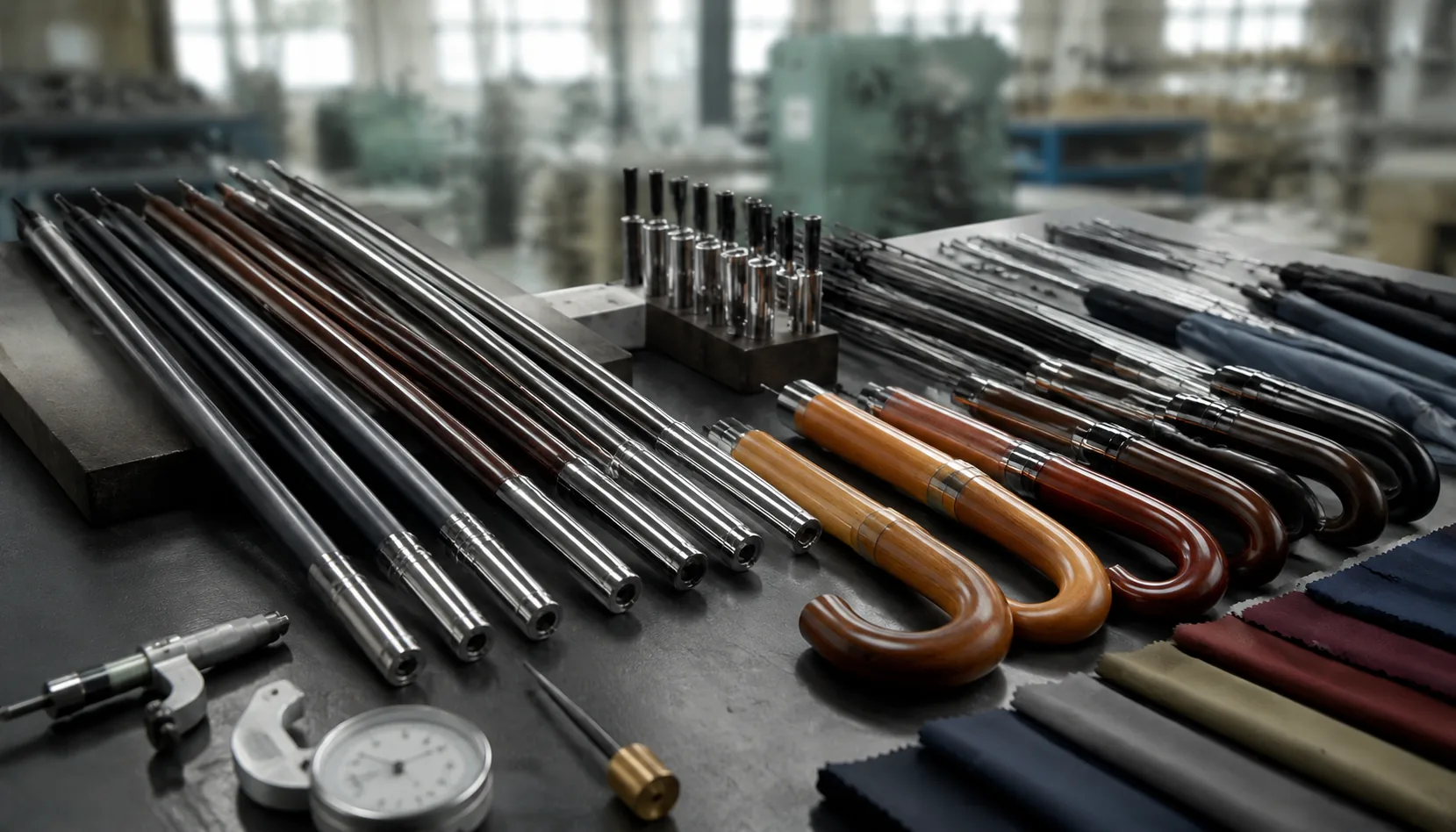
Retail buyers usually see shaft and tip problems only after cartons arrive: crooked ferrules, loose tips, wavy ribs, scratched plating, or handles that shift during a store pull test. On our stick umbrella lines in Songxia, the most reliable orders start with clear stick umbrella shaft specs tied to ferrule fit, rib alignment, handle fixing, and AQL checks, so the sample approval actually matches bulk production.
Choose Shaft Material for Look and Durability
Steel is still the safest default when retail stick umbrellas need predictable strength, clean straightness, and tight FOB pricing. For a 23" or 27" straight umbrella, we normally use a black electroplated or powder-coated steel shaft in 10 mm to 14 mm diameter, depending on canopy size and rib count. The buyer concern is not just “will it bend,” but whether it stays straight after rib riveting, handle fitting, carton compression, and a wet season in store inventory. Good stick umbrella shaft specs should call out shaft OD, wall thickness, coating type, salt-spray target, and straightness tolerance; otherwise factories may quietly switch to thinner tubing to hit price. Steel pairs well with 8K or 10K frames, especially when ribs are also steel, but it needs proper anti-rust oil control before assembly so the coating does not stain 190T pongee or transfer onto light-color EVA handles.
Aluminum shafts make sense when the retail buyer wants a lighter hand feel, especially for 21" and 23" fashion umbrellas or event umbrellas carried all day. The trade-off is dent resistance: aluminum feels better in the hand but can deform faster than steel if the carton is crushed or the umbrella is used like a walking stick. I usually recommend anodized aluminum rather than painted aluminum when the finish is visible, because scratches on paint show silver underneath and look cheap on shelf. A straight umbrella manufacturer should also check weight balance with the final handle, not the bare frame; a heavy crook handle on a light aluminum shaft can make the umbrella feel tail-heavy and unstable when opened. For retail stick umbrellas, ask for opened weight, center-of-gravity feel, and a drop test on the finished packed unit, not only a frame sample.
Wood shafts are chosen for character, not lowest defect rate, and that should be clear before sampling. Wooden shaft umbrellas look premium with maple, ash, beech, or faux-wood lacquer handles, but wood introduces grain variation, moisture movement, and stricter straightness sorting. For private-label retail, I would specify kiln-dried shafts, smooth lacquer with no raised fibers, consistent stain tone across handle and shaft, and moisture content controlled before final assembly. Umbrella ferrule tips also matter more on wood models because the tip alignment visually exposes any shaft curve; metal ferrules in nickel, black zinc, brass tone, or matte gunmetal should sit coaxial with no wobble. At ZheBrella, our standard practice is to inspect wood shafts before canopy sewing and again after tip pressing, because a small bow that passes in component form becomes obvious once the canopy, runner, and ribs are under tension.
Match Rib System to Shaft and Canopy Size
The rib system has to be matched to the shaft before anyone talks about canopy color or handle shape. For most retail stick umbrellas, an 8K frame is the practical baseline: 8 ribs, usually 23" or 27" rib length, giving a familiar daily-use arc around 46" to 54" depending on pattern depth. On a 23" stick umbrella, I normally pair a 10 mm to 12 mm steel or fiberglass shaft with 8 ribs because the load path is simple and the umbrella closes cleanly without bulky fabric stack-up. These are the stick umbrella shaft specs buyers should confirm early, especially if the assortment includes wooden shaft umbrellas, because wood diameter, straightness, and moisture control affect how the runner slides and how the top notch is fixed.
A 16K frame is not automatically stronger, but it does create a denser, more premium look because the canopy is divided into 16 narrower panels instead of 8 wide ones. That makes the dome rounder and the panel seams visually richer, which is why fashion retailers and gift programs often choose 16K for 23" or 24" stick models. The tradeoff is weight and closing bulk: 16 steel ribs can feel heavy in hand, while 16 fiberglass ribs cost more but recover better after gust loading. As a straight umbrella manufacturer, I would not put a 16K rib set onto a weak thin shaft just to chase a luxury appearance; the shaft wall thickness, runner, notch, and umbrella ferrule tips all need to match the added rib count.
Canopy material changes the frame requirement more than many buyers expect. A 190T pongee canopy with standard water-repellent coating works well on an 8K steel or fiberglass frame, but a heavier 210T pongee, laminated blackout fabric, PVC, POE, or EVA canopy adds both static weight and wind drag. Larger arcs, especially 27" and 30" golf-style stick umbrellas, need longer ribs and stronger stretchers because rib deflection increases with length. For heavier canopies, our standard practice at ZheBrella is to step up the rib gauge, use fiberglass on wind-sensitive models, and check opening force, closing alignment, and tip tension during AQL 2.5 inspection. Good stick umbrella shaft specs are not just diameter numbers; they are the full match between shaft, ribs, canopy weight, arc size, and ferrule fixing.
Specify Ferrule, Tip, and Safety Details
Ferrule and tip design should be locked before sampling, because these small parts create most of the avoidable safety complaints on retail stick umbrellas. For classic wooden shaft umbrellas, the top ferrule is usually nickel-plated iron, brass-plated steel, aluminum, or stainless steel, with common exposed lengths around 25–45 mm depending on 23", 27", or 30" models. A metal ferrule looks premium, but the edge must be rolled, capped, or polished smooth; a cut tube with a raw rim is not acceptable for store aisles or event handouts. For lower-cost retail stick umbrellas, plastic umbrella ferrule tips in PP, ABS, or nylon are safer and easier to color-match, but they need enough wall thickness so they do not split during drop testing or carton compression. When buyers write stick umbrella shaft specs, I recommend defining ferrule material, finish, exposed length, pull-off resistance, and whether the ferrule is decorative or load-bearing.
Rounded ends are not optional for retail environments where umbrellas sit in floor bins, hang on peg hooks, or get handled by children. A sharp ferrule point, loose plastic cap, burr on a plated metal tip, or exposed shaft end should be treated as an inspection defect, not a cosmetic issue. On our AQL 2.5 final inspections, a tip that can be removed by hand, rotates freely, exposes a sharp edge, or scratches a standard test card is marked as major or critical depending on severity. Reinforced top caps are especially important on auto-open straight umbrellas because the spring impact at opening puts extra load on the crown area. For 8K and 10K steel-rib models, the cap should sit tight against the canopy without cutting the 190T or 210T pongee; for fiberglass rib frames, the cap also helps keep the vented double-canopy stack aligned after repeated open-close cycles.
Anti-scratch finishes matter because ferrules rub against handles, neighboring umbrellas, retail displays, and printed canopy panels during packing. A polished nickel ferrule may look clean on a pre-production sample, but if the plating is thin or the edge is not deburred, it can scratch heat-transfer logos, UV-coated fabric, or glossy POE/PVC panels during transit. A straight umbrella manufacturer should specify plating thickness, salt-spray expectations if corrosion resistance matters, and whether the finish is bright, matte, painted, powder-coated, or rubberized. For retail stick umbrellas, I also like to see an inner plug or crimp control so the ferrule cannot slide off after repeated impacts. Carton drop testing, 50+ open-close cycles, and a simple pull test on the tip catch most problems before shipment. The safest stick umbrella shaft specs are boringly precise: no sharp points, no loose tips, no exposed metal burrs, no finish flaking, and no parts small enough to detach under normal consumer handling.
Coordinate Canopy Fabric, Handle, and Closure
Canopy fabric drives the whole feel of retail stick umbrellas before the shopper ever checks the rib count. For standard 23" and 27" stick styles, 190T pongee gives a lighter drape, closes slimmer, and works well on 8-panel frames where each panel has enough width to fall cleanly between ribs. On 16-rib layouts, 190T can look slightly busy if the cutting tolerance is loose, because every narrow gore shows seam tension. 210T pongee has a denser hand, better color depth after screen or heat-transfer printing, and a more premium fall over 16K frames, but it adds bulk at the runner and closure point. When buyers ask for stick umbrella shaft specs, I always check fabric weight together with shaft diameter and rib count, not separately, because a heavy canopy on a thin 10 mm steel shaft feels unbalanced in-store.
Handle choice should match the retail position, not just the catalog photo. A classic J handle in ABS, rubberized plastic, or bent wood supports traditional wooden shaft umbrellas and gift-store programs, especially with dark 190T pongee and a nickel-plated cap. Straight handles, including EVA foam or matte plastic cylinders, suit golf-inspired 27" and 30" retail stick umbrellas where buyers want a cleaner silhouette and easier carton packing. As a straight umbrella manufacturer, our standard practice is to prototype the handle with the actual shaft, ferrule, and canopy, because a 14 mm wood shaft with a thick J handle can feel elegant, while the same handle on a 10 mm steel tube feels cheap. Umbrella ferrule tips also matter: metal tips read premium but can scratch store fixtures; molded plastic tips are safer for mass retail and children’s ranges.
Closures are small parts, but they decide whether the umbrella looks neat on the shelf after customers open it three times. A sewn self-fabric strap with a metal snap is the safest choice for mid- to upper-tier stick umbrellas, especially 210T pongee where Velcro can catch the weave and make the wrap look fuzzy after handling. Velcro is cheaper and faster in assembly, but I reserve it for event, value, or high-volume private-label programs where speed and cost beat long-term appearance. For 16-rib umbrellas, specify strap length after the final canopy sample is folded, not from a drawing, because the wrap diameter changes with seam allowance, rib thickness, and whether the frame uses steel or fiberglass ribs. Good stick umbrella shaft specs should therefore list canopy fabric, rib count, handle type, strap construction, snap finish, and ferrule material together before MOQ, AQL 2.5 inspection, and FOB/DDP lead-time quoting.
Confirm Testing, Packaging, and Order Terms
Testing for retail stick umbrellas has to focus on the shaft system first, because a straight umbrella fails differently than a compact folding model. For stick umbrella shaft specs, I normally require open-close cycling at 500 cycles for manual and auto-open frames, with no latch slip, runner jam, or handle loosening. Shaft bend checks should include both visual straightness and loaded deflection: a 23" or 27" steel shaft should return true after moderate side pressure, while wooden shaft umbrellas need extra inspection for grain cracks, warping, and uneven lacquer thickness. Rib alignment is checked with the canopy fully tensioned; 8K ribs should sit evenly around the notch, and any rib tip lifting more than a few millimeters usually means poor sewing balance or a twisted stretcher.
Umbrella ferrule tips deserve a real pull test, not just a hand twist at final packing. For retail stick umbrellas, I like ferrules tested at 80–100 N pull force depending on shaft diameter, especially on metal tips press-fitted into steel or aluminum shafts. Wooden shafts need adhesive control at the ferrule joint because end-grain absorption can create weak bonding if the glue is too thin. Under AQL 2.5 inspection, our standard practice at ZheBrella is to list ferrule looseness, bent shaft, off-center canopy, broken rib, failed open-close action, sharp burrs, handle wobble, and dirty fabric as major defects. Minor defects include small print position drift, light thread ends, tiny lacquer marks, or carton scuffs that do not affect saleability.
Order terms should be confirmed before artwork approval, because stick umbrellas ship in long cartons and freight math changes fast. A straight umbrella manufacturer may quote a low FOB Ningbo or Shanghai unit price, but DDP can look very different when 27" or 30" umbrellas exceed standard carton lengths and get charged by volumetric weight. Typical MOQ is 500–1,000 pieces per color for custom canopy printing, with samples in 5–10 days for stock fabric and 10–15 days if custom handles, ferrules, or shaft colors are needed. Bulk production usually runs 30–45 days after deposit and sample approval, longer before Canton Fair or the rainy-season peak. For stick umbrella shaft specs, lock the carton size, pieces per carton, gross weight, HS code, and Incoterms in the PI so buyers are not comparing FOB apples against DDP oranges.
Frequently Asked Questions
Are wooden shafts stronger than metal shafts?
Not always. Wood offers a premium look but must be checked for straightness, cracking, and finish consistency, while steel usually provides predictable strength at lower cost.
Why do stick umbrella tips matter in retail orders?
Loose, sharp, or poorly finished ferrules and tips can create safety complaints and fail QC inspection. Buyers should specify rounded edges, secure assembly, and pull-test requirements before bulk production.
What shaft diameter is commonly used for retail stick umbrellas?
Most retail stick umbrellas use a 10–14 mm shaft depending on canopy size and material. Wooden shafts are often thicker for appearance and stiffness, while steel or aluminum shafts can be slimmer but should be checked for bending resistance during inspection.
Which ferrule tip design is safest for store-sold stick umbrellas?
Rounded plastic or metal-capped ferrules are safer than sharp pointed tips, especially for mass retail and department store programs. Buyers should specify smooth edges, secure fixing, and no burrs to reduce inspection failures and customer complaints.
Can the shaft, ribs, handle, and ferrule be matched for a premium retail look?
Yes. Common premium combinations include a wooden shaft with a curved wood handle and metal ferrule, or a black coated steel shaft with fiberglass ribs and a matte plastic tip. For OEM orders, confirm finish samples before bulk production, typically with a 7–10 day sample lead time.
Looking to Launch Your Custom Umbrella Line?
ZheBrella is a Zhejiang-based OEM/ODM umbrella manufacturer with 17 years of export experience. Free design, low MOQ from 100 pieces, windproof construction, full-color print.
Get Free Quote Now »People Also Search For
Related Articles
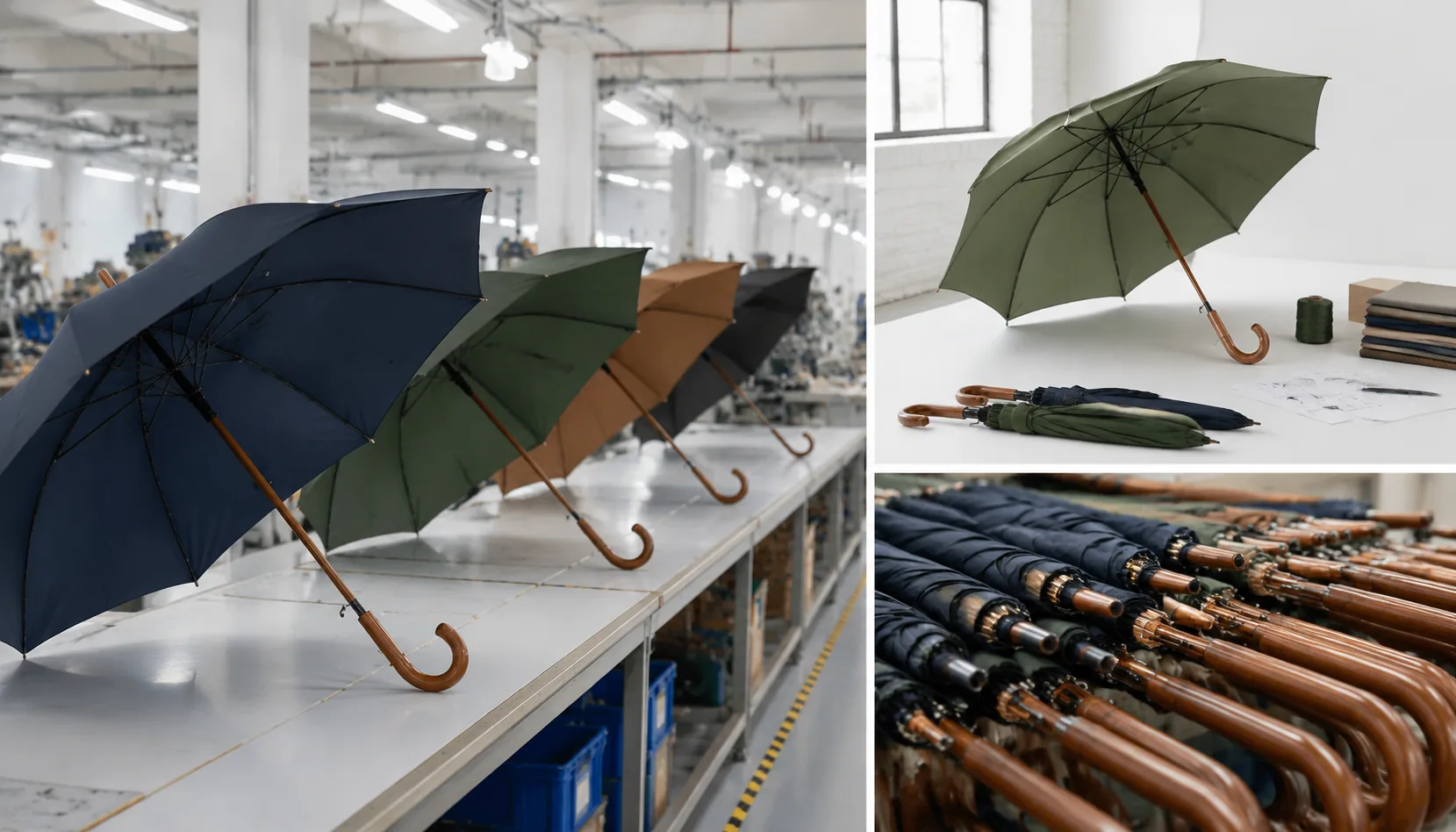
Wooden Stick Umbrellas: OEM Specs for Retail Brands
Compare wooden stick umbrella specs for retail orders, including shafts, 8K/16K ribs, 190T/210T pongee, handles, QC, MOQ...
Read More »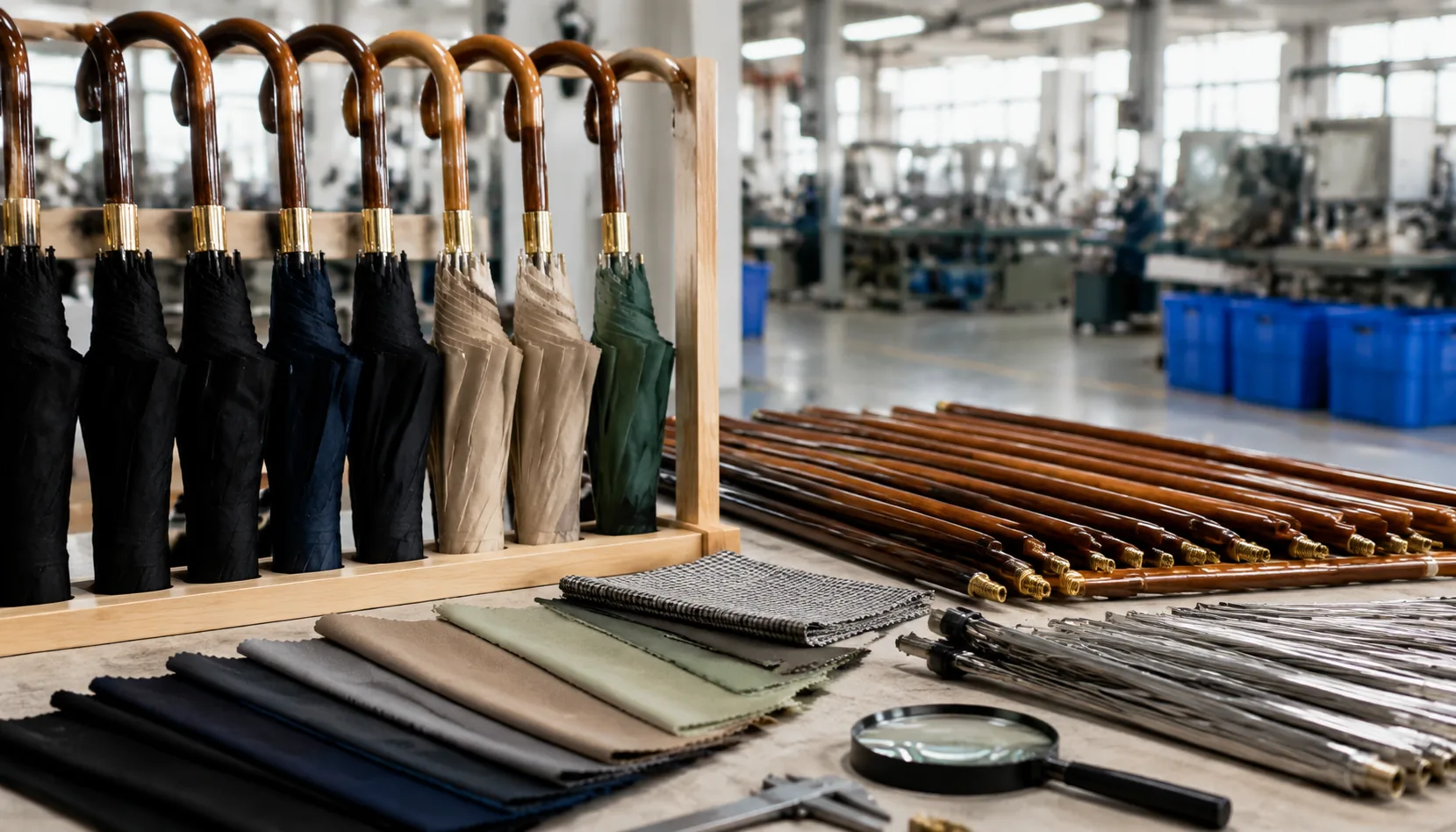
Cane Handle Stick Umbrellas: Buyer Specs for Retail Brands
Specify cane handle stick umbrellas with 8K frames, 190T/210T pongee, auto-open options, and QC checks for retail and gi...
Read More »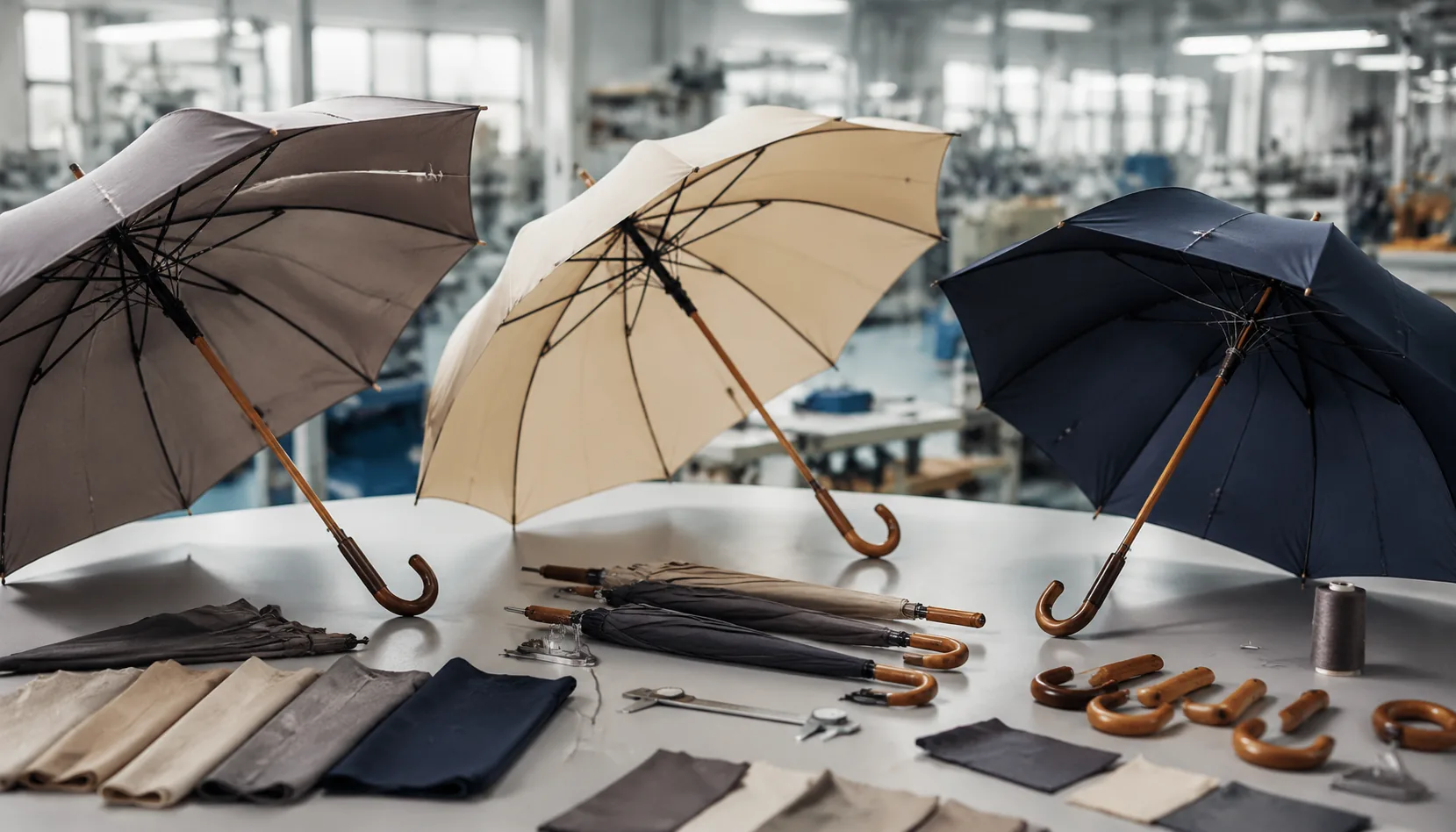
Wooden Shaft Umbrellas: Product Specs for Retail Brands
Compare wooden shaft umbrella specs, frame pairings, canopy fabrics, finishes, QC checks, and order terms for premium re...
Read More »