Umbrella Canopy Cutting: Panel Accuracy and Fabric Yield
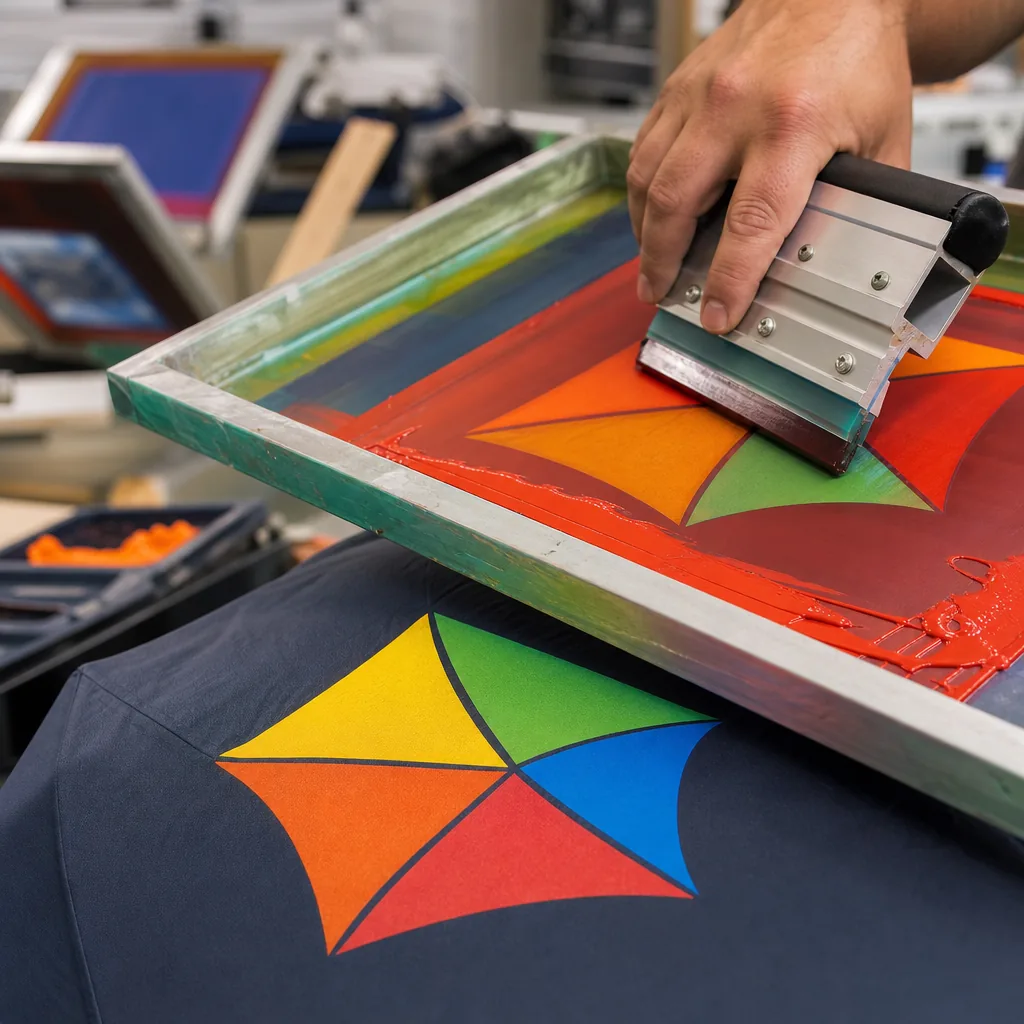
When bulk umbrellas start showing twisted seams, uneven tension, or color drift between lots, the root cause is often upstream in umbrella canopy panel cutting, not at sewing. On our Songxia floor, panel accuracy comes down to marker planning, 190T and 210T pongee layup stability, blade or die condition, and shade control at each batch break, because small cutting errors multiply fast across thousands of canopies.
From Fabric Roll Inspection to Cutting Plan
Shade drift and width loss destroy yield faster than any cutting error, so an OEM umbrella factory should clear every 190T and 210T pongee roll before umbrella canopy panel cutting begins. Inspectors first measure usable width against the purchase spec, because a nominal 150 cm roll that is actually 148.0 to 148.5 cm changes marker efficiency and increases waste on 21", 23", 27", and 30" canopy layouts. They then inspect shade at the roll head, middle, and tail under standardized lighting against the approved swatch; dye-lot drift often shows up only after 200 to 300 meters, so checking only the edge or roll head is not enough. The same inspection stage should flag coating defects, including uneven PU or Teflon application, pinholes, streaks, and glossy patches, which are especially visible on black, navy, and saturated red. Fabric skew is recorded before cutting, because off-square weft will twist printed logos and pull seam lines out of alignment after sewing. Rolls that exceed the order's canopy panel tolerance should be held, not forced into production.
Lot control is what keeps one canopy from showing mixed shades panel to panel. Each inspected roll should be tagged by supplier lot number, dye batch, color code, coating type, and inspection status, then released to cutting by PO or production order rather than mixed into general stock. On a 23" 8K order using 190T pongee cutting, lot A should stay separate from lot B even if both look acceptable in a quick warehouse check; the difference can become obvious under daylight or retail lighting. The risk is higher on 27" 210T golf umbrellas, where larger panels make side-by-side shade shift easier to see. Once width, skew, and defect mapping are confirmed, the cutting plan can focus on fabric yield optimization without taking avoidable quality risk: marker layouts are matched to 8K, 10K, or 16K canopies, defective edge bands are excluded, and grain direction stays consistent across all panels. That reduces sewing distortion, protects yield, and lowers the chance of an AQL 2.5 failure at final inspection.
Marker Planning and Yield Optimization
Marker planning sets fabric consumption before sewing starts, so it directly changes FOB cost, MOQ risk, and margin. In umbrella canopy panel cutting, the biggest variable is panel geometry. A 23-inch 8K canopy uses wider gores that usually nest more efficiently on a standard 190T pongee roll than a 23-inch 16K canopy. The 16-panel layout adds narrower gores, more seam-allowance events, and more notch points, which creates more unusable edge space in the marker. Once you add seam allowance, tip reinforcement position, and a realistic canopy panel tolerance of +/-2 mm, the extra consumption can shift unit cost by several cents. On a 3,000- to 10,000-piece order, that is no longer rounding error; it becomes a visible material line in the quote. For low-margin promotional programs, better nesting on an 8-panel layout can be the difference between holding target FOB, accepting lower margin, or raising MOQ to absorb waste.
Directional artwork is the next yield driver, and it is where many custom programs lose control of cost. If the print has a one-way repeat, or every logo must face the same direction, the marker cannot alternate or flip adjacent panels, so fabric yield optimization usually falls by about 5% to 12% versus a solid-color or non-directional layout. That is a common issue in 190T pongee cutting and 210T pongee programs, especially when a large logo sits near the lower arc and needs extra clearance from the seam allowance to prevent drift after cutting and sewing. A disciplined OEM umbrella factory should verify marker efficiency against print repeat, logo position, and cutter tolerance before bulk approval; a clean CAD marker can still fail in production if registration and cutting limits do not match. MOQ economics follow actual meter consumption, not only fabric price per meter, so poor nesting can push demand into mill minimums on bespoke colors, UPF 50+ pongee, or Teflon-coated fabric. The practical fix is straightforward: quote from real marker consumption plus cutting-loss allowance, then adjust panel count, artwork direction, or canopy size before fabric is booked and the 35-45 day custom fabric lead time starts.
Die Cutting, CNC Cutting, and Manual Cutting Compared
Die cutting is the lowest-risk choice for repeat bulk production because it pairs the fastest throughput with the most stable edge repeatability, once order volume absorbs the tooling cost. For umbrella canopy panel cutting, a hardened steel die matched to one panel profile can cut stacked 190T or 210T pongee faster than CNC or hand cutting, with edge consistency that helps keep canopy panel tolerance under control during sewing. On a standard 23-inch 8K umbrella, even 2-3 mm of panel drift shows at the tips and ferrule after stitching, so that repeatability directly affects finished appearance and rework risk. The limit is flexibility: any change to arc depth, seam allowance, vent position, or panel geometry requires a new die and typically adds 5-7 days of setup. In an OEM umbrella factory, die cutting usually becomes economical at roughly 3,000-5,000 pieces per colorway after the marker is locked for fabric yield optimization. For plain round canopies and replenishment orders, it delivers the lowest unit cutting cost, the most predictable fabric consumption, and less lot-to-lot variation.
CNC cutting is the practical middle ground when panel files are still changing, print registration must stay exact, or the order is too small to recover die cost. A digital cutter follows nested files precisely, which makes it useful for offset logo placement, irregular 27-inch golf umbrella panels, scalloped edges, and double-canopy vented styles where the upper and lower layers use different geometry. It is slower than die cutting on plain stock, but the setup advantage is decisive: a buyer can move from a 21-inch 8K manual frame to a 27-inch 16K auto-open frame with a same-day file revision instead of waiting 5-7 days for new tooling. Operator skill still affects fabric yield optimization, especially in 190T pongee cutting, because weak nesting can waste several percentage points of usable fabric. Manual cutting has the lowest setup cost and remains useful for samples, repairs, transparent POE or PVC panels, striped layouts, and awkward one-off jobs, but it creates the widest tolerance spread. In bulk production, small hand-cut errors quickly become twisted canopies or uneven closing lines, so manual cutting should stay limited to prototypes, unusual custom shapes, or trial runs in the low hundreds, with in-process inspection held to AQL 2.5.
Panel Tolerance and Its Effect on Canopy Fit
Most canopy fit defects start at the cutting table, not sewing. On an 8K or 10K umbrella, a panel length error of 2 to 3 mm or a notch shifted 1.5 mm off center compounds around the crown and shows up as canopy twisting, loose tips, uneven rib coverage, or one rib pocket carrying more load than the next. A short shoulder arc is harder to catch because the straight length can still read correctly on the table; once the canopy is mounted on a 21 inch or 23 inch frame, the fabric rides high between ribs and the skirt no longer reaches each rib evenly. That creates stressed seams and visible distortion even if the panels are sewn cleanly. In umbrella canopy panel cutting, the dimensions that matter before sewing are straight length, shoulder arc, tip width, centerline alignment, and exact notch position. If any one drifts outside tolerance, the canopy will fight the frame through assembly, increase rework, and lower first-pass yield for the buyer.
Stressed seams usually come from small drift across a full lay, not one obviously bad panel. In 190T pongee cutting, fabric slip, a worn knife, uneven ply compression, or poor spread tension can move the edge 1 to 2 mm from top ply to bottom ply. On compact auto-open-close umbrellas, that is enough to make one seam pucker while the opposite seam lies flat because the folded canopy sees higher repeat stress. Practical canopy panel tolerance is typically held at plus or minus 1.5 mm on panel length, plus or minus 1 mm on tip width, and plus or minus 1 mm on notch location; beyond that, fit problems show up quickly on 16K fashion umbrellas and double-canopy vented styles, where the geometry is less forgiving. A disciplined OEM umbrella factory checks die-cut or hand-cut bundles against a hard template before sewing, then compares opposite panels on a light table to confirm arc accuracy and left-right symmetry. That is also where fabric yield optimization needs discipline: saving 1 to 2 percent on a tighter marker is usually a false economy if it distorts grain direction, weakens the tip area, and raises rejection risk later in production.
Quality Controls Before Sewing Starts
No mixed cut panels should reach sewing. Before a trolley leaves cutting, every bundle should carry a label with PO number, color code, panel size, rib specification, fabric lot, and cut date, then be tied in fixed quantities that match the sewing line plan. On a standard 8K, 23-inch umbrella, that makes shortages or over-cuts visible before operators load the first bundle. Shade control matters just as much. With 190T and 210T pongee, dye-lot variation is easy to see under daylight, especially on white-backed print grounds and dark corporate colors. A disciplined OEM umbrella factory keeps each lot physically segregated in cutting and staging, not just in ERP records. Once off-shade panels are stitched into one canopy, the correction is usually panel replacement or full canopy rework. Catching defects at the umbrella canopy panel cutting stage cuts rework labor, protects fabric yield optimization, and keeps bulk orders on their planned lead time.
Panel counting is a production gate, not paperwork. Before first-piece release, the team should verify panel totals by bundle, by fabric lot, and against the production order, then confirm coating-side orientation on every stack. During 190T pongee cutting, water-repellent, UV, or Teflon-coated faces are easy to reverse after stacks are turned; mixed orientation in one canopy can pass a quick visual check but fail spray testing, print review, or appearance inspection. Canopy panel tolerance also has to be checked before sewing starts. If cut edges drift outside target, sewing operators compensate by pulling fabric, which causes puckering, uneven arc length, and poor fit on the frame. First-piece approval is the lowest-cost control: lay up one full canopy set and check notch position, tip alignment, center cap fit, and seam allowance consistency; for vented double-canopy styles, verify upper and lower layers separately. Hold bulk sewing until production, QA, and line leaders sign off. That prevents AQL 2.5 final inspection from turning into a sorting and repair operation.
Frequently Asked Questions
Does 210T pongee require different cutting controls than 190T pongee?
Yes. 210T pongee is denser and can feel slightly firmer, so layup height, blade sharpness, and tension control should be adjusted to avoid edge distortion or panel slippage.
Why do directional prints reduce umbrella fabric yield?
Directional prints limit how panels can be rotated during marker planning. This can increase fabric waste because every panel must align with the same visual direction around the canopy.
What panel tolerance should a buyer specify for a repeat umbrella program?
For standard promotional umbrellas, many buyers specify panel cutting tolerance within plus or minus 1.5 mm to 2.0 mm. If the canopy includes edge printing alignment, contrast panels, or strict seam matching, asking for a tighter internal control target helps reduce fit issues across reorders.
When does CNC cutting make more sense than steel die cutting for canopy panels?
CNC cutting is usually the better choice for low-to-medium volume OEM runs, frequent size changes, or programs with multiple canopy shapes because it avoids die tooling changes. Steel dies become more cost-effective on stable, higher-volume orders where the same panel shape repeats across 5,000 to 10,000 pieces or more.
How do factories control shade variation between umbrella panels in one order?
A practical control method is to cut each production lot from the same dyed fabric batch and keep roll segregation during layup. For large orders split across dye lots, buyers should ask for shade band approval and lot labeling on cartons so mixed-color canopies are not assembled.
Looking to Launch Your Custom Umbrella Line?
ZheBrella is a Zhejiang-based OEM/ODM umbrella manufacturer with 17 years of export experience. Free design, low MOQ from 100 pieces, windproof construction, full-color print.
Get Free Quote Now »People Also Search For
Related Articles
Cutting Umbrella Canopy Panels: Grain, Tolerance, and Yield
Plan canopy cutting with panel tolerance, fabric grain, 190T/210T pongee handling, and marker yield controls to prevent ...
Read More »Umbrella Canopy Cutting Tolerances for Consistent Production
See how panel cutting tolerance, fabric shrinkage, and marker layout affect canopy fit, print alignment, and rework in O...
Read More »
Umbrella Canopy Cutting Tolerances for Consistent OEM Fit
Control canopy panel cutting tolerances for 190T and 210T pongee umbrellas to improve rib fit, seam alignment, appearanc...
Read More »