Umbrella Color Blocking Strategies for Private Label Lines
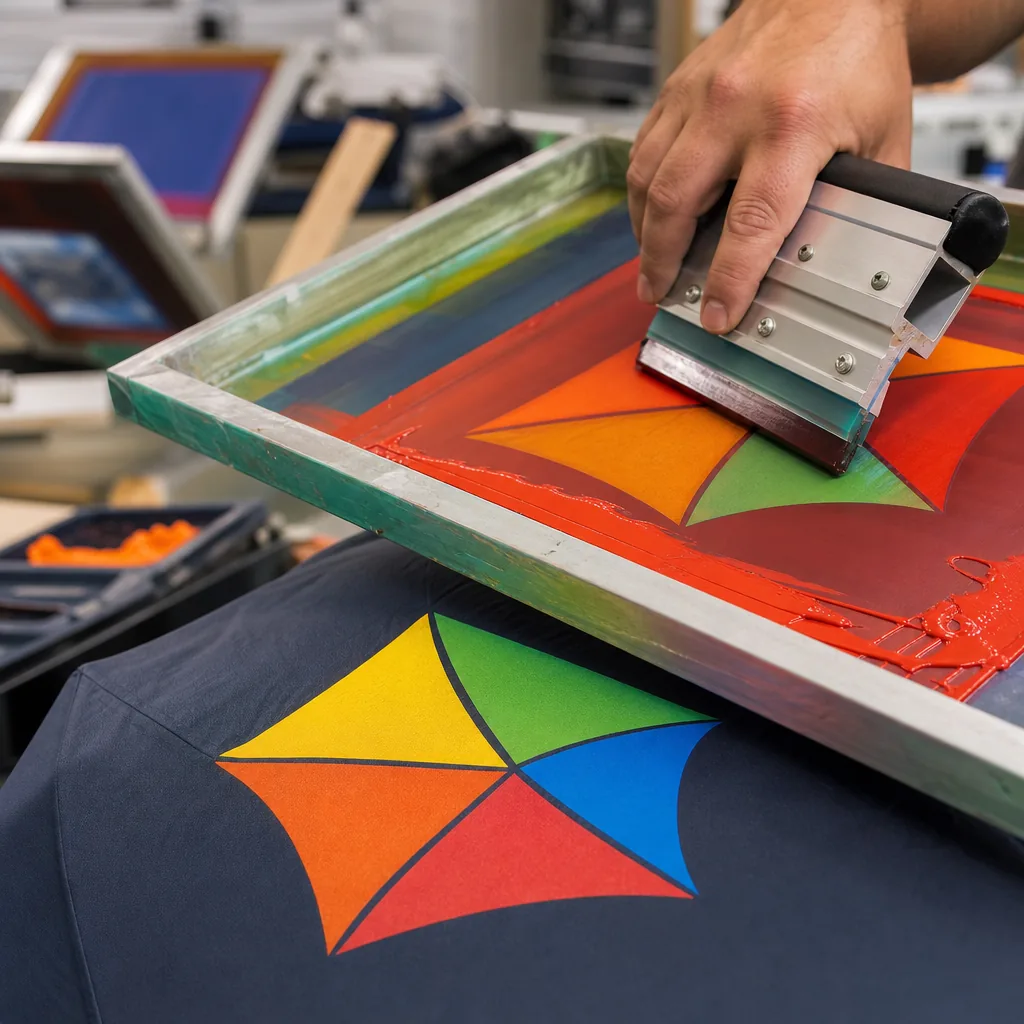
For private-label buyers, color blocking can make an umbrella line look premium—or expose every weak point in panel matching, fabric dye lots, and sewing control. On our Songxia production floor, a strong umbrella color blocking design starts with the frame layout, panel count, fabric behavior, and MOQ reality before any color card is approved. The right rules help keep samples attractive, bulk production consistent, and repeat orders easier to manage.
Use Color Blocking to Differentiate the Line
Use color blocking to build a clear price ladder before changing molds, handles, or cartons. An entry SKU can keep a 23-inch 8K steel-frame stick umbrella with shared shaft, tips, sleeve, and master carton, then add a low-cost two-panel contrast on 190T pongee. A mid-tier style can stay in the same 23-inch or 27-inch diameter family but move to alternating panel color blocking umbrellas, fiberglass ribs, auto-open operation, a black electroplated shaft, and a color-matched sleeve. Premium SKUs should justify the higher retail through real upgrades: 10K or 16K fiberglass frames, 210T pongee, and Teflon or UPF 50+ coating, with a cleaner layout such as four dark outer panels and four brand-color inner panels. This gives buyers visible good-better-best separation while the factory holds the BOM, tooling, and cutting setup steady, protecting margin across private label umbrella colors.
Start the umbrella color blocking design with the panel map, then place the logo where it will read cleanly. On an 8-panel canopy, 1+7, 2+6, 4+4, and alternating 1/1 layouts each look different from 10 feet on a retail rack. Private-label retail programs can use a neutral base with one or two seasonal accents to widen retail umbrella assortment colors without creating twelve unrelated SKUs. Resorts benefit from bright upper panels for beach, pool, and rental visibility, paired with darker lower panels that hide dirt, sunscreen, and handling marks. Team merchandise usually works best in 4+4 blocking because two club colors stay balanced and still leave printable panels for a crest or sponsor. Fashion-driven promotions should use lower-contrast combinations—navy/sky, olive/khaki, black/charcoal—especially when paired with wood, matte, or rubberized handles.
Approve color only after strike-offs on the actual canopy material: 190T or 210T pongee, POE, PVC, or EVA. Pantone targets can shift after coating, heat transfer, lamination, or outdoor exposure, and AQL 2.5 inspection will flag obvious shade variation across adjacent panels. For branded umbrella collection planning, shared black frames, sleeves, handles, and cartons let the factory combine MOQ across related SKUs while changing mainly fabric rolls and panel sequence. That matters on first orders of 1,000 to 3,000 pieces per colorway, where reorder decisions depend on early sell-through. Color blocking performs best on stick umbrellas, 27-inch and 30-inch golf umbrellas, and vented double-canopy windproof styles because the larger canopy makes the hierarchy easy to read. Use 21-inch auto-open-close compact models carefully; small folding panels can make a busy layout look fragmented instead of premium.
Design Around Panel Count and Canopy Construction
Panel count controls the rhythm of an umbrella color blocking design before Pantone matching or logo placement. On an 8K canopy, each panel is wide enough for high-contrast alternation: navy/white/navy/white reads clearly at about 10 meters, and a logo centered on one light panel keeps usable negative space. On a 16K canopy, the same sequence becomes a tight stripe pattern; it can look more refined on 27" or 30" golf umbrellas, but ribs interrupt small marks, thin rules, and taglines. Specify 8K for bold promotional contrast, simpler multi-panel artwork, and lower print-registration risk. Use 16K for tonal movement, gradients, or disciplined accents every fourth panel, such as charcoal-to-silver or forest-to-sage. For full-canopy repeats, approve a sewn pre-production sample before bulk cutting; 16K layouts require tighter cutting and sewing control, or the pattern can appear rotated after assembly.
Frame type changes how much color the buyer actually sees. A 23" straight umbrella in 190T or 210T pongee gives broader, smoother fields, so four dark panels and four light panels stay readable after sewing and canopy tensioning. A 21" 3-fold auto-open-close umbrella compresses the same artwork into smaller triangles, and fold lines, rib creases, and packed-display wrinkles break up the blocks. Folding models also develop crease memory along ribs, so pale panels placed beside deep red, navy, or black need stricter colorfastness checks to reduce transfer marks during carton storage. For private label umbrella colors, keep the strongest brand shade on the outside canopy and use a quieter underside when the SKU must fit retail umbrella assortment colors. If a logo crosses a seam, allow 3–5 mm sewing tolerance, especially on compact frames where final tension can shift the print position.
Double-canopy windproof construction makes panel color blocking umbrellas an inside/outside design problem. The outer layer carries the main 8K or 16K sequence, but the vent overlap exposes the second canopy when the umbrella opens, flexes in wind, or hangs on a retail hook. On a vented 30" golf umbrella with fiberglass ribs and an advertised wind-tunnel rating around 50+ mph, a contrast under-vent can add depth; if it is too bright, it competes with the crown-panel logo. For branded umbrella collection planning, use a simple range rule: outside panels carry the main retail colors, while the underside uses a secondary brand color or a neutral black, gray, or ivory. Before bulk approval, review open-canopy photos from the front, side, and underside; rib curvature, vent depth, and seam overlap can make a balanced flat file look crowded on the finished umbrella.
Choose Fabric and Color Specs That Reproduce Reliably
Reliable umbrella color blocking design starts with the fabric spec, not the Pantone number. Use 190T pongee for cost-sensitive 21-inch compact umbrellas and promotional 23-inch stick umbrellas; it gives a lighter hand, lower fabric cost, and acceptable dye consistency for event, gift, and value retail programs. Move to 210T pongee when private label umbrella colors depend on saturated black, navy, burgundy, forest green, or other dark grounds. The tighter weave and heavier hand generally show better color depth after coating and calendaring. Do not run 190T on one frame and 210T on another inside the same retail story unless the buyer approves the shade difference in writing. For retail umbrella assortment colors across 21-inch auto-open-close and 23-inch auto-open models, keep fabric count, coating, and dye route consistent so the line reads as one collection on shelf.
Test dark-light contrast on sewn panels, not flat lab dips alone. White, cream, yellow, and sky blue can look contaminated when stitched next to black, red, or deep navy, especially if thread color, seam allowance, canopy tension, or rib structure changes between sample and bulk production. A usable strike-off for panel color blocking umbrellas should use the final 190T or 210T pongee, approved coating, actual seam allowance, selected rib construction such as 8K steel or 8K fiberglass, thread color, and final print method. Screen print, heat transfer, sublimation, and piece dyeing all shift color differently on coated polyester. Review samples under D65 light and outdoor daylight before bulk cutting; glare can make light panels appear thin while dark panels look heavier than the approved standard.
UV programs need tighter color control because UPF 50+ fabrics affect shade and contrast. Silver coating, black coating, and dense UV-treated pongee can flatten pastel blocking, turn mint green gray, or make orange look dirty from the reverse side. Before bulk production, buyer-approved swatches must lock fabric count, coating type, Pantone target, acceptable Delta E tolerance, dye or print process, and whether approval applies to the outside face only or both canopy sides. This swatch signoff is a risk control, not a formality: once alternating panels are cut and sewn, the factory usually cannot correct shade drift without scrapping finished canopies, delaying shipment, or renegotiating acceptance terms under the purchase order.
Manage SKU Complexity, MOQ, and Factory Efficiency
Treat each added panel color as a production variable, not a styling detail. In umbrella color blocking design, a second or third panel color changes fabric roll allocation, cutting markers, bundling, sewing sequence, and carton sorting. On an 8K canopy, alternating 1-3-5-7 and 2-4-6-8 panels is workable if operators bundle panels by number; on 10K or 16K panel color blocking umbrellas, the extra sorting raises labor time and mismatch risk. Keep one approved fabric base across the launch wherever possible: 190T pongee with 190T pongee, or 210T with 210T, rather than mixing recycled PET, coated fabric, and different deniers in one retail drop. If navy uses standard 190T pongee and white uses 190T pongee with UPF 50+ coating, test shrinkage, hand feel, and light transmission before bulk cutting so the canopy does not twist or pucker after sewing.
Commercially workable MOQ comes from shared hardware and controlled variation. Lock the frame BOM first: same 23-inch or 27-inch shaft, runner, tips, handle mold, sleeve, and master carton, then vary only canopy colors and logo placement. For private label umbrella colors, steel ribs keep cost down for entry retail and event programs; fiberglass ribs cost more but fit wind-resistant claims better, especially on 8K or 10K vented models tested around 50+ mph. Avoid splitting four colorways across black steel, silver steel, black fiberglass, and mixed fiberglass ribs; that creates four setups, four material plans, and more inspection points. At ZheBrella, we calculate MOQ by canopy fabric color and decoration method—screen print, heat transfer, or sublimation—after the shared frame is confirmed.
Plan carton assortment before issuing the PO. If the retailer needs 12 pieces per inner carton and 48 per master carton, retail umbrella assortment colors should divide cleanly, such as 12 black/white, 12 navy/gray, 12 red/black, and 12 green/khaki. Uneven ratios leave finished-goods balances or force repacking, which slows final AQL 2.5 inspection and increases barcode and color-label errors. For branded umbrella collection planning, keep three to five colorways on the same frame, same canopy fabric, and same logo process: one hero color for display, two or three conservative colors for replenishment. As a practical benchmark, 600 to 1,200 pieces per colorway is workable for many custom pongee programs; it becomes harder to hold when each colorway changes ribs, handles, coatings, sleeves, or retail packaging. Efficient umbrella color blocking design gives buyers visual range while the factory runs one stable production family.
Set QC and Delivery Expectations for Multi-Color Orders
Lock QC before cutting, not at final carton inspection. For each SKU and frame size—21-inch compact, 23-inch stick, 27-inch market, or 30-inch golf—approve a layout sheet that fixes panel sequence, logo location, fabric grain, canopy layer, rib count, and closure strap position. Cutting teams should bundle panels by SKU, color position, and layer so an 8K canopy cannot be assembled with a reversed navy or contrast panel. Treat any wrong panel sequence as a major defect because it changes the approved umbrella color blocking design, not just the appearance of one unit. Match bulk fabric to the signed lab dip, strike-off, or pre-production sample under D65 light before sewing starts. For dyed 190T or 210T pongee, set Delta E at 1.0–1.5 in the purchase specification. For translucent POE, PVC, or EVA, agree to a wider visual tolerance because backlighting, panel overlap, and frame color can shift the perceived shade.
Inspect seam alignment during sewing, while rework is still practical. On 8K frames, each seam should track the rib line, with color breaks landing consistently at the ferrule, tips, and closure strap. On 10K or 16K frames, narrower panels make even a 3 mm drift visible on high-contrast panel color blocking umbrellas, especially under retail lighting. Use a maximum seam offset of 3 mm for standard stick umbrellas and 4–5 mm for 27-inch or 30-inch golf umbrellas. Adjust only when double-canopy vents, Teflon-coated fabric, or stretch materials affect fabric feed. At final inspection, apply AQL 2.5 for major defects. Count wrong panel order, visible shade mismatch, dirty transfer print or screen print, open seams, loose tips, and poor rib-to-seam alignment as major issues because they create returns, chargebacks, or assortment inconsistency. For private label umbrella colors, include one approved control sample per SKU in the inspection room, not just a digital rendering.
Build the delivery calendar around approvals, not the requested ship date. Lab dips or fabric strike-offs typically require 5–7 days. Printed or sewn pre-production samples need 7–12 days after artwork approval. Mass production usually runs 30–45 days, depending on rib material, canopy fabric, print method, handle trim, and retail packing. For retail umbrella assortment colors, freeze the color matrix before deposit so fabric buying, cutting, and mixed-SKU carton planning stay aligned; late color swaps create shortages and partial shipments. FOB Ningbo or Shanghai is the better choice when the buyer consolidates umbrellas with other seasonal goods or already controls ocean freight. DDP is more useful for branded umbrella collection planning when multiple SKUs ship to several warehouses and the buyer needs one landed cost covering duty, inland trucking, carton labels, and delivery appointments. For mixed retail programs, confirm carton ratio, SKU labeling, and warehouse routing before mass packing, not after final inspection.
Frequently Asked Questions
Does color blocking usually increase umbrella cost much?
Usually yes, but the increase depends on how many canopy colors and SKUs are involved. More color panels can add fabric planning, cutting complexity, and a higher risk of leftover material, which raises unit cost more than a single solid canopy.
Is 16K better than 8K for color-blocked retail umbrellas?
Not always. A 16K canopy can create a more refined, fashion-oriented look, but each panel is narrower, so bold color blocks read differently than on 8K umbrellas. The better choice depends on the brand aesthetic and logo scale.
Can each umbrella panel use a different fabric color in bulk production?
Yes, but each color usually needs to meet fabric MOQ requirements, often 300 to 500 pieces per color depending on polyester type and coating. For lower quantities, buyers often use 2-color or 3-color panel layouts to control cost and production risk.
How do factories control color consistency across multiple umbrella styles in one private label line?
Factories typically use Pantone references, pre-production fabric swatches, and bulk fabric approval before cutting. If the same color is used across stick umbrellas, folding umbrellas, and golf umbrellas, it is best to produce the fabric in one dye lot to reduce shade variation.
Which panel layouts are easiest for color blocking on umbrellas?
The most production-friendly layouts are alternating panels, half-and-half canopies, border panels, and single accent panels. Complex asymmetric layouts are possible, but they may require clearer artwork files, more cutting control, and longer sampling time.
Looking to Launch Your Custom Umbrella Line?
ZheBrella is a Zhejiang-based OEM/ODM umbrella manufacturer with 17 years of export experience. Free design, low MOQ from 100 pieces, windproof construction, full-color print.
Get Free Quote Now »People Also Search For
Related Articles
Color-Blocking Strategies for Brand-Driven Umbrella Design
Show how color-blocked umbrella layouts strengthen brand recognition while staying production-friendly, with fabric, pri...
Read More »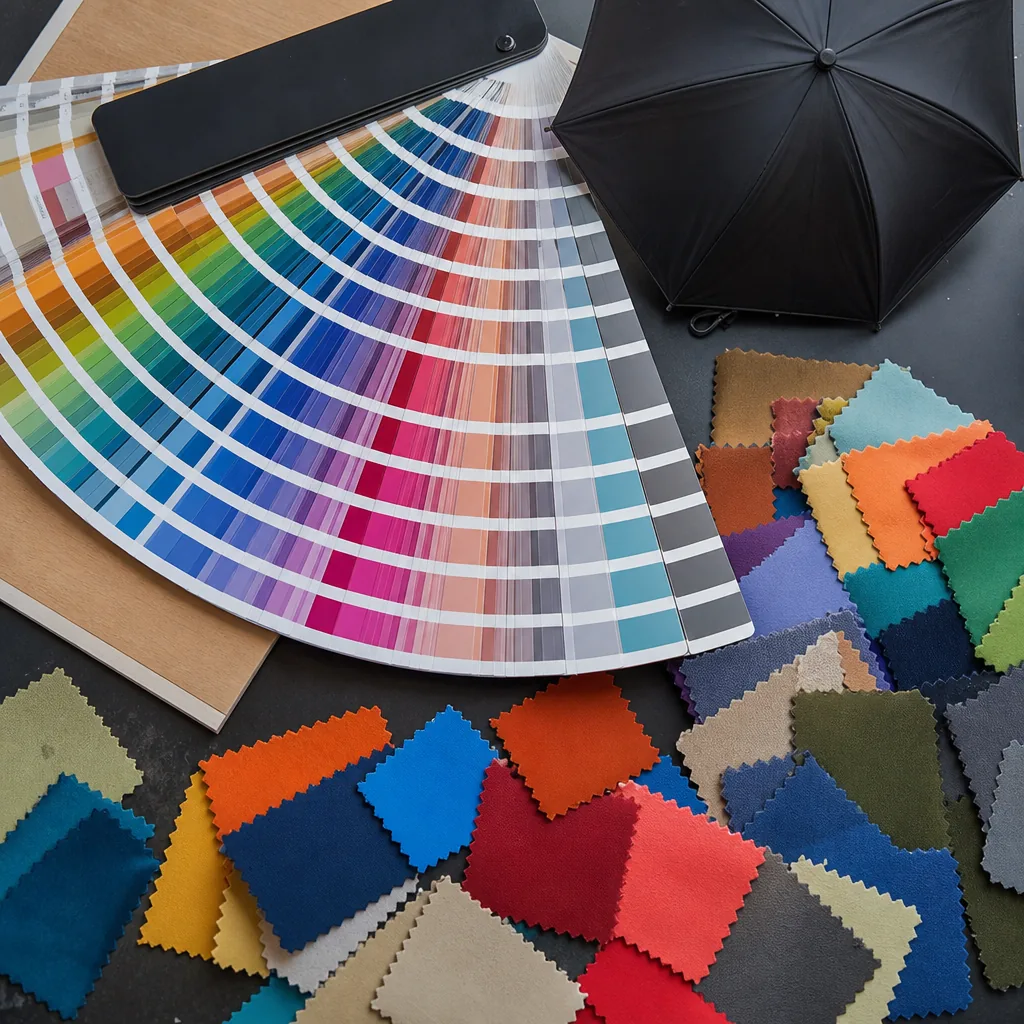
Custom Umbrella Color Blocking for Stronger Brand Recognition
Learn how to use panel blocking, trim choices, and stock color programs to boost brand recognition while controlling MOQ...
Read More »
Branded Umbrella Color Blocking for Stronger Shelf Impact
Learn how panel color layouts, trim choices, and fabric specs shape logo visibility, shelf impact, and production consis...
Read More »