Umbrella Factory Incoming QC for Fabric, Frames, and Parts
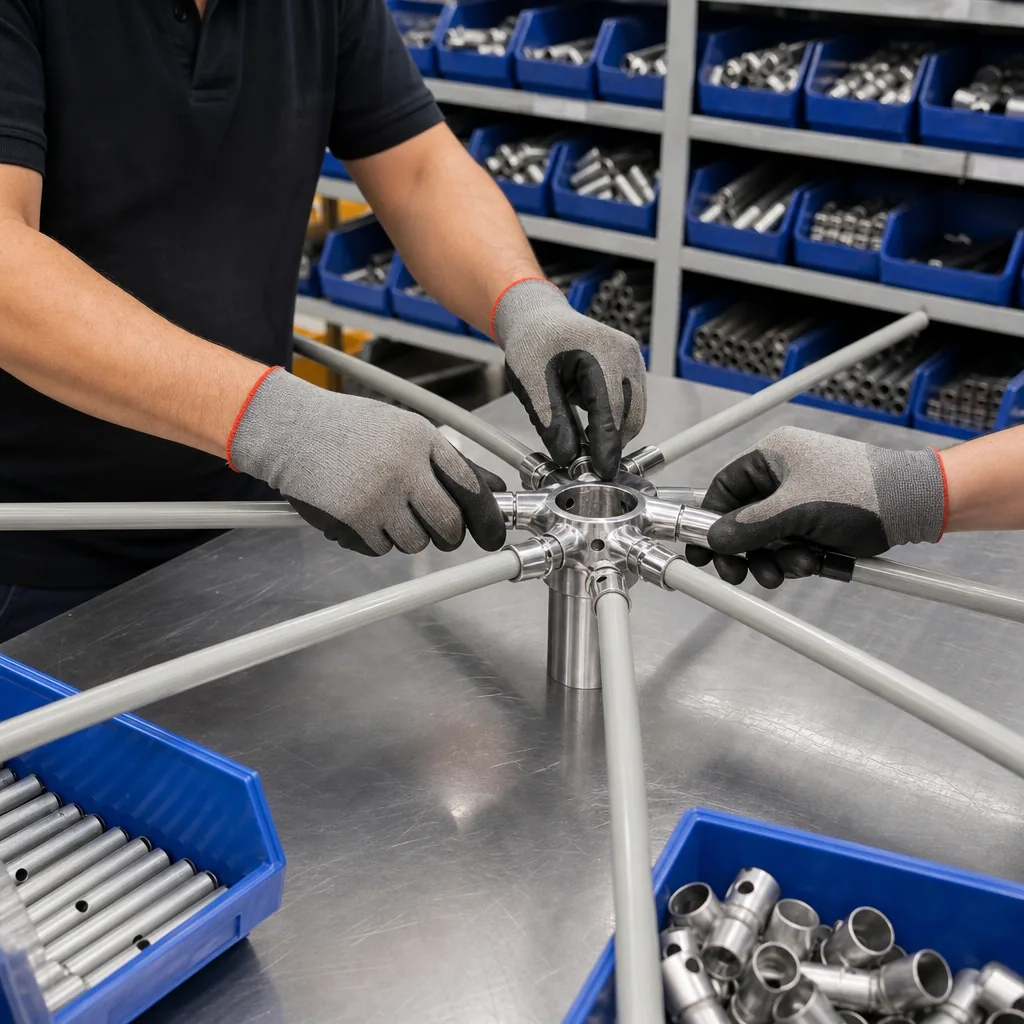
When custom umbrella orders go wrong, the root cause is often upstream: fabric shade drift, rib hardness out of spec, shaft plating that fails salt spray, or cartons that collapse in transit. In our Songxia production lines, umbrella factory incoming QC starts before cutting and assembly, with batch checks on pongee, frames, handles, and packing parts so defects are stopped at the warehouse door instead of showing up in final inspection or at the destination port.
Why Incoming QC Comes Before AQL Final Inspection
AQL 2.5 final inspection is a shipment gate, not a repair tool for weak umbrella factory incoming QC. Once defects are found after cutting, sewing, frame assembly, and packing, the loss is no longer one bad component. Bad steel tubes, cracked fiberglass ribs, off-shade 190T pongee, or sticky auto-open springs can trigger canopy scrap, disassembly labor, line stoppage, and partial remakes of 3,000 to 5,000 units. That is why umbrella material inspection has to happen before production release. For pongee fabric inspection, the factory should confirm color against the approved Pantone or lab dip, verify GSM and yarn consistency, and use roll-by-roll light inspection to catch weft bars, coating streaks, and shade variation before cutting markers are locked. The same rule applies to umbrella frame inspection: if runner tolerance drifts on 21 inch or 23 inch folding frames, open-close cycle failures surface only after labor is already sunk and the delivery schedule is exposed.
For OEM umbrella quality control, early checks protect margin, lead time, and claim risk in a way final inspection cannot. Incoming frame inspection should verify rib straightness, notch and runner fit, shaft wall thickness, spring force, plating quality, and corrosion risk on steel parts, especially for auto-open and auto-open-close frames. Transparent POE, PVC, or EVA canopies need a separate incoming standard for haze, odor, cold-crack behavior, and weld consistency because those defects do not behave like woven-fabric faults. Quarantining doubtful lots before mass production reduces rework, helps avoid missed vessel cutoffs, and lowers post-shipment claims on broken 8K compact frames or repeat-order shade mismatch. On OEM or ODM orders with mixed colors, low MOQs, or 25 to 35 day lead times, one unstable incoming lot can push an FOB booking or force expensive DDP air recovery. Final AQL 2.5 confirms lot status; umbrella factory incoming QC is what prevents unstable materials from reaching the line in the first place.
Fabric Checks for Pongee, Coatings, and Color Lots
Lot control is the first pass in umbrella factory incoming QC because shade variation is inexpensive to stop at receiving and expensive to absorb after cutting and sewing. Treat 190T and 210T pongee as separate purchase specs, not interchangeable substitutes. A 210T canopy fabric should show tighter warp and weft yarn density, better print stability, and higher GSM than low-grade 190T, which is more likely to split or distort at stretcher-tip stress points. At receiving, match every roll label to the PO and approved swatch or lab dip: supplier name, batch code, color number, coating type, finished width, meterage, and roll ID. Then segregate rolls by lot, color, and face direction before release to cutting. Do not send mixed lots to the cutting table; even a slight half-shade difference becomes obvious across 8K or 16K canopy panels. During umbrella material inspection, check both face and back of each roll for weaving bars, slubs, broken picks, pin holes, oil marks, skew, coating streaks, edge damage, and contamination. On white or light colors, tighten acceptance because defects will telegraph through screen printing or sublimation. For OEM umbrella quality control, disciplined roll labeling and lot segregation reduce scrap risk before any fabric reaches production.
Pongee fabric inspection needs measured data, not visual approval under warehouse lighting. For 190T and 210T pongee, verify finished width against the purchase spec, count warp and weft density, and confirm GSM from sample cuts so underweight fabric does not wrinkle after heat-transfer printing or lose canopy drape. Check water repellency with a spray test or hydro test after the finish has cured, especially on black and navy Teflon-finished goods where weak chemistry can look acceptable at first glance. If the order requires UV protection, collect UPF 50+ test data by lot and spot-check incoming rolls because coating pickup can vary across the roll with tenter speed. Hold fabric to AQL 2.5 as the baseline for umbrella factory incoming QC, then tighten major-defect limits for retail programs or large solid-color prints. Confirm color against the approved Pantone, lab dip, or swatch card in a light box and again in daylight to catch metamerism, tie-strap mismatch, or off-shade sleeve fabric. Quarantine any roll showing tackiness, powdering, fisheyes, calender marks, lint, gloss variation, crocking, coating odor, or backside contamination; those defects usually return later as blocking, offset marks, poor ink laydown, or canopy opening problems.
Frame and Mechanism Checks Before Assembly
Most preventable frame failures are visible at receiving, so umbrella factory incoming QC should measure every frame type before assembly instead of relying on a visual pass alone. Start with rib material, because fiberglass and steel fail in different ways. Fiberglass ribs should flex and return without white stress marks, splitting, or cracks at the joints. Steel ribs need consistent wall thickness, clean stamping at notch and stretcher holes, and burr-free edges so they do not cut fabric or create early fracture points. Structure matters: a 23-inch 8K promotional frame can accept lower-cost steel more safely than a 27-inch golf frame, while 10K and 16K layouts expose uneven rib hardness faster through poor tracking and uneven opening. Shaft checks should confirm straightness, outer diameter, top-notch alignment, and rivet spacing before release to production. On folding frames, add tube nesting and extension-play checks, because excess play will bind the runner and distort canopy shape even when sewing is correct. A disciplined umbrella frame inspection at receiving prevents labor loss later, when a bad frame has already been fitted with canopy and trims.
Mechanism defects are usually more expensive than fabric defects because they appear after assembly labor has been added, so OEM umbrella quality control should sample runner and spring performance at incoming stage under AQL 2.5. Runner fit must slide smoothly with no side shake, but it also cannot drag under load or after wet testing. On manual, auto-open, and auto-open-close frames, check spring force consistency, latch engagement, and release-button travel on sampled cartons. If spring force is too high, the runner slams into the stop and reduces cycle life; if too low, a 21-inch compact or 30-inch golf frame may stall half-open. Inspect plating on caps, ferrules, and steel joints for even coverage, especially at bends and edges where exposed base metal starts rust first. Anti-rust treatment must cover internal springs and steel ribs, not only visible parts; mixed-treatment lots should be rejected at receiving, not sorted on the line. Double-canopy windproof frames need a separate umbrella material inspection standard because upper and lower rib geometry changes the failure points. Check connector strength, spreader angle, vent-gap alignment, and moisture-prone plated areas more closely, then match pongee fabric inspection to the true frame arc on 27-inch and 30-inch vented models so the vent panel fits the frame, not just the drawing.
Handles, Tips, Ferrules, and Packaging Materials
Most avoidable defects start with trim, so umbrella factory incoming QC should stop bad handles before assembly adds labor cost. For ABS and PP handles, inspectors should check molding flash, sink marks around logo recesses, short-shot fill at grip edges, and visible gate scars at the cut point. Color consistency should be verified lot to lot in a standard light box against the approved swatch, with tighter attention on white, navy, and custom Pantone programs where retail color drift shows immediately. Soft-touch coatings need a rub test and tape adhesion check to confirm cure; weak coating systems can turn tacky after a few weeks in a hot container. Wood handles need moisture control before lacquered parts enter production, because excess moisture can cause haze, fine cracking, and finish failure after packing. Umbrella material inspection should also sign off grip texture, gloss level, and parting-line cleanup at incoming stage, since rework becomes slow and expensive once the handle is glued or riveted to the shaft. For OEM umbrella quality control, the decision rule is straightforward: reject cosmetic and fit defects while parts are still loose.
Tips, ferrules, and packaging need the same discipline because poor tolerances here create visible lean, crooked presentation, and transit damage even when umbrella frame inspection passes. Incoming checks should confirm top-tip fit at the crown, end-tip retention on each rib end, ferrule bore size against shaft diameter, and ferrule alignment so a stick umbrella stands straight. Metal ferrules should be sampled for plating defects, burrs, oxidation, dirty threads, and seating depth; plastic tips should be checked for brittleness, weld lines, and color match to the approved handle set. On 23 inch and 27 inch auto-open or auto-open-close styles, shallow ferrule seating can interfere with spring travel or leave a visible gap, so it needs specific verification. Packaging should be checked to AQL 2.5 before mass packing: verify polybag thickness, vent-hole position, suffocation warning text, barcode scan readability, insert card artwork version, export carton markings, and country-of-origin labeling. Export cartons also need board grade confirmation plus compression or burst strength review, internal dimension checks, and pack-fit verification, because oversize cartons allow movement in transit and weak cartons can collapse under stacking load on FOB or DDP shipments.
Documentation Buyers Should Request from the Factory
Request three linked records for every purchase order: the incoming QC report by material lot, the supplier material certificate, and the approved sample reference tied to the PO. If the umbrella factory incoming QC file cannot connect those three items to the same lot number and production order, traceability is weak and repeat-order control will drift. The incoming report should list canopy, frame, handle, and accessory item codes separately, with quantity received, quantity inspected, defect count, and final disposition: accepted, reworked, or rejected. For pongee fabric inspection, require the actual construction, such as 190T or 210T pongee, plus width, weight, yarn density, coating consistency, color delta against the approved Pantone, and water-repellency results. For umbrella frame inspection, the file should show the exact build, such as fiberglass ribs with a steel shaft or a full-steel economy frame, along with 8K or 10K rib count, manual or auto-open mechanism, and opening and closing test results. That level of detail does two jobs: it verifies the current lot before cutting and locks the standard for the next order so the factory is working from a recorded baseline, not inspector memory.
Ask for test data, not broad pass statements. Fabric test reports should cover spray or hydrostatic performance, seam slippage, colorfastness, and UV results when the order claims UPF 50+ or uses a Teflon coating. For POE, PVC, or EVA canopies, require film thickness and odor records, because transparent film can look acceptable at receiving and still yellow or become brittle after shipment. On metal and molded parts, umbrella material inspection should include shaft wall thickness, plating adhesion on nickel or black frames, ferrule fit, handle pull test, and salt-spray results when the shipment is intended for humid markets. If the factory reports AQL 2.5, the file should also show sample size, acceptance number, defect photos, and the basis for pass or rejection, with real defects such as pinholes, coating streaks, broken rib tips, loose top notches, off-center print registration, or shade variation between lots.
Corrective action records are what turn basic receiving checks into OEM umbrella quality control. A usable CAPA should name the supplier, define the root cause, show containment for current stock, and specify preventive action for the next lot, such as changing a fiberglass rib source, tightening handle bore tolerance, or rejecting a 210T pongee batch before cutting. Pair that record with approved sample photos and a physical spec sheet covering open diameter, closed length, canopy panel shape, printing method, and target weight for 21 inch, 23 inch, 27 inch, or 30 inch styles. These records also support FOB and DDP shipment planning: they show early whether the issue is a short re-inspection delay of a few days or a full material replacement that can move ship date by a week or more. For repeat orders, they give the factory a PO-based acceptance standard that can be reused lot by lot, which reduces quality drift and lowers the buyer's risk on replenishment orders.
Frequently Asked Questions
When should incoming QC be completed for a custom umbrella order?
It should be completed before cutting, printing, or frame assembly begins. If a fabric or frame lot fails, replacement sourcing can affect the production lead time.
Can buyers ask for incoming QC results before mass production?
Yes. For OEM orders, buyers can request fabric inspection records, frame test results, color-lot approval, and photos before PP approval or bulk production release.
What fabric tests should be completed before cutting pongee for a bulk umbrella order?
For incoming pongee, buyers typically require color match to the approved swatch, width and GSM check, coating consistency, water repellency, and visual defect inspection under a 4-point system. A factory should also verify shade variation between rolls and hold any roll with major weaving defects before cutting starts.
What frame and metal-part tolerances matter most at incoming QC stage?
The practical checkpoints are shaft straightness, tube wall thickness, rib length consistency, spring function, plating finish, and rust risk after basic salt-spray review if specified. For OEM orders, many buyers ask QC to separate critical defects like cracked joints or sharp burrs from minor cosmetic marks using an AQL 2.5 sampling plan.
How much incoming material should be checked before mass production on a repeat umbrella program?
On repeat programs, many factories still inspect at least 10% of fabric rolls and use AQL-based sampling for frames, handles, tips, and cartons from each lot. If a supplier had recent failures, buyers often increase inspection to tightened sampling or 100% screening on the affected component until the next 2 to 3 lots are stable.
Looking to Launch Your Custom Umbrella Line?
ZheBrella is a Zhejiang-based OEM/ODM umbrella manufacturer with 17 years of export experience. Free design, low MOQ from 100 pieces, windproof construction, full-color print.
Get Free Quote Now »People Also Search For
Related Articles
Incoming Material Inspection for Bulk Umbrella Orders
Learn which fabric, frame, coating, and packaging checks to run before umbrella production to reduce defects, delays, an...
Read More »Incoming Material Inspection Standards for Umbrella OEMs
Learn which incoming checks on ribs, fabric, hardware, and mechanisms prevent production defects, failed inspections, an...
Read More »
Umbrella Frame Assembly Line: Rivets, Jigs, and Tolerance Control
Learn how umbrella frames are assembled with rivets, jigs, and tolerance checks so bulk OEM orders open smoothly and pas...
Read More »