Incoming Material Inspection for Bulk Umbrella Orders
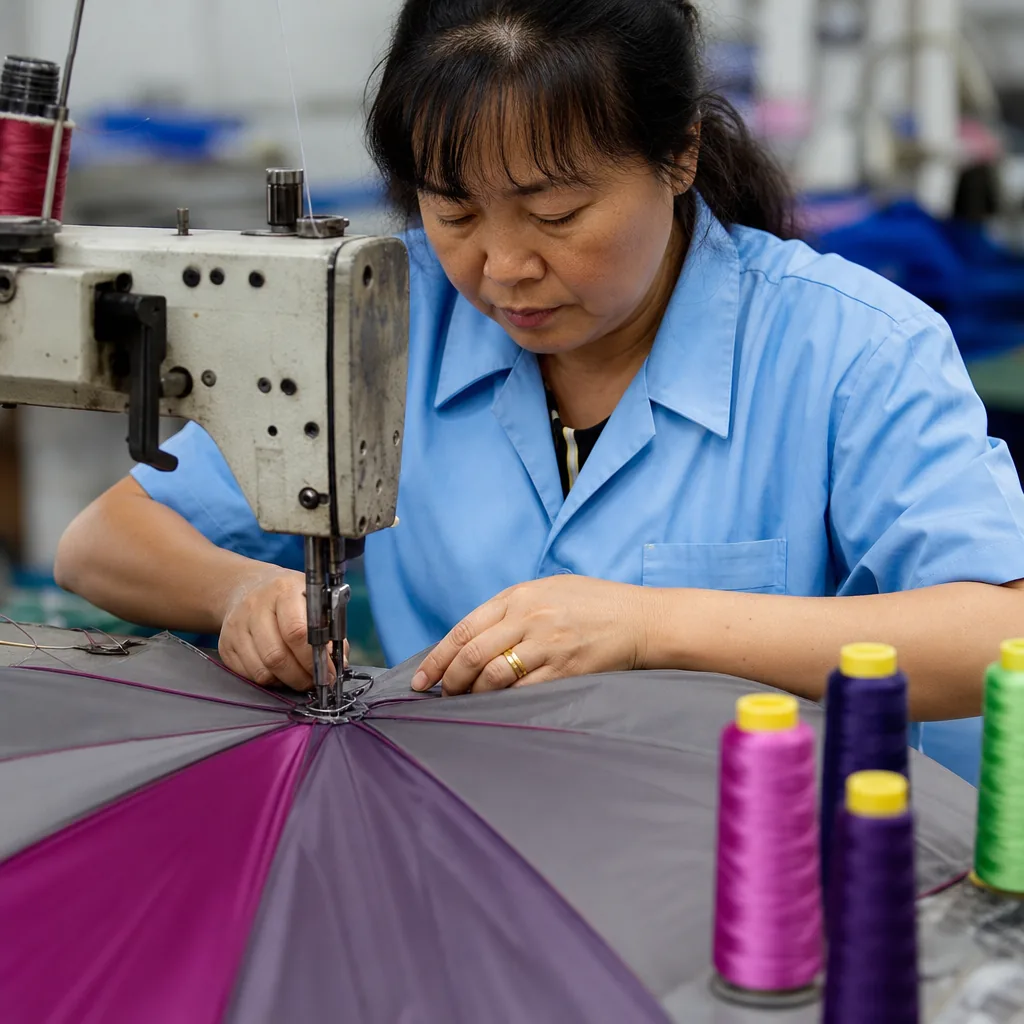
On bulk OEM orders, most umbrella defects are decided before the first panel is cut: a fabric roll with uneven coating, a batch of ribs with weak tempering, or cartons that fail compression can turn into rework, missed vessel dates, and payment disputes. In our Songxia factory, incoming material inspection umbrellas start with practical checks on fabric, frames, coatings, handles, and packaging against the approved sample and PO specs, so problems are isolated before production absorbs them.
Why Incoming Inspection Matters Before Cutting Starts
The cheapest defect to fix is the one found before the cutting table is loaded. For bulk umbrella production, incoming material inspection umbrellas work starts with matching every fabric roll, rib bundle, shaft, handle, runner, tip, sleeve fabric, label, and carton against the buyer-approved sample and PO. A 190T pongee that is half a shade darker may look acceptable under warehouse light, but after 5,000 panels are cut and mixed across 23" auto-open umbrellas, the finished canopies will show obvious panel-to-panel color variation. We check fabric lot numbers, width, GSM, yarn density, water repellency, coating side, and print readiness before release. For dyed pongee and polyester, we use a light box and gray scale standard; for POE, PVC, and EVA, we check transparency, odor, thickness, cold-crack behavior, and blocking. If the approved sample has Teflon coating or UPF 50+ treatment, the bulk roll must prove it before one panel is cut.
Umbrella frame inspection is just as important because a weak rib set usually fails after sewing value has already been added. Steel ribs, fiberglass ribs, aluminum shafts, springs, stretchers, notches, and safety runners all need dimensional and functional checks against the approved structure: 8K, 10K, 16K, 21", 23", 27", or 30". We open-close sample frames from each lot, measure rib length and shaft diameter, check rivet tightness, test runner locking force, and separate rusty or oily components before they reach assembly. For windproof models, especially double-canopy vented golf umbrellas, the frame must match the claimed rating, whether that is ordinary rain use or a tested 50+ mph wind-tunnel requirement. A nice canopy cannot rescue a frame with soft springs or mismatched stretchers. Our standard practice at ZheBrella is to quarantine any frame lot that does not match the sealed sample, because reworking assembled umbrellas is slower than replacing bad material at the gate.
Early incoming checks also protect MOQ planning and lead time. If a customer orders 3,000 pieces at MOQ with 210T navy pongee, black fiberglass ribs, EVA straight handles, and custom printed cartons, one rejected material lot can change the whole schedule. Finding the issue on day 2 still leaves time to re-dye fabric, replace a handle batch, or correct carton dimensions before mass sewing and packing begin; finding it on day 18 can create missed vessel dates, air-freight pressure, or DDP delivery penalties. This is where OEM umbrella quality control must connect purchasing, production, and inspection instead of treating QC as a final AQL 2.5 checkpoint. Incoming material inspection umbrellas procedures should confirm not only physical quality but also commercial accuracy: logo color, carton marks, barcode placement, polybag warning text, and packing ratio. Once cutting starts, every small mismatch becomes multiplied by thousands of umbrellas, so the factory has to stop bad inputs before they become finished inventory.
Fabric Checks for Pongee, Polyester, and Coated Canopies
Fabric mistakes are expensive because one bad roll can become 600 to 900 defective panels before anyone notices at sewing. For incoming material inspection umbrellas, we first verify roll width against the cutting marker, normally 57/58 inches for 190T and 210T pongee, with tolerance kept within ±1 cm unless the order sheet states otherwise. A narrow roll forces marker adjustment and creates panel shortages; an over-wide roll is less serious but still affects yield calculation. We sample at least the first, middle, and last 3 meters of selected rolls, checking shade lot consistency under D65 light and comparing against the approved lab dip or signed production swatch. For solid navy, black, and dark green, I also ask QC to check under warm light because metamerism can cause retail returns even when the roll passes in the cutting room.
GSM and yarn density tell us whether the supplier delivered the fabric we bought, not just fabric that looks similar. Standard 190T pongee is usually lighter and softer, suitable for promotional 21-inch and 23-inch umbrellas, while 210T pongee gives a tighter hand, better print definition, and better resistance to seam fraying on golf or retail umbrellas. During umbrella fabric inspection, we cut weighed samples, confirm GSM against the purchase spec, and do a quick density check with a pick glass when the hand feel seems off. Polyester taffeta needs extra attention because cheap lots can feel crisp at arrival but crack after coating or heat-transfer printing. Coated canopy rolls, including silver UV, black glue, or Teflon-treated fabric, must be checked for streaks, pinholes, uneven back coating, and roll-edge contamination before bulk umbrella production starts.
Water repellency is checked before cutting, not after the finished umbrella leaks at final inspection. Our standard practice at ZheBrella is to run a spray test on sampled fabric and record whether water beads and rolls off instead of wetting the yarn surface; for premium orders we can send samples for AATCC-style testing. UPF 50+ claims must be supported by coating confirmation, supplier test reports, and preferably third-party lab data when the buyer will print sun-protection claims on hangtags. Print surface defects are another frequent failure point: oil marks, crease lines, silicone spots, coating dust, and uneven tension can all cause missing ink in screen print, heat transfer, or sublimation. In OEM umbrella quality control, fabric approval is therefore tied to the print method, not just the canopy color, because a roll that is acceptable for plain umbrellas may fail badly on a logo-heavy order.
Frame and Hardware Checks Before Assembly
Frame defects are cheapest to catch before sewing ever starts, so incoming material inspection umbrellas work should begin with ribs, stretchers, shafts, and runners laid out by model and lot number. For a 23-inch straight umbrella, we normally verify the rib count first—8K, 10K, or 16K—then check whether the approved BOM calls for steel, fiberglass, or a mixed structure such as fiberglass ribs with a steel shaft. Steel ribs should be straight, without twist, burrs, cracked lacquer, or weak rivet holes. Fiberglass ribs need a bend test because poor resin content creates whitening, splintering, or memory loss after flexing. Shaft diameter is measured with calipers, not guessed by eye; even a 0.2 mm undersize shaft can create wobble at the runner and poor closing tension. For OEM umbrella quality control, I also compare rib length and arc against the golden sample, because a small mismatch will show later as a loose or wrinkled canopy after assembly.
Runner fit and spring action deserve separate attention because they decide how the umbrella feels in the buyer’s hand. The runner should slide smoothly without scraping, jamming, or excessive side play, and the notch engagement must lock cleanly after repeated open-close cycles. On manual, auto-open, and auto-open-close frames, we test spring return, button force, and latch consistency before the canopy is attached; once fabric is sewn on, a sticky runner becomes a rework problem instead of a supplier claim. Rivets should be centered and properly mushroomed, not sharp, loose, or over-pressed into the rib channel. Ferrules, tips, caps, top notches, and safety ends are checked for correct shape, hole position, and pull-off strength. In bulk umbrella production, one carton of mixed ferrules or wrong rib tips can stop a sewing line for half a day, so hardware kits must be counted and matched to the exact frame model before release.
Plating and corrosion resistance are especially important for coastal, resort, and marine promotional orders, where umbrellas sit near salt air, wet towels, pool chemicals, and damp storage rooms. During umbrella frame inspection, plated steel shafts, ribs, rivets, and springs should be checked for coating coverage, discoloration, pinholes, and exposed edges around cut ends or punched holes. A practical factory check is to measure plating thickness on incoming metal parts where specified, then run a salt-spray or humidity test for higher-risk orders; cheap bright plating can look acceptable on day one and show red rust after one week in seaside use. For black electroplated or powder-coated hardware, adhesion is checked by tape pull or light crosshatch testing. Our standard practice at ZheBrella is to quarantine any frame lot with inconsistent plating, weak springs, or loose rivets until the supplier provides replacement parts, because incoming material inspection umbrellas failures at this stage directly affect safety, warranty claims, and final AQL 2.5 pass rates.
Packaging and Accessory Verification
Packaging is not decoration; it is part of the product specification and must be checked before bulk umbrella production starts. During incoming material inspection umbrellas, I want the sleeve fabric matched against the approved sample first: same 190T pongee, PVC, EVA, or Oxford material, same drawstring, snap, zipper, piping, and seam allowance. A sleeve that is 8 mm too narrow can slow final packing and damage a wet umbrella’s canopy when workers force it in. Hangtags, woven labels, care labels, warning labels, and brand stickers also need verification against the artwork file, not just the buyer’s photo. We check color, logo position, stitching location, legal language, country-of-origin marking, fiber content, and whether the label survives normal handling without fraying or peeling. For OEM umbrella quality control, this is where many avoidable claims begin: a good 23-inch auto-open umbrella can still fail retail intake if the UPC hangtag is wrong or the warning label is missing.
Polybags and master cartons deserve the same discipline as canopy fabric and ribs. Each polybag should be checked for thickness, vent holes if required, suffocation warning print, adhesive strength, size fit, and whether the umbrella can be inserted without bending the ferrule or handle. For retail programs, barcode accuracy must be scanned using the actual EAN, UPC, FNSKU, or carton code, not visually approved from a PDF. We verify inner carton quantity, master carton quantity, gross weight, net weight, carton dimensions, and pack-out direction because a 1 cm carton change can affect container loading and DDP freight cost. Master carton strength should match the routing: common export cartons use 5-ply corrugated board, but club store or e-commerce drop-test requirements may need stronger board, edge crush resistance, or reinforced corners. Our standard practice at ZheBrella is to approve carton print and packing method before the first sewing line is released, not after 10,000 units are finished.
Packaging must be locked before mass production because FOB, DDP, and retail compliance punish different mistakes. Under FOB, the buyer may control freight, but incorrect carton marks, oversized cartons, or weak packaging still create warehouse rejection and chargebacks. Under DDP, the factory or exporter carries the landed-cost risk, so pack-out dimensions directly affect CBM, container utilization, courier surcharges, and final margin. Retail chains are stricter: carton labels must face the correct side, barcodes must scan at receiving speed, polybags must meet local safety language, and master cartons must survive stacking without crushing handles or deforming ribs. This is why incoming material inspection umbrellas should include packaging and accessory verification alongside umbrella fabric inspection and umbrella frame inspection. AQL 2.5 final inspection can catch visible defects, but it cannot fix 500 cartons printed with the wrong PO number without rework, delay, and extra handling damage.
How to Document Results for Buyer Approval
Buyer approval starts with evidence, not a summary line that says “checked OK.” For incoming material inspection umbrellas, the report should tie every photo and measurement to a specific PO, supplier lot, carton number, and inspection date. I want the first page to show what was received: canopy fabric roll numbers, frame component batches, handle or tip cartons, and the sample size pulled from each lot. For umbrella fabric inspection, the photos need scale references, defect close-ups, and full-roll or full-panel context so a buyer can see shade variation, coating pinholes, weave flaws, oil stains, or print misregistration. For umbrella frame inspection, record rib length, wire diameter, ferrule fit, opening force, plating appearance, and any broken or deformed parts. If the buyer is approving OEM umbrella quality control records, the file should make it obvious which defects are cosmetic, which are functional, and which are safety-related.
The acceptance decision has to be written in material-specific language, not just “pass” or “fail.” Finished goods can be judged against AQL 2.5, but incoming checks are usually stricter and narrower: fabric gets judged by roll width, GSM, color fastness references, coating performance, and cutting yield; steel or fiberglass parts get judged by diameter tolerance, straightness, corrosion spots, and assembly fit; sewing trims and plastic parts get judged by dimension, brittleness, odor, and contamination. In bulk umbrella production, I expect the report to list the defect code, the observed quantity, the acceptance rule used, and the disposition: accept, sort, rework, return, or quarantine pending buyer decision. If the buyer asks for incoming material inspection umbrellas evidence, this is where the report proves that the factory did not mix one bad lot into a whole order.
The most useful approval package is a controlled PDF set with the raw inspection sheet, annotated photos, and a traceability table that can be matched back to warehouse labels. That table should show supplier name, material spec, lot number, received quantity, sampled quantity, defective quantity, and the final decision signed by QC and production. If the issue is borderline, add a short nonconformance note explaining why the lot was held, what corrective action was requested, and whether replacement material or partial release was authorized. Buyers do not want theater; they want a record that helps them decide whether to release fabric for cutting or stop the order before sewing starts. In practice, that discipline is what keeps incoming material inspection umbrellas from becoming a paper exercise that only looks good after the shipment is already late.
Frequently Asked Questions
Is incoming material inspection required if the factory already made a good sample?
Yes. Bulk fabric, ribs, handles, and packaging often come from different production lots than the approved sample. Incoming inspection confirms the mass-production materials match the approved specifications.
What should buyers ask to see before mass production begins?
Ask for fabric roll inspection results, frame component measurements, coating or UPF reports where applicable, and photos of approved packaging materials. These records reduce disputes if defects appear later.
Should incoming material inspection be done before logo printing starts?
Yes. Fabric shade, coating performance, frame dimensions, and handle color should be approved before printing because reprinting after a material rejection adds both cost and delay. On OEM orders, this check is typically completed within 1-2 days after raw materials arrive.
What sample size is practical for incoming inspection on a 10,000-piece umbrella order?
Many buyers use an AQL-based sample from each incoming lot rather than checking every piece. For key materials like canopy fabric, ribs, shafts, and handles, factories often inspect 3%-5% of the lot for appearance and dimensions, then run functional tests on a smaller retained sample.
Which incoming defects are most likely to cause shipment claims later?
Common claim drivers are fabric color mismatch, weak water-repellent coating, rib wire diameter below spec, shaft plating rust risk, and incorrect carton markings. These issues often pass unnoticed at receipt but lead to opening failures, leakage, or destination warehouse disputes after shipment.
Looking to Launch Your Custom Umbrella Line?
ZheBrella is a Zhejiang-based OEM/ODM umbrella manufacturer with 17 years of export experience. Free design, low MOQ from 100 pieces, windproof construction, full-color print.
Get Free Quote Now »People Also Search For
Related Articles
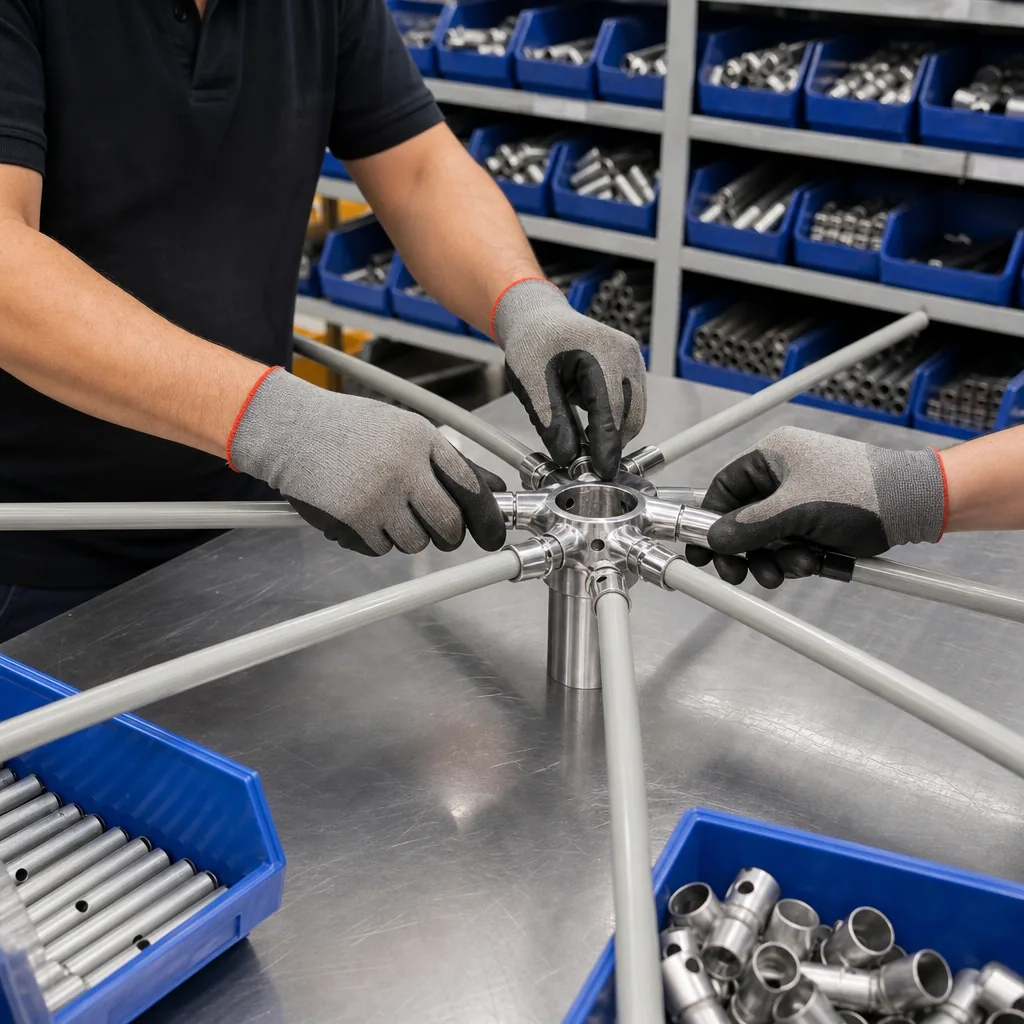
Umbrella Factory Incoming QC for Fabric, Frames, and Parts
Build an incoming QC plan for pongee fabric, ribs, shafts, handles, and cartons before mass production to reduce defects...
Read More »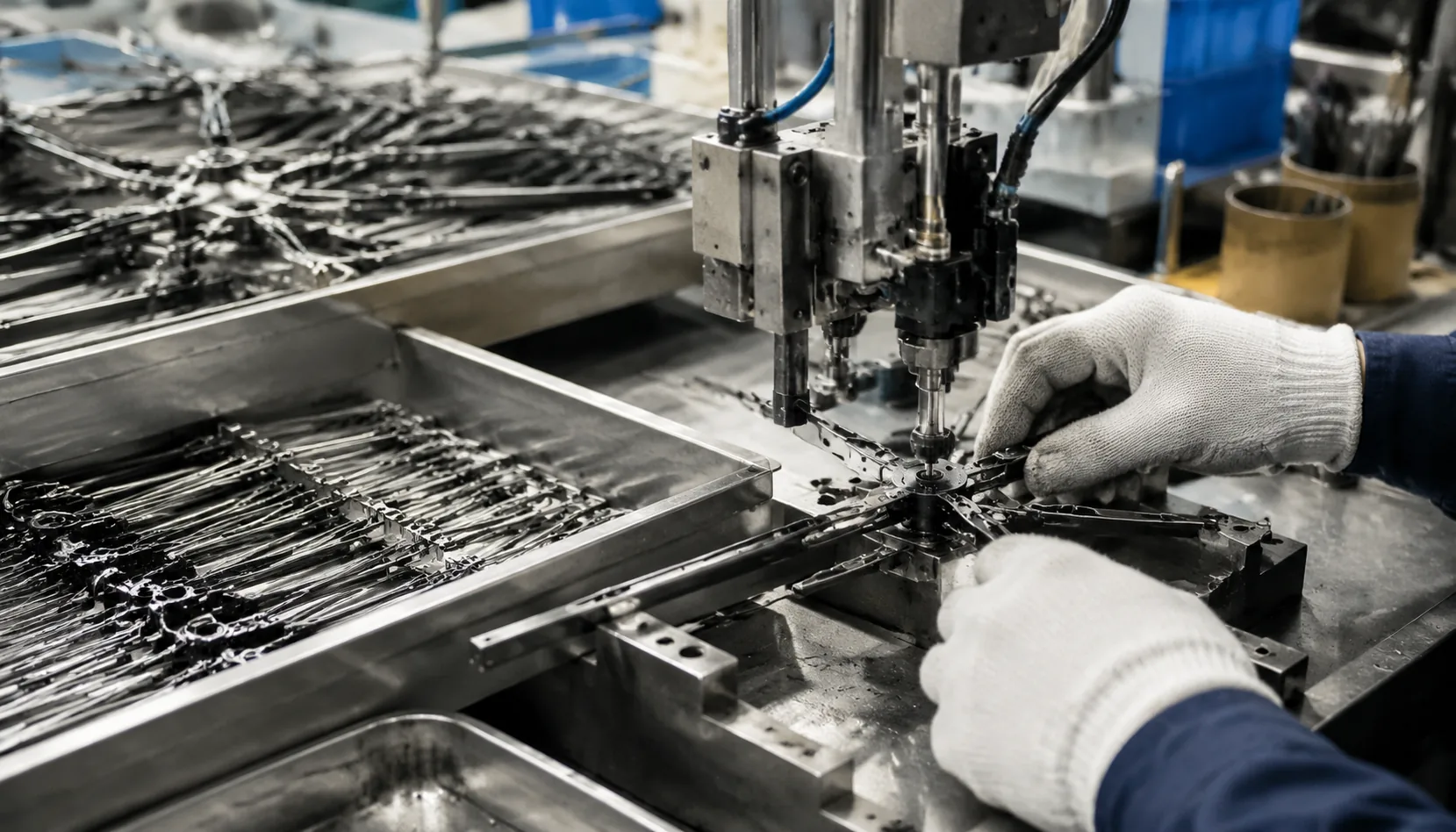
Umbrella Frame Riveting Process Control for Bulk Orders
See how rivet size, hole alignment, and pull-force checks improve umbrella frame durability across fiberglass, steel, 8K...
Read More »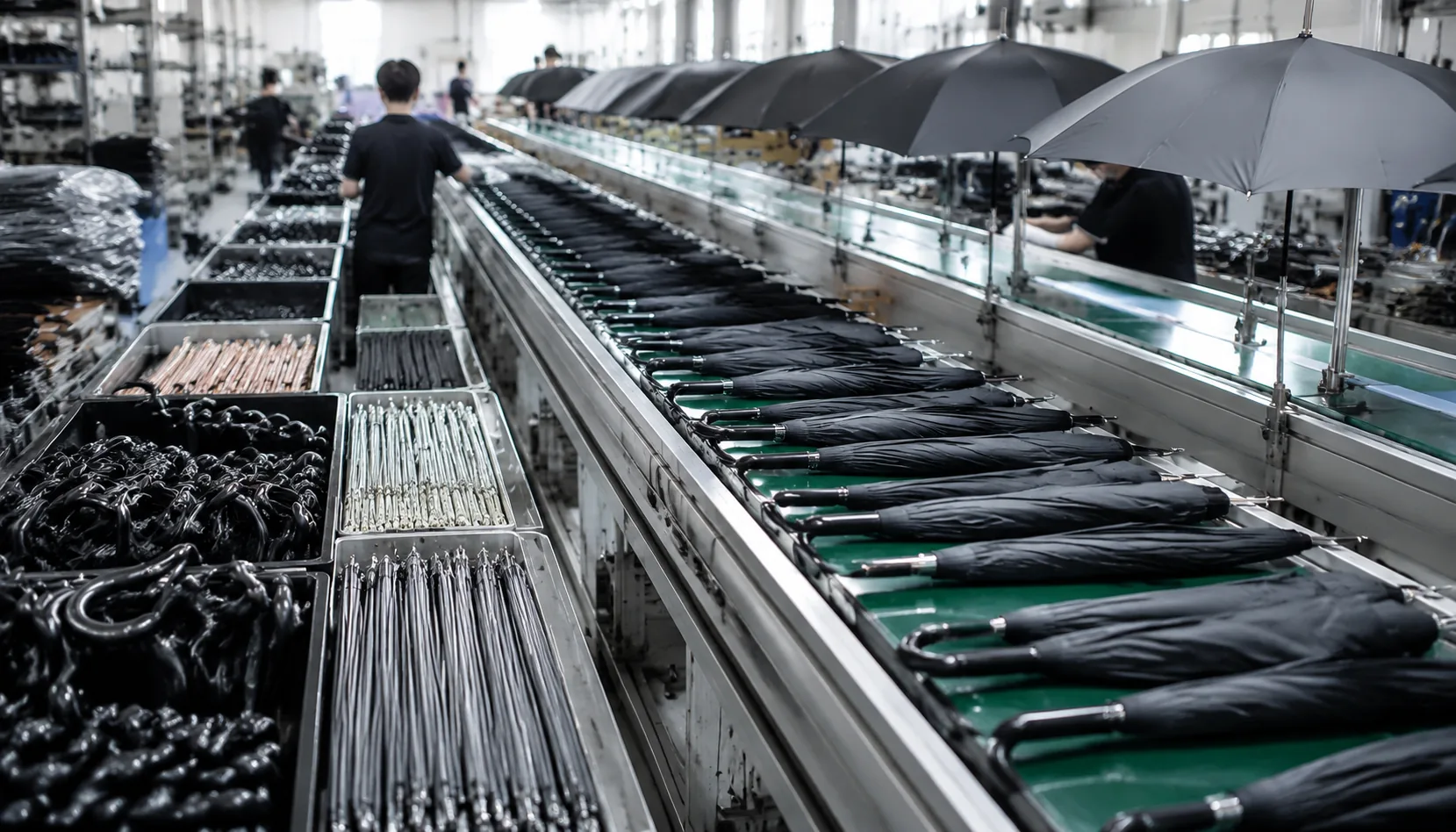
Umbrella Final Assembly Line Controls for Bulk OEM Orders
Improve bulk umbrella order consistency with final assembly controls for frame fit, auto-open function, canopy tension, ...
Read More »