In-Process Quality Gates for Custom Umbrella Manufacturing
Custom umbrella programs fail when defects are discovered too late—after panels are cut, frames are assembled, or cartons are already sealed. In Songxia, Shangyu, we build quality gates into each stage of production, from incoming materials to pre-pack audits, so issues in ribs, canopy fabric, coating, and opening mechanisms are caught early and corrected at the source through umbrella in-process quality control.
Incoming Material Quality Control Before Production
Incoming QC is where umbrella in-process quality control really starts, because a bad roll of fabric or a soft rib batch cannot be “fixed” at final inspection. For pongee canopy fabric, we check 190T or 210T yarn density, width, GSM, dye-lot shade against the approved lab dip, and any barré, oil stain, crease, or pinhole under a light table. Shade matching matters more than many buyers expect: if eight panels are cut from mixed lots, the finished 23" auto-open umbrella will show a checkerboard effect in daylight. For coated fabric, operators must confirm the coating side before cutting, especially with silver UV, black-out, Teflon-type water repellent, or PU layers; cutting upside down leads to poor rain shedding, wrong UPF 50+ performance, or visible dullness after sewing. Our standard practice at ZheBrella is to flag roll numbers before spreading so printing, cutting, and panel assembly stay within the same shade family.
Metal and frame parts get a separate incoming inspection because corrosion and dimensional drift are common hidden failures in OEM umbrella production QC. Steel ribs, stretchers, shafts, springs, ferrules, and tips are checked for plating thickness, rust spots, burrs, rivet-hole alignment, and salt-spray or humidity risk if the order is for coastal markets. Fiberglass ribs are checked for diameter, length tolerance, straightness, surface splinters, and recovery after bending; a 10K windproof frame with one undersized rib will twist unevenly in a 50+ mph gust test. For 8K, 10K, and 16K frames, we verify rib count, rib length, runner travel, notch fit, spring tension, and whether the shaft is manual, auto-open, or auto-open-close compatible. Handles are tested for color match, thread fit, logo position, pull strength, and odor, especially rubberized and EVA foam grips that can fail buyer chemical requirements.
Packaging is part of the umbrella manufacturing quality gates, not an afterthought, because crushed cartons create claims even when the umbrella itself passed. Incoming cartons are checked for paper grade, burst strength, flute type, size tolerance, printing accuracy, barcode readability, and dry storage condition; export cartons for FOB or DDP shipments usually need stronger five-ply board than domestic cartons. Polybags, sleeves, hang tags, care labels, silica gel, and inner boxes are matched against the packing instruction before mass production starts, since a wrong warning label can stop a retail delivery. For umbrella factory inspection records, we normally sample incoming lots under an AQL 2.5 umbrellas plan for major visual and functional defects, while critical safety or compliance items are treated with zero tolerance. Materials that fail IQC are quarantined with red tags, not parked beside the sewing line where someone can “use them first” under schedule pressure.
Frame and Mechanism Checks on the Assembly Line
On the assembly line, umbrella in-process quality control starts with the frame, not the canopy. If the rib riveting is sloppy, the whole umbrella will fail later under wind or repeated cycling. For OEM umbrella production QC, I check rivet head seating, hole alignment, washer compression, and whether each rib swings without grinding. Runner travel needs a consistent feel across the lot: too tight means the slider will stick after a few uses, too loose means the canopy tension will be uneven. Shaft straightness is not optional either; even a small bend creates an off-center open, poor closure, and premature wear at the top notch and spring area. These are the real umbrella manufacturing quality gates that separate a usable frame from one that only looks good in photos.
Manual umbrellas have the fewest moving parts but the highest dependence on clean assembly and user force, so the risk point is usually the runner and top spring interface. Auto-open models add a trigger system, so I watch the release button, spring preload, and whether the canopy snaps open fully without partial lock-up or rebound. Auto-open-close umbrellas are the most failure-prone in sample testing because they combine the opening spring, closing spring, and latch geometry in one mechanism; if one tolerance drifts, the button may jam or the shaft may not reset. At the umbrella factory inspection stage, we sample open-close cycles, usually after several dozen manual actuations on each checkpoint lot, to catch weak springs, twisted ribs, and inconsistent locking force before the batch moves forward.
For practical AQL 2.5 umbrellas inspection, the line team should separate cosmetic defects from functional defects and treat mechanism failures as hard rejects. A bent shaft, a rib that pops off its rivet, or a button that fails to release are not minor issues; they become returns in the field. The best umbrella manufacturing quality gates are simple and repeatable: check straightness against a fixed gauge, measure runner smoothness by hand feel and travel distance, and cycle a sample set from each carton or production lot. That is the core of umbrella in-process quality control on a custom program — catch frame instability before sewing, printing, and packing add cost to a bad mechanism.
Canopy Sewing and Printing Quality Gates
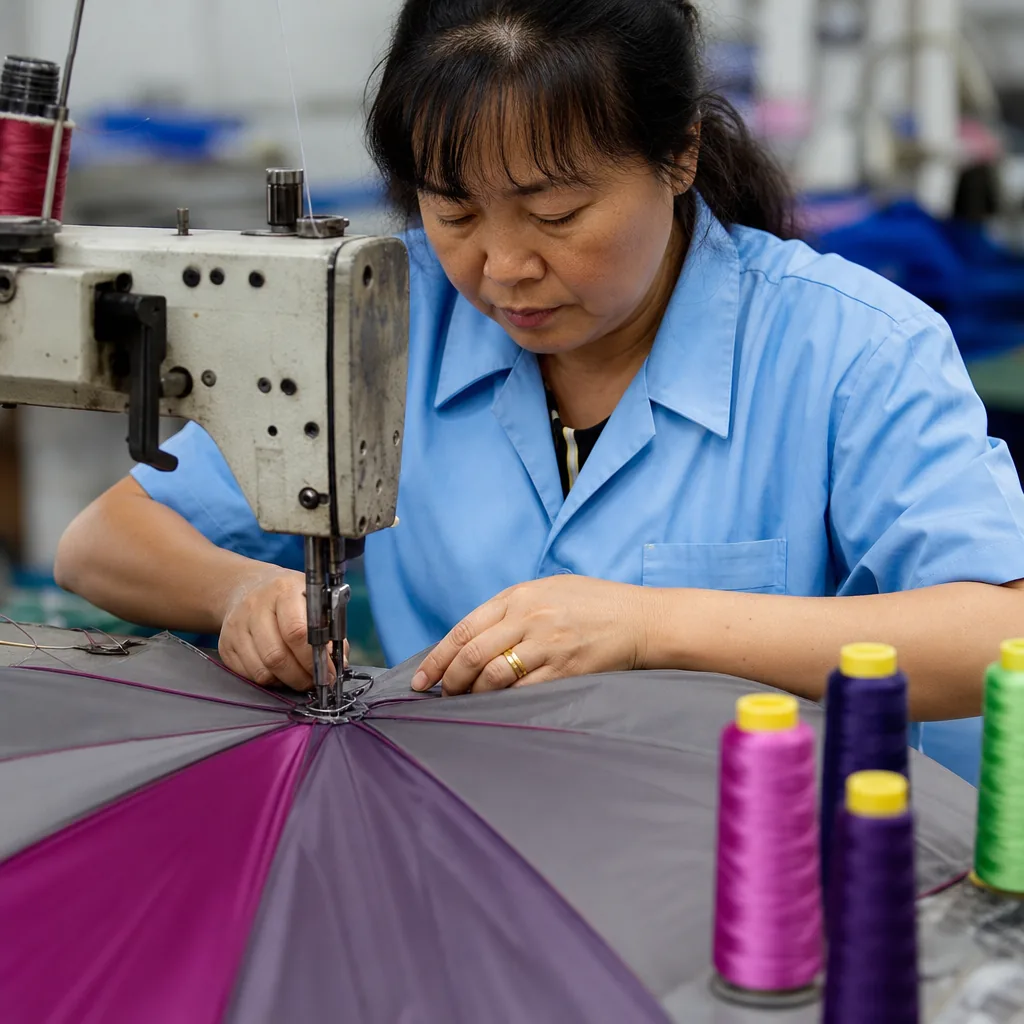
At the sewing table, the first gate is mechanical, not visual: stitch density, seam allowance, and panel registration have to stay within spec before anyone talks about print quality. For 190T or 210T pongee, I expect consistent stitch length, clean backtacks at the ribs, and seam allowance that does not wander enough to expose needle holes at the hem. In umbrella in-process quality control, that matters because a canopy can look flat on the bench and still fail once it is stretched over a frame; if the panels are off by even a few millimeters, the apex puckers, the tips pull unevenly, and the umbrella opens with visible skew.
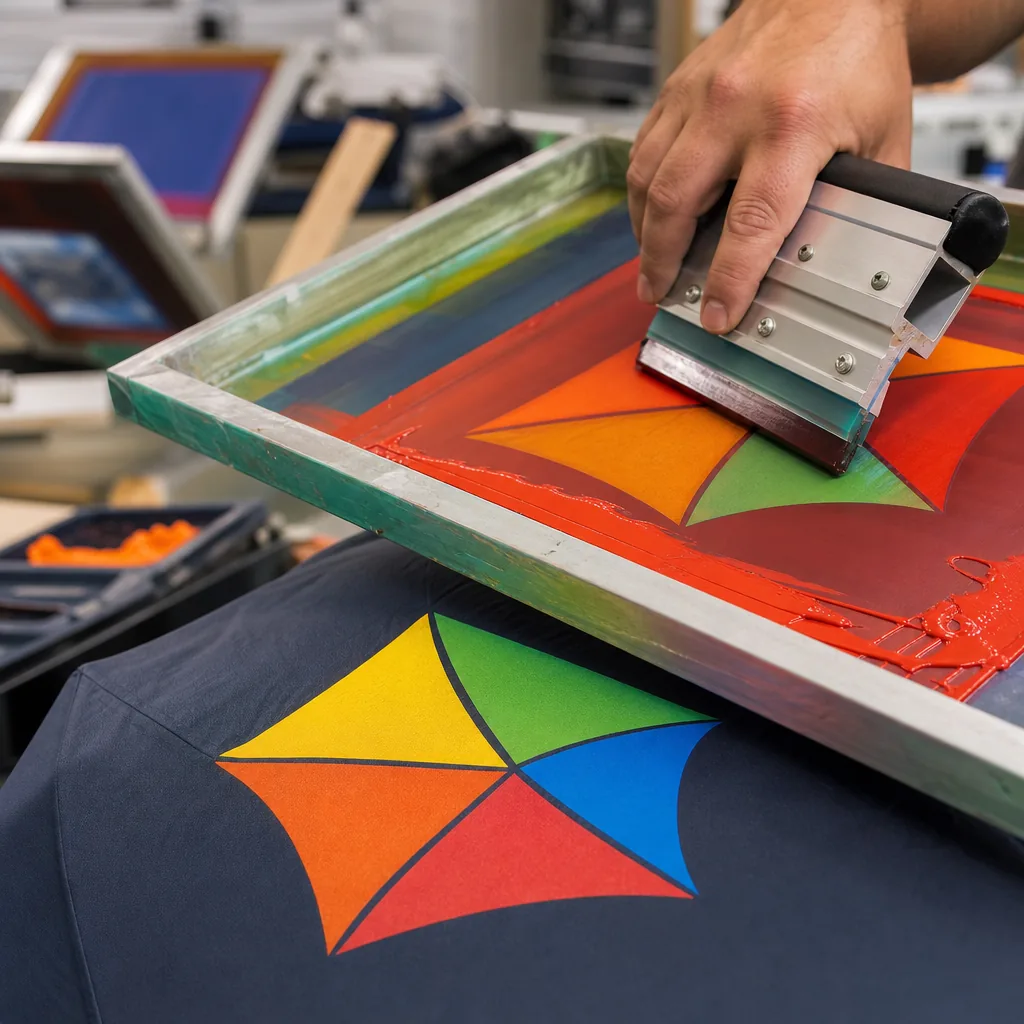
Logo placement is the next hard stop, especially on promotional orders where artwork must land in the same panel repeat on every unit. For OEM umbrella production QC, we check print-to-seam distance, panel symmetry, and registration against the cut pattern before the canopy goes to final assembly. With screen print, heat transfer, or sublimation on double-canopy windproof umbrellas, the print area can distort if the fabric was not relaxed properly before printing, so we verify color bleed, edge sharpness, and whether the ink has bridged into the seam line; that is where umbrella manufacturing quality gates save a lot of rework.
Coating damage is easy to miss and expensive to ignore. A water-repellent finish on 190T/210T pongee, or a UPF 50+ coated fabric, can be ruined by over-pressing, hot needles, or aggressive handling after printing, so we inspect for gloss spots, pinholes, and chalky transfer marks at the fold lines and around the logo area. Our standard umbrella factory inspection also includes a simple colorfastness-risk check: if the ink or coating rubs off on a white glove, the lot does not move forward. That is the practical side of AQL 2.5 umbrellas—catch the canopy problem before it becomes a customer claim, because once the frame is assembled, defects are slower and more costly to sort.
Pre-Pack Audits Before Carton Sealing
At the packing table, the final line checks are not cosmetic; they are the last chance to catch a bad umbrella before it gets sealed into a carton and shipped as a customer complaint. For umbrella in-process quality control, I want the operator to confirm open diameter against the spec sheet, verify rib count by counting full frame members, check canopy tension for wrinkles or loose panels, and test handle fixation so the shaft does not spin or pull under hand force. The same pass should confirm the hangtag is correct, the polybag is intact and properly inserted, the barcode scans and matches the SKU, and the pack-out quantity matches the carton plan without mixed sizes or colors.
These umbrella manufacturing quality gates work because many defects are invisible once cartons are closed. A canopy that is slightly off-center, a handle glued too shallow, or a barcode placed on the wrong hangtag may still clear a quick visual check at receiving, but it will fail later when the buyer opens random cartons under AQL 2.5 umbrellas. In practice, OEM umbrella production QC should use a simple checklist at pre-pack: one person measures, one person verifies identity and accessories, and a third person signs off the carton count. That slows the line by a few seconds per dozen, but it saves rework, chargebacks, and unnecessary sorting in the warehouse.
ZheBrella’s standard practice is to treat pre-pack audits as a mini umbrella factory inspection, not a paperwork step. The point is to stop defects before they become a carton-level problem: a missing polybag, one wrong barcode, or a pack-out short by two pieces can turn into a full lot dispute after delivery. When these checks are done consistently, the later AQL 2.5 inspection sees fewer avoidable nonconformities, because the obvious misses were already removed at the line. That is the real value of pre-pack audits: they protect shipment accuracy and reduce the defect rate that shows up under formal receiving inspection.
Linking Quality Gates to Lead Time, MOQ, and Shipping Terms
Quality gates are a scheduling tool, not just a QC form. For OEM umbrella production QC, I tie inspection depth to the order risk: 10,000 pcs of one 23" auto-open straight umbrella with 190T pongee is simple; 10,000 pcs split across 12 SKUs, four Pantone canopy colors, mixed fiberglass and steel ribs, and different logo positions needs tighter checkpoints before bulk sewing and final assembly. If we wait until final umbrella factory inspection, the line may have already packed 80% of the cartons. A wrong heat-transfer logo, weak runner spring, or mismatched 8K rib set then becomes a lead-time problem, not only a defect problem.
Large MOQs need earlier umbrella manufacturing quality gates because small process drift becomes expensive at scale. For seasonal promotions, our standard practice at ZheBrella is to approve pre-production samples, then check frame assembly, canopy cutting, panel printing, sewing tension, tips, ferrules, and open-close function before the goods move to carton packing. A 2.5 mm seam allowance error on 210T pongee may look minor on 30 pcs, but across 50,000 pcs it can cause loose canopy fit and poor wind performance. Proper umbrella in-process quality control keeps rework inside the workshop, where replacing a panel or rib is still practical.
Shipping terms do not change the physics of rework. FOB Ningbo or Shanghai gives the buyer control after loading, while DDP pushes customs, duty, and last-mile responsibility onto the supplier, but both suffer when defects are found after packing. Opening export cartons, sorting mixed SKUs, replacing polybags, and re-strapping cartons can add 3–7 days before vessel cutoff; after shipment, the cost is much worse. For AQL 2.5 umbrellas, final inspection should confirm the batch, not discover basic failures. Early gates protect the promised 25–45 day lead time and make mixed promotional orders less fragile.
Frequently Asked Questions
How is in-process QC different from an AQL 2.5 final inspection?
In-process QC checks production while defects can still be corrected on the line. AQL 2.5 is normally a final sampling standard used after goods are packed or nearly packed.
Which umbrella defects are best caught before final inspection?
Frame alignment, weak rivets, uneven canopy tension, print placement errors, and auto-open failures should be caught early. Once umbrellas are packed into export cartons, rework adds labor, time, and repacking cost.
What quality checks should be done when umbrella raw materials arrive at the factory?
Incoming inspection usually covers canopy fabric color, coating consistency, frame metal thickness, rib length tolerance, and handle finish. For OEM programs, factories often set a sampling plan by lot and reject or rework materials that fail dimensional or appearance standards before production starts.
Which in-process checks catch the most common umbrella defects early?
The most effective IPQC checks are frame opening/closing cycles, fabric panel alignment, seam strength, canopy tension, and auto-open/close mechanism testing. These controls usually happen during first-piece approval and again at set intervals on the line, so defects are caught before full batch assembly.
How is AQL 2.5 usually applied in umbrella factory inspections?
AQL 2.5 is commonly used for major defects in umbrella production, with sample sizes based on shipment quantity and inspection level. Buyers often pair it with tighter criteria for critical issues like broken ribs, failed opening mechanisms, or print misalignment, especially for retail or promotional orders.
Looking to Launch Your Custom Umbrella Line?
ZheBrella is a Zhejiang-based OEM/ODM umbrella manufacturer with 17 years of export experience. Free design, low MOQ from 100 pieces, windproof construction, full-color print.
Get Free Quote Now »People Also Search For
Related Articles
Umbrella Assembly Line QC Gates for OEM Manufacturing
Map the key QC gates in umbrella assembly, from frame prep to final packing, to cut defects, speed approvals, and protec...
Read More »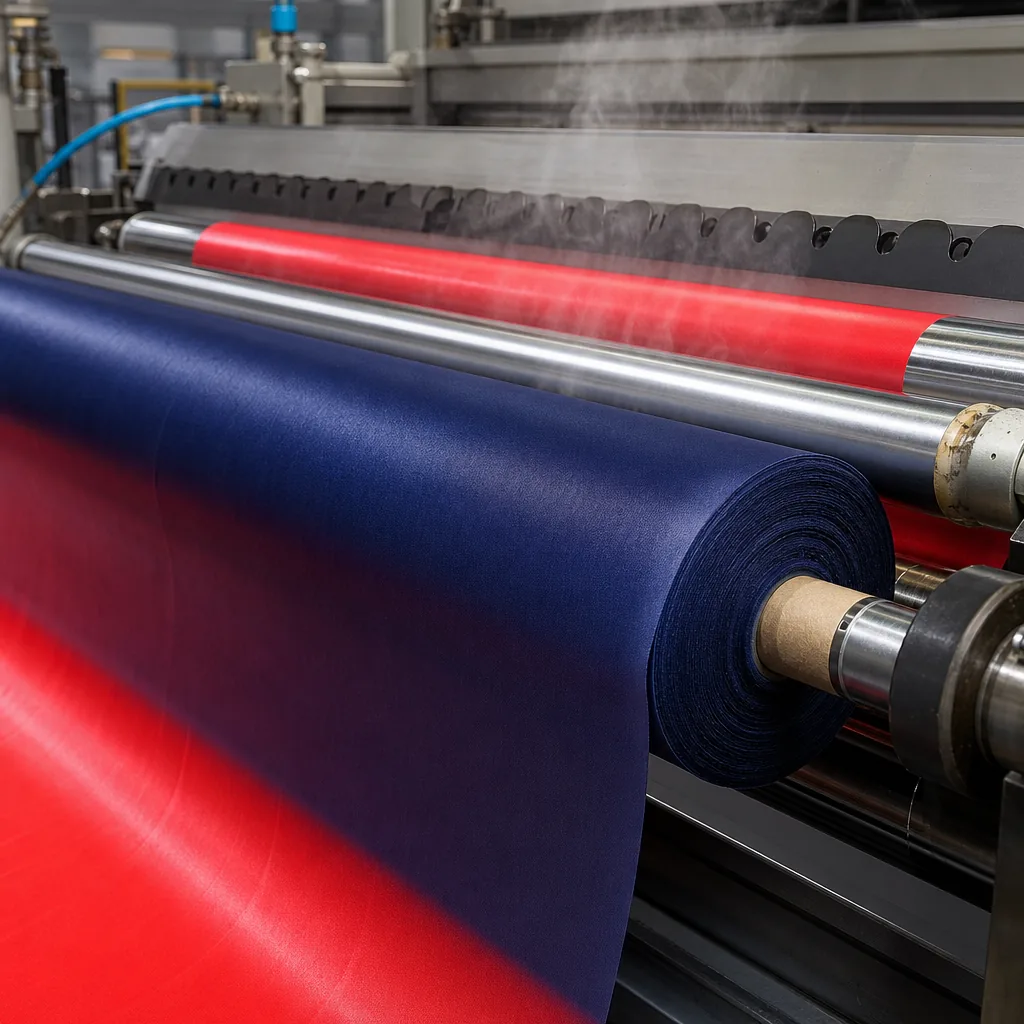
Umbrella Factory Process Control From Incoming IQC to OQC
Map umbrella factory controls from incoming IQC to OQC so buyers can reduce defects, align AQL 2.5 checks, and protect d...
Read More »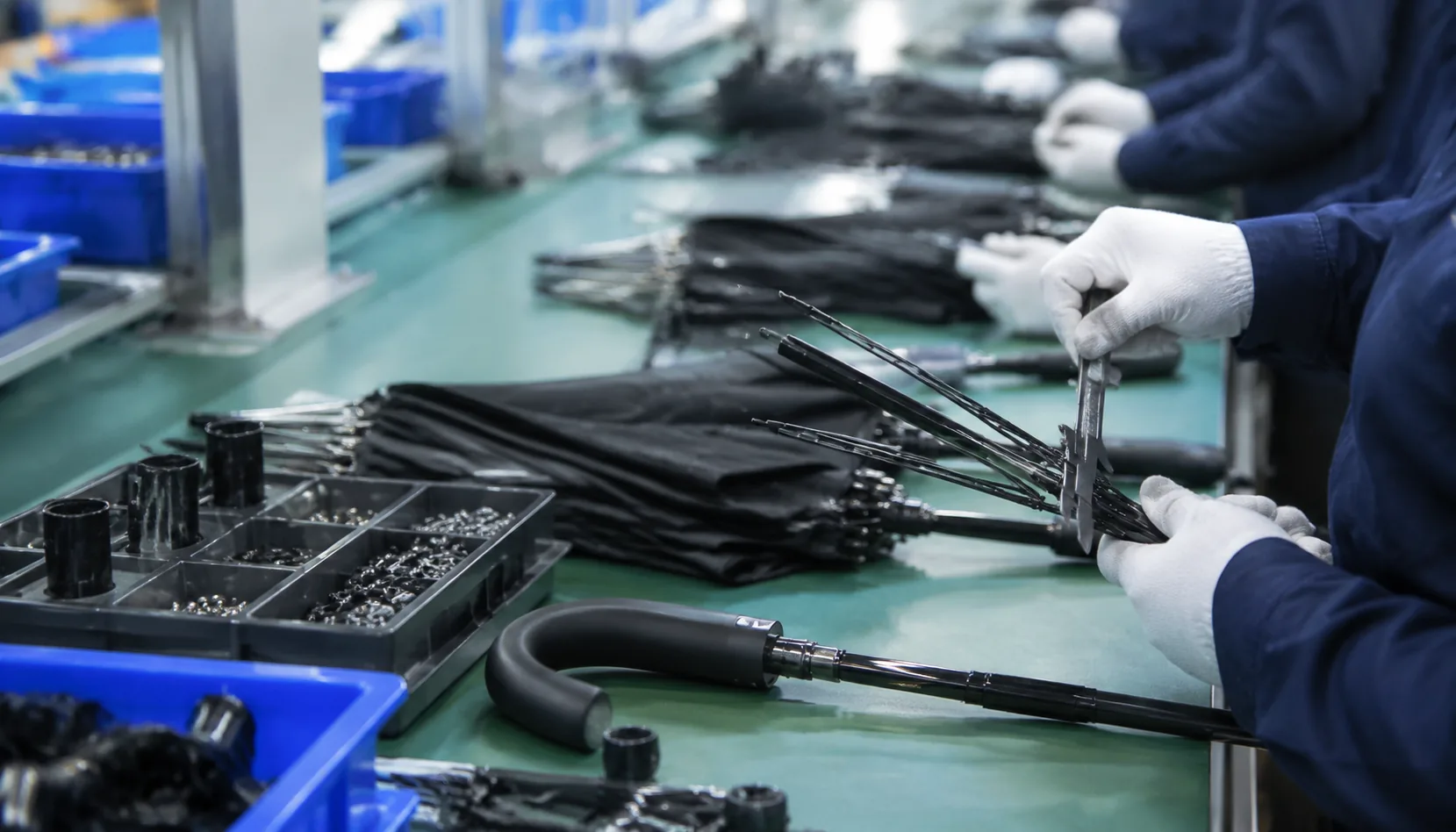
Inline Umbrella Assembly QC Gates Before Final Inspection
Map practical in-line QC gates for frames, canopies, auto-open mechanisms, and export packing so defects are caught befo...
Read More »