Umbrella Factory Process Control From Incoming IQC to OQC
When a shipment fails at final inspection, the root cause is usually not one bad operator—it is a missed control point days or weeks earlier, from fabric receiving to frame assembly, printing, sewing, packing, or carton marking. On our factory floor in Songxia, umbrella factory process control means tying IQC findings, inline checks, AQL 2.5 sampling, and OQC release criteria into one visible system so buyers can catch defects early, keep approvals aligned, and protect delivery dates.
Why Process Control Matters in Umbrella Manufacturing
Most umbrella defects are built in before final random inspection can catch them. In the umbrella manufacturing process, the highest-risk inputs are 190T/210T pongee, fiberglass ribs, steel shafts, POE/PVC panels, springs, runners, tips, and molded handles. Typical upstream failures include uneven PU coating, low fiberglass resin content, weak shaft plating, panel thickness variation, loose handle thread inserts, and runner springs below spec. Incoming quality control should test fabric density, coating weight, color fastness, rib straightness, plating condition, tensile strength, and open-close function—not just match carton labels to supplier packing lists. A 23-inch auto-open umbrella can look acceptable at receipt and still fail after 20 open-close cycles because the runner spring is weak. That is not a sewing problem; it is a purchasing and IQC escape. Effective umbrella factory process control stops suspect components before cutting, printing, sewing, and frame assembly add labor to parts that should have been rejected.
Defects then multiply at frame assembly, canopy cutting, sewing, and printing. On an 8K steel frame, inconsistent rivet pressure can cause shaft wobble or rib collapse during a 35–50 mph wind test. On 10K or 16K fiberglass frames, incorrect rib length or uneven tip spacing creates canopy tension that operators cannot fully correct at sewing. Cutting errors scale quickly: if 210T pongee stacks are too high and the blade drifts 2–3 mm, panels bind unevenly and the finished canopy twists. OEM and ODM printing adds order-wide exposure because one wrong logo placement, color, or process setting can affect the full production face. Screen printing may bleed on poor coating, heat transfers may peel after repeated folding, and sublimation color can shift when temperature or dwell time is unstable. In-process inspection should verify riveting, panel dimensions, seam alignment, top cap fit, tip attachment, logo position, and manual versus auto-open mechanism before thousands of units reach packing.
Weak controls convert isolated defects into rework, scrap, and shipment delays. AQL 2.5 final random inspection is useful for lot acceptance, but OQC cannot economically rebuild a bad order after cartons are sealed. If inspectors find loose tips, crooked seams, rusty ribs, wrong carton marks, mixed manual and auto-open mechanisms, or damaged logo printing, the factory may need 100% sorting, repacking, or replacement production. That can add 3–7 days to a promotional order, and longer when custom fabric, POE/PVC panels, or branded handles must be remade. For buyers, the risk is not only the defect rate; it is missed retail launch dates, extra air freight, delayed FOB or DDP release, and strained customer approvals. At ZheBrella, umbrella factory process control links incoming quality control, in-process inspection, and final random inspection so defects are blocked at the cheapest point, not discovered at shipment release.
Incoming Material Checks for Frames, Fabric, and Trims
Incoming quality control must stop wrong or weak frame parts before they enter the umbrella manufacturing process. At ZheBrella, each supplier lot is held by material code and checked against the approved spec sheet before release: 8K, 10K, or 16K rib count; rib and stretcher length; shaft diameter; drilled-hole position; notch and runner fit; spring rebound; and tip compatibility. Fiberglass ribs require checks for diameter, length, straightness, surface cracks, and bend whitening, because stressed glass fiber usually fails after repeated open-close cycling rather than at first assembly. Steel ribs, shafts, springs, and stretchers require gauge confirmation plus plating inspection at punched slots, rivet holes, and cut edges where rust starts first. Manual, auto-open, and auto-open-close frames are opened and closed to verify runner sliding force, positive locking, and spring return. Effective umbrella factory process control means inspectors open bundles, measure with calipers, and reject mixed specifications instead of only counting cartons.
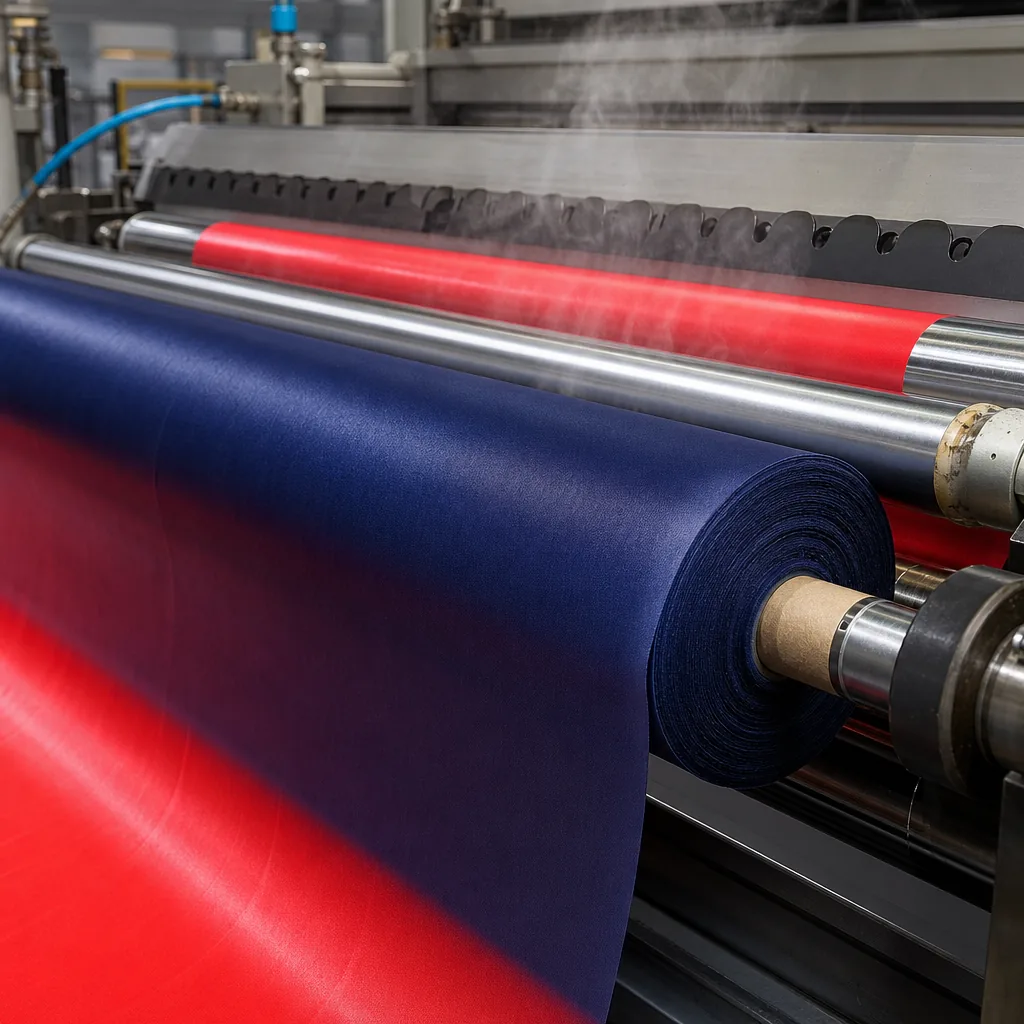
Fabric IQC targets defects that cutting and sewing cannot repair. For pongee 190T and 210T, inspectors verify roll width, gram weight, yarn density, coating side, water repellency, shade consistency, and surface defects against the approved lab dip or production standard. A 1–2 cm width shortage can reduce seam allowance or distort panels on 23-inch and 27-inch canopies, so width is confirmed before the cutting plan is issued. Shade is checked under D65 light when available, especially for black, navy, royal blue, and red, where dye-lot drift is common. For screen print, heat transfer, or sublimation orders, the fabric must be print-ready: smooth face, compatible coating, no silicone contamination, no oil marks, and stable shrinkage under heat. Rolls are tagged by shade group before cutting to prevent patchwork canopies and rework after sewing.
Trims receive the same incoming quality control because small parts often create warranty claims. Handles are checked for color, molding flash, thread fit, screw depth, paint adhesion, rubber-coating tackiness, and logo position when supplied pre-branded. Tips, caps, ferrules, Velcro straps, snaps, labels, sleeves, EVA, PVC, and POE parts are screened for burrs, cracks, odor, deformation, and carton-crush damage. Metal trims get a basic rust check on arrival, with tighter attention for coastal-market orders where salt air accelerates corrosion. Inspection records must show supplier lot number, sample quantity, defect type, and accept/reject decision before materials move to cutting or frame assembly. IQC is not final random inspection under AQL 2.5; it is the front gate that decides whether later in-process inspection and OQC find isolated defects or preventable batch failures.
In-Process Controls at Cutting, Sewing, and Assembly
After incoming quality control releases fabric and frame lots, IPQC must control variation that later becomes a twisted canopy, uneven edge line, or hard-opening frame. At cutting, operators should verify each bundle against the paper pattern or CAD marker for arc length, tip angle, notch position, grain/bias direction, and color-lot separation on 190T or 210T pongee. For a 23" 8K umbrella, panel variation should stay near ±2 mm; beyond that, sewing tension pulls the canopy off-center during opening. A 30" golf umbrella gives more fabric allowance, but the wider span makes seam drift, uneven edge curvature, and mismatched printed panels more visible. Screen print and heat-transfer logos need a pre-sewing orientation check before bundling, because a reversed or rotated panel becomes scrap after assembly, not a simple repair.
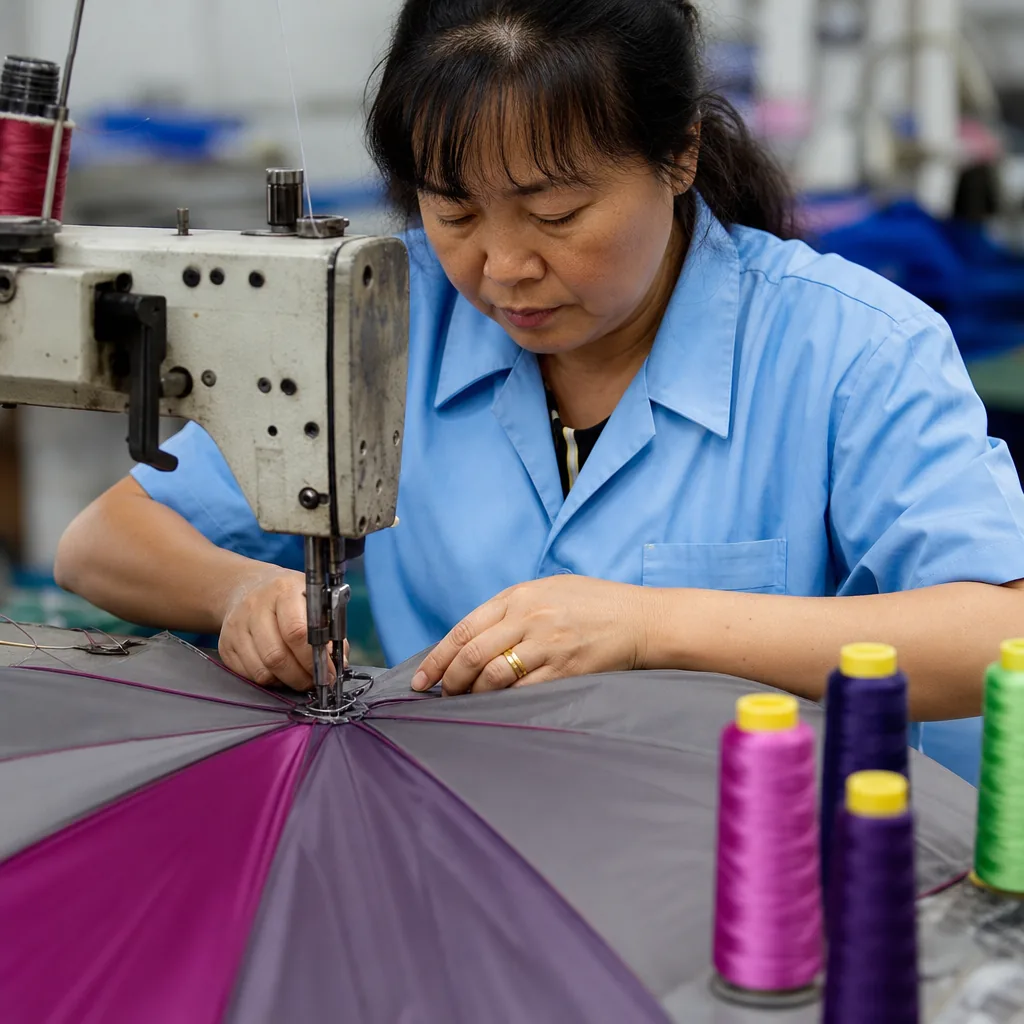
At sewing, umbrella factory process control should measure repeatability instead of rewarding output speed. Standard pongee seams should run 8–10 stitches per inch; thin UV-coated fabric needs tighter tension and smaller needle control because oversized holes weaken the seam. Inspectors should check seam alignment from the top cap point to every tip pocket, since a seam that looks straight on the table can fail when rib tension loads the canopy. Tip attachment requires both seating and pull checks: plastic tips must fully cover the rib end, metal tips must not cut the fabric, and tie-off threads must survive repeated open-close cycles. Double-canopy windproof umbrellas need an added rib-by-rib alignment check between the upper and lower canopies. Uneven vent overlap disrupts airflow and can trigger inversion before the intended 50+ mph wind target.
Assembly tolerances change by rib count. An 8K straight umbrella has fewer attachment points, so small fabric tension issues can often be corrected by adjusting tip position. A 16K frame doubles the rib ends and leaves less tolerance: one short seam, mis-seated tip, or uneven rib angle can create star-shaped wrinkles near the runner. In-process inspection should confirm runner travel, spring engagement, notch locking, cap tightness, canopy tension, and smooth rib spread before the lot moves to final random inspection under AQL 2.5. For auto-open and auto-open-close models, line samples should be cycled for clean button release, positive shaft lock without bounce-back, and closing spring movement without jamming under canopy load. ZheBrella records checks by line, model, and time slot so repeated defects trace to a jig setting, needle change, operator station, or rib lot—not the entire PO.
Functional Testing Before Packing and Final Inspection
Pre-pack functional testing is where umbrella factory process control catches defects that visual inspection misses. For a 23-inch auto-open straight umbrella, the button must release cleanly with consistent thumb force, and the runner must travel to the notch without shaft scraping. For auto-open-close folding models, inspectors check that the runner does not kick back, stop halfway, or jam after release. Lock stability is tested by opening the umbrella fully, then shaking it vertically and horizontally; the runner, spring, notch, and plastic safety cap must stay engaged. Manual umbrellas must slide smoothly and avoid finger-pinch points. On 8K and 10K frames, especially fiberglass rib designs, inspectors repeat open-close cycles and check rib symmetry, stretcher alignment, and tip seating because one twisted stretcher can distort the canopy even when stitching looks acceptable.
Canopy shape is judged only when the umbrella is open. A 190T or 210T pongee canopy should form an even dome with balanced panel tension, no loose panels, high-low ribs, tip puckering, or pulled seams. On double-canopy vented windproof umbrellas, the vent gap must stay even around the frame; a tight gap traps wind, while an oversized gap gives a collapsed profile. Water splash testing is a quick pre-pack screen, not a rain-room validation: inspectors spray or splash the crown, seams, and logo area, then check water beading, seam leakage, ink bleeding, and fabric wet-out. Teflon-coated and UPF 50+ fabrics should shed water without dark soaking within the agreed test time. Straightness is checked by rolling the closed umbrella on a flat bench and sighting the shaft, handle, ferrule, and tip; bent steel shafts or off-center handles are major defects for retail orders.
OQC, or final random inspection, normally uses AQL 2.5 for major defects and samples sealed export cartons from different pallet positions, not only the accessible front row. For a 5,000-piece lot, inspectors follow lot-size sampling rules, pull cartons across the stack, and open units from top, middle, and bottom layers. They compare function, workmanship, logo printing, barcode, polybag warning text, inner quantity, and master carton marks against the approved sample and packing list. Within the umbrella manufacturing process, critical defects include exposed sharp metal, broken tips that may injure users, mold, incorrect child-safety labeling, or unsafe auto-open mechanisms. Major defects include failure to open or lock, serious leakage, wrong canopy color, misprinted logo, cracked handle, bent shaft, missing rib, or carton shortage. Minor defects include light thread ends, small non-facing scratches, slightly uneven tie-wrap stitching, or shade variation within tolerance. Clear grading keeps final random inspection objective and reduces shipment disputes.
What Buyers Should Put in the QC Plan Before PO Approval
Approve the QC plan before PO release, not after fabric cutting, panel printing, or frame assembly. The minimum buyer spec set should include the signed approved sample, full BOM, Pantone references, pack-out, labeling, barcode requirements, carton marks, and written acceptance criteria. Define canopy material by grade, such as 190T or 210T pongee, POE, PVC, or EVA; frame details such as fiberglass or steel ribs, 8K/10K/16K rib count, shaft diameter, handle type, and manual, auto-open, or auto-open-close mechanism. Lock Pantone targets for canopy panels, binding tape, sleeve, handle insert, logo, and carton artwork. For logo umbrellas, state print method and tolerance because screen print, heat transfer, and sublimation perform differently on dark pongee versus clear POE/PVC. A practical umbrella factory process control file also defines pass/fail rules for canopy symmetry, rib alignment, smooth open/close action, logo position, water repellency, supported UPF 50+ claims, and any stated windproof requirement.
Treat packaging as a controlled production input, not an afterthought. Many shipment holds come from retail compliance errors rather than broken ribs, so the PO file should confirm sleeve type, hangtag, care label, warning label, barcode format, inner carton quantity, master carton quantity, carton marks, gross weight limit, and pallet rules for DDP deliveries. Approve barcode grade, carton drop-test requirement, and polybag warning text before incoming quality control; otherwise inspectors cannot verify sleeves, labels, printed inserts, and cartons when those materials arrive. Packaging artwork should be controlled like 210T fabric, fiberglass ribs, or steel shafts. A late barcode, carton mark, or warning-label change after mass production usually triggers relabeling, repacking, or carton replacement, adding 2 to 5 days and risking a missed vessel cutoff, courier pickup, or retailer delivery appointment.
Set inspection timing around MOQ, lead time, and Incoterms because they determine when defects can still be corrected and who can authorize release. For a 500-piece promotional MOQ, use an early in-process inspection after the first 50 to 80 units to check color, logo placement, frame assembly, and open/close function before the run continues. For a 10,000-piece retail PO, require incoming quality control, first-article approval, mid-production in-process inspection, and final random inspection under AQL 2.5 before packing is closed. FOB Ningbo or Shanghai usually allows a buyer-appointed third-party inspection before container loading. DDP needs earlier release because trucking, customs documents, duties, and last-mile booking depend on the ship date. In the umbrella manufacturing process, cutting and printing are the point of no return; umbrella factory process control must lock tolerances before final inspection becomes the only safety net.
Frequently Asked Questions
At what production stage should a buyer schedule a third-party umbrella inspection?
A practical checkpoint is when at least 80% of goods are packed and 100% are produced. That allows AQL 2.5 sampling on finished units and cartons without inspecting too early.
Do 16K umbrellas require a different QC focus than 8K umbrellas?
Yes. A 16K frame has more ribs, stretchers, and sewing points, so symmetry, canopy tension, and rib alignment need tighter in-process checks. It also tends to add assembly time compared with a standard 8K structure.
Which umbrella components should be checked during incoming material inspection?
IQC should cover canopy fabric weight and coating, frame ribs and shaft strength, handle finish, tips, runner, springs, sewing thread, labels, and packaging materials. For custom orders, color, logo artwork, and material specs should be verified against the approved sample before production starts.
How is AQL 2.5 usually applied to a bulk umbrella order?
AQL 2.5 is commonly used for major defects during final random inspection, with the sample size based on the order quantity and inspection level, often General Inspection Level II. Critical defects are typically set to 0 acceptance, while minor defects may use a looser limit such as AQL 4.0.
When should in-process inspection be done during umbrella production?
In-process inspection is best done after cutting, printing, sewing, frame assembly, and before final packing. For large OEM orders, checking the first 5–10% of production helps catch issues early enough to rework without delaying shipment.
Looking to Launch Your Custom Umbrella Line?
ZheBrella is a Zhejiang-based OEM/ODM umbrella manufacturer with 17 years of export experience. Free design, low MOQ from 100 pieces, windproof construction, full-color print.
Get Free Quote Now »People Also Search For
Related Articles
In-Process Quality Gates for Custom Umbrella Manufacturing
Map the factory quality gates from incoming materials to pre-pack audits, with IPQC checks that catch frame, fabric, and...
Read More »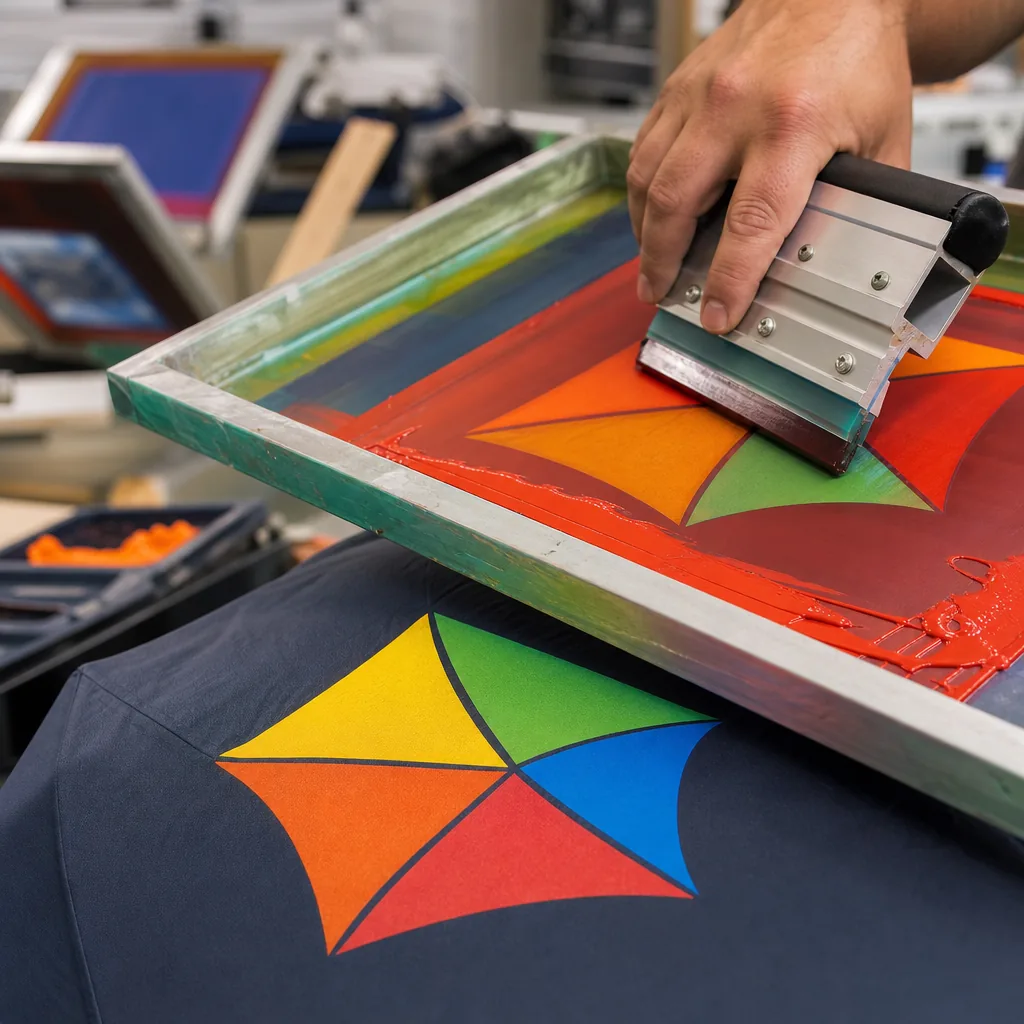
Umbrella Frame Assembly Line: Rivets, Jigs, and Tolerance Control
Learn how umbrella frames are assembled with rivets, jigs, and tolerance checks so bulk OEM orders open smoothly and pas...
Read More »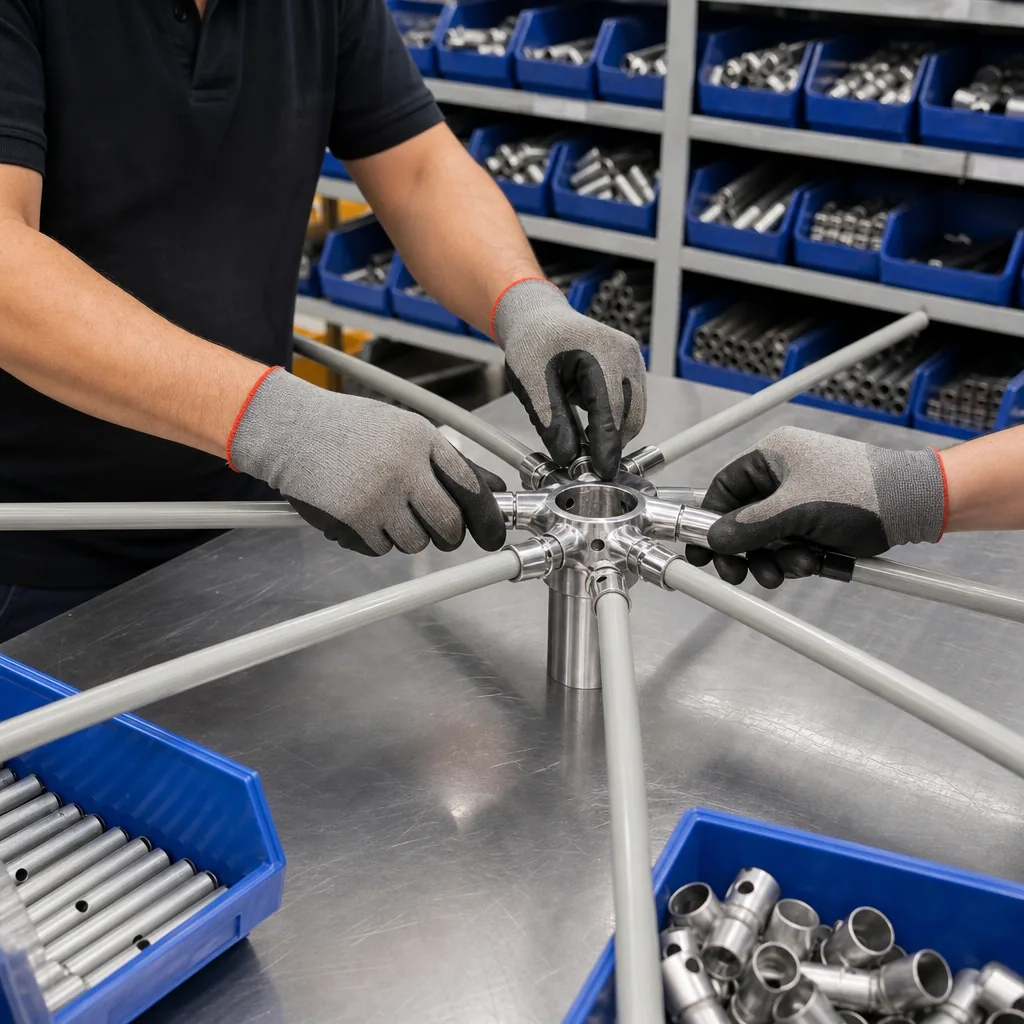
Umbrella Factory Incoming QC for Fabric, Frames, and Parts
Build an incoming QC plan for pongee fabric, ribs, shafts, handles, and cartons before mass production to reduce defects...
Read More »