Umbrella Assembly Line Balancing for OEM Consistency
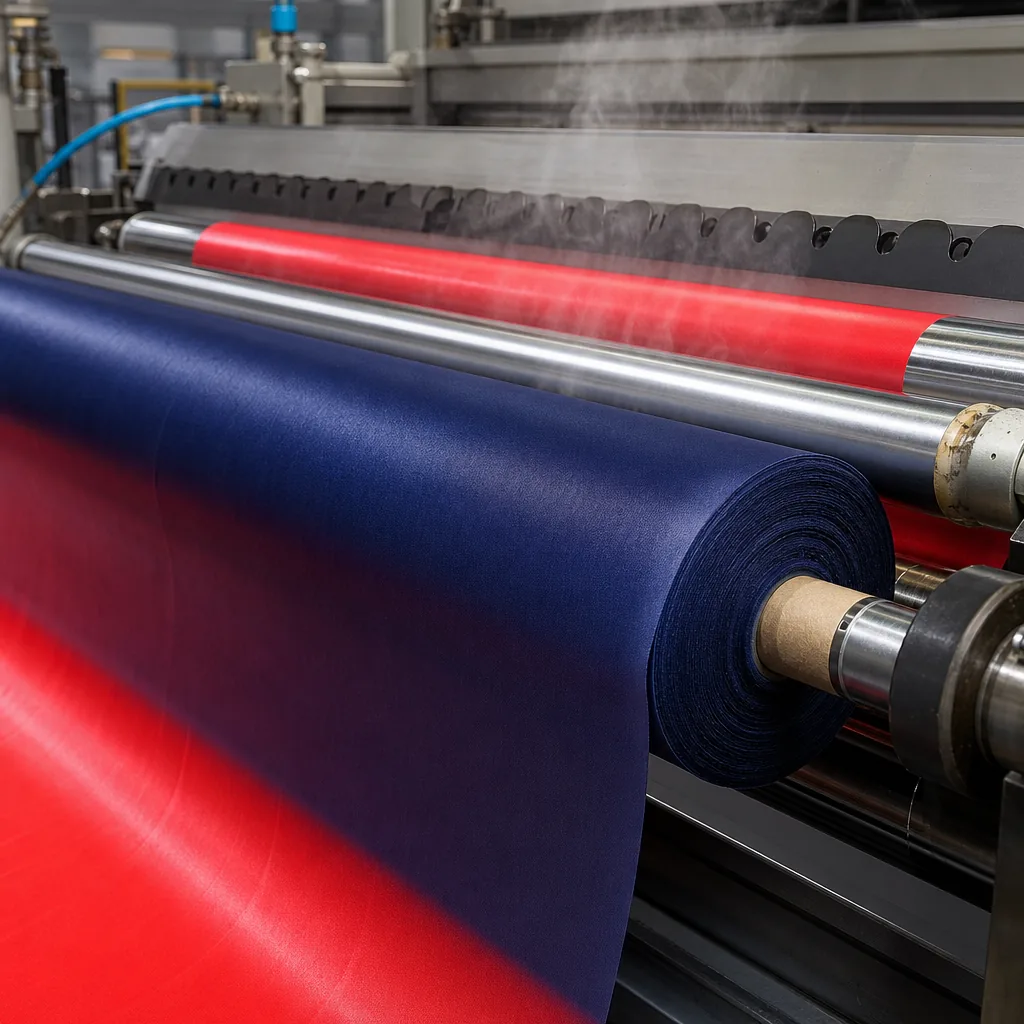
OEM consistency is usually lost before final inspection, not at the AQL table: one operator waits for ribs, another rushes canopy fitting, and defects move downstream hidden inside good output numbers. On our Songxia factory floor, umbrella assembly line balancing starts with takt targets, clear station ownership, and in-process checks at the points where frame tension, runner travel, cap alignment, and sewing-to-frame fit can drift.
Why Line Balancing Matters for Umbrella Orders
Umbrella assembly line balancing matters because one slow station can damage the quality of the entire order. In a typical OEM umbrella assembly flow, frame riveting, runner fitting, canopy sewing, tip attachment, logo printing, final assembly, inspection, and packing do not take the same time. A 23-inch auto-open umbrella with 8K fiberglass ribs may move smoothly until the sewing station hits a canopy with edge binding and double stitching, while the packing team is already waiting with cartons open. When operators feel pressure from accumulated semi-finished goods, they shorten stitch control, pull fabric too hard at the tips, or skip checking whether the runner locks cleanly. That is how mass production umbrellas become inconsistent: not because the design is impossible, but because the workstation timing was never matched to the product mix.
Bulk OEM orders make the problem worse because the line is rarely producing one plain black umbrella all day. A 10,000-piece order may include six canopy colors, two logo positions, retail hangtags for one customer channel, polybags with warning labels for another, and mixed carton marks for DDP shipment. If the umbrella production workflow is not balanced by SKU complexity, the printing confirmation table, sewing line, and packing area start fighting each other. A heat-transfer logo on 210T pongee needs different handling time than a one-color screen print on 190T fabric, and a vented double-canopy windproof model needs more assembly minutes than a basic manual stick umbrella. Without clear takt time and WIP limits, workers begin “helping” across stations without knowing the critical checks, which creates mismatched panels, wrong color sleeves, and missing barcode labels.
Good umbrella assembly line balancing protects in-process umbrella QC by putting inspection at the points where defects are easiest to catch, not only at final AQL 2.5 inspection. On our factory floor at ZheBrella, frame opening tension is checked before canopy mounting, logo position is verified before bulk sewing release, and finished umbrellas are sampled for open-close function, rib symmetry, tip security, and packaging version before cartons are sealed. This prevents a small upstream delay from becoming a full-container problem. For example, if an auto-open-close mechanism has a 3% misfire rate during sub-assembly, waiting until final packing means hundreds of umbrellas must be reopened, repacked, or reworked. Balanced stations keep pace realistic, so operators have enough time to stitch straight, seat caps properly, scan the correct SKU, and document defects before the order leaves under FOB or DDP terms.
Core Workstations in Umbrella Manufacturing
The backbone of OEM umbrella assembly is not one long table; it is a chain of specialized workstations that must feed each other at a steady takt. A typical umbrella production workflow starts with frame preparation: shaft cutting or incoming shaft inspection, runner and notch fitting, rib and stretcher riveting, spring placement, and functional checking before the frame moves forward. Steel ribs are faster to rivet and cheaper, but fiberglass ribs need more attention to hole alignment and crack control, especially on 8K and 10K windproof models. Canopy stitching runs in parallel: 190T or 210T pongee panels are cut by die or CNC, printed if required, then sewn into 8, 10, or 16 panels with seam tension controlled so the canopy does not twist after mounting. For POE, PVC, and EVA clear umbrellas, operators must avoid needle heat marks and surface scratches; these materials cannot be handled like pongee.
Canopy mounting is where poor umbrella assembly line balancing becomes visible first. If the sewing team runs too fast, mounted canopies pile up and get wrinkled; if the frame line runs ahead, operators start forcing tips and creating uneven panel pull. At this station, the canopy is tied to each rib, top cap and ferrule are fixed, tips are secured, and the open shape is checked against the frame. Handle fixing comes next, using glue, screw locking, heat staking, or pinning depending on the shaft and handle material. Manual umbrellas have simpler timing because the operator only checks smooth sliding and latch hold. Auto-open models add spring force and button release testing. Auto-open-close lines need more skilled labor because the shaft compression, reverse spring, and safety lock must be checked repeatedly, or the umbrella will fail after a few cycles.
Opening test, cleaning, and packing are not end-of-line decoration; they are part of in-process umbrella QC for mass production umbrellas. In our standard practice at ZheBrella, each unit is opened and closed at least several times before final packing, while inspectors watch for rib inversion, loose stitching, off-center logos, bent tips, handle wobble, and canopy stains. Golf umbrella lines, especially 27", 30", and 16K double-canopy vented windproof models, need wider worktables and more space between operators because the canopy blocks visibility and ribs can catch neighboring units. Compact 21" auto-open-close models need more cycle testing instead, because failures usually come from shaft locking, button return, or spring fatigue. Final stations include thread trimming, wiping, sleeve insertion, carton packing, barcode labeling, and AQL 2.5 inspection. Good umbrella assembly line balancing keeps these stations synchronized so FOB or DDP orders ship on time without hiding defects in the cartons.
Setting Takt Time and Output Targets
Takt time starts with the shipping date, not the sewing line. For OEM umbrella assembly, I first subtract real non-production days: fabric approval, strike-off printing, frame incoming inspection, carton drop-test confirmation, and final AQL 2.5 inspection. If a buyer orders 30,000 pieces of a 23-inch 8K auto-open umbrella and we have 12 effective assembly days, the floor must clear 2,500 finished umbrellas per day before rework allowance. With one 8-hour shift at 90% operating efficiency, that gives about 10.4 seconds of takt per piece across the balanced line. That number is not the time for one worker to make one umbrella; it is the rhythm every station must support after splitting work into rib checking, runner loading, canopy fixing, top notching, handle fitting, function testing, sleeve insertion, and carton packing. Good umbrella assembly line balancing converts the sales order into station-level manpower before cutting fabric or committing a delivery date.
Model complexity changes takt more than many buyers expect. A plain 21-inch manual 8K steel-frame umbrella with 190T pongee can run fast because the canopy attachment, tip sewing, and final open-close test are simple and repeatable. A 27-inch golf umbrella with a 10K or 16K fiberglass frame, EVA grip, double-canopy vented construction, and UPF 50+ coating is a different animal. Sixteen ribs mean twice as many tie points as an 8K frame, more chances for rib twist, and longer time to check symmetry after the canopy is locked. Double-canopy windproof designs add an upper panel, vent alignment, extra seams, and airflow spacing control; if those are wrong, the umbrella may pass visually but fail in a 50+ mph wind-tunnel sample test. Custom retail packaging also slows output because hangtags, barcode labels, color boxes, silica gel, and master-carton sorting move work from simple bulk packing to SKU-controlled handling.
For mass production umbrellas, I normally set one output target for stable running and another for the first two hours after changeover. The first target may be 3,000 pieces per day on a familiar 23-inch 8K auto-open model, but only 1,200 to 1,600 pieces for a 30-inch 16K double-canopy golf umbrella with custom sleeve printing and retail box packing. The umbrella production workflow must also include in-process umbrella QC points, not just a final inspector at the end. We check frame tension before canopy mounting, logo position after sewing or heat transfer, handle pull strength after riveting or screwing, and open-close function before sleeves are packed. At ZheBrella, our standard practice is to calculate manpower by the bottleneck station, then add float workers for rework, material feeding, and carton sealing. Without that buffer, one slow operation—often tip tying on 16K ribs or barcode matching for DDP retail orders—breaks the whole umbrella assembly line balancing plan.
In-Process QC Gates That Reduce Final Defects
The cheapest defect is the one caught before the next operator adds labor to it. In OEM umbrella assembly, we place QC gates at rib fitting, runner setting, canopy mounting, handle fixing, printing review, and carton pack-out instead of waiting for AQL 2.5 final inspection to discover a systemic problem. For rib alignment, the inspector checks whether all 8K, 10K, or 16K ribs sit in the same crown plane, with no twisted stretcher, bent U-channel, loose rivet, or fiberglass rib inserted into the wrong slot. On auto-open and auto-open-close models, runner movement is tested before canopy sewing is complete: smooth slide, positive lock at top notch, no grinding against the shaft, and no accidental release after 10 to 15 open-close cycles. This is where umbrella assembly line balancing matters, because if rib QC is slower than canopy loading, workers start stacking semi-finished frames and defects hide in piles.
Canopy-related checks must happen while the umbrella is still open on the assembly stand, not after the sleeve and hangtag are attached. Seam position is measured against the rib tips so each panel lands evenly, especially on 23 inch and 27 inch straight umbrellas where a 5 mm canopy shift becomes visible at the edge. For pongee 190T/210T, we check stitch tension, skipped stitches, cap alignment, and whether the fabric pulls tight without wrinkling between ribs. If the order uses UPF 50+ coating, the coated side orientation is verified before sewing because silver or black UV layers facing the wrong direction can fail customer testing even if the umbrella looks correct. Logo placement is checked against the approved artwork sheet: panel number, distance from lower edge, print angle, color tolerance, and whether screen print, heat transfer, or sublimation has bleeding near seam lines. This in-process umbrella QC prevents a full batch of mass production umbrellas from reaching final inspection with the same artwork error.
The last production gates focus on functional durability and packing accuracy. Handle torque is checked after adhesive curing or screw fastening; for plastic J handles, EVA grips, wooden crook handles, and straight rubber handles, the operator tests rotation, pull strength, and alignment with the logo panel. A loose handle may pass a quick visual check but fail after one rainstorm, so our standard practice at ZheBrella is to sample during assembly and again before carton sealing. Carton pack-out is also part of the umbrella production workflow, not just warehouse work: correct sleeve, barcode, instruction card, silica gel if required, inner quantity, master carton count, gross weight, and shipping mark must match the purchase order. Good umbrella assembly line balancing leaves time for these checks without choking output. Final AQL 2.5 inspection should confirm consistency, not become the first serious attempt to find rib, canopy, logo, handle, or packing defects.
Buyer Inputs That Help Stabilize Production
The most useful buyer input for umbrella assembly line balancing is a frozen BOM before cutting and frame allocation start. For OEM umbrella assembly, “23-inch auto-open, 8K fiberglass ribs, black metal shaft, 190T pongee canopy” is not enough; the factory needs runner type, rib gauge, stretcher length, spring spec, tips, ferrule, handle material, strap width, label position, sleeve fabric, carton count, and any coating such as Teflon or UPF 50+. One small change, like switching from steel ribs to fiberglass or from manual open to auto-open-close, changes workstation time and sometimes the jig setup. Our standard practice at ZheBrella is to lock the approved pre-production sample, BOM, and packaging specification together, because the sample alone does not control mass production umbrellas. If the buyer approves a sample but leaves the handle, hangtag, or inner box “to be confirmed,” the production team cannot accurately plan MOQ materials, line speed, or final packing labor.
Artwork and color control should be treated as production inputs, not decoration details. For screen printing, heat transfer, and sublimation, the factory needs editable AI or PDF files, Pantone or fabric swatch standards, print size in millimeters, placement tolerance, and whether the logo crosses panel seams. A 210T navy pongee canopy with a white one-color logo behaves differently from a full-panel sublimation design on polyester; ink curing, panel matching, and rejection risk are not the same. Packaging specs also affect the umbrella production workflow: one-piece polybag, printed sleeve, retail hangtag, barcode sticker, master carton marks, Amazon carton limits, or distributor mixed-SKU packing all change the final line layout. When buyers send artwork after fabric cutting, the line either waits or reworks panels, both of which damage efficiency and make lead times unreliable.
Inspection criteria must be agreed before production, not argued at final inspection. Buyers should define AQL level, commonly AQL 2.5 for major defects, and clarify what counts as critical: broken ribs, failed auto-open mechanism, canopy stains, loose stitching, skewed logo, color mismatch, sharp tips, weak carton, or failed windproof test. Good in-process umbrella QC checks frame opening, rib alignment, seam tension, tip attachment, print registration, water repellency, and packing accuracy before defects multiply across 5,000 or 20,000 units. Late changes hurt more than most buyers expect: revising carton size can affect container loading and FOB booking; changing delivery address or incoterm from FOB Ningbo to DDP U.S. can reset export documents, duty calculation, and trucking plans. For umbrella assembly line balancing, confirmed buyer inputs protect both cost and schedule because the factory can assign labor, materials, and inspection points without stopping the line for avoidable decisions.
Frequently Asked Questions
How does assembly line balancing affect umbrella lead time?
A balanced line reduces waiting time between stitching, frame assembly, testing, and packing. This helps keep bulk orders on schedule, especially when several SKUs share the same production window.
What production details should buyers confirm before mass assembly starts?
Buyers should confirm the PP sample, fabric type such as 190T or 210T pongee, frame material, rib count, logo placement, packaging, carton marks, and inspection standard. Unconfirmed details can slow the line or cause rework.
Which in-process checkpoints matter most before AQL 2.5 final inspection on umbrella orders?
The highest-value checkpoints are frame opening/closing function, rib and stretcher attachment, canopy panel alignment, top notch and ferrule fit, and handle pull-test verification. Many OEM factories check these at first-piece approval, hourly patrol inspection, and again at packing to catch repeat defects before final sampling.
How should a factory set takt targets for different umbrella SKUs on one line?
Takt should be based on daily order quantity, available labor hours, and the slowest operation, usually canopy sewing or final assembly. For mixed SKUs, buyers should ask the factory to separate standard straight umbrellas from compact folding models because folding styles usually need more assembly steps and lower units-per-hour output.
What is a practical MOQ for running a balanced OEM umbrella production line efficiently?
For most custom umbrella programs, efficiency improves once the run reaches about 1,000-3,000 pieces per color or design, depending on frame and printing complexity. Below that level, changeover time, first-piece setup, and material staging can raise unit cost and make line balancing less stable.
Looking to Launch Your Custom Umbrella Line?
ZheBrella is a Zhejiang-based OEM/ODM umbrella manufacturer with 17 years of export experience. Free design, low MOQ from 100 pieces, windproof construction, full-color print.
Get Free Quote Now »People Also Search For
Related Articles
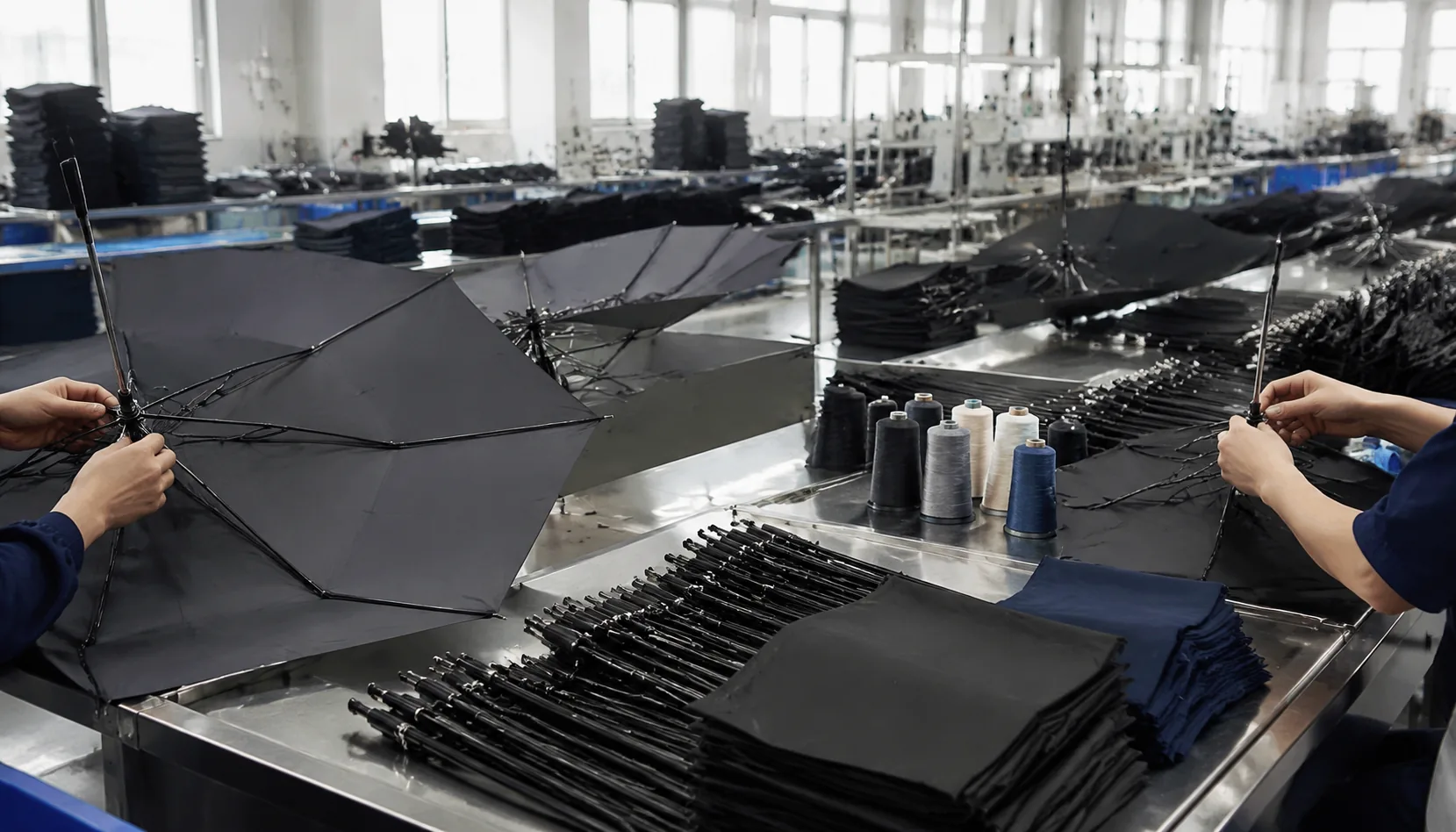
Umbrella Assembly Line Balancing for OEM Production
Plan umbrella assembly stations, labor allocation, and QC gates to keep bulk OEM orders on schedule without sacrificing ...
Read More »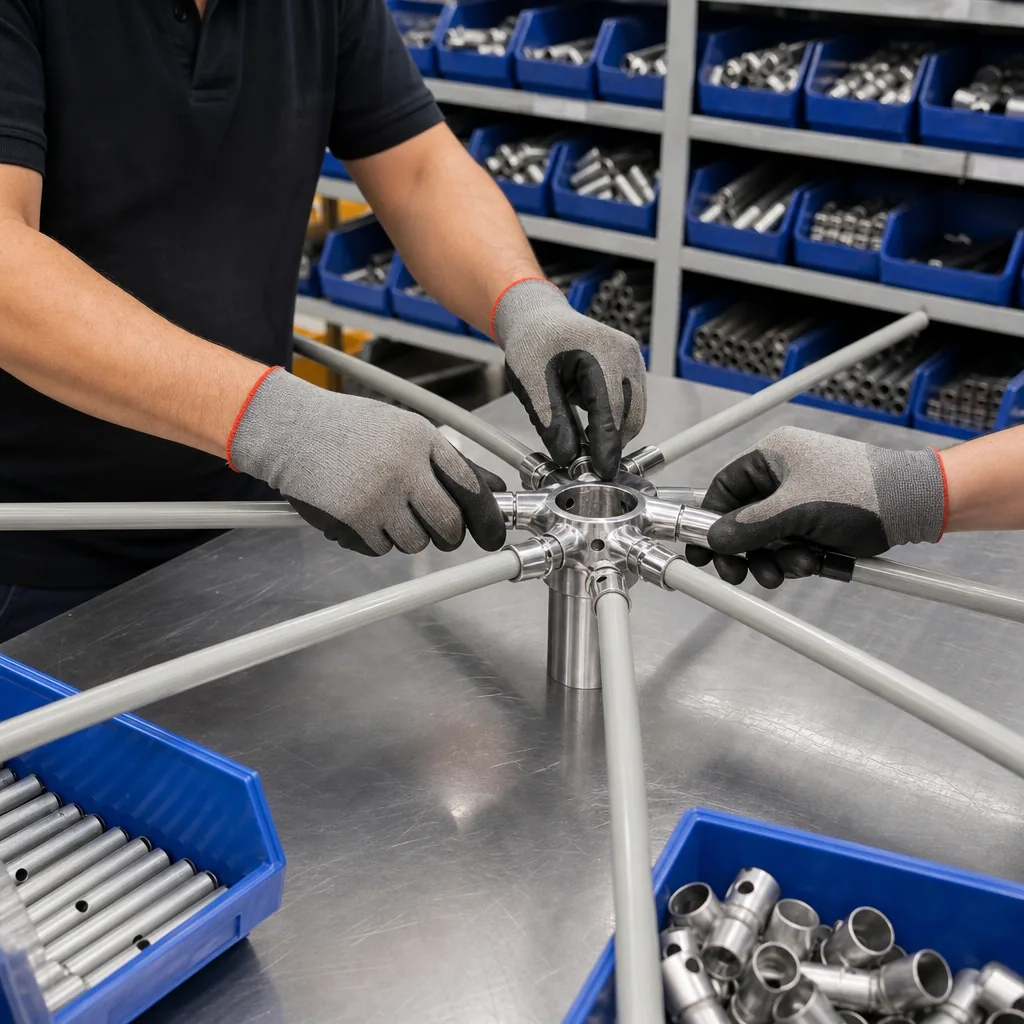
Umbrella Assembly Line Setup for Consistent OEM Quality
Plan umbrella assembly stations, takt time, jigs, and in-process checks to stabilize OEM quality before AQL 2.5 final in...
Read More »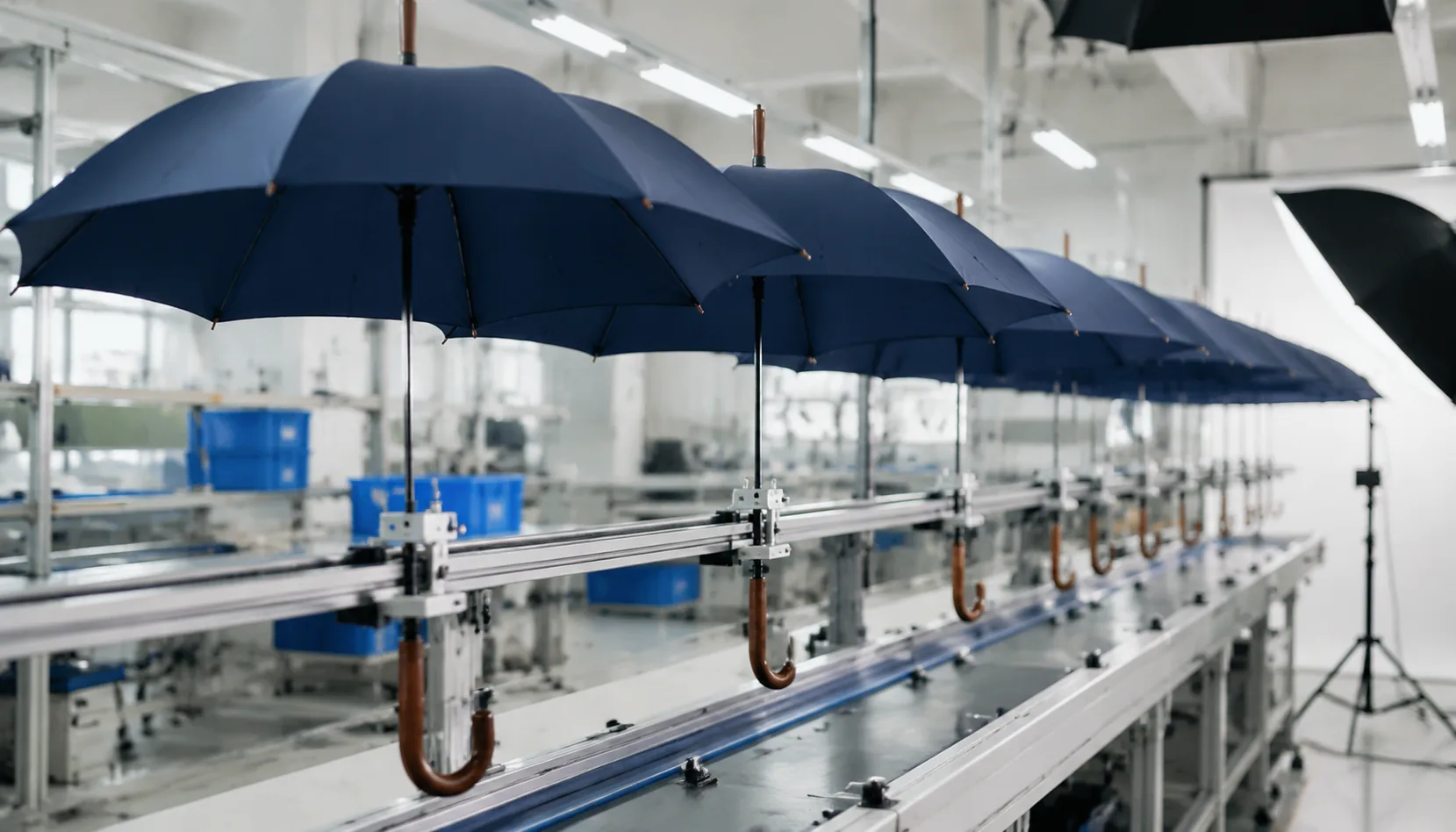
Umbrella Line Balancing for Consistent Mass Assembly
Understand how balanced workstations, takt time, and in-process QC keep OEM umbrella assembly stable for auto-open, wind...
Read More »