Umbrella Assembly Line Setup for Consistent OEM Quality
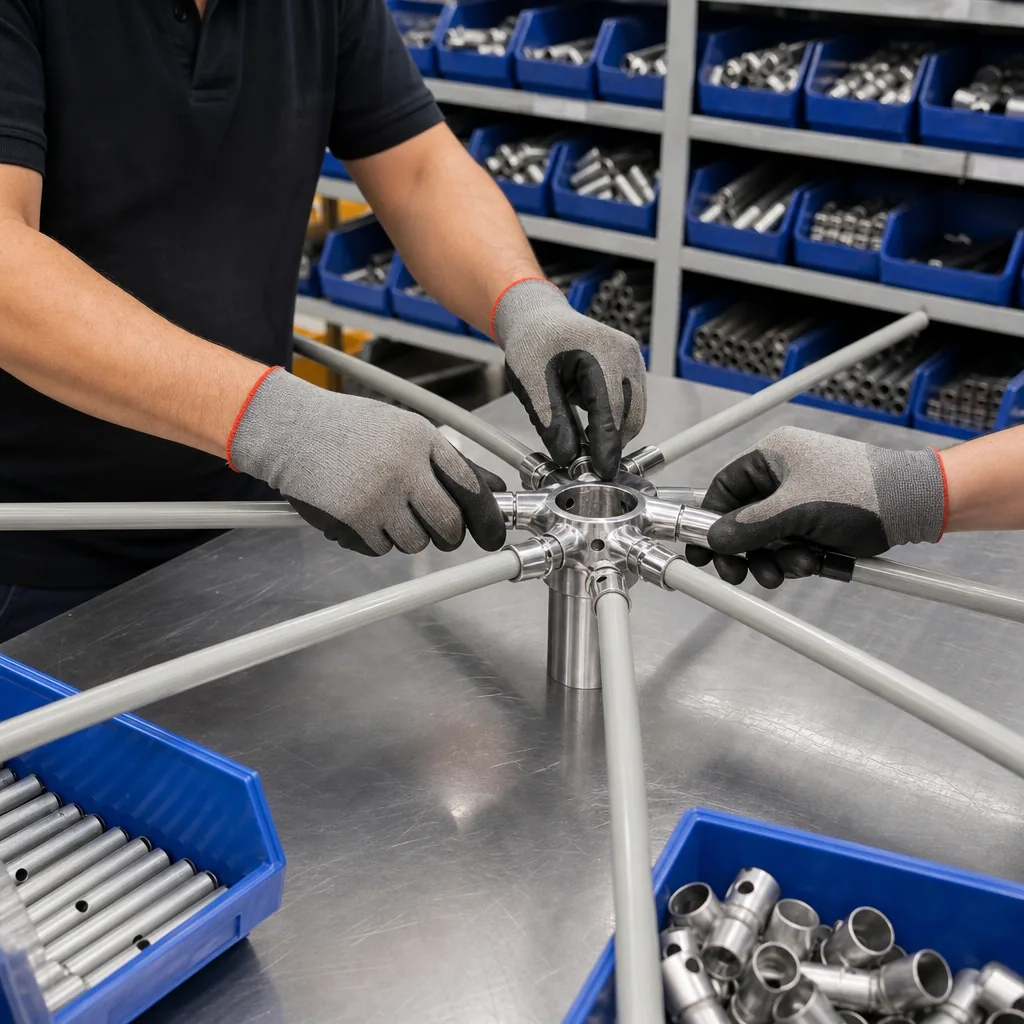
For OEM buyers, the hardest part of scaling umbrella production is not finding a factory but keeping every batch built the same way under changing orders, fabrics, and hardware. A disciplined umbrella assembly line setup turns that variability into repeatable station work, matching takt time, jigs, and in-process checks so defects are caught before they reach AQL 2.5 final inspection and shipment.
From Components to Finished Umbrellas: The Line Flow
A reliable umbrella assembly line setup starts before anyone touches a sewing machine. Incoming QC checks 190T/210T pongee by roll width, color lot, waterproof coating, and fabric defects under a light table; for printed orders we also test shrinkage and colorfastness because a 1% fabric movement can shift a logo across eight panels. Frame parts are inspected in parallel: fiberglass ribs for straightness and splintering, steel shafts for chrome or black paint scratches, stretchers for rivet tension, plastic or EVA handles for molding flash, and auto-open mechanisms for spring force and button travel. In OEM umbrella manufacturing, we quarantine mismatched dye lots and weak spring assemblies immediately, because once they enter line production the repair cost is five to ten times higher.
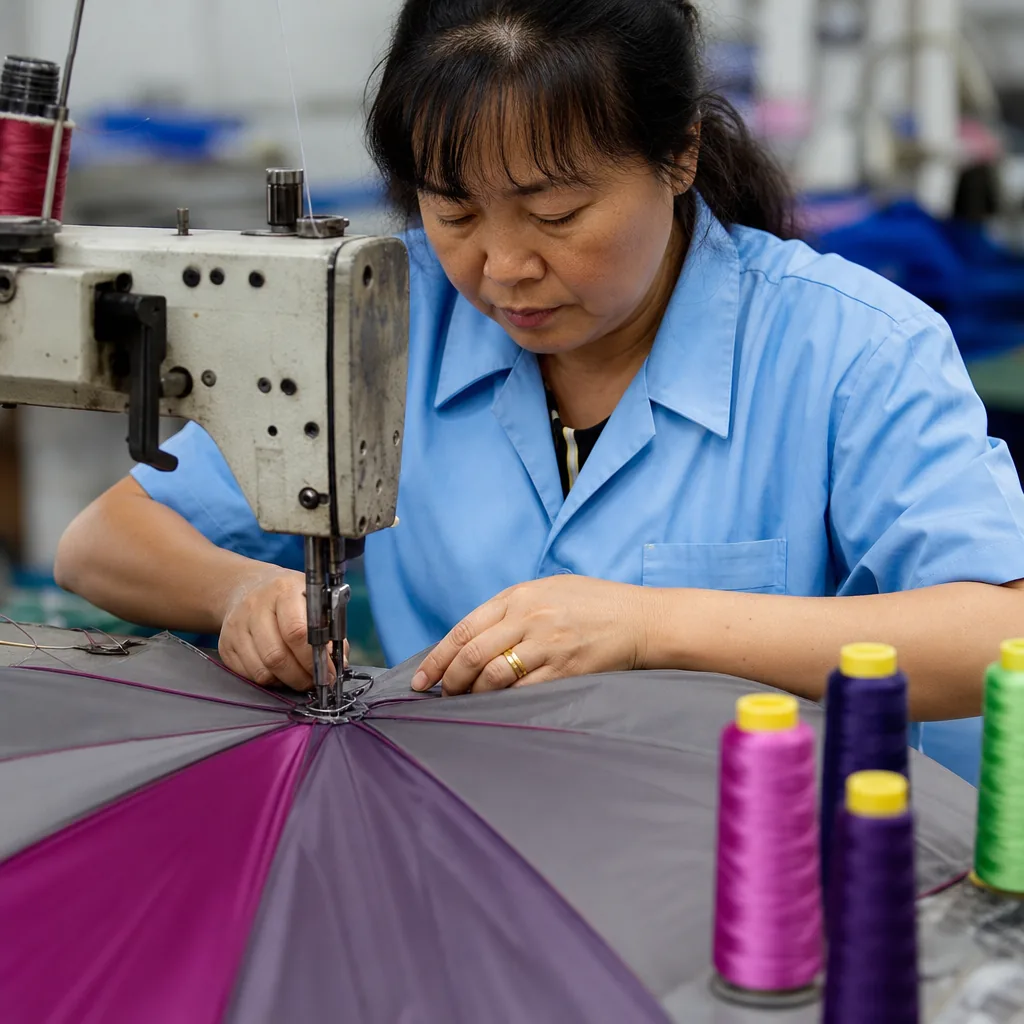
The umbrella production workflow then moves through cutting, printing, sewing, and frame preparation as two controlled streams. Fabric panels are die-cut or CNC-cut by size, usually 21 inch for compact, 23 inch for standard straight, 27 inch for golf, and 30 inch for oversized models, with panel direction marked to keep grain consistent. Printing happens before sewing for most screen, heat-transfer, and sublimation jobs, while edge-to-edge sublimation needs tighter panel registration and a separate approval sample. Sewers join the canopy panels, add tips, top cap reinforcement, Velcro strap, labels, and sometimes reflective tape; meanwhile the frame cell assembles ribs, runners, shafts, handles, and manual, auto-open, or auto-open-close mechanisms before line balancing joins both streams.
Final assembly is where a custom umbrella factory either controls variation or hides problems in cartons. The canopy is mounted to the frame by fixing the top notch, sewing each rib tip, checking rib alignment, and confirming the canopy tension is even without twisting the shaft. In-process umbrella QC should happen here, not only at final inspection: operators open and close every unit, check lock engagement, runner smoothness, rib symmetry, handle torque, cap tightness, and fabric contamination. For windproof double-canopy models, the vent layer is checked for correct overlap so it spills air instead of ballooning. Finished umbrellas pass functional testing, sleeve matching, barcode or hangtag verification, polybagging, inner carton packing, master carton sealing, and carton drop or weight checks; our standard practice at ZheBrella is to record these checkpoints against AQL 2.5 final inspection before FOB or DDP shipment.
Station Design for Repeatable Workmanship
A serious umbrella assembly line setup starts with fixed stations, not a crew that improvises at one table. Rib tying, ferrule fitting, runner installation, and canopy alignment all need their own work instructions, gauges, and approved samples on the bench, because the errors are different at each step. If the ferrule depth is inconsistent by 2-3 mm, the runner will drag; if the canopy is centered by eye instead of a jig, seam tension shifts and you get crooked panels that fail in folding and opening. In OEM umbrella manufacturing, the station operator should be checking against a sealed master sample, not memory, and in-process umbrella QC needs to catch drift before the frame moves downstream. That is the basic discipline that keeps a custom umbrella factory from turning one good sample into 5,000 inconsistent units.
The umbrella production workflow changes a lot between 8K compact umbrellas and 16K golf umbrellas, so labor balancing cannot be copied from one model to the other. An 8K compact usually needs faster cycle times, tighter dexterity, and more attention to small-part placement because the frame is lighter and the canopy packs tighter; a 16K golf umbrella takes more time in rib handling, canopy spreading, and alignment because there are more ribs, more load on the joints, and more chance for frame twist. If you assign the same takt time to both, one station will starve and another will pile up WIP. The better setup is to separate the balance sheets by model family, then match station capacity to actual motion content, not just piece count.
What matters most is repeatability under production pressure. A good umbrella assembly line setup uses jigs for rib spacing, ferrule stop depth, and canopy center marks, plus approved samples that show the exact acceptable look for stitching, tension, and closure shape. That is how operators make the same decision on every shift, and how supervisors can audit with AQL 2.5 without arguing about taste. ZheBrella’s standard practice is to lock these references before mass production, then train each station to the same visual standard so variation does not creep in after the first hundred pieces.
In-Process QC Gates That Prevent End-Line Rework
In an umbrella assembly line setup, the cheapest defect is the one you catch right after the process that created it. After printing, I check registration against the panel template, ink coverage at the hem, and whether the artwork is centered on the widest face of the canopy; a 2 to 3 mm shift is acceptable on a giveaway, but not on retail work where logos must land the same way on every panel. After sewing, the gate is seam allowance and stitch density: 5 to 7 mm allowance on pongee 190T or 210T is standard, and I want clean backtacks, no skipped stitches, and no puckering around the tips and vent tabs. In OEM umbrella manufacturing, these are not cosmetic details; they decide whether the canopy will sit flat or fight the frame later.
Frame assembly gets its own gate because that is where most rework hides. Rib tension should be even from runner to tip, ferrules fully seated, and the spreader geometry symmetrical so one side does not load heavier than the other when the frame opens. On auto-open models, I cycle the mechanism several times and listen for the spring snap and latch engagement; if it hesitates, binds, or opens with a weak stroke, it fails before canopy mounting. For double-canopy vented builds, vent alignment has to be checked panel by panel so the upper and lower vents line up cleanly and do not twist under load, which is a common miss in fast-moving umbrella production workflow. This is also where a custom umbrella factory should verify shaft straightness and rib tip position before fabric ever goes on.
The final gate sits after canopy mounting and before packing, because this is where small misses become costly carton claims. I verify fabric orientation, UPF 50+ labeling on coated cloth, smooth auto-open action after final dress-out, and that the canopy closes without rubbing the tips or pinching the fabric at the stretcher points. Carton count is the last hard stop: inner pack quantity, master carton count, and SKU mix all have to match the purchase order, because a short pack is expensive to fix once freight is booked. In-process umbrella QC works best when each gate has a reject reason written in plain terms and the operator signs off before the next step; that discipline cuts end-line rework far more effectively than trying to sort everything at final inspection.
Capacity Planning, Lead Time, and Bottleneck Control
The right way to size an umbrella assembly line setup is to start with the slowest station, not the headcount on paper. In OEM umbrella manufacturing, I break daily output into station capacity: canopy cutting, panel sewing, frame assembly, printing, final stitch-in, in-process umbrella QC, packing, and carton loading. A line with 24 operators can still only ship 1,200 pieces a day if the curing rack for screen print or heat-transfer ink can hold 1,200 finished canopies and the sewing table can feed them without WIP piling up. For a custom umbrella factory, the real number is usually set by takt at the bottleneck, then adjusted for changeovers, first-piece approval, and the scrap rate at AQL 2.5. On 21" and 23" folding umbrellas, manual and auto-open styles usually run faster than 27" golf models because the frame build and canopy handling are lighter.
The common choke points are predictable if you have actually run umbrella production workflow for a living. Printing cure time is the first one: UV or sublimation can look fast until the canopy has to sit long enough to pass rub testing and not block in cartons. Sewing skill is next, especially on 190T or 210T pongee where panel alignment and seam tension decide whether the canopy lays flat or twists on opening. Auto-open mechanism assembly slows down when spring preload, rivet seating, and runner alignment are inconsistent, and custom handle molding adds another delay because EVA, PU, or molded plastic handles usually need separate tooling, cooling, and inspection. In-process umbrella QC has to sit between these steps, not after packing, or you only discover a broken rib batch when the pallet is already wrapped.
Packaging is where good plans get ruined if the team ignores export mode. FOB shipments usually need simpler master cartons and tighter carton counts, while DDP orders often need retail inserts, barcode labels, moisture protection, and more time at the palletizing stage. I normally build the plan backward from the ship date: reserve time for mechanism rework, print touch-up, and final carton audit, then subtract a buffer for material shortages in steel ribs, fiberglass ribs, or vented double-canopy components. If the daily target depends on a single handle molding vendor or a single print cure oven, the line is too fragile. The practical fix is parallel work cells and a staging rule that never lets sewing outrun assembly by more than one shift; that is how an umbrella assembly line setup stays stable instead of looking busy while missing the vessel cutoff.
Buyer Visibility: Reports, Samples, and Factory Checkpoints
Procurement teams should not approve an umbrella assembly line setup on a promise and a price sheet alone. Ask for a dated production schedule that breaks the job into cutting, sewing, frame assembly, canopies, printing, final assembly, and packing, with daily output targets and the actual number of workers assigned to each station. For OEM umbrella manufacturing, the first document I want is a pre-production sample approved against the PO, because that is where fabric shade, handle style, canopy seam alignment, and open-close force get locked before the bulk run starts. In a custom umbrella factory, that sample is the control point that keeps a 21" promotional model from quietly drifting into a heavier retail spec.
After the sample is approved, request a first-line report as soon as the first lot comes off assembly. That report should show rib count, frame material, canopy fabric lot, print placement, defect count, and any rework already found in in-process umbrella QC. Mid-production photos matter because they show the real umbrella production workflow, not the polite version in a sales deck: rib tips seated correctly, stitching tension consistent, automatic open mechanisms cycling cleanly, and cartons labeled to the buyer’s SKU and destination. If the factory cannot provide those checkpoints, it usually means the line is being run by memory instead of by control.
For launch protection, insist on an AQL 2.5 inspection plan before the goods are packed, then ask for the final packing list with carton counts, net/gross weight, carton dimensions, and pallet or container loading details. That combination lets retail, event, and promotional programs catch problems while there is still time to fix them, instead of discovering a color mismatch or missing component after the ship date. In practice, these checkpoints reduce the two failures that hurt buyers most: late delivery and mixed-quality cartons. If the factory treats the schedule, photos, and inspection records as optional, the launch calendar is already at risk.
Frequently Asked Questions
When should a buyer request in-line QC instead of only final inspection?
In-line QC is useful for orders with tight launch dates, complex prints, auto-open mechanisms, double-canopy windproof frames, or high retail packaging requirements. It catches defects before they become expensive rework at final inspection.
How does assembly line setup affect umbrella lead time?
A balanced line reduces waiting between printing, sewing, frame assembly, and packing. For OEM umbrellas, poor station planning can add several days even when materials are already in the factory.
How many assembly stations does a typical OEM umbrella line need?
A standard manual line usually runs with 5 to 8 stations: frame prep, canopy sewing, frame assembly, handle fitting, opening/closing test, and final trim or packing. The exact number depends on umbrella type, such as manual, automatic, golf, or folding models.
What in-process checks should be built into umbrella assembly?
Key checks include rib length and symmetry, canopy seam alignment, spoke tension, open/close function, tip insertion, and handle fit. Many factories also check first-piece approval at each station and use hourly spot checks to catch drift before final inspection.
How does takt time affect OEM umbrella quality and output?
Takt time sets the pace each station must maintain to meet daily order quantity without overloading workers. If one station is slower than takt, defects often increase because operators rush; line balancing usually improves consistency before AQL 2.5 inspection.
Looking to Launch Your Custom Umbrella Line?
ZheBrella is a Zhejiang-based OEM/ODM umbrella manufacturer with 17 years of export experience. Free design, low MOQ from 100 pieces, windproof construction, full-color print.
Get Free Quote Now »People Also Search For
Related Articles
Umbrella Final Assembly Line Setup for Consistent OEM Quality
Design an umbrella assembly line with workstations, jigs, torque checks, and inline QC to improve consistency across MOQ...
Read More »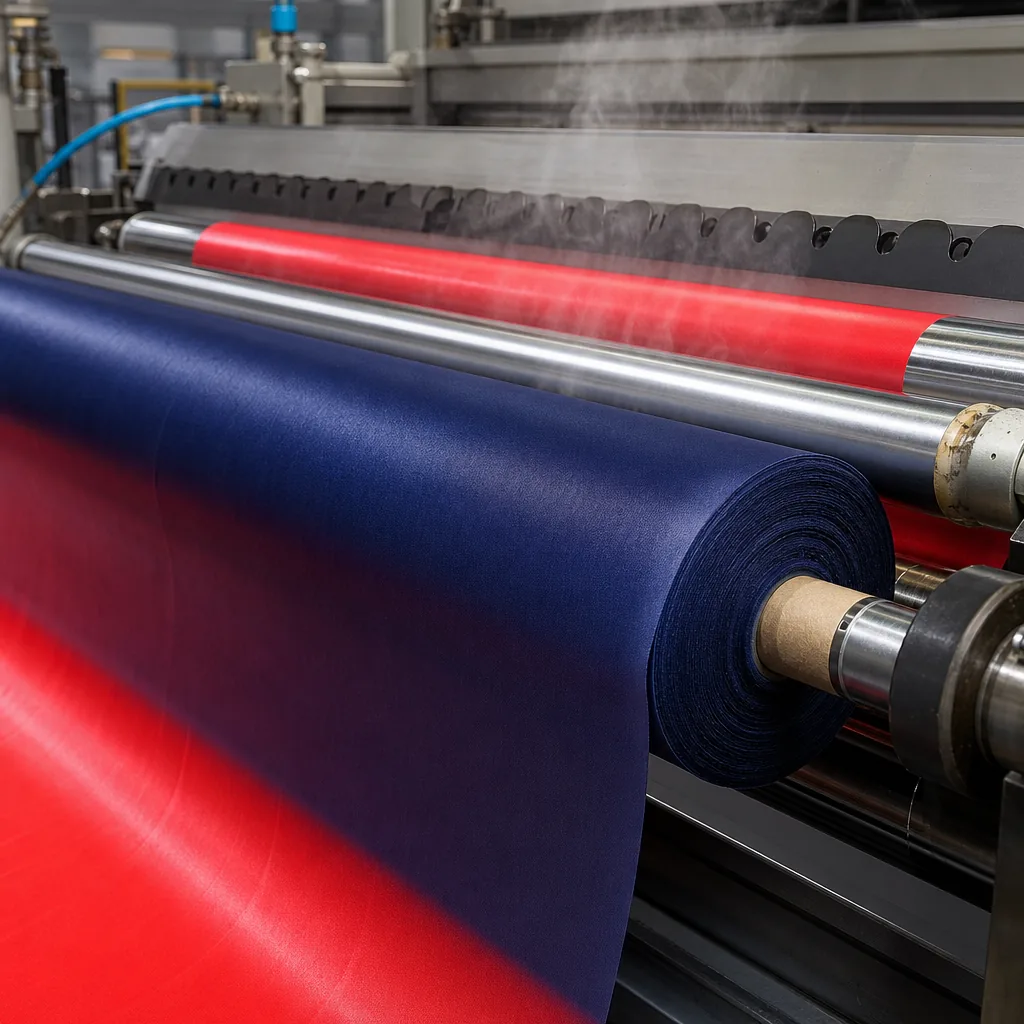
Umbrella Assembly Line Process for Consistent OEM Quality
See how umbrella factories control frame fit, canopy tension, and packing accuracy with in-line checks that reduce defec...
Read More »Umbrella Factory Line Setup for Mixed-SKU OEM Production
Plan mixed-SKU umbrella production with better line setup, material staging, QC gates, and realistic lead times for OEM ...
Read More »