Umbrella Final Assembly Line Setup for Consistent Quality
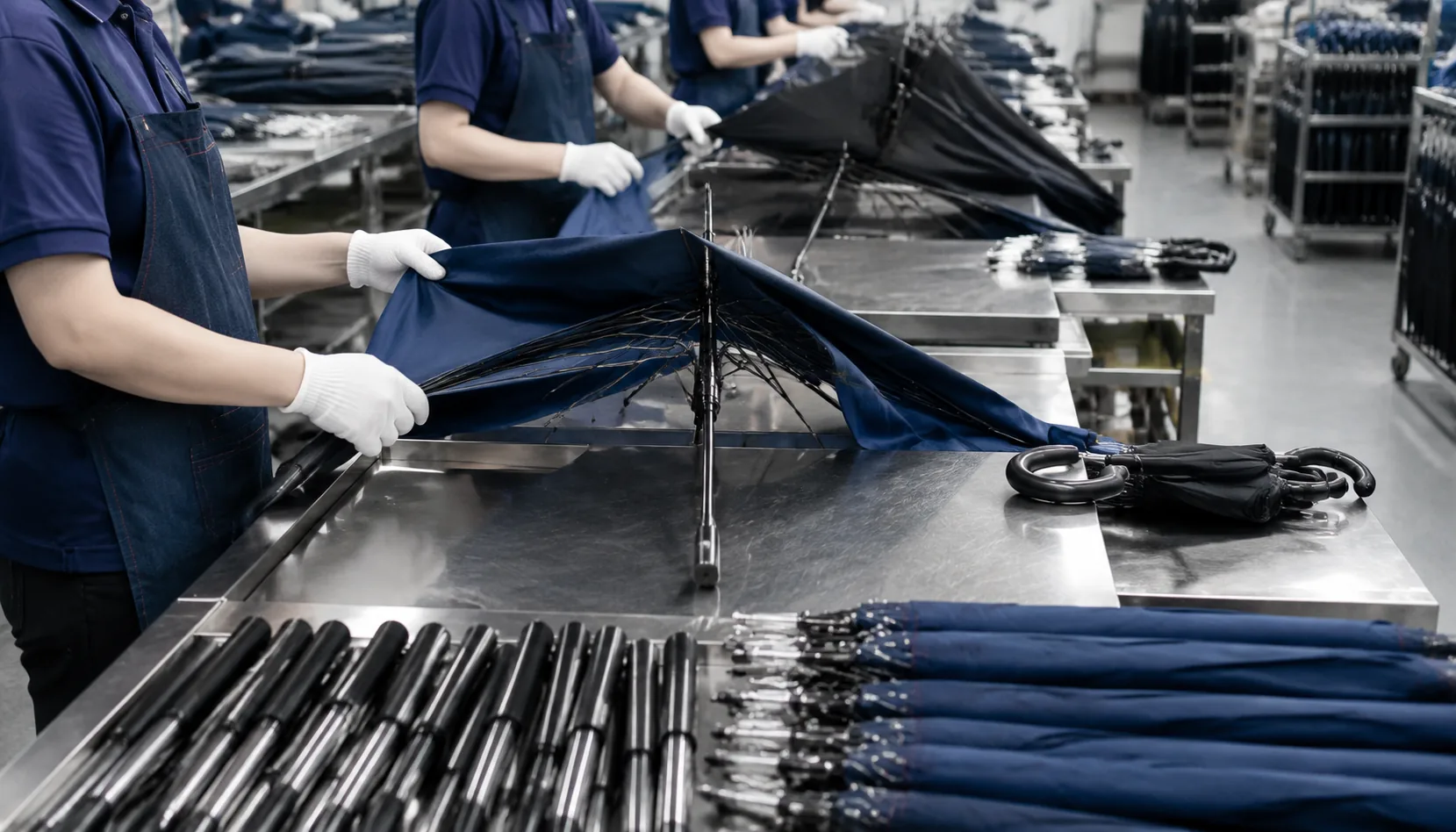
Setting up an umbrella final assembly line is less about adding a few workstations and more about controlling variation at every handoff. Buyers usually run into the same problems: loose canopy mounting, uneven opening performance, mislabeled cartons, and packing errors that show up only after export. At the factory floor, the fix is a line built around clear station controls, in-process checks, and repeatable test points that keep output consistent shift after shift.
Line Layout by Umbrella Type
The line layout should follow umbrella type first, not buyer or color, because the frame geometry decides the station sequence. A 23" straight umbrella can run in a compact flow: shaft and runner check, rib-tip alignment, canopy loading, hand stitching or tacking at rib ends, cap and ferrule fitting, handle gluing, open-close test, then packing. A 21" three-fold needs more space before canopy mounting because the telescopic shaft, folding ribs, springs, and runner lock create more failure points; if the line is squeezed, operators start stacking semi-finished frames and scratches appear on painted steel tubes. In bulk umbrella production, we normally allow 0.8-1.2 meters of WIP buffer per operator for straight umbrellas, but 1.5 meters or more for folding frames so the canopy does not snag while the frame is half-open.
Golf umbrellas and 16K models need a slower, wider umbrella final assembly line because rib spread and canopy tension are the bottlenecks. A 27" or 30" golf umbrella with 8K fiberglass ribs can usually be balanced with one canopy loader feeding two rib-end stitchers, but a 16K double-canopy windproof model often needs two loaders or a separate pre-positioning station for the vent layer. If the vented canopy is not centered before stitching, the top layer pulls sideways during the windproof inversion test. I do not like mixing 8K and 16K frames on the same hour-by-hour target board; a clean 8K steel straight umbrella may take 55-70 seconds at canopy attachment, while a 16K fiberglass golf frame can take 120-160 seconds before it is stable enough for trimming and inspection.
Auto-open and auto-open-close umbrellas should be separated from manual production whenever volume allows, because spring compression, button travel, and safety checks change the umbrella manufacturing process. In OEM umbrella assembly, we put mechanism testing before canopy mounting for auto frames: 20-30 open/close cycles, runner lock check, shaft wobble check, then canopy sewing. After final assembly, the umbrella inspection process should include button force, rebound speed, pinch-point check, cap tightness, and a full visual AQL 2.5 sampling plan before carton sealing. ZheBrella’s standard practice is to keep repair benches off the main flow; defective runners, loose rivets, or misaligned tips go to a side station, not back into the line, because rework traffic is one of the fastest ways to destroy line balance.
Canopy Mounting and Tip Attachment
Canopy mounting is where small cutting or sewing errors finally show themselves, so the first control point is canopy-to-frame matching before anyone touches a tip. On a 23" auto-open straight umbrella, for example, the canopy panel count, rib count, notch position, and runner height must agree with the frame drawing; an 8K canopy will not “stretch” correctly onto a 10K frame without twisting seams off the ribs. In our umbrella final assembly line, operators stage frames by size and mechanism—21" folding, 23" stick, 27" golf, 30" oversize—and match them with bundled canopies carrying the same work-order barcode. For OEM umbrella assembly, this prevents mixed black frames, fiberglass ribs, steel shafts, and custom printed canopies from being assembled into the wrong SKU during bulk umbrella production.
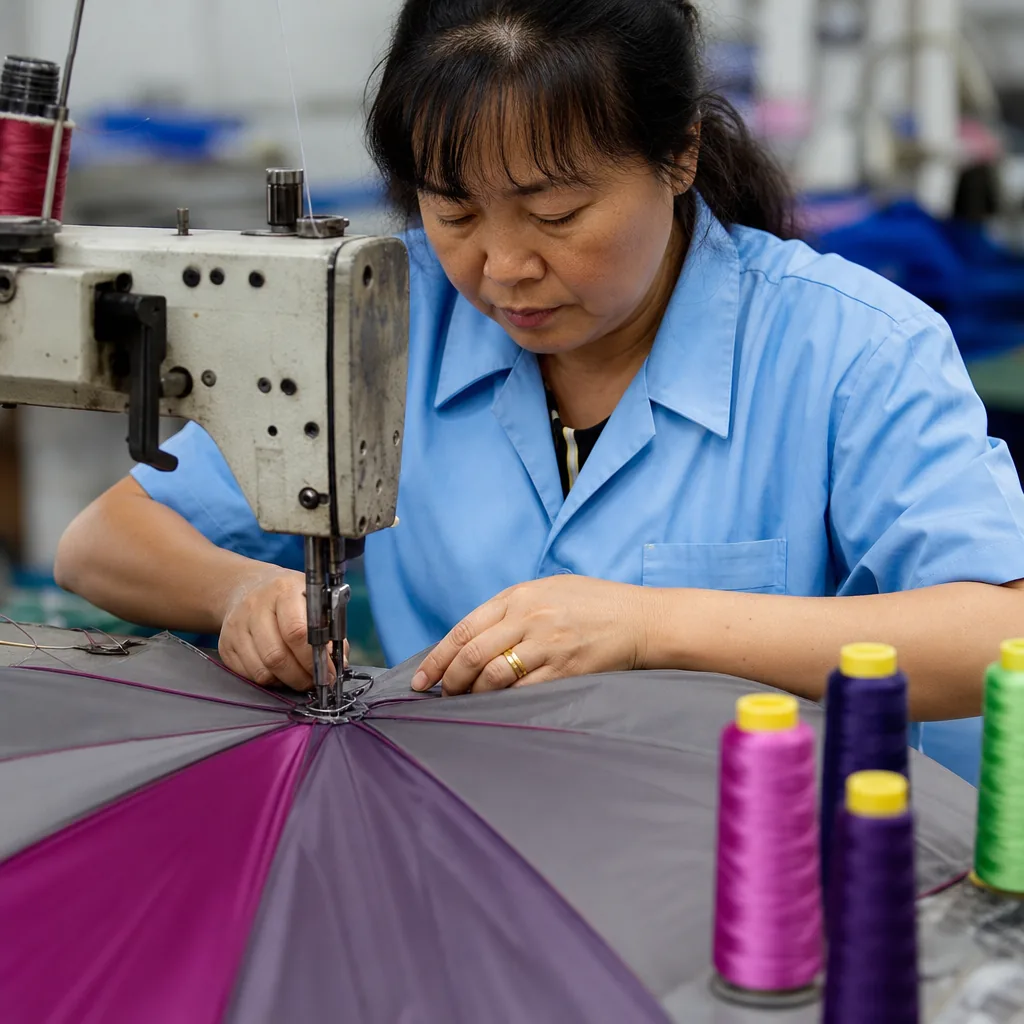
Tip attachment needs controlled tension, not brute force. With 190T and 210T pongee, the fabric is stable enough for daily rain umbrellas, but it still puckers if one panel is pulled harder than the next, especially on heat-transfer printed logos or Teflon-coated fabric where the hand feel is slightly stiffer. The assembler should fix opposite tips first, then work around the canopy in a balanced sequence so seam lines sit directly over the ribs. Plastic tips are usually pressed and stitched or bar-tacked depending on the buyer’s specification; metal tips need closer checking because sharp edges can cut thread during wind cycling. For double-canopy vented windproof models, the lower canopy must be seated cleanly before the top layer is locked, otherwise the vent gap becomes uneven and the umbrella may fail a 50+ mph wind-tunnel test.
Top cap installation and tie strap placement are simple operations that create many visible defects if the line has no standard. The cap washer must compress the canopy center without crushing the fabric or leaving a gap where water can enter; on POE, PVC, or EVA clear umbrellas, over-tightening also leaves stress whitening around the crown. Tie straps should land on the assigned panel, normally opposite the main logo view, with the snap or hook-and-loop facing outward for retail presentation. During the umbrella inspection process, QC checks seam alignment over every rib, tip security, cap tightness, strap position, open-close smoothness, and canopy symmetry under AQL 2.5 sampling. This part of the umbrella manufacturing process is not just cosmetic—poor alignment increases rib rub, weakens stitches, and makes otherwise acceptable FOB or DDP orders look inconsistent when distributors open cartons at an event or retail warehouse.
Function Testing at the Line
Function testing belongs directly on the umbrella final assembly line, not hidden in a back-room QC table after cartons are packed. The operator should open every umbrella once after handle fixing, tip alignment, and canopy tying, then check five points before it moves forward: smooth travel of the runner, positive runner lock, clean release from the spring button, shaft straightness under light shake, and no canopy drag around the crown. For manual 23" and 27" straight umbrellas, I want the runner to slide without a grinding feel and lock with a clear click; if the notch is shallow or the spring is weak, the umbrella may pass visually but fail in a customer’s hand. For auto-open and auto-open-close models, the button must respond without double-pressing, sticking, or delayed firing, especially on 3-fold 21" compact frames where shaft tolerances are tighter.
For double-canopy vented windproof umbrellas, vent clearance is a separate check because sewing tension can ruin an otherwise good frame. The upper canopy must lift evenly when air passes through, with no stitch catching on the lower canopy, no rib tip trapped between layers, and no binding at the vent overlap. On 8K fiberglass frames we normally allow a softer flex, but on 10K or 16K steel-and-fiberglass mixed frames, uneven vent tension can twist the runner and make the umbrella feel unstable. During OEM umbrella assembly, our standard practice is to test one piece from each operator every 30 minutes for five open-close cycles, plus the first three pieces after any frame, canopy, spring, or handle changeover. In bulk umbrella production, that frequency catches most assembly drift before it becomes a 500-piece rework problem.
The opening-cycle sample should be more severe than the basic 100% one-time open check. For manual umbrellas, cycle the runner fully up and down five times and confirm the lock still holds when the shaft is shaken vertically; for auto-open models, fire the button five times and watch whether the runner reaches full lock without hand assistance. For auto-open-close, include closing force and shaft compression, because weak internal springs or burrs inside the telescopic tube show up quickly. This function station is a practical bridge between the umbrella manufacturing process and the final umbrella inspection process under AQL 2.5: inspectors can still sample finished goods, but line testing prevents defects from reaching polybagging. On a well-balanced umbrella final assembly line, one trained checker can usually cover 700–1,000 pieces per day without slowing sewing or packing, provided failures are tagged by cause: frame, runner, spring, canopy tension, or operator handling.
Labeling, Packaging, and Carton Flow
Pack-out control starts before the umbrella reaches the carton, not after the goods are stacked at the warehouse door. On a proper umbrella final assembly line, the operator confirms the sewn label inside the canopy seam, the hang tag on the handle loop or shaft, the care label, and the importer-required warning label before sleeve packing. Retail umbrellas normally use a matching fabric sleeve in 190T or 210T pongee, while promotional OEM umbrella assembly may specify a clear polybag with suffocation warning, a printed paper band, or no individual bag to reduce plastic. For kids’ umbrellas with POE or EVA canopies, we separate sharp tag pins from the product and use string loops or adhesive labels instead. Mixing a UPC tag for a 23" auto-open umbrella with a 21" compact auto-open-close model is a small factory mistake that becomes a big receiving chargeback when the distributor scans the wrong SKU.
Carton marks must match the purchase order, packing list, and commercial invoice exactly: item number, color, quantity, gross weight, net weight, carton dimensions, country of origin, and carton sequence such as 1/80 through 80/80. For FOB Ningbo or Shanghai shipments, the forwarder mainly checks document consistency and export carton durability; for DDP shipments to the U.S. or EU, barcode control and importer data become stricter because customs brokers and 3PL warehouses rely on advance SKU information. In bulk umbrella production, we usually pack 12, 24, 36, or 48 pieces per export carton depending on size: 30" golf umbrellas may be 12 pcs/carton, while 21" folding umbrellas can be 48 pcs/carton. Cartons need 5-ply corrugated board for heavy steel shaft models, and edge crushing during trucking from Shangyu to Ningbo can trigger rework even when the umbrellas themselves pass AQL 2.5 inspection.
The last gate in the umbrella inspection process is a carton-level scan, not just a visual count. Our standard practice at ZheBrella is to scan the inner barcode, outer carton barcode, and shipping mark against the packing list before palletizing, then hold random cartons for open-box verification. This catches wrong-color sleeves, missing hang tags, duplicate carton numbers, and quantity shortages that line QC may not see during the umbrella manufacturing process. Pack-out errors are expensive because they surface late: a customs officer may hold a DDP shipment if carton marks do not match the invoice, and a distributor’s receiving dock may reject goods if GS1 barcodes or Amazon FNSKU labels are unreadable. For event orders with fixed dates, a labeling mistake can cost more than a failed rib test, because re-labeling 300 cartons after vessel arrival usually means warehouse labor, demurrage risk, and missed delivery windows.
Final Gate Before Warehouse Release
The final gate also prepares the shipment for the umbrella inspection process under AQL 2.5, so the QC team can sample cleanly without chasing mixed-status goods. Approved cartons are staged in a marked finished-goods zone by PO, SKU, carton number, and production date, while rework pieces stay in a physically separate red-tag area with defect categories such as canopy stain, bent steel rib, weak spring, loose handle, poor print registration, or failed open-close cycle. This separation sounds basic, but it prevents the most common factory-floor mistake: repaired umbrellas drifting back into sealed stock without retesting. For larger orders, I prefer a pre-final audit when 20–30% is packed and a final AQL inspection when 100% is produced and at least 80% is packed. The umbrella final assembly line should never release warehouse inventory based only on production output; it releases only after appearance, moisture, carton readiness, quantity, and inspection status all agree.
Frequently Asked Questions
How many inspection points should an umbrella assembly line include?
A practical line uses at least three gates: frame/canopy matching, functional opening check, and final packing review. High-risk auto-open or windproof models may add extra cycle-test sampling.
When should cartons be sealed for export orders?
Cartons should be sealed only after quantity, labeling, barcode, and final inspection status are confirmed. For buyer inspections, factories often keep selected cartons accessible until AQL inspection is completed.
What stations should be included in an umbrella final assembly line?
A practical line usually includes canopy mounting, frame alignment, opening/closing test, label application, folding or sleeve insertion, and carton packing. For export orders, many factories also add a final visual check and barcode or carton mark verification before sealing.
How many inspection points are typical before packing bulk umbrellas?
Most OEM umbrella lines use 3 to 5 control points: after canopy mounting, after function testing, before labeling, after packing, and a final carton audit. For retail-branded orders, a 100 percent visual check is common, while functional sampling is often done at AQL levels agreed with the buyer.
What lead time should a buyer expect for a customized final assembly run?
For standard styles, final assembly and packing usually follow the main production schedule and add about 2 to 5 days after umbrella bodies are ready. Custom labeling, special inserts, or retail packaging can extend the line time if artwork approval or extra QC steps are required.
Looking to Launch Your Custom Umbrella Line?
ZheBrella is a Zhejiang-based OEM/ODM umbrella manufacturer with 17 years of export experience. Free design, low MOQ from 100 pieces, windproof construction, full-color print.
Get Free Quote Now »People Also Search For
Related Articles
Umbrella Final Assembly Line Setup for Consistent OEM Quality
Design an umbrella assembly line with workstations, jigs, torque checks, and inline QC to improve consistency across MOQ...
Read More »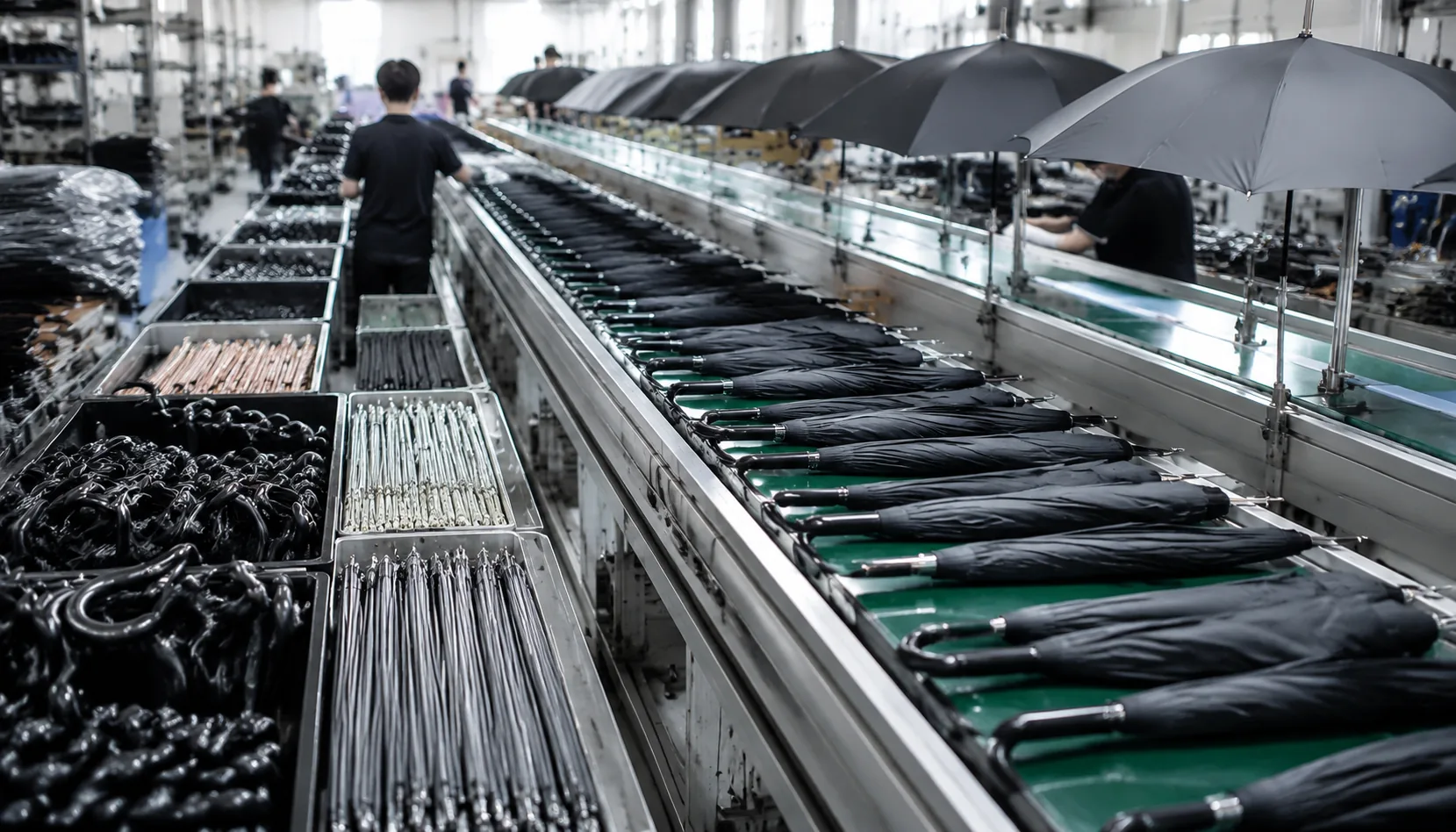
Umbrella Final Assembly Line Controls for Bulk OEM Orders
Improve bulk umbrella order consistency with final assembly controls for frame fit, auto-open function, canopy tension, ...
Read More »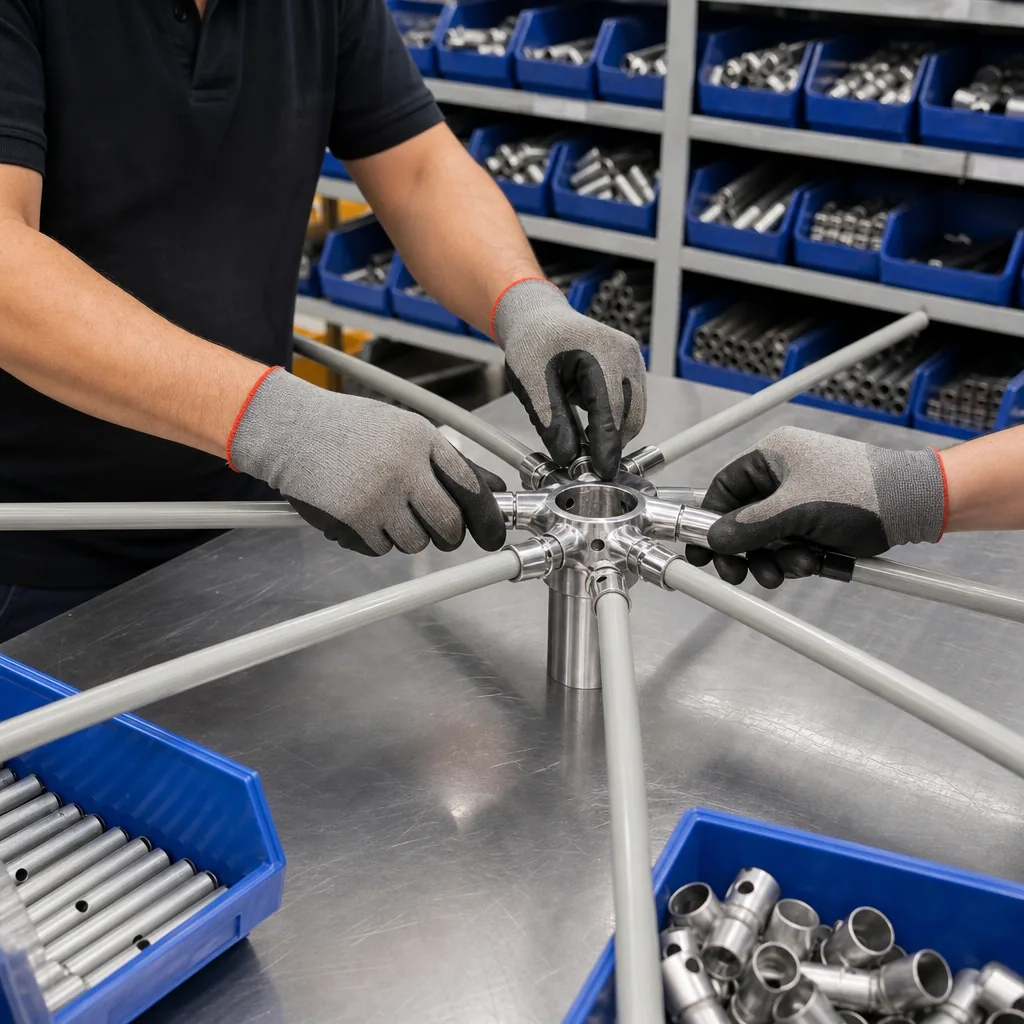
Umbrella Final Assembly Line Setup for Bulk OEM Orders
Plan a reliable umbrella assembly line with station controls, in-line QC gates, and output targets for consistent bulk O...
Read More »