Umbrella Handle and Shaft Bonding QC for Bulk Production
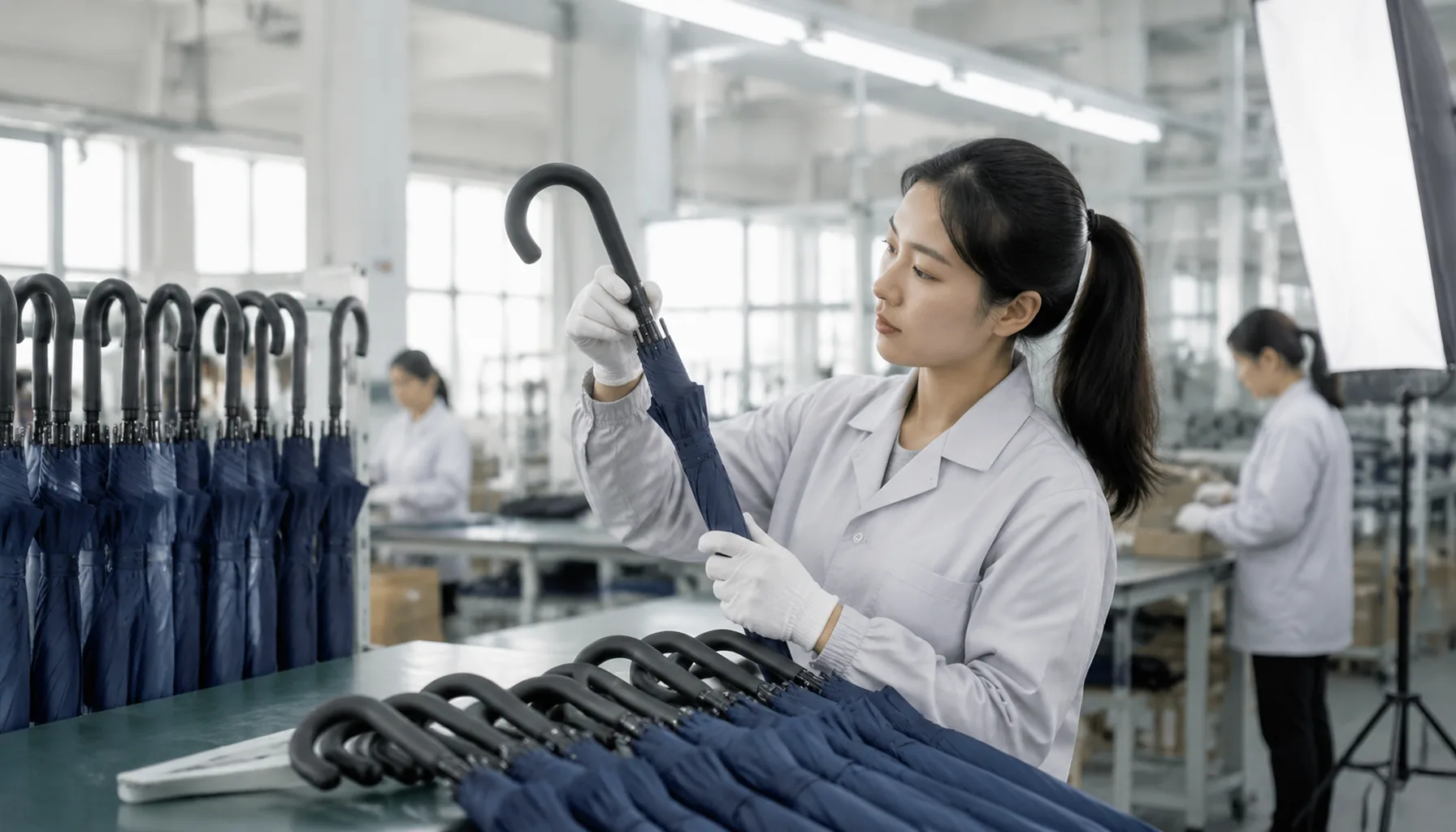
A loose handle is one of the fastest ways a good umbrella order turns into claims, because the defect may not show until cartons have bounced through shipping or users twist the grip in wet conditions. On our Songxia production floor, umbrella handle bonding QC means checking adhesive mix, shaft insertion depth, cure time, pull strength, and torque resistance by shaft material—not just giving the handle a quick tug before packing.
Why Handle Bonding Is a Structural Quality Point
A handle joint is not decoration; it is the load path between the user’s hand and the full umbrella shaft assembly. On a 23" auto-open stick umbrella, the spring release sends a sharp axial shock through the shaft when the runner locks, and that force is absorbed partly at the handle socket. On a 27" or 30" golf umbrella, the handle also carries higher leverage when the canopy catches wind, especially with 8K or 10K fiberglass ribs that flex instead of breaking. In bulk cartons, handles at the edge of the pack take compression from stacking, so a weak bond may fail before the umbrella is ever opened by the buyer. That is why umbrella handle bonding QC should be treated as structural inspection, not cosmetic checking. Our standard practice at ZheBrella is to verify shaft insertion depth, adhesive coverage, curing time, and alignment before final AQL 2.5 inspection, because once the canopy is sewn and packed, rework is slow and messy.
The most common failures are easy to recognize if inspectors know where to look. A loose handle usually means shallow shaft insertion, wrong adhesive viscosity, oily plating residue, or curing time cut short to chase output. Rotation is more dangerous because the umbrella may pass a casual pull but twist under real use; this happens often when smooth steel shafts are bonded into PP or ABS sockets without knurling, crimping, or enough glue contact area. Cracked plastic sockets usually come from forcing an oversized shaft, using brittle recycled plastic, or cooling the injection mold too fast. Adhesive squeeze-out is also a warning sign, not just a cleanliness issue. A small, even glue ring can be acceptable, but heavy squeeze-out often means too much adhesive at the mouth and too little inside the socket, leaving a hollow bond line deeper in the handle.
For umbrella production testing, we normally combine visual checks with a practical umbrella pull test. For compact 21" auto-open-close models, the handle must resist repeated push-button operation and torsion from users collapsing the shaft. For straight 23" and 27" models, we check axial pull, twist resistance, and whether the handle stays square to the shaft after opening cycles. A typical OEM umbrella quality control plan sets in-line checks every 30 to 50 pieces at the bonding station, then finished-goods sampling under AQL 2.5 before packing. The exact pull force depends on handle material, shaft diameter, and design, but the key is consistency: same fixture, same dwell time, same pass/fail definition. Good umbrella handle bonding QC prevents customer complaints that look small in photos but create high return risk, because a spinning or detached handle makes the whole umbrella feel cheap even when the canopy fabric, ribs, and printing are correct.
Matching Bonding Methods to Shaft and Handle Materials
The safest bonding method is dictated first by shaft material, not by handle shape. For a chrome-plated steel shaft, we normally use a controlled press-fit plus epoxy or cyanoacrylate adhesive, because the steel wall can tolerate insertion pressure without ovalizing. If the umbrella shaft assembly uses aluminum, the handle socket needs a longer engagement length, usually 25–35 mm on a 23" stick umbrella, because aluminum dents easier and loses grip after repeated torsion. Fiberglass shafts are the least forgiving: a hard screw point can split the tube, so I prefer adhesive bonding with a molded internal sleeve or a cross-pin through a reinforced insert. For umbrella handle bonding QC, the mistake I see most often is one glue recipe used across steel, aluminum, and fiberglass. That is lazy engineering. Surface energy, coating, shaft diameter tolerance, and handle socket shrinkage all change the bond.
Handle material decides the second half of the process. ABS and molded plastic handles bond well if the socket is clean and slightly textured, but PP is difficult because low surface energy makes many adhesives peel unless it is flame-treated, plasma-treated, or mechanically locked. EVA foam and rubberized grips should not depend only on glue at the end cap; they need a plastic or nylon inner core that carries the load, with EVA acting as the comfort layer. Wooden handles behave differently again: moisture content, lacquer thickness, and drilled-hole accuracy matter more than the adhesive brand. A straight wooden crook handle on a 27" golf umbrella can pass first-day inspection and still loosen after container heat if the bore is oversized by 0.3 mm. Our standard practice at ZheBrella is to pair wood with epoxy and a hidden pin when the umbrella is positioned for retail rather than one-time promotional use.
Mechanical pins, screws, and press-fit designs are not inferior to adhesive; they are controls against variation. A pin through a steel shaft and ABS handle gives excellent anti-rotation strength, but the pin hole must be deburred or it becomes a rust point after salt-spray exposure. Screws work for thick molded plastic handles, especially on auto-open and auto-open-close models, but they are risky on thin aluminum shafts unless the pilot hole and screw torque are specified. Press-fit is fast for bulk production, yet it depends heavily on shaft OD tolerance, handle socket ID, and operator feel, so it needs go/no-go gauges at the line. In OEM umbrella quality control, we verify with an umbrella pull test, torque check, and drop test before AQL 2.5 final inspection. For umbrella production testing, I want no handle movement after 150–200 N axial pull on compact umbrellas and higher loads on 27"–30" golf models.
Testing Pull Strength, Torque, and Cure Consistency
Cure consistency is where many bulk defects start, so the inspection cannot stop at the finished umbrella pull test. Two-component epoxy, hot-melt, and anaerobic adhesives all behave differently; changing from a 25°C dry workshop to a humid rainy day in Songxia can extend practical cure time by several hours. Our standard practice at ZheBrella is to mark bonding time by batch, hold assemblies in racks so the shaft stays vertical, and block any lot from final assembly until the approved cure window is complete. Visual inspection matters too: operators should confirm insertion depth against a gauge mark, check that adhesive squeeze-out is even but not messy, and reject handles with tilted shafts, exposed burrs, oil contamination, or plating flakes around the bond line. Drop checks add a final reality test: 3–5 drops from about 1 meter onto the handle end can reveal brittle adhesive, loose ferrules, or internal cracking before AQL 2.5 final inspection.
How Packaging and Shipping Can Expose Weak Joints
Weak handle joints often survive the assembly table and fail inside the export carton. In a compact pack-out, 50 or 60 folding umbrellas are not lying weightless; the handles become small pressure points against neighboring shafts, tips, and carton walls. A straight 23" stick umbrella with a J-handle sees bending load when cartons are stacked five or six layers high, while a 21" auto-open-close compact can take side load on the plastic grip if the inner polybag is too tight and the wrist strap is trapped under compression. For umbrella handle bonding QC, I do not trust a clean-looking glue line unless the sample has been checked after packaging simulation, because EVA foam, ABS, PP, and rubberized handles all deform differently under carton pressure. A handle bonded to a steel shaft may hide looseness until vibration works the adhesive gap open; fiberglass shafts are more forgiving in bending but still expose poor epoxy coverage or shallow insertion depth.
Inner polybags can make the problem worse when buyers request very tight retail presentation. A 190T pongee compact umbrella in a sleeve, then a thin OPP bag, then a 24-piece inner box sounds tidy, but the handle may be forced against the runner or ferrule during road transport from Shangyu to Ningbo or Shanghai. That is why umbrella production testing should include carton drop, vibration, and carton compression checks, not only a bench pull right after curing. Our standard practice at ZheBrella is to run an umbrella pull test on pre-shipment samples after they have been packed for at least 24 hours: manual models are checked for axial handle pull, auto-open models for twisting under repeated opening, and auto-open-close models for both pull and impact because the spring load transmits shock through the umbrella shaft assembly. If the glue, rivet, or crimp is marginal, packaging stress usually finds it before the customer does.
FOB and DDP shipments change the risk profile because ownership, handling, and claims evidence are different. Under FOB Ningbo or Shanghai, a distributor may accept cartons at origin but still face damage claims after ocean freight, warehouse stacking, and UPS or FedEx parcel distribution. Under DDP, the factory or trading partner carries more exposure all the way to the buyer’s door, so OEM umbrella quality control must treat packaging as part of the joint design. I like to specify carton burst strength, edge crush expectations, handle orientation, and maximum gross weight before mass production, especially for 27" golf umbrellas, 30" vented windproof models, and heavy 16K frames. AQL 2.5 inspection should record loose handles separately from cosmetic defects because one failed handle can trigger a distributor complaint across the whole PO. Good umbrella handle bonding QC connects the pull-test data, carton layout, and shipping route instead of pretending transit damage is random.
What Buyers Should Put in the QC Checklist
The QC checklist should start with locked specifications, not a vague line that says “black plastic handle.” Buyers should name the handle material—ABS, PP, EVA foam, rubberized TPR, bamboo, wood, or zinc alloy—and match it to the shaft diameter and shape. A 23" stick umbrella usually uses an 8 mm or 10 mm steel shaft, while a 27" golf model may use 12 mm or 14 mm fiberglass or steel; the bonding gap changes with every combination. For umbrella handle bonding QC, I want the checklist to state whether the joint is press-fit only, hot-melt glued, two-part epoxy bonded, riveted, pinned, or screw-fastened with adhesive backup. If the supplier changes from epoxy to cyanoacrylate to save curing time, the first samples may pass visually but fail after heat aging in a container at 50°C. The umbrella shaft assembly drawing should show insertion depth, adhesive coverage area, handle orientation, and whether any anti-rotation flat or knurling is required.
Minimum strength values must be written as numbers the inspector can test on the line. For a standard promotional umbrella, we normally set an umbrella pull test at 15–20 kgf for straight handles and 20–25 kgf for golf handles; premium retail programs may require 30 kgf after 24 hours of adhesive cure. Torque testing is just as important: a J-handle that twists at 2 N·m will feel cheap even if it does not pull off, so many OEM umbrella quality control plans specify 3–5 N·m depending on handle size and shaft wall thickness. The checklist should define sample size under AQL 2.5, classify loose handles, cracked sockets, exposed glue, off-center insertion, and wrong logo direction as major defects, and treat detached handles as critical. Our standard practice at ZheBrella is to record pull-test failures by production lot, operator, adhesive batch, and curing time, because most bonding issues trace back to process discipline rather than raw material alone.
Photo standards prevent arguments during bulk inspection. Buyers should provide approved sample photos showing correct handle color, logo placement, seam line position, shaft exposure length, glue cleanliness, and acceptable mold parting marks. The inspector’s report should include close-up photos before and after umbrella production testing, especially for failed pull or torque samples, with a ruler or caliper visible when checking insertion depth and shaft diameter. If the order uses custom handle molds, special soft-touch coatings, bamboo grain matching, or low-odor export adhesives, confirm MOQ and lead time before approving the checklist; a new mold can add 15–25 days, while imported or specialty adhesives can add 7–14 days if they are not stocked in Songxia. For repeat OEM orders, I recommend adding a retained golden sample, pre-production sample approval, and first-article inspection before mass sewing starts, because a handle mistake discovered after 10,000 canopies are finished is expensive to rework.
Frequently Asked Questions
Is adhesive bonding enough for golf umbrellas?
It can be, but large golf umbrellas place higher load on the handle joint. Many OEM specs use adhesive plus a pin or screw for stronger retention.
Should handle pull tests be done on every umbrella?
No, destructive pull testing is normally sampled by batch or line period. Visual insertion checks can be done more frequently, with AQL 2.5 final inspection covering loose or rotating handles.
What pull force should be used to check handle-to-shaft bonding in bulk umbrella production?
A practical production check is usually 150-250 N for standard manual umbrellas and 250-350 N for golf or windproof models, held for 5-10 seconds without slippage. The exact value should be confirmed by shaft material, handle design, and buyer specification before mass production.
How many umbrellas should be tested for handle bonding during final inspection?
For export orders, factories commonly test bonding during in-line QC and then sample again at final inspection using an AQL plan. For critical performance checks, many buyers require at least 5-13 pieces per lot, with any handle separation treated as a major or critical defect.
What cure checks help prevent loose umbrella handles after shipping?
QC should confirm adhesive type, application volume, insertion depth, and minimum cure time before packing; common epoxy or structural adhesives may require 12-24 hours at room temperature. Cartons should not be compressed or drop-tested until the handle bond has fully cured.
Looking to Launch Your Custom Umbrella Line?
ZheBrella is a Zhejiang-based OEM/ODM umbrella manufacturer with 17 years of export experience. Free design, low MOQ from 100 pieces, windproof construction, full-color print.
Get Free Quote Now »People Also Search For
Related Articles
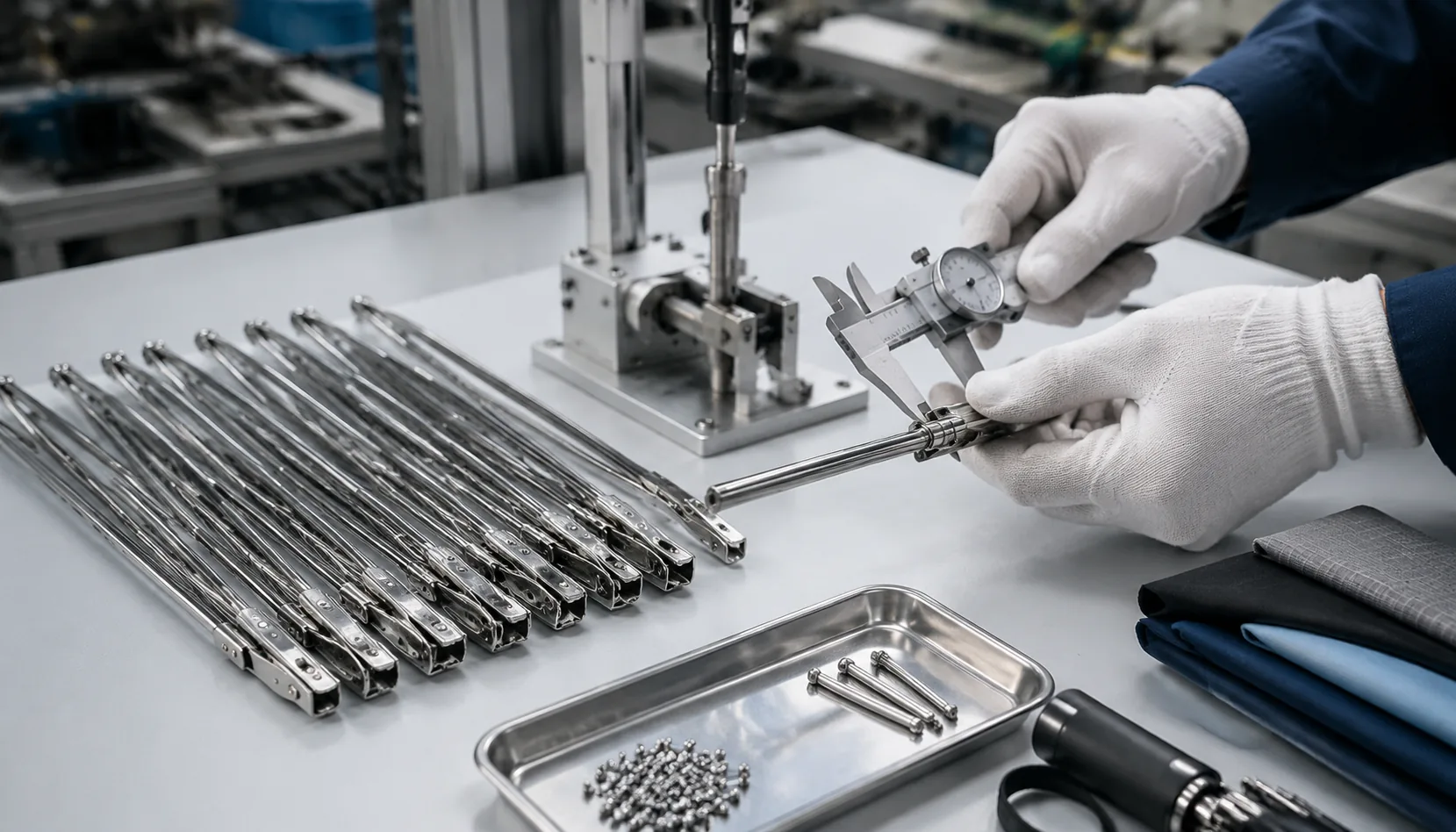
Umbrella Frame Riveting Quality: Tolerances and Pull Tests
Specify rivet fit, pull strength, and in-process checks to reduce loose ribs, canopy sag, and field failures in OEM umbr...
Read More »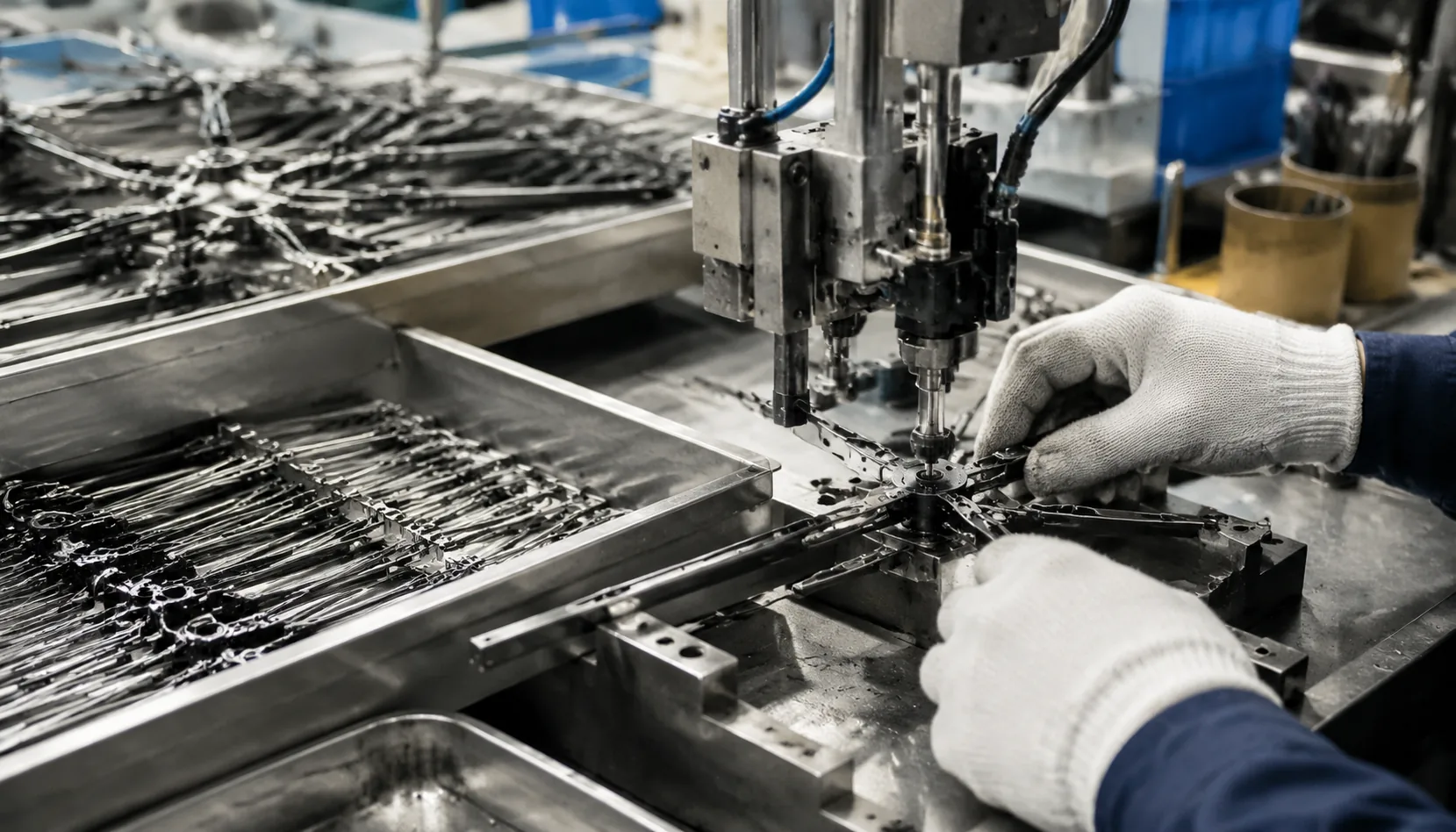
Umbrella Frame Riveting Process Control for Bulk Orders
See how rivet size, hole alignment, and pull-force checks improve umbrella frame durability across fiberglass, steel, 8K...
Read More »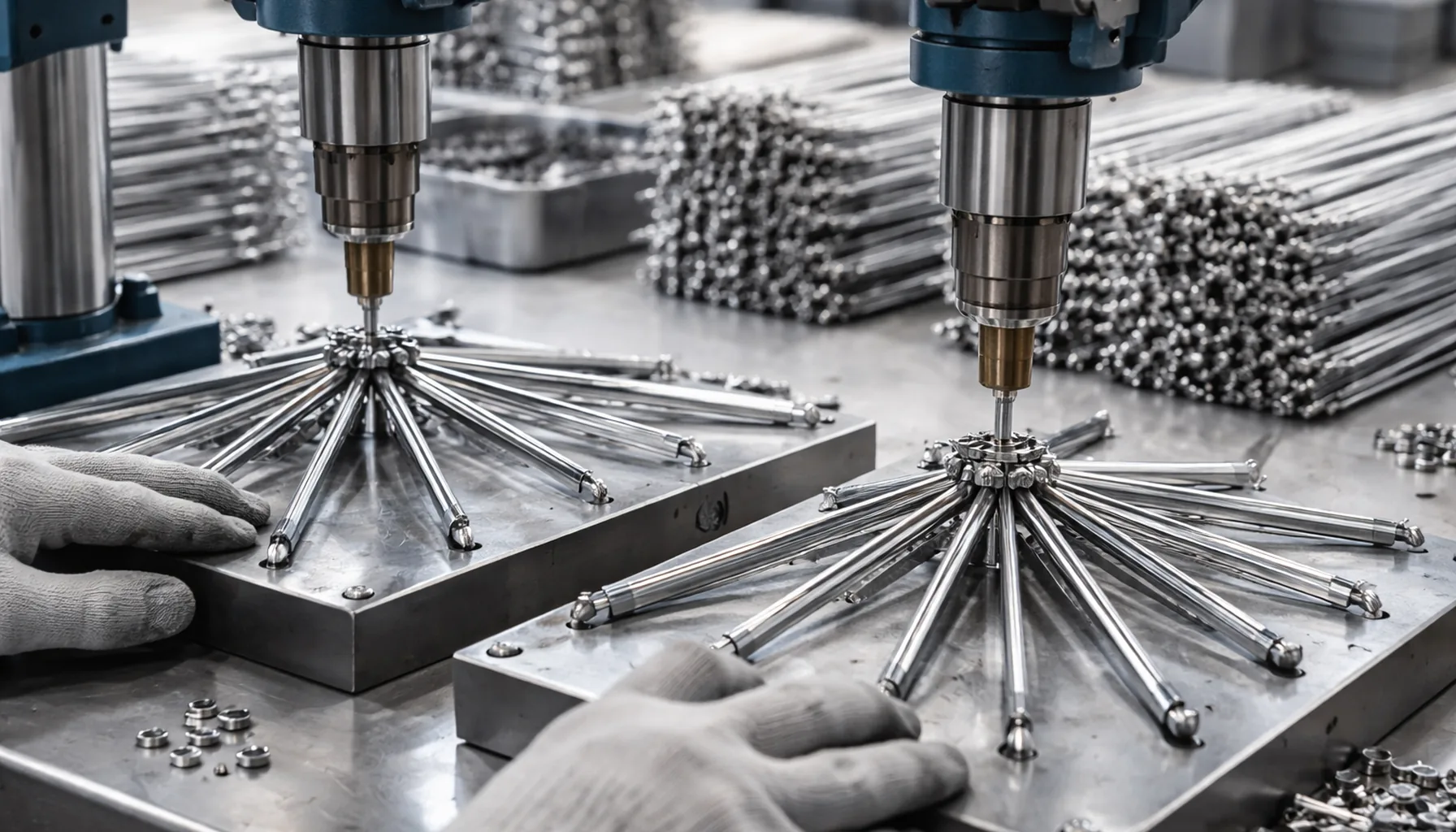
Umbrella Frame Riveting Specs for Consistent Bulk Assembly
Learn how rivet diameter, washer choice, rib alignment, and in-line pull tests reduce 8K/16K frame failures before AQL 2...
Read More »