Umbrella Frame Riveting Specs for Consistent Bulk Assembly
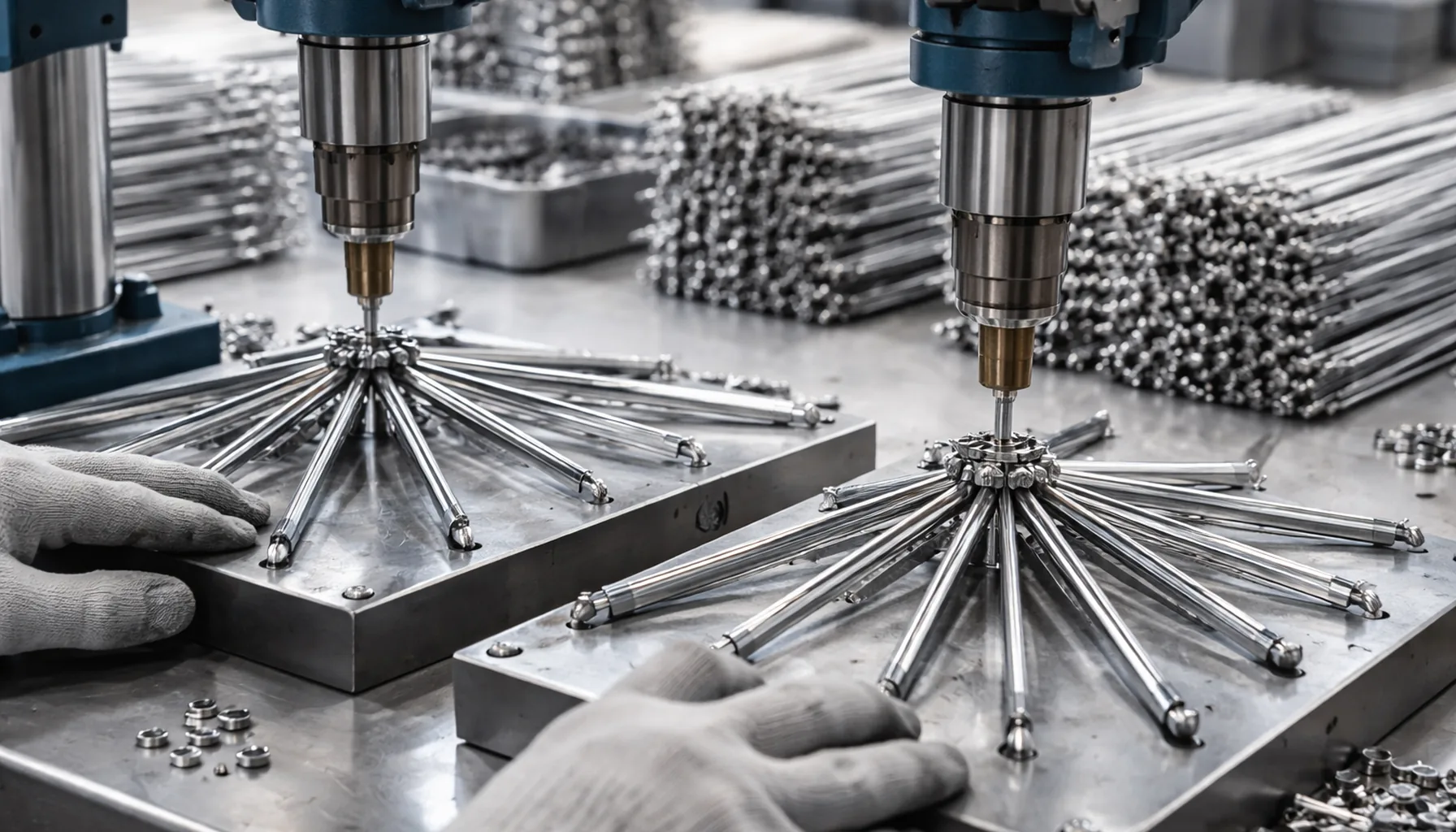
On an 8K or 16K OEM order, frame failures usually start long before final AQL 2.5 inspection: a rivet set too tight, a washer with the wrong bite, or ribs that shift under canopy tension. On our Songxia assembly floor, umbrella frame riveting specs are treated as process controls, not paperwork, because small variations in diameter, stack height, and pull strength decide whether bulk frames open smoothly or come back as claims.
Rivet Points That Carry the Highest Load
The highest-load rivet in normal umbrella frame assembly is usually the rib-to-stretcher joint, because it takes the opening shock, canopy tension, and reverse-bend stress when wind pushes the cover upward. On a 23" 8K straight umbrella with steel ribs, we normally see this joint fail before the top notch if the rivet is under-set or the hole is punched oval. The stretcher-to-runner rivet is the second critical point: every open-close cycle transfers force through the runner, especially on auto-open and auto-open-close mechanisms where spring impact is sharper than manual opening. For practical umbrella frame riveting specs, I want the rivet head seated flat, no visible daylight under the mushroom, free rotation without side wobble, and no cracked plating around the punched hole. If the joint is too tight, the frame opens with a hard snap and wears quickly; too loose, the canopy shakes and the umbrella feels cheap before it even leaves AQL 2.5 inspection.
The top notch and tip connections carry different loads, so they should not be judged by the same feel test. The top notch anchors all main ribs near the shaft, and any misalignment there shows up as uneven canopy tension, twisted panels, or a leaning ferrule on finished goods. On 27" and 30" golf umbrellas, especially double-canopy vented windproof models rated for 50+ mph wind-tunnel survival, top notch riveting must control both axial position and rib fan angle. Tip connections look minor, but they decide whether 190T or 210T pongee sits cleanly at the edge; a loose tip lets the canopy flutter and tears bartack stitching, while an over-crimped tip cuts thread or punctures coated fabric. In OEM umbrella manufacturing, we check these points before canopy sewing, not after, because a finished UPF 50+ or Teflon-coated canopy can hide frame errors until bulk packing.
8K and 16K frames need different riveting pressure because the load path and spacing are not the same. An 8K frame has fewer ribs, wider panel spans, and higher load per rib, so the rivet must hold against larger bending force without freezing the joint. A 16K frame distributes wind and canopy tension across more ribs, but the smaller spacing leaves less room for tooling, and alignment errors multiply around the circle; even a 1 mm offset at several joints can create a visibly uneven crown. For fiberglass ribs, we reduce impact and use cleaner die support because crushed fiber around the rivet hole becomes a delayed failure point. For steel ribs, pressure can be higher, but burr control matters because sharp edges scrape the stretcher during cycling. Our standard rib rivet testing includes 20 to 30 open-close cycles, side-play checks, and pull comparison by joint type, because good umbrella quality control catches bad riveting before printing, packing, and FOB shipment.
Material Choices for Rivets, Washers, and Ribs
Rivet material is not a cosmetic choice; it decides how long the hinge stays tight after 3,000 to 5,000 open-close cycles. For standard 23" and 27" steel-rib umbrellas, low-carbon steel rivets are still the workhorse because they flare cleanly under pneumatic riveting and match the rib hardness. Plated steel, usually zinc or nickel plated, gives better shelf appearance and moderate rust resistance, but once the plating cracks at the upset head, corrosion can start inside the joint. Brass rivets are softer and useful on lighter 8K promotional frames where smooth articulation matters more than high wind load, but they can loosen faster on heavy 10K or 16K structures. Stainless rivets resist salt air best, especially for coastal resort, marine, and golf programs, but they require tighter control of riveting pressure because over-setting can deform thin steel ribs or crush plastic runner links.
Fiberglass ribs change the calculation because the rib itself flexes instead of permanently bending like painted steel. In umbrella frame assembly, we normally pair fiberglass ribs with stainless or plated steel rivets plus a washer when the joint has repeated angular movement, such as the stretcher-to-rib connection on double-canopy windproof models. A bare rivet through fiberglass can ovalize the hole after wind-tunnel testing at 40 to 50+ mph, especially on 30" golf umbrellas with longer lever arms. Steel ribs tolerate higher compression, but they are more vulnerable to red rust if the paint film is scratched during riveting. For OEM umbrella manufacturing, coastal orders should avoid unplated steel rivets unless the buyer accepts shorter outdoor life; salt spray does not forgive small exposed edges.
Washers look minor on a BOM, but they are one of the cheapest controls against joint looseness. A washer spreads the bearing load, keeps the rivet head from biting into 190T or 210T pongee near the frame tips during assembly, and reduces side play at high-movement pivots. The mistake I see from low-cost suppliers is using washers everywhere without checking stack height; too much clearance gives a rattling frame, while too little clearance makes auto-open or auto-open-close action sticky. Our umbrella frame riveting specs call for rib rivet testing after frame assembly: visual flare check, manual articulation, pull resistance on selected joints, and AQL 2.5 inspection before canopy sewing. In umbrella quality control, the best rivet is not the hardest one; it is the one that holds alignment without freezing the joint.
In-Line Assembly Controls on the Factory Floor
The most reliable umbrella frame riveting specs are controlled at the riveting table, not rescued at final QC. For 8K and 10K straight umbrellas, we normally set the formed rivet head about 0.3-0.5 mm wider than the original shank diameter, with a smooth flare and no sharp crescent edge that can cut 190T or 210T pongee during cycling. On compact 21" auto-open-close frames, the tolerance is tighter because the rib stack is crowded; an over-flared rivet makes the stretcher bind, while an under-flared rivet walks out after 200-300 open/close cycles. Operators check the head with a go/no-go plate every tray change, then flex each rib joint by hand to confirm free rotation without side play. A good joint moves cleanly under finger pressure and returns without clicking, grinding, or spring-back hesitation.
First-piece approval is mandatory before bulk umbrella frame assembly starts, especially when switching between steel ribs, fiberglass ribs, or mixed fiberglass-and-steel windproof frames. The line leader signs off one complete frame after checking rivet head diameter, flare symmetry, rib alignment, runner travel, notch engagement, and canopy clearance if fabric is already mounted. For fiberglass ribs, we reject whitening, splitting, or crushed laminate around the rivet hole; for steel ribs, we reject burrs, ovalized holes, and black oxide flaking that can stain light canopies. In OEM umbrella manufacturing, small differences in frame source matter, so our standard practice at ZheBrella is to keep approved first-piece samples beside the riveting station, not locked in the QC room. The operator needs a physical reference for flare height, rib looseness, and acceptable joint friction.
Hourly spot checks catch drifting air pressure, worn punches, and tired operators before the problem becomes a carton-level defect. A typical patrol check pulls 5-10 frames per riveting station and records rivet flare, cracked ribs, loose stretchers, jammed runners, and pinched canopy fabric if sewing has already been joined to frame fitting. For rib rivet testing, QC opens and closes the sample at least 20 times by hand, then shakes the frame upside down to listen for loose rivets or uneven stretcher contact. Any cracked rib, canopy pinch mark, or frozen joint triggers immediate containment of that hour’s production, not just a note for final inspection. Final umbrella quality control under AQL 2.5 still matters, but it should confirm stability, not discover basic riveting failure after 1,000 pieces are already packed for FOB shipment.
Mechanical Tests Buyers Can Add to Specs
The most useful mechanical add-on to umbrella frame riveting specs is a simple pull-and-torque requirement at every critical joint: stretcher-to-runner, rib-to-notch, rib-to-stretcher, and tip end where applicable. For 21" and 23" compact frames, I like to see rivets hold a straight pull of 80–100 N without head lift, ovalized holes, or rib splitting; for 27" and 30" golf frames, 120–150 N is more realistic because the canopy load is higher. Torque checks are just as important on steel ribs, where a loose rivet may pass visual inspection but twist under wind load. A good factory-side test is rotating the rib joint 30 degrees each direction for 10 cycles, then checking that play stays under 1.0 mm. In OEM umbrella manufacturing, this catches under-peened brass rivets, soft aluminum rivets, and misaligned dies before they become bulk assembly defects.
Repeated open-close testing should be written as a frame-level requirement, not only a mechanism requirement. Manual umbrellas should complete 500 cycles with no runner cracking, rivet walkout, or notch deformation; auto-open models should reach 800–1,000 cycles because the spring shock loads the stretcher rivets harder than a hand push. Auto-open-close folding umbrellas need stricter checks around the lower runner, center rod latch, and first-fold rib hinges, since those joints absorb the snap-back force when closing. For promotional orders I would not accept fewer than 300 cycles, but retail private-label programs should specify 1,000 cycles minimum and inspect after every 250 cycles. If the frame uses 8K steel ribs, look for joint looseness; if it uses 8K or 10K fiberglass ribs, look for rivet-hole tearing or resin whitening. These checks turn umbrella quality control from a visual sorting job into a measurable durability gate.
Rib flex and windproof frame testing should match the product design. A double-canopy vented umbrella with fiberglass ribs can survive 50+ mph wind-tunnel testing only if the riveted joints allow controlled flex without cutting into the rib wall. For bulk umbrella frame assembly, I recommend a rib flex test of 30–45 degrees downward deflection for 20 cycles per rib, followed by a reverse-flex check on at least two opposite ribs to simulate canopy inversion. Rib rivet testing should record whether failure occurs at the rivet head, rib hole, stretcher slot, or notch seat; that failure location tells the factory what to adjust. In formal umbrella frame riveting specs, buyers can require AQL 2.5 inspection plus destructive testing from pre-shipment samples: 3–5 frames per size, per production lot, with photos of failed parts and cycle counts. That level of detail prevents vague arguments about whether a frame is “windproof” or just lightly reinforced.
How to Write Riveting Requirements in an RFQ
The RFQ should lock the frame before it talks about price, because riveting changes by geometry. State whether the umbrella frame assembly is a 21" 3-fold auto-open-close, 23" straight auto-open, 27" golf manual, or 30" double-canopy windproof model, then specify 8K, 10K, or 16K ribs and the rib material: black steel, galvanized steel, fiberglass, or mixed steel shaft with fiberglass ribs. Good umbrella frame riveting specs call out rivet material and size, such as nickel-plated brass, stainless steel, or aluminum tube rivets, plus the riveting points: stretcher-to-runner, rib-to-stretcher, rib tip joint, and top notch connection. I also want the buyer to define functional load: open-close cycling, lateral rib flex, and whether the frame must survive a 50+ mph wind-tunnel claim. Without that, factories may quote a cheaper thin-wall rivet that looks acceptable on a desk sample but loosens after carton vibration or 300 cycles.
Inspection language must be written like a production rule, not a slogan. Use AQL 2.5 for major defects and define what counts as major: loose rivet rotation beyond an agreed limit, cracked rib eyelet, sharp burrs, missing washer, asymmetric canopy tension, runner jam, or frame collapse during manual/auto-open testing. For rib rivet testing, require pull checks and open-close cycling on both PP samples and random bulk units; for example, 20 cycles during inline inspection and 100 cycles on retained samples for higher-risk auto-open-close models. In OEM umbrella manufacturing, the frame should be checked before canopy sewing, because a bad rivet hidden under 190T or 210T pongee wastes labor and delays packing. If the umbrella has POE, PVC, or EVA panels, note that stiffer canopy materials transfer more stress to rib joints, so the riveting standard should be stricter than for soft pongee with Teflon or UPF 50+ coating.
Sample approval criteria should include photos, not just a signed umbrella. Ask for PP sample images shot in consistent light: full open front view, top hub close-up, runner/stretcher joint, rib tip, rivet backside, folded profile, and any defect found during correction. Our standard practice at ZheBrella is to keep these photos with the sealed PP sample so bulk inspectors compare actual rivet head shape, washer position, and rib alignment instead of relying on memory. The RFQ also needs commercial assumptions tied to umbrella quality control: MOQ by color and print method, sample lead time of 5–10 days, bulk lead time of 25–45 days depending on season, and whether pricing is FOB Ningbo/Shanghai or DDP to the buyer’s warehouse. Packaging must be clear too: individual polybag or sleeve, inner box quantity, export carton strength, carton drop-test expectation, and whether spare parts or replacement frames are included. Precise umbrella frame riveting specs reduce arguments because the factory, inspector, and buyer all judge the same details.
Frequently Asked Questions
Should buyers specify rivet material in an umbrella tech pack?
Yes. Rivet material affects corrosion resistance, joint strength, and cost, especially on steel-rib or resort umbrellas. For coastal orders, plated steel may be insufficient compared with stainless or brass options.
Can poor riveting pass visual inspection but still fail in use?
Yes. A rivet can look acceptable but be over-compressed, under-flared, or misaligned. Add open-close cycle tests and rib-joint pull checks before relying only on AQL 2.5 visual inspection.
What rivet points should be checked before mass umbrella frame assembly starts?
Buyers should confirm rivet diameter, head shape, washer material, and rib hole clearance against the approved pre-production sample. A factory should also run first-piece checks on rib alignment and opening/closing smoothness before releasing the line.
How often should rib rivet pull tests be done during an OEM umbrella order?
For bulk orders, in-line pull testing is commonly done at production start and then at fixed intervals such as every 500 to 1,000 frames, or more often for 16K, windproof, or heavy canopy models. Failed samples should trigger immediate isolation of the affected batch and rechecking of riveting pressure.
Can poor washer selection cause umbrella frame failures after shipment?
Yes. Washers that are too thin, too soft, or mismatched to the rivet diameter can loosen after repeated open-close cycles, especially on 8K and 16K frames. For retail orders, buyers should require washer specs in the QC file and verify them during pre-shipment inspection under AQL 2.5.
Looking to Launch Your Custom Umbrella Line?
ZheBrella is a Zhejiang-based OEM/ODM umbrella manufacturer with 17 years of export experience. Free design, low MOQ from 100 pieces, windproof construction, full-color print.
Get Free Quote Now »People Also Search For
Related Articles
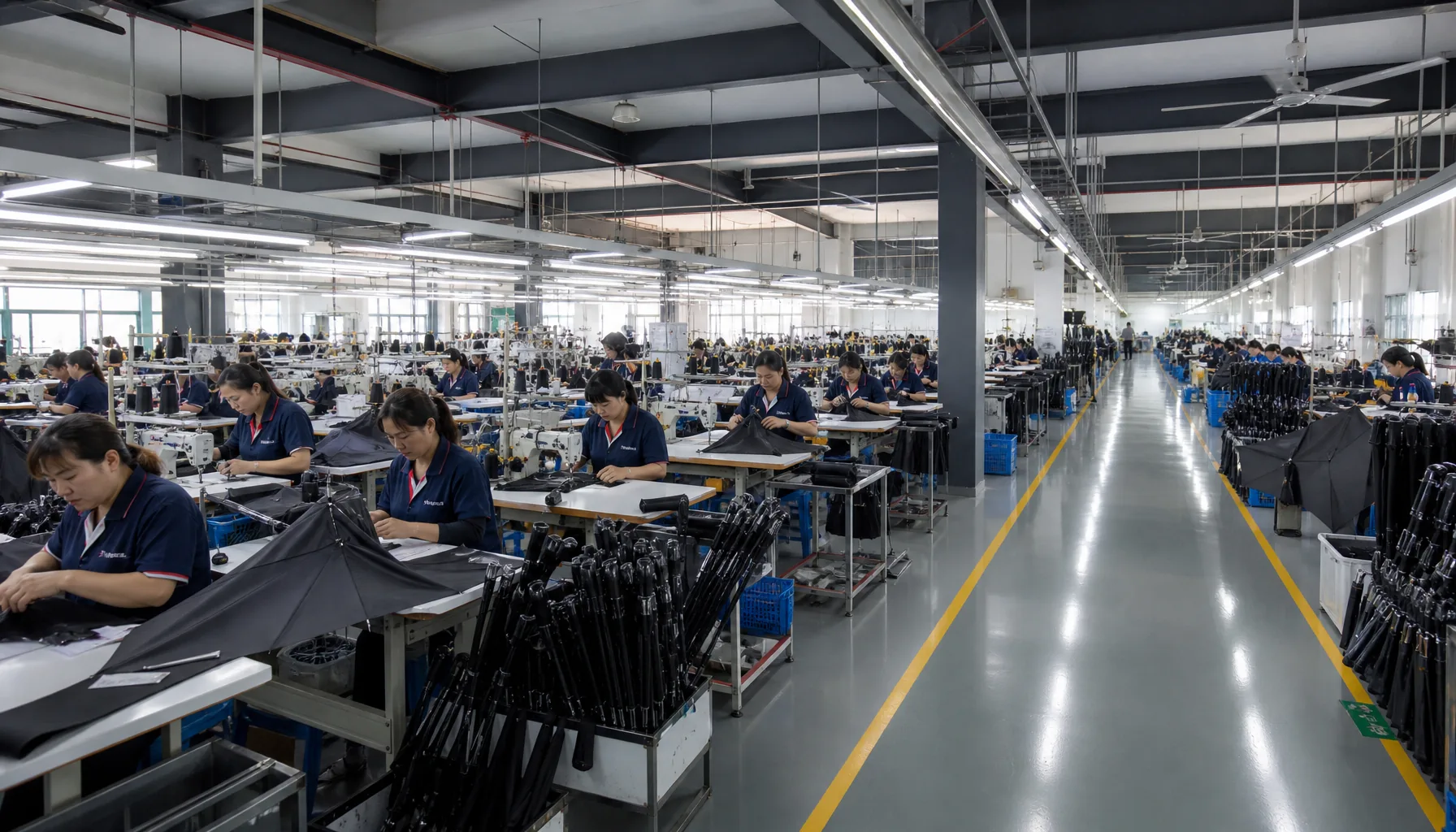
Umbrella Frame Riveting Process Controls for OEM Durability
See how rivet diameter, setting force, washer fit, and in-line pull tests prevent loose ribs, noisy frames, and AQL 2.5 ...
Read More »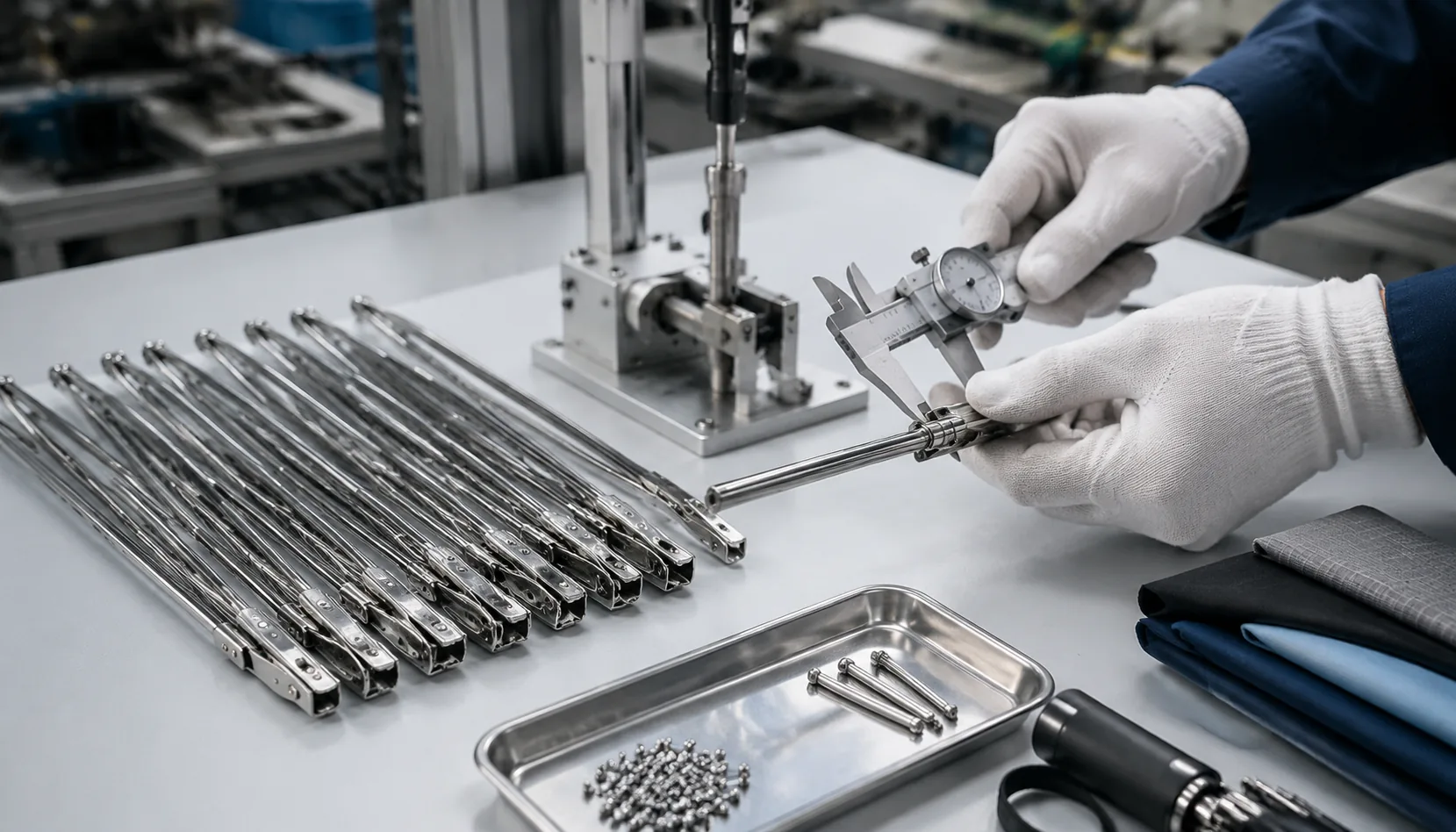
Umbrella Frame Riveting Quality: Tolerances and Pull Tests
Specify rivet fit, pull strength, and in-process checks to reduce loose ribs, canopy sag, and field failures in OEM umbr...
Read More »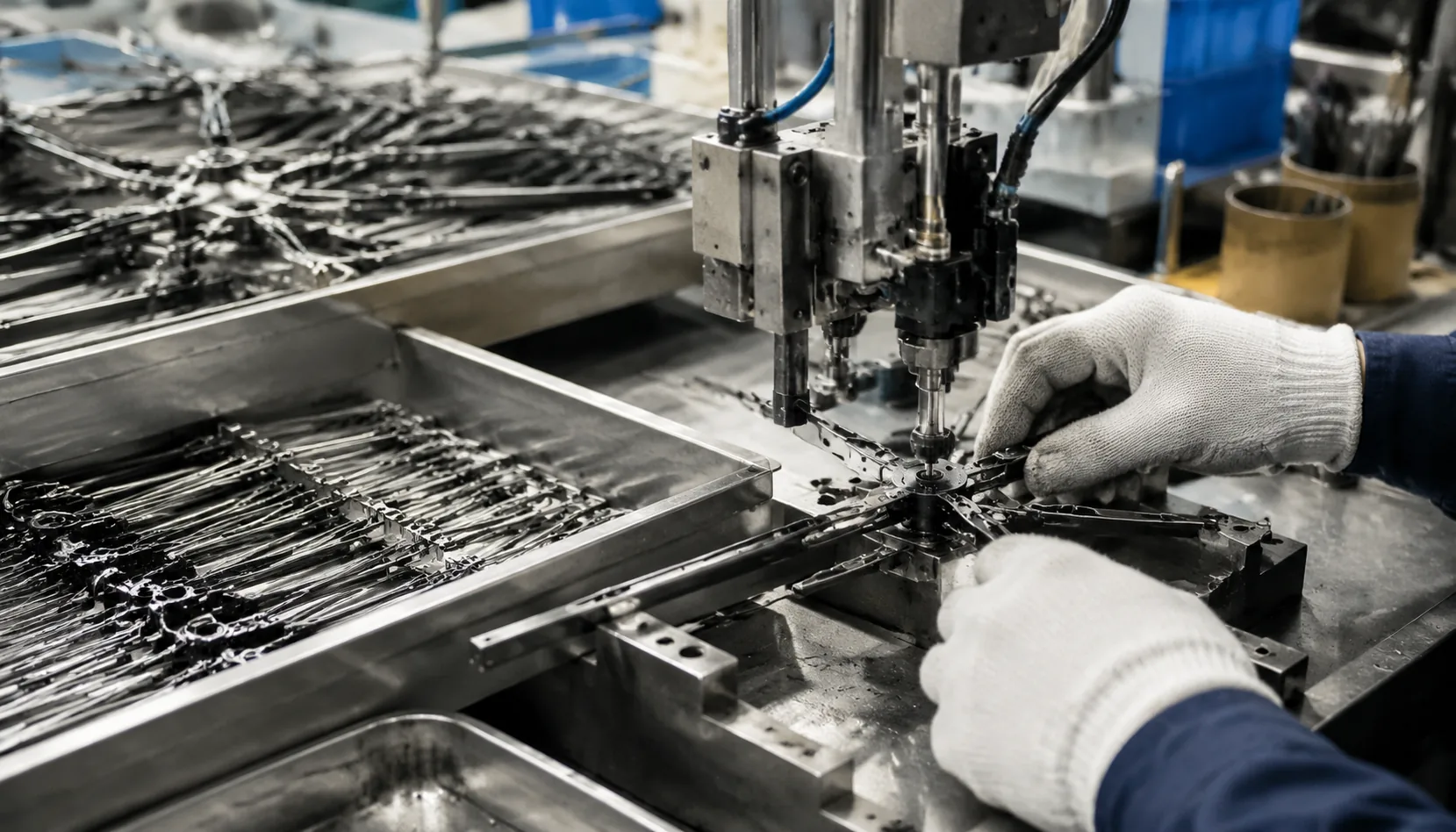
Umbrella Frame Riveting Process Control for Bulk Orders
See how rivet size, hole alignment, and pull-force checks improve umbrella frame durability across fiberglass, steel, 8K...
Read More »