Umbrella Panel Seams and Stitching: Build Quality Factors
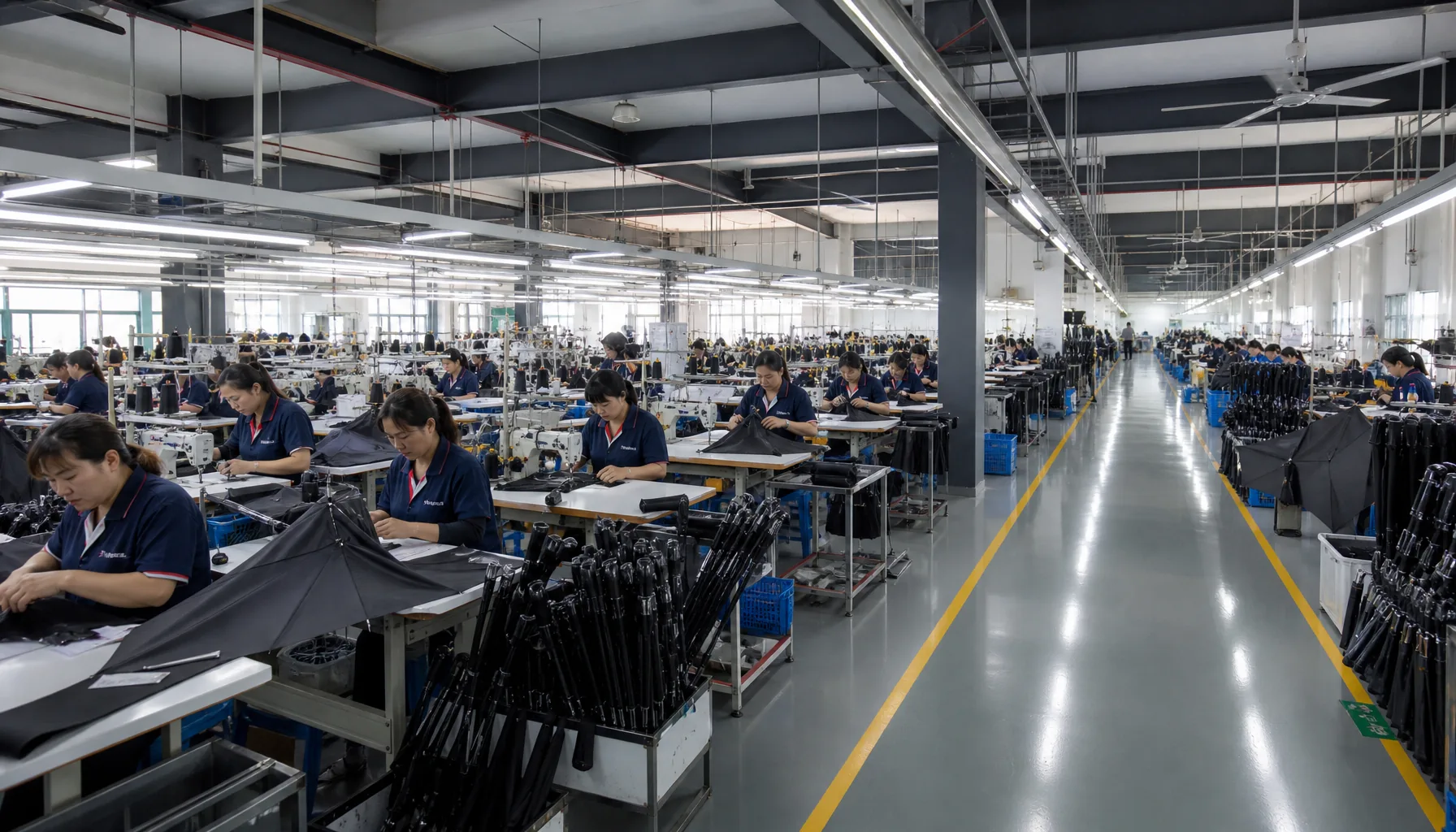
When buyers inspect an umbrella, the first failures are often hidden in the seams: uneven panel joins, loose stitches, and weak reinforcement that show up later as leakage, fraying, or early distortion. In our factory in Songxia, we see that durability is usually decided long before the canopy is packed, by how the `umbrella panel seams` are placed, sewn, and locked under real production tension.
Why panel seams matter in umbrella durability
Umbrella panel seams are where the canopy either holds together under real weather or starts to fail first. A straight, even seam keeps the panel shape stable, maintains the designed pitch of the canopy, and helps the cloth shed water instead of channeling it into stitch holes. When the seam line wanders, tension concentrates at the panel edge, so you get puckering, distorted ribs, and uneven coverage that shows up quickly on large formats like 23" and 27" golf umbrellas. In production, I look at seam stitching quality before I look at print because poor stitching ruins both fit and appearance, even if the fabric itself is decent.
The practical failure modes are easy to spot. Seam blowout usually starts at the top of the panel where the canopy is pulled hardest during a gust, especially on lightweight 190T pongee or thin POE film if stitch length and thread tension are wrong. Leakage is different: needle holes, skipped stitches, or badly overlapped seam allowances let rain wick through, then the problem gets worse after repeated opening and closing. A canopy with weak canopy seam strength may pass a quick visual check but still split along the seam after one storm cycle, which is why umbrella factory inspection has to include opening tests, water spray checks, and tension checks, not just a glance at the surface.
In a proper umbrella factory inspection, seam lines are treated as a structural item, not a cosmetic one, and AQL 2.5 sampling should catch loose thread, uneven bite, and panel mismatch before shipment. The best results come from controlled stitch density, consistent seam allowance, and thread matched to the fabric weight; otherwise the canopy starts to wrinkle around the seams and the load transfers into the ribs. On windproof frames with fiberglass ribs, a bad seam still becomes the weak link because the frame flexes while the fabric tears at the stitch line. That is why seam stitching quality matters as much as rib material: if the seam fails, the umbrella fails, even when the rest of the build looks fine.
Stitching specs buyers should request
Buyers should ask for stitch count per inch, thread spec, seam allowance, and bartack locations before they approve samples. For a normal 190T pongee canopy, I would expect 8 to 10 SPI on the panel join, with polyester thread that matches the fabric weight and a seam allowance around 6 to 8 mm. On 210T pongee, the cloth is denser and slightly less forgiving, so you want tighter control on needle size, thread tension, and seam straightness; otherwise the fabric puckers and the umbrella panel seams lose consistency at the first rain test. Seam stitching quality is not a cosmetic issue here, because a sloppy line turns into a leak path after a few openings and closings.
Canopy seam strength depends on where the load lands, not just the number on the spec sheet. Ask for bartacks at the top crown, the lower panel ends, and any point where the runner or stretcher can pull the fabric during deployment. If the design uses vents, vents, or double-canopy construction, the stress points need extra reinforcement because wind pressure concentrates at the seam intersections. In an umbrella factory inspection, I look for thread skips, needle cuts, seam grin, and uneven bite length first, because those defects tell you the operator or machine settings are off long before the umbrella fails in use.
For 190T pongee, a well-run line can usually hold a narrower seam allowance and standard bartacks without overbuilding the panel, while 210T often benefits from slightly wider allowance and stronger reinforcement at the apex and hem. That difference matters in AQL 2.5 sampling, because a few weak seams can pass visual inspection but still fail after opening-cycle or spray testing. If a supplier cannot state the stitch count, thread type, and reinforcement map in writing, they are asking you to accept guesswork instead of build quality control.
How seam construction changes by umbrella type
Compact umbrellas are usually the most abusive on seams because the canopy is folded, twisted, and stuffed into a tight sleeve every day. On a 21" or 23" frame, the umbrella panel seams need enough give to survive repeated packing without puckering, but not so much stretch that the stitch line waves after a few wet cycles. A 190T pongee canopy is common here; for better seam stitching quality, I prefer tighter needle control, shorter stitch lengths at the panel joins, and edge binding only where the fabric frays or where the cover is too thin to hold a clean turn. Seam sealing is useful when the buyer cares about drips from the stitch holes, but it is a tradeoff because sealant adds cost and can make a compact canopy feel stiff if overapplied.
Golf umbrellas live in a different stress category: the spans are larger, the panels are longer, and wind loading is higher, so canopy seam strength matters more than pure foldability. On 27" and 30" golf frames, 8K structures can usually tolerate standard join construction if the rib tips and stretcher geometry are clean, but 16K layouts put more load into the panel edges because there are more attachment points pulling on the same canopy area. That is where reinforced seam tape, better backtack control, and occasional edge binding make sense, especially on vented or double-layer canopies. In our umbrella factory inspection, I would flag loose thread tension, skipped stitches, and uneven seam allowance long before I worry about cosmetic needle marks, because those defects turn into seam failure in wind.
Double-canopy umbrellas are the least forgiving for sloppy stitching because the upper and lower layers move independently and trap air differently under load. The vent openings reduce inversion risk, but they also concentrate stress around the seam corners and the vent cut lines, so seam stitching quality has to be tighter than on a single-layer canopy. Seam sealing is useful only on the upper skin if the customer wants better water resistance without making the lower vent layer gummy; full sealing on both layers usually causes stiffness and poor drape. For production control, I treat umbrella panel seams on these styles as a structural item, not just a sewing detail: AQL 2.5 checks should include seam gap, skipped stitches, thread tension consistency, and pull testing at the highest-stress intersections near the top cap and rib tips.
Quality checks for seam failure and leakage
The first thing I check on umbrella panel seams is whether the stitch line stays straight under tension. A seam can look fine on a flat table and still fail once the canopy is opened, twisted, and loaded in wind. Good umbrella factory inspection starts with a visual pass under bright light, then a hand flex test on selected samples to catch needle damage, skipped stitches, thread loops, and broken lock points. If the stitch pitch changes from one panel edge to the next, that is usually a machine setup issue, not a material issue.
For buyers, seam stitching quality has to be judged by function, not just appearance. We check seam stitching quality against the canopy fabric weight, thread count, and coating type, because 190T pongee, 210T pongee, and POE film all behave differently at the needle hole. The real failure point is often the puncture line itself: if the needle is too large, the holes open under rain, and canopy seam strength drops even when the thread has not broken. On production runs, I prefer a simple standard: no visible skipped stitches, no puckering, no loose tension, and no edge fraying before the garment-style trimming step.
Rain testing is where weak umbrella panel seams show their defects fast. A proper spray or shower test should run long enough to expose leakage at the seam line, not just wet the surface. We look for drips at needle holes, water tracking along thread paths, and pooling at panel intersections, especially near the crown and rib-tip stress zones. For purchasing decisions, AQL 2.5 is a practical buyer standard because it lets you sample enough units to catch seam defects without overloading inspection time. If a lot passes visual inspection but leaks in rain testing, the batch should be treated as a seam construction problem, not a random cosmetic issue.
How to write seam specs into an OEM/ODM brief
For an OEM/ODM brief, start with hard dimensions on the umbrella panel seams: specify panel count, seam allowance, stitch length in stitches per inch, topstitch distance from the seam line, and acceptable tolerance on cut width and finished canopy diameter. If the canopy is 23" or 27", say whether the measurement is rib tip to rib tip or fabric edge to fabric edge, because factories will quote both if you leave it vague. For seam stitching quality, I would put the needle thread count, bobbin thread type, and whether bar tacks are required at the top and bottom ends of each panel seam; if you want a clean premium look, define max needle holes per inch and require no skipped stitches, puckering, or thread breakage on the face side.
Do not rely on words like "strong" or "well-made"; write canopy seam strength into the purchase order with a test method. A usable sample line is: "Seams must withstand 15 N peel force after conditioning, with no opening greater than 2 mm at the seam line, and no seam slippage exceeding 3 mm after 200 open-close cycles." If you want a higher standard, add a water-ingress check under spray test and a flex test on the finished canopy, because a seam that looks fine on the table can still fail once the panels are tensioned on 8K or 10K frames. Our standard practice is to tie that language to the fabric spec, such as 190T pongee or 210T pongee, so the supplier cannot substitute a weaker cloth and still claim compliance.
For umbrella factory inspection, state the acceptance plan in the PO: AQL 2.5 for major defects, 4.0 for minor defects if you want to be practical, and define seam defects as open stitches, broken stitches, skipped stitches, raw-edge exposure, and seam wandering beyond the tolerance. Add a sample-ready clause such as: "First article approval required before bulk cutting; production lots inspected at AQL 2.5; any seam failure in the first 200 pcs triggers 100% recheck of the lot." That removes a lot of argument later, especially when the supplier tries to treat cosmetic stitch variation as acceptable. Also ask for a signed golden sample with annotated seam photos, because a written spec without a visual reference usually gets interpreted generously at the factory floor.
Frequently Asked Questions
Should umbrella canopy seams be sealed or just stitched?
Most promotional and retail umbrellas use stitched seams only. Seam sealing is usually reserved for special rainwear-style builds or high-spec outdoor models where leakage control is critical.
What seam issues should buyers catch during inspection?
Look for skipped stitches, loose thread ends, crooked panel alignment, and puckering near the top cap and tips. These defects can signal weak production control even when the umbrella looks acceptable at first glance.
What stitch density is usually acceptable for umbrella canopy seams in bulk production?
For most polyester or pongee canopies, buyers commonly approve around 8 to 12 stitches per inch, depending on fabric weight and seam type. Below that range, seams are more likely to gap or leak; above it, needle perforation can weaken coated fabric if tension is not controlled.
Which seam defects should be classified as major under an AQL 2.5 umbrella inspection?
Major defects usually include skipped stitches, open seams, visibly uneven panel matching, seam puckering that distorts canopy shape, and needle holes that cause leakage in a water test. Many importers also treat seam separation at the tip or top notch area as major because it directly affects function and returns.
How many umbrellas should be checked for seam issues during a pre-shipment inspection?
Under a standard single-sampling plan tied to AQL 2.5, the sample size depends on lot quantity, but many orders in the low thousands are checked with 80 to 200 pieces. Inspectors typically review seam appearance on all sampled units, then perform rain or spray testing and open-close cycling on a smaller functional subset.
Looking to Launch Your Custom Umbrella Line?
ZheBrella is a Zhejiang-based OEM/ODM umbrella manufacturer with 17 years of export experience. Free design, low MOQ from 100 pieces, windproof construction, full-color print.
Get Free Quote Now »People Also Search For
Related Articles
Umbrella Stitching Specs That Reduce Canopy Failures
Learn which stitching specs, seam tests, and fabric pairings reduce panel distortion, leakage, and rework on OEM umbrell...
Read More »Umbrella Canopy Panel Cutting and Seam Alignment Controls
Understand how panel cutting, seam alignment, and stitch control shape canopy appearance, waterproofing, and rejection r...
Read More »
AQL 2.5 for Umbrella Inspections: What Buyers Should Specify
See how AQL 2.5 is applied to umbrella orders, which defects matter most, and what tolerances protect quality before shi...
Read More »