Umbrella Seam Sealing Methods for Leak Resistance in Production
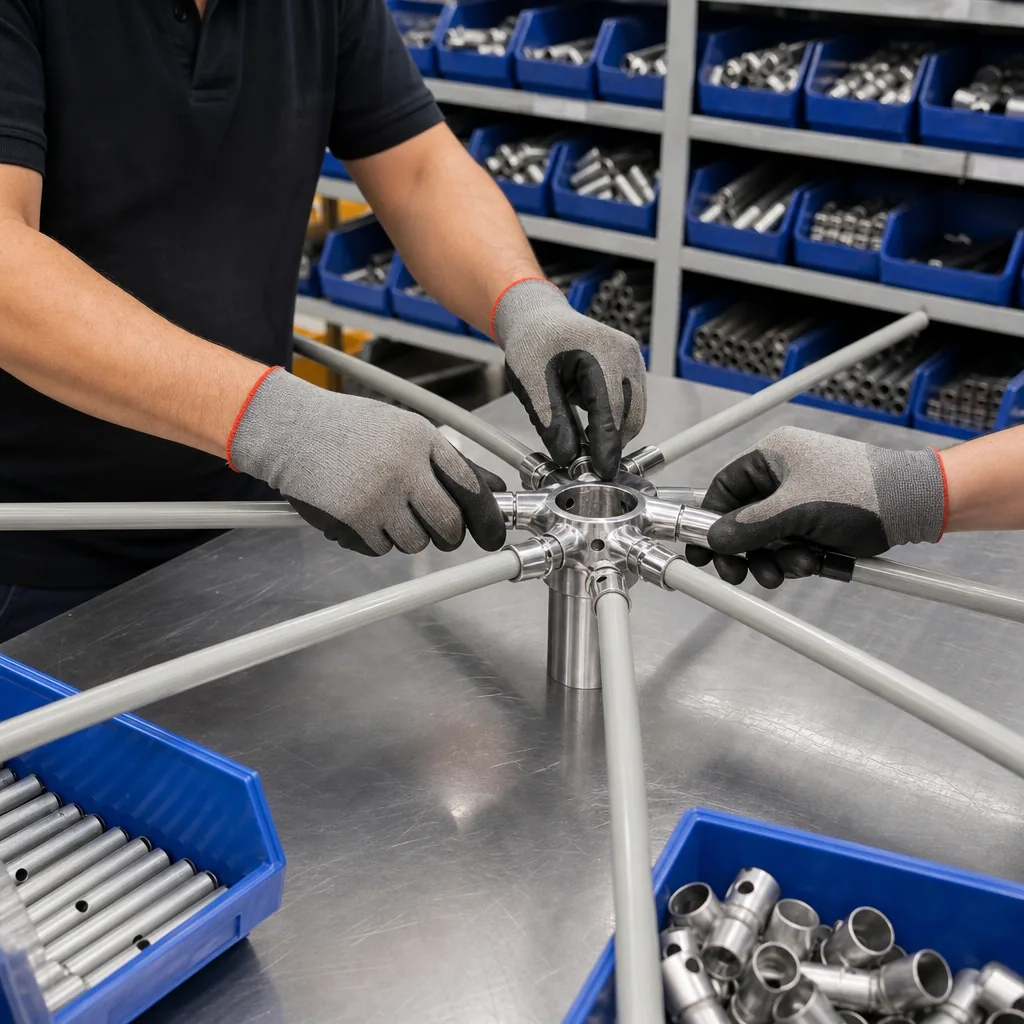
On bulk umbrella orders, leak complaints usually trace back to small production choices: stitch tension, tape temperature, panel overlap, and how seams are routed around high-stress points. The right umbrella seam sealing methods have to match the fabric coating, canopy shape, and daily line speed, or the factory will trade water resistance for rework. On our sewing and inspection floors, we treat sealing as a process control issue, not a final cosmetic step.
Where Leaks Start in an Umbrella Canopy
Most canopy leaks begin where sewing penetrates the waterproof layer, not across the open panel face. On an 8-panel umbrella, every panel seam forms a continuous line of needle holes; if the stitch density is too tight for the fabric, water can travel along the thread by capillary action. Lightweight 190T pongee and thin POE are higher risk when a factory uses 10-12 SPI for appearance instead of matching canopy stitching specs to yarn count, coating thickness, thread size, and needle diameter. A 210T pongee canopy with PU, silver, or Teflon finishing may pass rain shedding on the face fabric but still leak at the seam if the needle fractures the coating film. For commuter, golf, and dome models in waterproof umbrella production, umbrella seam sealing methods should be specified by sewn construction, not by fabric label alone.
Tip pockets and crown areas leak for different reasons than long panel seams. Tip pockets fail when the reinforcement patch is too small, the bartack adds excessive needle penetrations, or the rib tip keeps the fabric under tension so stitch holes cannot close after sewing. Crown stitching is a high-risk point because 8K or 10K panels meet at a tight radius; stacked seam bulk can lift the top patch, create puckering, and hold water before it tracks down the thread. Clear PVC, POE, and EVA canopies do not wick like woven pongee, but they can deform around stitch holes when the needle is wrong or thread tension is too high. Cold-cracking near the stitch line is also a risk on film canopies. In OEM umbrella manufacturing, seam leak resistance depends on fabric type, reinforcement layout, stitch density, and whether the coating protects only the face or maintains back-side coverage after sewing.
Needle holes should be evaluated after folding, binding, and frame assembly, not only at the sewing table. A fine needle with suitable polyester thread may let 210T pongee relax around the stitch, while a larger needle used to speed production through coated fabric can leave a permanent water channel, especially when heat-setting or tension control is poor. Low-grade waterproof coatings usually fail first at the seam: the panel face may pass a spray test, but the seam line leaks after the coating cracks during turning, binding, or rib attachment. ZheBrella reviews leak risk by construction details such as cutting accuracy, stitch spacing, reinforcement size, and coating integrity. A 23-inch auto-open umbrella in 190T pongee with poor seam control can leak sooner than a 21-inch manual umbrella using cleaner-cut 190T panels and better seam handling. Effective umbrella seam sealing methods start before tape or liquid sealant is applied.
Stitch Construction Choices That Affect Water Resistance
For pongee 190T and 210T canopies, stitch density is not a seal; every needle hole can become a capillary path under rain and wind pressure. In OEM umbrella manufacturing, single-needle lockstitch is the preferred panel-join construction because it holds curved panel dimensions better than chain stitch and is less likely to open after repeated folding. Set canopy stitching specs around 8-11 SPI for 190T pongee and 9-12 SPI for the firmer 210T fabric, using a fine needle matched to continuous-filament polyester thread. Below about 8 SPI, seams can grin under rib-tip and notch tension, exposing holes and reducing seam leak resistance. Above the target range, extra perforations often work against waterproof umbrella production by increasing leakage risk, especially on coated pongee where tight tension can pucker the fabric or concentrate stress along the stitch line.
Seam allowance should support the canopy edge without adding fold bulk. For standard 21 inch to 27 inch rain umbrellas, a finished 6-8 mm seam allowance gives pongee panels enough stability during high-speed sewing and repeated open-close cycling. Below about 5 mm, the seam can roll, distort, or leak inconsistently after use; a slightly wider allowance helps spread load near the ferrule, runner, and rib transition points. Wider margins are not automatically safer: compact auto-open-close frames have shorter fold geometry, and excess seam bulk can create pressure ridges, poor packing, and visible print-through on coated 190T or 210T pongee. Among umbrella seam sealing methods, controlled seam geometry at sewing usually creates less rework risk than applying stiff tape or post-assembly coating to a lightweight canopy.
Thread choice determines whether a tight seam improves resistance or creates failure points. Continuous-filament polyester is the standard for 190T and 210T pongee because it absorbs little moisture, resists UV exposure, and provides enough strength without sawing into the fabric. Use a medium ticket size for most 21 inch to 27 inch frames; heavier thread needs a larger needle hole, while overly fine thread often requires higher tension that can pucker coated pongee or bias-cut panel edges. Tighter seams help only when fabric feed is stable, thread tension is balanced, and presser-foot pressure does not drag the panels. On slippery 190T, aggressive top tension can form rope-like seams, enlarge holes after wind loading, and reduce seam leak resistance. ZheBrella verifies the sewing window with spray testing and opening-cycle checks, not visual inspection alone.
Heat-Sealed, Taped, and Sewn Seam Options
Choose umbrella seam sealing methods by fabric first, then by leak target and order economics. Conventional needle sewing remains the mass-production baseline in OEM umbrella manufacturing because 190T and 210T pongee or polyester panels cut cleanly, keep screen and digital print registration stable, and run on standard canopy lines for 21", 23", 27", and 30" frames. Its limit is physical: every needle hole can wick water at the crown, rib tips, and panel joins during sustained rain. Better canopy stitching specs reduce, but do not eliminate, that risk: use finer needles, balanced thread tension, consistent seam allowance, and higher SPI to limit hole size and puckering. For folding umbrellas, promotional runs, and most golf umbrellas, sewn seams are acceptable when the canopy already has PU, AC, Teflon, or another water-repellent finish. This option keeps unit cost lowest, supports the lowest MOQ, and requires only normal sewing folders, jigs, and operator training, so it fits waterproof umbrella production where the buyer’s real requirement is water resistance rather than a fully sealed canopy.
Seam tape is the practical upgrade when stronger seam leak resistance matters but the buyer wants to keep woven pongee or coated polyester. After sewing, the factory bonds PU-based or hot-melt tape over the inside seam with a heated roller; tape choice must match the coating, seam allowance, canopy curvature, and crown thickness. A correct tape process bridges stitch holes and reduces capillary seepage better than sewing alone, but it adds tape material, heat-press labor, slower handling on curved panels, and inspection for lifting, adhesive bleed, and missed coverage. MOQ often rises because tape color, adhesive chemistry, and fabric compatibility need sampling before bulk approval. Buyers should expect added sampling days and a moderate unit-cost increase, not a full production rebuild. Ultrasonic or heat-welded seams are more limited: they work best on POE, EVA, PVC, and laminated thermoplastic canopies, such as clear bubble or kids’ umbrellas. On standard woven pongee, ultrasonic sealing usually means changing material, making horn and anvil tooling, tuning line speed, and accepting higher MOQ to absorb development scrap.
How Factories Test Leak Performance Before Shipment
A valid factory leak test starts with a written spray protocol, not a hose-down video. For production checks, the canopy should be fully locked open under an overhead spray for 10 to 15 minutes at a fixed pressure, typically 0.8 to 1.2 bar for 23 inch and 27 inch straight umbrellas. The report should identify the inspected points: stitched panel joins, top cap, ferrule area, crown patch, and rib-tip pockets. If the supplier claims advanced umbrella seam sealing methods, ask them to test sealed and standard stitched seams on the same canopy fabric, such as 190T or 210T pongee, because coating, stitch density, and print heat all affect leakage. Most failures start at needle holes, tie-off points, and stiff printed areas near the seam, not in the coated fabric field.
Static water hold checks catch slow wicking that spray tests can miss. The factory should place the open canopy at a fixed angle, hold standing water over selected seam zones for 3 to 5 minutes, then inspect the underside for darkening, bead formation, and delayed drips. This matters most on 30 inch golf umbrellas, double-canopy vented windproof models, and any frame where panel tension varies from rib tip to crown. Buyers should request canopy stitching specs with the leak report: stitches per inch, thread type, seam allowance, lockstitch tension after sublimation printing, and whether seam tape or liquid seam treatment was applied before final assembly. In OEM umbrella manufacturing, those process details often predict seam leak resistance better than the fabric name alone.
Final inspection should repeat the leak test after mechanical flexing. A practical sampling check is 20 to 50 open-close cycles on manual or auto-open-close frames, followed by a second spray test and close inspection for seam wicking around the crown patch, tip pockets, and heavy-ink logo panels. Do not approve vague results such as “waterproof passed.” For sampling and pre-shipment inspection, specify test duration, water pressure, sample quantity, and allowed drip points per umbrella. A clear limit could be zero continuous drips through stitched seams during the test, with no more than one isolated drip at an agreed non-seam hardware penetration. In waterproof umbrella production, that acceptance language keeps AQL 2.5 inspection objective before goods are packed for FOB shipment.
Writing Clear Seam Specs Into an OEM Order
Write seam requirements in the PO as controlled production specs, never as “factory standard.” For 190T or 210T pongee canopies, set canopy stitching specs at 8 to 10 stitches per inch: below 7 SPI, seams can open near rib tips under tension; above 11 SPI, coated fabric gains too many needle holes and loses seam leak resistance. Define seam overlap by canopy size. Use 6 to 8 mm for most 21 inch and 23 inch folding umbrellas, and 8 to 10 mm for 27 inch and 30 inch golf umbrellas where panel span and wind load are higher. Specify needle size, typically #11 or #12 for pongee, so production cannot switch to a larger needle that weakens waterproof umbrella production. Place these umbrella seam sealing methods beside rib count, fabric weight, coating, frame material, MOQ, and lead-time terms in the OEM order so cost and quality tradeoffs are visible before sampling.
Specify thread as precisely as fabric. For polyester canopies, call for 100% polyester filament thread, commonly 150D/2 or equivalent ticket size, with stated colorfastness and minimum seam strength. Reject cotton-core thread because it wicks water, swells, and degrades faster in humid storage. If taping is required, name the seam type, tape width, and post-heat-setting adhesion requirement. Do not require full-canopy taping by default: it is uncommon on mass promotional pongee umbrellas because it adds cost and can worsen fold memory. Taping is easier to justify on premium golf umbrellas, PU-coated fabrics, and double-canopy vented builds where the upper canopy seam sits in the runoff path. Folding umbrellas need added tolerance at bulky intersections near the runner. Double-canopy styles need separate inner and outer canopy stitching specs so the vent gap stays even and does not twist under wind load.
Make the PO enforceable with carton-level inspection points tied to AQL 2.5 sampling. Inspectors should open random units and run a water-spray or pour test focused on crown seams, panel junctions, tip patches, ferrule and top-cap penetrations, and the top 150 mm above the strap where folded umbrellas crease and leak first. For 3-fold and 5-fold umbrellas, check skipped stitches at high-bulk points, runner interference, seam allowance print-through, and bunching when the canopy is fully tensioned. For golf umbrellas, add checks for panel alignment, long seam straightness, and cap-area leaks because larger canopies magnify sewing drift. For double-canopy umbrellas, confirm vent symmetry, bar-tack security, and smooth open-close cycling without the inner canopy catching tape or stitches on the outer layer. These umbrella seam sealing methods turn leak risk into measurable acceptance criteria for OEM umbrella manufacturing.
Frequently Asked Questions
Is seam tape always better than sewing for umbrella waterproofing?
Not always. Seam tape can improve leak resistance, but it adds process cost, may affect hand feel, and is not the best fit for every canopy shape. The right choice depends on fabric coating, order volume, and target price.
Can a tight seam damage the fabric?
Yes. Excessive tension or too-small seam allowance can distort the canopy and shorten service life, especially on lightweight fabrics. Good production balances water resistance with panel stability and opening performance.
Should buyers specify seam tape for all umbrella canopy seams?
Not always. Seam tape is usually reserved for higher leak-resistance requirements, such as golf umbrellas, storm umbrellas, and premium retail lines, because it adds labor, material cost, and production time compared with standard stitching.
What seam details should be included in an OEM umbrella tech pack?
A good tech pack should define stitch type, stitch density, thread material, seam allowance, panel overlap, tape width if used, and the required water test method. These details help the factory control leakage, puckering, and rework during bulk production.
How is seam leak resistance checked before shipment?
Factories typically use spray testing, static water exposure, or targeted seam checks on production samples and random finished units. For larger OEM orders, buyers can request AQL inspection with specific leakage acceptance criteria written into the purchase order.
Looking to Launch Your Custom Umbrella Line?
ZheBrella is a Zhejiang-based OEM/ODM umbrella manufacturer with 17 years of export experience. Free design, low MOQ from 100 pieces, windproof construction, full-color print.
Get Free Quote Now »People Also Search For
Related Articles
Umbrella Canopy Seam Specs That Improve Leak Resistance in Production
Specify stitch count, seam allowance, thread type, and seam sealing methods so your umbrella canopy resists leaks, frayi...
Read More »
Umbrella Panel Stitching Specs for Leak Resistance in Production
Learn the stitching specs, seam allowances, and QC checks that reduce seam leakage in OEM umbrella production and stabil...
Read More »
Umbrella Canopy Seam Sealing and Leak Resistance in Production
Learn how seam construction, tape bonding, and fabric choice affect leak resistance, repair rates, and waterproof perfor...
Read More »