Umbrella Specs for Insurance Claims and Roadside Assistance
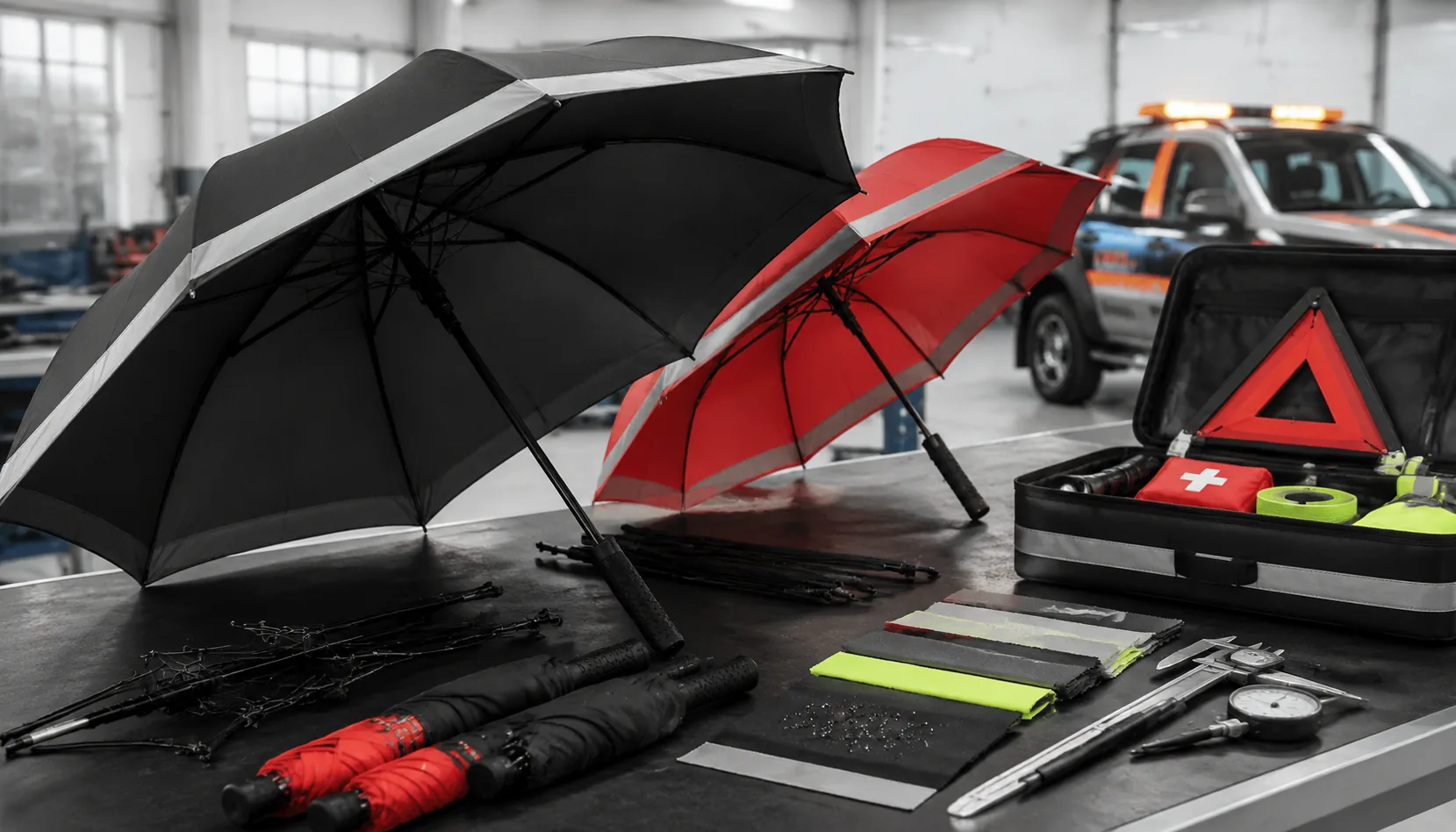
For insurance carriers and roadside-assistance networks, an umbrella is not just a giveaway; it has to work in a wet parking lot, fit in a glove box or claim-center drawer, and arrive on schedule for storm season. On our Songxia production floor, insurance branded umbrellas usually succeed when buyers lock the frame strength, compact length, fabric coating, logo method, AQL standard, and reorder window before sampling starts.
Where Umbrellas Fit Insurance and Assistance Programs
The best insurance umbrella programs separate goodwill gifts from working field equipment. Claim-center handouts and claims office umbrella gifts usually need a clean 23" auto-open stick umbrella with 190T pongee, steel shaft, fiberglass ribs, and a single-position logo that still looks respectable after sitting in a reception rack for six months. Policyholder retention gifts can move up to 27" golf umbrellas with 8K or 10K fiberglass frames, Teflon water-repellent coating, and UPF 50+ fabric if the carrier wants the item to feel useful rather than disposable. For insurance branded umbrellas, I would avoid the cheapest 170T polyester and black-only handles; they save cents but make the brand feel like a trade-show leftover.
Roadside assistance umbrellas and emergency service umbrellas have a different job: they must work beside a disabled vehicle, in rain, spray, and wind from passing traffic. A 30" double-canopy vented golf umbrella with 8K fiberglass ribs, EVA grip, reflective piping, and a high-visibility yellow or orange panel is much more practical than a compact travel model. For kits stored in tow trucks or service vans, manual open is often safer than auto-open because it is less likely to deploy accidentally in a crowded compartment. If the buyer wants branded safety umbrellas, we normally specify wind-tunnel survival above 50 mph, colorfast screen printing, and an AQL 2.5 inspection focus on rib joints, runner lock, tip alignment, and reflective trim adhesion.
Adjuster field visits and catastrophe-response stations need staff operational umbrellas, not customer giveaways. Field adjusters benefit from 27" or 30" golf umbrellas with fiberglass shafts, 16K ribs for extra stability, and darker 210T pongee that hides mud and roof grit better than light fabric. Cat-response sites may need large quantities delivered quickly, so the practical spec is often a stocked 23" or 27" model with one-color logo printing, MOQ around 500–1,000 pieces, and 20–35 day production depending on artwork approval and season. For FOB Ningbo or Shanghai, carton strength and inner polybag labeling matter; for DDP programs to multiple regional offices, carton marks should separate customer-facing insurance branded umbrellas from staff-use units so warehouse teams do not mix them during emergency deployment.
Durability Requirements for Field and Emergency Use
For roadside assistance umbrellas, the first durability decision is frame geometry, not logo placement. I would specify a double-canopy vented windproof construction for any crew working around disabled vehicles, storm claims, or tow dispatch points, because the vent lets pressure bleed off instead of flipping the frame inside out. Fiberglass ribs are worth the small cost increase over painted steel ribs; steel is rigid and can deform permanently after one bad gust, while fiberglass flexes and rebounds. A serious field umbrella should pass a 50+ mph wind-tunnel check, use at least 190T pongee with a water-repellent coating, and include reinforced rib tips with clean bar-tack stitching. For insurance branded umbrellas used during active claims work, I would avoid thin promotional frames that look fine indoors but fail when an adjuster is standing in a parking lot during sideways rain.
Compact 8K folding models make sense for glove boxes, vehicle kits, and roadside welcome packs because they fit in door pockets and emergency bags without taking space from tools, flares, or first-aid items. A 21" or 23" auto-open-close folder with fiberglass ribs, a steel shaft, and a rubberized anti-slip handle is the practical baseline. The tradeoff is coverage: an 8K compact usually protects one person, maybe a clipboard, but not a customer and technician together. For claims office umbrella gifts, that is acceptable if the product is meant as a preparedness item rather than daily field equipment. I would still require AQL 2.5 inspection on open/close cycling, rib alignment, handle pull strength, and canopy leakage, because emergency service umbrellas often sit unused for months and then need to work immediately.
For adjusters, CAT response teams, tow supervisors, and mobile support crews, a 16K full-size umbrella is the better tool. A 27" or 30" straight umbrella gives enough canopy diameter to cover a tablet, estimate paperwork, or a customer conversation at the roadside, and the 16-rib layout spreads wind load more evenly than an 8K frame. Pair that with a fiberglass shaft or thick steel shaft, EVA or rubber anti-slip grip, and 210T pongee with Teflon water repellency or UPF 50+ coating if the umbrella will be used for heat exposure as well as rain. Branded safety umbrellas can also use reflective edge binding or reflective print panels, but keep decoration clear of stress seams and vent openings. For FOB production, typical lead time is 25-35 days after artwork approval, with higher MOQ if custom molded handles or reflective materials are required.
Safety, Visibility, and Brand Design Considerations
Visibility should be treated as a safety spec, not a decoration choice, when umbrellas are used near tow trucks, claim inspection lanes, or accident-scene intake tables. For roadside assistance umbrellas, I usually specify 190T or 210T pongee with reflective piping on every panel seam or at least around the canopy edge, because moving headlights catch the perimeter first. Safety yellow, orange, or lime panels work best when staff stand near traffic, especially on 23" or 27" golf umbrellas where the canopy becomes a visible marker above parked vehicles. If the buyer wants a calmer corporate look, use a navy or black outer canopy with one or two high-visibility panels, reflective binding, and a silver heat-transfer logo; that keeps the brand controlled without making the umbrella disappear at dusk.
Large logo placement needs to respect how the umbrella is actually held. A logo printed only on one panel may face the wrong direction during a claim inspection, so insurance branded umbrellas often work better with two opposite-panel logos or a wider arc logo across adjacent panels. For emergency service umbrellas, screen printing is economical for one- or two-color marks on dark 190T pongee, while heat transfer gives sharper detail for reflective silver, small text, or multi-color assistance hotline graphics. On 8K or 10K frames, avoid placing dense ink over every panel because heavy coatings can change fabric hand-feel and slow drying; one large brand mark plus reflective trim usually performs better than an overloaded canopy.
Conservative navy and black canopies are appropriate for claims office umbrella gifts, adjuster kits, hotel-style handouts, and executive roadside programs where the umbrella must look professional in parking lots and customer homes. Safety yellow or orange is the right choice for branded safety umbrellas used by field crews, towing partners, catastrophe response teams, or event traffic staff, especially when paired with fiberglass ribs and a vented double canopy rated around 50+ mph in wind-tunnel testing. For hot-weather roadside scenes, optional UPF 50+ coating is worth adding on 210T pongee because adjusters may stand in sun for 20 to 40 minutes while documenting vehicle damage; our standard practice at ZheBrella is to confirm both reflective visibility and UV coating performance before final AQL 2.5 inspection.
Order Planning for Regional Branches and Partners
Regional insurance programs should plan MOQ by branch count first, not by total annual giveaway budget. For insurance branded umbrellas, a practical starting point is 1,000 to 3,000 pieces per model/color, then allocate by claim volume: high-traffic claims offices may need 300 to 500 pieces each before storm season, while smaller agencies can hold 80 to 150. Roadside assistance umbrellas usually move faster than lobby gifts because tow-truck partners, field adjusters, and catastrophe teams use them as working tools, not only promotional items. I normally recommend one core 23" auto-open stick umbrella with fiberglass ribs and 190T or 210T pongee for branch inventory, plus a smaller 21" auto-open-close folding model for adjusters’ vehicles. If the program includes branded safety umbrellas, specify reflective piping, high-visibility panels, and a darker underside to reduce glare during roadside use.
FOB works when the buyer already consolidates promotional products in China or has a broker who can manage customs, duties, and final-mile distribution. DDP is cleaner for branch networks because cartons can be labeled by destination and delivered directly to regional offices, roadside partners, or a central storm-response warehouse. For claims office umbrella gifts, split shipments are usually worth the extra handling: one release to the head office for normal inventory, one to coastal or flood-prone branches, and one held for emergency replenishment. Carton markings should show SKU, branch code, quantity, PO number, and color, because mixed black/navy/hi-vis umbrellas are easy to misroute once they leave the factory. Our standard practice at ZheBrella is to lock packing lists before final AQL 2.5 inspection so the export cartons match the allocation file, not just the production order.
Storm-season timing needs more buffer than most marketing calendars allow. For a standard 23" umbrella with screen-printed logo, plan 25 to 35 days for production after artwork and sample approval; add 7 to 10 days if the canopy uses sublimation, reflective trim, custom handles, or 10K/16K windproof frame tooling. Ocean freight to the U.S. can take 25 to 40 days port-to-port, while DDP final delivery can push the total calendar to 60 to 85 days. Hurricane and monsoon programs should place firm orders 90 days before peak risk, not when the forecast changes. Winter storm inventory is different: emergency service umbrellas need stronger shafts, fiberglass ribs, and vented double canopies that can survive 50+ mph gust testing, so do not cut the lead-time buffer just because the fabric color is standard. Reorder triggers should be set when branch stock drops below 35%, because replacement production rarely arrives before the next weather event.
Inspection Standards Before Program Rollout
Inspection must happen before the rollout calendar is locked, not after the claims office starts asking where the cartons are. For insurance branded umbrellas, I would set the written QC plan at AQL 2.5 for major defects and define critical failures separately: auto-open not firing, shaft not locking, sharp rib tips, reflective trim peeling, wrong barcode, or mixed SKU in a master carton. On auto-open models, we cycle the runner and spring at least 20 times per inspected unit, checking for slow release, button sticking, and canopy shake. Rib strength should be checked by hand flexing fiberglass or steel ribs, plus a controlled inversion test on 23" or 27" umbrellas if the program claims wind resistance. A double-canopy vented frame should recover cleanly after inversion; a cheap 8K steel frame often stays bent, which becomes a complaint on roadside assistance umbrellas.
Fabric and decoration checks need the same discipline as frame checks because these programs usually mix branch delivery, event use, and emergency kits. For 190T or 210T pongee, inspectors should confirm water repellency with a spray test, verify any Teflon or UV UPF 50+ coating against the approved sample, and check that reflective trim is stitched straight, heat-bonded correctly, and visible under flashlight from several angles. Print accuracy matters on claims office umbrella gifts: logo position should normally stay within ±3 mm, PMS color should match the signed swatch, and screen or heat-transfer prints should pass a tape pull and rub test after drying. For branded safety umbrellas, I do not accept reflective striping that cracks when folded around the rib tips, because that failure appears only after the user has opened and closed the umbrella several times in real weather.
Pre-production samples should be treated as the contract standard, not as a nice photo approval. Our standard practice at ZheBrella is to approve one sealed sample for frame, one for canopy fabric and coating, and one for final packed presentation with pouch fit, hangtag, warning label, barcode, and SKU sticker. Pouch fit is easy to overlook: if the sleeve is 5 mm too narrow, field staff will throw it away, and the umbrella looks unfinished in emergency service umbrellas or roadside kits. Before shipment, run drop-carton checks on export cartons, usually one corner, three edges, and six faces depending on carton weight, then reopen and inspect for bent shafts, cracked handles, wet cartons, scuffed prints, and crushed retail sleeves. Distribution labeling should be checked carton by carton: SKU, color, logo version, branch code, carton quantity, gross weight, and scannable barcode must match the packing list before FOB or DDP release.
Frequently Asked Questions
Are compact umbrellas suitable for roadside assistance kits?
Yes, 21-23 inch folding umbrellas fit well in vehicle kits and glove-box programs. For roadside safety, specify fiberglass ribs, a sturdy auto-open mechanism, and reflective trim if the umbrella may be used near traffic.
What lead time should insurers plan for storm-season orders?
Most custom umbrella programs need sample approval plus bulk production, often several weeks before ocean or air freight. Buyers should place storm-season replenishment orders early and decide whether FOB or DDP delivery best matches branch distribution.
What umbrella specifications work best for roadside assistance programs?
Most roadside programs use 21 to 23 inch compact folding umbrellas with fiberglass ribs, auto open/close, and pongee fabric around 190T. For better roadside visibility, buyers often add reflective piping, bright panels, or a reflective logo print.
What AQL level should be used for insurance umbrella orders?
For branded insurance and claims office umbrellas, a common inspection standard is AQL 2.5 for major defects and AQL 4.0 for minor defects. Critical checks should include frame opening, handle strength, print alignment, canopy stitching, and carton drop-test condition.
How long should insurers plan for umbrella reorders?
For repeat OEM orders using an approved design, production is typically 25 to 40 days after deposit and artwork confirmation. Sea freight to the U.S. or Europe can add 25 to 40 days, so distributors should plan reorder cycles 8 to 12 weeks ahead of stockout.
Looking to Launch Your Custom Umbrella Line?
ZheBrella is a Zhejiang-based OEM/ODM umbrella manufacturer with 17 years of export experience. Free design, low MOQ from 100 pieces, windproof construction, full-color print.
Get Free Quote Now »People Also Search For
Related Articles
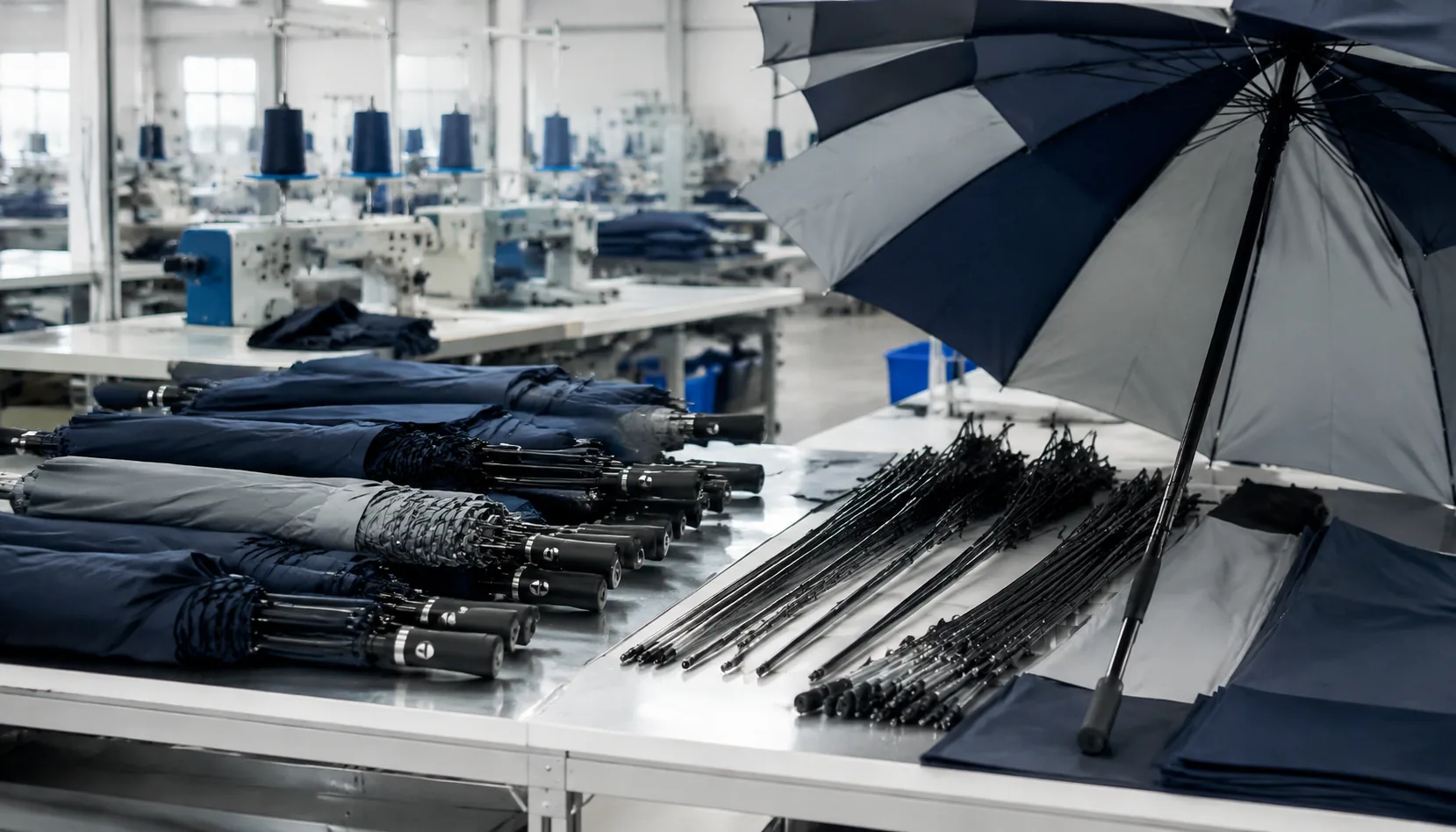
Custom Umbrellas for Insurance Claims and Roadside Teams
Design insurance and roadside-assistance umbrellas for field inspections, policyholder support, and storm response with ...
Read More »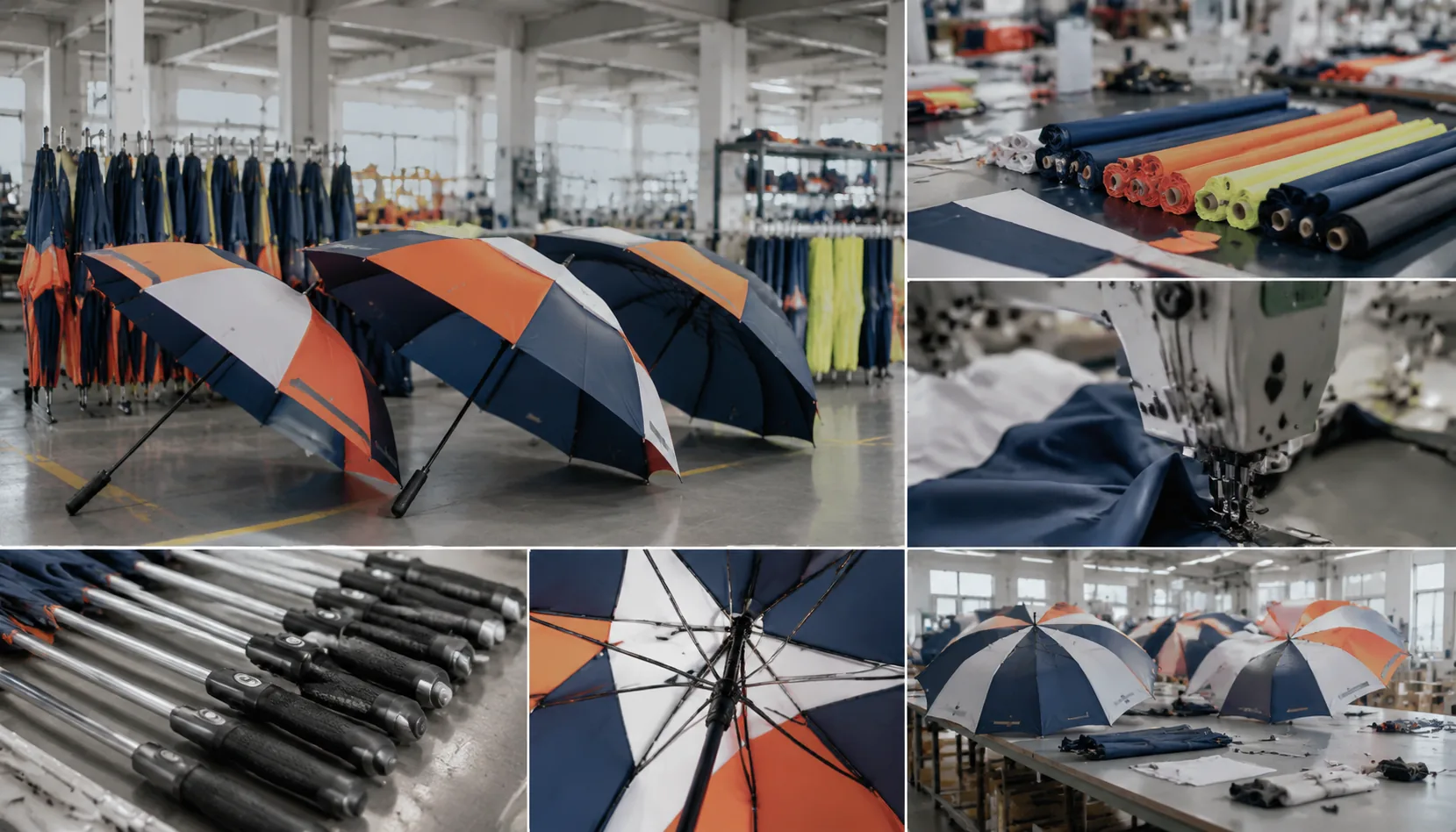
Branded Umbrellas for Insurance Claims and Roadside Teams
Plan umbrellas for insurance adjusters and roadside crews with windproof frames, fast reorders, compliant logos, and rea...
Read More »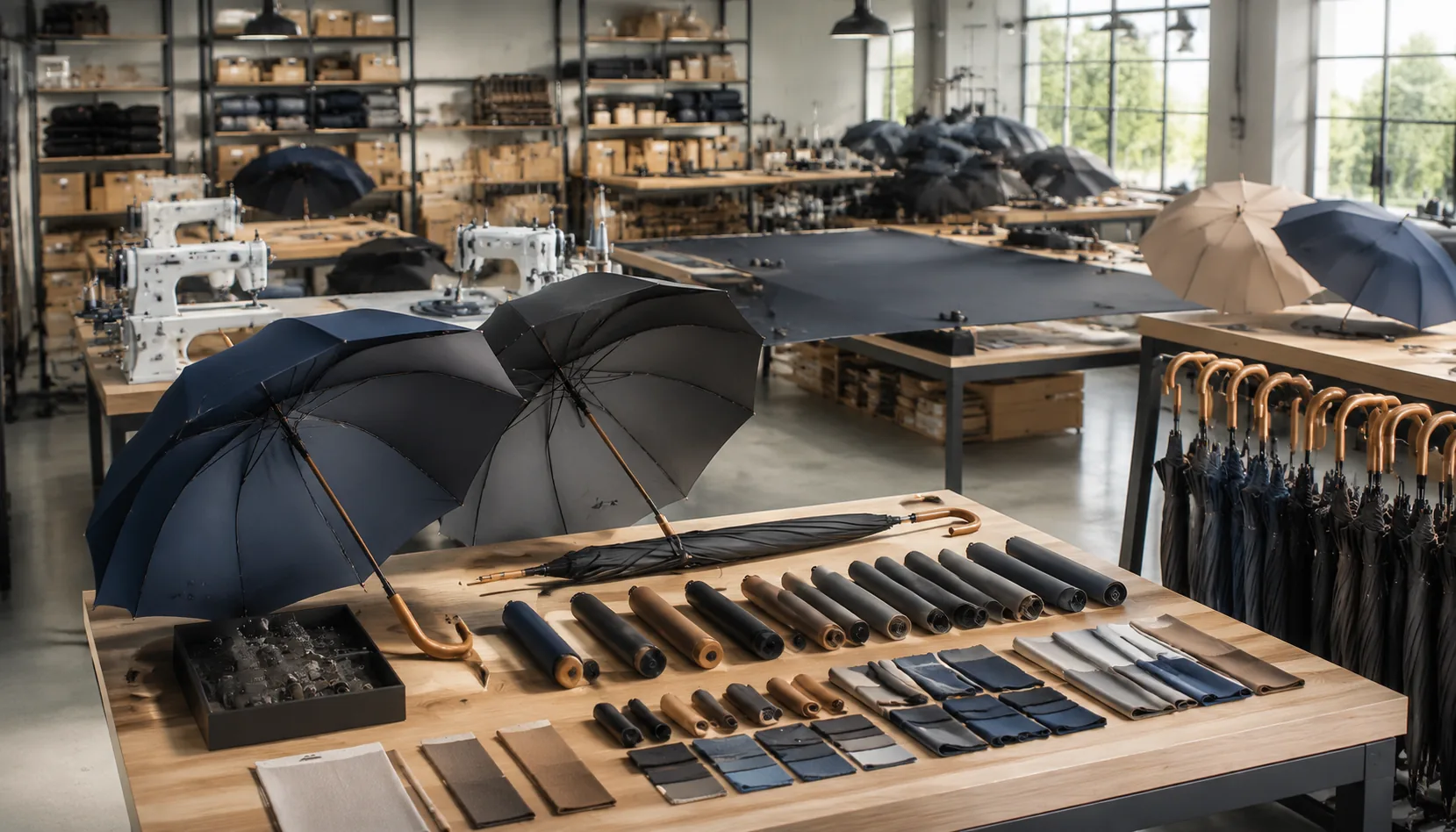
Branded Umbrellas for Insurance Agencies and Claims Teams
Plan umbrella programs for insurance agencies, adjusters, and storm-season clients with durable specs, tiered MOQs, and ...
Read More »