Umbrella Test Standards for Rain, Wind, and UV Buyers
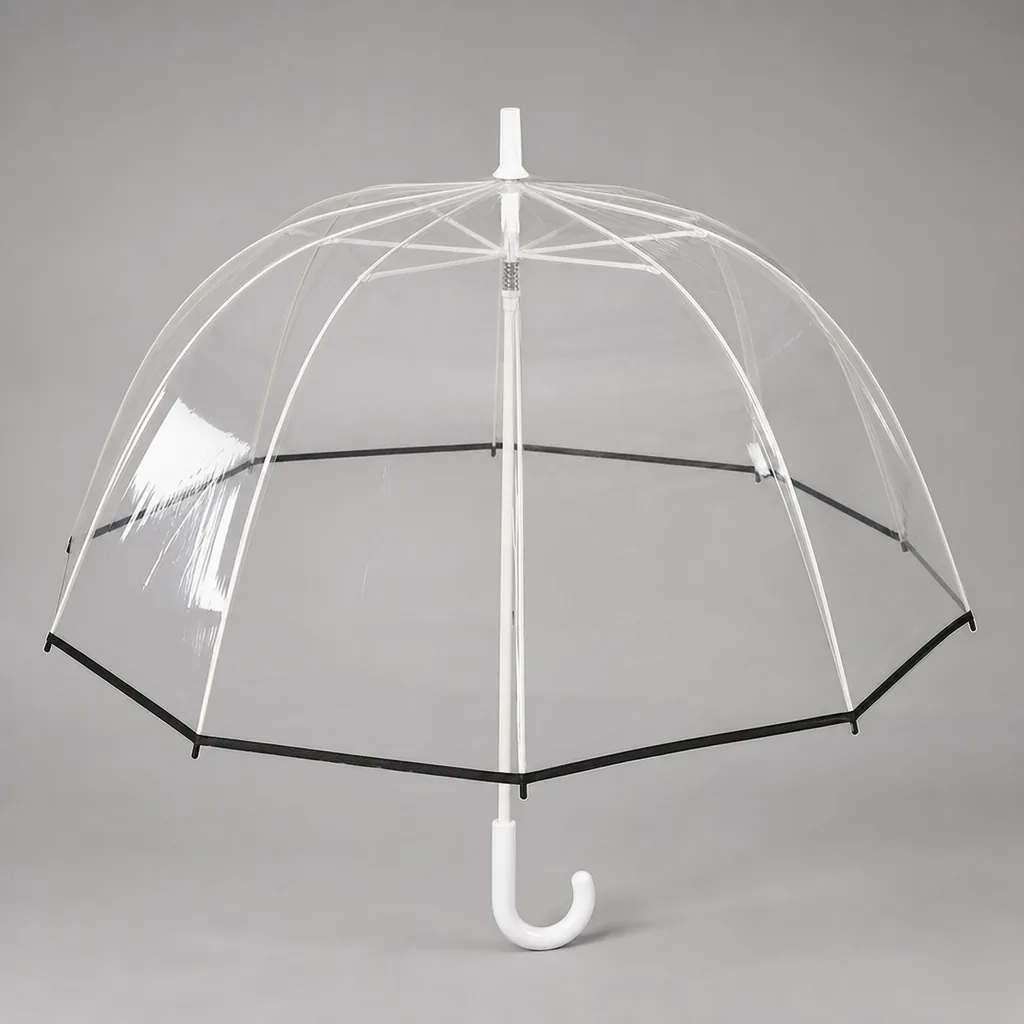
A sample umbrella can look perfect on a buyer’s desk and still fail when a retailer checks spray leakage, rib strength, UV blocking, or open-close life. On our factory floor in Songxia, we see problems most often when test requirements are agreed too late, after fabric coating, frame selection, and runner design are already locked. Clear umbrella testing standards tell the lab what to measure and give production the right targets before the first shipment leaves Zhejiang.
Core tests every umbrella order should include
The core umbrella testing standards I want written into every PO are not complicated: spray test, opening and closing cycle test, wind resistance test, UV test for sun models, and point-load inspection. The spray test proves whether the canopy fabric, seams, top notch, and tips shed water without leakage or wet-through. For 190T or 210T pongee rain umbrellas, we normally check water beading after a controlled shower exposure, then inspect the inner canopy, seam lines, runner area, and cap for seepage. POE, PVC, and EVA clear umbrellas need extra attention at heat-welded or sewn edges because water can creep through poorly sealed joints even when the panel itself is waterproof.
Cycle testing shows whether the frame and mechanism will survive real use, not just look good in a showroom sample. Manual stick umbrellas, auto-open golf umbrellas, and auto-open-close folding umbrellas should be opened and closed repeatedly to catch weak springs, loose runners, bent stretchers, poor rivets, and handle separation. I treat compact 21 inch and 23 inch folding models more strictly because their small ribs and multi-section shafts carry more stress than a 27 inch or 30 inch straight umbrella. For retail and promotional orders, this check should be paired with AQL 2.5 inspection so defects are measured consistently across packed cartons, not judged by a few nice samples on the QC table.
Wind resistance testing matters most for fiberglass ribs, double-canopy vented golf umbrellas, 8K/10K/16K frames, and any product advertised as windproof. A useful wind resistance test should state the speed, duration, and failure criteria, such as no rib breakage, no shaft bending, and no canopy inversion after exposure around 50 mph or higher depending on the model. UV testing belongs on sun umbrellas, beach umbrellas, and coated pongee models sold as UPF 50+ umbrellas; without a lab report, the claim is just artwork on a hangtag. Point-load inspection is the factory-floor check people skip: pressing ribs, tips, handle joints, and cap areas to find weak assembly before shipment. At ZheBrella, adding these checks early usually protects lead times because failures are found before bulk packing, not after the buyer books freight.
How to read wind and rib-failure results
Wind reports are only useful when the frame construction is stated clearly. An 8K umbrella has 8 ribs, which is standard for 21" to 23" folding and straight umbrellas; a 16K frame spreads the canopy load across more ribs and usually feels steadier in gusts, especially on 27" and 30" golf models. More ribs do not automatically mean stronger, though. A 16K steel frame can still twist badly if the stretcher thickness is light or the runner is molded from weak plastic. In real wind resistance test work, the first failures usually start at the runner, the stretcher rivet, or the rib tip pocket where canopy tension concentrates. Fiberglass ribs tend to bend and recover; steel ribs resist at first, then kink permanently. That difference matters more than rib count when buyers compare umbrella testing standards across suppliers.
Ask for wind-speed results in m/s, mph, or Beaufort level, not vague words like “windproof” or “storm resistant.” A proper pass/fail format should say, for example, “opens normally after 10 cycles at 15 m/s” or “no rib breakage after 3 minutes at 22 m/s in a fixed-angle wind tunnel.” For folding umbrellas, I want to see whether the test was done canopy-facing-wind only or with reverse gust exposure, because auto-open-close shafts and joints fail differently from straight-stick frames. For double-canopy vented models, the report should show whether the vent seam lifted, whether the top canopy fluttered loose, and whether any rib tips pulled out. If a supplier only sends a short video without speed, duration, and sample size, treat it as demonstration footage, not a test result.
Rib-failure data should be read together with inspection sampling, because one perfect lab sample does not protect a shipment. Our standard practice at ZheBrella is to combine wind checks with AQL 2.5 final inspection, including runner smoothness, rivet tightness, rib-tip stitching, canopy alignment, and open-close cycling. If the same weak point appears twice in a sample lot, we do not call it random; we trace it back to frame batch, rivet setting pressure, or sewing tension at the rib pocket. Buyers ordering UPF 50+ umbrellas or coated 210T pongee should also remember that heavier canopy treatments add load to the frame, so the wind result for an uncoated sample may not represent the production order. Clear umbrella testing standards reduce disputes, but they also affect lead times: adding wind tunnel, spray test, and UV lab testing can add 5 to 10 days before bulk approval.
What UV and water tests mean for different fabrics
Rain resistance and UV protection are often put on the same spec sheet, but they are not the same test and should not be judged by the same sample. For pongee 190T and pongee 210T, the first water check is usually a spray test, often based on AATCC 22 or ISO 4920, where controlled water is sprayed onto the canopy face and the wetting pattern is rated. A good umbrella canopy should bead water cleanly and avoid dark soaking marks after repeated sprays. 210T pongee usually performs better than 190T because the yarn density is tighter, but coating quality matters more than the number printed in the catalog. A cheap 210T with weak PU or Teflon treatment can fail faster than a well-finished 190T. In real production, we also open the umbrella after spraying and check seam leakage, tip stitching, and panel-to-panel color migration, because lab fabric data alone does not catch sewing defects.
UPF 50+ umbrellas need a separate ultraviolet transmittance test, commonly following AS/NZS 4399, AATCC 183, or EN 13758-type methods depending on the buyer’s market. The lab measures how much UVA and UVB passes through the fabric; UPF 50+ means less than 1/50 of effective UV radiation gets through. Dark 190T or 210T pongee can sometimes reach strong UPF results, but silver-coated or black-coated canopies are more reliable for consistent blockage, especially on light colors such as white, beige, and pastel promotional umbrellas. The coating must be on the correct side and evenly cured. I have seen samples pass because the center panel was tested, while mass production had thin coating near panel edges after cutting. That is why serious umbrella testing standards should define test location, fabric color, coating side, and whether testing is done before or after folding and rubbing cycles.
Do not accept a supplier statement like “waterproof and UV 50+” without asking which test report supports each claim. A spray test proves surface water repellency, not UV protection. A UPF report proves sun blocking, not seam leakage in rain. For bulk orders, our standard practice at ZheBrella is to combine incoming fabric inspection, in-line coating checks, finished-canopy spray checks, and final AQL 2.5 inspection before carton sealing. If a buyer also needs certified UPF 50+ umbrellas, third-party lab testing normally adds 5 to 10 days to lead times, longer if multiple colors or coating types must be tested separately. For retail programs, I recommend locking the approved fabric roll standard before mass cutting, then retaining one shade band and one coated fabric swatch with the purchase order. This prevents the common dispute where a factory ships visually similar pongee, but the UV or water result no longer matches the approved sample.
QC sampling and defect limits for mass orders
For volume orders, AQL 2.5 is the normal limit we use for major defects, while minor defects are often set at AQL 4.0 unless the buyer’s manual says otherwise. Under umbrella testing standards, the inspection level is usually General Inspection Level II, which means the sample size depends on the packed order quantity, not on what the factory feels like opening. For example, a 3,200-piece order commonly requires a 200-piece sample, with acceptance and rejection numbers taken from ISO 2859-1 / ANSI ASQ Z1.4 tables. If the buyer specifies AQL 2.5 for major defects, the inspector checks those 200 umbrellas and applies the table limit strictly; one extra failure can move the shipment from pass to fail.
Major defects are problems that affect function, safety, sellability, or brand reputation. On umbrellas, that means broken ribs, weak runner lock, auto-open or auto-open-close failure, sharp exposed wire tips, loose top caps, cracked handles, leaking seams, wrong canopy size, incorrect logo position, or cartons mixed with the wrong SKU. A failed wind resistance test on a required sample is also major, especially for fiberglass 8K or 10K frames sold as windproof. A failed spray test, heavy water leakage at the ferrule, or UV coating that cannot support UPF 50+ umbrellas when claimed should be treated as major, not cosmetic.
Minor defects are small appearance issues that do not stop normal use: light thread ends, tiny oil marks under the buyer’s tolerance, slight color shade variation within approved lab dip range, small printing pinholes, mildly uneven sleeve stitching, or carton scuffing without product damage. A serious factory or third-party inspection team should also record measurements, carton drop condition, barcode scanning, metal detection if required, and basic open-close cycling. At ZheBrella, our standard practice is to keep pre-shipment inspection separate from inline checks because rushing final QC to protect lead times is how mixed defects reach buyers.
Using test reports in FOB and DDP buying
The safest way to use test reports in FOB or DDP buying is to connect them directly to the approved sample, not to a catalog description. A report for a 23-inch auto-open umbrella with 190T black pongee, steel shaft, and 8K fiberglass ribs does not prove the performance of a 30-inch golf umbrella with 210T navy pongee, double-canopy venting, and a different runner system. In our standard practice at ZheBrella, the golden sample is sealed after the buyer approves fabric weight, color, logo method, rib count, shaft material, handle, tips, and opening mechanism. That sample becomes the reference for bulk production and for the pre-shipment inspection. If the order requires umbrella testing standards such as a spray test, wind resistance test, or UV lab report, the test request should quote the same BOM, Pantone color, coating, and frame build as the shipment.
Timing is where many buyers lose days. A basic spray test and frame function check can be done during sample approval, but third-party lab testing for UPF 50+ umbrellas, colorfastness, nickel release on metal parts, or formal wind-tunnel data usually adds 5 to 10 working days before bulk production is released. If the buyer waits until finished goods are packed, a failed report can force re-cutting fabric, changing coating, or replacing ribs, which can push lead times from a normal 30 to 45 days into 50 to 60 days. For FOB orders, this delay affects vessel booking and factory storage. For DDP orders, it also disrupts trucking, customs documents, duty calculation, and final delivery appointments, because the forwarder cannot lock a reliable dispatch date until inspection and testing are closed.
Pre-shipment inspection should verify both workmanship and report traceability. For most export orders, AQL 2.5 for major defects is a practical baseline: check canopy stitching, rib alignment, tip attachment, print registration, opening and closing cycles, water leakage, and carton marking. The inspector should compare random units against the approved sample and the test reports, including fabric color, coating side, UV claim, frame materials, and rib count. This matters because small substitutions change performance: PVC and POE behave differently in cold weather, EVA yellows differently under UV, and a steel rib frame that passed a static bend check may not survive the same wind resistance test as fiberglass. Good umbrella testing standards are not paperwork decoration; they are the link between what was approved, what was produced, and what the buyer is paying to ship.
Frequently Asked Questions
Do I need both a spray test and a leak test?
Yes. A spray test checks whether water beads and sheds properly, while a leak test checks seams, tips, and stitch points. A canopy can pass one and still fail the other.
How many samples should I test before confirming an order?
For a new program, test pre-production samples and at least one pilot run from the same fabric and frame set. Then confirm the bulk shipment with AQL 2.5 inspection before release.
For a first order, which test reports matter most if the umbrellas will be sold through retail chains?
Ask for at least four items: wind resistance, spray or water repellency, UV test report if the product is sun-protective, and an AQL inspection report at 2.5. For many retail programs, buyers also request open-close cycle testing, commonly 500 to 1,000 cycles depending on frame type.
Should I test every umbrella SKU, or can one report cover multiple colors and sizes?
One report can usually cover multiple colorways only if the fabric construction, coating, frame, and canopy size are unchanged. If you change fabric supplier, coating type, panel count, or frame structure, buyers typically require a new test or at least a technical equivalency review.
How should testing fit into production lead times so shipment is not delayed?
Plan lab testing off pre-production or pilot samples before mass production starts, because third-party reports often take 5 to 10 working days. If inspection is done at final packing under AQL 2.5, reserve another 1 to 2 days before the ex-factory date to avoid missing vessel cutoff.
Looking to Launch Your Custom Umbrella Line?
ZheBrella is a Zhejiang-based OEM/ODM umbrella manufacturer with 17 years of export experience. Free design, low MOQ from 100 pieces, windproof construction, full-color print.
Get Free Quote Now »People Also Search For
Related Articles
Buyer Guide to Sun and Rain Umbrella Specs for Dual Use
Specify one umbrella for sun and rain with the right fabric, frame, coating, and testing so retail and promo programs me...
Read More »
Rain Test Standards for OEM Umbrellas: What Buyers Should Ask
Learn which factory rain and durability tests matter for OEM umbrellas, from water repellency and seam leakage to cycle ...
Read More »
Rain Test Methods for Umbrellas Before Bulk Production
See which rain and function tests matter before bulk shipment, including canopy leakage, opening cycles, fabric specs, a...
Read More »