Umbrella Trim Color Customization for Stronger Brand Recall
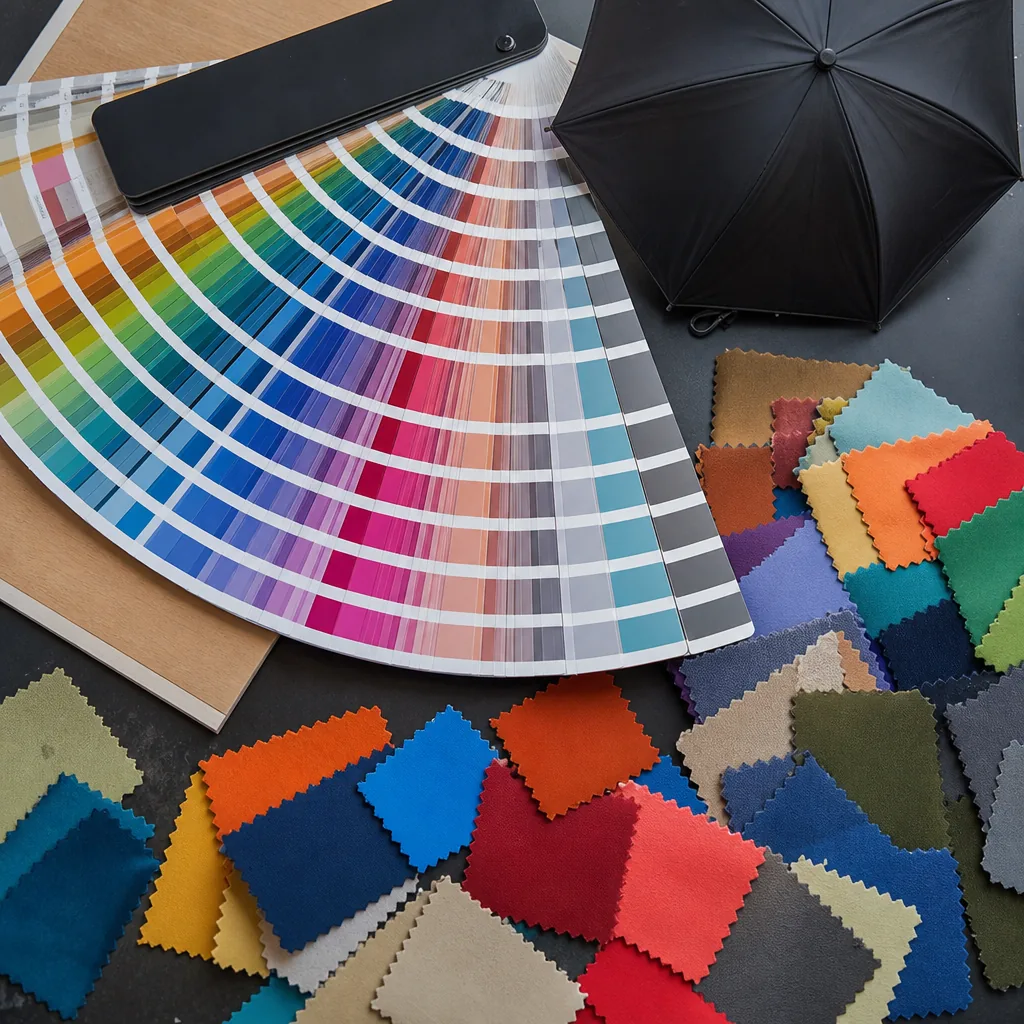
Buyers often want a custom umbrella that feels more branded than a logo print alone, but trim changes can quickly run into dye-lot limits, MOQ thresholds, and assembly constraints if they are specified too loosely. On our Songxia production lines, umbrella trim color customization usually comes down to a few workable touchpoints, such as piping, edge tape, handle parts, and strap details, where color control can strengthen brand recall without adding unnecessary complexity to cutting, sewing, and final inspection.
Which Umbrella Trim Parts Can Carry Brand Color
Prioritize trim that stays visible in all use states: open, closed, and in storage. For umbrella trim color customization, the most efficient parts are edge tape, closing strap, handle shell, and runner; they deliver stronger brand recall than trying to Pantone-match plated metal. On 21" and 23" 3-fold umbrellas, custom umbrella edge tape in dyed polyester is usually the lowest-risk option because it outlines every panel and can be matched to 190T or 210T pongee more reliably than recoating steel components. The closing strap is the next practical choice. Hook-and-loop and snap straps both support branded umbrella color accents and can still carry a woven label or small screen print. Tips are workable on many 8K and 10K folding frames when the factory already runs stock molds in black, navy, red, or white. The tradeoff is cost control: exact Pantone tips on low-volume folding orders add MOQ pressure, more sampling rounds, and higher unit cost for limited visibility gain. For most buyers, folding umbrellas are best kept to edge tape, strap, wrist loop, handle shell, and, where feasible, strap stitching.
Straight-stick and golf umbrellas offer more trim options because the frame is larger and mechanically simpler. On 27" and 30" golf umbrellas, especially vented double-canopy styles, contrast piping, custom umbrella edge tape, runner color, shaft color, end caps, ferrules, handle collars, and tips all read clearly at distance, making logo color coordination more effective. A black canopy with a white logo usually looks cleaner with white edge binding or a white handle collar than with small white rib tips alone. Process choice matters. Powder-coated steel shafts are relatively straightforward to color-match; fiberglass shafts are usually limited to base material colors unless you shift to wrapped finishes and accept higher MOQs. Straight-stick umbrellas are easier than folding models for colored runners, shafts, and handles because the mechanism has fewer tight-tolerance parts. Folding frames remain the most restrictive, especially auto-open-close designs where the runner, spring tube, and button housing limit trim changes. In promotional umbrella design, confirm trim choices against lead time early: a dyed strap may add 3 to 5 days, while a custom-molded handle insert or nonstandard runner color can add 10 to 15 days and often requires a higher MOQ.
How Frame and Material Choices Affect Color Options
Frame finish determines whether umbrella trim color customization reads as intentional or looks pieced together. On a 23 inch or 27 inch straight umbrella with an 8K frame, exposed zinc-plated steel stretchers create bright silver lines that compete with red, yellow, and other high-contrast trim colors. Fiberglass ribs and spreaders reduce that problem because the sections are thicker and usually molded in matte black or dark gray, so the frame recedes visually instead of flashing at the canopy edge. A black-coated steel frame gets close to the same effect at a lower unit cost than full fiberglass, while still masking much of the silver exposure. For buyers working around strict logo color coordination, this is a practical decision, not a styling detail: a black 190T pongee canopy with black frame components makes branded umbrella color accents and custom umbrella edge tape look cleaner from distance, while the same trim looks less controlled when silver hardware remains visible around the perimeter.
Trim becomes more noticeable as the construction exposes more color breaks. On a 27 inch vented straight umbrella or 30 inch golf umbrella, a double-canopy layout can show two or three distinct bands at once: the lower canopy edge, the vent opening, and the binding tape. With 190T or 210T pongee and a contrasting undercanopy, that gives promotional umbrella design more usable area for color blocking than a basic single-canopy folding style. The effect is stronger on black-coated frames because the ribs sit deeper under the canopy and visible hardware is reduced. Auto-open construction raises the standard further. On 21 inch or 23 inch auto-open umbrellas, the canopy opens fully tight, so the edge tape, runner, ferrule, and tip caps are visible at the same time. Any mismatch between trim and hardware shows immediately. Buyers should approve trim against a physical frame sample, not only a Pantone chip, and hold cosmetic consistency to AQL 2.5 before shipment. For stronger brand recall, black-coated steel or fiberglass frames are usually the lower-risk choice.
Balancing Visual Impact With Production Complexity
For most buyers, one accent color, or at most two, is the best tradeoff in umbrella trim color customization. It lifts brand recall without turning a routine order into a color-matching problem across multiple materials. On a standard 8K umbrella, the lowest-risk layout is a solid 190T or 210T pongee canopy with one controlled accent in custom umbrella edge tape, alternating panel welts, or a matched handle-and-tip set. That limits the job to a manageable mix of canopy fabric, trim tape, molded plastic parts, handle coating, and print ink. Risk climbs fast when separate colors are assigned to edge tape, ribs, ferrule, strap closure, and tips at the same time. A Pantone that reads correctly on matte pongee can shift on glossy POE or PVC, and woven tape reflects light differently than ABS or EVA components. Buyers should evaluate umbrella trim color customization by bulk stability, not only by a lab dip or CAD mockup: can the same brand red stay consistent across fabric, plastic, and ink through a 25 to 35 day production cycle and still pass AQL 2.5 final inspection.
The control problem is more visible on 16K umbrellas than on 8K frames because the same trim detail repeats across twice as many panels. A 16K construction adds more seam positions, more binding length, and more opportunities for variation in tape tension, panel alignment, and part sequencing. If the design uses branded umbrella color accents on alternating panels, contrasting tips, and a printed strap, production control has to be tighter than on a basic 23-inch or 27-inch 8K manual or auto-open style. Narrower 16K panels also make slight shade differences easier to spot around the canopy. For that reason, logo color coordination is usually easier on 8K promotional umbrella design programs: wider panels give the logo more visual weight, so one secondary color is often enough. Once a buyer adds three trim colors, a double-canopy vented build, and mixed fiberglass and steel components, the risk of shortages, substitutions, and extra sample rounds increases, especially on MOQ-driven orders. The practical rule is simple: keep most 8K orders to one canopy color plus one accent, and keep 16K to no more than two accents unless you can absorb extra sampling and several additional days before FOB Ningbo or DDP shipment.
Quality Control for Consistent Color Across Components
The core QC issue in umbrella trim color customization is simple: one Pantone callout will not reproduce the same way on every substrate. A 190T or 210T pongee edge tape, polyester webbing strap, ABS runner cap, PP handle insert, and paint-finished steel ferrule all absorb, reflect, and age differently, especially after UV exposure. Control fabric, plastic, and coated metal as separate color tracks tied to one master standard, then define the acceptable visual variance before production starts. For branded umbrella color accents, review every component under D65 lighting rather than mixed workshop light, which can hide undertones and create false approvals. Start with fabric lab dips for the canopy or custom umbrella edge tape, then compare molded or painted part samples to the same approved target. If a brand red looks warm on the fabric tape but shifts blue-red on the handle button, the shipment fails the standard even when both vendors matched the same Pantone reference on paper.
Most color defects should be stopped at the lab-dip and approval-sample stage, not discovered in final carton inspection. Approve lab dips first, then build a sealed sample using the actual canopy, webbing, plastic tips, and any painted shaft or ferrule parts in one assembled umbrella; that is the only reliable way to judge logo color coordination across the full promotional umbrella design, especially when screen printing, heat transfer, or sublimation is involved. After signoff, lock the sample to the batch number and supplier lot, and require incoming materials to match that reference before cutting, molding, or painting. On 3,000 to 10,000 piece orders, run production by lot instead of mixing dye lots, webbing rolls, or resin batches across the line. Final inspection should use an AQL 2.5 plan with checkpoints for tape-to-canopy match, webbing-to-print match, plastic-to-fabric match, and painted metal parts checked under consistent lighting. This is particularly important on 21 inch and 23 inch folding umbrellas, where small adjacent parts make even minor color drift obvious.
Planning MOQ, Cost, and Delivery Around Color Customization
MOQ is the first filter for umbrella trim color customization because it determines whether the job stays in standard sourcing or moves into custom dyeing or tooling. The lowest-risk route is stock-part substitution: custom umbrella edge tape, wrist straps, tip caps, or runner collars pulled from colors already in the factory supply chain. On a 21" or 23" folding umbrella with a standard canopy and frame, that usually keeps MOQ around 300 to 500 pieces per colorway. On a 27" or 30" golf umbrella, 200 to 300 pieces is often workable because the larger unit value absorbs trim cost more efficiently. Costs change fast when a buyer asks for Pantone-matched dyed webbing, fully custom edge binding, or molded PP or ABS parts such as handles and top caps in a brand-specific shade. Those programs typically move MOQ to 1,000 to 3,000 pieces per SKU because dye lots and injection runs have minimum consumption thresholds. For most branded umbrella color accents, the practical decision is simple: avoid a custom resin or dye setup on a small order unless the brand impact is material. On low-volume programs, that surcharge can exceed the total order cost difference between a basic steel-rib frame and an upgraded fiberglass frame.
Color control is a separate risk from MOQ, and buyers should manage it with physical approvals, not digital proofs. Polyester pongee 190T or 210T edge tape usually tracks a Pantone target more closely than EVA or PVC trim, while molded ABS or PP parts often cool slightly darker, especially in navy, red, and orange. When logo color coordination is strict, approve a trim card and strike-off under daylight and retail lighting because canopy print, woven strap, and molded cap will not read the same. In promotional umbrella design programs with vented double canopies or 16K frames, seam count and trim length increase assembly risk, so wrong-color assembly should be a named checkpoint under AQL 2.5 during line changeovers. Lead times follow the same logic as cost: 5 to 7 days for a stock-color sample, 10 to 14 days for custom-dyed trim, and 12 to 18 days for molded color parts after chip confirmation. After approval and deposit, mass production is typically 25 to 35 days for stock substitutions and 35 to 50 days for fully custom dyed or molded components. FOB Ningbo usually delivers better unit pricing and more freight control if the buyer uses its own forwarder; DDP reduces coordination risk for smaller launches by keeping customs and final delivery on one schedule.
Frequently Asked Questions
Can the same brand color be matched across canopy fabric, strap webbing, and plastic handle parts?
It can be matched closely, but exact uniformity is harder because fabric, webbing, and molded plastics absorb color differently. Buyers should approve physical samples, not only digital references, before production.
Do custom trim colors increase lead time significantly?
They usually do when dyed webbing, molded parts, or painted hardware are involved. Stock component swaps may add little time, but fully custom trim programs often need extra sampling and material preparation before bulk production starts.
Which trim components are usually the easiest to color-customize without changing the whole umbrella?
The most production-friendly trim points are edge tape, piping, strap closure, handle button, and sleeve details. These parts can usually be changed without altering the canopy print layout, which helps keep tooling costs low and MOQs more manageable.
Does Pantone matching on trim require a higher MOQ than standard stock colors?
Yes, in most cases Pantone-matched trim needs a higher MOQ because the tape, webbing, or plastic parts must be dyed or sourced specifically for your order. A common range is 1,000 to 3,000 pieces per colorway, versus lower minimums when using available stock trim colors.
How much lead time should buyers add for custom trim colors on OEM umbrellas?
Buyers should typically add 7 to 15 days beyond the standard production schedule for custom trim sourcing and color approval. If multiple trim materials are involved, such as edge tape plus strap plus handle parts, approvals can take longer due to separate sampling steps.
Looking to Launch Your Custom Umbrella Line?
ZheBrella is a Zhejiang-based OEM/ODM umbrella manufacturer with 17 years of export experience. Free design, low MOQ from 100 pieces, windproof construction, full-color print.
Get Free Quote Now »People Also Search For
Related Articles
Umbrella Color Blocking for Stronger Brand Recognition
Plan color-blocked umbrellas that read clearly at distance, fit MOQ budgets, and stay consistent across 190T or 210T can...
Read More »
How Umbrella Color Blocking Improves Brand Visibility
See how panel colors, trims, and contrast blocks improve logo visibility on custom umbrellas while keeping brand colors ...
Read More »Custom Umbrella Color Blocking for Stronger Brand Recognition
Learn how to use panel blocking, trim choices, and stock color programs to boost brand recognition while controlling MOQ...
Read More »