UPF 50+ Umbrella Specs for Retail and Promotional Buyers
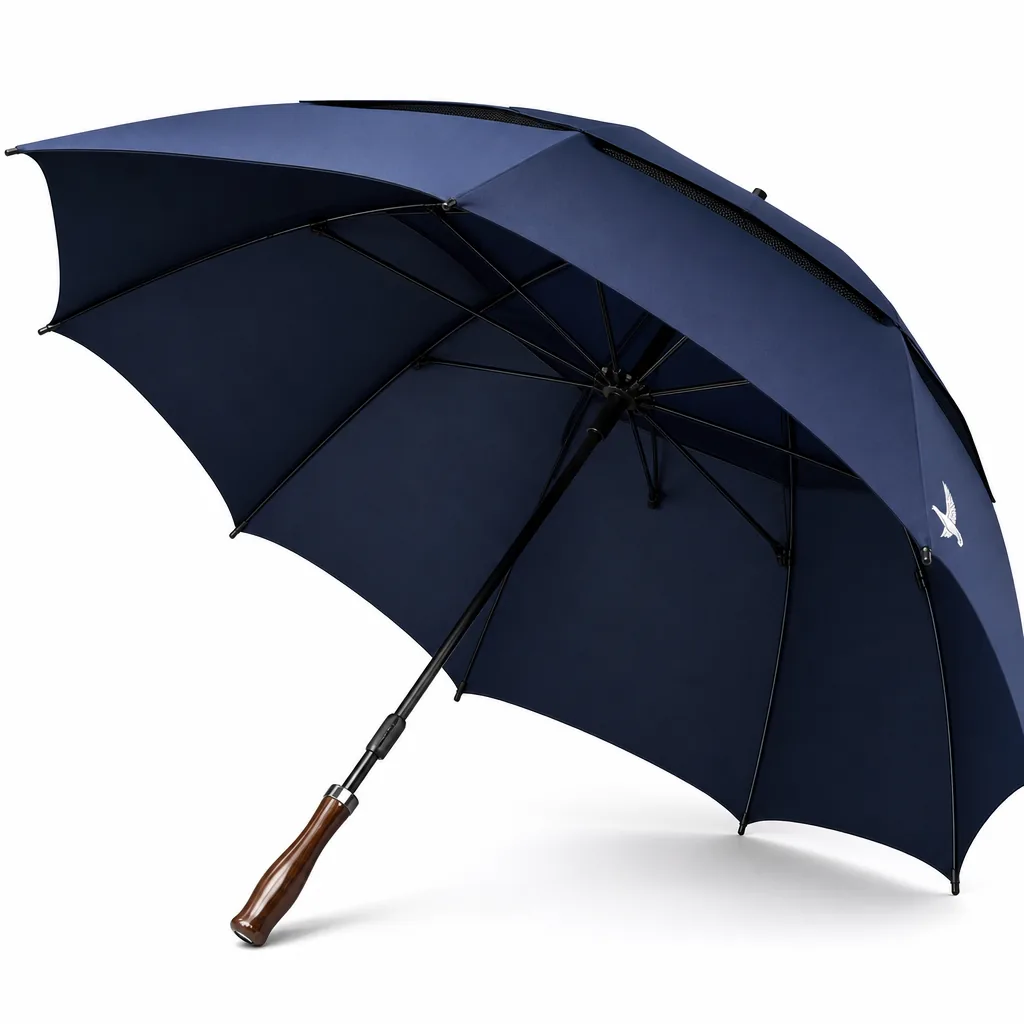
Buying for retail or promotion means more than picking a sun label; the real challenge is sourcing umbrellas that hold UPF 50+ performance, survive rain use, and still meet cost and display requirements. As a UPF 50 umbrella supplier on the factory floor, we see the same failure points repeatedly: weak coatings, mismatched pongee weights, and frames that flex before the canopy does. The right spec starts with how each component behaves in production, transit, and field use.
What to Specify for UV Performance
Start with the claim you actually need: UPF 50+, full canopy coverage, and the use case. A commuter umbrella only needs to protect one person moving through the sun for a few minutes at a time; a golf or event shade umbrella has to hold coverage longer and at a wider angle; retail resale often needs a cleaner spec package with a lab basis behind it. If you are sourcing from a UPF 50 umbrella supplier, ask for the intended exposure scenario up front, because the same canopy size behaves differently in walking rain, standing shade, and outdoor merchandising. I also want the buyer to define whether the umbrella must cover shoulders and bags, not just the head, because panel span and arc diameter matter as much as the headline rating.
Color is not a spec. Dark fabric can help, but the real performance comes from fabric density, fiber type, and the UV canopy coating. A 190T pongee canopy is common for lighter retail programs, while 210T pongee gives you a tighter weave and usually better opacity before coating. If the product has a silver or black underside coating, specify the coating type, thickness, and whether it is intended for UV blocking, heat reduction, or both. For a true UV claim, the test basis matters: UPF results should be tied to a recognized method, not just a factory statement. If the umbrella is meant to be used in strong sun and wind together, a double-canopy windproof structure can help ventilation, but it should still be tested for UV performance on the finished canopy, not just on loose fabric.
The buyer should also specify the geometry of the canopy. A 21-inch folding umbrella, a 23-inch stick umbrella, and a 30-inch golf style umbrella do not deliver the same shade footprint even if they all carry the same UPF 50+ claim. Panel count, venting, rib material, and frame tension affect how flat the fabric sits and how much uncovered area appears at the seams. In practice, a well-made 190T pongee canopy with a proper UV coating can outperform a poorly finished 210T panel if the stitching, seam tape, and edge binding are weak. For retail resale, I would ask for the full spec sheet, test report, and photo proof of the finished canopy under open and closed conditions before approval.
190T vs 210T Pongee for Sun Blocking
190T pongee is usually the right starting point when the order is mainly for giveaways, campus events, trade shows, or other promo programs where unit cost matters more than a luxury hand feel. It has a slightly lighter drape, so the canopy opens and folds with less resistance, and on a manual or auto-open style that can make the umbrella feel quicker in the hand. For sun blocking, the fabric itself is only part of the job; the real difference comes from the UV canopy coating on the underside or backside. If the coating is applied correctly, 190T can still deliver solid UPF 50 protection for short-use promotional pieces. The limitation is opacity and premium appearance. Under strong light, 190T can look a little thinner, especially in lighter colors, and that shows up fast on samples and retail shelves.
210T pongee is the safer choice when the umbrella has to do double duty for rain and UV, or when the buyer wants a more substantial product that feels closer to retail grade. The extra yarn density gives a tighter weave, better light blocking, and a cleaner print surface for logos, gradients, and fine text. From the factory side, 210T also tends to hide coating irregularities better, which matters if you are pairing it with a dark UV canopy coating or a double-canopy windproof construction where the inner layer must stay visually consistent. It does cost more, but the increase is usually justified for retail programs, hotel umbrellas, golf styles, and any account where the buyer will reject a thin-looking canopy. As an UPF 50 umbrella supplier, I would not push 210T for every job, but I would recommend it whenever the umbrella is expected to look premium in hand and on display.
The practical cutoff is simple. If the order is a large-volume promo run with a tight budget, one-color printing, and no expectation that users will carry the umbrella daily, 190T is enough and keeps the landed cost under control. If the spec calls for longer life, richer print sharpness, darker color saturation, or repeated use in mixed weather, 210T is the better risk choice. The difference also matters when the buyer wants a stronger contrast between the canopy exterior and the UV blocking treatment inside, because the denser weave gives the coating a more even finish. For premium retail, I would usually pair 210T with fiberglass ribs and, if needed, a double-canopy windproof build so the product feels engineered rather than commodity-grade. ZheBrella’s standard practice is to match fabric density to the use case instead of forcing one fabric into every program, because that is where most quality complaints start.
Coatings, Linings, and Double-Canopy Builds
For an UPF 50 umbrella supplier, the coating choice is not cosmetic; it drives how much visible light and UV gets through the canopy. Silver coatings reflect heat better in direct sun, which is why they are common for outdoor retail programs and beach use, while black coatings absorb more light and usually give a darker, cleaner shadow underneath. On 190T pongee and 210T pongee, the coating must be matched to the base fabric weight and coating add-on, otherwise you get cracking at the panel edges or an uneven hand feel after packing. A dark inner layer matters because it reduces light leak at the seams and needle holes, so the underside looks less patchy when the umbrella is opened against strong sun. If the buyer wants a real UV canopy coating, we usually specify the coating side, target UPF result, and wash/rub resistance up front instead of treating it as a generic silver finish.
A double-canopy windproof build is useful in hot, still markets where airflow matters as much as shade. The vent between the upper and lower canopies lets pressure escape during gusts and keeps the umbrella from feeling like a sealed drum, which is one reason these constructions are preferred for golf, outdoor promotions, and long-wear retail use. The tradeoff is straightforward: you are adding a second fabric layer, extra stitching, more binding, and more frame points to control, so the cost goes up before you even talk about print or coating. In practice, a double-canopy usually raises MOQ because the factory needs to commit to more material and more setup time, and lead time often stretches by several days compared with a single-canopy run. If the market is truly hot and windy, the extra structure is justified; if not, it is just more parts to manage.
The dark inner layer is not only about appearance; it is a functional fix for light bleed that buyers notice immediately when they test a sample under strong midday sun. On a 21 inch or 23 inch compact umbrella, small gaps at the rib tips and seams are more visible because the canopy is tighter and the panel count is lower, so black backing is often the cleaner choice. On larger 27 inch or 30 inch promotional models, a silver outer with black inner can balance heat reflection and shade quality better than a single light-colored coating. For a UPF 50 umbrella supplier, the right spec is usually a 190T pongee or 210T pongee shell with a defined UV canopy coating, then a decision on whether the extra airflow of a double-canopy windproof build is worth the higher MOQ and longer lead time. That is the part buyers need to budget for early, not after artwork is approved.
Frames That Hold Up Outdoors
For a UPF 50 umbrella supplier, the frame choice matters as much as the fabric. Fiberglass ribs are the better default for retail and promotional umbrellas because they flex under gusts instead of staying rigid and snapping; steel still has a place on low-cost straight-stick models where weight and price matter more than wind behavior. The key point is not just material, but how the load is carried from shaft to runner to rib tip. A heavier UV canopy coating on 190T pongee or 210T pongee will expose weak frames fast, especially if the canopy is cut large or printed heavily. At ZheBrella, we treat the frame as the structure that keeps the canopy flat, not as a commodity part to minimize. If the ribs are underbuilt, the umbrella looks fine in a sample room and then starts sagging at the first outdoor event.
Rib count changes how the umbrella behaves in wind, and the difference between 8K and 16K is not cosmetic. An 8K frame gives a cleaner, lighter product and is usually enough for compact promotional umbrellas, but a 16K layout spreads stress across more points, which improves canopy shape and helps a double-canopy windproof design vent properly. More ribs also reduce the flat spots that make UV fabric drum or wrinkle when the umbrella is open. That matters when you are using denser 210T pongee with a UV coating, because the cloth has more body and puts more load on the ribs than a thin polyester canopy. For buyers comparing options, I usually recommend 8K for entry retail programs and 16K when the umbrella is meant to feel premium, hold shape in wind, or support larger print areas without looking loose.
Auto-open is worth adding when speed and user convenience matter more than the absolute lowest landed cost. For commuter, golf, and hospitality programs, a one-touch opening mechanism improves daily use and helps the product feel finished instead of generic. It also works well with stronger fiberglass frames, because the spring and runner action can be paired with a canopy that opens cleanly without forcing the ribs. On lighter frames, auto-open can exaggerate weak points if the shaft or rib joints are under-specced, so the mechanism should match the structure, not be bolted on as an upsell. A practical UPF 50 umbrella supplier should match frame strength to canopy weight, rib count, and size; otherwise the umbrella holds up in the warehouse but starts drooping at the edge after repeated use. For most retail programs, I would rather use a well-built 8K or 16K fiberglass frame than save a few cents on a frame that cannot support the fabric properly.
Sampling, QC, and Import Terms
Sampling should not be treated as a formality. A serious UPF 50 umbrella supplier starts with a pre-production sample that locks the canopy fabric, coating, rib structure, handle, and printing method before bulk cutting begins. For UV styles, we verify the UV canopy coating on the actual 190T pongee or 210T pongee lot that will go into production, because a lab-approved swatch is not enough if the mill changes finish or hand feel. Our standard practice is to confirm panel layout, logo placement, seam allowance, and color target first, then issue a signed sample approval sheet. If the buyer wants a double-canopy windproof frame, we also check vent spacing, rib symmetry, and opening tension on the sample, because those details are where most field failures start.
QC needs to be tied to AQL 2.5, not to vague promises. For bulk inspection, we check canopy appearance, stitching density, tip and ferrule fit, rib alignment, and opening/closing function, then run carton drop tests and carton compression checks before shipment. Color consistency is also non-negotiable: we compare each production lot against the approved standard under daylight-equivalent lighting, and we reject obvious shade drift across panels, handles, or straps. On printed orders, we verify registration and ink coverage on multiple positions, because a clean sample can still produce banding or weak transfer on the line. That is the difference between a working retail program and a return problem.
Order gates should be clear before anyone starts production. MOQ depends on model and decoration, but buyers should expect separate gates for sample approval, material booking, bulk start, and final balance payment before release. FOB terms are usually cleaner for experienced importers who want control over freight, while DDP makes sense when the buyer wants landed cost certainty and less customs work. Lead time is typically counted from sample sign-off and deposit receipt, not from the first email, and it changes with fabric availability, print complexity, and packaging requirements. A practical UPF 50 umbrella supplier will state those gates in writing, including carton count, spare parts policy, and whether the order includes one extra percent for inspection loss and transit damage.
Frequently Asked Questions
Is a darker canopy always better for UV protection?
No. UPF depends on fabric density, coating, and pigment, so a tested UPF 50+ claim matters more than color alone. Dark linings can help, but they do not replace lab testing.
Can one umbrella be specified for both rain and sun?
Yes, but the buyer should ask for 210T pongee or equivalent coated fabric plus a documented UV test. That usually costs more than a rain-only model, yet it avoids splitting the line into separate SKUs.
For a retail UPF 50+ umbrella, which fabric is usually easier to spec: 190T or 210T pongee?
210T pongee is usually the safer choice when a buyer wants a denser handfeel and better coverage consistency. 190T can still work for budget programs, but it is more common in entry-level sun umbrellas where cost pressure is higher.
What canopy construction helps an umbrella pass both sun and wind requirements?
A double-canopy or vented design helps reduce inversion in gusts while still supporting UV coating on the outer layer. Buyers often pair that with fiberglass ribs and a reinforced shaft for retail programs that need both UPF performance and wind resistance.
What MOQ should a buyer expect for custom UPF 50+ umbrellas?
For OEM/ODM production, MOQ is often 500 to 1,000 pieces per style and color, depending on print coverage and frame selection. If the order uses a standard frame and stock fabric, some factories can support smaller trial runs.
Looking to Launch Your Custom Umbrella Line?
ZheBrella is a Zhejiang-based OEM/ODM umbrella manufacturer with 17 years of export experience. Free design, low MOQ from 100 pieces, windproof construction, full-color print.
Get Free Quote Now »People Also Search For
Related Articles
UPF 50+ Umbrella Specs: How Buyers Source Sun Protection
Compare UPF 50+ fabrics, coatings, and frame builds so you can buy sun umbrellas that pass testing, print cleanly, and h...
Read More »Double-Canopy Windproof Umbrella Specs for Retail Buyers
Learn how to specify double-canopy windproof umbrellas with the right ribs, vent size, MOQ, and pricing terms for retail...
Read More »
UPF 50+ Sun Umbrella Materials for Retail and Promo Buyers
Compare canopy fabrics, coatings, and frame specs for UPF 50+ umbrellas so you can source sun-safe models with clear MOQ...
Read More »