UV-Coated vs Black-Coated Sun Umbrellas for OEM Buyers
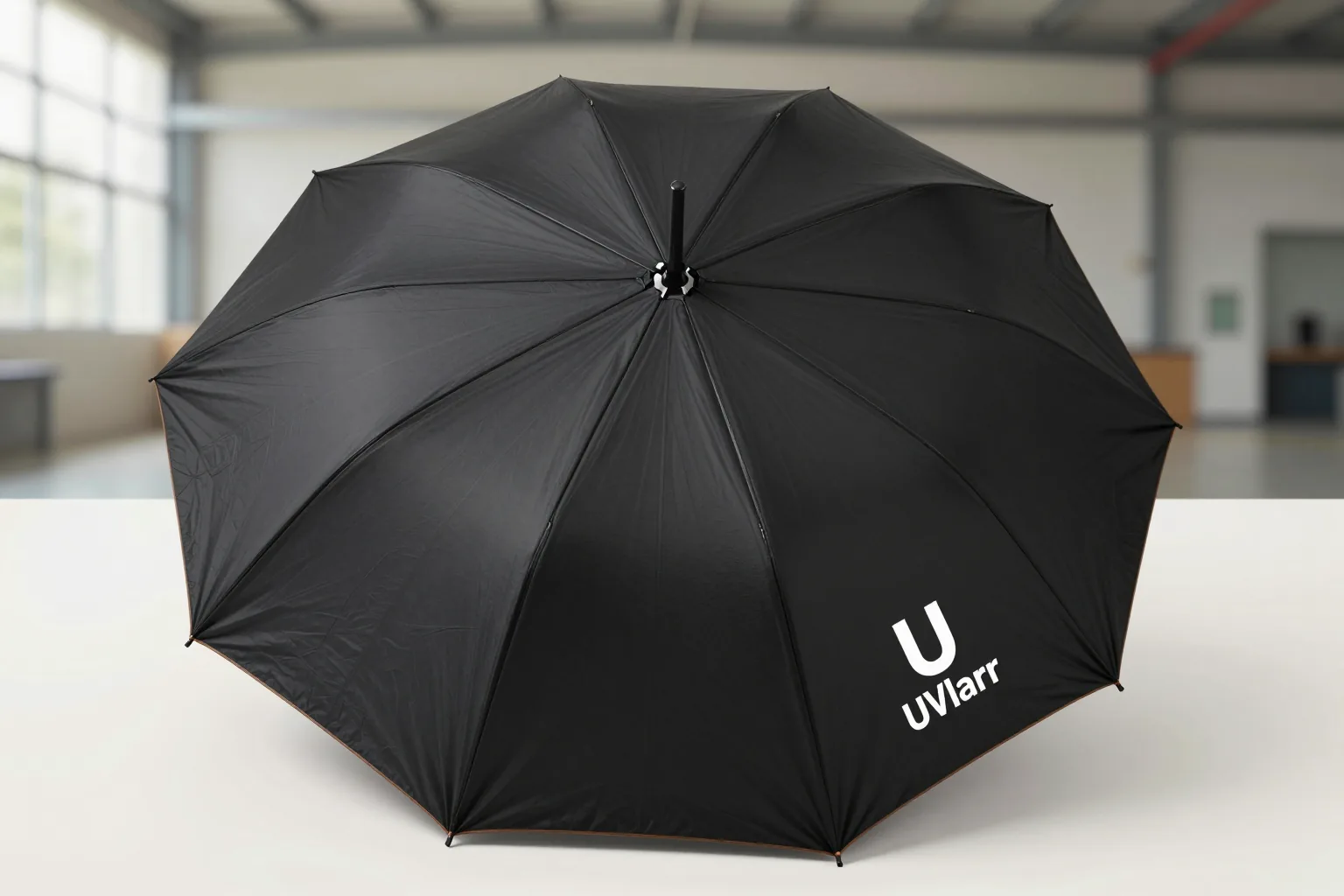
For OEM buyers sourcing sun umbrellas, the coating choice directly impacts protection, cost, and lead time. A black coated sun umbrella typically relies on a dense opaque layer to block light, while UV-coated fabrics use chemical additives to absorb radiation—both aiming for UPF 50+, but with trade-offs in weight, printability, and minimum order quantities that a seasoned factory can help navigate.
Define Black Coating vs UV Coating
A black coated sun umbrella uses an opaque black glue layer on the underside of 190T or 210T pongee to absorb light and block UV through opacity, not reflection. A UV-coated umbrella fabric uses a different finish: silver coating reflects radiation with a metallic layer, while clear UV coatings add an invisible treatment that improves UV resistance without changing canopy color. The appearance difference is practical for OEM buyers. Black coating creates a dark interior and a matte retail look, which suits fashion parasols and premium sun umbrella OEM programs. Silver coating is easier to spec for promo giveaways because the metallic underside makes the protection visible at first glance. Clear UV coatings fit branded retail programs when the buyer wants a lighter interior or a color-accurate canopy and still needs a UPF 50+ umbrella claim supported by lab testing.
For sourcing, the coating choice should follow the use case, not the sales copy. Black glue coating on 190T pongee is common when buyers want stronger print contrast, a cleaner inside view, and a straightforward route to UPF 50+ claims after testing. Silver-coated canopies usually make sense for high-volume giveaway umbrellas because the finish is easy to explain and often lower cost. Clear UV-coated umbrella fabric is better for retail sun umbrellas where the inside color must stay close to the outer fabric, but the claim still depends on the finished fabric, coating weight, and test report. A coating name alone does not prove UPF 50+; OEM buyers should confirm the lab report before release.
From a factory standpoint, black coating is usually the easiest finish to inspect during incoming checks and in-process QC, which lowers rejection risk. A black coated sun umbrella can be built in 21-inch, 23-inch, 27-inch, or 30-inch sizes with 8K, 10K, or 16K ribs, using fiberglass or steel depending on target wind resistance and cost. If water resistance is also required, a Teflon finish can be added on the face side. The trade-off is heat: black-backed canopies absorb more solar energy than silver-coated versions, so they can feel warmer in direct sun. For short-use fashion parasols, that is usually acceptable; for longer outdoor use, compare both coatings on the same pongee 190T 210T base and request the test report that supports the final UPF 50+ claim.
Compare Fabric, Coverage, and User Experience
Fabric spec matters more than the coating label when buyers compare a black coated sun umbrella with a UV-coated umbrella fabric. On 190T pongee, both finishes are workable, but the cloth has a softer hand, more panel waviness, and more color show-through under strong backlight. 210T pongee is denser and usually gives flatter panels, stronger opacity, and a cleaner look for printed graphics or dark exterior colors. Black coating typically blocks more visible light and cuts glare from the top side, while white, silver, or clear UV coatings keep the underside brighter. For OEM buyers, that changes retail presentation, stroller use, and face coverage, but the real spec check is still fabric density, coating continuity, seam quality, and whether the sewn canopy actually holds a UPF 50+ umbrella claim.
For sun umbrella OEM orders, canopy size and frame build affect weight and carrying comfort more than coating does. A common 8K build in 21", 23", or 27" sizes feels different from a 30" dome-style canopy, even when the coating is the same. The coating layer itself adds very little mass; finished weight is driven mainly by base cloth, rib material, shaft thickness, and canopy diameter. A 190T canopy on an 8K frame is usually the lower-cost option and stays lighter, while 210T adds a more premium hand feel and better opacity without a meaningful weight penalty for most users. If the buyer wants the lowest price, the best visual blockout, or a more polished retail sample, the fabric grade matters more than the finish color.
Coverage and user experience depend on how the fabric, coating, and seams work together at production level. A credible UPF 50+ umbrella should block light evenly across the panels, with no obvious edge glow or pinholes at stitch lines. Thin or uneven coating shows up faster on 190T than on 210T, especially in direct sun or a backlight booth. In bulk approval, we check panel flatness, seam tension, and interior glare because those are the details customers notice first during a long walk or while waiting outdoors. For black coated sun umbrella programs, the coating does not materially change carry weight, but it does change how opaque, cool-looking, and finished the umbrella feels in use. That is why 210T is usually the safer spec when the buyer needs stronger coverage and fewer complaints about transparency.
Check Frame and Mechanism Compatibility
For a sun umbrella, the frame drives landed cost, carry weight, and return risk. Fiberglass ribs are the better fit for 21" and 23" compact models because they keep the canopy lighter, flex under gusts, and reduce brittle tip failures that show up with thin steel parts. Steel still makes sense for 27" and 30" parasols when the buyer needs a lower FOB price and can accept extra weight and a simpler BOM. This matters on sun umbrella OEM orders built with UV-coated umbrella fabric in pongee 190T or 210T: a heavier coating, printed lining, or tighter panel count can expose weak ferrules, loose stretch lines, and poor tip alignment. Lock the frame and canopy spec together before sampling so the prototype does not pass visual approval and then fail in production.
Manual open is usually the right mechanism for dedicated shade products. Parasol users typically open and close the umbrella in calm settings such as markets, cafes, and outdoor seating, so they value a clean silhouette, fewer moving parts, and lower repair risk more than one-handed convenience. Auto-open and auto-open-close systems add trigger hardware, extra internal wear points, and a bulkier handle, which is harder to justify on a UPF 50+ umbrella built mainly for shade. For mixed rain-and-sun lines, auto-open still has a place, but pure sun styles are usually kept manual to stay lighter, cheaper, and easier to pack.
Double-canopy windproof construction is less common on a black coated sun umbrella because the vent gap reduces uninterrupted shade area and interrupts the top surface used for branding. It also adds cutting, seam matching, and stitch control, which raises labor cost and increases puckering risk around the vent. The airflow benefit matters more in rain umbrellas than in dedicated shade products. For sun-only programs, a single canopy in pongee 190T or 210T with a black inner coating or UV-block finish is usually the cleaner build: fewer parts, lower MOQ risk, and less chance of mismatch between rib tension and canopy finish. For most sun umbrella OEM programs, the sequence is simple: choose the mechanism first, then the rib material, then finalize coating and panel count.
Review Branding, Testing, and Quality Risks
Print adhesion is usually the first QC failure on a black coated sun umbrella, because a coating that looks even can still be too slick for stable ink anchorage. Buyers should match the print system to the real UV-coated umbrella fabric, not the rendering: screen print, heat transfer, and logo placement all need to be tested on the actual pongee 190T or 210T canopy, with rub checks at the rib touchpoints, tip area, and panel seams after repeated open-close cycles. Strong inspection light is not optional, since black coating can hide pinholes, orange peel, weak edges, and minor misregistration that pass on a quick bench check and fail after packing or handling.
Color consistency, odor, and abrasion deserve the same gatekeeping. Shade should be approved against a signed golden sample and a pre-production swatch under daylight and factory light, with panel-to-panel variation checked before cutting starts. A heavy solvent or resin smell usually signals incomplete curing and can later show up as tackiness, dusting, or whitening at fold lines, so the factory should hold coated canopies until odor and hand-feel are stable. Under AQL 2.5, QC should inspect coating uniformity, print registration, visible pinholes, seam alignment, canopy tension, early rub-through at the leading edge, and tie-strap contact zones. For carton-drop risk, test fully packed units with the final inner tray and polybag; loose packing can let coated panels shift, crease, and leave permanent scuff marks.
For any UPF 50+ umbrella claim, buyers should request the actual lab report and verify that it matches the tested fabric construction, coating type, test method, and lot or shade code used in production. A line on the PO is not enough. The approval package should also include the golden sample, strike-offs, and one fully assembled unit opened repeatedly to check cracking, gloss or reflectance change, and abrasion at the fold points. Locking the specification before mass production is the main control point for a sun umbrella OEM order: it reduces reject risk, avoids late rework, and keeps the shipment aligned with the tested black coated sun umbrella rather than a sample that was never duplicated in production.
Build the Right Import Program
MOQ is the first hard stop for coated sun umbrella imports. A black coated sun umbrella with standard pongee 190T/210T canopy requires 500 pieces per color per style if custom frame tooling or a specific rib count (8K–16K) is needed. For a stock shell with your print—e.g., a 27-inch auto-open model in UPF 50+ fabric—MOQ drops to 300 pieces. Sample timelines: 7–10 days for a coated fabric mock-up; add 5 days for a wind-tunnel test (50+ mph survival) on a double-canopy vented design. Bulk production lead time is 30–45 days from PO confirmation if materials are in stock. The UV coating line is the bottleneck: a rush order for UV-coated 210T pongee with Teflon finish pushes lead time to 50 days. Lock rib material (fiberglass vs. steel), canopy venting, and coating type (black pigment or clear UV absorber) before signing the PO—mid-production changes add 10 days and a re-run charge.
FOB vs. DDP is where most buyers trip up on seasonal programs. For a black coated sun umbrella destined for a May summer campaign, FOB Shanghai gives you freight control but puts port delays and container shortages on you—peak season can cost two weeks waiting for a vessel slot. DDP lets us handle the full logistics chain, from factory to your warehouse, including customs and inland trucking. For a fixed retail launch, DDP is safer: we guarantee delivery in 50–60 days total (production + shipping) and absorb costs if a typhoon shuts down Ningbo port. However, DDP adds 8%–12% to unit cost, so if margins are tight on a UPF 50+ umbrella with a 16K fiberglass frame, stick with FOB and book your container 4 weeks early. Decide on incoterm at the RFQ stage to reserve coating capacity and fabric rolls.
Before releasing a PO, lock three things: coating type, fabric weight, and AQL level. A black coated sun umbrella uses carbon black pigment for automatic UPF 50+, but it can bleed onto the frame in high humidity if the pongee 190T/210T isn't pre-treated. UV-coated fabric with a clear absorber requires a precise application rate of 20–25 g/m²—skimping yields UPF 30 instead of 50. We test every batch with a spectrophotometer and UV transmittance meter, standard for any sun umbrella OEM order. Specify AQL 2.5 for critical defects (coating delamination, rib breakage) and AQL 4.0 for minor ones (thread tension, print alignment). For a retail brand with a return policy, push to AQL 1.0 on coating—it adds 3% to cost but cuts warranty claims by half. Confirm canopy size in inches: a 27-inch umbrella may measure 26.5 inches after sewing due to seam allowance. We measure from top to bottom edge and include a tape measure in the pre-production sample photo—that detail saves a 500-piece reorder.
Frequently Asked Questions
Does black coating affect logo printing on the outer canopy?
Yes. Most logos are printed on the outer fabric face, but black-coated umbrellas can show slight color differences depending on fabric thickness and ink coverage. Buyers should approve a pre-production sample, especially for light Pantone colors on 190T pongee.
Can a sun umbrella be both UPF 50+ and wind-resistant?
Yes, but the build has to balance UV performance and frame strength. A 210T pongee canopy with UV treatment plus fiberglass ribs can achieve strong sun protection while handling moderate wind better than a basic steel-frame parasol.
Does black coating or UV coating work better for logo printing?
For a 2025 OEM quote assumption to verify with the supplier, outer-surface logo printing is usually cleaner on lighter 190T or 210T pongee with an inner black coating, because the print ink is applied to the fabric face rather than the coated back side. Full-panel artwork should be checked with a pre-production sample before bulk cutting.
What MOQ should buyers expect for coated sun umbrellas?
As a 2025 RFQ assumption to verify in the factory quote, common MOQs are about 600-1,200 pieces per model/color for standard coated pongee and higher for custom coating colors or special frame combinations. MOQ can change if the order uses shared stock fabric versus custom-dyed fabric.
How long does OEM production take for UV or black-coated sun umbrellas?
As a 2025 planning assumption to verify in the supplier quotation, sampling typically takes 5-10 calendar days after artwork approval, and bulk production often takes 25-35 calendar days after sample approval and deposit. Add extra time if lab testing for UPF 50+ or custom packaging approval is required.
Looking to Launch Your Custom Umbrella Line?
ZheBrella is a Zhejiang-based OEM/ODM umbrella manufacturer with 17 years of export experience. Free design, low MOQ from 100 pieces, windproof construction, full-color print.
Get Free Quote Now »People Also Search For
Related Articles
Sun Protection Umbrella Guide for Retail and Promo Buyers
Learn how to specify UPF 50+ umbrellas, from UV fabrics and coatings to frame choices, MOQ, and packaging for retail or ...
Read More »
Blackout Coated Rain Umbrellas: Retail Buyer Spec Guide
Specify blackout coated rain umbrellas with UPF 50+, pongee fabric, frame choices, print limits, MOQ, and AQL checks for...
Read More »
Black Coating vs Silver Coating Umbrellas for UV Programs
Compare black and silver umbrella coatings for UV-focused programs, including heat feel, appearance, UPF 50+ goals, fabr...
Read More »