UV Coating vs Black Glue Umbrellas for Branded Sun Protection
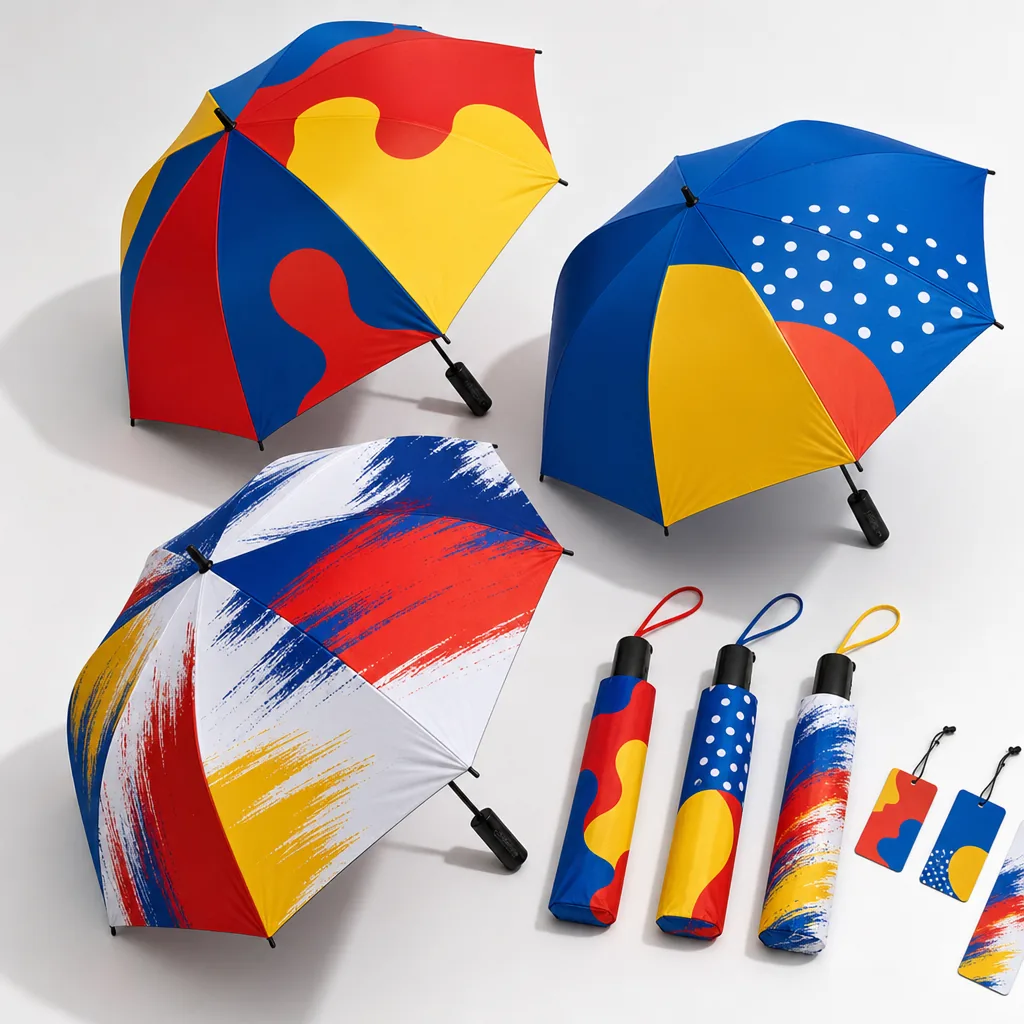
When buyers source branded sun umbrellas, the real risk is choosing a canopy build that looks right on a sample but misses UPF targets, adds too much weight, or pushes MOQ and unit cost out of line in production. On our Songxia lines, the tradeoff usually comes down to UV coating versus black glue: both can reach strong sun protection, but they behave differently in fabric lamination, color matching, print finish, and frame balance across uv coating umbrella options.
How UV Coating and Black Glue Umbrellas Work
The core difference is layer position and how the canopy blocks radiation. Surface-finish UV builds apply a silver, colored, or clear coating to the outside of `pongee 190T` or `pongee 210T`, so part of the UV load is reflected or absorbed before it reaches the weave. A `black glue umbrella` adds an opaque dark inner layer under the face fabric, which reduces light transmission more aggressively and usually improves under-canopy glare control and perceived cooling. For buyers comparing `uv coating umbrella options`, this matters more than an “anti-UV” sales label. Outer-face coatings depend more on base fabric tightness, coating weight, and coating uniformity across panels, while black glue construction adds a second shielding layer that is less dependent on fabric color alone. In practical sourcing terms, a 210T pongee canopy usually gives a more stable starting point than 190T when the target is repeatable UV performance across production lots.
Either build can qualify as a `UPF 50+ umbrella`, but only the finished canopy assembly—not the raw fabric claim—proves it. `pongee 210T` generally delivers more consistent UPF 50+ results than `pongee 190T` because the weave is tighter; paired with darker shades or a black glue backing, the pass rate is usually more stable. By contrast, light-colored canopies with only a thin surface coating are more sensitive to coating variation, seam stretch, print coverage, and vent cutouts on double-canopy frames. For any `sun umbrella OEM` program, ask for recent lab data for the exact material stack-up: fabric spec, color, coating construction, and printed vs unprinted area on the final BOM. If a supplier cannot provide the test standard used, report date, and result for the actual canopy build, treat the UV claim as unverified and price the order with that risk in mind.
Material and Frame Choices That Affect End Use
Canopy fabric sets both UV performance and how a branded sun umbrella looks after a full season of opening, folding, and bag abrasion. Low-grade polyester with a thin silver coat may look acceptable at first inspection, but the coating often cracks on fold lines and wears first at the tips and top cap. For more stable uv coating umbrella options, buyers usually start with `pongee 190T` or `pongee 210T` because both take coating more evenly, print logos more cleanly, and hold stitch tension better during sewing. Check the base fabric before comparing coatings. A `black glue umbrella` blocks visible light more aggressively and creates a darker feel underneath, while a properly specified `UPF 50+ umbrella` with UV coating can deliver the same rated sun protection with a softer hand and better drape. For retail and promotional programs, that usually means black glue improves shade comfort, while UV-coated pongee gives cleaner logo definition and less canopy stiffness on both straight and compact builds.
Frame choice determines whether the umbrella still feels reliable after one windy season. Fiberglass ribs are usually the better spec for corrosion resistance, lower carry weight, and flex recovery after inversion; that matters in coastal, resort, and golf use where salt air exposes plated steel quickly. For repeated outdoor use, a 23-inch or 27-inch straight model with fiberglass ribs and a fiberglass or aluminum shaft gives the best balance of comfort and service life. Steel ribs reduce FOB cost on entry-level orders, but they add weight and are more likely to stay bent after a hard gust. Format changes the best build. Straight umbrellas have fewer moving parts and can support larger 23-inch, 27-inch, or 30-inch canopies, 8K or 16K frames, vented double-canopy layouts, and thicker shafts, so they are the stronger platform for long-duration sun coverage. Compact umbrellas are easier to carry, but their joints and stretchers already work under higher folding stress; once UV coating, black glue, and auto-open-close hardware are added, packed weight rises and durability margins narrow. For a `sun umbrella OEM` program, fiberglass ribs with a steel shaft are a practical compact spec for cost control, while full fiberglass-forward builds make more sense on straight formats where rust resistance and user comfort matter most.
Performance Trade-Offs in Heat, Weight, and Appearance
Choose a black glue umbrella when shade density and glare control matter more than interior brightness. The black PU-style backing blocks visible light more completely than a clear or silver UV finish, so users see a darker underside at noon and less reflected glare on the face. In use, the gain is usually lower radiant heat and less eye strain, not a major drop in ambient air temperature under the canopy. On a UPF 50+ umbrella made with pongee 190T, black glue creates a more enclosed, cave-like interior than the same fabric with a UV coating, which suits golf, beach, and queueing use where maximum opacity is the priority. The trade-off is fixed: that darker interior can feel too dim for daily city carry and can make the product feel heavier in use even when frame size stays the same. For buyers comparing uv coating umbrella options, the key test is not just lab sun protection, but how dark the underside feels over 10 to 15 minutes outdoors.
Weight, drape, and branding usually decide the final spec. On the same 23-inch 8K frame, a black glue canopy typically adds about 15 to 40 grams versus a comparable UV-coated canopy, with the difference driven by pongee 190T vs pongee 210T and the coating load. That extra layer also stiffens the fabric: drape is flatter, the canopy holds its shape more firmly, and folded bulk increases slightly, which matters on compact manual and auto-open-close styles. By comparison, uv coating umbrella options in pongee 210T usually keep a softer hand, easier refolding, and cleaner fold memory. Appearance is equally practical. Black glue gives a more technical look, but the dark interior can mute light-color graphics and make white or pastel programs read heavier at retail. UV-coated fabrics usually present cleaner exterior color, brighter logo contrast, and a lighter overall look, so many sun umbrella OEM buyers sample both constructions before approving artwork, target weight, and unit cost.
MOQ, Sampling, and Production Factors for OEM Orders
For sun umbrella OEM orders, MOQ is usually set by the least standardized component, not by the logo print. With stock black or white canopy fabric, buyers can typically start at 300-500 pieces per color for a 21" or 23" straight umbrella built with pongee 190T or pongee 210T on a standard 8K steel-and-fiberglass frame. Custom-dyed canopy colors push the threshold higher because mills often require 800-1,500 meters per shade, which commonly moves the practical MOQ to 1,000 pieces or more depending on panel yield and umbrella size. That applies to both uv coating umbrella options and black glue umbrella programs: the dye lot, shade consistency, and coating appearance all need approval before bulk cutting. For a buyer, the tradeoff is simple. Stock fabric reduces MOQ, lowers inventory risk, and shortens replenishment; custom color improves brand match but increases commitment, fabric waste exposure, and lead-time risk.
Sampling lead time is usually driven by approvals rather than sewing capacity. A stock-fabric sample with one standard screen print can often be finished in 5-7 days, while exact Pantone matching, interior logo placement, edge-to-edge graphics, or mixed-panel artwork often extends sampling to 10-14 days because lab dips, coating adhesion, and print registration need sign-off first. If the item is sold as a UPF 50+ umbrella, the factory should state whether protection comes from the base fabric, a UV coating, a black glue layer, or a combined construction, since that affects test-report support, color appearance in sunlight, and possible color rub on handles. Mechanism choice also changes cost and assembly risk. Manual open is the simplest to assemble and inspect; auto-open adds spring hardware, tighter runner tolerances, and more QC points at the rib joints and shaft lock. Auto-open is common on 23" and 27" promotional styles, but auto-open-close is less common on large sun umbrellas because thicker tubes, higher spring load, and return-force tuning slow assembly and raise defect risk. After sample approval, combining custom color, non-standard logo placement, and upgraded wind-resistant frames can add 7-15 days to mass production.
Buyer Checklist for Quality Control and Shipping Terms
Set the QC standard before pre-production approval, because sun-protection umbrellas usually fail on handling details, not on the first visual check. For uv coating umbrella options, tell the writer to build the inspection sheet around four measurable points at both incoming material check and final random inspection: coating uniformity under strong angled light to catch thin spots or streaks; color migration from canopy to strap or sleeve after humidity exposure; opening and closing smoothness for at least 20 manual cycles per sampled lot; and stitch density at panel seams, tips, and the tie strap, with seam alignment and thread tension reviewed at the same time. Use AQL 2.5 as the acceptance benchmark for branded export orders. Also lock the fabric into the approval file: specify whether the canopy is pongee 190T or pongee 210T. Pongee 210T usually delivers a tighter weave and cleaner print surface, while pongee 190T remains acceptable if coating adhesion, sewing consistency, and logo registration stay stable.
A black glue umbrella needs extra scrutiny because the dark inner layer can hide defects until the canopy is opened in direct sun. Require inspection for pinholes, streaking, bare areas near seams, and flaking along fold lines after heat exposure; on darker custom prints, also check whether the black backing causes face-fabric dulling or color transfer. If the item is sold as a UPF 50+ umbrella, the writer should state that the claim must match the fabric spec, coating method, and test report, not generic UV-protection copy. Add frame checks: runner travel should stay smooth, and the top notch and rib joints should not snag the canopy; fiberglass ribs generally recover better than painted steel after repeated wind flexing. For shipping terms, FOB makes more sense when the buyer is consolidating SKUs, controlling customs, and booking a sun umbrella OEM program about 35 to 50 days before the in-market date, plus ocean transit. DDP is the lower-risk choice for seasonal promotions, split delivery points, or teams that cannot absorb customs delays, where protecting the launch window matters more than trimming landed cost.
Frequently Asked Questions
Does black glue always mean better UV protection than a coated canopy?
Not automatically. Many black glue umbrellas can achieve high UV blocking, but buyers should ask for actual UPF 50+ test results on the finished fabric and not rely on the black underside alone.
Is 210T pongee always the better choice for sun umbrellas?
Not in every program. 210T often feels denser and more premium, but 190T can still perform well for promotional orders where lower weight and price matter more than retail hand feel.
How does black glue affect logo printing on the inside of the canopy?
Black glue is usually applied as an inner coating layer, so inside printing options are more limited than standard single-layer canopies. For OEM orders, most factories recommend outside canopy printing only, or a double-canopy structure if you need branding visible inside.
Will switching from 190T to 210T pongee change carton weight and freight cost noticeably?
Yes. 210T pongee is denser and typically adds a small but measurable amount of weight per umbrella, which can increase outer carton weight and sea freight volume cost on large orders. On a 5,000-piece order, buyers often compare both specs side by side because the fabric upgrade may affect unit cost and shipping together.
Does adding UPF 50+ performance usually increase MOQ for custom umbrellas?
Usually the MOQ change depends on the coating method rather than the UPF claim alone. Standard OEM runs may stay around 500-1,000 pieces per color, but custom black glue colors, special lining, or third-party UV test reports can push the practical MOQ and lead time higher.
Looking to Launch Your Custom Umbrella Line?
ZheBrella is a Zhejiang-based OEM/ODM umbrella manufacturer with 17 years of export experience. Free design, low MOQ from 100 pieces, windproof construction, full-color print.
Get Free Quote Now »People Also Search For
Related Articles
UPF 50+ Umbrella Fabric and Frame Guide for Sun Protection
Specify fabrics, coatings, canopy coverage, and frames that deliver UPF 50+ performance for retail and promotional sun u...
Read More »Black Coating vs Silver Coating Umbrellas for UV Programs
Compare black and silver umbrella coatings for UV-focused programs, including heat feel, appearance, UPF 50+ goals, fabr...
Read More »
UV-Coated vs Black-Coated Sun Umbrellas for OEM Buyers
Compare black coating and UV coating for sun umbrellas, including UPF 50+, fabric options, weight, print impact, MOQ, an...
Read More »