White Ink Underbase for Logos on Dark Umbrella Canopies
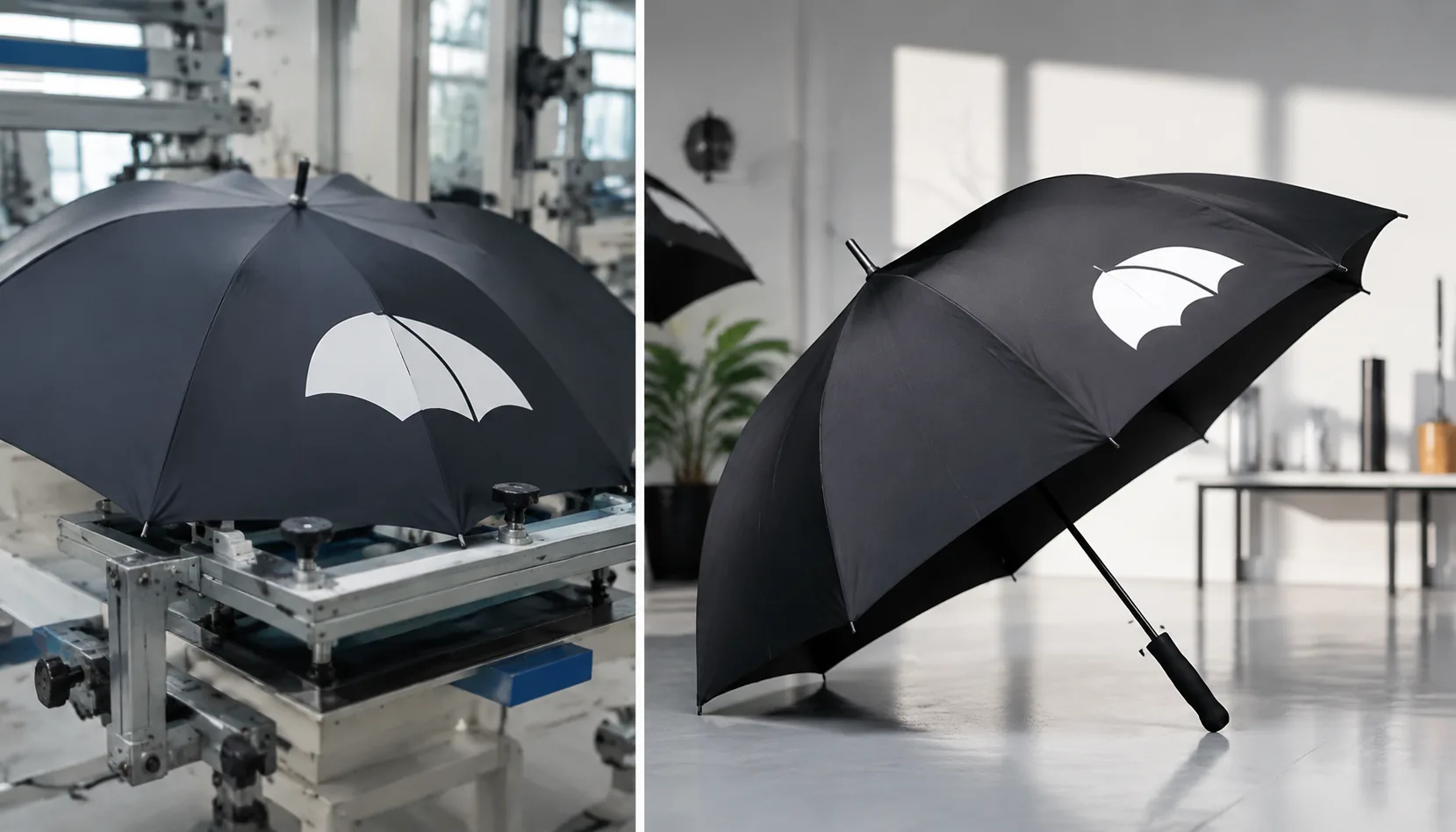
Dark pongee canopies can make a clean brand color turn muddy if the print spec ignores what happens on the screen table, especially with red, yellow, light blue, and fine logo details. In our Songxia workshop, white ink underbase umbrellas are usually recommended when the buyer needs stronger opacity and tighter color matching, but the extra pass changes ink buildup, drying time, unit cost, sampling, and what QC must check before bulk approval.
Why Dark Canopies Need an Underbase
Dark pongee eats color. On navy, black, forest green, and burgundy 190T/210T pongee, the yarn-dyed fabric and water-repellent finish reduce ink brightness before the logo even reaches QC. A red logo that looks correct on paper can turn muddy on burgundy; yellow drops toward olive on forest green; cyan becomes dull on navy; and fine gray details almost disappear on black. This is why dark canopy logo printing cannot be judged from a PDF proof alone. The substrate changes the ink value, especially with screen printing and heat-transfer films that are not fully opaque. For branded umbrella opacity, I usually treat dark pongee as a technical printing surface, not just a color choice. If the buyer wants Pantone accuracy within a reasonable commercial tolerance, the print plan has to include either high-opacity spot ink, a white ink underbase, or a modified artwork file with stronger color separations.
A white underbase is needed whenever the brand color must stay bright instead of blending into the canopy. For a one-color white logo, no underbase is needed because the white ink itself is the visible layer, but we still specify double-hit white on black or navy if the logo has thin strokes under 1.2 mm. For one-color red, orange, yellow, light blue, or lime logos, white ink underbase umbrellas should be quoted as the default on dark canopies, not as an optional upgrade hidden later. For multi-color marks, the underbase should sit only under the color areas, with a 0.2–0.4 mm choke so white does not show as a halo after sewing tension and frame opening. On 8K and 10K umbrellas, panel curvature matters because registration can shift slightly near rib seams.
Gradient logos are the hardest case because a solid white base can make the light end pop while crushing the soft transition. For pongee umbrella printing, we normally separate gradients into halftone screen dots or recommend heat transfer/sublimation-style transfer only when the artwork and canopy material allow it; direct sublimation is not suitable for dark-dyed pongee because there is no white dye. For umbrella print QC, we check opacity under daylight and indoor LED, then open the umbrella fully to inspect distortion across the panel. AQL 2.5 inspection should include underbase registration, pinholes, ink cracking after flexing, and color comparison against an approved pre-production sample. The safest approval path is a strike-off on the actual 190T or 210T canopy color, not a loose fabric swatch or digital mockup.
Printing Methods That Support White Underbase
Screen printing is still the most reliable method for white ink underbase umbrellas when the artwork has solid spot colors, simple gradients, or a retail logo that must read cleanly on navy, black, forest green, or burgundy pongee. We normally use a separate white plate first, flash or air-dry it to a controlled tack, then print the color plate on top. Setup cost is higher because every color needs its own screen, and the white underbase adds one more screen, one more registration step, and one more drying pass. For 190T or 210T pongee umbrella printing, I prefer screen printing when the minimum line thickness is at least 0.35 mm and knockout gaps are not below 0.4 mm. Registration tolerance should be held within ±0.5 mm on a single panel; anything tighter becomes risky once the canopy is sewn and tensioned over ribs. On 8K umbrellas, the wider panels give more printable area and easier jig positioning, while 16K layouts have narrow, curved panels where small misregistration becomes more visible near seam lines.
Digital printing can support underbase work, but buyers need to separate sample-room capability from stable mass production. UV digital and some textile direct-print systems can lay white first, then CMYK, which is useful for dark canopy logo printing with full-color artwork, small quantities, or variable designs. The advantage is low plate cost and fast sampling, often 3–5 days after artwork confirmation, but machine time is expensive and white ink maintenance is unforgiving because titanium dioxide pigment settles quickly. Fine detail can be better than screen printing on flat fabric, with 0.2–0.3 mm lines possible, but canopy fabric is not a rigid sheet; woven pongee moves, stretches, and absorbs differently across panels. For branded umbrella opacity, digital white usually needs two passes on deep black or red canopies, which raises cost and can create a heavier hand feel. I do not recommend digital underbase across panel seams or close to rib pockets, especially on 16K umbrellas, because the print bed alignment may be good but sewing shrinkage changes the final geometry.
Heat transfer is the cleanest underbase solution when the logo has many colors, metallic effects, or very tight edges that would be painful to register by screen. The white base is built into the transfer film, so opacity is more predictable on dark pongee, PVC, or POE canopies, and 0.2 mm detail can hold if the supplier uses good PET film and controlled adhesive powder. Setup cost sits between digital and screen: lower than multi-screen printing for complex logos, but higher per piece because each transfer must be printed, cut if needed, positioned, pressed, and peeled. The weak point is not color; it is adhesion and flexibility. Umbrella print QC should include cross-hatch tape testing, 500-cycle wet rub where required, folded-panel checking, and heat-press mark inspection under side light. Heat transfer works well on 8K and 16K umbrellas if each panel is pressed before final assembly or if the logo stays centered away from seams. For large one-panel prints above 180 mm wide, screen printing usually ages better because transfer films can feel stiff on a tensioned canopy.
Artwork Rules for Clean Logo Opacity
Clean opacity on a navy, black, forest green, or burgundy canopy starts in the artwork file, not on the print table. For white ink underbase umbrellas, we require vector artwork in AI, PDF, EPS, or CDR format with fonts outlined and Pantone spot colors separated from CMYK preview colors. The white plate should be its own named spot-color layer, usually set as 100% White Underbase, sitting below the visible logo colors. For pongee umbrella printing on 190T or 210T fabric, raster logos create soft edges and pinholes after the canopy panel flexes, especially on fine serif text and thin circular marks. If the buyer only has PNG or JPG artwork, we redraw it before sampling; otherwise, dark canopy logo printing becomes a guessing job and the approved brand color may shift once the black fabric absorbs light through the ink film.
Trap is where many umbrella logos fail. The white underbase should normally be choked 0.15–0.30 mm inside the top color so a tiny registration movement does not leave a white halo around red, yellow, or light blue graphics. On large solid logos, we may add 1–2 mm bleed past the stitched panel guide, but not into seam allowance, because screen pressure and heat-transfer placement both change near rib pockets and panel edges. Avoid reversed text under 6 pt, QR codes under 25 mm, and hairlines below 0.25 mm; they fill in after curing or lose sharpness when the canopy is folded around the frame. Branded umbrella opacity is strongest when the underbase is matched to the print method: screen printing gives heavier laydown for simple spot-color logos, while heat transfer handles gradients but needs a good white backing film.
Approval should move in three steps, not by email screenshot. First, make a strike-off on the actual canopy fabric color, using the same ink, mesh count, squeegee hardness, curing temperature, and Teflon or UV coating planned for bulk. Second, build a pre-production sample on the real umbrella size, such as 23 inch or 27 inch, so the buyer can judge logo position across the curved panel and rib tension. Third, lock a signed color standard: Pantone reference, approved strike-off, or physical sample, with viewing condition noted, usually D65 daylight. Our standard ZheBrella umbrella print QC checks include opacity against a light box, 3M tape adhesion, wet rub, fold abrasion, registration tolerance, and AQL 2.5 visual inspection before packing. Without that paper trail, white ink underbase umbrellas become dispute-prone because every dark canopy makes color look different under warehouse, outdoor, and event lighting.
Cost, MOQ, and Lead-Time Impact
A white underbase is not a small artwork setting; it changes the production route. For dark canopy logo printing on black, navy, burgundy, or forest-green 190T/210T pongee, we usually need one extra screen for the white plate, one ink pass for the underbase, a flash or intermediate cure, then the color pass on top. If the logo has tight registration, small text under 1.5 mm, or Pantone colors that must stay clean, the operator slows the table speed and checks alignment more often. That is why white ink underbase umbrellas normally cost more than single-pass prints, especially on 8K/10K folding umbrellas where panels are smaller and harder to position consistently. For a simple one-location logo, buyers should expect a modest unit-cost increase; for multi-panel artwork, 16K golf umbrellas, or double-canopy vented windproof models, the added setup and handling become more visible in the quote.
MOQ depends on whether we can group the print run with existing fabric, frame, and handle inventory. For common 21-inch and 23-inch auto-open folding umbrellas with steel or fiberglass ribs, an underbase job may start around 300–500 pieces per design when artwork is simple and colors are limited. Custom frames, 27-inch or 30-inch golf sizes, UPF 50+ coating, Teflon water-repellent finishing, POE/PVC/EVA panels, or color-matched handles can push practical MOQ toward 1,000 pieces. Sample timing is usually 5–7 days after artwork approval for screen printing, sometimes 8–10 days if we need Pantone drawdowns, opacity testing, or a physical strike-off for branded umbrella opacity. Bulk lead time is commonly 25–35 days after sample approval and deposit, but add several days before peak rainy-season or Q4 promotional deadlines when sewing lines and print tables are already loaded.
FOB and DDP quotes should separate the print setup charge from the umbrella unit price, because the economics are different. Screens, film output, ink mixing, and test panels are front-loaded costs; freight, duties, and last-mile delivery change by carton volume, destination ZIP code, and whether the buyer ships by sea, rail, or air. Our standard practice at ZheBrella is to confirm underbase opacity on the actual canopy fabric, not just on a white paper proof, because pongee umbrella printing can shift after curing and water-repellent treatment. Rush orders are risky: if curing time is shortened, white ink can crack, block, or lose adhesion during wet rub testing. For umbrella print QC, we check registration, pinholes, hand feel, color consistency, and adhesion under AQL 2.5 before packing. If the delivery date is fixed for an event, approve artwork early rather than forcing production to compress the curing and inspection steps.
QC Checks Before Bulk Shipment
Bulk shipment should not leave the factory until the logo survives handling, rain, and a fair light check, because dark canopy logo printing hides problems under workshop lighting. For white ink underbase umbrellas, I start with a dry rub and wet rub test on the printed panels before final assembly: 20 back-and-forth strokes with a white cotton cloth, then another 20 strokes after the cloth is dampened. If the top color lifts, or if the white base smears into the edge of the logo, the ink curing or heat-transfer pressure is wrong. For 190T and 210T pongee umbrella printing, we also do a rain exposure check by spraying the canopy for 5-10 minutes, letting it dry, and inspecting whether the ink edge becomes fuzzy, cracked, or tacky. PVC, POE, and EVA canopies need a different read because surface tension is lower; poor adhesion usually shows as flaking at the fold lines after opening and closing the umbrella 10-20 cycles.
Print registration is where many cheap logo jobs fail, especially when a white underbase is printed first and CMYK or spot color is laid on top. The underbase should sit 0.2-0.5 mm inside the color layer, not stick out as a white halo around letters, QR codes, or fine line artwork. We check pinholes by holding printed panels against a D65 light booth or standardized D65 lamp, not against random sunlight near the loading door. A proper branded umbrella opacity comparison uses an approved golden sample beside current production, both opened on the same rib angle, so the buyer’s navy, black, or burgundy canopy does not show through the logo. If the white ink layer is too thin, red and yellow logos look dirty; if it is too thick, the print becomes stiff and may crack on 8K or 10K folding umbrellas where the canopy folds sharply.
Final inspection should follow AQL 2.5 for major logo and appearance defects, with a separate checklist for canopy stains, frame function, and packaging accuracy. In umbrella print QC, I classify exposed underbase, visible pinholes, color shift beyond the approved sample, off-center panel placement, and poor adhesion as major defects because the end user sees them immediately. Inspectors should open and close manual, auto-open, and auto-open-close samples, check rib alignment on steel and fiberglass frames, confirm no oil marks transferred from the runner or shaft, and verify sleeve printing, hangtags, barcodes, carton marks, and PO quantity. At ZheBrella, our standard practice is to inspect printed umbrellas after full curing and again after packing, because a clean logo can still be ruined by wet ink stacking, dirty polybags, or cartons compressed during loading. For FOB or DDP shipments, that last carton-level check prevents expensive claims that cost more than the printing itself.
Frequently Asked Questions
Does every logo on a black umbrella need white underbase?
No. White, yellow, red, and light brand colors usually need it, while metallic transfers or intentionally muted tone-on-tone logos may not.
Can white underbase be used on windproof umbrellas?
Yes, but the factory should test placement over double-canopy vents and rib seams, especially on fiberglass 8K or 16K frames where panel movement can affect registration.
When should a buyer request a white ink underbase for dark umbrella canopies?
Request a white underbase when printing light, bright, or brand-critical colors on black, navy, dark green, burgundy, or other dark pongee canopies. It is especially important for yellow, orange, red, light blue, and white logo areas where opacity must match the approved artwork.
How does white underbase affect umbrella logo printing cost and lead time?
A white underbase usually adds one extra screen or print pass, so the unit cost increases based on logo size, number of panels, and order quantity. Sampling may add 2–4 working days because the factory must test opacity, drying, adhesion, and color matching before bulk approval.
What should be checked during QC for dark canopy logo printing?
QC should compare bulk prints against the approved pre-production sample for opacity, registration, edge sharpness, color consistency, and ink adhesion. For bulk inspections, buyers commonly use AQL standards and check printed panels across cartons to confirm there is no show-through, smudging, or misalignment.
Looking to Launch Your Custom Umbrella Line?
ZheBrella is a Zhejiang-based OEM/ODM umbrella manufacturer with 17 years of export experience. Free design, low MOQ from 100 pieces, windproof construction, full-color print.
Get Free Quote Now »People Also Search For
Related Articles
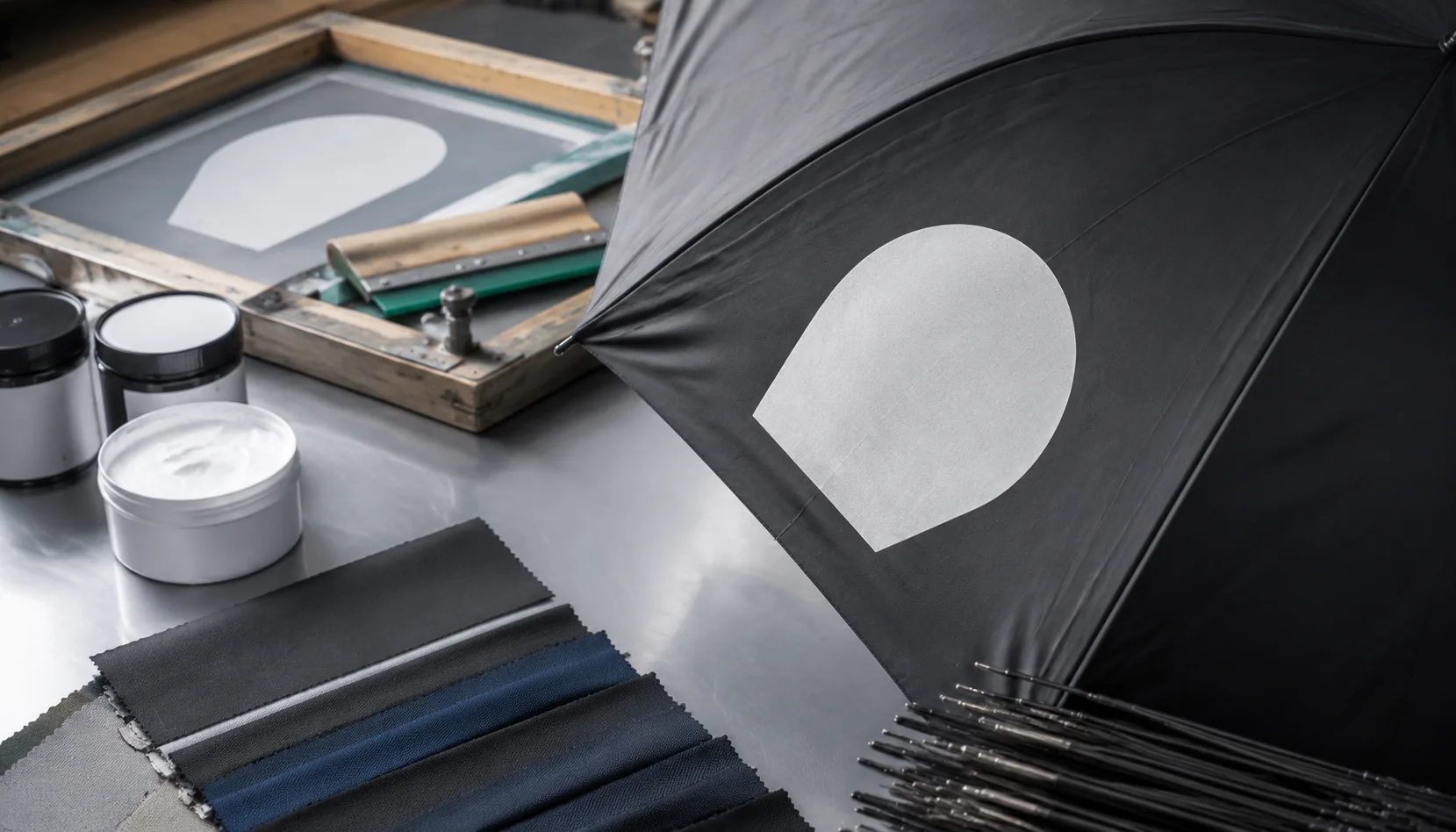
White Ink Underbase for Dark Umbrella Canopy Logos
Learn when white underbase improves logo opacity on dark umbrella canopies, with fabric, ink, sampling, MOQ, and QC tips...
Read More »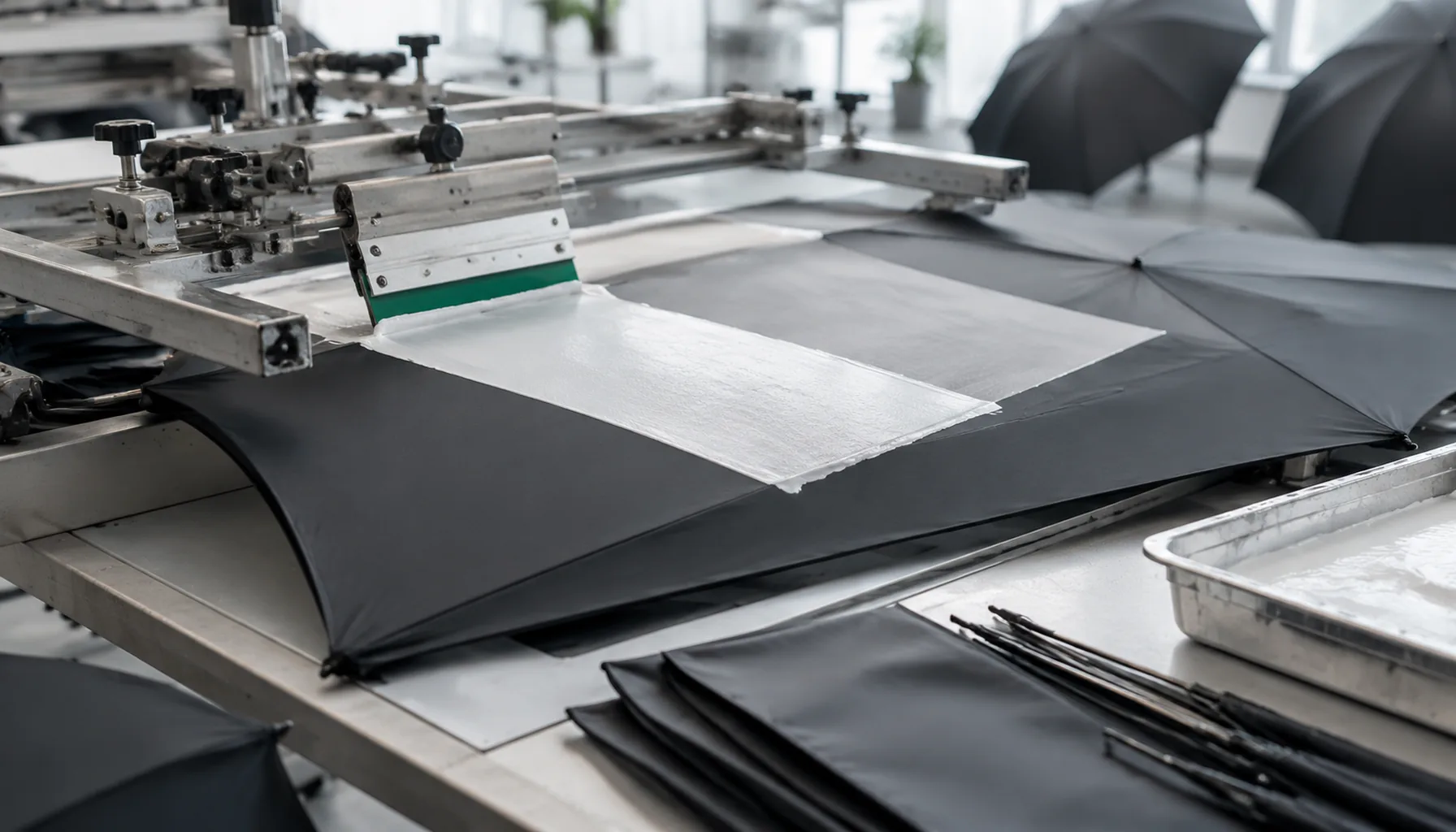
White Ink Underbase Printing for Dark Umbrella Canopies
Use white underbase printing to keep logos bright on navy, black, and red canopies, with clear guidance on ink layers, s...
Read More »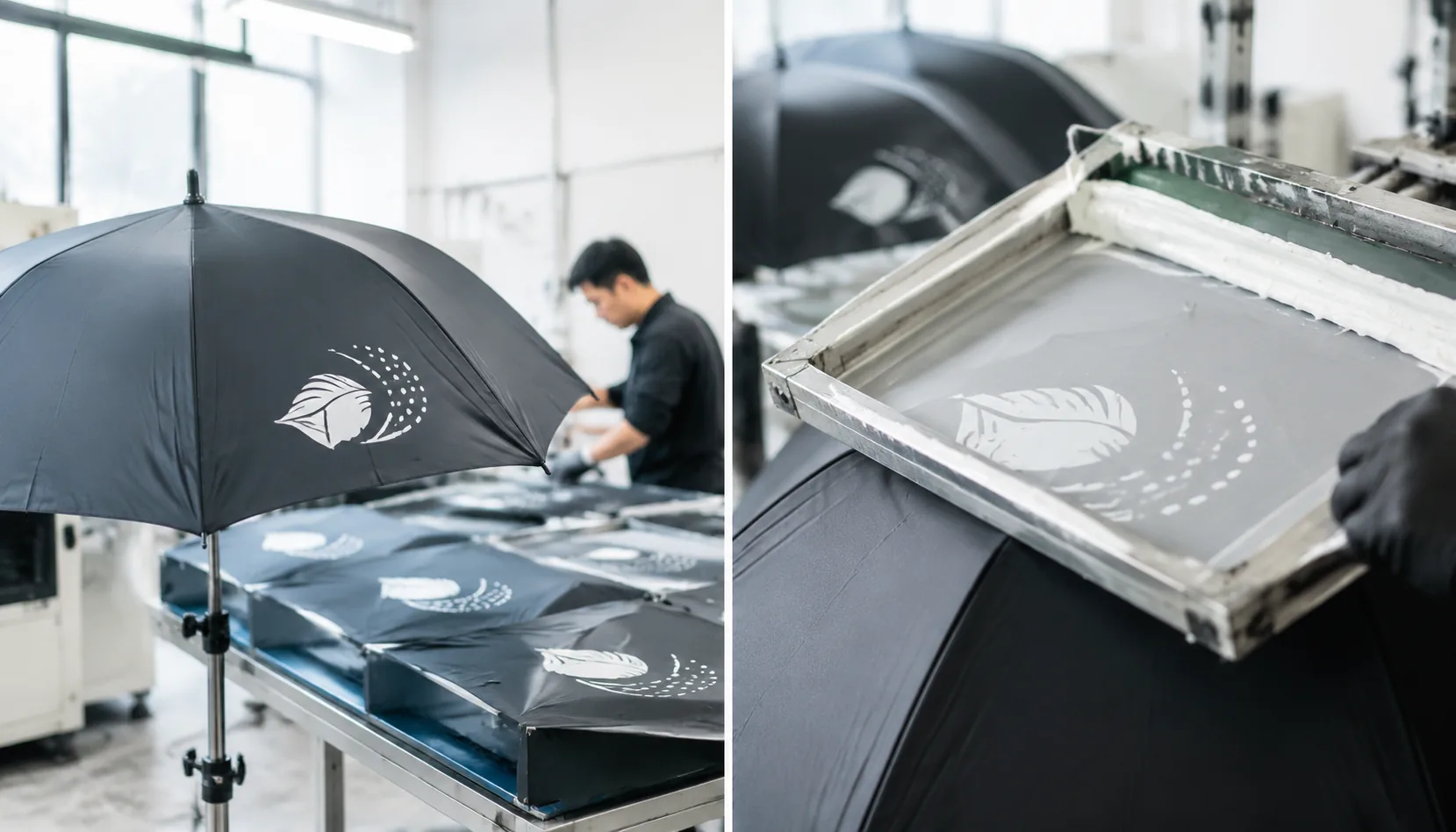
White Ink Underbase for Dark Umbrella Logo Printing
Learn when white underbase is needed on dark umbrellas to improve logo opacity, color accuracy, durability, and buyer ap...
Read More »