Wooden Stick Umbrellas for Retail and Hospitality Buyers
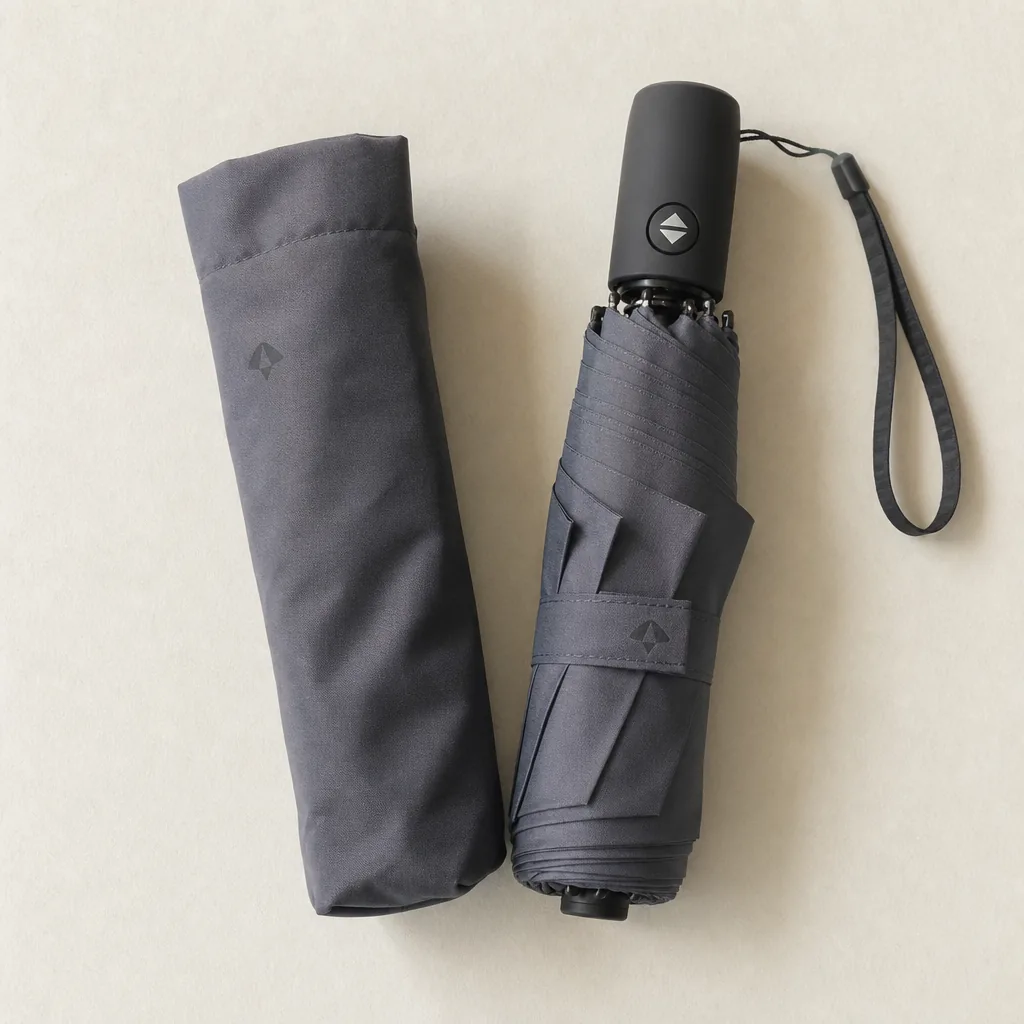
Retail and hotel buyers often approve a beautiful sample, then lose margin when the bulk order exposes weak rib tension, inconsistent wood finishing, loose handle fitting, or cartons that fail after loading. On our Songxia factory floor, wooden stick umbrellas are controlled from shaft straightness and canopy cutting to tip alignment, AQL inspection, and export packing, because each small spec affects how the umbrella looks in a lobby, gift shop, or guest room after repeated use.
Where Wooden Stick Umbrellas Fit Best
Wooden stick umbrellas fit best where the umbrella is part of the customer’s first impression, not just an emergency rain tool. Hotels, resorts, private clubs, golf courses, and boutique retailers use them because the long shaft, curved wooden handle, and larger canopy read as more deliberate than a 3-fold travel umbrella pulled from a handbag. For hotel guest umbrellas, I usually recommend 23" or 27" canopies in 190T or 210T pongee with a stained maple, beech, or rubberwood handle, plus a clean one-color logo on one or two panels. A straight 8K steel frame keeps cost controlled, while fiberglass ribs or a fiberglass/steel hybrid improve recovery in gusty entrances and coastal resort locations. If the property wants a more premium feel, a 16K frame adds visual weight and a smoother canopy shape, though it also raises unit cost and carton volume.
For retail stick umbrellas, the biggest advantage is shelf presence. A wooden crook handle hanging from a display rail looks better than a compact umbrella stacked in a bin, especially for lifestyle stores, museum shops, golf pro shops, and department-store private labels. Wooden handle umbrellas also support better storytelling: dark wood with black pongee for executive buyers, natural wood with navy or cream panels for resort shops, or sublimation-printed canopies for art-led boutiques. In production, the details that separate ordinary from luxury rain umbrellas are not vague “premium” claims; they are tighter canopy tension, straight tip alignment, smooth runner action, clean binding tape, and logo registration within 2-3 mm on printed panels. Our standard practice at ZheBrella is to check these under AQL 2.5 before packing because stick umbrellas show defects more visibly than small folding models.
The trade-off is portability. Wooden stick umbrellas are not the right choice for airlines, commuter giveaways, or brands that need a 21" auto-open-close umbrella to fit inside a tote or backpack. A 23" stick umbrella commonly packs around 85-90 cm long, and a 27" golf-style version can exceed 100 cm, so FOB freight efficiency and DDP courier costs are very different from compact folding umbrellas. That size is exactly why they work well for doorman service, valet stands, golf carts, spa entrances, and retail wall displays, but it makes them awkward for mass event handouts. Buyers should also decide early between manual open and auto-open: manual is more traditional and durable, while auto-open gives hospitality staff faster one-hand operation. For premium programs, a vented double canopy and fiberglass ribs can survive 50+ mph wind-tunnel testing, but they should be specified before sampling because the frame, fabric cut, and packing all change.
Shaft, Rib, and Frame Construction Choices
The shaft is where many retail and hospitality buyers overpay for looks or under-spec for abuse. A true wood shaft gives wooden stick umbrellas the warm handfeel and premium lobby-rack appearance that hotels, resorts, and department stores like, but it is not the toughest option for wet, high-turnover use. Beech, maple, and ash shafts are common; they machine cleanly and hold a curved wooden handle well, but they can swell, warp, or crack if the varnish is thin or the umbrella is stored closed while wet. A steel shaft with a wood-look finish is less romantic but more consistent in straightness, cheaper at volume, and better for valet stands or shared hotel guest umbrellas where guests are not gentle. The tradeoff is corrosion: if the plating, powder coat, or imitation-grain wrap is scratched near the runner or notch, rust can creep under the finish. Our standard practice at ZheBrella is salt-spray checking plated steel parts and rejecting rough notch edges before frame assembly.
Ribs decide wind behavior more than the handle does. Steel ribs are stiff and inexpensive, but on a 23 inch or 27 inch stick umbrella they can permanently bend after inversion, especially in gusty coastal cities. Fiberglass ribs flex and recover better, which is why I prefer fiberglass for retail stick umbrellas positioned as durable everyday rain gear or for hotels near airports, beaches, and convention centers. A mixed frame is common: steel shaft and stretcher with fiberglass ribs to balance cost and wind resistance. For a premium build, fiberglass ribs with reinforced joints can survive 50+ mph wind-tunnel tests when paired with a properly tensioned 190T or 210T pongee canopy. The weak points are usually not the ribs themselves but the rivets, runner spring, and rib tips. If those are loose, even luxury rain umbrellas will chatter in wind and fail AQL 2.5 functional inspection after repeated open-close cycling.
Frame count affects both appearance and load distribution. An 8K frame is the normal commercial choice: eight ribs, manageable weight, faster sewing alignment, and clean panel layout for logo printing. It suits most wooden handle umbrellas in 23 inch and 27 inch sizes, especially when the buyer wants a classic silhouette without making the product heavy. A 16K frame looks more architectural and spreads canopy stress across more ribs, so it feels steadier in rain and photographs well for upscale retail displays. But 16K also means more metal or fiberglass, more rivets, more sewing points, and higher failure risk if the factory does not control rib symmetry. On a 30 inch golf-style stick umbrella, 16K can become tiring for guests unless fiberglass is used aggressively. For wooden stick umbrellas, I usually recommend 8K fiberglass ribs for practical hospitality programs and 16K only when the brand brief values visual luxury over lowest landed cost.
Canopy Fabric and Weather Performance Specs
For resort and outdoor hospitality use, UPF 50+ coating is worth specifying when the umbrella will be used for sun exposure as much as rain. Silver UV coating gives strong protection but looks less refined inside the canopy; black UV coating feels more retail-friendly and pairs well with wooden handle umbrellas in neutral colors. If the product will sit in a lobby basket or boutique retail display, I usually recommend 210T pongee with black UV coating, 23 inch or 27 inch rib length, and an auto-open mechanism only if the spring has been cycle-tested. Manual open is more traditional for wooden stick umbrellas and has fewer after-sales failures, but auto-open is easier for hotel staff carrying luggage. Before production, confirm rib length, finished arc, closed length, panel count, logo position, and AQL 2.5 inspection points. Small dimensional changes affect packaging: a 27 inch stick umbrella may need longer export cartons, higher volumetric weight, and different DDP freight estimates than a 23 inch model.
Handle, Tip, and Branding Details
Handle choice is where buyers can make wooden stick umbrellas feel either traditional, retail-ready, or hotel-grade. A crook handle in beech, maple, or ash is still the safest choice for hospitality because it hangs neatly on luggage carts, reception counters, and coat rails; the curve also gives better grip when guests carry bags. Straight wood handles look cleaner for retail stick umbrellas, especially in 23" and 27" city sizes, but they need tighter machining because any off-center drilling is obvious when the shaft, handle, and ferrule are aligned. For premium programs, I prefer a medium-gloss lacquer rather than a mirror finish: high gloss shows scratches after carton rubbing, while matte lacquer can look uneven on open-grain wood. We normally check handle color under D65 lighting and compare against an approved production sample, not just a Pantone callout, because natural wood absorbs stain differently from batch to batch.
Tips and top caps should not be treated as minor hardware on luxury rain umbrellas. A cheap plastic tip on a wood shaft immediately lowers the perceived value, so metal tips in nickel, gunmetal, brass, or matte black are common for department-store and hotel guest umbrellas. The important production detail is finish consistency: the runner, notch, tip cup, ferrule, and logo plate should come from the same plating direction, or the umbrella looks assembled from spare parts. For wooden handle umbrellas, engraved logo plates are usually fixed by pin, screw, or recessed adhesive; recessed plates are cleaner, but the handle needs accurate milling so the plate sits flush and does not catch the user’s hand. Laser engraving directly on wood works well for small hotel crests, but deep engraving can burn unevenly on darker stains, so sampling on actual handle stock is better than approving from a digital mockup.
Branding should be planned across the canopy, sleeve, and small trim before cutting fabric, not added at the end. Panel printing on 190T or 210T pongee can be screen printed for solid logos, heat-transfer printed for gradients, or sublimated when the full panel carries artwork, but a classic stick umbrella often looks better with one restrained logo panel and a woven label on the tie wrap. Sleeve branding gives retailers more surface area for barcodes, care labels, and collection names, while hotels usually prefer a simple sleeve logo plus room-safe color coding. For wooden stick umbrellas, color matching means checking the canopy, sleeve fabric, tie wrap, handle stain, and plated parts as one set. On premium orders, I like to approve a sealed pre-production sample and then run inline checks every 300-500 pieces for lacquer bubbles, stain drift, crooked plates, loose woven labels, and print registration before final AQL 2.5 inspection.
Ordering, Inspection, and Logistics Checklist
MOQ should be locked by the parts that actually create production changeovers: wood finish, canopy color, and print method. For wooden stick umbrellas, a natural maple or beech handle can usually start at 300–500 pcs per finish, while dark stained, walnut-look, or lacquered handles are safer at 500–1,000 pcs because the dipping and drying batches need consistency. Standard black, navy, burgundy, and forest green 190T or 210T pongee can often run at 300 pcs per color if fabric is in stock; custom Pantone canopy dyeing normally moves the MOQ to 1,000–3,000 pcs. For hotel guest umbrellas, I prefer one handle finish, one shaft color, and two canopy colors maximum on the first order, because mixed wood tones and small fabric lots are where shade variation becomes visible at the lobby stand.
Approve a pre-production sample before cutting bulk fabric, not after the frames are already assembled. The sample should confirm the 23 inch or 27 inch stick frame, 8K steel or fiberglass rib structure, J-handle curve, tip length, runner smoothness, logo position, and canopy tension when opened. For retail stick umbrellas and wooden handle umbrellas, check barcode labels, hangtags, sleeve fit, and master carton markings at the same stage. Typical sample time is 7–10 days for stock fabric with laser-engraved or screen-printed logos, and 12–18 days when a stained wood handle or custom canopy color is required. Bulk lead time is usually 25–35 days after sample approval and deposit; add 7–10 days for multi-color printing, UV coating, or retail packaging with color boxes.
Inspection should be written into the purchase order, not negotiated after production. Our standard practice at ZheBrella is AQL 2.5 for major defects and AQL 4.0 for minor defects, with checks on open diameter, rib alignment, shaft straightness, wood handle cracks, canopy stains, loose stitching, logo registration, and opening force. Cartons need export-grade five-ply board, corner crush resistance suitable for 12–18 kg loads, inner polybags or sleeves, and dry cartons below practical moisture limits before loading. FOB Ningbo is usually the cleanest option for Shaoxing production, with FOB Shanghai available when the buyer consolidates luxury rain umbrellas with other retail goods. Hotels that do not want to manage import clearance can use DDP delivery to one property, a regional warehouse, or multiple hotel sites, but the consignee details, HS code, duties, and final-mile access rules must be confirmed before quotation.
Frequently Asked Questions
Are real wood shafts better than steel shafts with wood-look finishes?
Real wood gives a premium natural appearance but can vary in grain and requires tighter finish control. Steel shafts with wood-look finishes are more uniform and may be stronger for high-use programs.
What QC points matter most for wooden stick umbrellas?
Inspect lacquer consistency, handle attachment strength, rib alignment, canopy tension, and logo placement. For hotel orders, also test repeated opening and closing because guest-use umbrellas see heavy daily handling.
What shaft and rib specs should a hotel umbrella order include?
For hospitality buyers, specify the shaft material, shaft diameter, rib count, rib material, and opening style in the PO. A common commercial setup is an 8-rib fiberglass or steel frame with a reinforced wooden shaft for durability in lobby use.
What MOQ is typical for custom wooden stick umbrellas?
MOQ usually depends on whether the canopy, handle, and printing are fully customized. For OEM orders, factories often quote 500 to 1,000 pieces per color or style, with lower MOQs possible for stock components.
How should packaging be defined for retail and hotel orders?
State whether each umbrella needs a polybag, hangtag, sleeve, or gift box, and confirm carton pack count and barcode labeling. Retail programs often require individual retail-ready packaging, while hotel programs usually prioritize bulk inner packing and quick replacement.
Looking to Launch Your Custom Umbrella Line?
ZheBrella is a Zhejiang-based OEM/ODM umbrella manufacturer with 17 years of export experience. Free design, low MOQ from 100 pieces, windproof construction, full-color print.
Get Free Quote Now »People Also Search For
Related Articles
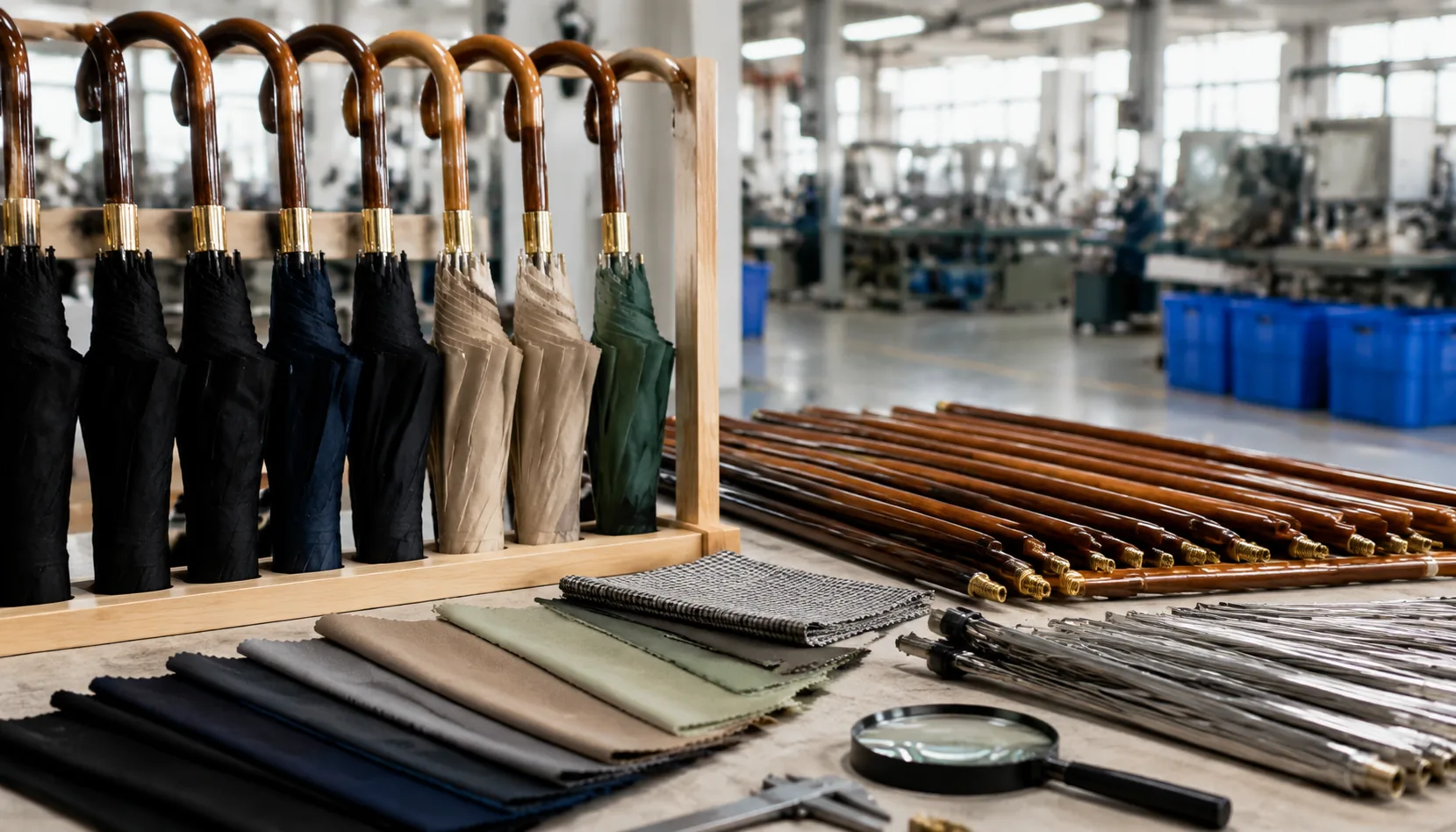
Cane Handle Stick Umbrellas: Buyer Specs for Retail Brands
Specify cane handle stick umbrellas with 8K frames, 190T/210T pongee, auto-open options, and QC checks for retail and gi...
Read More »
Luxury Wooden Handle Umbrellas for Retail Private Label
Build retail-ready wooden handle umbrellas with 16K frames, 210T pongee, branded details, packaging specs, FOB/DDP terms...
Read More »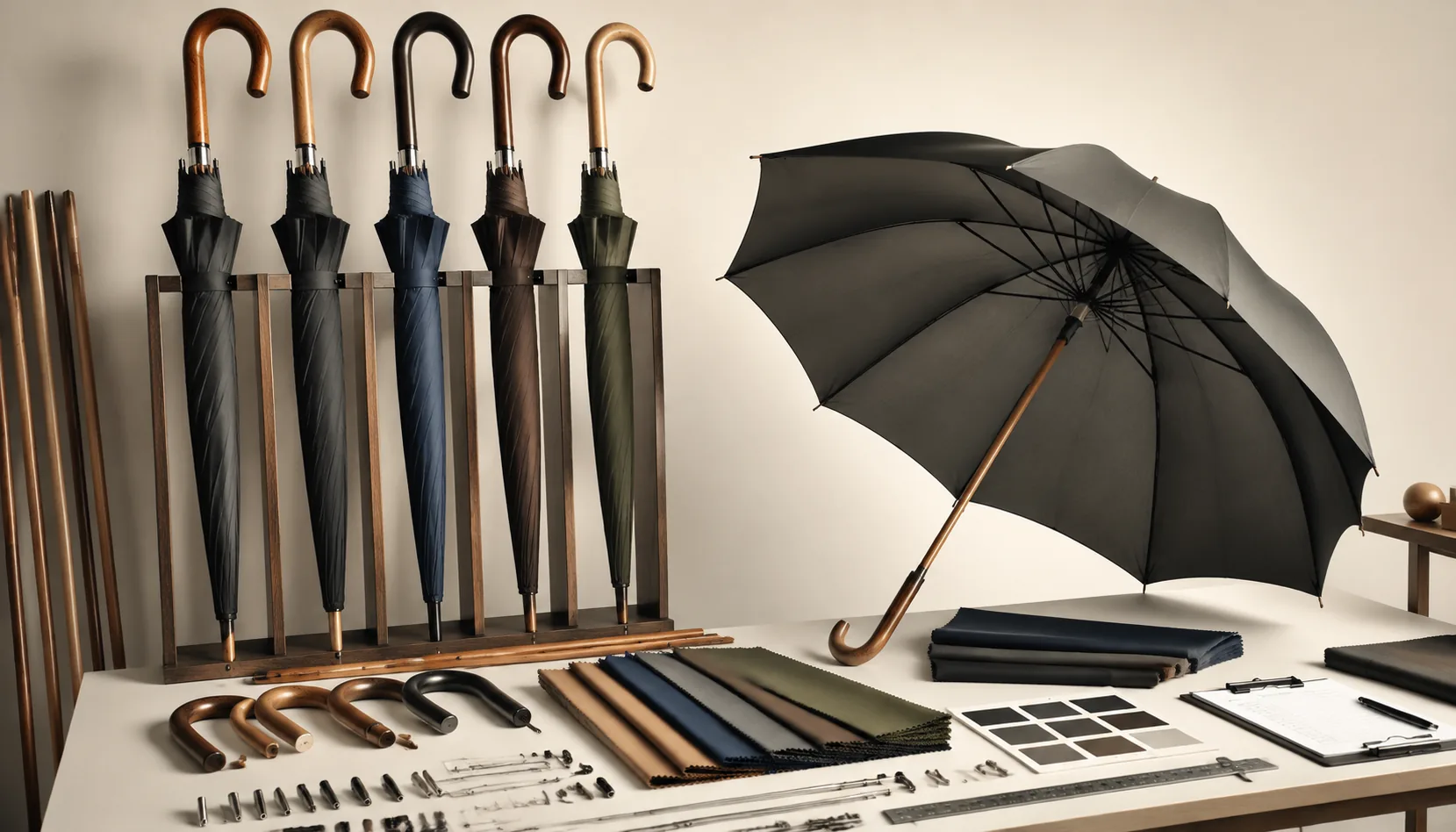
Executive Stick Umbrellas: Buyer Specs for Retail Brands
Compare executive stick umbrella specs, from 8K/16K frames and pongee fabrics to handles, QC, MOQs, and shipping terms f...
Read More »