Branded Umbrella Closure Straps for Gift and Retail Lines
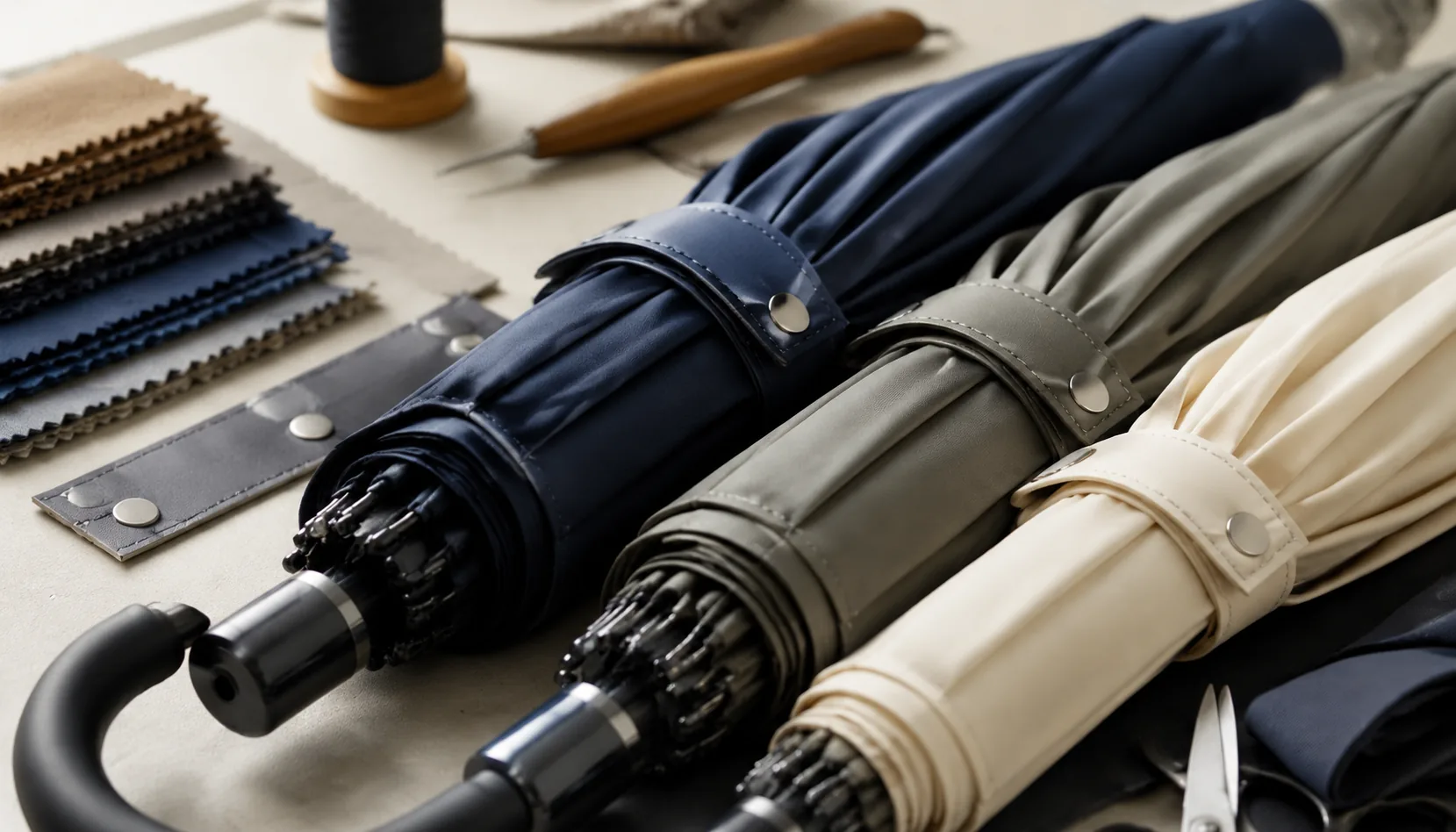
For gift and retail umbrella programs, the closure strap is often the first branded detail a buyer handles on the shelf or in the box, and it can cheapen the whole product if the material, logo method, or stitching is wrong. On our Songxia production floor, branded umbrella closure straps are specified alongside canopy fabric, runner tension, snap hardware, and final packing so the strap looks premium without slowing assembly or failing daily use.
Why Closure Straps Influence First Impressions
The closure strap is the first branding surface many buyers actually see because umbrellas spend most of their retail life folded, not open. On a shelf, in a counter display, inside a gift box, or stacked for an event handout, the canopy logo may be hidden under the wrap, but the strap sits right on the outside. A 21" folding umbrella with a 190T pongee canopy may show only a narrow band of fabric and a snap button before purchase, so that band carries more weight than people expect. For retail umbrella branding, I treat the strap like a product label: clean stitching, centered artwork, correct thread color, and no twisting after folding. If the strap looks cheap, the whole umbrella feels cheap before anyone checks the frame, ribs, or handle.
Branded umbrella closure straps also solve a common design problem: buyers want more brand presence, but they do not always want another large canopy print panel. A logo umbrella strap can support the main canopy logo without making the umbrella look overloaded. For example, a black 23" auto-open umbrella with an 8K fiberglass frame may use a subtle one-color canopy print and then a woven, screen-printed, or heat-transfer strap mark for close-range recognition. This works especially well for corporate gifts, hotel programs, golf events, and museum retail, where the user sees the folded umbrella in a bag, drawer, car door pocket, or reception stand. The strap keeps the brand visible when the umbrella is not in use, which is most of the product’s life.
For private label umbrella details, the strap should be specified as deliberately as the canopy fabric or handle. Common options include matching 190T or 210T pongee, contrast webbing, PVC/POE clear strap styles for transparent umbrellas, metal snap color, Velcro width, and printed label placement. On production lines, the problems usually come from vague artwork files or oversized logos that distort when wrapped around the canopy. Our standard practice is to check strap length after final folding, not just as a flat component, because an 8K compact umbrella and a 16K golf umbrella need very different wrap tension. Good custom umbrella straps do not shout; they make the folded product look finished, organized, and retail-ready.
Select Strap Construction by Umbrella Type
Strap construction should follow the umbrella’s folded bulk, not just the buyer’s artwork file. For compact 21" and 23" auto-open-close umbrellas, a matching 190T or 210T pongee strap is usually the safest choice because it bends cleanly around the canopy and does not fight the telescopic shaft. On 8K compact frames, we normally cut the strap shorter and place the snap closer to the sewn anchor point; on 10K or heavy windproof models with fiberglass ribs and thicker tips, the folded canopy gains enough diameter that the snap must move out 8–15 mm. If the strap is too tight, workers force the wrap during packing, and the first failure is usually puckering at the canopy seam or a cracked plastic snap cap after carton compression.
Golf umbrellas and full-size straight umbrellas need a different view because the frame bulk is not the only issue; the handle also controls the wrap path. A 27" or 30" golf umbrella with 8K fiberglass ribs may close neatly with a wide pongee strap, but a 16K frame creates a larger rib stack and needs extra strap length or a wider contact area to prevent a twisted closure. Grosgrain tape is useful here because it has better edge stability than plain canopy fabric and holds a logo umbrella strap print sharply, especially for screen printing in one or two colors. For retail umbrella branding, I avoid very narrow straps on golf models because they look cheap next to a large EVA or rubberized handle and they cut into the canopy when the umbrella is wet and tightly rolled.
PU leather tabs and elastic loops are best treated as design details with engineering limits. PU tabs look good on private label umbrella details, especially with debossed logos or metal snaps, but they add stiffness and should not sit directly over an auto-open button or runner release where the user’s thumb needs clearance. Elastic loops work well for children’s, bottle, and some lightweight straight umbrellas, but they age faster under UV and can lose recovery after repeated wet-dry cycles; I would not use them on premium 16K windproof models rated for 50+ mph. For branded umbrella closure straps, our standard practice at ZheBrella is to approve strap length on pre-production samples after the umbrella has been folded by line workers, not by the sample room alone, because real production rolling exposes snap position mistakes quickly.
Decoration Methods for Strap Branding
The most reliable decoration method for branded umbrella closure straps is still the woven label sewn into the strap edge or face. It handles daily folding abrasion better than most surface prints because the logo is made from dyed yarn, not ink sitting on top. For 190T or 210T pongee umbrellas, we usually specify polyester woven labels with 3 to 6 thread colors; very small text under 1.5 mm will blur, so retail UPC-style claims or fine taglines should move to the hangtag. A woven label suits gift sets, corporate programs, and mid-tier retail umbrella branding because it looks intentional without adding much risk to production. The weak point is sewing placement: if the label is too close to the snap, repeated pulling can curl the corners after 300 to 500 open-close cycles. I prefer bar-tack reinforcement or a slightly wider strap when the label is large.
Heat-transfer logos and screen print work best when the buyer wants clean color matching on custom umbrella straps, especially for promotional orders with Pantone-controlled artwork. Heat transfer gives sharper gradients and small icons than screen print, but it needs the right strap fabric and curing temperature; overheat a pongee strap and you get shine marks, underheat it and the logo can crack after wet folding. Screen print is cheaper for one- or two-color marks, but heavy ink layers can feel rubbery and may scuff against steel ribs or fiberglass tips during packing. For outdoor retail programs, I tell buyers to expect good performance if the print passes a 3M tape pull test and a wet rub test, not just a pretty pre-production sample. A logo umbrella strap using silver, white, or high-opacity ink on black fabric is common, but metallic inks are less flexible and should be tested before mass production.
For premium gift lines, tone-on-tone branding often looks better than loud contrast. Debossed PU straps, matte metal badges, engraved custom snaps, and low-contrast woven labels support private label umbrella details without making the umbrella look like an advertisement. Debossing on PU is durable if the PU is at least 0.8 mm thick and the edge paint is controlled, but it is not ideal for very small lettering. Metal badges add weight and perceived value, yet they need anti-rust plating and rounded edges so they do not scratch the canopy when the umbrella is rolled tight. Custom snaps are a subtle option: embossed cap logos, gunmetal plating, antique brass, or color-painted snaps can carry the brand while keeping the strap clean. The tradeoff is MOQ and lead time; custom snap tooling often needs 12 to 18 days before assembly, while standard heat-transfer strap branding can usually enter production within 3 to 5 days after artwork approval.
Quality Tests for Daily Use
The closure strap is a small part, but it gets abused every day, so I do not approve it by appearance only. For branded umbrella closure straps, our incoming check starts with snap pull strength: a standard metal snap should hold at 6–8 kgf without tearing the strap fabric or distorting the cap, while a lighter plastic snap for kids’ umbrellas may be accepted around 4–5 kgf if the buyer approves it. Stitch density is checked at 8–10 stitches per inch on 190T or 210T pongee straps, with no skipped stitches, loose bobbin thread, or needle cutting along the folded edge. On EVA, POE, or PVC canopy umbrellas, we reduce needle tension because the strap can pucker or crack if the operator runs it like normal pongee. These checks are recorded under AQL 2.5, not left to the sewing line leader’s memory.
Logo durability is where many custom umbrella straps fail after sampling. A printed logo umbrella strap should pass a dry rub test of 50 cycles and a wet rub test of 20 cycles using a white cotton cloth, with no obvious ink transfer or broken logo edges. For heat-transfer logos, we also bend the strap 180 degrees ten times because weak adhesive shows up faster on the fold than on a flat table. Woven labels and silicone patches are checked for edge lift, color bleeding, and needle placement, especially on retail umbrella branding where the strap sits directly beside the hangtag and barcode sticker. If the buyer specifies Pantone color, we compare under D65 light, but I still recommend approving a tolerance range because dark navy, black, and charcoal straps can shift visually after water-repellent finishing.
Alignment around the folded canopy is inspected on finished umbrellas, not on loose straps. The strap must wrap naturally around a folded 21", 23", 27", or 30" canopy without forcing the fabric, and the logo should face outward when the umbrella is rolled by a normal packer, not only by the sample-room technician. For private label umbrella details, we normally allow plus or minus 3 mm position tolerance from the approved sample, but tighter retail programs may require plus or minus 2 mm with inline jigs. Metal snaps are checked after salt-spray or humidity exposure when required, and every lot gets a visual rust check around the cap, socket, and prong area before packing. Pre-shipment photo reports should show close-ups of stitching, snap setting, logo rub results, folded-canopy alignment, carton marks, and random AQL 2.5 inspection tables so the buyer can see the strap is production quality, not just a neat sample.
MOQ, Sampling, and Packing Decisions
MOQ for branded umbrella closure straps is driven less by sewing labor and more by the components you choose. A simple self-fabric strap cut from the same 190T or 210T pongee canopy can usually follow the umbrella MOQ, often 500–1,000 pcs per color if the fabric is already in production. Once you add a custom woven label, jacquard logo tape, rubber patch, or debossed PU tab, the supplier behind that small part may require 1,000–3,000 pcs because they need to set up yarn, molds, or cutting dies. Metal snaps, logo rivets, and plated buckles are stricter; for clean plating and consistent logo depth, I prefer 3,000+ pcs, otherwise the unit cost looks ugly and color matching becomes unstable. For a logo umbrella strap on 23-inch auto-open or 21-inch folding models, confirm whether the strap width is 12 mm, 15 mm, or 20 mm before approving artwork.
Sampling normally adds 10–15 days when custom umbrella straps involve woven labels, plated metal, heat-transfer logos, or special hook-and-loop tape. A plain strap with screen print can be sampled faster, but buyers should not approve only the logo position; they should check pull strength, stitch density, snap closure force, and whether the folded strap sits flat around an 8K or 10K frame. On compact auto-open-close umbrellas, the strap length has less tolerance because the ribs and canopy roll tighter than a manual stick umbrella. Our standard practice at ZheBrella is to make one functional pre-production sample using real strap material before bulk cutting, then inspect the strap seam during inline QC and final AQL 2.5 inspection. This is especially important for retail umbrella branding, because a crooked label or weak snap is visible before the customer even opens the canopy.
Packing decisions should be locked before production because the strap controls how the umbrella is rolled, sleeved, and boxed. If the umbrella goes into a matching sleeve, the closure strap is installed and tested before sleeve packing; otherwise workers cannot confirm the rolled diameter or sleeve fit. For gift sets, private label umbrella details such as hangtags, belly bands, kraft boxes, ribbon handles, and barcode stickers are usually assembled at the factory after final inspection, which adds labor time and carton volume. FOB pricing is cleaner when the buyer or forwarder handles downstream kitting, but DDP needs earlier decisions because gift packaging changes chargeable weight, carton dimensions, customs descriptions, and last-mile damage risk. For branded umbrella closure straps with metal hardware, I also recommend adding tissue or a thin polybag separator inside premium boxes so the snap or logo plate does not rub against the canopy coating during ocean transit.
Frequently Asked Questions
Is a printed strap durable enough for retail umbrellas?
It can be if the ink is tested for rub resistance and the strap fabric is compatible. For heavy-use corporate gifts, woven labels or debossed PU tabs usually last longer.
Can the strap carry a different logo from the canopy?
Yes, but keep hierarchy clear. Many buyers place the master brand on the canopy and a campaign, hotel, or collection mark on the closure strap.
What strap branding methods work best for premium retail umbrellas?
Woven logo straps are durable and suitable for mid-to-premium retail lines, while debossed PU or leather-look straps create a higher-end gift appearance. Printed straps are usually the most cost-effective choice for larger promotional or seasonal orders.
Can closure straps be matched to canopy colors and retail packaging?
Yes. Strap fabric, thread, snap button color, and printed logo colors can be matched to the canopy and packaging artwork using Pantone references, with pre-production samples recommended before bulk production.
What is the typical MOQ for custom umbrella straps?
For OEM umbrella orders, custom straps are usually included from around 500 to 1,000 pieces per design, depending on the strap material and logo process. Woven or debossed options may require additional setup time and mold or jacquard fees.
Looking to Launch Your Custom Umbrella Line?
ZheBrella is a Zhejiang-based OEM/ODM umbrella manufacturer with 17 years of export experience. Free design, low MOQ from 100 pieces, windproof construction, full-color print.
Get Free Quote Now »People Also Search For
Related Articles
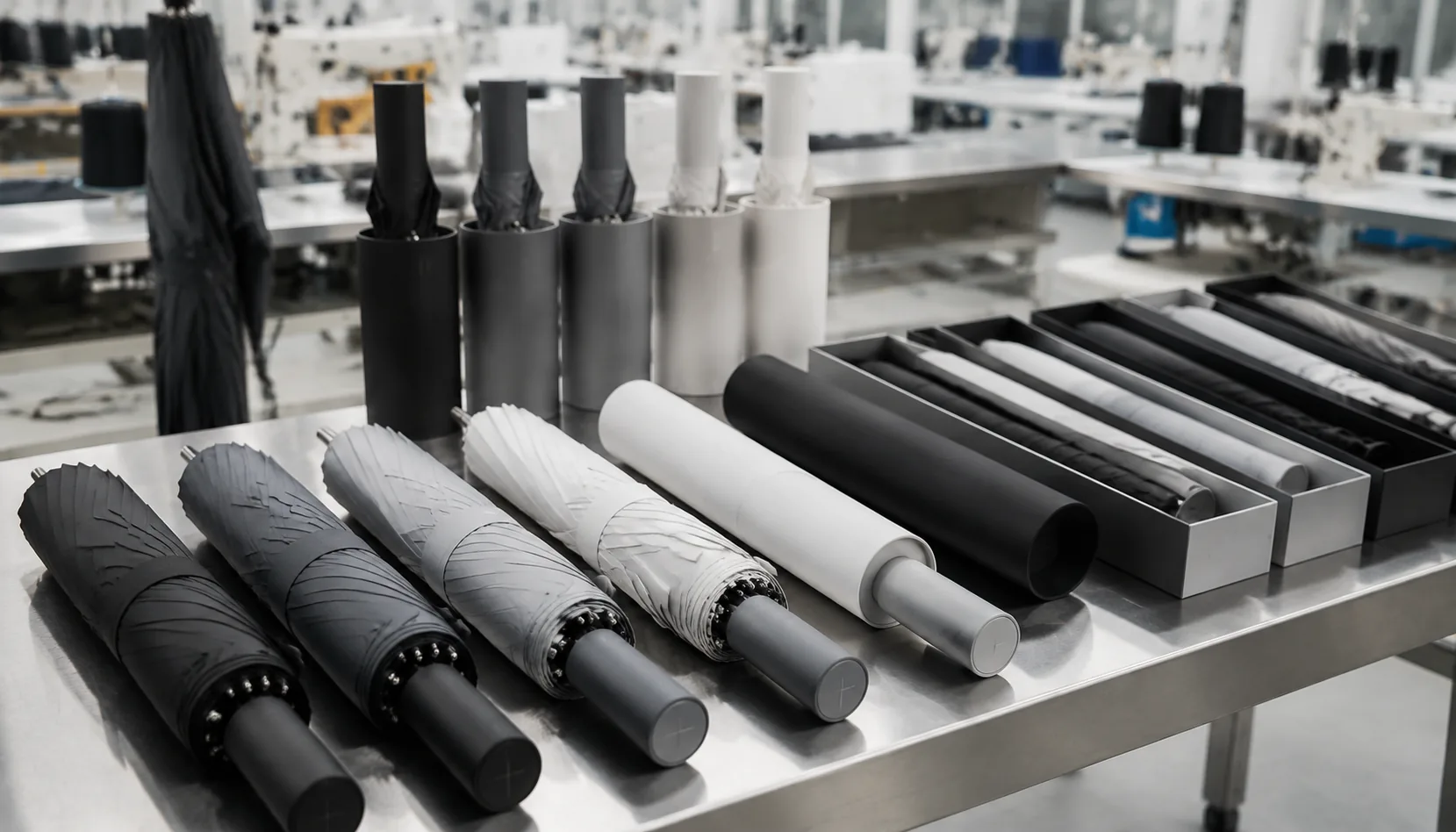
Tone-on-Tone Umbrella Branding for Premium Retail Lines
Use tone-on-tone umbrella branding to create premium retail programs with controlled logo contrast, fabric choices, samp...
Read More »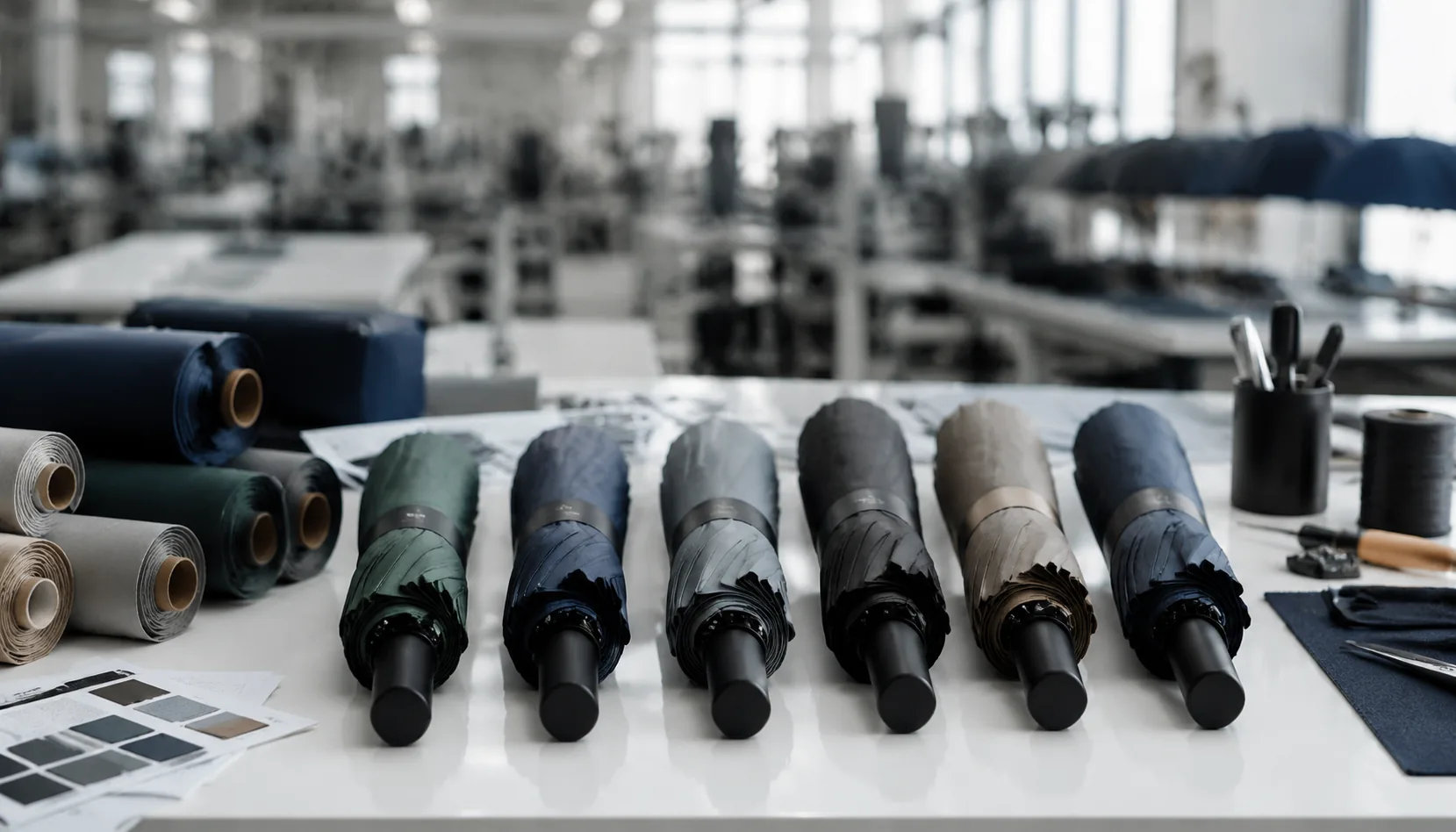
Branded Umbrella Belly Bands for Retail Gift Presentation
Plan branded belly bands with logo, SKU, and gift messaging while keeping canopy quality visible, with material, sizing,...
Read More »
Branded Umbrella Belly Bands for Gift and Retail Sets
Use belly bands to add logo impact, barcode space, and gift-ready presentation without changing umbrella structure or ra...
Read More »