Branded Umbrella Inserts for Retail and Corporate Gifts
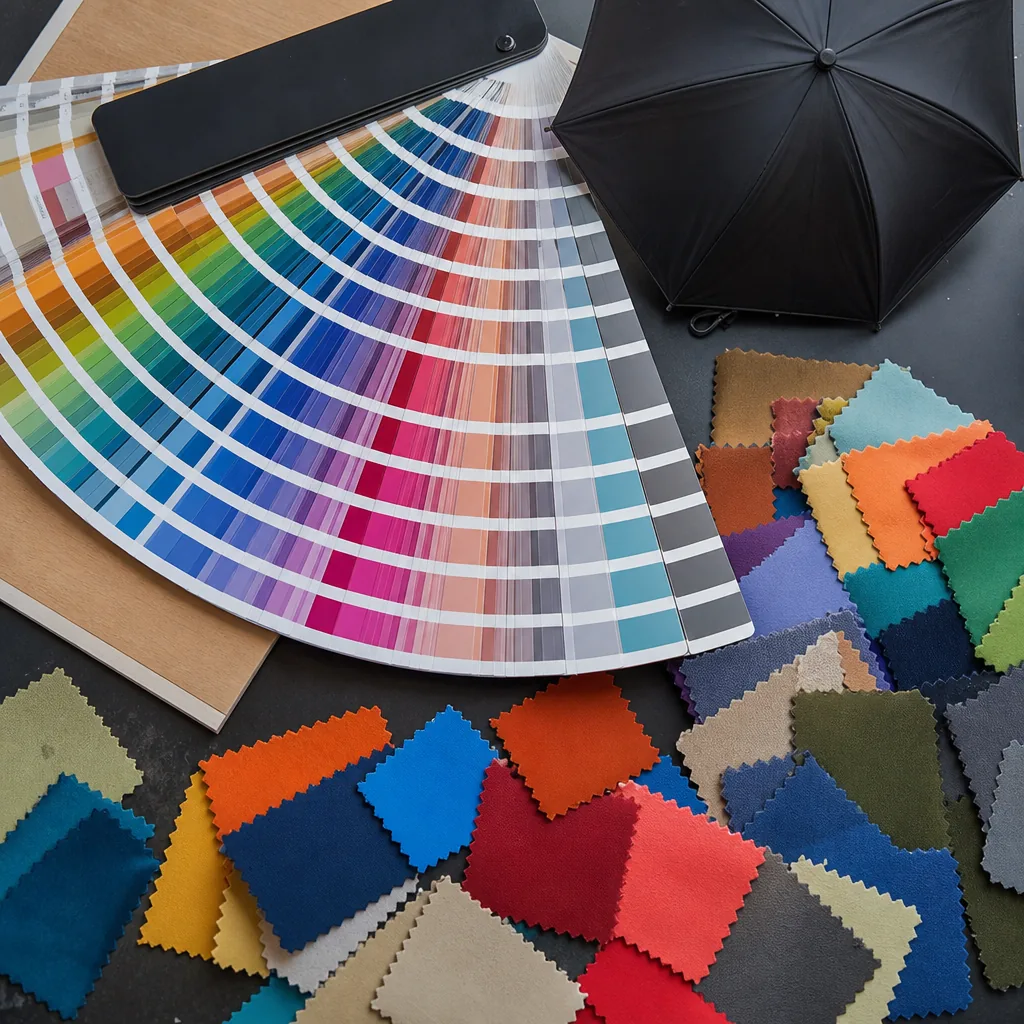
When a retail buyer or corporate gifting team opens a carton, the umbrella is judged before the first rain test—by how clearly the brand, care instructions, and warranty are presented. On our production floor in Songxia, we see branded umbrella inserts work best when they are sized for fast packing, protected from moisture, and matched to the handle, sleeve, and carton plan so they add value without slowing output or increasing damage risk.
Define the Role of Each Insert in the Brand Experience
The first job of branded umbrella inserts is to reduce confusion after the customer opens the package. A 23" auto-open corporate umbrella with fiberglass ribs, 190T pongee, and a vented double canopy needs different user guidance than a 21" folding auto-open-close model packed in a retail sleeve. Umbrella care cards should tell the buyer how to dry the canopy fully before closing, rinse salt or mud from steel tips, avoid forcing a reversed frame back by hand, and store the umbrella outside the plastic sleeve when wet. For retail umbrella packaging, this small card prevents returns caused by mildew odor, bent ribs from rough handling, or a customer thinking a windproof frame is “broken” because it flexes under gust load.
Umbrella warranty cards have a different role: they define the promise without overpromising. I like warranty language that separates manufacturing defects from wear, storm damage, and misuse. For example, loose stitching at a rib tip, failed auto-open spring, or cracked runner within normal use can be covered; a canopy torn after being caught in a car door should not be. Corporate gift inserts should be warmer and shorter, usually one thank-you note plus a basic feature line such as UPF 50+ coating, Teflon water repellency, 8K fiberglass frame, or 50+ mph wind-tunnel tested construction. Our standard practice at ZheBrella is to keep warranty cards under one printed panel so procurement teams do not accidentally turn a practical gift into a legal document.
Product feature cards and campaign inserts are where private label umbrella branding can drive repeat purchase. A retailer may use a hangtag-style insert to explain why a 210T pongee canopy dries faster than cheap polyester, or why a 16K frame feels smoother but costs more than an 8K frame. A bank, university, or insurance company may use a campaign insert with a QR code leading to a renewal page, event registration, or employee benefit portal. These branded umbrella inserts should be matched to the sales channel: retail buyers need education at shelf level, corporate recipients need a reason to remember the giver, and repeat customers need a simple path back to the brand before the next rainy season.
Connect Insert Content to Umbrella Features
The best branded umbrella inserts do not repeat a logo story; they translate the umbrella’s actual construction into buyer-facing proof. If the frame uses fiberglass ribs, say why that matters: fiberglass flexes under gust load better than thin painted steel ribs and is less likely to take a permanent bend after inversion. If the umbrella uses a steel shaft, describe it as a strength and weight tradeoff, not a luxury feature. For 8K, 10K, or 16K frames, explain the rib count in plain language: more ribs can improve canopy tension and roundness, but only if the runner, stretchers, and tips are matched correctly. I would never print “stormproof” on umbrella care cards unless the model has passed a defined wind test, such as repeated open-close cycling in a wind tunnel at 50+ mph.
Insert copy should also connect operating features to correct use, because many returns come from misuse rather than defects. For an auto-open umbrella, the card should tell the customer to point the canopy away from the face and press the button once, not force the runner by hand. For auto-open-close models, corporate gift inserts should explain that the button closes the canopy but the shaft must be pushed back manually until it clicks. Double-canopy windproof construction deserves a simple diagram or one-sentence note: the vent lets wind pressure escape between canopy layers, reducing inversion risk. If the model uses 190T or 210T pongee, the insert can mention tighter weave, smoother hand feel, and better print clarity than low-density polyester, especially for retail umbrella packaging where customers compare products on a shelf.
Claims around coatings need the tightest control. UPF 50+ should only appear on umbrella warranty cards or hangtags when the fabric or finished canopy has a valid test report; the same applies to Teflon-style water repellency, PVC/POE transparency, and EVA environmental claims. Our standard practice at ZheBrella is to match private label umbrella branding copy to the approved tech sheet before mass printing, including canopy material, rib material, shaft diameter, handle type, and opening mechanism. A useful branded umbrella insert may say “UPF 50+ coated 210T pongee canopy” or “fiberglass ribs with vented double canopy,” but it should not say “unbreakable,” “hurricane proof,” or “lifetime waterproof.” Those vague promises create chargebacks during AQL 2.5 inspection disputes and make after-sales service harder for distributors.
Design Inserts for Packaging Fit and Handling
The insert has to be engineered around the umbrella’s folded diameter, not just the carton face. For a 21" compact auto-open-close in a sleeve, we usually keep branded umbrella inserts around 70 × 120 mm or a slim 80 × 160 mm, because anything wider curls or jams when the sleeve is pulled over the canopy. For 23" stick umbrellas in retail umbrella packaging, a 90 × 180 mm card works if it sits flat against the gift box wall, while large 27" and 30" golf umbrellas can take a 100 × 210 mm folded card without looking undersized. Paper weight matters: 250–300 gsm art card is stiff enough for retail handling, but 350 gsm can crack on folds unless it is scored properly. For umbrella care cards and umbrella warranty cards, I prefer matte lamination or uncoated FSC card with a varnished print face; glossy stock looks nice but shows scuffs quickly in carton friction tests.
Fold type should follow how the customer opens the package. A simple half-fold is best for corporate gift inserts because procurement teams often want care instructions, warranty terms, QR registration, and distributor contact details in one piece. Tri-folds look more premium, but they add thickness and can create pressure marks on 190T or 210T pongee when packed tightly with an elastic tie. Rounded corners are not decorative in our factory; 3–5 mm radius corners stop the card from snagging the canopy hem, poking through PE sleeves, or scratching coated plastic handles during vibration. If the umbrella has a PU, rubberized, or wood-look coated handle, do not let a printed card rub directly against it. During a 30–40 day ocean shipment, heat and humidity can soften coatings enough for ink setoff, especially with dark navy or black solid canopies.
Placement is where many private label umbrella branding projects fail after the sample stage. Inside a gift box, the safest location is under a paper belly band or in a separate paper pocket glued to the inner wall, not loose against the folded wet-look canopy. In a retail carton, inserts should be either tucked behind the sleeve opening or attached with a low-tack sticker to the polybag exterior, so the warehouse team can scan barcodes without unpacking. For branded umbrella inserts that must sit inside the umbrella sleeve, we test insertion after final packing compression, not on a single loose sample, because 8K steel frames and 10K fiberglass frames fold to different thicknesses. Moisture is another issue: POE, PVC, and EVA umbrellas can trap condensation, while Teflon-coated pongee can repel water but still transfer surface humidity. Our standard practice at ZheBrella is to run a basic rub test and a 48-hour humidity hold before approving dark ink, metallic foil, or heavy black coverage on any insert touching fabric or handles.
Control Branding, Languages, and Compliance Copy
The insert is often the only printed piece the buyer keeps, so logo hierarchy needs to be locked before artwork goes to plate or digital print. For branded umbrella inserts, I normally ask the client to define three levels: master brand, collection or campaign name, and factory/legal information. The master logo should not fight with a retailer’s barcode block, a hotel property name, or a sustainability claim. Pantone matching also needs realistic tolerances because the same PMS color can look different on 350 gsm art card, kraft paper, and recycled uncoated stock. If the umbrella has a printed canopy, match the insert to the approved canopy strike-off, not the PDF on screen. For private label umbrella branding, we keep a signed artwork sheet showing PMS codes, CMYK backup values, logo clear space, trim size, bleed, paper weight, and finishing such as matte lamination or spot UV.
Multilingual layouts should be built as controlled versions, not last-minute text pasted into the same small panel. English, French, Spanish, German, Arabic, Japanese, and Traditional Chinese all change line length, and warranty language becomes unreadable if the card is designed only around English. Umbrella care cards should use standard care symbols where possible: dry open after use, do not machine wash, keep away from flame, and store in sleeve only when fully dry. Fiber or material claims must match the actual build, such as 190T pongee, POE, PVC, EVA, fiberglass ribs, steel shaft, or UV-coated canopy. Country-of-origin statements must also be exact: “Made in China” is usually required on retail umbrella packaging, while some markets need importer name, address, VAT/EORI details, or local language safety copy. Guessing here creates customs delays, not just artwork corrections.
Warranty copy needs tighter control than most buyers expect. Umbrella warranty cards should separate manufacturing defects from wear, storm damage, misuse, lost parts, and damage from forced closing of auto-open-close frames. If the product is rated for a wind-tunnel claim, such as surviving 50+ mph in a double-canopy vented construction, the wording should state test conditions and avoid implying indestructibility. Corporate gift inserts often use softer language, but large retail chains and hotel groups usually require version control by market, season, and channel. A U.S. retail insert may need Proposition 65 review; an EU version may require importer and disposal markings; a Middle East hotel program may require Arabic layout and property-specific brand rules. Our standard practice at ZheBrella is to maintain an artwork revision log with date, market, SKU, language set, and approval owner before mass packing begins.
Build Insert Checks Into Production QC
Insert mistakes need to be controlled like canopy logo mistakes, because many buyers treat missing or wrong branded umbrella inserts as a shipment-level defect. We lock the insert artwork at the same time as the umbrella print artwork: size, paper weight, fold line, QR code, barcode, warranty wording, country-of-origin statement, and brand color all go into the signed approval file. For retail umbrella packaging, I do not accept “similar blue” or “close enough” on a care card if the same buyer has already approved a Pantone logo on the canopy. Pre-production samples should include the full packing method, not only the umbrella: hangtag, polybag warning, umbrella care cards, umbrella warranty cards, sleeve, inner carton mark, and master carton mark. If the insert is multilingual, the approved PDF must show the exact market version, because mixing U.S., EU, and Middle East warranty language is a common packing-line error.
During production QC, inserts should be checked under AQL 2.5 visual inspection together with canopy printing, stitching, frame operation, and sleeve fit. The inspector should pull cartons from finished goods and verify that each umbrella has the correct insert type, correct quantity, correct placement, and no smudged printing, folded corners, or outdated QR code. Count verification matters most when corporate gift inserts are added after the umbrella is already packed in its sleeve; one worker can easily miss every tenth piece when the line is moving fast. Our standard practice at ZheBrella is to create a golden sample pack and keep it at the packing table, so line leaders compare every style against the approved version before sealing cartons. For mixed-color orders, the QC sheet must state whether the same insert goes into all colors or whether black, navy, and red umbrellas each require different private label umbrella branding materials.
Packing-line photos should be mandatory evidence before final inspection is released, especially for FOB shipments where the buyer may not see the goods until arrival. I want clear photos showing the open sleeve with the insert visible, a close-up of the printed card, the counted stack at the worktable, the inner carton layout, and the sealed master carton label. For branded umbrella inserts, the final inspection report should record the approved artwork version number and the actual insert count against order quantity, with allowance only for the buyer-approved spare rate. A wrong insert can cause the same rejection as an incorrect canopy logo because it affects warranty claims, retail compliance, and brand presentation at the moment of unboxing. If a distributor is delivering 5,000 auto-open 23-inch umbrellas for a bank event, the buyer will not separate “umbrella quality” from “insert accuracy” when the branch staff opens the cartons.
Frequently Asked Questions
What should an umbrella care card include?
It should explain drying before storage, closing the canopy correctly, avoiding force in high wind, and basic cleaning for pongee fabric. For auto-open models, include a short note on safe button use.
Can inserts be customized by recipient or event?
Yes, but variable inserts require careful packing control. For multiple versions, use clear SKU codes, separate cartons, and factory packing photos to avoid mixing corporate gift messages or retail languages.
What information should an umbrella care card include for retail buyers?
A good care card usually includes opening and closing instructions, drying guidance, cleaning tips, and storage advice. For premium retail programs, many brands also add a QR code, warranty summary, and product SKU to help with returns and customer support.
Can branded inserts be customized for different umbrella models in one order?
Yes. Most factories can print different insert versions for compact, straight, golf, and automatic umbrellas as long as the artwork is finalized before production. The usual MOQ is based on print quantity, often starting around 500 to 1,000 pieces per design.
How long does it take to produce custom umbrella inserts?
Standard printed inserts usually take 7 to 15 days after artwork approval, depending on paper type, finishing, and quantity. If the inserts are packed with the umbrellas, the lead time should be planned together with the main umbrella production schedule.
Looking to Launch Your Custom Umbrella Line?
ZheBrella is a Zhejiang-based OEM/ODM umbrella manufacturer with 17 years of export experience. Free design, low MOQ from 100 pieces, windproof construction, full-color print.
Get Free Quote Now »People Also Search For
Related Articles
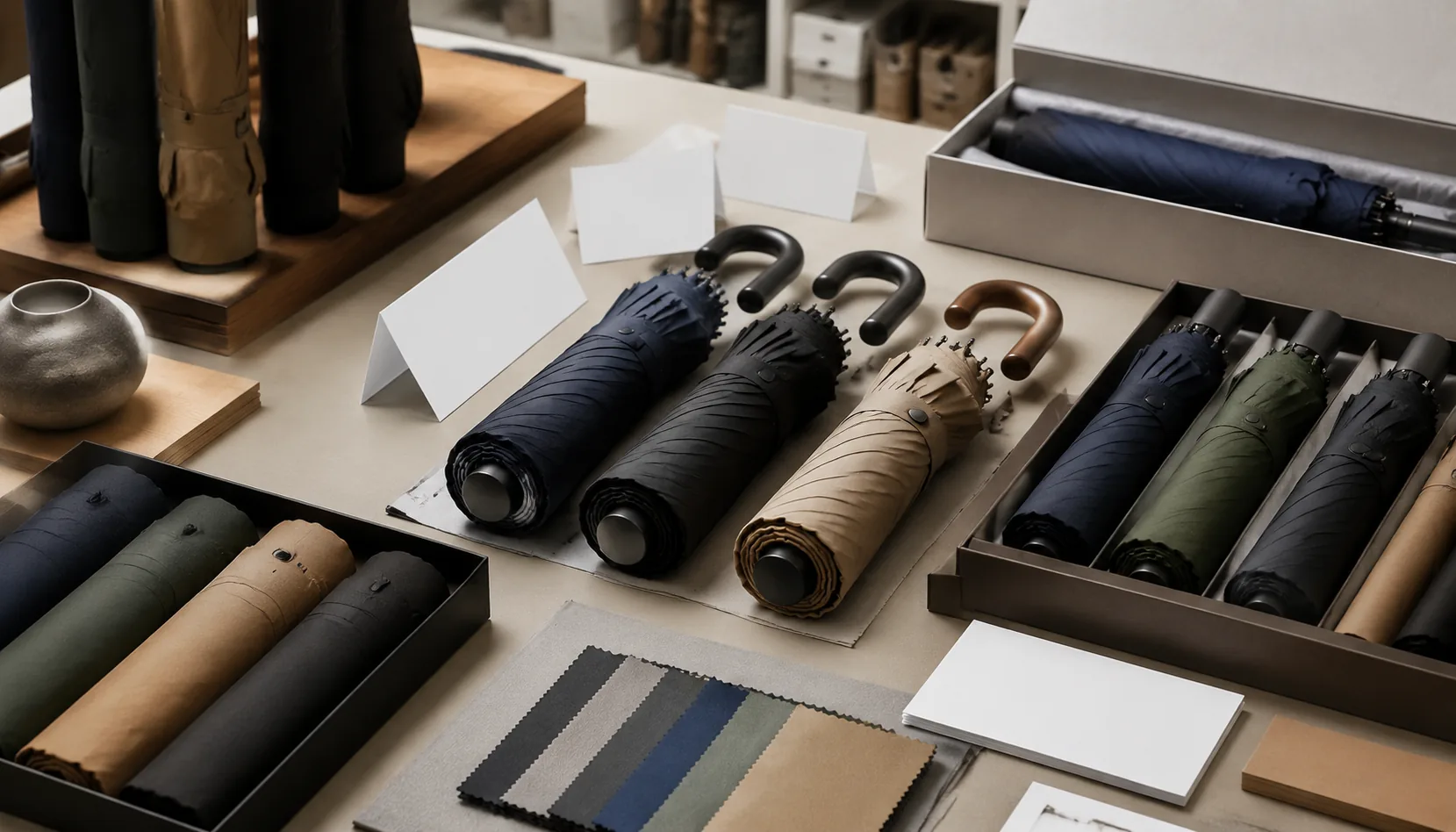
Branded Umbrella Insert Cards for Retail and Gift Programs
Plan insert cards that reinforce brand value, explain UPF 50+ or windproof features, and speed retail approval without c...
Read More »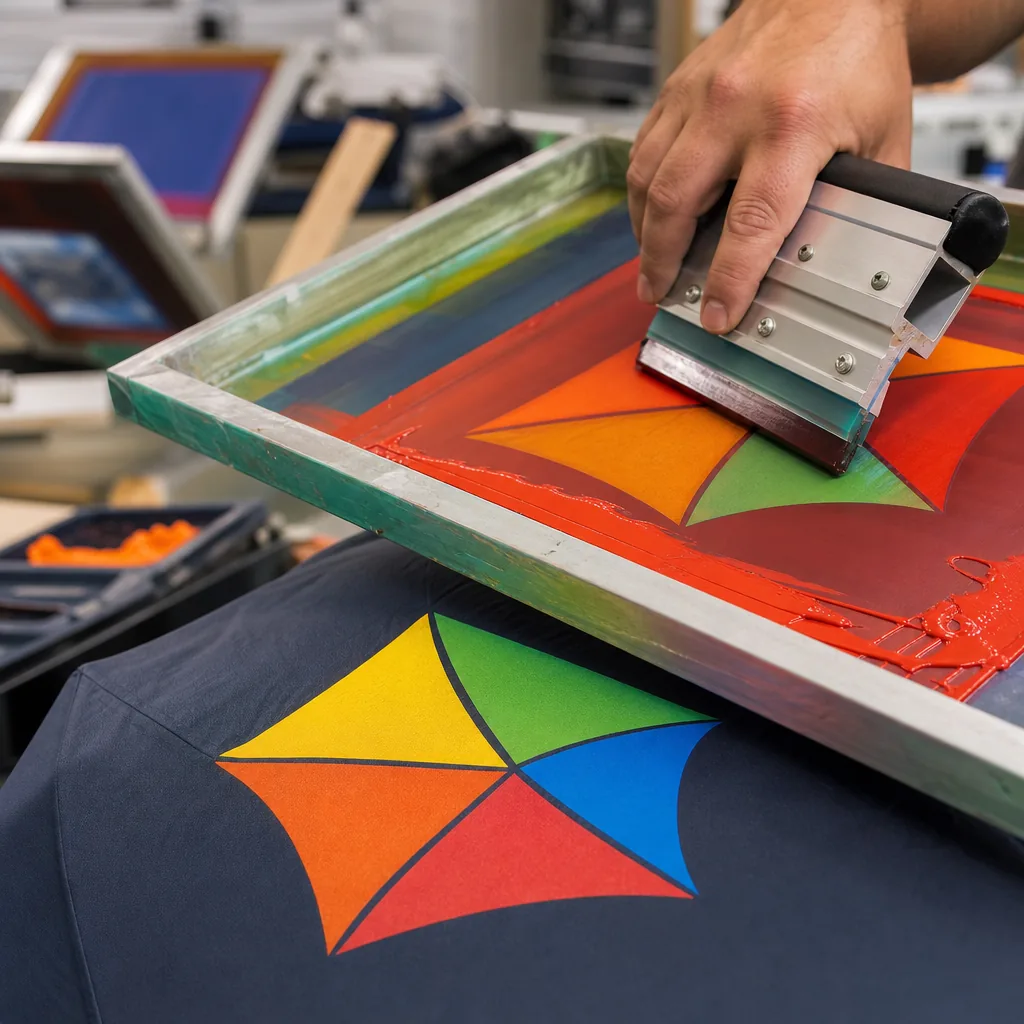
Care Cards and Warranty Inserts for Branded Umbrella Orders
Add care and warranty inserts that reduce returns, clarify claims, and give branded umbrella orders a more complete reta...
Read More »
Umbrella Insert Cards for Branded Gifting and Aftercare
Use insert cards to explain features, care, warranty, and brand story while improving the gift feel of 190T, 210T, windp...
Read More »