Coastal Market Umbrellas: Corrosion-Resistant Spec Guide
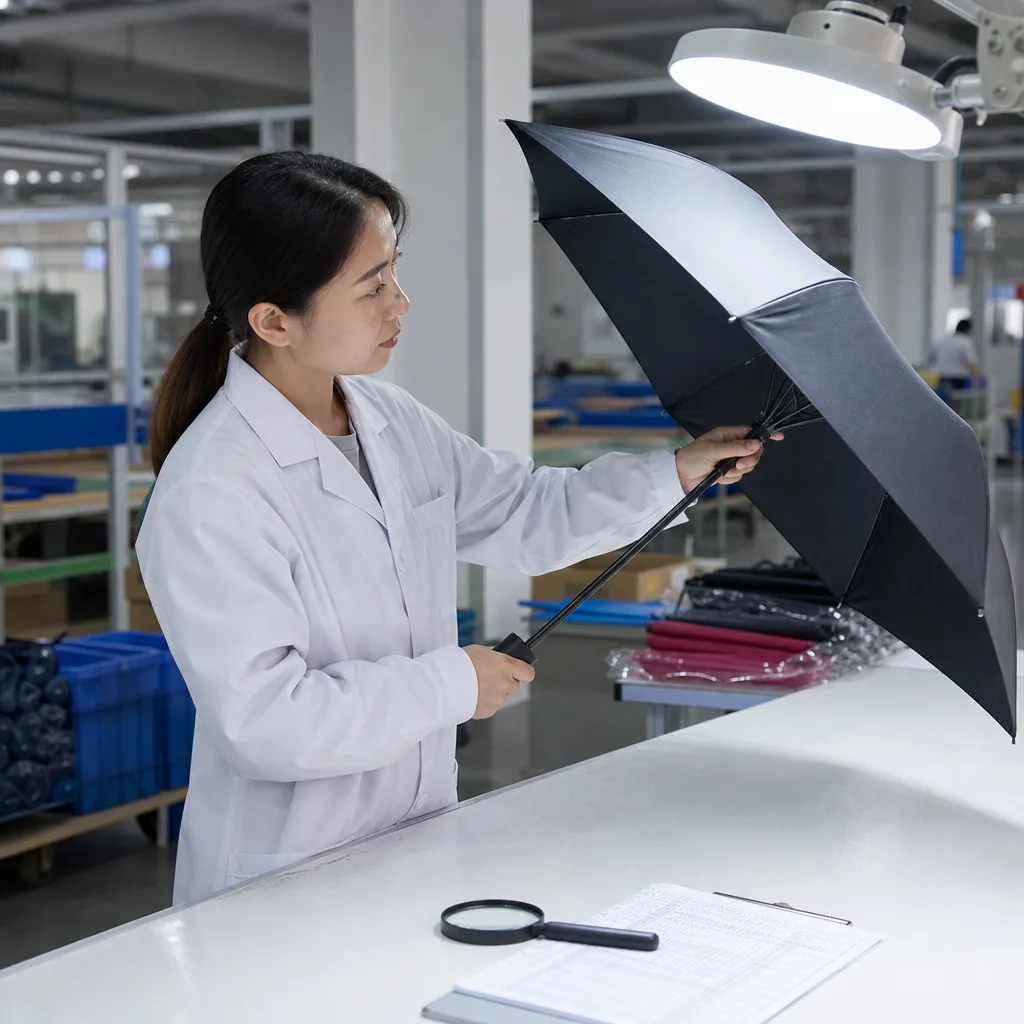
Coastal buyers usually discover weak specifications after the first salt-air season: rib tips stain, rivets bloom, and tilt joints start binding before the canopy fabric wears out. On our Songxia production floor, we treat corrosion resistant umbrella frames as a full system—tube finish, fiberglass rib selection, plated hardware, drainage details, fabric coating, and QC salt/humidity checks all have to match the exposure level.
Why Coastal Markets Need Different Umbrella Specs
Salt air changes the umbrella spec because it attacks every exposed metal edge, not just the main pole. In a dry inland market, powder-coated steel ribs and a painted shaft can survive several seasons if the canopy is stored properly. On a coast, chloride in the air sits on wet surfaces after fog, rain, or sea breeze, then creeps into scratches around rib joints, spring buttons, rivets, runner notches, tips, and screw heads. Once red rust starts, it stains 190T or 210T pongee, roughens the runner action, weakens rib pivots, and makes the umbrella look cheap before the canopy fabric is actually worn out. That is why corrosion resistant umbrella frames are not a luxury upgrade for coastal market umbrellas; they are a baseline requirement if the product will be opened daily near beaches, piers, cruise terminals, or seafood streets.
The use case matters. Coastal retail vendors usually need 23 inch or 27 inch manual-open umbrellas that are light enough to move but tough enough for constant opening and closing; aluminum shafts, fiberglass umbrella ribs, stainless rivets, and rust resistant umbrella hardware are more important than a fancy handle. Resorts and beach clubs often prefer larger 27 inch, 30 inch, or patio-style market umbrellas where the shaft, runner, and lower hub take more load from wind gusts and guest handling. Marinas are harsher because salt spray is direct, not just airborne, so plated steel screws and ordinary zinc rivets fail quickly. Outdoor event planners have a different problem: umbrellas may be packed wet after rain, then stored in cartons or bags, which traps humidity and accelerates corrosion inside the frame before the next activation.
Good salt air umbrella specifications start with material choices and then tighten the small parts. Fiberglass ribs do not rust and flex better than steel ribs in gusts, especially on 8K or 10K frames with vented double canopies rated around 50+ mph in wind-tunnel checks. Aluminum shafts with thicker wall gauges, stainless steel springs, brass or stainless eyelets, and nylon or acetal runners perform better than low-cost painted steel assemblies. For canopies, POE or PVC clears are easy to wipe but can stiffen; 210T pongee with Teflon water repellent or UPF 50+ coating is usually more practical for resort and event programs. Our standard practice at ZheBrella is to treat coastal orders as a different bill of materials, not the same inland umbrella with a stronger sales description, because AQL 2.5 inspection will not catch corrosion that appears three months after FOB delivery.
Choose Frames That Limit Rust and Fatigue
Frame material matters more than canopy color on coastal market umbrellas because salt air attacks every exposed joint first. For ribs, fiberglass beats painted steel in fatigue life because it flexes and rebounds instead of taking a permanent bend after a gust. Steel ribs are still acceptable for budget 8K patio umbrellas used inland or in low-wind courtyards, but near the ocean I avoid thin powder-coated steel unless the buyer accepts visible rust risk after one season. Aluminum shafts are the practical middle ground: lighter than steel, naturally corrosion resistant, and strong enough when wall thickness is kept around 1.0–1.2 mm for 38 mm center poles. For true corrosion resistant umbrella frames, specify anodized or heavy powder-coated aluminum shafts, fiberglass umbrella ribs, and a hub/rib connector design that does not trap standing water.
Small hardware is where coastal failures usually start. Rivets, screws, spring buttons, and runner pins should be stainless steel, zinc-nickel plated, or at minimum E-coated before final paint; plain zinc plating looks fine at shipment but turns rough quickly in salt spray. Rust resistant umbrella hardware also includes reinforced runners, because the runner takes the opening load every day and becomes the fatigue point when sand, salt, and poor lubrication build up. I prefer nylon or glass-filled nylon runners with metal inserts for commercial 23" to 30" market umbrellas, especially when paired with manual lift or pulley systems. Our standard practice at ZheBrella is to check rivet roll-over, runner sliding force, and rib-tip alignment during AQL 2.5 inspection, because a frame can look strong on a spec sheet and still fail if the rivet clearance is sloppy.
An 8K frame is enough when the umbrella is 21" to 23", used in a sheltered café lane, and paired with a heavy base that stops the canopy from walking in gusts. For exposed boardwalks, hotel pools, beach bars, and rooftop terraces, 16K fiberglass construction spreads the wind load across more ribs and reduces fabric flutter, which is one reason it survives repeated opening cycles better than a basic 8K steel layout. The best salt air umbrella specifications combine 16K fiberglass ribs, double-canopy venting, reinforced rib joints, and a tested wind rating rather than a vague “windproof” claim; a realistic target is surviving 50+ mph controlled wind-tunnel loading when properly anchored. I would not oversell any market umbrella as storm equipment, but stronger rib count plus corrosion resistant umbrella frames can add seasons of service life in harsh marine locations.
Protect Hardware With Plating and Component Choices
For coastal market umbrellas, the frame tube is only half the corrosion story; the small parts usually fail first. Black electroplating on steel ribs and stretchers gives a cleaner retail look than raw zinc, but it must be even inside the rib channel and around punched holes, not just on the visible face. Nickel plating is better for exposed pins, rivets, runners, and snap buttons because it resists finger sweat and salt air staining longer than basic black oxide. For corrosion resistant umbrella frames, I prefer powder-coated steel center poles at 38 mm or 48 mm diameter, with coating thickness checked after bending, drilling, and swaging because those operations expose weak edges. Buyers should reject pre-production samples if the lower pole joint shows bare metal, if the push button scratches through after five cycles, or if rivet heads already show red rust after a 24-hour salt-spray check.
Plastic tips are not a cheap detail on salt air umbrella specifications; they isolate the canopy edge from metal abrasion and stop water from sitting at rib ends. On 8K and 10K market umbrellas, we normally use PP or nylon tips with a tight rivet or bar-tack attachment, while larger 16K patio frames need stronger molded tips because the canopy tension is higher on 2.7 m, 3.0 m, and 3.5 m covers. Fiberglass umbrella ribs are a good choice near the coast because they do not rust and they flex better in gusts, but the rib-to-hub connectors, screws, and runner still need rust resistant umbrella hardware. In samples, check the notch, cap, finial thread, crank housing screws, tilt joint pin, and every washer around the hub. Those are the parts where factories sometimes substitute untreated carbon steel to save a few cents.
Auto-open mechanisms need special attention because the spring sits inside a wet, enclosed tube where salt moisture cannot dry quickly. A corrosion-resistant spring should be stainless steel, phosphated steel with oil protection, or properly zinc/nickel plated depending on the price level; plain music wire is a bad choice for coastal orders even if it passes the first open-close test. For manual beach and market umbrellas, spring buttons and latch plates should be checked after 50 open-close cycles, then wiped with a white cloth to see whether black residue or orange rust transfers. Our standard practice at ZheBrella is to approve pre-production only after checking plating coverage on rivets, spring rebound, runner smoothness, tip pull strength, and coating adhesion by cross-hatch tape test. That is more useful than asking for a generic claim of corrosion resistant umbrella frames without component-level proof.
Pair Frame Choices With Suitable Canopy Fabrics
For coastal market umbrellas, frame selection should drive fabric selection, not the other way around. If the buyer specifies powder-coated steel ribs to save cost, I prefer 190T pongee with DWR for moderate beach-adjacent use because the canopy is lighter and puts less torsion on the joints when wind comes off the water. For 8K or 10K aluminum frames with stainless rivets and rust resistant umbrella hardware, 210T pongee is the better match: tighter weave, better hand feel, and less flutter on 7.5 ft to 9 ft market umbrellas. On higher-end resort programs, fiberglass umbrella ribs paired with an aluminum center pole give the best fatigue performance, especially when gusts repeatedly twist the canopy. That is where 210T pongee with Teflon-style repellency makes sense, because the coating sheds salt mist and rain faster than basic DWR and reduces wet-weight sag after a storm.
The fabric coating has to match the exposure level in the salt air umbrella specifications. Standard DWR is acceptable for promotional café umbrellas or seasonal beach rentals where the expected service life is one or two summers. For hotel pools, boardwalk restaurants, and marina retail, I would specify 210T pongee with a fluorine-free Teflon-style water repellent finish, UPF 50+ UV treatment, and a minimum Grade 4 colorfastness to light if the brand color is critical. Dark navy, black, forest green, and burgundy look premium but absorb more heat and fade faster in sun and humidity; yellow, red, and orange are especially sensitive if low-grade disperse dyes are used. Our standard practice at ZheBrella is to ask for the Pantone target, then test lab dips before bulk cutting, because a canopy that passes rain testing can still fail visually after 30 to 45 days of coastal exposure.
Corrosion resistant umbrella frames also need canopy engineering that does not trap moisture against the metal. A double-canopy vent helps release uplift and dries faster than a sealed single top, which matters when umbrellas are closed wet at night and reopened the next morning. For coastal programs, I avoid PVC-coated polyester unless the buyer needs wipe-clean food-service use, because trapped condensation and plasticizer odor can become a problem in humid storage. Pongee breathes better and folds cleaner, especially on auto-tilt or pulley-lift market umbrellas. Specify stainless screws, zinc-alloy sliders only with proper plating, and plastic spacers where ribs contact the hub; otherwise even a good 210T canopy will hide rust stains until inspection. Before shipment, an AQL 2.5 check should include spray testing, seam leakage review, rubbing at printed logos, and a 24-hour closed-wet sample check so the fabric and frame are judged as a system, not separate line items.
Verify Durability Before Bulk Shipment
Durability has to be verified before the container door closes, because coastal market umbrellas usually fail first at small metal contact points, not in the canopy fabric. For an AQL 2.5 final inspection, I want every sampled unit opened fully and checked for rust spots on the hub, runner, rivets, spring buttons, tilt joint, crank gearbox, pulley, screws, and end caps. On corrosion resistant umbrella frames, a pinhead orange mark around a rivet hole is not cosmetic; it means plating, passivation, or powder coating coverage was weak at the cut edge. Inspectors should record the rust location, size, and quantity per umbrella, then separate critical red rust from light surface discoloration. For coastal orders, I also require a thumb-pressure rivet movement check: if the rib-to-stretcher joint shifts sideways more than 1 mm or clicks under hand pressure, that unit should be counted as a major defect because wind load will enlarge the hole quickly.
Opening force and frame alignment are practical factory-floor checks that catch poor assembly better than a certificate does. Manual market umbrellas should open smoothly without binding, and crank models should lift the runner without gear skipping or handle backlash; for 2.7 m and 3.0 m outdoor umbrellas, we normally flag unusually heavy opening force above 8-10 kg at the runner or any sudden jump in the pulley cord. With fiberglass umbrella ribs, look for consistent rib arc, no white stress marks near drilled holes, and no mismatch between 8K or 10K rib lengths. Steel ribs need closer attention at welds and punched holes, even when zinc plated. Frame alignment should be judged with the umbrella locked open on a level stand: the shaft should remain vertical, rib tips should sit within roughly 15 mm of the same canopy plane, and the runner should not wobble around the pole. These checks belong in salt air umbrella specifications, not just in internal QC notes.
For rust resistant umbrella hardware, I recommend adding three small pre-shipment stress checks when the order is meant for beach resorts, pool decks, or waterfront restaurants. First, run a neutral salt-spray screening on representative hardware or full frame sections for 24-48 hours; 304 stainless screws, aluminum poles with proper anodizing, and quality powder-coated steel should show no red rust after wiping. Second, perform 200-500 open-close cycles on production samples, including crank, pulley, tilt, and locking parts, then recheck rivet play and runner wear. Third, do a wet-storage test: spray the canopy and frame, close the umbrella while damp, keep it bundled for 24 hours, then reopen and inspect seam leakage, dye transfer, mildew odor, and hidden corrosion at the hub. Seam leakage should be checked at top cap, vent seams, and rib pockets, especially on 190T or 210T pongee with PU, Teflon, or UV UPF 50+ coating. These tests do not replace AQL, but they prevent expensive coastal failures after bulk shipment.
Frequently Asked Questions
Are fiberglass ribs completely rustproof?
Fiberglass ribs do not rust, but rivets, springs, shafts, and tips may still corrode if poorly specified. Coastal programs should upgrade both the ribs and the metal hardware.
Does corrosion-resistant construction increase MOQ?
Usually not for common upgrades like fiberglass ribs or plated hardware, but custom colors, special shafts, or nonstandard rivets can raise MOQ. Confirm whether the factory has those components in stock before sampling.
What frame finish is recommended for umbrellas used within a few miles of the ocean?
For coastal use, buyers usually specify powder-coated aluminum or galvanized steel with a corrosion-resistant topcoat. For higher salt exposure, 304 stainless or reinforced fiberglass components are often added, especially at joints and rib tips.
How should a supplier test umbrella hardware for salt air resistance?
A common QC requirement is salt spray testing on plated hardware and fasteners, often to ASTM B117 or a similar method. Buyers may also require open-close cycle testing and coating adhesion checks before mass shipment.
What MOQ and lead time are typical for custom coastal market umbrellas?
For OEM coastal market umbrellas, MOQ is often 300-500 units per size or color, depending on frame and canopy customization. Lead time is usually 30-45 days after sample approval and deposit, with longer timelines for special hardware finishes or custom molds.
Looking to Launch Your Custom Umbrella Line?
ZheBrella is a Zhejiang-based OEM/ODM umbrella manufacturer with 17 years of export experience. Free design, low MOQ from 100 pieces, windproof construction, full-color print.
Get Free Quote Now »People Also Search For
Related Articles
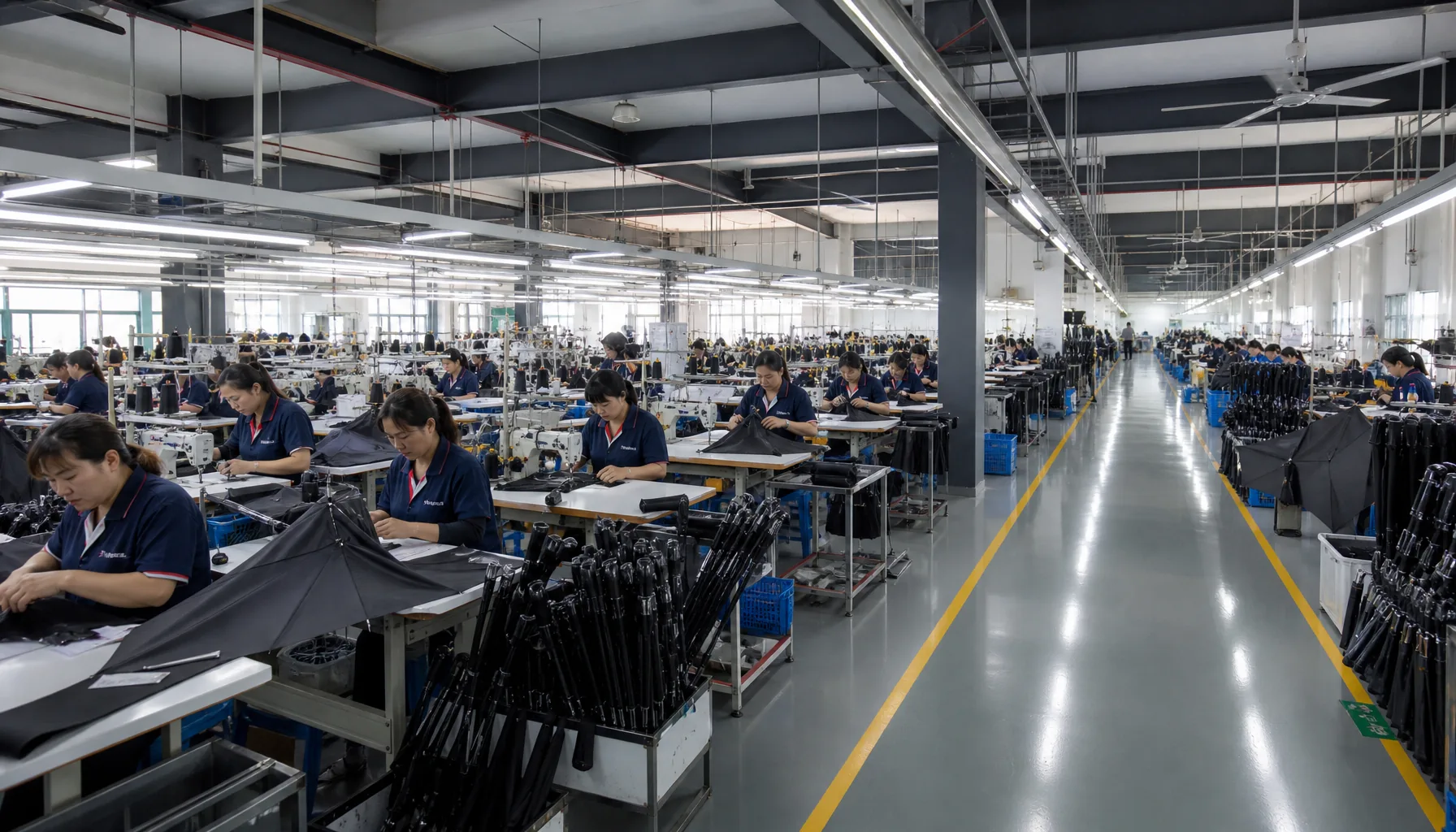
Salt Spray and Corrosion Testing for Coastal Umbrella Orders
Specify corrosion-resistant umbrellas for coastal markets with smarter frame materials, coatings, salt spray tests, insp...
Read More »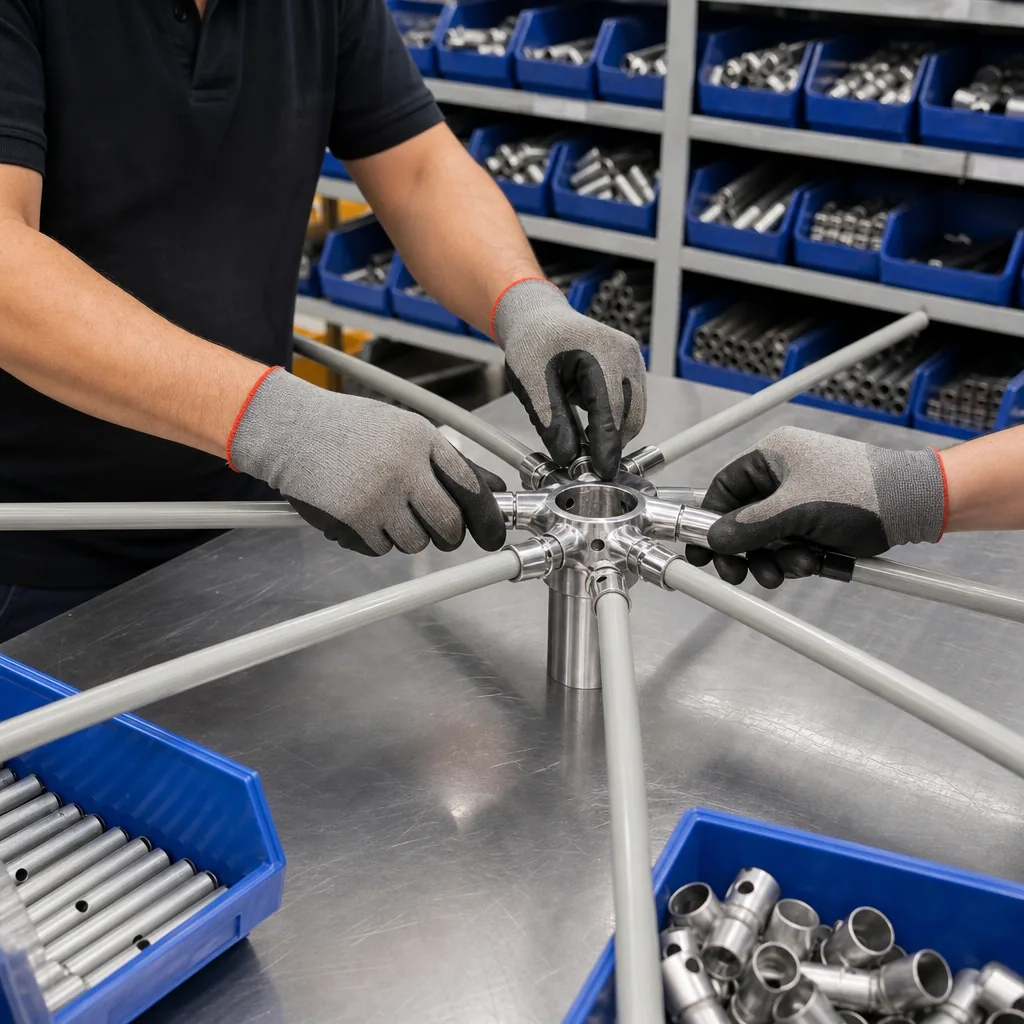
Umbrella Hardware Plating and Salt-Air Corrosion Control
Compare plating and coating choices for umbrella hardware, with salt-air testing methods, corrosion failure points, and ...
Read More »How Umbrella Frame Salt Spray Testing Reduces Rust Claims
Learn how salt spray testing, coatings, and frame-material choices cut rust complaints on custom umbrellas shipped throu...
Read More »