Colorfast Branding on Umbrellas for Outdoor Promotions
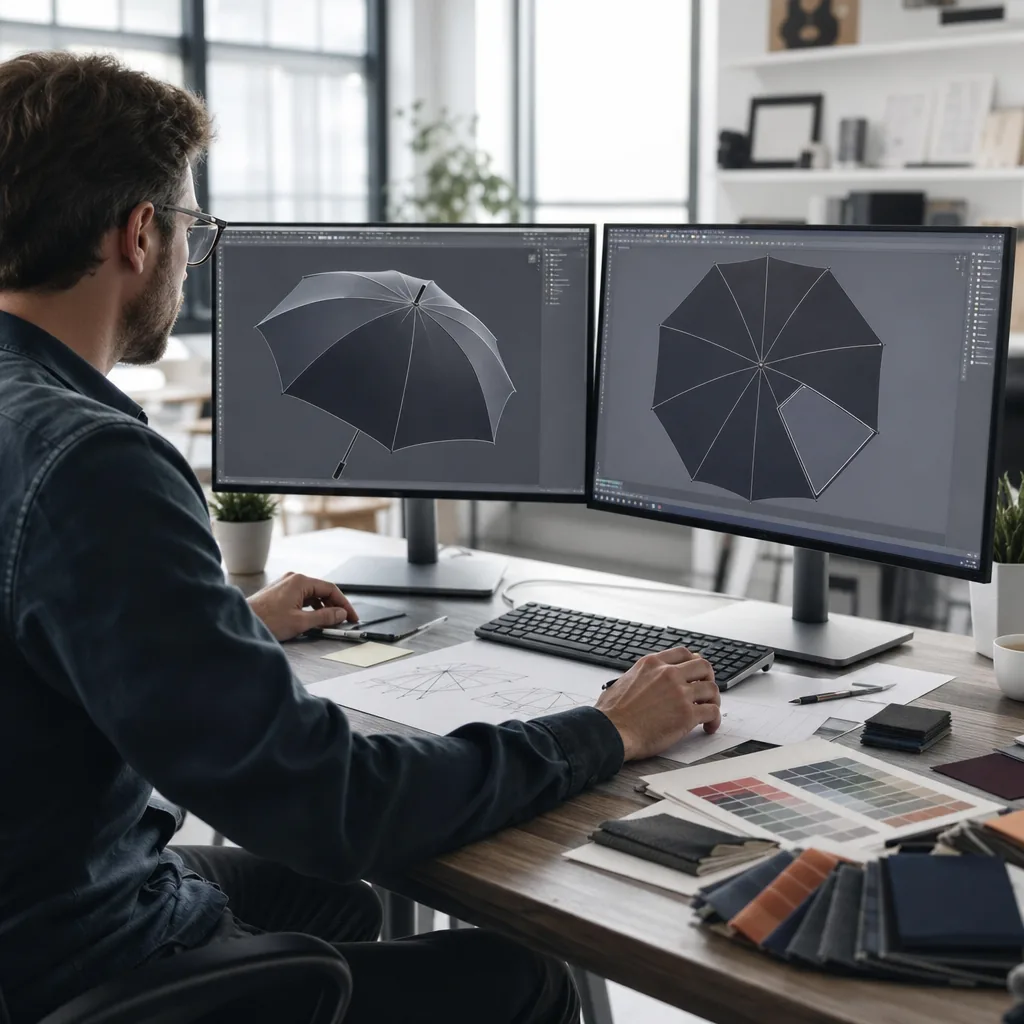
Outdoor promotions punish an umbrella long before the customer complains: UV exposure dulls panels, rain can pull dye into seams, and repeated opening rubs ink at fold lines. On our Songxia production floor, colorfast branded umbrellas start with the right polyester grade, matched ink system, and test plan before bulk cutting begins. If buyers specify only Pantone colors and unit price, they leave too much room for fading, bleeding, and logo wear in the field.
Why Colorfastness Matters for Brand Visibility
Colorfastness is not a cosmetic detail on outdoor promotional umbrellas; it decides whether the logo is still readable after the third rainy weekend. At outdoor events, golf tournaments, campus welcome programs, and hotel valet stations, umbrellas are opened wet, folded wet, rubbed against metal racks, and exposed to direct UV for hours. A weak print system can look acceptable in a pre-production photo but lose edge sharpness after abrasion at the fold lines. On 190T or 210T pongee, the most common problem is not the entire logo disappearing at once; it is gradual fading on the high-tension panels, especially near rib tips and seam lines where fabric flexes every time the frame opens. For branded rain umbrellas, I prefer testing printed panels after repeated open-close cycles, not just checking a flat fabric swatch, because the real stress happens when the canopy is stretched over 8K or 10K ribs.
Rain creates two separate risks: dye migration from the canopy and ink breakdown from water exposure. Dark navy, red, and black panels can bleed into white logos if the fabric dyeing and post-treatment are not controlled, particularly on low-cost polyester with poor washing fastness. For fade resistant umbrella logos, screen printing with the correct ink binder, heat-transfer film with good adhesive, or sublimation on lighter polyester can all work, but each method has limits. Sublimation is strong for full-panel graphics, but it is not suitable for printing bright white on a dark canopy. Heat transfer gives clean edges for campus crests and sponsor marks, but cheap films can crack at fold creases. Our standard practice at ZheBrella is to review logo size, panel color, print method, and coating together, because a Teflon water-repellent finish or UV coating can change ink adhesion if the process order is wrong.
Repeated handling is where umbrella print durability is usually won or lost. A hospitality umbrella at a resort may be opened 20 to 40 times per week, dragged across umbrella stands, and stored in damp bins. Sports promotions add sunscreen, sweat, mud, and hand abrasion to the problem. Even if the canopy fabric has a UPF 50+ UV coating, the printed logo still needs its own fastness performance; otherwise the panel stays bright while the brand mark turns chalky. For colorfast branded umbrellas, buyers should request rubbing fastness checks, water fastness checks, and outdoor exposure samples before approving bulk production, especially for 23-inch auto-open models and 27-inch golf umbrellas with large logo areas. In AQL 2.5 inspection, I look for inconsistent logo density, peeling transfer corners, ink sticking after folding, and color shift between panels, because those defects become highly visible when hundreds of umbrellas are used together at an event entrance or stadium walkway.
Fabric Dyeing and Print Method Risks
The biggest colorfastness risk on outdoor promotional umbrellas is not rain; it is heat, pressure, and incompatible chemistry between fabric dye, coating, and print ink. Dark 190T pongee is common because it folds cleanly and keeps cost down, but black, navy, burgundy, and dark green disperse dyes can migrate into light logo inks during heat-transfer printing, especially when the press is run above 150–160°C or stacked while still warm. 210T pongee has a tighter weave and usually gives sharper screen print edges, but the same dye migration problem appears when buyers request white, yellow, or silver logos on dark panels. For colorfast branded umbrellas, I prefer testing the actual dyed fabric roll, not a lab swatch, because shade variation from lot to lot can change ink holdout and bleeding behavior. A basic crocking test, wet rub test, and 24-hour folded contact test will catch many failures before mass production.
Silver-coated UPF 50+ fabrics add another failure mode: adhesion loss. The silver layer improves sun protection and is popular for beach, golf, and event umbrellas, but the coating can reject ordinary plastisol or low-grade transfer films. If the logo is printed on the coated side, ink cracking can appear along rib fold lines after 200–300 open-close cycles, especially on 27-inch and 30-inch canopies where fabric tension is higher. Printing on the face side avoids some cracking, but heat can still distort the coating underneath if the dwell time is too long. For branded rain umbrellas that use silver-coated panels, we normally specify low-temperature transfer film or two-part screen ink with a crosslinker, then run tape adhesion and fold-flex checks before approving bulk. Good umbrella print durability depends as much on curing control as on ink brand.
Contrast-panel designs look simple on paper but create the most sleeve-transfer complaints in real shipments. A white or light-gray panel touching a red, royal blue, or black panel inside a tight PVC or pongee sleeve can pick up color after container heat exposure, especially on DDP shipments sitting in summer warehouses. The problem is worse when panels are packed slightly damp after steam shaping or when sleeves are made from clear PVC with plasticizer that softens the print surface. Fade resistant umbrella logos also need UV consideration: sublimation performs well on white polyester but is weak for dark pongee, while screen printing gives stronger opacity but must be matched to the fabric finish. For contrast canopies, I advise a 48-hour folded contact test at 50°C, sleeve insertion testing, and AQL 2.5 inspection focused on panel staining, logo cracking, and rub-off before carton sealing.
Matching Durability to Umbrella Structure
Mechanism and packing details also affect umbrella print durability more than buyers expect. Auto-open and auto-open-close umbrellas have more moving parts around the shaft, runner, and spring system, so the canopy folds with stronger compression at the same crease lines every time. If the logo is placed too close to a rib seam, panel edge, or top vent overlap, rubbing increases during closing and sleeve insertion. Tight sleeves make the problem worse, especially on PVC, POE, or coated pongee where surface friction is higher. Our standard practice at ZheBrella is to check logo position against the folded canopy, not only the open umbrella mockup, because colorfast branded umbrellas fail in the customer’s hand, bag, and trunk long before they fail in a lab cabinet.
QC Tests Buyers Should Request
For colorfast branded umbrellas, the first QC request should be rub testing on the actual production fabric, not a perfect lab swatch. I ask for dry rub and wet rub checks using a white cotton cloth over the printed logo area, usually 20 cycles with firm hand pressure or a crockmeter if the lab has one. Dry rub catches loose pigment and poor curing; wet rub exposes water-based ink problems that only appear after rain. Buyers should define failures clearly: visible logo smearing, color transfer that stains the white cloth beyond a light trace, or edge bleeding more than 1 mm outside the artwork line. On 190T and 210T pongee, pigment and heat-transfer prints behave differently, so the test should cover solid logo blocks, fine text, and registration edges. For branded rain umbrellas with dark navy, black, or red panels, test both the print and the base fabric because dye migration can make a white logo turn pink or gray after packing.
Water spotting and folding abrasion are the most practical tests for outdoor promotional umbrellas because umbrellas spend their life wet, folded, and rubbed against ribs. The inspector should drip clean water onto the printed logo for 30 minutes, then blot without rubbing and check for halos, whitening, ink lift, or tackiness. After that, fold the umbrella normally and open-close it 20 to 50 times, paying attention to logo zones that touch rib tips, runner joints, and panel seams. Poor umbrella print durability often shows as cracked heat-transfer film, dull patches on metallic ink, or broken letters along fold lines. A simple tape adhesion test is also useful: apply 3M 600 or equivalent tape over the cured print, press it down, then pull at a steady angle. Any flaking, peeling, or transferred ink should be recorded as a major defect, especially on EVA, POE, PVC, or coated pongee where surface energy affects adhesion.
For bulk orders, require AQL 2.5 inspection with defect definitions written into the PO before production starts. Our standard practice at ZheBrella is to classify logo fading, wet smearing, and adhesion loss as major defects, while small print position variance within agreed tolerance, such as ±3 mm, may be minor if the branding remains readable. Fade resistant umbrella logos should also get a short UV exposure check, especially for golf umbrellas, beach-style 30 inch models, and event giveaways stored outdoors. A practical factory-side method is to compare printed samples after 24 to 48 hours under a UV aging lamp against an approved control sample, then reject obvious color shift, yellowing of white ink, or loss of contrast. For colorfast branded umbrellas, buyers should keep a sealed golden sample and request inspection photos under consistent lighting. Without that reference, arguments about “acceptable fading” become subjective and expensive after shipment.
Specifying Orders to Prevent Rework
A purchase spec for colorfast branded umbrellas should start with the parts that actually control print performance: canopy fabric, coating, and print method. For most outdoor promotional umbrellas, I would specify 190T or 210T pongee with PU, Teflon, or UV UPF 50+ coating, because cheap polyester with uneven waterproofing causes ink migration and patchy drying. State the umbrella size clearly, such as 21" folding, 23" straight, 27" golf, or 30" golf, and list the frame as steel, fiberglass, or mixed construction. If the event is windy, write 8K or 10K fiberglass ribs, not just “windproof.” For logos, include the exact panel position, print width and height in millimeters, Pantone C or U target, and tolerance. A practical tolerance is Delta E ≤ 2.0 for controlled brand colors, or a written Pantone visual approval when the canopy color affects the ink shade.
Choose the print process before approving price, because umbrella print durability changes sharply by method. Screen printing works well for 1–3 solid colors on pongee and gives clean fade resistant umbrella logos when the ink is matched to coated fabric. Heat transfer is better for gradients or small details, but buyers should request a wash, rub, and fold test because poor transfer film cracks near rib seams. Sublimation is suitable for full-panel artwork on white polyester, but it will not hit every corporate Pantone exactly. Our standard practice at ZheBrella is to require one pre-production sample with final fabric, final coating, final logo size, and final handle or sleeve branding before bulk cutting. The spec should also define inspection: AQL 2.5 for critical visual defects, acceptable logo offset, color deviation, broken stitches, frame opening force, and water leakage after a spray test.
MOQ and lead time must be written into the order, not discussed casually by email. A typical MOQ is 500–1,000 pieces per design for branded rain umbrellas using screen print, while custom canopy colors, molded handles, or retail packaging may push MOQ to 2,000–3,000 pieces. Normal lead time is 7–10 days for sampling, 25–35 days for mass production after sample approval, and longer during March–June when promotional and rain-season orders overlap. For event deadlines, Incoterms matter as much as factory speed. FOB Ningbo or Shanghai means the buyer controls freight, customs clearance, and final delivery risk after vessel handover. DDP is slower to quote but safer for fixed event dates because duty, clearance, and last-mile trucking are planned together. For colorfast branded umbrellas needed at a trade show, I would lock artwork 45–60 days before the event for air shipment and 75–90 days for sea shipment.
Frequently Asked Questions
Will a printed umbrella logo fade in sunlight?
All outdoor prints can fade over time, but proper fabric, ink selection, and curing reduce the risk. For UV-heavy use, ask for fade-resistance testing and consider UPF 50+ canopy materials.
How can buyers prevent logo transfer onto the umbrella sleeve?
Specify fully cured inks, request dry and wet rub tests, and avoid packing umbrellas before prints have stabilized. Tight sleeves should be checked during sampling because repeated insertion can abrade the logo.
Which QC tests should importers request before approving outdoor umbrella production?
Ask for colorfastness to light, water, and rubbing results, plus print adhesion testing on the canopy fabric. For outdoor programs, buyers often require dry/wet crocking, spray or rain exposure, and accelerated UV testing before mass production.
Does umbrella fabric type affect how well a logo holds color outdoors?
Yes. Polyester and pongee can print well, but coating type, fabric density, and surface finish all affect ink bonding and fade performance. For repeated outdoor use, many buyers ask suppliers to test the exact fabric-and-ink combination rather than approving artwork on appearance alone.
When should a buyer request a pre-production sample for print durability review?
Request it before bulk printing, especially for dark canopies, large solid logos, or strict Pantone requirements. A pre-production sample usually adds several days to lead time, but it can confirm color accuracy, edge sharpness, and resistance to bleeding after water exposure.
Looking to Launch Your Custom Umbrella Line?
ZheBrella is a Zhejiang-based OEM/ODM umbrella manufacturer with 17 years of export experience. Free design, low MOQ from 100 pieces, windproof construction, full-color print.
Get Free Quote Now »People Also Search For
Related Articles
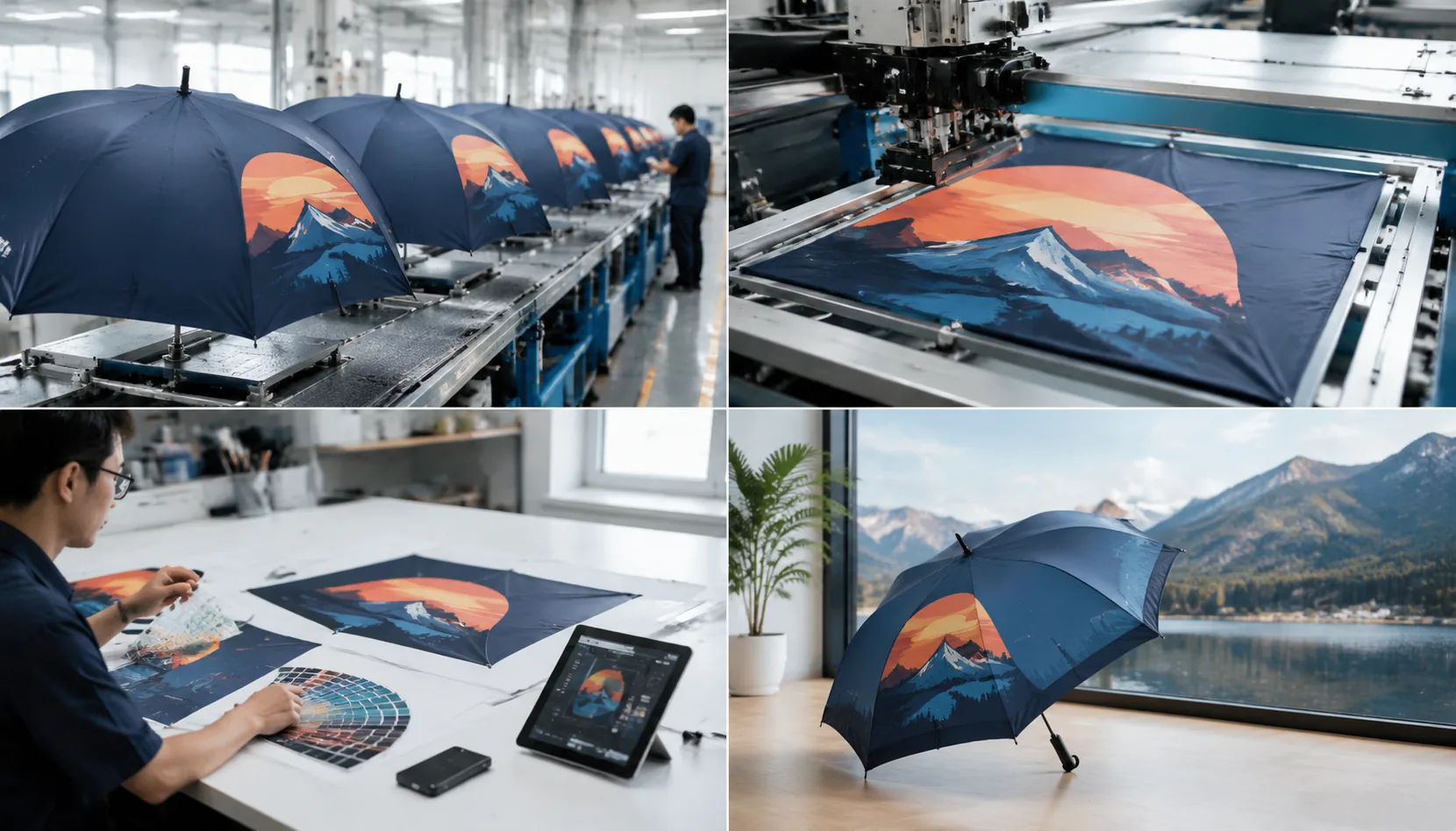
Colorfast Umbrella Printing Specs for Outdoor Brand Use
Specify fade-resistant umbrella prints with fabric, ink, coating, and AQL checks suited for outdoor campaigns, retail, a...
Read More »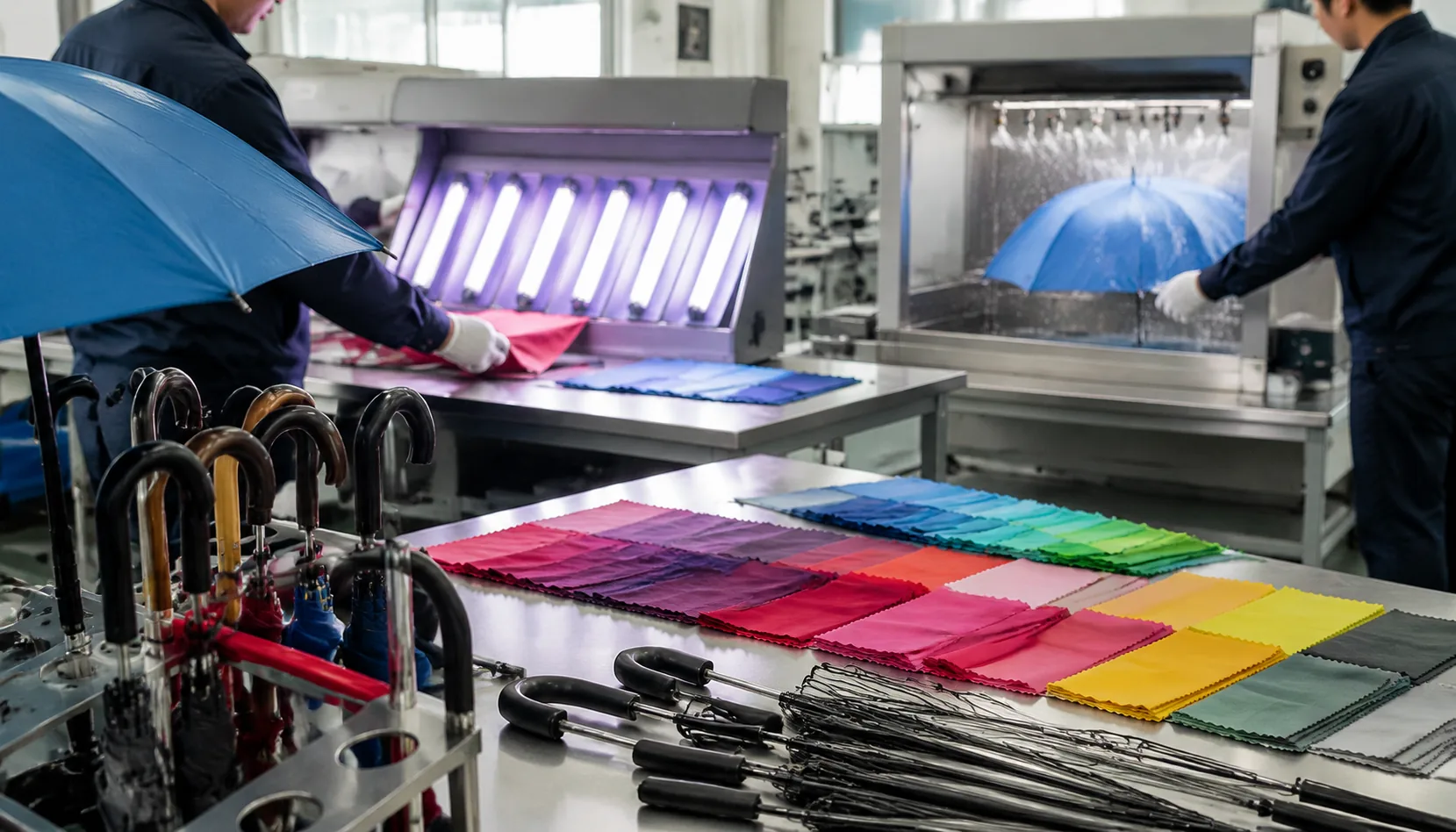
Colorfast Umbrella Branding Specs for Outdoor Promotions
Build colorfast umbrella specs for outdoor promotions, covering fabric dyeing, ink durability, UV exposure, water testin...
Read More »Colorfast Logo Printing for Branded Umbrella Canopies
Reduce logo fading, bleeding, and transfer issues by matching ink, fabric, coating, and QC tests before branded umbrella...
Read More »