Cruise Line Umbrella Programs for Shore Excursion Teams
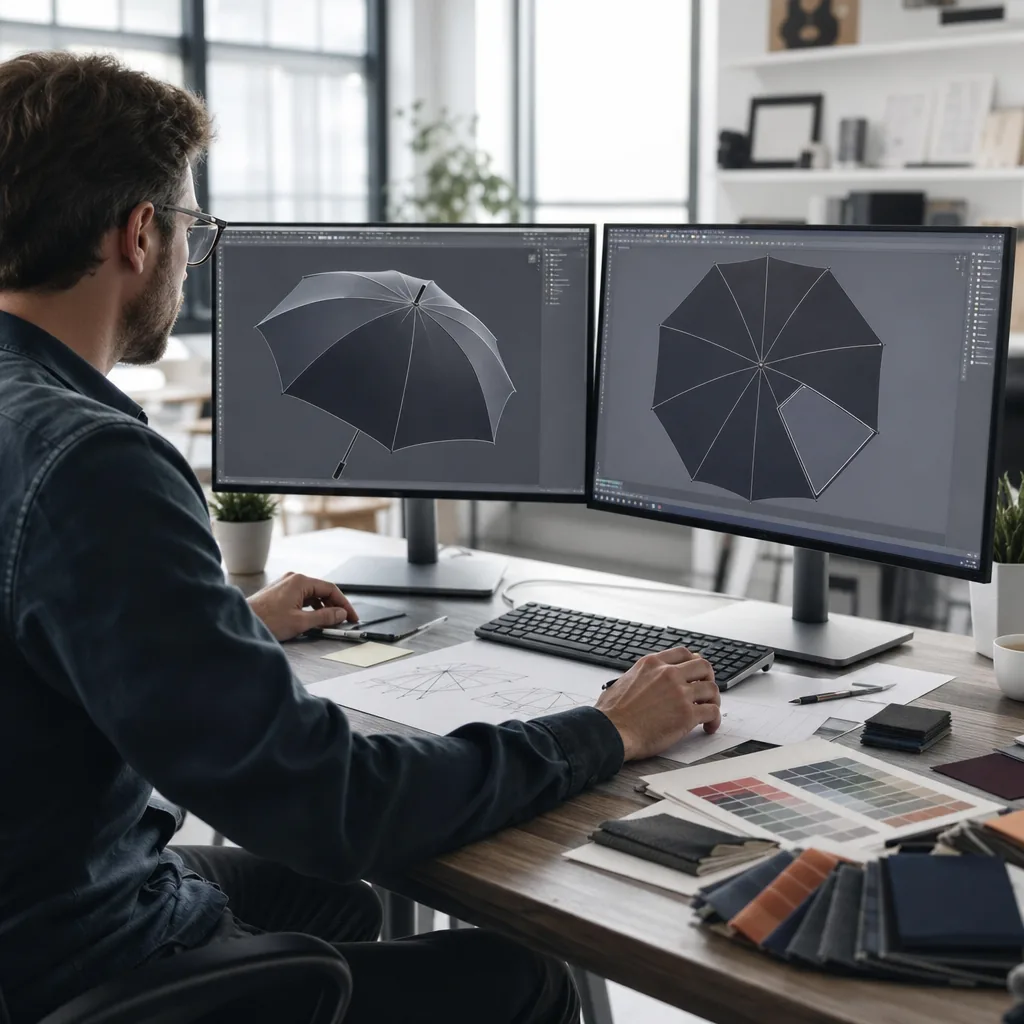
For shore excursion teams, an umbrella failure is not just a wet guest issue—it slows boarding, exposes crew, and reflects poorly on the cruise brand at the pier. When we build cruise line umbrellas in our Songxia factory, the program starts with wind frame selection, UV fabric choices, salt-air hardware, print durability, and carton planning for mixed delivery points. The right spec has to survive repeated opening, crowded gangways, and tight replenishment schedules.
Identify Cruise-Specific Umbrella Use Cases
The first use case I separate is the shore excursion guide umbrella, because it is a working tool, not a souvenir. Guides need high-visibility canopy colors, strong logo placement, and enough diameter to act as a meeting-point marker when 30 to 50 passengers are coming off a tender in uneven weather. For this job, a 27" or 30" straight umbrella with 8K or 10K fiberglass ribs is more practical than a small folding unit, especially in ports where squalls come in fast. A vented double canopy helps when wind channels between buses, terminal buildings, and pier structures. For shore excursion umbrellas, I prefer 190T or 210T pongee with a water-repellent coating, because it dries faster than cheap polyester and does not sag badly after repeated wet-dry cycles.
Passenger loan programs need a different specification because loss rate, storage space, and user handling matter more than premium appearance. Cruise line umbrellas used at gangways, concierge desks, and tender pickup points should be simple, durable, and easy for staff to count in and out. A 23" auto-open umbrella is usually the best balance: large enough for one passenger with a bag, but compact enough to store in bins near the terminal door. For tropical itineraries, UV exposure is as important as rain, so UPF 50+ coating or silver-backed fabric may be worth the added cost. If the umbrella will be used on wet decks, I would avoid polished metal handles and slippery grips; matte plastic, EVA foam, or rubberized handles perform better in real hands.
Crew movement and onboard retail create two more categories. Crew umbrellas are often used for short transfers between ship, terminal, provisions area, and shuttle points, so bulk umbrellas for cruise ships should favor low failure rate over fancy mechanisms. Manual-open or simple auto-open frames with fiberglass ribs handle abuse better than delicate auto-open-close folding frames. Retail merchandise can be more design-driven: branded travel umbrellas, compact 21" folding models, or marine tourism merchandise with port names, ship artwork, and sublimation-printed canopies. The constraint is storage. Cruise retail shelves and back rooms are tight, so cartons must cube efficiently, usually 24 to 48 pieces per export carton depending on size. Tropical ports also mean salt air and humidity, so nickel-plated steel shafts need proper plating control, while fiberglass frames reduce corrosion complaints over a long season.
Choose Specs for Coastal Weather
For cruise line umbrellas used by shore excursion teams, the frame matters more than the handle style or sleeve color. Coastal ports punish cheap steel ribs: salt air starts oxidation at the rivets, sudden quay-side gusts invert light frames, and repeated wet-dry cycles loosen runner springs. I recommend fiberglass ribs with a steel or aluminum shaft depending on size; fiberglass flexes under gust load instead of taking a permanent bend. For most walking tours, a 23" auto-open with 8K fiberglass ribs is the practical baseline. For guide stations, tender queues, or pier-side guest control, step up to 27" or 30" with 8K or 10K ribs. If the itinerary includes windy ports like the North Atlantic, Alaska, or Mediterranean shoulder season, a double-canopy vented windproof frame is worth the extra cost because it releases uplift instead of fighting it.
Corrosion-resistant components should be written into the spec sheet, not assumed. Ask for nickel-plated or stainless rivets, coated springs, plastic tips that are securely crimped, and a shaft finish that passes basic salt-spray exposure without bubbling. On the production floor, the common failure point is not the canopy fabric; it is the small hardware around the notch, runner, and rib joints. Shore excursion umbrellas are opened and closed dozens of times per day by staff and guests who are rushing, wearing sunscreen, or handling wet bags. For that use, manual open is durable, but auto-open is faster for guides managing groups. Auto-open-close is convenient for branded travel umbrellas sold onboard, though I would avoid it for heavy staff use unless the spring mechanism is tested by cycle count before shipment.
For canopy material, 190T pongee is acceptable for promotional giveaway or short port calls, while 210T pongee gives a tighter hand feel, better print surface, and stronger water resistance after coating. A quality water-repellent finish should bead rain immediately; if droplets darken the panel after a few seconds, the coating is too light. For sun-heavy itineraries in the Caribbean, Greek islands, Southeast Asia, and the Red Sea, specify UV coating at UPF 50+ rather than treating shade as an afterthought. White ink and light logos also need testing because UV coatings can change color tone slightly. For bulk umbrellas for cruise ships, our standard practice at ZheBrella is to sample-print the logo on production fabric, run an opening test, check rib alignment, and inspect under AQL 2.5 before packing for FOB or DDP delivery. Those checks prevent marine tourism merchandise from failing on the first windy pier day.
Balance Guest Experience and Operational Control
The best cruise line umbrellas do two jobs at once: they make guests feel looked after, and they keep the shore excursion team in control when 40 people spill onto a pier in wind, glare, and light rain. Color-coding is the simplest control system I trust in the field. A red umbrella for “City Highlights,” blue for “Food Tour,” green for “Beach Transfer,” and yellow for “Mobility Assistance” is faster than reading a paddle sign in a crowded terminal. For excursion leaders, I would not use small retail compacts; a 27" or 30" 16K golf umbrella with fiberglass ribs, a vented double canopy, and a high-visibility logo panel stays readable above heads and survives gusts that fold cheap steel-frame umbrellas. If your ports include the Caribbean, Alaska, or Northern Europe, specify 190T or 210T pongee with water-repellent treatment, and consider UPF 50+ coating for sun-heavy itineraries.
Numbered loaner umbrellas reduce loss better than polite reminder cards. Put a heat-transfer number on the canopy tip panel and repeat it on the sleeve: A-01 through A-80 for one vessel, B-01 through B-80 for another, or by excursion desk location. The crew can issue and recover them the same way they handle audio receivers. For bulk umbrellas for cruise ships, I recommend avoiding ultra-light frames for loaner stock; guests will use them as walking sticks, lean them against buses, and force them closed while wet. A manual-open 8K compact with fiberglass or reinforced steel ribs is more durable than a cheap auto-open-close when hundreds of passengers handle it every week. If automation is required for premium guest experience, use tested auto-open mechanisms and run open-close cycling checks before shipment, not just visual inspection under AQL 2.5.
Retail and operations should not fight over the same model. Branded travel umbrellas sold onboard can be 21" or 23" 8K compacts with matching sleeves, a soft-touch handle, and tasteful cruise branding; passengers pack them easily and treat them as marine tourism merchandise rather than disposable rain gear. Shore excursion umbrellas should be more visible and more rugged, with leader units separated from guest loaners by size, color, and sleeve labeling. Branded sleeves matter because most umbrellas are lost when wet canopies are carried bare onto buses, cafés, or tenders; a sleeve with the ship name, QR code, and return message brings more units back. Our standard practice at ZheBrella is to test sleeve fit after canopy coating and printing, because a sleeve that is 5 mm too tight becomes unused, and an unused sleeve defeats the entire loss-control plan.
Set Quality Standards for Repeat Sailings
Repeat sailings punish weak umbrellas faster than one-off promotional use, so the purchase spec should start with AQL 2.5 final inspection and a written defect list. For cruise line umbrellas, I would classify broken ribs, failed shafts, non-opening runners, sharp burrs, and major logo misplacement as critical or major defects, not cosmetic issues. Frame checks should include rib flexing, stretcher rivet pull, runner lock security, and handle torque, especially on 23" and 27" models used by shore excursion guides. Fiberglass ribs cost more than black-painted steel, but they resist bending and red rust better when umbrellas are loaded wet into buses and gangway carts. If the program uses 8K compact branded travel umbrellas, inspect more heavily at the joint hinges; if it uses 16K full-size guide umbrellas, check rib symmetry and canopy tension because poor balance becomes obvious in coastal wind.
Opening and closing function needs its own test, not just a quick sample pop at the packing table. For shore excursion umbrellas where fast deployment is required, auto-open mechanisms should be cycle-tested before shipment: at least 50 open-close cycles on inspection samples, with no sticking, spring weakness, or runner slippage. Auto-open-close compact umbrellas need stricter checks because the reverse spring system is more sensitive to cheap shafts and poor assembly; I do not recommend them for guides unless the buyer accepts a higher unit cost and replacement allowance. Manual stick umbrellas are slower, but they are often more reliable for bulk umbrellas for cruise ships because crew members may issue them hundreds of times per month. Our standard practice at ZheBrella is to test wet opening after water spray, because some low-grade pongee and rough shaft plating create friction once salt moisture and sand enter the mechanism.
Salt-air exposure should be treated as a real quality risk, not an afterthought in marine tourism merchandise. Specify rust-resistant plating on steel parts, fiberglass ribs where budget allows, and nickel- or zinc-plated rivets with clean closing heads. Canopy inspection should cover 190T or 210T pongee water repellency, seam slippage, stitch density, loose threads, and panel alignment; on POE or PVC clear umbrellas, check cold cracking and seam welding instead of only sewing. Logo accuracy also matters because cruise branding is photographed constantly on piers and tour buses: Pantone tolerance, print position, panel orientation, and heat-transfer adhesion should be inspected against an approved pre-production sample. For cruise line umbrellas with UV claims, require UPF 50+ test documentation; for rain performance, a Teflon-type coating should bead water after repeated spray, not only look good in the showroom.
Plan Delivery to Ports and Cruise Supply Chains
Port delivery planning should start with the Incoterm, because FOB and DDP create very different responsibilities for cruise line umbrellas. Under FOB Ningbo or Shanghai, the factory controls production, export packing, China customs documents, and delivery to the vessel or warehouse handover point at origin; the buyer or forwarder then manages ocean freight, destination clearance, port drayage, and any bonded warehouse moves. DDP is cleaner for cruise operators that do not want their shore excursion team chasing customs brokers in Miami, Barcelona, Singapore, or Sydney, but it requires accurate HS codes, declared values, consignee data, and port receiving rules before production starts. For bulk umbrellas for cruise ships, I normally recommend FOB when the buyer already has a cruise supply-chain consolidator, and DDP when the order is tied to a fixed itinerary launch and the internal logistics team cannot absorb delays. The wrong Incoterm can save 3% on paper and lose two weeks at the port.
Carton labeling matters more than many buyers expect, especially when the same SKU is split across ships, routes, and embarkation ports. Each master carton should show PO number, item code, canopy color, print version, carton quantity, gross/net weight, carton dimensions, destination port, vessel name, and route code such as Alaska 7-Day, Med East, or Caribbean South. If shore excursion umbrellas are being issued to tour guides instead of sold as marine tourism merchandise, we also mark department codes like ShoreEx, Guest Services, or Retail to prevent the cartons from disappearing into general hotel inventory. Our standard practice at ZheBrella is to pack by final deployment sequence, not just by production convenience: for example, 23-inch auto-open branded travel umbrellas for Ship A in cartons 1–120, 21-inch compact auto-open-close umbrellas for Ship B in cartons 121–200, with pallet labels matching the booking plan.
Seasonal deployment should be staggered instead of shipping the whole annual forecast at once. Alaska, Northern Europe, and typhoon-season Asia routes often need the first drop 30–45 days before the itinerary opens, then replenishment every 45–60 days based on sell-through, breakage, and crew issue rates. For new cruise line umbrellas, allow 5–7 days for artwork layout, 7–10 days for pre-production sample making with screen print, heat transfer, or sublimation proofing, and another 3–5 days for buyer approval if the decision chain includes brand, retail, and operations teams. Bulk production usually takes 25–35 days for standard 190T or 210T pongee canopies and 35–45 days for custom frames, double-canopy vented windproof builds, UV UPF 50+ coatings, or mixed carton programs. Add 18–35 days for ocean freight depending on port pair, or use air freight only for sample sets and emergency launch gaps.
Frequently Asked Questions
What umbrella is best for shore excursion guides?
A 27-inch or larger golf umbrella with fiberglass ribs, double-canopy construction, and a high-visibility canopy is ideal. It helps guests locate the guide while providing reliable rain and sun coverage.
Can cruise lines use umbrellas as onboard retail merchandise?
Yes. Compact travel umbrellas with 190T or 210T pongee fabric, branded sleeves, and retail-ready packaging work well in ship shops. Buyers should confirm carton dimensions and storage limits before ordering.
What umbrella specs work best for daily shore excursion operations in windy ports?
For active excursion teams, buyers usually choose 23 to 27 inch umbrellas with fiberglass ribs, a vented double canopy, and automatic open. A common target is wind resistance around 30 to 40 mph, which balances durability, guest usability, and replacement cost.
How should a cruise operator split umbrella purchasing between crew use and onboard retail?
Many programs separate utility stock from retail stock: higher-volume, simpler models for crew and premium folding or UV-coated styles for gift shops. For factory planning, this often means MOQ by SKU starting around 500 to 1,000 units, with separate packaging and carton labels for operations versus retail channels.
What QC checks matter most for umbrellas used in marine tourism programs?
B2B buyers typically ask for opening and closing cycle tests, canopy stitching inspection, frame symmetry checks, salt-humidity exposure review, and drop-test carton verification. Before shipment, an AQL inspection with logo color approval and metal-part rust checks helps reduce failures after port delivery.
Looking to Launch Your Custom Umbrella Line?
ZheBrella is a Zhejiang-based OEM/ODM umbrella manufacturer with 17 years of export experience. Free design, low MOQ from 100 pieces, windproof construction, full-color print.
Get Free Quote Now »People Also Search For
Related Articles
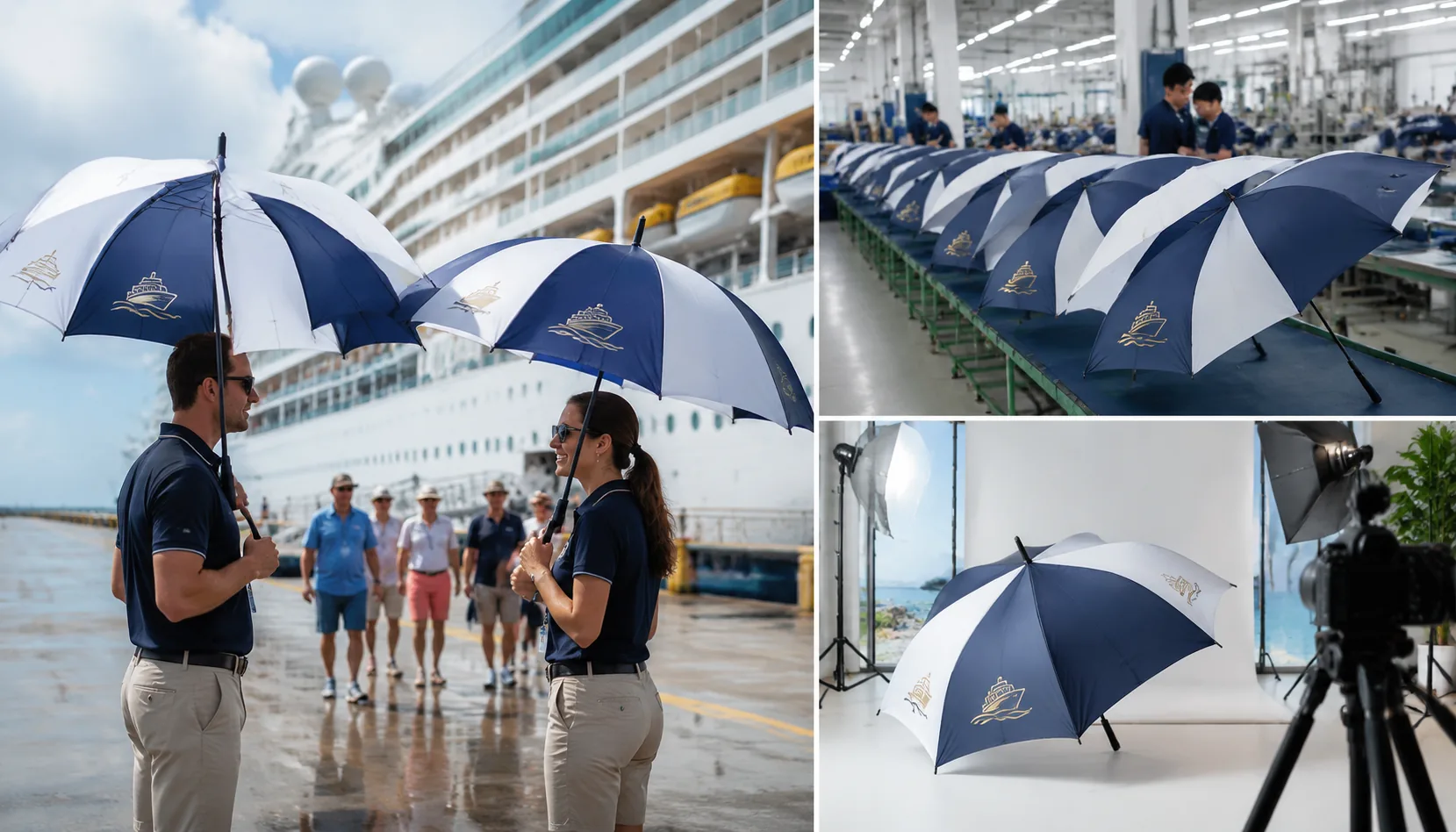
Custom Umbrellas for Cruise Lines and Shore Excursion Teams
Source cruise-ready umbrellas for shore teams, guest retail, and excursions with windproof frames, compact packing, and ...
Read More »
Umbrellas for Cruise Lines and Shore Excursion Programs
Specify umbrellas for cruise retail, shore excursions, and crew use with UPF 50+ canopies, corrosion-aware frames, MOQs,...
Read More »
Branded Umbrellas for Cruise Lines and Marine Tourism
Source umbrellas for cruise retail, shore excursions, and VIP guests with corrosion-aware specs, windproof frames, packa...
Read More »