Debossed, Engraved, or Printed Logos on Umbrella Handles
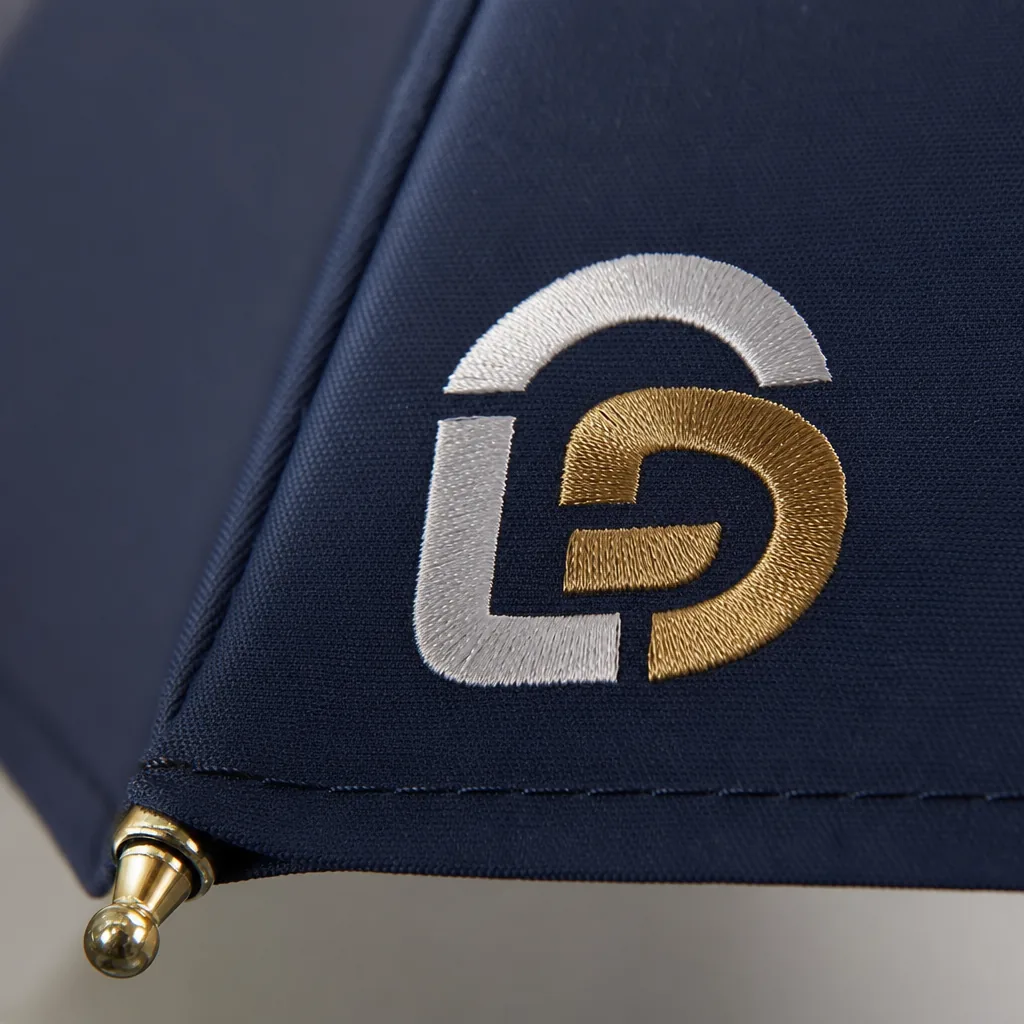
Choosing between debossing, engraving, and pad printing on umbrella handles is usually where branded programs start to drift on cost, lead time, or durability, especially when the handle material changes from ABS to wood, EVA, or rubberized finishes. On our Songxia production lines, we see umbrella handle logo branding succeed only when the marking method matches the substrate, mold plan, and MOQ from the start, because what looks sharp on a sample can fail quickly in assembly, packing, or daily use.
Which Handle Materials Support Each Logo Method
ABS plastic gives the most flexibility for umbrella handle logo branding because the handle geometry can be engineered around the artwork before the mold is cut. On injection-molded ABS straight grips, the most dependable methods are pad printing on a flat land or broad outer radius and a debossed handle logo molded directly into the tool. If the buyer wants an engraved umbrella handle look, ABS usually achieves it through laser marking on painted ABS, plated ABS, or a metal badge insert; deep engraving into raw ABS is possible but rarely produces the cleanest edge. Keep usable artwork to about 18-35 mm on straight handles and 15-28 mm on hook handles. Hook profiles reduce printable area because the radius tightens near the crook, which distorts small text and can break registration if the logo crosses a seam line, ejector-pin zone, or fast-changing curve. For multi-letter wordmarks, straight grips are the safer OEM umbrella branding choice.
EVA foam and rubber-coated handles need simpler graphics and tighter process control. EVA supports a debossed handle logo through compression molding or hot-press tooling, but foam memory softens fine detail over time; lines under about 0.4 mm and small serif text often lose sharpness after carton compression in transit. Printing on EVA is feasible, but adhesion varies with surface density and anti-slip texture, and pad printing becomes inconsistent on curved hook handles once the image area exceeds roughly 20 x 20 mm. Rubber-coated ABS is a better fit for a one-color printed umbrella handle than for laser work, since engraving may expose the base plastic unevenly if coating thickness varies. Wood is the best match for engraving, especially beech, maple, and laminated bamboo-style handles. Laser or CNC engraving stays clear at about 25-40 mm wide on straight wood handles, while hook handles limit the logo to a narrower outer arc. Printing on wood works best in 1-2 solid colors on a flatter zone, but grain and clear coat make exact Pantone matching less predictable than on ABS. In practice: use molded plastics for debossing, wood for engraving, and softer-touch handles only for bold icons or short wordmarks, not dense legal text.
Durability Trade-Offs in Daily Use and Transit
For daily wear, recessed decoration outlasts surface ink. A debossed handle logo on EVA foam, PU-wrapped crook handles, or molded ABS/PP plastic sits below the contact surface, so rings, fingernails, and carton rubbing hit the surrounding material first. An engraved umbrella handle is usually the most durable option on wood, bamboo, aluminum, or zinc-alloy end caps because the mark is cut or laser burned into the substrate rather than deposited as an ink film. A printed umbrella handle, usually pad print or screen print, wears fastest at the edges because the logo remains fully exposed to abrasion. Hand oils, sunscreen, and repeated gripping speed up failure, especially on smooth plastic or rubberized coatings if ink selection and surface treatment are not tightly controlled. For umbrella handle logo branding that needs to survive export packing, container loading, and routine customer use, debossing and engraving are the lower-risk specifications.
Moisture and transit widen the gap. On wood handles, a shallow laser mark can lose contrast if the lacquer layer is thin and the umbrellas are stored damp; a deeper engraved mark with a sealed topcoat holds appearance better through wet-dry cycles. Printed logos on matte plastic may pass an initial tape test after a 48-hour cure, then still lose sharpness after carton friction in bulk packs of 24 to 36 pieces per inner carton during trucking and ocean freight. That matters for retail resale, where the handle still needs to look clean after months in stock and after repeated use on 21-inch folding umbrellas or 27- to 30-inch golf umbrellas. Debossed and engraved handles usually justify their higher tooling or unit cost for that channel. Printed handles make more sense for short-run promotional giveaways and low-MOQ OEM umbrella branding: lower cost, easier color matching, and acceptable life when the program is seasonal rather than built for 12-month shelf appearance. On FOB shipments with long ocean transit, recessed marks are the safer choice; printed handles may need a clear protective coat, and buyers should still allow for some fallout within AQL 2.5.
Cost, MOQ, and Tooling Implications
Tooling cost is where the three methods separate fastest. For umbrella handle logo branding on a stock ABS or rubber-coated straight handle, printing is usually the lowest-risk entry point because setup is limited to a screen, pad-print plate, or small UV fixture rather than a new mold. A 1-color printed umbrella handle typically carries $80-$250 in setup charges, with MOQs around 300-1,000 pieces. The range depends on print area, handle curvature, and whether the logo must register to the shaft button or canopy seam. A debossed handle logo needs more upfront work: a metal insert, hot-stamp die, or modified mold cavity. On a stock handle, setup commonly runs $200-$600, and artwork finer than about 0.3 mm line width can lose definition or force a costlier insert. An engraved umbrella handle, especially on wood, bamboo, or a metal end cap, often sits between print and deboss on setup cost, but unit labor is higher because laser cycle time is slower and fixtures matter more. MOQ usually starts near 500 pieces and rises if rotational alignment is required.
The larger cost decision is not logo method alone, but whether the logo goes on a stock handle or a new handle body. Using an existing crook, straight, or golf-grip handle keeps OEM umbrella branding manageable; adding a proprietary shape, finger grooves, a medallion recess, or overmolded materials moves the project from decoration into full handle development. In Songxia, a new plastic handle mold typically runs about $1,500-$4,500 for a straightforward ABS part, with higher tooling cost for TPR overmolding, metal inserts, or difficult ejection. The umbrella format also changes the quote: a 21-inch 8K folding frame, 23-inch auto-open, and 30-inch golf umbrella use different shaft diameters, hardware clearances, and holding fixtures. Integrated factories lower changeover cost by combining handle decoration with 190T or 210T pongee canopy printing, frame assembly, and packing under one production plan. That reduces repacking, batches by frame and color, and catches handle-to-canopy orientation issues before final assembly. In practice, printed canopies plus printed handles can remain workable at 500 pieces, while debossed stock handles with custom canopy artwork more often need 1,000 pieces to absorb setup and still hold AQL 2.5 without rework.
How Handle Branding Fits Different Umbrella Constructions
Compact umbrellas leave little room for error in umbrella handle logo branding. A 21 inch or 23 inch 3-fold compact with a standard 8K frame usually uses ABS, rubberized plastic, or a short wood-look handle, so a printed umbrella handle is typically the lowest-risk option for 1-color logos, simple icons, or QR codes. A debossed handle logo works on molded ABS only if the tool includes a flat panel with enough depth; many auto-open-close compacts lose usable branding area to the push-button housing and curved grip. An engraved umbrella handle is uncommon on entry-level compacts unless the spec already includes real wood, aluminum trim, or zinc-alloy end caps. Frame spec affects the branding choice: steel shaft and steel ribs usually indicate a cost-sensitive build, where print keeps tooling cost and setup time under control. If the compact steps up to fiberglass ribs for better flex and fewer reversals in 40 to 50 mph gusts, debossing or engraving makes more sense because the product is already positioned above basic promotional grade.
Stick, golf, and larger auto-open umbrellas offer more consistent results because the handles are larger, straighter, and easier to fixture during production. On 27 inch or 30 inch stick umbrellas, including standard 8K golf builds and 16K fashion-promotional designs, handle material should determine the branding method. Straight or hooked wood can take either a debossed handle logo or laser engraving, with engraving usually holding finer lines and smaller retail-style marks. EVA foam grips are poor candidates for detailed debossing because rebound varies from piece to piece; pad or screen print is more predictable. Auto-open and auto-open-close constructions also increase wear at the grip, so print on soft-touch coatings tends to fade faster than engraving on metal trim or debossing on hard molded surfaces. Premium golf umbrellas with fiberglass shafts and ribs, vented double canopies, and 190T or 210T pongee should use higher-spec OEM umbrella branding to match the build; on a basic steel-frame 8K stick, simple print is usually the more cost-efficient and honest choice.
Approval Standards Before Mass Production
Do not approve umbrella handle logo branding from flat artwork alone. The release gate should be a signed pre-production sample made on the actual handle with the actual process: pad print on ABS, laser engraving on a wooden crook, or a debossed handle logo formed by a machined metal insert on EVA or rubberized grips. A digital mockup will not show how a curved 23-inch auto-open handle distorts a 22 mm mark, how a strap hole shifts the visual center, or how a matte black coating changes a Pantone match on a printed umbrella handle. Lock four items in writing before production: logo size in millimeters, orientation to a fixed reference point such as the push-button axis, approved color standard for any printed mark, and minimum line clarity for small text on an engraved umbrella handle. Realistic sampling lead times are 5 to 7 days for pad printing, 7 to 10 days for laser engraving, and 10 to 15 days when a new deboss insert must be cut. For multi-SKU OEM umbrella branding, seal one approved sample and attach an approval sheet with Pantone code, logo dimensions, deboss depth target, and front and side photos before mass production begins 20 to 30 days later.
Write AQL 2.5 into the PO before production starts, then tie inspection points to the sealed sample. Major branding defects should include wrong or missing logo, upside-down placement, severe color mismatch, illegible copy, double print, weak adhesion, and obvious off-center placement. For a debossed handle logo or engraved umbrella handle, add depth inconsistency, burrs, laser scorch, and letters filling in on textured surfaces. Set position tolerances in advance—about ±1.5 mm for engraving and ±2.0 mm for pad printing—because crook, straight, and bottle handles do not register the same way. A repeat order on a standard 21-inch or 23-inch folding umbrella with existing tooling typically runs 25 to 35 days after deposit and sample approval; add 3 to 5 days for adhesion or alcohol-rub testing and 7 to 12 days for new engraving or deboss tooling. Before FOB or DDP shipment, inspectors should sample by lot number, pull cartons from top and bottom layers, and confirm the branded handle still matches the approved sample after assembly and packing. If defects exceed AQL 2.5, the PO should already define the remedy: 100% sorting, adhesion retest, or repacking with handle protection before release.
Frequently Asked Questions
Does engraved branding require a higher MOQ than pad printing on handles?
Usually yes, because engraving may need dedicated tooling or fixtures, especially on wood or molded plastic handles. Pad printing can work at lower MOQs, but exact thresholds depend on handle shape and factory setup.
Can handle logos match a canopy program on premium retail umbrellas?
Yes, but the method should match the product tier. A 190T or 210T pongee canopy on a fiberglass frame usually pairs better with engraved or debossed handle branding than basic surface printing.
Which handle materials support debossing, engraving, and printing without extra risk of defects?
Debossing works best on molded plastic and some rubberized handles when the logo is built into the tool. Engraving is commonly used on wood, metal, and certain hard plastics, while pad printing is the most flexible option for plastic, wood, rubber-coated, and metal handles if the surface is smooth enough for ink transfer.
When does a debossed logo require new tooling instead of using an existing handle mold?
A debossed handle logo usually requires a mold insert change or a new handle mold if the current tool was not designed with a logo area. For OEM programs, buyers should expect tooling lead times of about 15-30 days, and this method is generally more cost-effective when order volume is high enough to spread the tooling cost.
What is the practical MOQ difference between engraved and printed umbrella handles?
Printed handles are typically the lowest-barrier option because factories can often start from around 500-1,000 pieces depending on handle shape and print setup. Engraved handles may be similar if laser marking is used on stock components, but custom engraved metal plates or wood parts can push MOQs higher and add sampling time.
Looking to Launch Your Custom Umbrella Line?
ZheBrella is a Zhejiang-based OEM/ODM umbrella manufacturer with 17 years of export experience. Free design, low MOQ from 100 pieces, windproof construction, full-color print.
Get Free Quote Now »People Also Search For
Related Articles
Debossed, Engraved, or Printed Handles for Umbrella Branding
Evaluate debossed, engraved, and printed handle branding by material, durability, MOQ, and cost to select a logo treatme...
Read More »
Debossed, Printed, or Molded Logos on Umbrella Handles
Evaluate handle logo options by material, tooling cost, MOQ, and durability to build branded umbrellas that look consist...
Read More »
Debossed, Engraved, or Printed: Branding Umbrella Handles
Compare debossed, engraved, and printed handle branding by material, MOQ, tooling, and lead time so buyers can match log...
Read More »