Debossed, Engraved, or Printed Umbrella Logos by Price Tier
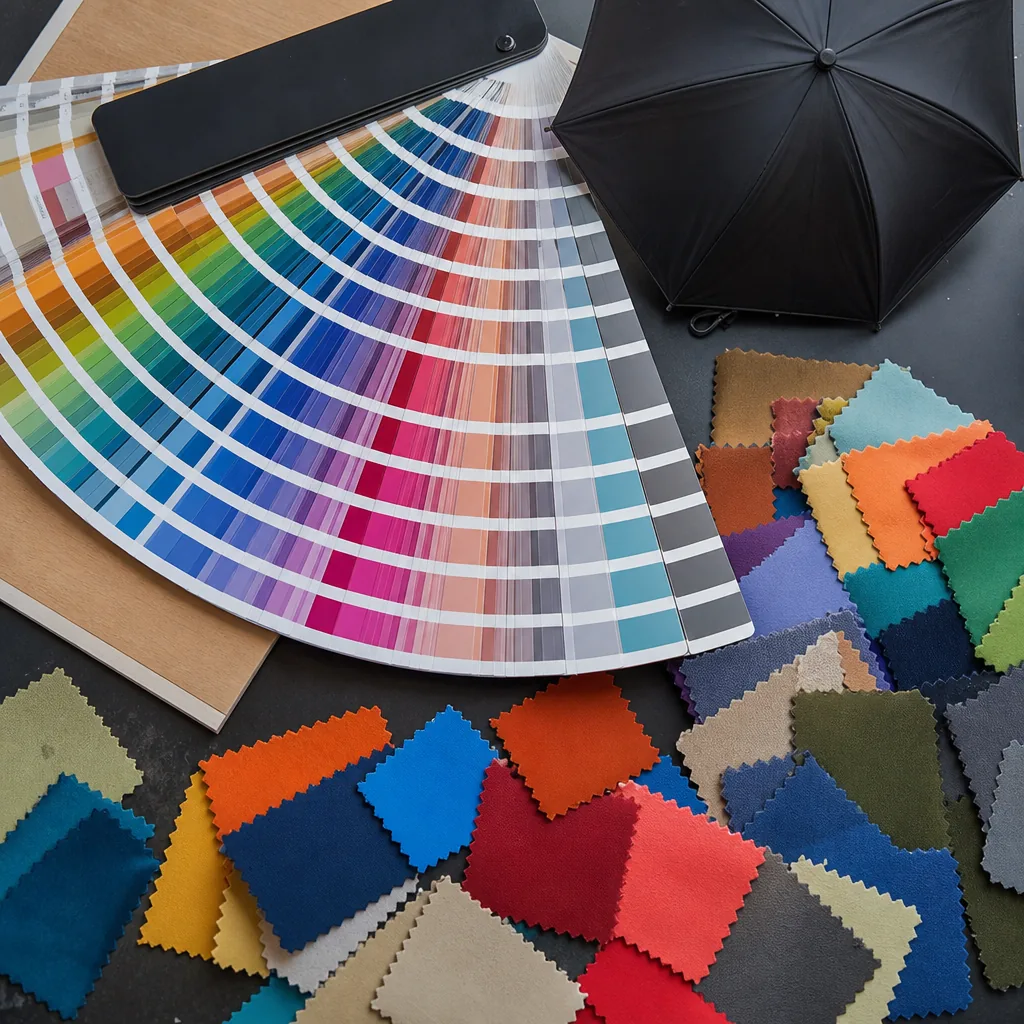
Buyers usually run into the same constraint: the logo method that looks right on a quote sheet may fail once you factor in handle material, order volume, and line speed. On our Songxia production floor, the real choice among debossed, engraved, and printed marks comes down to mold cost, setup time, scrap risk, and how each umbrella logo finish options decision holds up through assembly, packing, and end use.
How Logo Finish Changes Perceived Product Tier
Logo finish sets price positioning before a buyer evaluates the frame, canopy, or open-close mechanism. In promotional programs, the lowest-cost choice is usually a one-color canopy print on 190T pongee because it uses the largest branding area with standard screen printing and little tooling. That keeps printed umbrella logo cost within giveaway budgets, especially on 21" or 23" folding umbrellas with steel ribs, manual or auto-open frames, and one printed panel at MOQ 500 to 1,000 pieces. The commercial logic is straightforward: a large canopy print delivers maximum visibility per unit cost, but it adds almost no tactile value, so the product still reads as entry-level. That is why buyers reviewing umbrella logo finish options for corporate gifts or retail entry tiers often scale back canopy graphics and move branding to smaller contact points. A debossed umbrella logo on a closure strap, PU patch, or molded handle usually lifts perceived value because the mark feels built into the umbrella rather than printed onto the surface.
Debossing and engraving sit more naturally in mid-market and premium umbrella programs because both require tighter control of material, tooling, and part geometry. A debossed umbrella logo is standard on faux leather wrist straps, closure tabs, and handle wraps for 23" and 27" straight umbrellas, especially when the canopy upgrades to 210T pongee with Teflon or UV treatment rated UPF 50+. An engraved umbrella handle logo moves the product further upscale on wood, bamboo, or metal handles, where buyers want branding that looks permanent and understated rather than promotional. On fiberglass 8K or 10K windproof frames, including vented double-canopy styles rated above 50 mph, that quieter treatment usually supports stronger retail pricing than oversized canopy graphics. For OEM umbrella decoration, execution decides whether the finish earns the premium: engraving depth must stay consistent, wood cannot show scorch marks, debossed PU cannot collapse at the edges, and curved plastic prints need adhesion checks before production. Pre-production sample approval and AQL 2.5 inspection reduce that risk, particularly on 30" golf umbrellas where poor logo placement is obvious. Lead time also tracks with tier: simple printed orders commonly ship FOB in 25 to 35 days, while deboss tooling or engraved parts typically push production to 35 to 45 days, with DDP transit extending total delivery by market.
Best Surfaces for Debossing, Engraving, and Printing
Start with the substrate, because the wrong process creates rework before you ever discuss artwork. Among umbrella logo finish options, debossing is best on solid wood crook handles, straight wood shafts with end caps, and thicker PU or faux-leather straps that can hold a recessed edge after pressure is applied. It is a weak choice for hollow ABS or PP grips, which tend to spring back unless the recess was built into the injection mold from the start. Those plastic handles usually suit pad printing better. A debossed umbrella logo also loses definition on narrow closure straps: once stitched borders reduce usable width, detailed artwork needs to be simplified to 1 color and thicker strokes, typically around 4 to 5 mm, to avoid distortion. Engraving is the better fit for aluminum or zinc-alloy nameplates, metal tips, and selected hardwood handles when buyers need a mark that will not rub off after repeated opening and closing. The main risk is low-cost electroplated plastic. Laser engraving can burn through the plated layer unevenly, leaving a patchy logo before retail delivery. If artwork is too fine for a strap or molded handle, a separate engraved badge improves legibility but adds assembly, increases unit cost, and can raise MOQ because plating, engraving, and riveting are sourced as separate steps.
Canopies are still the most scalable branding surface, and fabric spec has a direct effect on both image quality and printed umbrella logo cost. On 190T pongee, 1-color or 2-color screen printing is usually sharp enough for promotional logos, bold type, and simple icons, and it often becomes more cost-efficient than handle decoration once volume reaches about 500 to 1,000 pcs. On 210T pongee, the tighter weave and smoother surface deliver cleaner small text, crisper edges, and better multicolor registration for heat-transfer or sublimation. That matters most on dark navy, black, and red canopies, where ink spread is immediately visible. Clear POE, PVC, and EVA canopies can also be screen printed, but they are less forgiving: film shows stretch marks, scratches, and uneven white-ink coverage quickly if curing is rushed. For OEM umbrella decoration, the practical control point is approved pre-production samples followed by AQL 2.5 inspection, because defects on an engraved umbrella handle logo, metal badge, or misregistered print are more visible than minor canopy shade variation. For premium programs, the lowest-risk layout is simple branding on the strap, permanence on the handle, and high-visibility artwork on the canopy.
Durability, Readability, and Use-Case Tradeoffs
Frequent hand contact is the real durability test when comparing umbrella logo finish options. A printed canopy logo can stay crisp for years if it is matched to the fabric and artwork: screen printing for solid spot colors on 190T or 210T pongee, heat transfer for multicolor logos, and dye-sublimation for full-panel designs on larger golf or promotional umbrellas. The failure point is usually not the canopy but the hard-touch parts. Handles, tips, and runners take constant abrasion from skin oil, sunscreen, fingernails, and bag contact, so surface ink on ABS, wood, or rubber-coated grips is typically the first decoration to show edge wear. A debossed umbrella logo or engraved umbrella handle logo holds up better because the mark is recessed into the substrate instead of sitting on top of it. The tradeoff is straightforward: lower color visibility, better wear resistance. For buying decisions, logo location should come first. Canopy placement favors visibility and lower reading distance; handle placement favors tactile feel, reduced chipping, and a cleaner long-term appearance after repeated opening and closing.
Readability changes by distance and use case. Printed logos are more visible from across a street, in event queues, and on 27 inch or 30 inch golf umbrellas where the canopy gives enough area for high-contrast branding. White or metallic silver artwork on navy, black, or red fabric usually reads better outdoors than a dark recessed mark on a handle, which is why printed umbrella logo cost is often justified for schools, sponsorships, and promotions. Engraved or debossed marks work differently: they read best at hand distance and feel more premium because the user can feel the recess on a wood crook, molded ABS grip, or rubber-coated handle. Outdoor exposure reinforces that split. UV, rain, and abrasion from car doors or bag pockets can fade low-grade surface printing on cheap plastic parts faster than buyers expect, while deeper engraving on metal nameplates or laser engraving on aluminum shafts keeps a cleaner appearance over time. If contrast is critical, paint fill can improve visibility but adds unit cost. For OEM umbrella decoration, the lowest-risk specification is usually printed canopy branding for distance visibility, plus a subtle engraved or debossed handle mark where frequent handling would make surface printing look worn first.
Cost Drivers, MOQ, and Sampling Workflow
For buyers comparing umbrella logo finish options, the first cost split is structural: a printed logo uses an existing canopy or stock handle, while a debossed umbrella logo or some engraved treatments add tooling, trials, and more reject risk. Printing on 190T or 210T pongee, or on a stock ABS handle, usually has the lowest entry cost because setup is limited to artwork separation, film, and a screen or transfer plate. That setup scales well at 1,000 pieces and above, but at 100 to 300 pieces the same printed umbrella logo cost rises sharply per unit because the fixed setup barely changes. Debossing moves cost into hardware and process control. A debossed umbrella logo on a PU strap, rubberized grip, or leatherette sleeve typically needs a brass or zinc alloy die, then heat-and-pressure trials to avoid shallow edges, gloss marks, or crushed grain. Engraving is only the middle-cost option when the substrate is straightforward: laser marking on wood, aluminum, or stainless caps is efficient, while deeper marks on zinc alloy or curved handles need fixtures, slower cycle times, and tighter reject thresholds.
MOQ is driven more by decoration method and component sourcing than by whether the frame is 21 inch, 23 inch, or 27 inch. For screen printing on standard frames, 300 to 500 pieces per design is usually workable when panel layout is simple and the print area stays within normal registration tolerance. OEM umbrella decoration on molded handles, zipper pulls, or custom tip caps is more often a 1,000 to 3,000 piece decision because the tool cost has to be amortized and component suppliers do not like very short runs. An engraved umbrella handle logo can be viable from 500 pieces if you stay with a catalog wood crook or metal cap, but a new handle shape, Pantone-matched plating, or mixed-material grip typically extends lead time from about 35 days FOB to 45 to 60 days FOB once injection molding, die casting, or extrusion is added. Sample control should follow the same logic: artwork approval in 24 to 48 hours, print strike-off in 3 to 5 days, finished stock-material sample in 5 to 7 days, simple debossed or engraved sample in 7 to 10 days, and 10 to 14 days when a curved handle needs a positioning jig. Custom molded parts or nonstandard EVA or POE bags can push preproduction sampling to 15 to 20 days. Approve logo size, depth or burn effect, and placement orientation as separate checkpoints; under AQL 2.5, those are the details most likely to trigger preventable disputes later.
Specifying Quality Standards Before Production
Most disputes over umbrella logo finish options come from artwork approval that never became a production standard. Put four measurable items on the PO or tech pack before tooling starts: logo depth, minimum line weight, placement tolerance, and finish acceptance criteria. For a debossed umbrella logo on EVA, PU, molded plastic, or wood handles, call out depth in millimeters, not subjective terms like "deep" or "premium." A practical range is 0.25-0.45 mm on EVA or molded plastic and 0.15-0.30 mm on wood; going deeper can crush edges, close counters, and make small letters unreadable. For an engraved umbrella handle logo, define the minimum stroke width as well: at least 0.25 mm for laser marking on coated metal and 0.35 mm for mechanical engraving on curved grips. Anything finer risks loss after paint fill or clear coating. If you are benchmarking printed umbrella logo cost against debossing or engraving, apply the same discipline: specify Pantone color, print method, substrate, and which defects count as rejects.
Placement control matters as much as artwork control. On a straight shaft or a centered handle face, ±1.0 mm is generally achievable; on hooked handles, telescopic shafts, or strap buttons, ±1.5-2.0 mm is a more realistic tolerance because of curved surfaces and molded-part variation. State orientation in production language: parallel to the shaft axis, centered between seam lines, or set a fixed distance from the ferrule or push button. For OEM umbrella decoration, define acceptance by defect type and inspection method, not by vague phrases like "clean print." A screen print on 190T pongee behaves differently from pad print on ABS, so set clear limits for pinholes, edge raggedness, fill coverage, and contrast on dark substrates. Use AQL 2.5 for final inspection, but do not rely on AQL alone for subtle debossing or engraving. Approve a pre-production sample set first: one golden sample, one light-limit sample, and one deep-limit sample. Record depth readings, line width, placement dimensions, and viewing conditions on the approval sheet before mass production; that step reduces subjective judgment and prevents avoidable claims.
Frequently Asked Questions
Which logo finish is most durable for heavy daily use?
Engraved or molded-in branding generally lasts longer than surface printing because it is less exposed to abrasion. Printed logos can still perform well when the substrate and ink system are chosen correctly.
Is debossing possible on all umbrella handle materials?
No. Debossing works best on materials that can take an impression, such as certain faux leather wraps or softer components, but it is not suitable for every rigid plastic handle design.
When does a debossed or engraved logo become more cost-effective than printing?
For most OEM orders, debossing or engraving starts to make better unit-cost sense at roughly 1,000 to 3,000 pieces per SKU, especially on molded plastic, EVA, or wood handles. You usually pay a one-time tooling charge up front, but the per-unit decoration cost is often lower than repeated print setup on larger runs.
Which logo finish holds up best on umbrellas sold for daily outdoor use?
Engraved and debossed logos generally outperform surface printing for abrasion resistance because the mark is cut into or formed into the material rather than sitting on top of it. For commuter or outdoor retail umbrellas, buyers often choose engraving on wood or metal parts and debossing on molded handles to reduce visible wear claims.
Can I mix logo finishes on the same umbrella to hit a target price point?
Yes. A common B2B approach is to use a printed logo on the canopy and a debossed or engraved mark on the handle or strap, balancing visibility with budget. This lets importers control tooling costs while still offering a more premium perceived finish on higher-margin SKUs.
Looking to Launch Your Custom Umbrella Line?
ZheBrella is a Zhejiang-based OEM/ODM umbrella manufacturer with 17 years of export experience. Free design, low MOQ from 100 pieces, windproof construction, full-color print.
Get Free Quote Now »People Also Search For
Related Articles
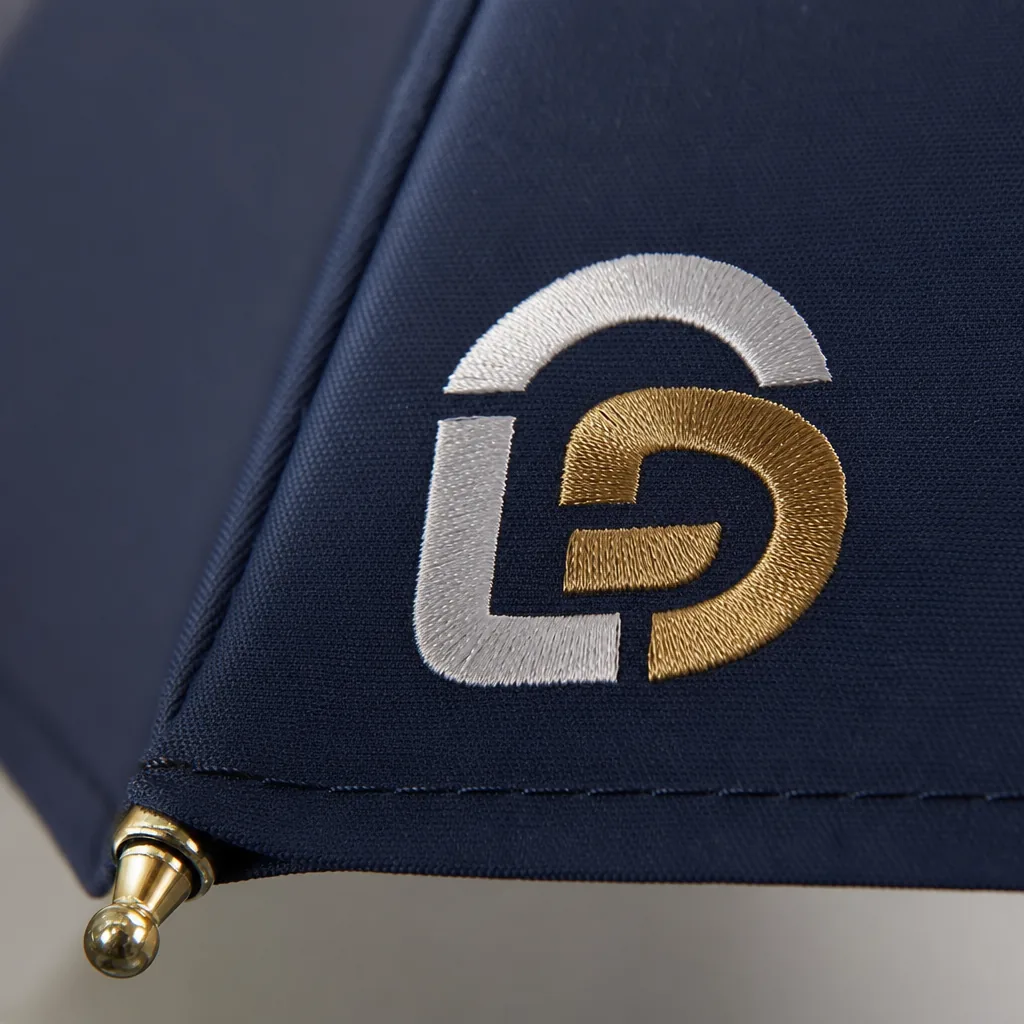
Debossed, Engraved, or Printed Logos on Umbrella Handles
Compare debossing, engraving, and pad printing on umbrella handles by material, MOQ, cost, and durability for stronger b...
Read More »
Debossed, Engraved, or Printed Handles for Umbrella Branding
Evaluate debossed, engraved, and printed handle branding by material, durability, MOQ, and cost to select a logo treatme...
Read More »Debossed, Engraved, or Printed: Branding Umbrella Handles
Compare debossed, engraved, and printed handle branding by material, MOQ, tooling, and lead time so buyers can match log...
Read More »