Fiberglass vs Steel Umbrella Frames: What Buyers Should Specify
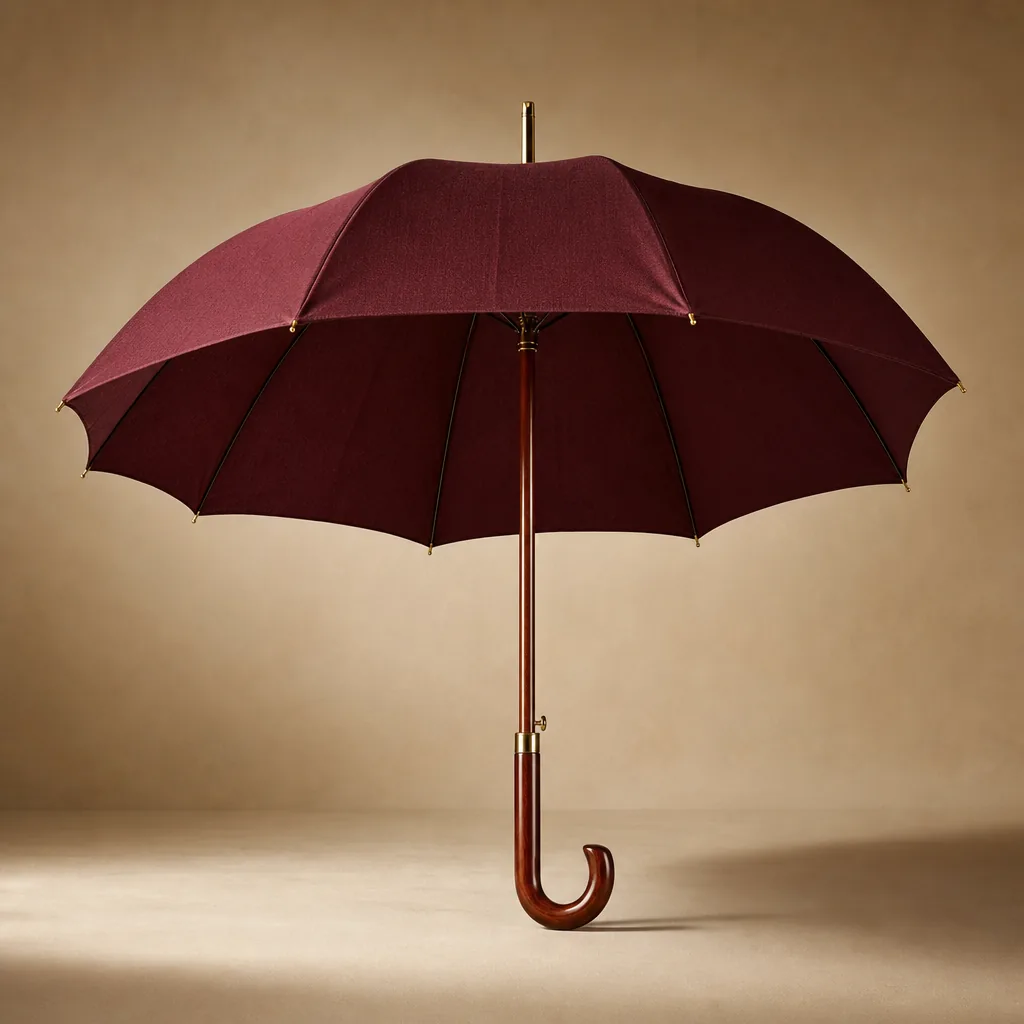
For umbrella buyers, the frame spec is where performance, cost, and return rates are decided before the fabric is even cut. A fiberglass umbrella frame can reduce weight and flex under wind, while steel can hold down cost and add stiffness, but the right choice also depends on rib count, target market, MOQ, and the price point you need to hit. On the factory floor, those tradeoffs show up in bend tests, corrosion risk, and how well the finished umbrella survives real use, not just a sample table.
Start With the End Use and Price Band
For commuter umbrellas, the frame choice is usually decided by failure tolerance, not by the catalog photo. A fiberglass umbrella frame makes sense when the buyer wants lower breakage risk in daily carry umbrellas, especially 21" to 23" auto-open models where a bent shaft or snapped rib turns into an immediate return. Fiberglass flexes under gust load and usually survives the kind of abuse office commuters put it through: getting caught in train doors, shoved into bags, and opened in traffic wind. A steel umbrella frame is cheaper on paper and can be perfectly acceptable for light-duty promotional programs, but it is less forgiving once the canopy size grows or the user expects repeat storm use. For low-price promos, the customer often accepts a shorter life if the decoration cost and unit price stay low; for retail, the return risk starts to matter more than the initial savings.
Golf umbrellas are a different category because the canopy area and wind load are much higher. At 27" and 30", and especially in 8K ribs or 16K ribs structures, steel becomes the wrong place to save money unless the product is only meant for fair-weather events. A fiberglass umbrella frame is usually the better specification for vented double-canopy golf styles, because the flex helps the frame recover instead of staying bent after a gust. That does not mean all steel is bad; thicker steel shafts and ribs can work for budget golf umbrellas, but weight goes up fast and users notice that immediately. In practice, a windproof umbrella supplier should be asked for actual rib material, rib diameter, and failure mode, not just "windproof" claims. If the buyer is targeting retail, the unit cost delta is small compared with the cost of complaints and replacements.
For promotional umbrellas, the right frame depends on whether the campaign is designed for giveaways or for brand retention. A steel umbrella frame keeps the landed cost down, which matters when the buyer is ordering thousands of pieces for a one-time event and expects some loss rate. But if the same umbrella is being used as a retail or premium corporate gift, the cheaper frame can hurt perceived value more than the savings help. That is why buyers should specify the acceptable return risk up front: if a 3% to 5% defect-and-return exposure is tolerable, steel may be fine; if the buyer needs a product that can survive normal customer abuse, fiberglass is the safer spec. ZheBrella’s standard practice is to match the frame to the end use first, then tune the canopy, coating, and mechanism around that choice instead of chasing the lowest unit price blindly.
How Fiberglass and Steel Behave Under Load
A fiberglass umbrella frame behaves differently under load because the ribs are designed to flex and recover instead of staying bent. That matters in gusts: when a canopy catches a side wind, fiberglass spreads the stress along the rib and runner rather than transferring it straight to a single hinge point. In practice, that reduces permanent deformation, cracked tips, and the classic “one rib kicked out of line” failure you see on cheap steel structures. For buyers comparing 8K ribs and 16K ribs, the rib count is only part of the story; the material and wall thickness decide whether the frame snaps, twists, or springs back after repeated loading. A good fiberglass umbrella frame usually gives better memory in real wind, especially on compact and golf models that see sudden opening shocks and hand pressure during carry.
Steel still has a place, but it should be specified with clear expectations. A steel umbrella frame is stiffer at the same geometry, which can feel solid in hand and can be cheaper in low-cost programs, especially for promotional umbrellas where the target is basic rain protection rather than wind survival. The downside is that stiffness does not equal durability under dynamic load: once a steel rib yields, it tends to stay bent, and repeated flexing can create fatigue at the rivets, stretch joints, and stretch the canopy attachment points. That is why a lower-priced steel frame can look acceptable in samples but show a higher return rate after field use. For buyers sourcing from a windproof umbrella supplier, the question is not whether steel is strong in a static sense, but whether the product needs real recovery after repeated gust loading.
Corrosion is the other hard divider. Fiberglass does not rust, which is a real advantage in humid markets, coastal retail, and any program where umbrellas are stored wet in cars, lockers, or hotel rooms. Steel frame parts can be plated or painted, but once the coating is scratched at the ferrule, joint, or tip socket, rust starts and spreads. Over time that rust adds friction, makes opening rough, and can stain the canopy or drip onto packaging. ZheBrella typically treats fiberglass as the default for higher-wind specs, while steel is reserved for price-sensitive promotions where the buyer accepts shorter service life. If the brief is a windproof umbrella with fewer breakages and better field recovery, specify fiberglass; if the brief is a short-life giveaway with tight cost control, a steel umbrella frame is still workable as long as the buyer understands the tradeoff on memory, corrosion resistance, and after-sales claims.
What 8K and 16K Rib Counts Really Change
8K and 16K are not strength ratings by themselves. They change how the canopy is shaped and how wind load is shared across the frame. An 8K umbrella has wider panels, so each panel has more fabric to move and a more obvious segmented look. That is usually fine for a 21" or 23" compact umbrella, and it folds faster because there are fewer ribs, fewer stitch lines, and less stack-up at the tips. A fiberglass umbrella frame in 8K form is usually the best balance for buyers who want reasonable wind resistance without paying for extra parts that do not help the end user much. A steel umbrella frame can feel rigid in hand, but if the rib geometry is poorly matched to the canopy, stiffness alone does not fix flutter or tip stress.
A 16K construction gives a rounder canopy profile because the panels are narrower and the fabric is supported at more points. In gusty conditions, that helps distribute pressure more evenly and reduces the big single-panel flaps you see on lower-rib-count umbrellas. The tradeoff is obvious on the production side: more ribs mean more sewing, more tip caps, more alignment checks, and a slower folding action because the canopy has to collapse into more segments. For large 27" or 30" golf umbrellas, 16K can make sense when the customer wants a premium look and smoother opening behavior. For a basic promo order, it is usually overkill because the extra labor and bulk do not translate into meaningful field performance unless the rest of the build is also upgraded.
A serious windproof umbrella supplier does not sell 16K as an automatic upgrade; the frame still has to be matched to rib material, stretcher thickness, runner tolerance, and canopy cloth. I have seen 16K umbrellas fail early when the ribs were thin steel wire and the hub geometry was sloppy, while a well-built 8K fiberglass umbrella frame survived better because the load path was cleaner. The practical rule is simple: use 8K when cost, pack size, and fast folding matter; move to 16K when you need a more polished canopy shape, better panel support, and you are already paying for heavier hardware and better sewing. Past that point, you are usually buying appearance and wind distribution, not a miracle increase in storm survival.
Critical Frame Details Beyond the Ribs
Buyers who compare only rib count miss the parts that usually fail first. On a fiberglass umbrella frame, I want the shaft wall thickness stated in millimeters, not just the diameter, because a thin tube can ovalize long before the canopy looks stressed. For a 21-inch or 23-inch automatic style, 0.60 to 0.80 mm wall thickness is a practical range depending on the load target; larger golf models often need more. The ferrule points matter just as much: specify whether the top and bottom ferrules are brass, zinc alloy, or reinforced plastic, and whether they are crimped, swaged, or glued. A steel umbrella frame can be made rigid, but poor ferrule fit will still loosen under cyclic wind loading. In 8K ribs and 16K ribs alike, the weak spot is often the interface between shaft, stretcher, and ferrule, not the rib section itself.
Runner material and spring hardware determine whether the umbrella feels solid after 500 openings or starts rattling. I prefer POM or reinforced nylon runners for higher-end builds because plain ABS tends to wear and crack at the locking surface, especially on auto-open-close mechanisms. The spring should be specified by wire gauge, coating, and cycle target; if the supplier cannot state the spring steel grade or corrosion protection, that is a red flag for a windproof umbrella supplier. On a fiberglass umbrella frame, the opening spring and top cap assembly need to be matched to the canopy load, otherwise the slider slams too hard and chips the ferrule or deforms the runner track. ZheBrella tracks these details in sample approval because field failures usually start as small fit issues, not dramatic breakage.
The common failures I see are joint failures: the rib tip pulls out of the crown, the stretcher pin elongates the hole, the runner splits at the latch groove, or the shaft collar slips under repeated impact. If you are buying a steel umbrella frame, ask for the joint method at every connection point, including rivet diameter, adhesive use, and whether the ferrule is mechanically locked or only press-fit. For longer 27-inch and 30-inch umbrellas, the shaft-to-ferrule junction should be treated as a wear point and tested under repeated opening cycles, salt spray if the market needs it, and lateral wind loading. A good spec should call out these details alongside canopy fabric and rib count, because a frame can pass a static pull test and still fail in real use when the runner, spring, or ferrule loosens first.
Sampling, QC, and Buying Terms
When a buyer says they want a durable frame, I ask for the test method, not the adjective. For a fiberglass umbrella frame, the supplier should state the open-close cycle count, the load applied at the runner, and whether the test is done before or after salt-spray exposure. A real spec sheet should say something like 3,000 to 5,000 open-close cycles with no rib fracture, no button failure, and no stitch tear at the canopy points. For a steel umbrella frame, I want the same discipline plus clear rust-control details, because plated steel that passes a hand sample can still fail after a few humid weeks in transit. If the umbrella is 8K ribs or 16K ribs, ask for a sample from the actual production mold, not a hand-picked prototype. Buyers who skip this usually discover too late that a "windproof" claim from a windproof umbrella supplier is just marketing unless it is tied to a test standard and a failure threshold.
QC terms matter more than people think. A supplier should agree in writing to AQL 2.5 for major defects, with clear definitions for broken tips, crooked shafts, loose ribs, poor printing, and canopy holes. For custom orders, I also ask for spare-part confirmation before production starts: at minimum extra ribs, tips, runners, springs, and handle parts, with the exact percentages and packing method listed. That is especially important on a fiberglass umbrella frame, where a small rib issue can stop an entire shipment from being usable in the field. ZheBrella's standard practice is to confirm these items against the approved sample and keep the spare-part list attached to the PO so there is no argument later. If a factory will not commit to inspection points or replacement parts, it is not a serious supplier, it is just selling you a carton of risk.
On terms, do not accept a quote until MOQ, incoterm, and lead time are all tied to the same configuration. For custom umbrellas, MOQ is often 500 to 1,000 pieces per color or design, but it moves with canopy fabric, printing method, and whether you choose a manual, auto-open, or auto-open-close mechanism. FOB is usually the cleaner choice if you already have a freight forwarder, because you control the ocean or air leg; DDP is simpler for one-stop delivery, but you need the duty and last-mile math spelled out or the landed cost will drift. Typical lead time for a custom order is 25 to 40 days after sample approval and deposit, with longer timing if you need special molds, 16K ribs, UV coating, or packaging changes. A buyer who asks these questions early usually gets a better fiberglass umbrella frame program, because the factory knows you will measure the order like a production job, not a brochure.
Frequently Asked Questions
When should a buyer choose fiberglass over steel ribs?
Choose fiberglass when flexibility, wind recovery, and corrosion resistance matter more than the lowest possible price. Steel still works for budget programs, but it is more prone to permanent bending and rust if the finish is weak.
Does a 16K frame always outperform an 8K frame?
No. A 16K frame can distribute stress better, but only if the ribs, ferrules, and canopy tension are built correctly. A well-made 8K umbrella can outperform a poorly built 16K model in real use.
When should a buyer choose fiberglass over steel for a custom umbrella order?
Choose fiberglass when the priority is wind flex, lower weight, and fewer breakages in daily use. For retail umbrellas, fiberglass is often paired with 8K or 16K ribs and a target weight around 280-380 g depending on open size.
What frame specs should be stated in an OEM inquiry to avoid sample changes later?
Specify shaft material, rib material, rib count, runner type, open diameter, and target weight. If wind performance matters, also request a test standard or target wind speed, such as 15-20 m/s for reinforced models.
How does rib count affect price and MOQ for bulk umbrella sourcing?
More ribs usually means higher material cost and a slightly higher unit price, especially when moving from 8K to 16K. MOQ is often 500-1,000 pcs per color or design for custom frame builds, with lead times around 30-45 days after sample approval.
Looking to Launch Your Custom Umbrella Line?
ZheBrella is a Zhejiang-based OEM/ODM umbrella manufacturer with 17 years of export experience. Free design, low MOQ from 100 pieces, windproof construction, full-color print.
Get Free Quote Now »People Also Search For
Related Articles
Fiberglass vs Steel Umbrella Frames: OEM Buyer Spec Guide
Compare fiberglass and steel umbrella frames, rib counts, and failure points so buyers can match wind resistance, weight...
Read More »Double-Canopy Windproof Umbrella Builds for Retail Buyers
Learn how double-canopy vents, rib choice, and frame layout improve wind resistance, and what specs retailers should req...
Read More »
Vented Golf Umbrellas: How Buyers Specify Windproof Builds
Learn how to spec vented golf umbrellas with double-canopy construction, rib materials, QC targets, MOQs, and lead times...
Read More »