How Custom Umbrella Canopies Are Cut, Sewn, and Assembled
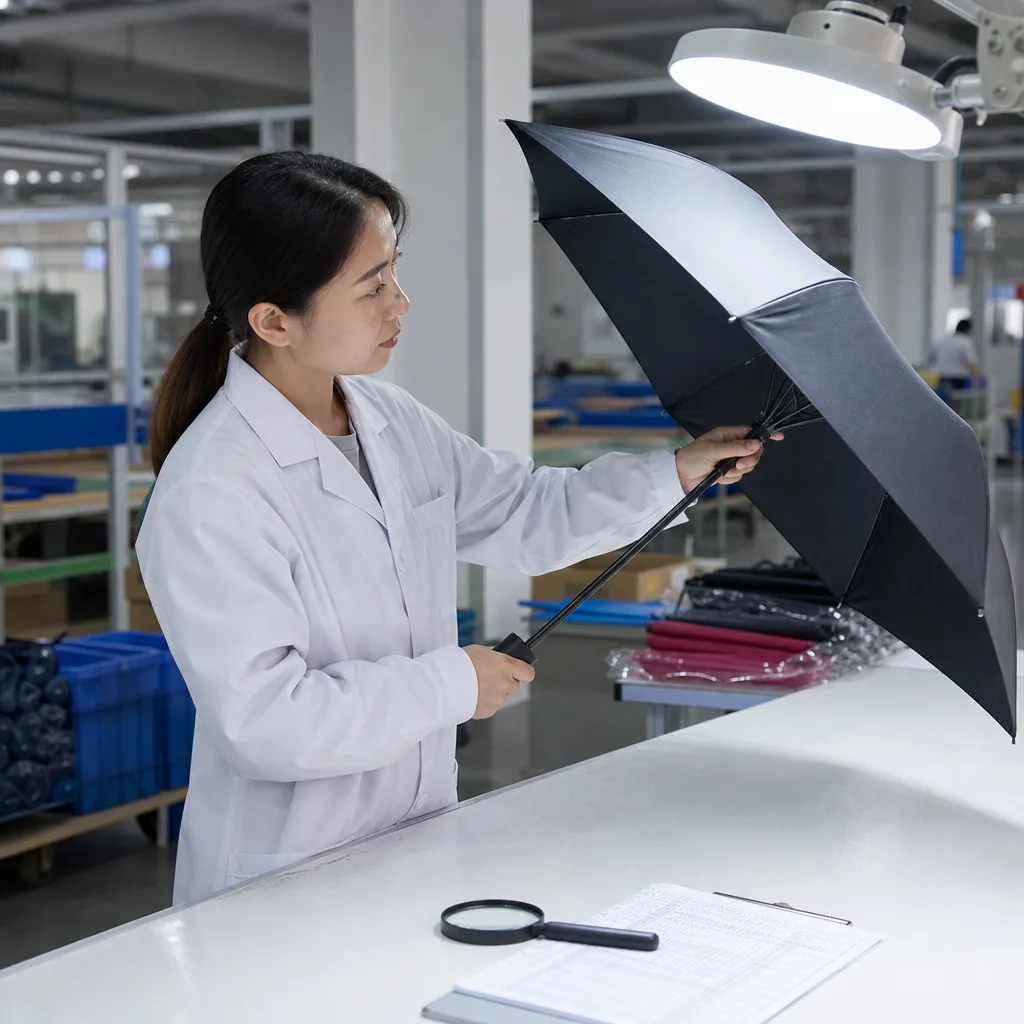
In OEM umbrella production, buyers usually notice problems only after samples arrive: uneven panel alignment, print mismatch at the seams, or a canopy that opens off-center and fails inspection. On our Songxia floor, those issues are decided much earlier—during custom umbrella canopy manufacturing, when panel cutting accuracy, stitch control, print registration, and frame matching directly shape yield, quality consistency, and lead time.
From Roll Goods to Cut Panels
Cutting is the first cost-control gate in custom umbrella canopy manufacturing. Before marker making, the fabric team checks each pongee 190T and pongee 210T roll for usable width, coating consistency, dye-lot color delta, pinholes, slubs, oil marks, and weave skew. Side lighting matters: lighter 190T can mask small defects, while 210T often shows coating streaks and tension lines more clearly. Rolls are relaxed before spreading so panels are not cut under stretch, then measured again because a nominal 150 cm width can shift panel yield. The spreader also locks grain direction for every gore. If warp and weft run inconsistently, the finished canopy can twist, pull off-center, or close unevenly, especially on 8K and 10K golf umbrellas where longer seams magnify small cutting errors.
Panel matching is not limited to stripes or printed artwork. For solid colors, cutters still bundle panels by dye lot, sheen, and coating face so adjacent gores feed and stretch the same during the umbrella sewing process. Markers are built around size and rib count: 21 inch folding, 23 inch straight, 27 inch golf, and 30 inch beach umbrellas, commonly in 8K, 16K, or occasional 24K layouts. The cutter must hold seam allowance, tip curvature, and the center cap opening; a 2 to 3 mm shift at the tip can show at the ferrule and create poor closing lines on compact frames. Printed OEM umbrella assembly requires tighter registration because off-grain logos or repeat patterns drift across seams. For sublimated pongee 210T, panels are cut only after print fixation and cooling, then bundled by canopy set to avoid mixed-shade umbrellas.
Cutting accuracy determines canopy shape, seam alignment, and fabric waste before sewing starts. Uneven panel edges create cupping, wrinkles between ribs, and uneven stretcher tension, which can shorten frame life on auto-open-close models. Factories choose die cutting or CNC hot/cold cutting based on fabric, coating, and order volume. Hot cutting can seal synthetic edges, but it may stiffen some coated fabrics and make sewing feed less stable. In MOQ umbrella production, small orders often use manual lay planning to avoid surplus fabric inventory; 3,000 to 10,000 piece runs can justify nested markers for better yield. In a disciplined umbrella factory workflow, a few percentage points of waste can change FOB pricing, while poor cutting raises rework risk and cosmetic rejection. For buyers, this step links cost, durability, lead time, and finished appearance in one measurable control point.
Printing Before or After Sewing
Print cut panels before stitching when artwork depends on panel geometry: full-bleed graphics, alternating colors around 8K or 10K frames, repeat patterns crossing seams, or logos locked to a fixed distance from the tip and seam. This route is standard for sublimation on white polyester and for heat-transfer graphics on 190T polyester or pongee 210T because the fabric lies flat, pressure stays even, and the printer can add bleed before cutting. Allow for seam take-up of about 3 to 5 mm per side; otherwise a pattern that looks aligned on the file will shift after the umbrella sewing process. The main control point is not the print itself but panel handling. Operators must keep panel order, face direction, and left/right orientation consistent through bundling, stitching, and canopy closing, or the design rotates around the frame and fails visual inspection. For custom umbrella canopy manufacturing with all-over artwork, this pre-sewing route gives the best registration but adds sorting labor and higher rejection risk if sewing discipline is weak.
Print after sewing when the mark is simple: one- or two-color screen print, a small logo on one or two panels, or a repeat promotional order where fast setup matters more than seam-to-seam alignment. After the canopy is sewn and mounted during OEM umbrella assembly, the printer can judge logo position against the crown, ribs, tips, and handle, which is useful for sponsor marks on 21-inch, 23-inch, or 27-inch umbrellas. The practical limit is registration. A finished canopy has curved fabric, rib high points, seam bulk, and tension variation, so screen-print tolerance is commonly about +/-5 to 8 mm. Flat panel printing can hold closer to +/-2 to 3 mm when cutting and sewing are controlled. Heat transfer after sewing is acceptable for small marks, but reject risk rises if the press crosses ribs, thick seams, or waterproof coatings such as Teflon. Sublimation after sewing is rarely economical unless the order supports specialized 3D transfer equipment, which most MOQ umbrella production runs do not justify.
The print method changes unit cost through setup, alignment labor, jigs, press speed, and loss rate inside the umbrella factory workflow. Screen print is usually the lowest unit cost at volume, especially above 1,000 to 3,000 pieces with the same artwork, but each color needs a separate screen and curved-canopy printing slows output. Heat transfer has lower setup cost and suits smaller or mixed-artwork orders, yet large graphics become expensive because each transfer is positioned and pressed one at a time. Sublimation gives the best photo detail and all-over coverage, but it requires white polyester, accurate digital files, and tighter panel matching in custom umbrella canopy manufacturing. For retail-grade repeating patterns across all seams, print panels first and budget for extra handling control. For a single sponsor logo on a 23-inch auto-open umbrella, post-sewing screen print is usually the lower-cost, lower-risk choice.
Stitching Standards That Affect Durability
Seam specification is often the difference between a stable canopy and a return claim. In custom umbrella canopy manufacturing, lockstitch construction at 8 to 10 stitches per inch is the usual standard for woven polyester such as pongee 210T because it holds panel edges without distorting print registration. A looser stitch lets the seam creep under wind load; an overly dense stitch perforates coated cloth, especially dark PU, Teflon, or UV-treated fabric. Size also changes the sewing standard. A straight 23 inch or 27 inch beach or golf umbrella can accept a slightly wider seam allowance, while a compact 21 inch 3-fold umbrella needs lower bulk around rib channels so it closes cleanly. For export orders, bonded polyester thread is the safer choice than cotton-core thread because moisture, drying cycles, and repeated flexing expose weak thread faster.
The highest-risk areas are not the long panel seams. Failures usually start at tip pockets, the crown notch, and runner contact zones where snap-open force transfers into the canopy. The umbrella sewing process should match reinforcement to the frame: a steel-rib 8K manual umbrella stresses the canopy differently from a fiberglass 10K or 16K auto-open-close model. Bar tacks at tip attachments, reinforced top-cap patches, and controlled seam allowance near rib ends reduce seam burst when the umbrella inverts during 40 to 50+ mph wind testing. Seam slippage should be checked after OEM umbrella assembly, not only at the sewing table, because rib tension changes the panel pitch once the canopy is mounted. A 2 to 3 mm seam allowance drift can create uneven water channels at stitch lines and early tearing near tips.
Seam quality also controls water resistance and claims rate. Needle size, thread tension, and stitch density determine how far needle holes open under rain and wind pressure; that risk is lower on POE, EVA, or PVC canopies but critical on woven polyester. A pongee 210T canopy can still leak if operators drag panels, miss alignment marks, or skip reinforcement where the runner hits the fabric. A controlled umbrella factory workflow inspects sewn canopies before frame mounting, then uses random spray tests and open-close cycle checks under AQL 2.5 after final assembly. This matters in MOQ umbrella production because short runs often rotate operators and machines, so stitching consistency can drift unless the line leader locks the standard at the first approved sample. Many “broken umbrella” returns begin as sewing defects that appear only after wind load, wet-dry cycling, and repeated opening.
Assembly Line Steps and Common Failure Points
Frame assembly defines the tolerance limit for the rest of the umbrella factory workflow. Before fabric reaches the line, ribs and stretchers should be riveted, and the runner, top notch, shaft, spring, latch, and runner lock should travel without binding. On 23-inch and 27-inch stick umbrellas, operators should open the bare frame under light tension and compare rib symmetry; a 2 to 3 mm stretcher deviation can pull the sewn canopy off-center. For auto-open and auto-open-close models, cycle the mechanism 5 to 10 times before mounting fabric. A sticky latch or weak spring at this stage will not be corrected by the umbrella sewing process. Buyers reviewing custom umbrella canopy manufacturing should check more than print color: mixed steel thickness, uneven rib arcs, poorly formed fiberglass rib ends, and loose rivets are early causes of crooked panels, uneven tension, and failed auto-open mechanisms after shipment.
Canopy attachment is both a sewing and geometry control point. Panels cut from pongee 210T should be matched for grain and stretch, then sewn with a consistent seam allowance so the logo stays aligned when the umbrella opens. During OEM umbrella assembly, the canopy is fixed at the top notch, tied or stitched at each rib position, then seated into the tips. The main defects appear here: crooked panels from seam misalignment, uneven tension from different pull force across opposite ribs, and loose tips when fabric is not fully inserted before pressing. On 8K and 10K frames, inspect the umbrella fully open from the top cap toward the edge along each seam. Minor skew may be hidden when closed but becomes visible to the end user under full tension.
Tip insertion and final opening checks are the last practical control point before packing. Loose tips usually come from weak adhesive, the wrong bore size for the rib end, or fabric shifting before pressing; on children’s POE or EVA umbrellas, that becomes a safety risk, not only a cosmetic defect. Release checks should include random pull tests, AQL 2.5 inspection, centered top caps, full canopy tension, smooth runner travel, and clean auto-open release without hesitation or double-triggering. For MOQ umbrella production of 500 to 1,000 pieces across multiple colors, changeovers increase risk because thread, tip color, or frame style can be switched too quickly. During pre-shipment inspection, count loose tips, compare panel tension rib by rib, check seam drift, and cycle every auto-open sample several times rather than accepting one successful opening.
Inspection, Packing, and Production Timing
Inspection costs the least before finished umbrellas reach packing. In a controlled umbrella factory workflow, QC should verify panel symmetry after cutting, stitch density during the umbrella sewing process, and top-notch alignment before the canopy is mounted to the frame. On pongee 210T, inspectors need clean needle penetration, no yarn pulls, and no skipped stitches; dark solid colors require warehouse-light checks because thread breaks and puckering show late. Printed panels need separate controls for seam registration, color drift, and heat-set stability. A logo that is 3 to 5 mm off at the seam will become more visible once tensioned on a 23-inch or 27-inch frame. During OEM umbrella assembly, line inspectors should test open-close cycles, runner travel, rib-tip security, and canopy balance across all 8K or 10K panels. In custom umbrella canopy manufacturing, these checks prevent one cutting, sewing, print, or fitting defect from repeating across 2,000 finished units.
Final inspection should use AQL 2.5 with a documented pull from finished goods, not a visual scan of sealed cartons. The lot check should cover appearance, function, measurement, and packing: canopy diameter, shaft length, print position, fabric flaws, loose threads, handle scratches, and manual, auto-open, or auto-open-close mechanism performance. Windproof models need extra checks at notches, rib joints, and rivets because weak joints can pass a tabletop review but fail after repeated hard openings. Packing must be staged before the AQL pull by SKU, canopy color, sleeve type, retail polybag, hangtag, carton mark, and export carton ratio. A request for 12 pieces per inner carton, 36 per master carton, barcode labels on two sides, and matching individual sleeves is a production specification, not a warehouse afterthought. MOQ umbrella production becomes risky when assorted handles, printed sleeves, and multiple warehouse carton marks are not separated at the line.
Lead time usually slips when approvals move late, not because sewing capacity is slow. A blank fit sample typically needs 5 to 7 days; a printed pre-production sample needs 7 to 10 days; new molds, custom handles, or unusual POE or EVA details can push sampling to 10 to 14 days. After sample approval, bulk production normally runs 25 to 35 days for standard orders and 40 to 50 days for larger or mixed-model programs, especially during peak rain-season capacity booking. Custom sleeves, inserts, and color cartons often need their own 7 to 12 days, so approve them with canopy artwork instead of after fabric cutting. Rework is the real schedule risk: replacing incorrect sleeve prints can add 3 to 5 days, while reprinting canopies or remaking sewn panels can add 7 to 14 days depending on fabric stock and machine loading. For custom umbrella canopy manufacturing, lock artwork, Pantone references, carton marks, and packing ratios before bulk cutting starts.
Frequently Asked Questions
Why does the same umbrella look different between factories?
Small differences in cutting, sewing tension, and assembly order change the finished silhouette. Even with the same material spec, panel shape and frame tolerances can make one umbrella feel much tighter than another.
What is the biggest manufacturing risk for printed umbrellas?
Misregistration between artwork and panel seams is the most common issue. The buyer should confirm artwork placement, panel count, and acceptable seam breaks before bulk production starts.
How much cutting tolerance is acceptable for custom umbrella canopy panels?
For OEM umbrella production, panel cutting tolerance is typically controlled within 1-2 mm depending on fabric type, canopy size, and frame design. Larger tolerance can cause uneven canopy tension, poor rib alignment, or visible puckering after assembly.
Should umbrella canopy printing be done before or after sewing?
Most logo and pattern printing is completed before sewing so each panel can be printed flat and registered accurately. For edge labels, seam details, or small decorative marks, printing or heat transfer may be added after partial assembly if the design requires it.
How does the sewing process affect lead time for bulk umbrella orders?
Sewing is one of the main labor bottlenecks in umbrella production, especially for multi-color panels, full-print canopies, or reinforced seams. A standard OEM order may need 25-45 days after sample approval, while complex canopy construction can add several days for panel matching, stitching, and inline inspection.
Looking to Launch Your Custom Umbrella Line?
ZheBrella is a Zhejiang-based OEM/ODM umbrella manufacturer with 17 years of export experience. Free design, low MOQ from 100 pieces, windproof construction, full-color print.
Get Free Quote Now »People Also Search For
Related Articles
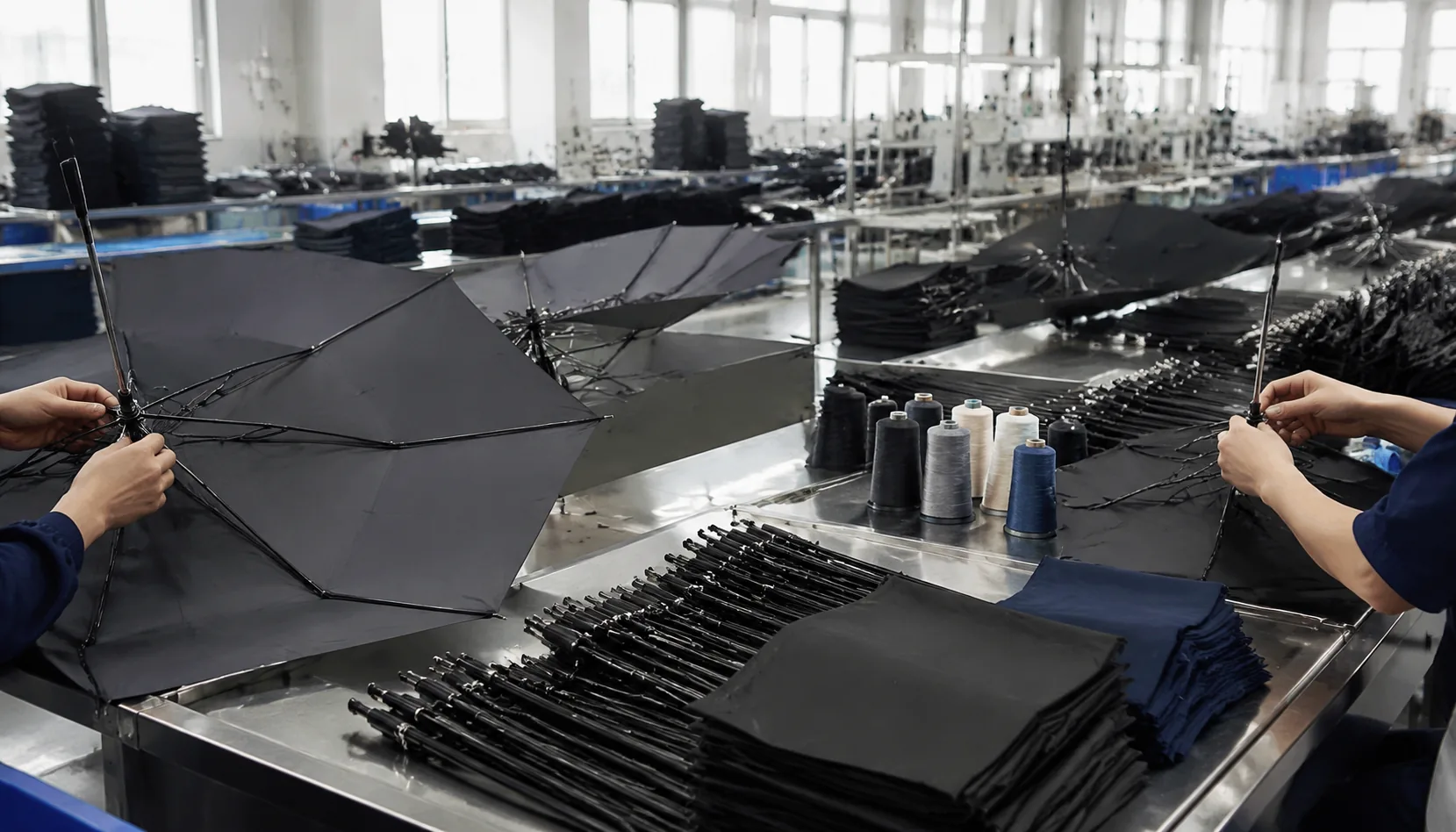
Umbrella Assembly Line Balancing for OEM Production
Plan umbrella assembly stations, labor allocation, and QC gates to keep bulk OEM orders on schedule without sacrificing ...
Read More »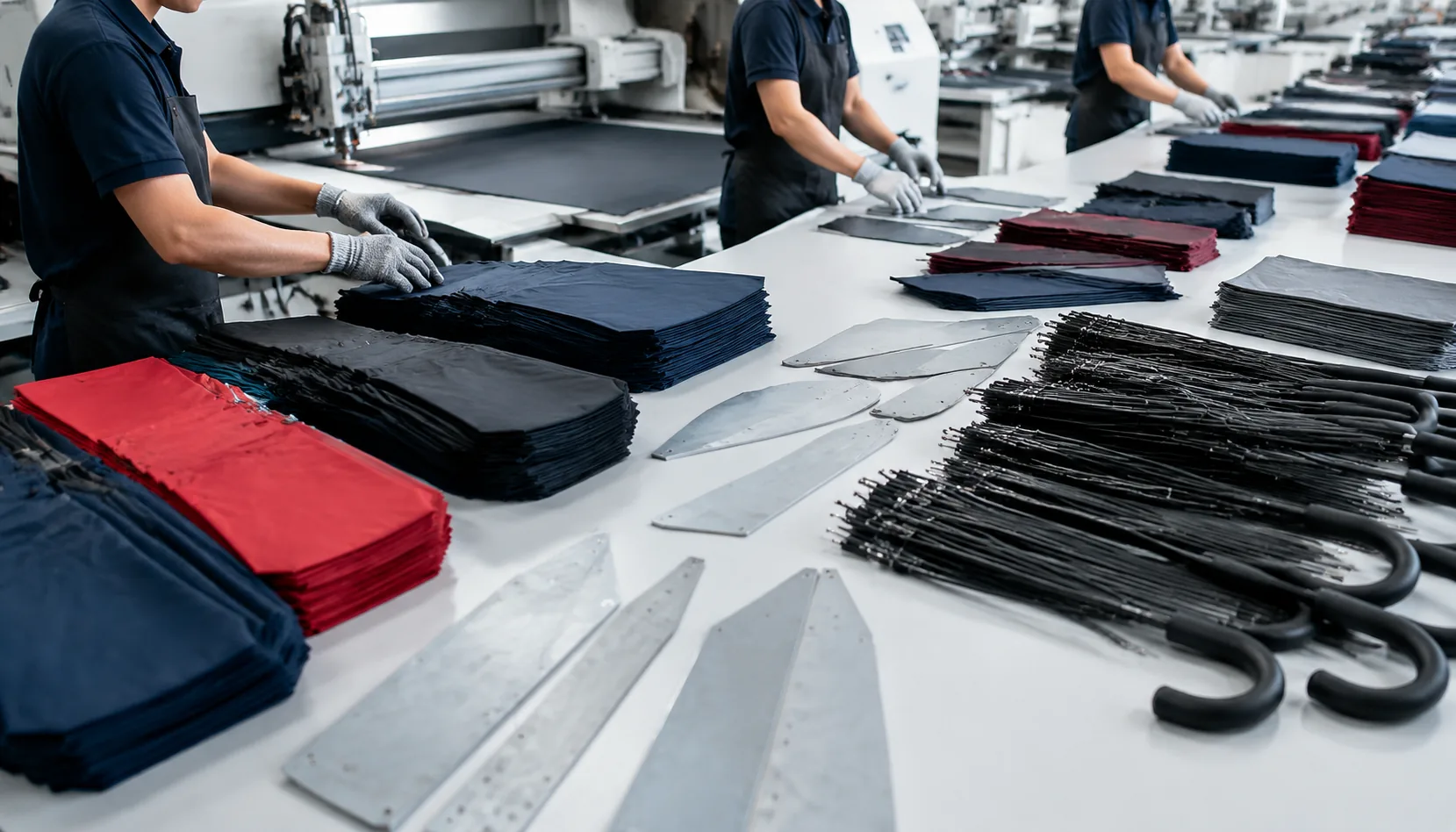
Umbrella Canopy Cutting: Panel Accuracy for Bulk Orders
Understand canopy cutting controls for 190T and 210T pongee, panel matching, shrinkage allowance, and print alignment in...
Read More »
Umbrella Assembly Line Process for Consistent OEM Quality
See how umbrella factories control frame fit, canopy tension, and packing accuracy with in-line checks that reduce defec...
Read More »