How to Specify a Double-Canopy Umbrella for B2B Orders
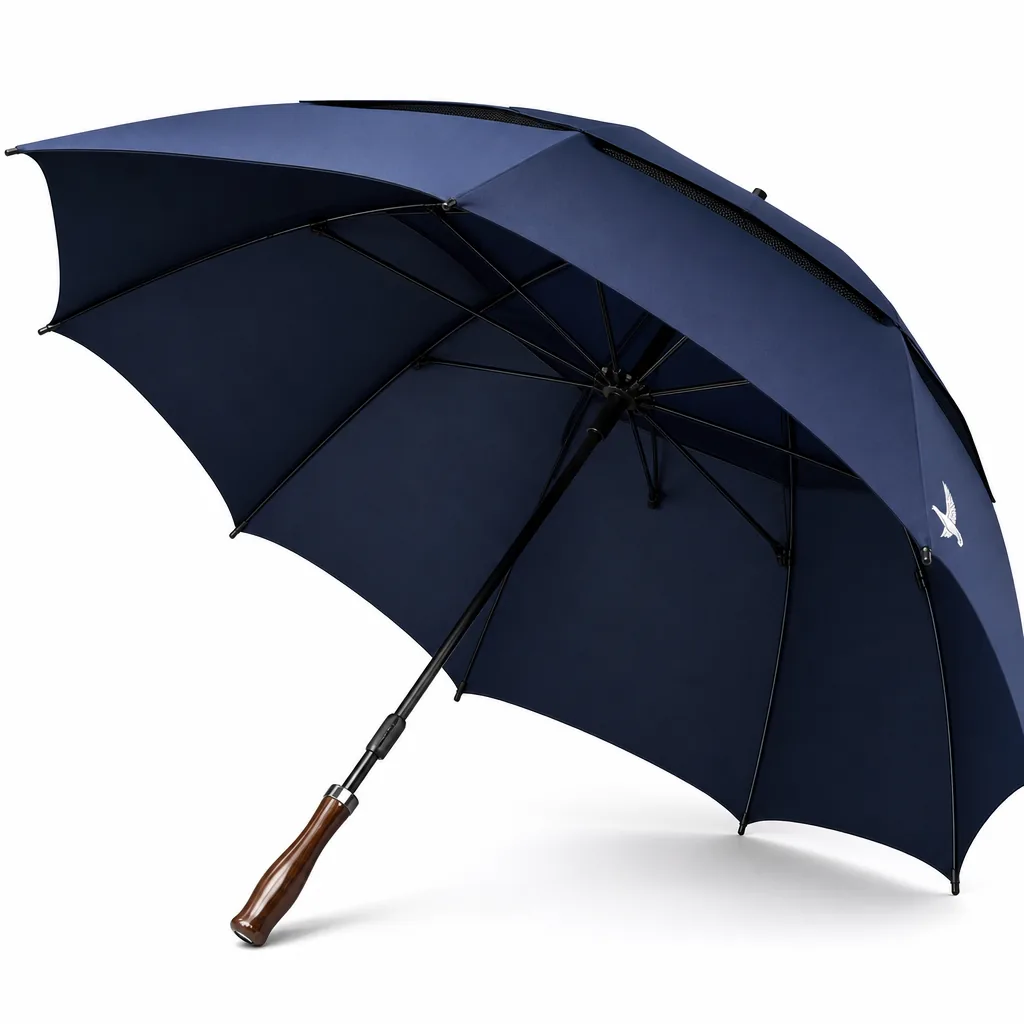
A double-canopy umbrella looks simple on a spec sheet, but small choices in vent overlap, rib strength, fabric coating, and stitch tension decide whether it survives wind testing and repeat retail use. As a double canopy umbrella supplier working with B2B orders on the factory floor, we see most sourcing problems start from vague samples, unclear MOQ assumptions, and shipping terms that do not match carton size or production lead time.
What Makes a Double-Canopy Build Different
A double-canopy build is a vented pressure-release system, not a cosmetic second fabric layer. The lower canopy carries the main rain coverage, while the upper canopy sits above it with a working vent gap, typically 20 to 40 mm depending on panel shape and frame size. In a gust, air moving under the canopy can escape through that gap, reducing uplift before the umbrella inverts. A single-canopy model traps more pressure, so the ribs, stretchers, runner, and shaft take the full load. For a double-canopy windproof umbrella, the vent only matters if the frame can flex and recover. Fiberglass ribs handle repeated bending better than steel; steel can lower unit cost but is more likely to stay bent after overload. Credible windproof umbrella specs should call out 8K or 10K fiberglass ribs, a functional vent, and 190T or 210T pongee. A sewn overlap with little airflow may look similar in product photos but will not perform the same in a 40 to 50 mph gust test.
Buyers choose this construction when the umbrella will see repeated outdoor use: golf, resort, tournament, corporate, and event programs. Golf models usually run 27 inch, 30 inch, or 32 inch arc sizes, often with 8K or 16K frames, EVA handles, and manual-open mechanisms because large canopies need controlled opening in wind. Corporate orders more often use 23 inch or 27 inch sizes, sometimes with auto-open frames, and place logos on the lower panels so the vent layer does not distort the artwork. Event buyers use double-canopy models for rainy-season promotions, outdoor staff, resorts, and sports events because they feel more substantial and tolerate repeated handling better than basic single-canopy builds. A double canopy umbrella supplier should confirm the vent gap, rib material, rib count, shaft diameter, handle type, and wind test method before sampling. Without those checks, buyers may pay for a windproof appearance without getting the mechanical benefit.
Double-canopy models cost more because the second layer changes cutting, sewing, inspection, printing, and freight, not only fabric consumption. The bill of materials may add 190T or 210T pongee, POE, PVC, or recycled canopy fabric, plus extra cutting markers and sewing time to keep the upper vent layer centered and untwisted. Logo production also needs tighter control for screen print or heat transfer because artwork must avoid the vent seam and visible overlap. For umbrella OEM China projects, ZheBrella quotes double-canopy versions separately from single-canopy umbrellas even when the shaft, handle, and rib count look similar on paper. MOQ can rise when buyers request custom fabric color, UPF 50+ coating, Teflon water repellency, or matched logo placement across both canopy layers. For FOB DDP umbrella orders, freight can shift the landed cost sharply: a 30 inch golf umbrella packs into larger cartons than a 23 inch corporate model.
Choose the Right Frame and Rib Configuration
Lock the frame before approving canopy artwork because rib material and rib count set the real performance envelope: wind behavior, unit weight, corrosion exposure, assembly speed, and landed cost. Steel ribs are the low-cost option for standard 8K straight umbrellas, but they add weight and need a clear anti-rust finish requirement for humid storage and sea freight. Fiberglass ribs cost more, but they flex back better after inversion, resist corrosion, and reduce breakage in wind testing, which makes them the better default for golf umbrellas, commuter stick umbrellas, and any double-canopy windproof umbrella positioned around durability. For most B2B orders, 8K remains the commercial standard because it balances strength, cost, and factory throughput. Use 10K when a larger 27" or 30" canopy needs extra support. Treat 16K as a premium visual choice: it gives a rounder canopy and higher perceived value, but it will not outperform a well-built 8K fiberglass frame if the shaft, runner, springs, or handle fixing are weak.
Specify the shaft with the same discipline as the ribs. Steel shafts keep FOB pricing low and provide good compression strength, but confirm tube wall and anti-rust treatment before sampling; a thin 0.28 mm steel shaft can look acceptable in a showroom and still bend after carton compression or repeated use. Aluminum reduces weight and corrosion risk, but light-wall aluminum dents more easily, especially on compact auto-open-close models, which can raise return rates. Fiberglass shafts create the strongest storm-positioned build, though they increase landed cost and are less common in compact automatic designs. A capable double canopy umbrella supplier should quote the frame as one system: rib material, shaft diameter, tube wall, runner type, spring mechanism, and handle fixing method. That level of detail makes umbrella OEM China comparisons fair across FOB DDP umbrella orders, AQL 2.5 inspection planning, freight cost, and after-sales risk.
Select Fabric, Coating, and Opening Mechanism
Specify canopy fabric by channel, artwork risk, and finish requirement, not by the lowest FOB line. For 23" and 27" promotional double-canopy models, 190T pongee is the practical baseline: lighter hand feel, quick drying, lower unit cost, and acceptable definition for 1-color screen logos. Move to 210T pongee when the buyer needs a smoother drape, a more retail-ready hand, cleaner heat-transfer graphics, or edge-to-edge sublimation with less ink spread. In double-canopy construction, the upper and lower panels flex and rub during opening and wind venting, so 210T is the safer choice when artwork crosses seams or the umbrella will sell through resort retail, golf shops, or corporate gift programs. Treat water repellency as a separate spec from fabric count. Event giveaways can use a standard water-repellent finish; hospitality and retail programs should quote Teflon or an equivalent durable water-repellent coating and verify performance after repeated open-close cycles.
Match the opening mechanism to size, user behavior, and failure risk. Manual open remains the lower-risk build for 27" to 30" golf, beach, and resort double-canopy windproof umbrella models because the shaft, runner, and ribs avoid the shock load created by spring deployment. It also pairs better with fiberglass ribs and vented canopies built for 50+ mph wind-tunnel performance. Auto-open fits 21" to 23" stick umbrellas for hotels, conferences, and promotional distributors where one-hand use matters at entrances, parking lots, and transit points. Keep auto-open-close mainly on compact umbrellas; on large vented canopies it adds spring force, weight, and extra inspection points. Before pricing windproof umbrella specs, a double canopy umbrella supplier should confirm rib count, shaft diameter, runner material, spring fatigue testing, and AQL 2.5 inspection criteria.
Add UPF 50+ only when the umbrella must sell shade as well as rain protection. Outdoor promotions, resort retail, golf events, campus programs, and amusement-park merchandise should use a UV coating on the underside or a silver/black blackout layer, especially on 27" and 30" umbrellas used for long outdoor exposure. For umbrella OEM China production, UV layers can shift logo color and affect print adhesion, so confirm whether artwork prints before or after coating and approve a pre-production sample under daylight, not only a factory lightbox photo. Keep spray testing and UPF testing separate; water repellency does not prove sun protection. For FOB DDP umbrella orders, lock fabric, coating, and mechanism before sampling. A late change from 190T manual to 210T auto-open can add 7 to 12 days and change carton weight, duty basis, and freight cost.
Branding, Testing, and QC Points Buyers Should Confirm
Branding risk on a double-canopy windproof umbrella sits at the vent transition, where the upper canopy overlaps the lower canopy and artwork can shift under tension. Before bulk cutting, approve a pre-production sample using the final panel layout, rib count, fabric grade such as 190T or 210T pongee, logo size, logo position, and vent construction; a flat strike-off cannot show how print behaves on a curved, loaded canopy. The PO should set print registration across both layers, especially when artwork crosses a vent line. Use measurable limits: logo centered within +/-3 mm, no ink bleeding, no transfer-film cracking after 20 open-close cycles, and no visible offset at full open. A qualified double canopy umbrella supplier should also confirm upper/lower color match, vent overlap consistency over every rib, daylight shadowing from the inner canopy, and readability when the ribs flex.
Windproof umbrella specs must separate frame inputs from finished-umbrella performance. Fiberglass ribs with a steel shaft recover differently from an all-fiberglass frame, and an 8K compact umbrella should not be judged against a 10K or 16K golf frame. For 23 inch auto-open and 27 inch golf umbrellas, inspect canopy tension at full open, vent alignment over each rib, stitch consistency at the top notch, tips, and vent edge, and runner action with no scraping, lock hesitation, or loose release button. Manual, auto-open, and auto-open-close frames need cycle testing on the approved sample before bulk production starts. If the sales claim states 50+ mph wind resistance, name the test method on the spec sheet because a short gust test and a continuous inversion test expose different failure modes.
For umbrella OEM China programs, write final inspection terms into the PO before production, especially for retail, promotional, and FOB DDP umbrella orders where freight damage, carton errors, and relabeling delays raise landed cost. Use AQL 2.5 as the baseline for major defects: broken ribs, loose tips, failed runner locks, uneven stitch density, dirty panels, print defects visible at arm’s length, wrong carton marks, and barcode errors. Export packing needs its own checklist: master carton dimensions, inner polybag thickness, sleeve fit, barcode placement, silica gel when required, and carton drop requirements before shipment. During final QC, inspectors should open umbrellas from multiple cartons, not only the top layer, and compare bulk goods against the signed sample, color standard, approved logo position, and confirmed packing method at the inspection table.
MOQ, Lead Times, and FOB vs DDP Planning
Set MOQ by the setup driver, not the total purchase order. For a standard 23" or 27" double-canopy windproof umbrella built with shared components, stock 190T or 210T pongee, and an 8K fiberglass frame, 500 pcs per colorway is a realistic baseline. Custom-dyed canopy fabric, 10K or 16K rib sets, rubberized private handles, printed sleeves, nonstandard runners, or matched retail packaging often raise factory MOQ to 1,000-3,000 pcs because dye lots, frame procurement, and sewing setup cannot be divided efficiently. Logo MOQ should be quoted by artwork, position, and method: screen print often starts at 300-500 pcs, heat transfer is more stable from about 500 pcs, and full sublimation usually needs a larger run because inner and outer canopy panels are printed before cutting. A qualified double canopy umbrella supplier should itemize MOQ by colorway, logo location, frame build, and packaging setup so buyers can see which change is driving cost.
Approve samples against the final windproof umbrella specs, especially for a vented canopy where rib count, runner lock, vent overlap, and seam tension affect wind performance. A plain stock sample can ship in 3-5 days. A pre-production sample with confirmed canopy color, inner vent panel, logo placement, 8K or 10K rib set, and auto-open or auto-open-close mechanism usually takes 7-12 days. Add custom-dyed pongee, UPF 50+ coating, Teflon water-repellent treatment, a private handle, or retail packaging, and sample timing commonly extends to 15-20 days. For umbrella OEM China programs, plan bulk production at 25-35 days after sample approval and deposit; 16K frames, multi-logo event assortments, or complex carton marking can push production to 40-50 days. Reduce release risk with inline inspection after frame assembly and final AQL 2.5 inspection before carton sealing, checking vent stitching, rib tips, ferrule alignment, open-close function, and carton strength.
Use FOB when your team imports regularly, already has a forwarder, and wants control over ocean or air booking, cargo insurance, customs entry, duty payment, and destination trucking. Under FOB Ningbo or Shanghai, the factory covers export packing, local port transport, export documents, and loading handover; cost and risk shift after the port handoff. DDP fits buyers consolidating promotional, university, trade show, sports event, or retail-launch deadlines who need one landed cost and fewer clearance variables. For FOB DDP umbrella orders, require separate quote lines for tooling, sample fees, unit price, packaging, carton dimensions, gross weight, freight, duty, customs clearance, and final-mile delivery. DDP can protect a fixed event date only when the buyer confirms consignee details, tax information, delivery window, unloading limits, and latest acceptable arrival date before production starts.
Frequently Asked Questions
Does a double-canopy umbrella always require fiberglass ribs?
No. Steel ribs can be used on entry-level builds, but fiberglass ribs are usually preferred for better flex and lower breakage in gusty conditions. For wind-focused programs, buyers typically prioritize fiberglass in the rib structure.
Can both canopy layers be fully custom printed?
Yes, but buyers should confirm panel alignment, ink coverage, and visibility once the vented top layer is assembled. Full printing on both layers may also raise MOQ and extend sampling time.
What vent construction should I specify for a double-canopy umbrella order?
For most B2B windproof umbrellas, specify an overlapping upper and lower canopy with a 3–5 cm vent gap around each panel section. Ask the factory to confirm stitch reinforcement at the vent seams and test samples in simulated wind before mass production.
What frame materials are recommended for bulk double-canopy umbrellas?
A fiberglass shaft and ribs are preferred for wind resistance because they flex better than steel. For cost-sensitive orders, buyers often use a steel shaft with fiberglass ribs, but fully fiberglass frames are better for golf and storm-resistant models.
What MOQ and lead time should importers expect for custom double-canopy umbrellas?
Typical MOQ is about 500–1,000 pieces per design for custom logo orders, depending on fabric, frame, and printing method. Sampling usually takes 7–15 days, and bulk production often takes 30–45 days after sample approval and deposit.
Looking to Launch Your Custom Umbrella Line?
ZheBrella is a Zhejiang-based OEM/ODM umbrella manufacturer with 17 years of export experience. Free design, low MOQ from 100 pieces, windproof construction, full-color print.
Get Free Quote Now »People Also Search For
Related Articles
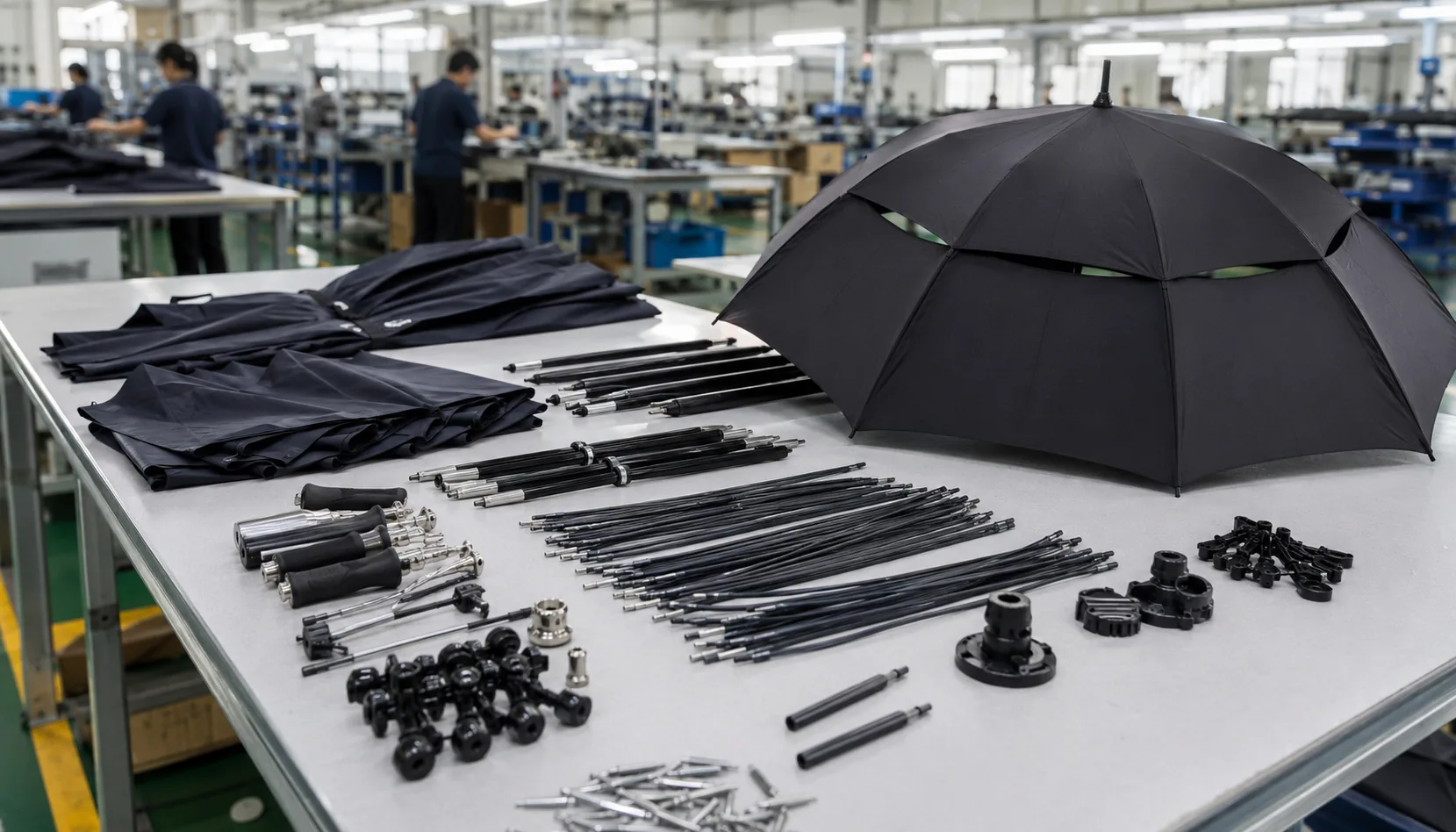
Vented Golf Umbrellas: How Buyers Specify Windproof Builds
Learn how to spec vented golf umbrellas with double-canopy construction, rib materials, QC targets, MOQs, and lead times...
Read More »
Double-Canopy Umbrellas for OEM Orders: Spec Guide
Learn how to specify double-canopy umbrellas for OEM orders, from vent gaps and rib materials to print limits, MOQ, QC, ...
Read More »
Single-Canopy vs Double-Canopy Umbrellas for Buyers
Compare single- and double-canopy umbrellas for sourcing decisions on wind performance, cost, weight, print options, and...
Read More »