How Umbrella Canopy Panel Tension Is Measured in Production
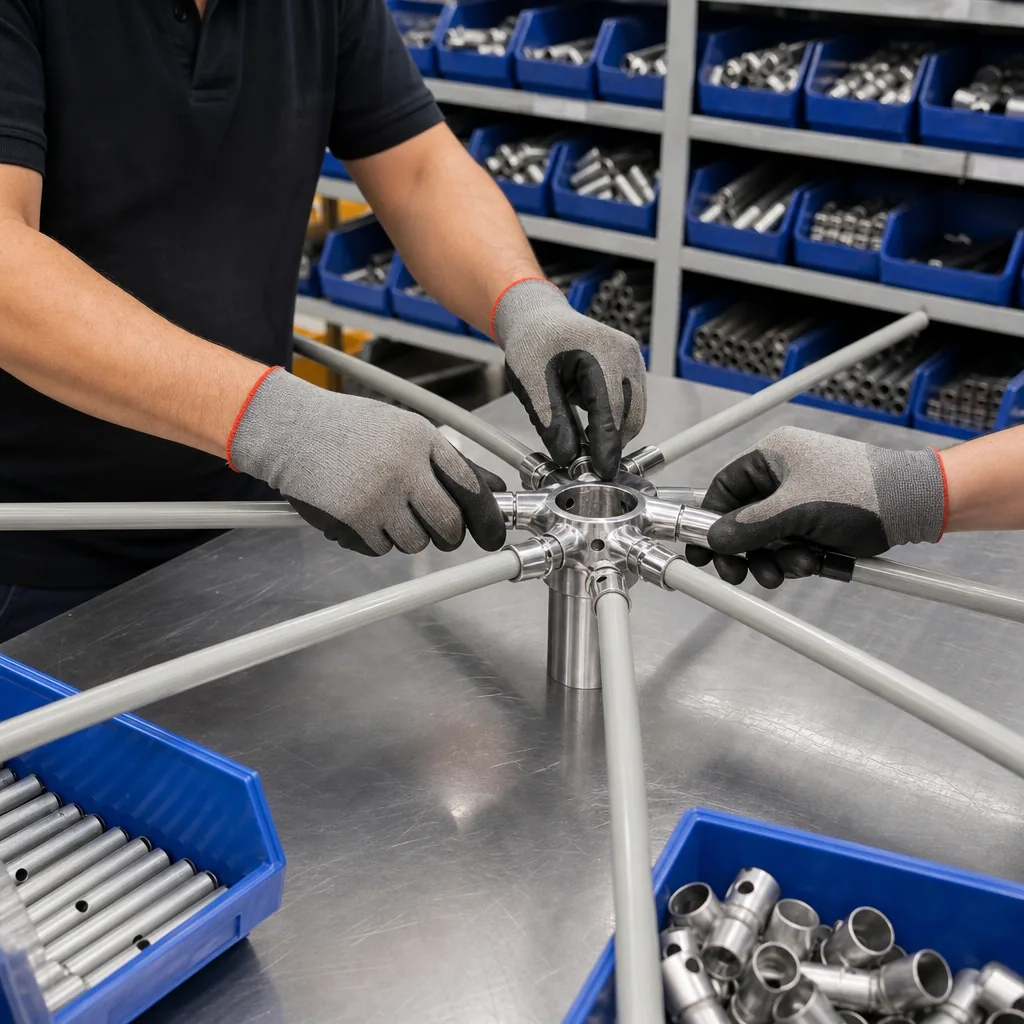
When buyers see slack panels, waviness at the seams, or early leakage, the root cause is usually not the fabric alone but how the canopy is cut, stitched, and tensioned on the line. In production, umbrella canopy panel tension is measured against pattern geometry, seam alignment, and fit at the frame to catch small deviations before they become returns.
Why Canopy Tension Matters for Appearance and Performance
Umbrella canopy panel tension is one of those things that buyers only notice when it is wrong. If the panels are cut slack or the seam line is drifting, the canopy sags between ribs, flutters in wind, and makes a dry umbrella look tired before it ever sees rain. On the factory floor, we check this during canopy fit testing because a panel that is too loose will not sit flat on the frame, and a panel that is too tight will pull the seams and shorten the life of the stitching. In OEM umbrella QC, the real issue is not just appearance; poor fabric tension control changes how the whole top behaves under opening force and wind load.
Loose panels also mess up water management. Instead of shedding cleanly from the crown to the edge, water pools in low spots and runs unevenly, which makes drips more likely when the customer closes the umbrella. The problem is usually tied to panel seam tolerance and stitch consistency: if one seam is longer, the panel twists; if the lockstitch tension is off, the fabric creeps after a few opening cycles. That is why umbrella canopy panel tension has to be checked against the frame geometry, not just eyeballed after sewing. A canopy that looks acceptable on day one can develop wrinkles and edge waviness after repeated opening if the cutting and sewing tolerances are not controlled together.
We measure this with a combination of panel lay-flat inspection, seam-to-rib alignment checks, and repeated open-close cycling to see whether the canopy returns to the same shape every time. The goal is a stable profile with even load distribution across all panels, especially on larger 23-inch and 27-inch models where small errors show up fast. Good tension does not mean over-pulling the cloth; it means matching panel dimensions, thread tension, and rib geometry so the canopy stays smooth without fighting the frame. That is the practical difference between a cheap-looking umbrella and one that still opens cleanly after a lot of use.
Measuring Panel Fit During Sampling and Mass Production
The first thing we check is whether the canopy panels actually match the frame, not whether the sample just looks neat on a table. In production, umbrella canopy panel tension shows up as edge pull, wrinkle pattern, and how evenly each panel lands on the ribs when the frame is fully opened. The practical checks are panel length verification from apex to hem, spread diameter at full open, and rib-to-fabric alignment at every tip pocket or stitch point. If the panel is short, the canopy hangs loose; if it is long, the seams fight the ribs and the umbrella looks over-stretched even before use.
During sampling, we run canopy fit testing on the intended frame size and record the real opened diameter, panel width at the widest point, hem circumference, and seam-to-seam repeat. For OEM umbrella QC, I lock those numbers into the tech pack before approval, along with panel seam tolerance, stitch allowance, rib length, and the target fabric tension control method, because those are the dimensions that decide whether mass production stays consistent. The tech pack should also state the exact canopy fabric spec, cutting direction, and any allowed deviation at the apex and hem, otherwise every line supervisor will interpret “good fit” differently.
In mass production, the useful check is not a visual yes/no; it is whether the canopy lands within the same measured window across the whole order. We compare random pieces against the approved sample and watch for panel creep after sewing, especially on lighter pongee or coated fabrics that can shift under heat and thread tension. If the spread diameter is right but the ribs do not sit centered in the panel lanes, the umbrella may pass open-close testing and still fail in use because tension is uneven from panel to panel. That is why umbrella canopy panel tension has to be measured with fixed frame dimensions, not guessed from appearance.
Fabric Choice and Tension Behavior
190T and 210T pongee behave differently the minute you clamp them into a frame. 190T has a slightly softer hand and more give, so it drapes well and is easier to sew, but it also moves more under load; if your pattern is sloppy, the panel will show it as waviness between ribs. 210T is denser, tighter, and less forgiving at the cut edge, which usually means better shape retention and less visible distortion after repeated opening cycles. In umbrella canopy panel tension work, I care less about the marketing name and more about how the fabric behaves at the stitch line and under the rib tip load.
A denser weave like 210T helps when the design needs crisp panel geometry, stronger seam stability, or a cleaner dome on 23" to 27" frames with fiberglass ribs. It resists bias stretch better, so the canopy stays closer to spec during canopy fit testing and holds a steadier outline after heat-setting or waterproof finishing. The tradeoff is that the sewing window gets narrower: needle heat, feed pressure, and thread balance have to be controlled more tightly, or the fabric will pucker and the panel seam tolerance will drift. That is why OEM umbrella QC usually sets separate acceptance limits for high-density pongee versus softer lightweight cloth.
Lighter 190T can be the right choice for cost-sensitive builds or compact manual umbrellas, but only if fabric tension control is disciplined from cutting through final inspection. Because it stretches more, panel alignment has to be tighter at the cutting table, and the stitch operator cannot rely on the fabric to self-correct under the presser foot. If the seam allowance varies even a little, the difference shows up at the center cap and along the rib tips as uneven tension. For that reason, a good production standard is to measure panel-to-panel symmetry after assembly, not just single seam length, because umbrella canopy panel tension is really about the full canopy shape under load, not a flat-cut dimension on paper.
Stitching, Seams, and Reinforcement Points
Seam allowance is the first thing I check because it determines whether the canopy will sit flat or fight the frame. On a production line, umbrella canopy panel tension starts with consistent cut size, then a controlled stitch margin, usually held to a narrow band so adjacent panels match within the approved panel seam tolerance. If one panel is long by even a few millimeters, the canopy twists when opened and the load shifts to the ribs. Good factories track fabric tension control at sewing and do canopy fit testing on sample frames, because a panel that looks clean on the table can still pucker at the crown or sag between ribs once it is tensioned.
Top-stitch consistency matters more than buyers usually think. A straight seam with even SPI is not just cosmetic; it keeps the seam from creeping under wind load and helps the canopy distribute stress from tip to tip. The weak spots are predictable: needle holes at the corner, skipped stitches at the tip pocket, loose thread tails at the runner line, and overcut reinforcement patches that start lifting after repeated opening cycles. In OEM umbrella QC, we inspect those points under magnification and by hand flexing the seam line, because defects usually show up first as seam waviness, micro-puckers, or a canopy edge that sits off-center on the frame.
Reinforcement points need separate attention, not just a visual pass. At the crown, tips, and runner contact zones, the fabric sees concentrated force every time the umbrella opens, closes, and flips in wind. A factory that knows what it is doing will bar-tack or patch those points according to the fabric weight and rib type, then sample each lot under AQL 2.5 for skipped stitches, broken reinforcement, seam opening, and tension mismatch across panels. That is where umbrella canopy panel tension becomes measurable in practice: not by one number on paper, but by whether the canopy opens symmetrically, stays centered, and keeps its shape after repeated cycling and fit checks on the actual frame.
What Buyers Should Specify to Avoid Fit Problems
Buyers need to specify the finished canopy diameter first, because everything else hangs off that number. A 23-inch stick umbrella and a 30-inch golf frame do not forgive the same cutting allowance, and umbrella canopy panel tension changes fast when the panel count shifts from 8K to 10K or 16K. If you want a clean fit, state the panel count, the target fabric, and the seam construction up front: pongee 190T behaves differently from 210T, and a coated POE or PVC canopy stretches less than woven polyester. On the factory floor, we check this during canopy fit testing by measuring how the sewn panels sit on the frame before final top-stitch and after opening cycles, not just by looking at the finished umbrella in a photo.
The buyer should also define panel seam tolerance in plain numbers, not vague language like “neat” or “good.” For OEM umbrella QC, that means giving an acceptable puckering limit at the seams, the max gap at the tip pocket, and whether slight asymmetry at the edge binding is allowed. Fabric tension control is easier when the spec says what matters visually and structurally: for example, no hard wrinkles between ribs, no pulled stitches at the spoke ends, and no visible stress whitening on TPU or laminated films. If the umbrella uses fiberglass ribs, the canopy can sit tighter than on a softer steel frame, so the acceptance standard should match the frame material instead of assuming one rule fits every model.
Packaging compression limits matter more than most buyers expect, especially for retail-ready cartons or vacuum-style packing. If the canopy is forced flat too hard, a panel that passed PP sample sign-off can still arrive with permanent crease memory, loose seam points, or tip distortion, so the carton spec should state the maximum compressed height and dwell time in transit. Any change after PP approval — different fabric lot, revised panel count, altered seam allowance, or a new print method — should be treated as a new sample round and may add 7 to 15 days to lead time depending on tooling and inspection load. In OEM umbrella QC, we only lock production after the signed PP sample matches the buyer’s fit standard, because that is the point where umbrella canopy panel tension stops being theory and becomes a repeatable factory target.
Frequently Asked Questions
Is canopy tension mostly a sewing issue or a pattern issue?
It is both. Pattern accuracy sets the baseline fit, but sewing consistency determines whether the canopy stays smooth and centered on the frame.
Does a denser fabric always improve canopy tension?
Not always, but 210T pongee usually holds shape better than lighter fabrics. Final performance still depends on the frame geometry, panel pattern, and seam control.
What production point is best for checking canopy panel tension?
The most useful checkpoint is right after canopy sewing and again after canopy-to-frame assembly. Checking both stages helps separate sewing-related slack from frame-matching issues before final packing.
What tolerance do buyers usually request for panel seam alignment?
For standard OEM orders, buyers often ask for visible seam alignment within about 2-3 mm at the canopy edge, with tighter control on premium retail programs. The exact tolerance should be written into the approved QC standard before bulk production starts.
Can canopy tension problems be corrected without remaking the full umbrella?
Sometimes yes, if the issue comes from tip fixing, top notch positioning, or minor sewing deviation. If panel shape or cut size is off across multiple panels, the practical fix is usually rework at canopy level rather than adjustment on the finished frame.
Looking to Launch Your Custom Umbrella Line?
ZheBrella is a Zhejiang-based OEM/ODM umbrella manufacturer with 17 years of export experience. Free design, low MOQ from 100 pieces, windproof construction, full-color print.
Get Free Quote Now »People Also Search For
Related Articles
Umbrella Canopy Cutting Tolerances for Consistent OEM Fit
Control canopy panel cutting tolerances for 190T and 210T pongee umbrellas to improve rib fit, seam alignment, appearanc...
Read More »
Umbrella Fabric Shrinkage Control in OEM Production
Understand how shrinkage affects panel size, fit, and print alignment, and what factories test to keep umbrella canopies...
Read More »
Umbrella Canopy Panel Cutting and Seam Alignment Controls
Understand how panel cutting, seam alignment, and stitch control shape canopy appearance, waterproofing, and rejection r...
Read More »