In-Process QC Gates for Umbrella Sewing and Assembly
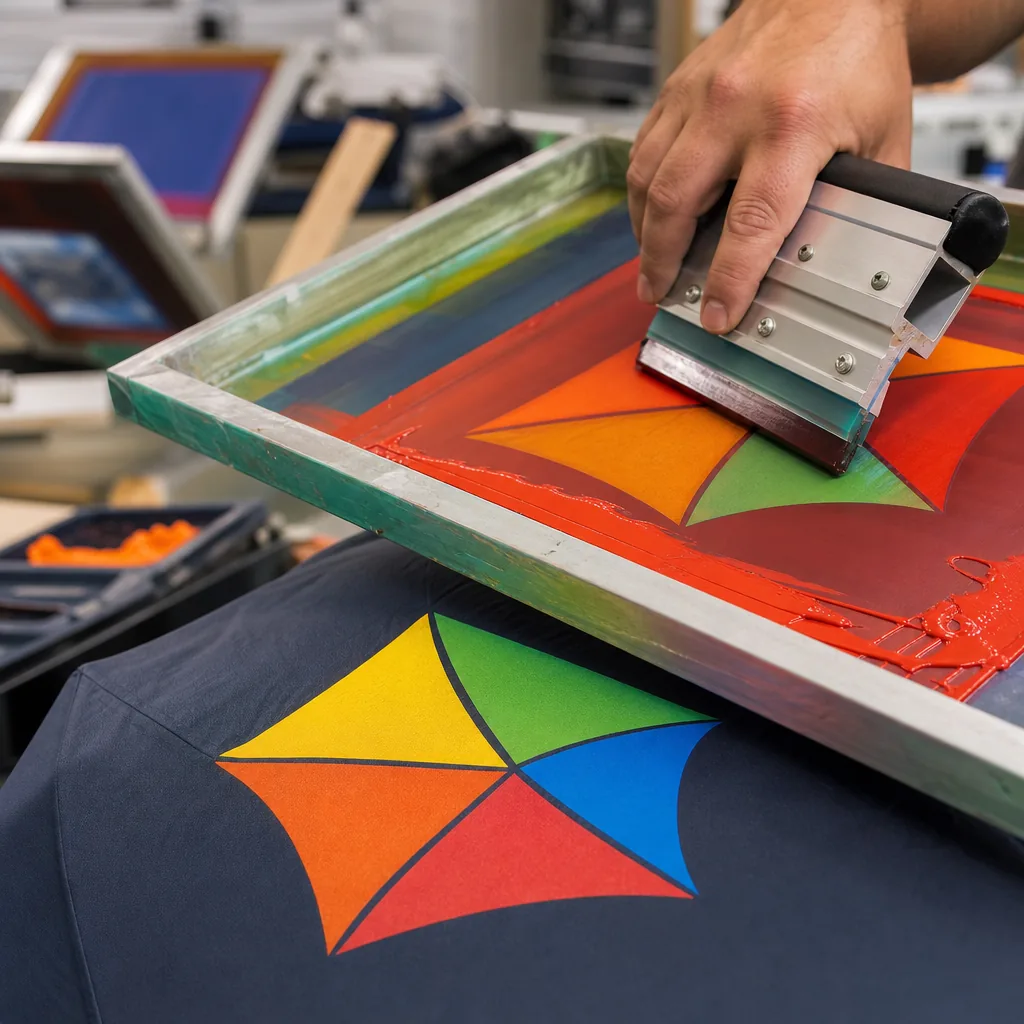
A bulk umbrella order can look on schedule until small sewing variations, rib alignment issues, or packing mix-ups surface at final inspection and force rework under shipping pressure. On our Songxia production floor, umbrella in-process QC gates are set at the points where defects become expensive to correct: cutting accuracy, panel sewing, canopy mounting, frame assembly, function testing, and carton packing. Practical defect limits at each gate protect lead time while keeping final AQL results predictable.
How In-Process QC Differs From Final Inspection
Final inspection is a shipment decision; in-process QC is a defect-prevention system. AQL 2.5 at the end of production tells a buyer whether the finished lot is acceptable for loading, usually by checking appearance, function, size, labeling, packing, and a few destructive tests from a statistical sample. It does not repair the 3,000 canopies already sewn with the wrong seam allowance or the 10,000 tips installed with weak crimping. Umbrella in-process QC gates are placed before damage multiplies: fabric cutting, panel printing, canopy sewing, frame assembly, final mounting, and packing. On an OEM umbrella production line, a missed issue at cutting can affect every later operation, so we check panel grain direction, color lot, notch position, and size tolerance before sewing operators ever touch the fabric.
Umbrella sewing quality control needs to happen while the canopy is still easy to correct. For a 23 inch 8K straight umbrella in 190T pongee, typical sewing gates include stitch density, seam straightness, skipped stitches, panel matching, top reinforcement, strap position, and whether the canopy tension is balanced after trial mounting. If sublimation or heat-transfer printing is used, the print gate must verify logo position, color shade, ink penetration, and heat marks before panels are bundled to sewing. A final AQL inspector may find off-center logos, but by then the cost includes fabric, thread, labor, frame, handle, packing material, and time. Good umbrella defect prevention means stopping a bad print sheet, a dull cutting die, or an incorrect thread color immediately, not writing it on a final inspection report two weeks later.
Umbrella assembly inspection is different again because mechanical defects often look fine until the umbrella is opened 20 or 30 times. At the frame gate, inspectors check rib count and material, such as 8K fiberglass versus steel, runner movement, spring strength, rivet tightness, shaft straightness, and auto-open or auto-open-close function. For double-canopy vented windproof models, we also check vent overlap and tie-down points before packing, because a vent sewn too tight can reduce wind performance even if the umbrella looks clean on the table. Packing QC then confirms carton quantity, barcode, polybag warnings, master carton strength, and PO-specific labeling for FOB or DDP orders. Our standard practice at ZheBrella is to treat final AQL 2.5 as confirmation, not discovery; the real control happens at the umbrella in-process QC gates where defects are still cheap to isolate.
Cutting and Panel Preparation Checkpoints
Panel cutting is the first place where umbrella in-process QC gates either prevent defects or quietly create them for the sewing line to fight later. For 190T and 210T pongee, we check panel length, arc width, seam allowance, and tip angle against the approved paper pattern or CAD marker before bulk cutting starts. A normal tolerance is plus or minus 1.5 mm on compact 21" and 23" canopies, and plus or minus 2 mm on 27" and 30" golf umbrellas. That sounds small, but on an 8K canopy, eight small errors collect into visible scallop mismatch; on a 16K canopy, the higher panel count makes symmetry more sensitive because each panel is narrower and the eye catches uneven rib spacing faster. Good umbrella sewing quality control starts before any operator touches a sewing machine: we verify knife sharpness, ply height, notch depth, and whether heat-cut edges are sealed cleanly without melting or shrinking the pongee.
Grain direction matters more than many buyers realize, especially on solid-color pongee with Teflon coating or UV UPF 50+ backing. If panels are cut with inconsistent fabric direction, the canopy can twist slightly after sewing, and the color may reflect differently under store lighting even when the dye lot is technically the same. Our standard practice at ZheBrella is to mark the warp direction on the first-layer fabric and require all panels in one canopy set to follow the same orientation. For dark navy, black, bottle green, and burgundy 210T pongee, we also control shade sequence by roll number and cutting bundle. A mixed bundle from two dye lots can pass warehouse lighting but fail badly in outdoor photos. For OEM umbrella production line stability, each cut bundle should include a roll tag, color code, cutting date, size, rib count, and panel quantity so the sewing team does not mix 8K panels with 10K or 16K work orders.
Logo placement marks need to be checked at cutting, not after printing, because a panel that is 2 mm short or rotated off grain will push the logo toward the seam when the canopy is tensioned on the frame. For screen printing, we usually mark the centerline and bottom hem reference point; for heat transfer and sublimation, we also confirm the printable safe area after seam allowance, tip fold, and runner tension are considered. Fabric defects must be removed before bundling: slubs, oil spots, coating streaks, pinholes, crease shine, water marks, and yarn pulls are common on pongee rolls if inspection is rushed. These cutting-room controls are practical umbrella defect prevention, not paperwork. A later umbrella assembly inspection can reject a crooked logo or uneven canopy, but by then the factory has already spent labor on sewing, tips, caps, and frame mounting. Well-designed umbrella in-process QC gates keep bad panels from entering production at all.
Sewing Line Controls for Canopy Strength
Canopy strength is won or lost before the frame ever reaches the line, so umbrella sewing quality control starts with measurable sewing settings, not visual judgment. For 190T and 210T pongee, our normal lockstitch density is 8–10 stitches per inch on panel joins, with a 6–8 mm seam allowance after trimming; PVC, POE, and EVA need slightly longer stitches to avoid perforation tearing under tension. Operators must keep panel tension even through the feed dog, especially on 23" and 27" arcs where bias stretch can pull one panel short by 3–5 mm. At the first umbrella in-process QC gates, the line inspector checks seam balance, thread tension, puckering, and needle heat marks, then records defects by machine number so a bad tension spring or worn needle is corrected before 300 canopies carry the same weakness.
Rib-tip reinforcement is a hard checkpoint because it carries repeated opening shock. On standard 8K steel frames we require a bar tack or reinforced stitch box at each tip pocket; on fiberglass 10K or 16K windproof models, the pocket must allow flex without cutting into the fabric edge. Tip pocket width is normally controlled within ±1.5 mm so ribs seat fully but do not twist the canopy. For double-canopy vented windproof umbrellas, vent seam alignment is inspected against the frame layout, not just against the fabric panels. If the upper vent floats off-center, airflow becomes uneven and the umbrella can invert earlier in a 50+ mph wind test. Skipped stitches are limited to no more than one isolated skip within 100 mm, and no skipped stitches are allowed at rib tips, vent overlaps, top-cap circles, or tie-strap attachment points.
Leak-risk areas need special handling because water follows thread paths and capillary gaps. The top cap opening should be punched cleanly and kept tight to the shaft diameter; if the sewing operator overcuts the crown, no amount of final umbrella assembly inspection will fully hide that weakness. Panel joins near the crown must meet without stair-stepping, and any sealing tape or PU back coating cannot be burned by excessive iron temperature during label or heat-transfer work. Tie straps should be stitched through reinforced fabric or a folded seam, never through a single loose panel layer, because repeated wrapping can tear lightweight pongee within a few dozen cycles. In an OEM umbrella production line, these umbrella in-process QC gates prevent defects while repair is still cheap: replace a needle, reset a guide, or retrain one operator before finished goods reach AQL 2.5 inspection and fail for leakage, weak seams, or uneven canopy tension.
Assembly Checks for Opening, Tension, and Alignment
On an OEM umbrella production line, the first umbrella in-process QC gates after sewing are mechanical, not cosmetic. I check runner movement on the stretcher track, shaft straightness against a flat jig, and whether the locking points engage cleanly without scraping the center pole. For manual models, the opening force should feel smooth but not loose; for auto-open units, the spring must fire the canopy fully in one motion; for auto-open-close, the release button must reset without binding. Rib-tip attachment gets a hard look here because a loose tip or crooked stitch hole will show up later as canopy flutter and edge skew. This is where umbrella sewing quality control and umbrella defect prevention overlap: if the canopy panel tension is uneven or the ferrule sits off-center, the frame will never open square.
Canopy tension is checked with the umbrella fully opened and locked, then rotated under overhead light to catch waviness, puckering, and panel-to-panel mismatch. I want the ribs to load evenly, with no single arm over-stressing the fabric at the tip or crown. On 21-inch and 23-inch promotional styles, a slight over-pull at the seams is acceptable if the fabric is pongee 190T or 210T; on larger 27-inch and 30-inch frames, poor tension will quickly reveal itself as side sag. Umbrella assembly inspection also includes closing force: a canopy that shuts too easily usually means weak spring pressure or poor rib geometry, while one that needs a hard yank can damage the runner latch over time. In practice, umbrella in-process QC gates should catch these issues before final packing, not at AQL 2.5.
Cycle spot checks are the fastest way to prove the build is stable, not just pretty on the bench. I cycle a sample set through 5 to 10 open-close operations for manual umbrellas, 10 to 15 for auto-open, and 15 to 20 for auto-open-close units, watching for delayed pop-up, partial rebound, or rib-tip walkout. On vented double-canopy windproof models, the opening motion must stay centered and the top vent must not pinch the inner layer as the frame locks. If the shaft is even slightly bowed, the closing path will drift and the tip alignment will change from cycle to cycle. This is standard umbrella in-process QC gates work: measure, cycle, correct, and recheck before the line moves forward. On a crowded factory floor, that is the difference between stable output and a pile of returns from broken sliders and twisted frames.
Packing Gate Before Finished Goods Inspection
The packing gate is not a warehouse formality; it is the last practical point to stop moisture, labeling, and mixed-SKU mistakes before the goods become expensive to fix. On an OEM umbrella production line, we require the canopy to be fully dry before sleeving, especially after water-repellency checks, steam shaping, or final spot cleaning. A 190T or 210T pongee canopy folded with trapped moisture can develop odor, print blocking, or mildew marks during a 30- to 40-day ocean shipment. At this umbrella in-process QC gates stage, inspectors confirm the correct sleeve material and size, whether fabric sleeve, POE sleeve, PVC sleeve, or retail polybag, and match the umbrella to the approved packing instruction. The hangtag, sewn label, care label, warning label, and country-of-origin mark must match the PO, artwork proof, and retail compliance sheet. A good umbrella can still become a claim if a UPF 50+ tag is missing, a customer logo sleeve is swapped, or a manual-open umbrella is packed under an auto-open barcode.
Handle and tip protection need more attention than many buyers specify. Wooden crook handles scratch easily, EVA foam handles can dent under carton pressure, and rubberized plastic handles may pick up sleeve ink if packed too early after printing. For straight umbrellas in 23", 27", or 30" sizes, we check ferrule caps, runner position, strap closure, and whether the handle is protected by tissue, foam net, or individual polybag according to the approved sample. For folding umbrellas, especially auto-open-close models, the shaft must be fully collapsed and the push button protected from accidental activation in the inner box. This is part of practical umbrella sewing quality control as well as umbrella assembly inspection, because poor folding can stress seams, distort the canopy panels, and bend steel ribs or fiberglass ribs before final inspection even begins. Our standard practice at ZheBrella is to pull packed units from the line every hour and compare them against the golden sample, master carton marking, and barcode scan result.
Carton quantity control is where small errors become DDP delivery problems. If the packing instruction says 12 pcs inner box and 48 pcs master carton, the inspector verifies count, color ratio, SKU mix, gross weight, net weight, carton dimensions, carton mark, and barcode readability before pallets are closed. Retail receiving teams often reject or charge back shipments for unreadable GS1 labels, wrong case pack, missing FBA label, or carton weight outside the declared range, even when the umbrellas themselves pass AQL 2.5 finished goods inspection. Drop-test readiness is also checked here: carton board strength, corner fill, tape width, strap tension, and whether heavy 30" golf umbrellas need reinforced cartons instead of standard export cartons. These umbrella in-process QC gates reduce umbrella defect prevention costs because repacking after final inspection delays booking, increases labor, and can push a shipment from FOB vessel cutoff into air freight or late DDP delivery. Packing accuracy directly affects retail receiving speed, claim rates, and the buyer’s confidence in repeat production.
Frequently Asked Questions
How often should a factory check umbrellas during production?
A practical approach is first-piece approval at each process, then hourly or batch-based checks depending on order size and risk. Higher-risk items such as auto-open or double-canopy umbrellas need more frequent functional checks.
Can in-process QC reduce the need for AQL inspection?
No. In-process QC reduces defects and rework, but final AQL inspection is still needed to verify the shipment. Buyers should use both systems for OEM and ODM umbrella orders.
At what production stages should an importer require hold-point approval on an umbrella order?
For OEM umbrella orders, practical hold points are after first-panel cutting, first completed canopy sewing, first full frame assembly, and pre-carton packing. Buyers often require photo or video approval at these four gates before the factory releases mass production to the next stage.
What defect threshold should trigger line stoppage instead of normal rework during umbrella assembly?
A common factory rule is to stop the line if the same critical defect appears in 2 pieces within a 50-piece check, or if major defects exceed 5% at one in-process gate. Typical stop issues include misaligned top notch, failed opening/closing function, exposed sharp points, or canopy-panel mismatch.
How large should an in-process inspection sample be for a 10,000-piece umbrella order?
Many factories use rolling inline checks of 20-32 pieces per hour per line, plus a gate review of 50-80 pieces at first output and after any material or operator change. For a 10,000-piece order, that gives enough data to catch repeat sewing or assembly defects before they affect final AQL results.
Looking to Launch Your Custom Umbrella Line?
ZheBrella is a Zhejiang-based OEM/ODM umbrella manufacturer with 17 years of export experience. Free design, low MOQ from 100 pieces, windproof construction, full-color print.
Get Free Quote Now »People Also Search For
Related Articles
Umbrella Assembly Line QC Gates for OEM Manufacturing
Map the key QC gates in umbrella assembly, from frame prep to final packing, to cut defects, speed approvals, and protec...
Read More »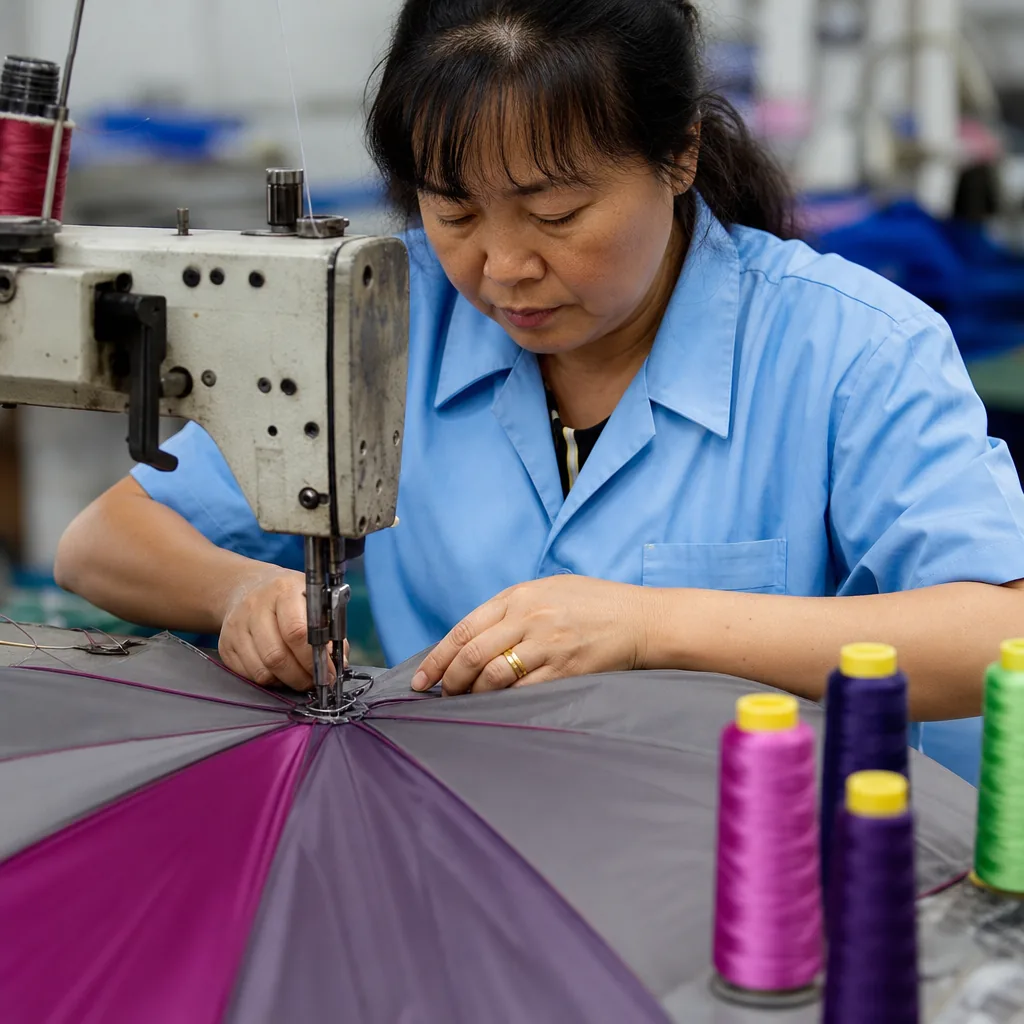
In-Process Quality Gates for Custom Umbrella Manufacturing
Map the factory quality gates from incoming materials to pre-pack audits, with IPQC checks that catch frame, fabric, and...
Read More »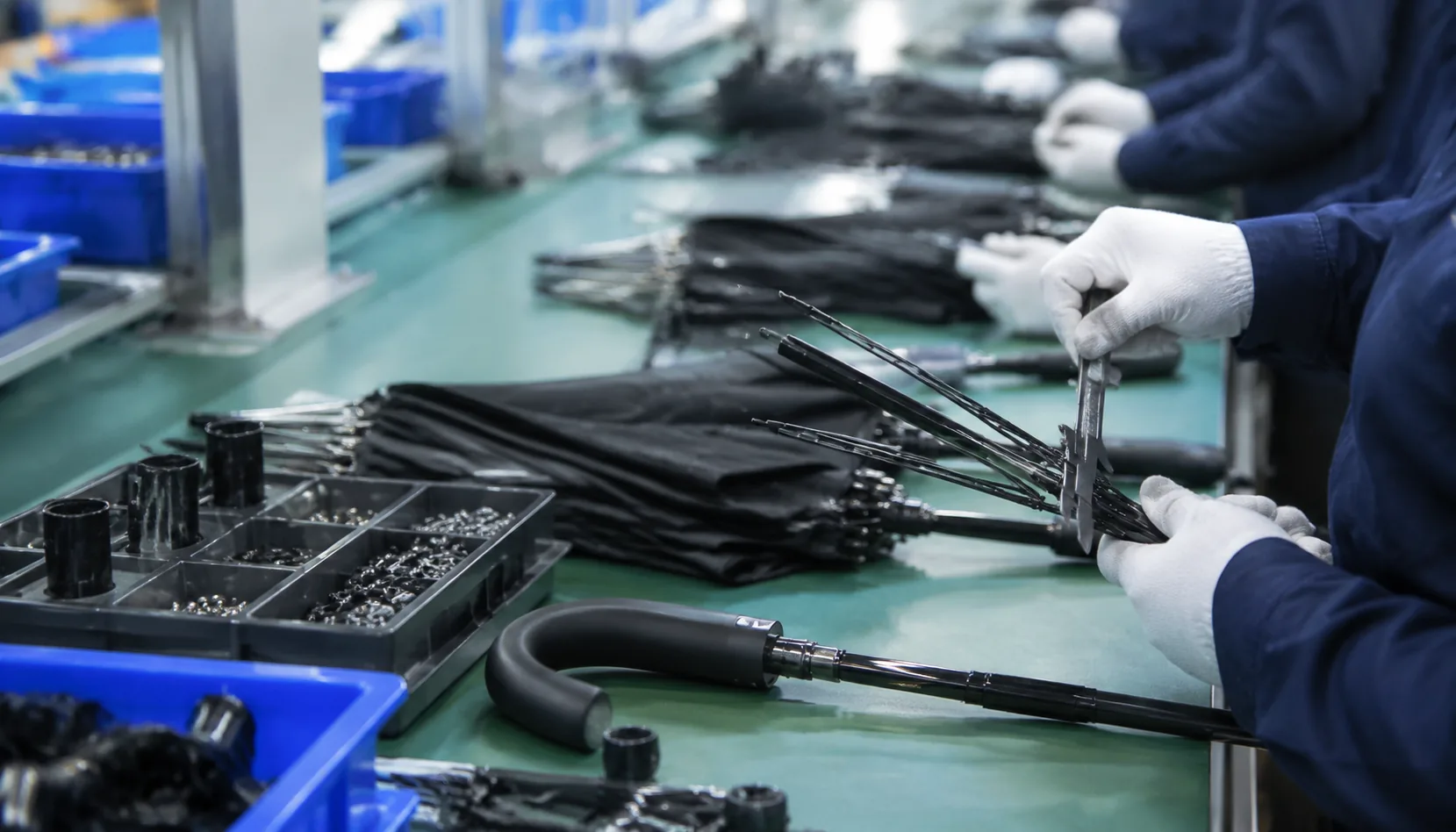
Inline Umbrella Assembly QC Gates Before Final Inspection
Map practical in-line QC gates for frames, canopies, auto-open mechanisms, and export packing so defects are caught befo...
Read More »