Inline Umbrella Assembly QC Before Final AQL Inspection
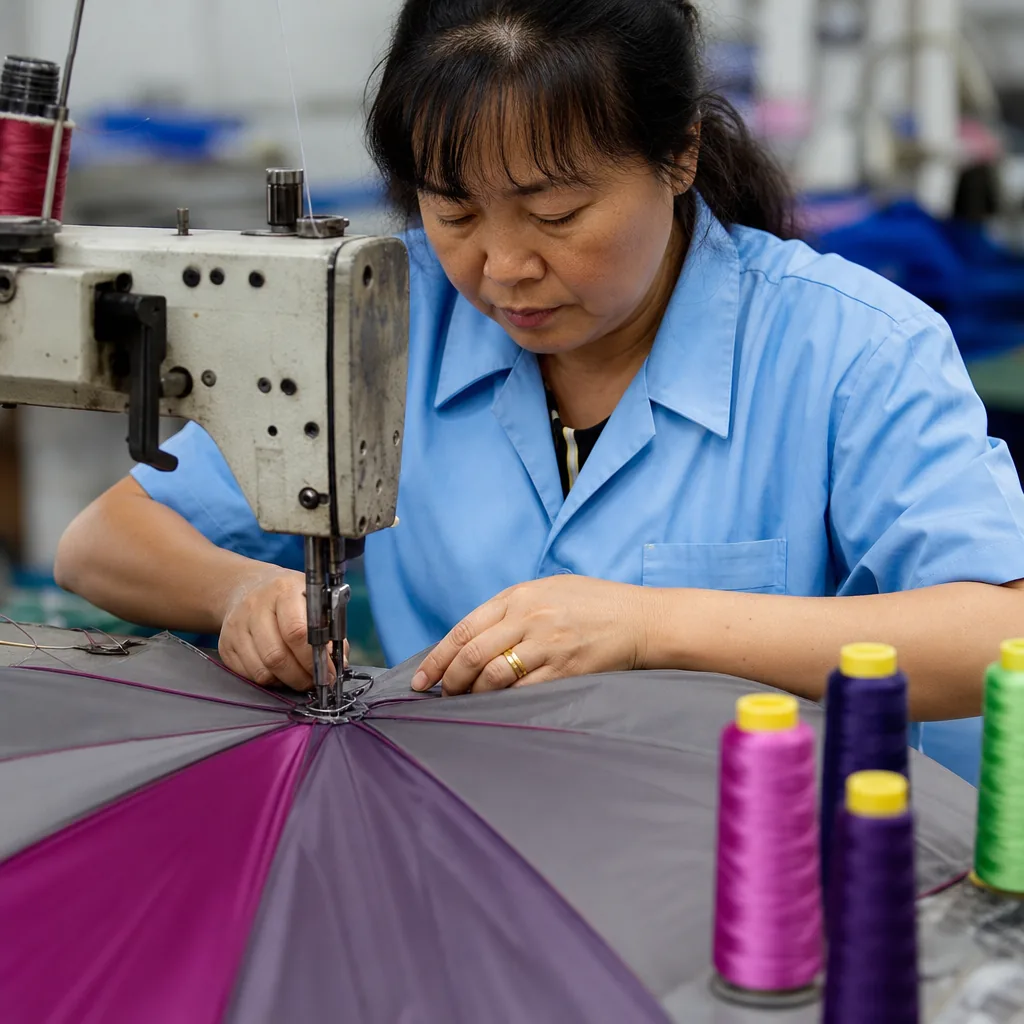
Final AQL 2.5 is too late to discover that a run of umbrellas has loose ribs, twisted canopies, weak handle joints, or cartons packed with the wrong sleeve. On our assembly lines in Songxia, inline umbrella assembly QC means checking the product while operators are still building it, when defects can be corrected before they multiply across an OEM order. The goal is simple: keep rework contained, protect ship dates, and make final inspection a confirmation instead of a surprise.
Why Final Inspection Is Too Late
AQL 2.5 umbrella inspection is a final sampling standard, not a production control system. It tells the buyer whether a finished lot is statistically acceptable for shipment; it does not prove that each assembly station held tolerance during production. On umbrellas, small setup errors multiply fast. A runner jig set 1.5 mm off can create cartons of off-center canopies, uneven tip positions, or auto-open springs that bind after repeated cycling. By the time an inspector pulls 80 or 125 units from a 5,000 to 10,000 piece MOQ order, the factory has already consumed the 190T or 210T pongee, frame, labor, sleeve, inner carton, and master carton costs. A failed final result means teardown, rework, repacking, shipment delay, or a price concession to ship compromised goods.
The highest-cost umbrella assembly defects usually start before the finished umbrella exists. A rib cap pressed too shallow can cut 190T pongee during a wind check; a steel stretcher with inconsistent temper may open cleanly but deform under a 45 to 50 mph load; a weak rivet set creates top-notch wobble that buyers interpret as poor frame quality even when the logo print is correct. Inline umbrella assembly QC catches these faults at the station that creates them: frame opening force after skeleton assembly, canopy centering before top-cap locking, stitch density and panel alignment before final steaming, and water-spray checks before sleeve packing. A practical umbrella production inspection plan starts with first-piece approval, then checks every bundle or every 50 to 100 units, with tighter controls for higher-risk builds such as 8K manual, 10K auto-open, and double-canopy vented golf umbrellas.
Large MOQ orders fail in clusters, not in tidy statistical patterns. One operator, one riveting machine, one batch of fiberglass ribs, or one late-shift packing period can create a defect pocket inside an otherwise acceptable lot. That is why OEM umbrella quality control needs inline checks as well as the warehouse-table AQL review. When repeat defects hit the trigger level, production should stop, the affected batch should be segregated, and the tooling or work method should be corrected before the next 300 pieces carry the same fault. Inline umbrella assembly QC changes the cost profile from finished-unit teardown to station-level correction, protects 25 to 35 day lead times on repeat models, and reduces the buyer’s main final-inspection risk: passing the AQL sample while still shipping a concentrated block of umbrella assembly defects inside the approved lot.
Key Checkpoints Along the Assembly Line
The line should catch defects before the umbrella is fully built, not after it reaches final sampling. Good inline umbrella assembly QC starts with incoming materials: verify rib gauges, spring hardness, shaft straightness, runner fit, and plating consistency on steel parts, then match those records to the BOM for 8K or 16K frames. Fiberglass ribs need a bend-and-recovery check because poor resin cure shows up later as white stress marks or split ends. On canopy materials, we check width, shade variation, coating handfeel, and roll defects under backlight; 190T or 210T pongee should be inspected for slubs, needle damage, oil marks, and coating skips, while POE or EVA films need haze, scratch, and weld-line review. For printed orders, panel registration and color fastness must be confirmed before cutting, otherwise the whole lot can drift out of logo position even if the sewing is clean. This first gate is where a disciplined umbrella production inspection program saves the most money.
At sewing, the checkpoint is not just seam appearance but geometry. Panel count must match frame type, seam allowance needs to stay consistent, and top notch and tip positions have to line up so the canopy tensions evenly after mounting. Double-canopy vented styles need extra scrutiny: the upper and lower layers must keep vent spacing uniform, mesh or vent openings cannot skew, and bartacks at high-load points must be complete. Once the canopy goes onto the frame, the main failure modes are obvious to anyone who has reworked a line: crooked crowns, exposed stitches at the cap, misaligned ferrules, and uneven edge drop from panel mismatch. This is where most umbrella assembly defects first become visible, especially on 16K frames where small sewing error multiplies across more ribs. Our standard practice is to hold hourly in-line checks against a golden sample and quarantine any workstation once repeat defects exceed the control limit.
Mechanism and packing checks need to be done under cycle load, not by opening one piece once and calling it good. Auto-open and auto-open-close umbrellas should be cycled multiple times to confirm spring release force, lock engagement, and smooth runner travel; if the button stroke is inconsistent or the shaft rebounds harshly, that lot will generate returns in the field. Handle fixing is another weak point in OEM umbrella quality control: adhesive-only assembly is not enough on heavier 23 inch or 27 inch models, so we verify pull resistance, pin or screw fit, and rotational play. Before carton sealing, every unit should pass a visual and function check for canopy centering, strap alignment, tip cap security, and clean closure, then metal count and assortment count are confirmed at pack-out. Final AQL 2.5 umbrella inspection still matters, but if inline umbrella assembly QC is working, final inspection should mostly confirm consistency rather than discover avoidable defects.
Defects That Inline QC Should Catch
Inline umbrella assembly QC should stop frame defects before closing, tagging, and export packing make rework expensive. On 21-inch and 23-inch folding umbrellas, bent ribs distort the canopy arc and leave visible tension marks after top-notching, especially on mixed fiberglass and steel frames. Loose rivets at the stretcher, rib, or runner joint deserve immediate rejection; a sample may pass one open-close check but loosen after 20 to 50 cycles as the joint walks out. Inspectors should also catch missing ferrules, mis-seated tips, shifted top caps, and sharp exposed ends before they scratch coated fabric or puncture neighboring units in the carton. These defects usually point to frame fatigue risk, poor jig alignment, worn riveting tools, or operators feeding parts through without confirming fit. Catching them before final AQL 2.5 umbrella inspection protects durability and avoids opening sealed cartons for frame-level rework.
Canopy faults should be removed before final umbrella production inspection because most are no longer low-cost once panels are sewn, tipped, and tied. Wrong fabric side out is a serious failure on pongee 190T and 210T orders when UV, silver, or Teflon-coated surfaces must face the specified direction. After printed panels are joined into an 8K or 10K canopy, reversal can require replacing the full cover rather than resewing one panel. Inspectors should check uneven canopy tension, tight or slack panels, sewing pitch drift near tips, off-center crown positioning, and inconsistent tip tying. On vented double-canopy windproof umbrellas, the same issue shows as a twisted upper canopy or uneven vent gaps. Common causes include inaccurate panel cutting, mixed frame and canopy tooling batches, or operators forcing mismatched components to fit. OEM umbrella quality control should isolate the batch immediately, not pass the defect downstream.
Functional and packing defects need the same line discipline as visible umbrella assembly defects. Weak handle pull strength on telescopic shafts often comes from uneven glue application, short cure time, or poor shaft-to-handle seating; the customer sees it as a grip that rotates or pulls off during normal use. Slow auto-open action, sticky runners, and incomplete auto-open-close return usually trace to spring tolerance, oil contamination, shaft burrs, or runner deformation. Cycle checks during assembly show these failures earlier than testing only sealed cartons. Packaging also belongs in inline umbrella assembly QC: incorrect polybag warnings, wrong color stickers, mixed carton labels, or the wrong customer item code can create chargebacks or customs delays even when the umbrella itself is acceptable. Verify polybags, carton marks, PO item numbers, and assortment labels before pack-out. Relabeling 5,000 finished units after final inspection wastes labor and adds mix-up risk.
Sampling Frequency and Acceptance Rules
First-piece approval must control line release, not document it after the fact. For every style, colorway, canopy material, print method, rib set, or mechanism change, QC should inspect and sign off the first 3 to 5 finished umbrellas against the golden sample, BOM, and carton specification before volume assembly continues. The checklist should cover opening force, runner travel, top notch fit, rib symmetry, canopy centering, stitch density, tip alignment, and print registration on screen-printed or heat-transfer panels. For a 21-inch 8K auto-open-close folding umbrella, add at least 10 consecutive trigger cycles to expose weak spring tension, latch slippage, or inconsistent closing before hundreds of units enter WIP. Effective inline umbrella assembly QC also stops premature packing: when the first piece fails, hold the station, identify the cause, and prevent frames, canopies, and handles from moving into mixed WIP baskets.
Hourly patrol checks prevent process drift during umbrella production inspection. On a stable line, QC should pull 5 to 8 finished pieces per hour per line, then raise sampling after needle replacement, canopy lot changes such as 190T to 210T pongee, or rib substitutions between steel and fiberglass. The patrol sheet should focus on repeat umbrella assembly defects that drive rework cost and shipment risk: loose ferrules, cracked plastic runners, off-center crowns, exposed thread ends, failed snap buttons, canopy panel mismatch, tip misalignment, and ribs scraping fabric during open-close cycles. Line-end checks should repeat open-close testing and visual review before packing, especially on 23-inch straight umbrellas and 27-inch golf umbrellas, where longer shafts make frame alignment errors easier to see. A practical OEM umbrella quality control trigger is 3 occurrences of the same defect within one hour or roughly 2% of the patrol sample. Quarantine WIP from the last confirmed-good point and trace the issue to tooling wear, operator method, or incoming parts variation.
Final AQL 2.5 umbrella inspection is a shipment acceptance gate, not a replacement for station-level control. It is normally performed on packed goods under the agreed sampling plan after at least 80% of the order is packed, with defects classified as critical, major, or minor. A broken auto-open function, sharp exposed rib end, or severe print misregistration belongs in major defects; light canopy creasing or a slightly uneven stitch line may be minor if function and appearance remain within the buyer’s tolerance. Inline umbrella assembly QC should keep the lot well below the AQL 2.5 acceptance limit by catching repeat defects while the factory can still correct them at the line. If assembly defects are left for final inspection, the buyer absorbs predictable risk: carton reopening, higher rejection probability, delayed FOB booking, and 7 to 12 lost days for sorting or corrective rework that should have happened before packing.
What Buyers Should Request from the Factory
Request the factory’s inline umbrella assembly QC checklist before frame assembly starts, before cartons are sealed. The checklist should separate inspection points by process: runner fit on the shaft, top notch alignment, rib and stretcher riveting, spring function on manual or auto-open-close frames, canopy centering, stitch density, tip attachment, carton drop resistance, and open-close cycle checks. These are the points where rework cost rises fastest. A loose rib rivet, weak spring, or off-center canopy may look acceptable during a quick visual check but fail after 20 to 50 cycles. Ask for defect photos from prior umbrella production inspection records, classified as critical, major, and minor umbrella assembly defects. Agree on those examples before production reaches 30% completion, so the line team, merchandiser, and buyer use the same defect standard when schedule pressure starts.
Use the approved PP sample as the control standard for OEM umbrella quality control, and tie it directly to the PO. The sample should be tagged and locked with exact specs: 21 inch, 23 inch, 27 inch, or 30 inch size; 8K, 10K, or 16K frame; steel or fiberglass ribs; 190T or 210T pongee, POE, PVC, or EVA canopy; printing method; and any Teflon or UPF 50+ coating requirement. Without a frozen PP sample, inspectors judge by memory, which is how mixed handles, wrong ferrules, print shade drift, and vent misalignment get approved. Require a production schedule showing canopy cutting, sewing, frame assembly, printing, packing dates, and daily line output. Also request corrective action records when repeated defects appear, including crooked top caps, exposed thread ends, scratched shafts, weak auto-open springs, or double-canopy alignment problems.
Extra reporting lowers shipment risk, but it can affect lead time. Daily inline photos, open-close cycle videos, metal thickness checks, and written CAPA updates at 20%, 50%, and 80% completion usually require one added QC clerk or a line supervisor time block per shift. On a 5,000 to 10,000 piece order, allow 1 to 3 added days if the factory must stop assembly to sort frames, replace components, or retrain operators. Build that buffer into FOB booking cutoffs and DDP shipment planning because carton closing dates affect domestic trucking, customs filing, and vessel or air schedules. Align inline umbrella assembly QC reporting with the final AQL 2.5 umbrella inspection plan: use inline controls to prevent bulk rework, then use final AQL for lot verification, carton marks, assortment count, and packaging integrity.
Frequently Asked Questions
Is inline QC a replacement for AQL 2.5 inspection?
No. Inline QC controls defects during production, while AQL 2.5 verifies finished goods by sampling. Buyers should use both for OEM umbrella orders with brand, retail, or event deadlines.
When should inline QC start on an umbrella order?
It should start with incoming materials and first-piece assembly, not after cartons are packed. Early checks are especially important for auto-open umbrellas, 16K frames, coated fabrics, and custom packaging.
Which umbrella assembly points should be checked before final AQL inspection?
Inline QC should check rib alignment, runner movement, shaft straightness, canopy tension, stitching, tip attachment, handle bonding, open-close function, and carton labeling. These checks are usually done after frame assembly, canopy mounting, handle installation, and packing.
How many umbrellas should be inspected during inline production?
For OEM umbrella orders, buyers commonly request inline checks after 20-30% of production is completed, with random samples taken from each active assembly line. The sample size depends on order volume, but defects found at this stage should trigger 100% rework of the affected batch or process station.
Can inline QC replace the final AQL 2.5 inspection?
No. Inline QC reduces preventable assembly defects before packing, while the final AQL 2.5 inspection confirms shipment-level quality using a statistical sampling plan. Importers usually need both for retail or distributor orders.
Looking to Launch Your Custom Umbrella Line?
ZheBrella is a Zhejiang-based OEM/ODM umbrella manufacturer with 17 years of export experience. Free design, low MOQ from 100 pieces, windproof construction, full-color print.
Get Free Quote Now »People Also Search For
Related Articles
Inline Umbrella Assembly QC Gates Before Final Inspection
Map practical in-line QC gates for frames, canopies, auto-open mechanisms, and export packing so defects are caught befo...
Read More »
Inline Umbrella Assembly Checks Before Final Inspection
Use inline assembly checks to catch frame, fabric, handle, and mechanism issues earlier, reducing rework before final AQ...
Read More »
In-Line Umbrella Assembly QC Before Final AQL Inspection
See how line checks for ribs, runners, springs, canopy tension, and packaging reduce rework before AQL 2.5 final inspect...
Read More »