Inside-Canopy Printing for High-Visibility Event Umbrellas
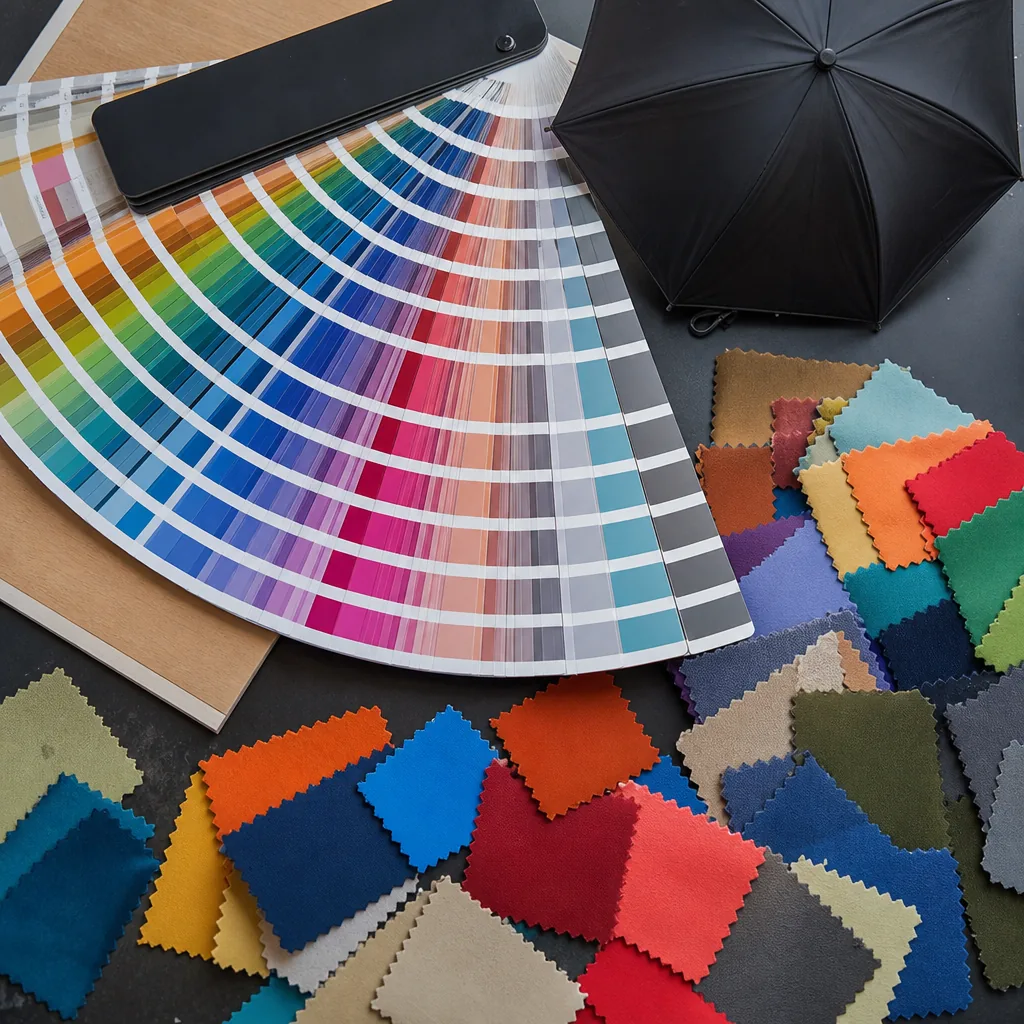
Event umbrellas have to do two jobs at once: carry branding that reads in dense crowds and still survive the realities of production, folding, and daily handling. Inside canopy printing solves that visibility problem by moving the message into the viewer’s line of sight from underneath, but only if layout, ink cure, fabric tension, and panel registration are controlled from the start. On the factory floor, the difference between a sharp result and a wasted run is usually in those details, not the artwork.
Why inside-canopy branding works for events and media
Inside canopy printing works because it puts the message where people actually look: from below, not from across the street. At festival gates, stadium entries, street campaigns, and corporate hospitality check-ins, the canopy underside stays visible while the umbrella is open, moving, or stacked in a crowd. That makes reverse umbrella logo print useful for sponsor marks, zone IDs, short slogans, and directional color coding. For custom event umbrellas, keep the artwork simple and readable at 6 to 12 feet: one logo, one short line, and high contrast. Thin type, low-contrast tones, and detailed graphics disappear quickly in rain, shade, and motion.
For photos and video, double canopy printing gives stronger brand exposure because cameras often catch the underside when guests raise umbrellas or staff hold them overhead at entry points. A 23-inch auto-open model with fiberglass ribs is a practical choice for fast distribution, while 27-inch and 30-inch frames suit VIP areas and corporate hospitality where coverage and wind resistance matter more than pack size. Typical specs are 190T or 210T pongee, UPF 50+ coating, and fiberglass ribs for lower weight with better flex than steel. For repeat-use programs, ask for wind testing, AQL 2.5 inspection, and a clear lead time in days before you commit.
Set artwork for the reverse-view print surface
Inside canopy printing has to be built as a reverse-view file from the start, not copied from a normal outer-canopy layout. Mirror the artwork in layout software so text reads correctly from inside the umbrella, then set the final reading direction around the intended viewer: wearer-facing graphics usually belong on the panel opposite the handle or centered in the user’s forward line of sight, while crowd-facing umbrella event branding often needs the logo rotated toward the audience instead. On standard single-canopy models, the graphic prints on one visible layer behind the ribs, so the main constraints are panel seams, the pole at center, and stitch-safe margins. Keep small copy off the seam line, and proof the exact panel map before production so the reverse umbrella logo print lands where the eye expects it.
Double canopy printing needs a different plan because windproof frames use two fabric layers, and the outer shell can block, soften, or visually break the inside image. That makes inside canopy printing less forgiving for sponsor names, fine lines, and tightly aligned layouts. Use larger type, stronger contrast, and simpler shapes so the artwork still reads when the canopy flexes in wind. For custom event umbrellas, treat the full-panel mockup as the approval standard and check the artwork at actual panel scale, not just on a flat artboard. If the design includes multiple logos, put the most important mark where it stays visible through rib spacing and avoid crowding the center point; on double-canopy windproof models, restrained graphics usually deliver cleaner results than dense compositions.
Choose materials and constructions that keep colors vivid
For inside canopy printing, the fabric spec determines how sharply ink sits and how well colors hold after folding, reopening, and repeated handling. Pongee 190T is the usual entry point for custom event umbrellas: it is cost-effective, widely available, and works well for screen ink and heat-transfer graphics when the artwork is simple and the buyer needs a low-risk production spec. Pongee 210T is denser and tighter in weave, so it generally gives better ink hold, less show-through on the outer panel, and cleaner edges on sponsor marks, white text, and reverse umbrella logo print work. For umbrella event branding that relies on saturated solids or fine type, 210T is the safer choice. For price-sensitive programs with straightforward graphics, 190T is usually enough without pushing the MOQ or landed cost higher than necessary.
Frame design has a direct effect on print stability because the canopy can only stay clean if the structure holds its shape. Fiberglass ribs are preferred over steel ribs for most printed event umbrellas because they flex under wind load and recover better, which helps reduce seam pucker and panel distortion around the artwork. An 8K layout is lighter and acceptable for compact giveaways, but a 16K frame distributes load across more ribs, keeps the canopy flatter, and usually gives better registration control when the print sits close to seams. Vented or double-canopy printing structures also matter: they release air before the umbrella balloons, which reduces twisting and helps the artwork stay readable in gusty outdoor use. For larger custom event umbrellas, that extra stability is usually worth more than the small weight or cost savings of a simpler frame.
Auto-open mechanisms are the right call when speed and one-handed deployment matter more than the lowest unit price. They fit stadium entry, registration desks, transit exits, and other high-throughput event settings where staff need to hand out umbrellas fast and users need immediate cover without wrestling the shaft. Manual-open models are cheaper and still work for controlled giveaways, but they slow distribution and are easier to fumble when a crowd is moving. If the brief is practical event use with visible branding, an auto-open fiberglass frame with a 190T or 210T canopy is the more dependable build; choose 210T when the print must stay crisp, and reserve 190T for simpler graphics where cost control is the main constraint.
Balance coverage, cost, and production lead time
Full inside-canopy printing changes the job at the pattern-making stage, not just at artwork handoff. Standard umbrella event branding on the outside panel can tolerate small registration shifts after cutting, but inside canopy printing on 6, 8, or 10 panels puts every seam and rib junction in view when the umbrella opens. On 23" and 27" custom event umbrellas made with 190T or 210T pongee, a 3 mm cutting drift can throw off a logo edge or sponsor line, so we usually require a physical strike-off before bulk cutting instead of relying on a PDF proof alone. That adds 3 to 5 days for artwork separation and screen preparation, plus 5 to 7 days for sampling when the print covers most of the canopy. MOQ also rises because the factory must lock in fabric, screens, sewing capacity, and inspection time for a build that cannot be blended easily with plain-stock orders.
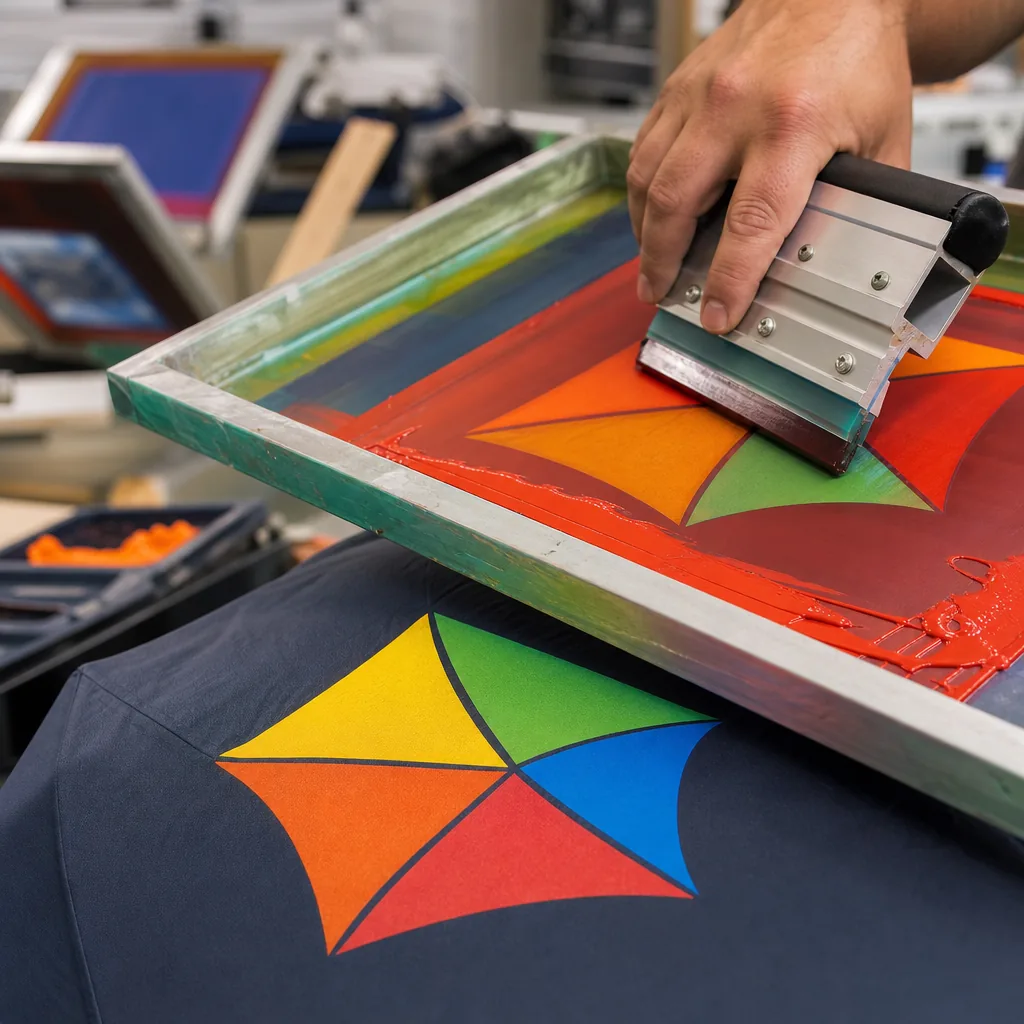
Screen printing is the better fit for solid colors, large marks, and repeated sponsor logos in reverse umbrella logo print applications. It gives stronger opacity on dark pongee, stable color matching, and lower unit cost once the order reaches about 500 to 1,000 pieces per design, but each color still adds film, screen, ink adjustment, and wash-down time. Digital printing is more practical for gradients, photographic graphics, skyline artwork, and complex full-panel layouts, especially on white or light canopies. It shortens setup and sampling, but the per-piece print cost is higher, and dark-fabric coverage is weaker unless a white base or transfer process is used. For double canopy printing, the inner layer also has to clear the frame so heat, ink build-up, or seam bulk does not affect opening.
That cost structure shows up differently in FOB and DDP quotes. On FOB Ningbo or Shanghai, the main variables are screen charges, digital print cost, sampling fee, and production days, with a typical customized 23" auto-open run landing around 25 to 35 days after sample approval. On DDP, the quote also includes carton volume, duty classification, inland trucking, destination handling, and last-mile delivery risk, so a low-MOQ digital order can price higher than expected even when the umbrella itself is simple. The practical way to quote inside canopy printing is to separate screen printing and digital printing once coverage exceeds 50% of the canopy, then show MOQ, sample cost, and lead time line by line. That keeps buyers focused on the real tradeoff: better visual coverage versus higher setup cost, longer sampling time, and tighter delivery risk on custom event umbrellas.
Define QC checkpoints for crowd-facing branding
For inside canopy printing, the first QC gate is panel registration. Crowd-facing branding only reads cleanly when the reverse umbrella logo print lands in the same visual center across every rib bay, so check placement against the cut pattern before sewing and again after final canopy tensioning. That second check matters because fabric stretch can move the image a few millimeters, and on 8K or 10K frames that shift is visible from 10 to 15 feet, the distance that matters for umbrella event branding in queue lines, sponsor corridors, and stage entries. On 16K frames or larger canopies, tighten the tolerance further when the artwork crosses multiple panels or includes narrow type, because small misalignment shows up fast once the umbrella opens.
Color control comes next. For custom event umbrellas, compare strike-offs under standard light against one approved master and keep that reference locked for the full run, or the same artwork will drift in density from panel to panel and from one production day to the next. Smudging, pinholes, and weak ink laydown need separate checks at seam crossings, since double canopy printing can hide a bad edge until the canopy opens and the image breaks at the vent line. Heavy solids, gradients, and small text need extra scrutiny where the stitch channel or seam allowance can cut into the image; reject any panel where ink feathers into stitching or bleeds onto the adjacent panel. Use AQL 2.5 for visible print defects, and make carton labeling part of the control plan with artwork version, color code, quantity, canopy size, and event date so repeat runs stay consistent across multi-event programs.
Frequently Asked Questions
Does inside-canopy printing require a different file setup than exterior printing?
Yes, the artwork usually needs to be reversed so it reads correctly from underneath. The factory should also confirm the panel layout and crown position before production starts.
Are inside-canopy prints durable on windproof umbrellas?
They can be, as long as the ink system matches the fabric and the print is placed away from high-stress fold lines. Double-canopy and fiberglass frames help reduce deformation, which supports better durability.
Does inside-canopy artwork need to be split by panel seams?
Yes. Inside-canopy graphics are usually set up panel by panel because each seam interrupts the image. For best alignment, buyers should provide vector artwork and keep critical text at least 10-15 mm away from seam lines and rib attachment points.
What umbrella sizes work best for interior branding at outdoor events?
For strong visibility in photos and crowds, 23-inch to 27-inch straight umbrellas and 30-inch golf umbrellas are the most common choices. Larger canopies give more usable print area on the inside, but they also increase carton size and freight cost.
How does inside-canopy printing affect MOQ and production time compared with standard exterior logo printing?
Inside-canopy printing often requires a higher MOQ because setup is more complex, especially for all-over or multi-panel artwork. In many OEM programs, MOQ starts around 300-500 pieces per design, and production can run 7-15 days longer than simple 1-color exterior logo printing depending on print method and frame style.
Looking to Launch Your Custom Umbrella Line?
ZheBrella is a Zhejiang-based OEM/ODM umbrella manufacturer with 17 years of export experience. Free design, low MOQ from 100 pieces, windproof construction, full-color print.
Get Free Quote Now »People Also Search For
Related Articles
Inside-Canopy and Reverse Printing for Umbrella Branding
Compare inside-canopy and reverse-print branding methods for umbrellas, including legibility, protection, and factory se...
Read More »Inside-Canopy and Underside Logo Printing on Branded Umbrellas
See how inside-canopy logo printing expands branding space on umbrellas, with guidance on artwork, fabric choice, and pr...
Read More »
Inside-Panel Umbrella Printing for Subtle Brand Messaging
Learn when inside-panel umbrella printing works, how it looks in use, and what artwork and construction limits buyers sh...
Read More »