Inside-Canopy and Reverse Printing for Umbrella Branding
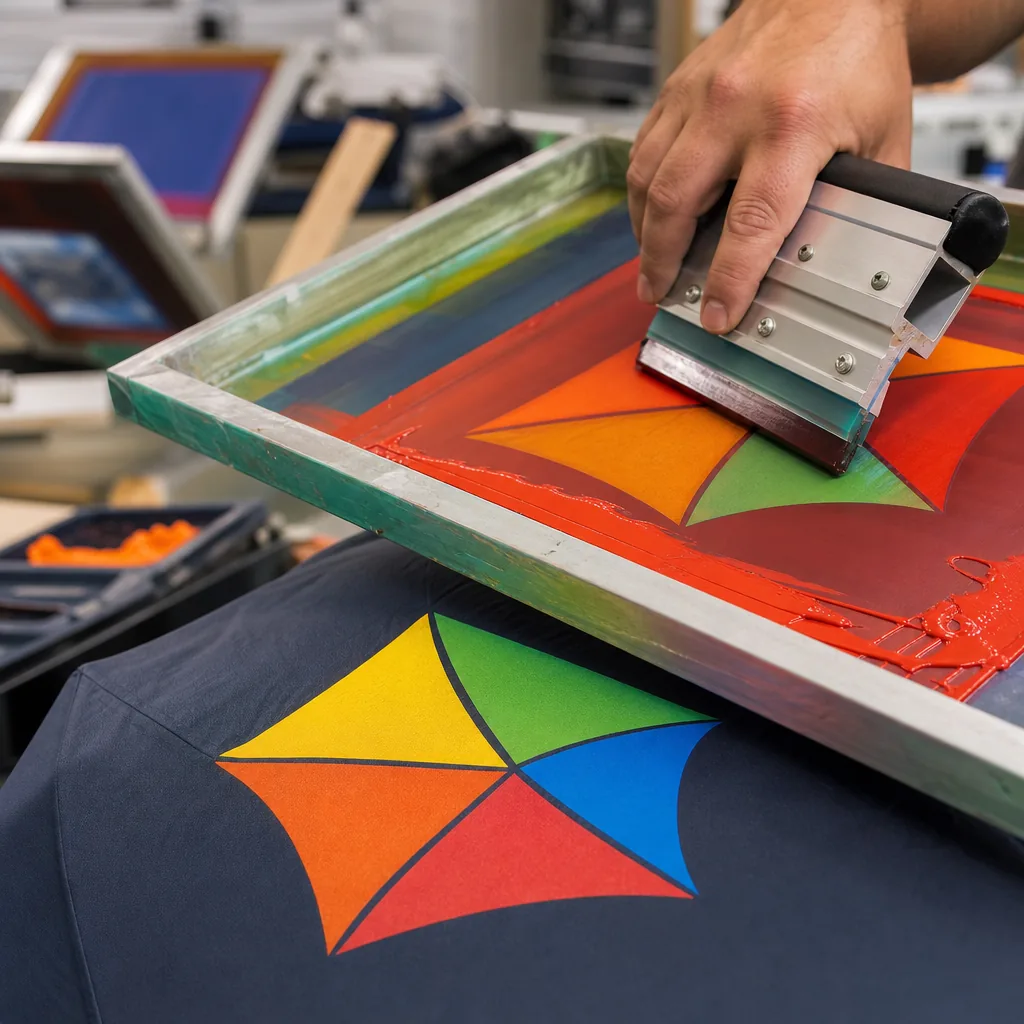
Umbrella branding fails when the mark looks good in a mockup but disappears once the canopy opens, folds, and flexes in real use. For buyers comparing inside-canopy and reverse-printing methods, the real questions are legibility, abrasion resistance, and what the factory must change in ink system, frame timing, and curing to keep the result consistent. At ZheBrella, we see that inside canopy printing and reverse-side decoration each impose different constraints on fabric finish, seam placement, and quality control, so the right choice depends on where the umbrella will be used and how long the branding must hold.
Explain when inside-canopy branding makes sense
Inside canopy printing works best when the underside is the surface people actually see. On a 23-inch or 27-inch umbrella held low in rain, the interior faces reception lines, crowd photos, and low-angle event shots while the outer shell is partially hidden. That makes it a strong choice for hotel arrivals, airport transfers, weddings, trade shows, and city tourism programs where the umbrella is part of the scene. A reverse umbrella logo or internal canopy print also reads well under overhead lighting and flash, which is useful when photographers are shooting from below and the brand needs to stay centered and legible.
For premium retail and gift programs, the goal is controlled presentation rather than street-level distance reading. A branded rain umbrella print on the exterior still gives walking visibility, but inside canopy printing creates a cleaner reveal when the canopy opens, which fits fashion labels, museum shops, resorts, golf outings, and corporate gifting. The layout should follow the panel structure, usually 8K or 16K, with art aligned to seam positions so the mark does not split across ribs. That matters because a logo viewed from underneath is judged at close range, where uneven placement, clipped edges, or stretched artwork will stand out immediately.
This placement also supports destination branding because it keeps the message visible in the exact moments that matter: arrivals, procession shots, shuttle transfers, and group photos. When umbrellas are held low against wind or viewed from below in a packed crowd, the underside becomes the cleanest billboard available. That is the practical reason buyers choose inside canopy printing over other umbrella branding methods for hospitality, tourism, and event work. It gives a sharper read in photographs, a more premium feel in hand, and less risk than relying on a side view that may never appear in the final image set.
Compare reverse-print and standard-print techniques
Reverse-print layouts begin from the carried viewpoint, not the sewing table. On an outward-opening frame, the visible face when the umbrella is closed is the underside of the canopy, so the factory file for inside canopy printing cannot be treated like a standard outside print. The print-ready artwork should be rebuilt panel by panel against the gore pattern, with centerline, seam allowance, rib tip positions, handle-facing direction, and fold line all marked before release. That is where a reverse umbrella logo stays readable: the mockup is shown in normal reading order for approval, then the production file is mirrored only where the panel geometry requires it. Skipping that conversion is the main buyer risk, because a clean render can still produce backward text, shifted copy, or a logo that lands across a seam after cutting and stitching.
Standard umbrella branding methods are simpler because the viewing side and print side match, especially on 190T or 210T pongee and white polyester canopies using screen print, heat transfer, or sublimation. With inside canopy printing, the orientation check moves earlier in prepress: any text, badge, or directional mark should be flagged before separations are made, and the panel template should be verified at the final stitch scale so a branded rain umbrella print reads correctly after assembly. A sound workflow uses three approvals before bulk production: a flat panel proof, a stitched digital mockup, and one physical pre-production sample. That matters more on 16K umbrellas than on 8K or 10K styles, because narrower panels leave less tolerance for 3 to 5 mm seam breaks and make mirrored copy more obvious once the canopy is inverted and closed wet-side inward.
Match print method to fabric and canopy color
Match the method to the cloth first, then to the artwork. On 190T pongee, inside canopy printing with plastisol or water-based screen ink is the most economical option for 1-color and 2-color logos, as long as the line weight stays above 0.4 mm and the design does not rely on tight halftones. The tighter 210T pongee gives a smoother face and better edge control, so it is the better base when the buyer needs a reverse umbrella logo with small text or registration held within about ±1.5 mm. For sewn panels, screen print is strongest on solid shapes and simple type; digital transfer is the better choice once the art adds gradients, soft shadows, QR codes, or more than 4 spot colors. For a branded rain umbrella print with fine serif text, a transfer also reduces mesh distortion and keeps details more consistent across multiple panels.
Canopy color changes visibility and cost. White, pale gray, and light silver pongee give the cleanest internal canopy print because the ink reads against a bright base and needs less opacity. Navy, black, forest, and burgundy panels absorb more light, so small letters below 5 pt can fill in, especially near seams where panel tension shifts; on those colors, a white blocker is usually required, which adds one print pass, more curing, and a stiffer hand. UV-coated fabrics, including UPF 50+ or Teflon-treated canopies, need extra testing because the coating can reduce ink adhesion. A cross-hatch and tape-pull check before bulk production is standard practice, and if the topcoat is slick or fluorocarbon-heavy, direct screen print becomes a higher-risk choice than transfer or pre-printed panel work.
Translucent POE, PVC, and EVA panels behave differently from woven polyester because the artwork shows through the material and can read from both sides. That makes mirrored text, adhesive halos, and edge bleed more visible, so the reverse umbrella logo has to be simplified and positioned with the panel seam layout in mind. For these plastic films, UV-cured screen print or specialty transfer systems designed for film adhesion usually perform better than standard textile ink. Sublimation works well on white 190T or 210T polyester panels when the goal is photo-quality coverage, but it is not a fit for dark or opaque canopies. Buyers should choose the method based on the cloth, opacity, and wash-through risk, not just the artwork file, because the wrong umbrella branding methods raise rework risk and can force a higher MOQ or longer lead time.
Account for construction and weather performance
Inside canopy printing has to follow the umbrella structure, not just the artwork layout. On a vented double-canopy umbrella, the inner canopy and outer canopy move differently as pressure escapes through the vents, so a reverse umbrella logo can look clean in the file and still skew once the frame opens under load. That risk is highest on windproof frames with fiberglass ribs, where the ribs flex to absorb gusts but the fabric still cycles through tension and release at every opening. The safest internal canopy print placement is the flatter center of each panel, kept clear of seam allowances, vent edges, and the points where the canopy is repeatedly pulled during opening. Fiberglass gives better fatigue resistance than basic steel, but it does not protect ink from distortion if the print crosses a stress line. On 8K, 10K, and 16K constructions, narrower panels and more seams reduce the uninterrupted area available for a readable branded rain umbrella print, so the panel map has to be set before artwork approval.
The main failure mode for umbrella branding methods on the inside surface is mechanical cracking, not color mismatch. Ink film breaks first where the canopy folds sharply: near the top notch, along the main crease lines, at the rib tips, and anywhere the fabric is compressed on every close. That is why dense solids and heavy borders are poor choices for an internal canopy print on compact 21-inch umbrellas, where the panels are short and the fold pattern is tighter. A 23-inch or 27-inch windproof model gives more usable print area, but the larger span also sees greater load in strong wind, so the reverse umbrella logo still needs to stay away from reinforcement patches, seam stress, and any section that bends hard when the runner moves. In practice, long-life results come from lighter coverage, stable registration, and fabrics such as 190T or 210T pongee, which handle repeated opening better than loose, overprinted cloth when the print is kept out of the high-motion zones.
For buyers, the construction choice should be tied to the intended use, MOQ, and expected service life. A vented double-canopy frame with fiberglass ribs is usually the better base for inside canopy printing when the umbrella will be carried daily in wind, because the vent reduces lift and the ribs reduce breakage risk. Standard production controls should also account for cure time, fold memory, and inspection criteria such as AQL 2.5, since a print that looks acceptable on flat fabric can still fail after a few open-close cycles if it crosses a seam or crease. For a practical branded rain umbrella print, specify the panel map, print clearance from seams, and the fabric weight before sampling, then confirm the final layout on the exact frame size. That reduces rework, protects the ink from cracking, and keeps the finished umbrella aligned with the weather performance the structure can actually deliver.
Set approval standards for branded production
Lock the approval standard before bulk cutting. For inside canopy printing, the sample should state the exact logo orientation on each panel, the reading direction from the user’s point of view, and which panel sits above the strap closure when the umbrella is folded. Require three approval views: fully open from below, half-open at about 45 degrees, and fully closed with the tie strap fastened. If the design is a reverse umbrella logo, the proof should be marked on the exact frame count and size, such as 8K, 10K, or 16K and 21 inch, 23 inch, 27 inch, or 30 inch, because panel width changes centering and edge balance. For artwork that crosses seams on 190T or 210T pongee, set a measurable registration tolerance, typically no wider than plus or minus 3 mm for simple shapes. The approval pack should also say whether the internal canopy print must remain legible when the canopy is partially collapsed, since some layouts disappear into pleats when closed.
Set durability expectations by decoration method, not by umbrella alone. For screen print, heat transfer, or sublimation, ask for dry rub, damp rub, and a 24-hour air-dry water exposure check so you can catch smudging, cracking, ghosting, or color lift before bulk sewing. If the canopy is POE, PVC, or EVA instead of woven pongee, include adhesion and migration risk in the approval because film-backed materials respond differently to folding and heat. Your inspection standard should cover the print as well as the frame: incorrect orientation, upside-down panels, off-center placement, missing ink, pinholes, seam overlap, contamination, and rub-through from rib tips or ferrules after at least 10 open-close cycles on sampled units. Use AQL 2.5 for final inspection and list the acceptance points for the decorated panels, not only the hardware.
MOQ and lead time usually rise when the decoration moves to the inside layer because alignment, curing, and packing controls are tighter. A typical outside canopy order may start around 300 to 500 pieces, while inside placement often moves to 500 to 1,000 pieces depending on color count, panel coverage, and whether the art crosses seams. Lead time commonly extends by 3 to 7 days over a normal 25 to 35 day production window because the factory needs a pre-production sample, extra registration checks, and more careful packing to avoid blocking or abrasion. For any branded rain umbrella print order, the buyer should confirm the exact print method, approve the same fabric and frame combination used for bulk production, and require a written hold point before mass sewing starts.
Frequently Asked Questions
Is inside-canopy printing durable on daily-use umbrellas?
Yes, if the print method is matched to the fabric and the artwork stays away from high-stress fold lines. Screen and transfer prints are usually more durable than overly detailed digital artwork on flexible panels.
Can reverse printing be used on windproof double-canopy umbrellas?
Yes, but the artwork must be planned around the vent gap and the inner canopy structure. The factory should confirm the visible area in the open state so the logo does not disappear behind seams or overlap the vent opening.
When is inside-canopy printing a better choice than standard exterior panel printing?
Inside-canopy printing works best when the user will see the message while carrying the umbrella, such as for tourism, events, or premium gifting. It is also useful for designs that need more protection from direct abrasion and folding wear on the outside surface.
Does reverse logo printing require a different umbrella construction than normal panel branding?
Usually yes. Reverse printing is easier to execute consistently on umbrellas with suitable panel layout, stable canopy tension, and factory equipment that can register artwork in the correct viewing direction after assembly. Buyers should confirm whether printing is done before panel sewing or after frame assembly, because this affects alignment and lead time.
What are the practical MOQ and lead time differences for inside-canopy or reverse-print umbrella orders?
For OEM production, inside-canopy or reverse-print programs commonly start around 300 to 1,000 pieces per design, depending on size, fabric, and print coverage. Lead times are often 7 to 15 days longer than basic single-position exterior logo printing because of artwork setup, sampling, and added production steps.
Looking to Launch Your Custom Umbrella Line?
ZheBrella is a Zhejiang-based OEM/ODM umbrella manufacturer with 17 years of export experience. Free design, low MOQ from 100 pieces, windproof construction, full-color print.
Get Free Quote Now »People Also Search For
Related Articles
Inside-Canopy and Underside Logo Printing on Branded Umbrellas
See how inside-canopy logo printing expands branding space on umbrellas, with guidance on artwork, fabric choice, and pr...
Read More »Under-Canopy Printing for Reverse-Fold Brand Messaging
Place brand messages inside reverse-fold umbrellas to create a visible surprise effect, while protecting logo placement ...
Read More »Inside-Canopy Printing for High-Visibility Event Umbrellas
Create event umbrellas with inside-canopy branding that stays visible in crowds, photos, and video while protecting prin...
Read More »