Inside-Canopy Umbrella Printing for Brand Storytelling
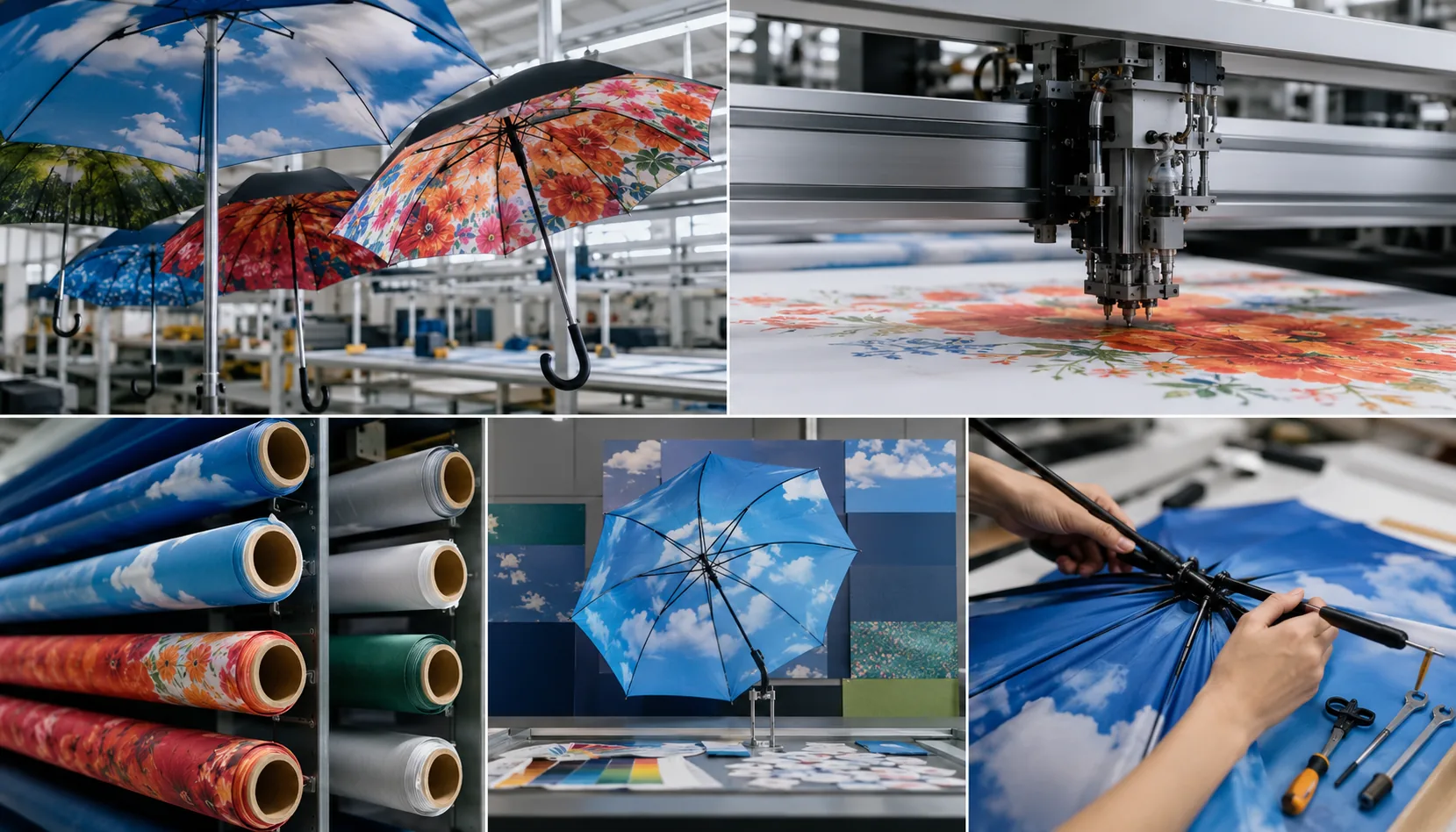
Brand buyers often want more storytelling space on an umbrella, but putting every message on the outside can clutter the look and dilute brand recognition. On our Songxia production floor, inside canopy umbrella printing is where campaign artwork, messages, or maps can live cleanly on 190T or 210T pongee, provided the panel cutting, ink control, and sewing alignment are managed before bulk production.
Why Print on the Inside of the Canopy
Inside canopy umbrella printing works best when the buyer needs a clean outside and a memorable experience underneath. Museum shops use interior umbrella artwork for ceiling murals, artifact sketches, or exhibition timelines, while the exterior stays black, navy, or beige for retail consistency. Travel brands print route maps, skyline silhouettes, airport codes, or destination photography on the underside, keeping the top panel simple enough for hotel boutiques and duty-free shelves. For city tourism programs, the branded umbrella interior can carry subway lines, landmark illustrations, or neighborhood icons without turning the outside into a billboard.
For sports events and corporate campaigns, the logic is practical: the exterior needs to photograph well in a crowd, pass brand guidelines, and avoid clashing with uniforms, sponsor walls, or retail displays. A 23" auto-open stick umbrella with 190T pongee can keep a single-color outer canopy and a small transfer logo on one panel, while the printed umbrella lining carries stadium seating graphics, team history, product launch visuals, or campaign messaging. We usually recommend fiberglass ribs for these projects because buyers often use them outdoors at events, and an 8K or 10K frame gives better stability than cheap steel-only promotional builds.
The inside surface also gives more room for storytelling without increasing the visible logo burden. Full-panel sublimation is the cleanest method for photo-heavy umbrella campaign artwork, especially on white or light 190T/210T pongee lining laminated under a darker exterior layer. Screen printing can work for simpler one- or two-color interiors, but registration becomes harder across 8 panels, so artwork should be built with safe margins at the seams. For retail or museum programs, we check panel matching during AQL 2.5 inspection because a crooked skyline or mismatched map line is more obvious to the user than a small exterior logo shift.
Artwork Types That Work Inside Umbrellas
The artwork that performs best under a canopy is the artwork people can understand while standing still for 5 seconds. Sky scenes, constellation graphics, city maps, campus maps, resort trail maps, and illustrated skylines all work because the umbrella naturally frames the view upward. For inside canopy umbrella printing, I prefer continuous artwork that tolerates panel breaks instead of designs that depend on one perfect center point. On an 8K umbrella, each triangular panel is visually dominant, so maps and sky scenes should be divided with intentional landmarks near the middle of each panel, not buried on seam lines. On 16K frames, the narrower panels create a smoother wrap, but they also increase seam count and sewing distortion risk. If the artwork has a horizon line, compass ring, or circular brand device, specify whether it must align to rib tips, panel centers, or the ferrule point before sampling.
Timelines, brand illustrations, product education graphics, and event schedules need stricter layout control than decorative interior umbrella artwork. Text below 12 pt usually fails after cutting, sewing, rib shadow, and real-world viewing distance; for event schedules I recommend 14–18 pt minimum, with bold headers and no more than 3–4 information blocks per panel. A branded umbrella interior can carry a company origin story, sustainability claims, ingredient map, wine region guide, museum floor plan, or conference agenda, but the copy must be written like signage, not a brochure. Keep QR codes at least 25 mm square, away from seams, and test scan them under the actual pongee 190T or 210T fabric color. Dark ink on light lining reads better; white text reversed out of heavy artwork often looks premium but loses sharpness on coarse weave.
Panel seams and rib shadows are not minor production details; they decide whether umbrella campaign artwork looks intentional or broken. Every file should show seam allowance, rib positions, top cap area, and the direction each panel is sewn, because a printed umbrella lining wraps as separate fabric pieces, not as a flat poster. Our standard practice at ZheBrella is to ask for a full canopy mockup plus individual panel files at production scale, especially for 8K and 16K structures where artwork continuity matters. For sublimation on polyester pongee, gradients, skies, and full-color illustrations are strong choices, while screen printing is better for bold icons and limited-color schedules. Always approve a pre-production sample opened on the actual frame, because the same artwork can look clean on a 23 inch 8K auto-open umbrella and crowded on a compact 21 inch frame with shorter panel height.
Fabric, Coating, and Print Method Choices
For inside canopy umbrella printing, the fabric choice changes how sharp the artwork looks more than most buyers expect. 190T pongee is the usual baseline: it is light, prints cleanly, and keeps folds from becoming too bulky, but very fine lines can soften a bit because the weave is less dense. 210T pongee gives a tighter surface, so interior umbrella artwork holds edges better and small type reads more reliably, especially on 23" and 27" promotional umbrellas where the canopy curve is obvious. Black-coated UV fabric is different: the coating blocks light and helps the printed face pop from the inside, but heavy coating can slightly mute delicate tones if the artwork depends on subtle gradients. For a printed umbrella lining, the tighter and more uniform the base cloth, the less distortion you see at the seams and rib points.
If the goal is detailed umbrella campaign artwork, digital print is the practical choice. It handles photographic images, fine text, layered logos, and gradient-heavy graphics that would fall apart under normal spot-color separation. On a branded umbrella interior, digital also keeps registration clean across panels, which matters when the viewer sees the canopy from below and notices any misalignment immediately. The tradeoff is cost and ink control: on porous fabric, too much saturation can bleed or darken the whites, so press settings and pre-treatment need to be dialed in. This is where 210T pongee usually performs better than 190T, because it gives the ink a more consistent landing surface and reduces banding on large interior graphics.
Screen print still makes sense for simple repeated interior graphics like logos, stars, arrows, or short slogans. It is faster, cheaper per piece at volume, and usually sharper on solid shapes than trying to force a complex digital file through a production line that does not need it. For inside canopy umbrella printing, the cleanest results come from keeping the art limited to one to three spot colors and placing it where the ribs do not interrupt the viewer’s line of sight. UPF 50+ canopies are useful when the buyer wants shade performance and a bright interior at the same time, but the coating should not be so heavy that it kills contrast. In practice, the best combination for clarity is a tight 210T pongee or UV-rated fabric with digital print for rich interior umbrella artwork, and screen print only when the branded message is simple and repetitive.
Construction Details That Affect the Interior View
Inside-canopy umbrella printing lives or dies on the frame layout, not just the artwork file. Fiberglass ribs are usually easier on a branded umbrella interior because they stay visually quiet: matte black fiberglass disappears faster than polished steel, especially on 8K and 10K golf-style frames where each rib cuts across the field of view. Steel ribs and metal stretchers can create hard lines that split face graphics, and silver finish parts are worse because they reflect light back at the user and visually compete with fine gradients or typography. If the design is meant to read as interior umbrella artwork, I prefer dark-coated hardware, because dark ribs frame the print instead of stealing attention from it. That matters even more for detailed umbrella campaign artwork with logos, copy blocks, or starburst layouts, where one bright metal rib can ruin symmetry.
Double-canopy vented construction adds another problem: the vent opening is useful for wind load, but it also interrupts the printed umbrella lining and creates a second visual boundary that the artwork has to respect. On a 23" or 27" frame, auto-open hardware and a high runner can push the view line upward, so the hub and stretcher stack sit right where the customer first looks when opening the canopy. Lower runner height usually gives a cleaner central window for inside canopy umbrella printing, while bulky auto-open mechanisms can make the center feel crowded if the artwork depends on large, uninterrupted shapes. For the best result, I tell buyers to map the ribs, vents, and center components before finalizing interior umbrella artwork; otherwise the print may look sharp in the flat proof but awkward once the umbrella is open and held overhead.
Approval Workflow and Bulk Production Controls
Approval should start with a layout proof that shows the inside view, not just a flat AI file pasted over a generic umbrella. For inside canopy umbrella printing, we mark each panel with rib positions, seam allowance, top notch direction, runner clearance, and the expected “reading angle” when the umbrella is open. A 23" or 27" stick umbrella usually has 8K panels, while golf models may run 8K, 10K, or 16K; the artwork must be split accordingly or the story gets chopped at every seam. For digital interior umbrella artwork, we ask buyers to approve color references against Pantone, CMYK values, or a physical swatch because 190T/210T pongee with PU, Teflon, or UV coating does not behave like paper. A one-panel strike-off is the first real checkpoint: it verifies ink density, edge sharpness, coating compatibility, and whether dark artwork shadows through to the outside canopy.
After the one-panel strike-off, a full pre-production sample should be made using the real frame, canopy fabric, printing method, and handle trim. This is where seam alignment review matters. A skyline, map, slogan arc, or umbrella campaign artwork can look perfect on screen but shift 3-6 mm during cutting, sewing, and stretching over steel or fiberglass ribs. We open the sample on a light table and from normal user height to check whether the branded umbrella interior reads cleanly without distortion near the crown or tips. Sampling for digital art normally takes 10-14 days after final files and deposit, longer if sublimation color matching or blackout lining is required. For most custom inside projects, realistic MOQ is 500-1,200 pcs depending on size, frame, and print process; below that, setup waste and operator time push unit cost out of range.
Bulk production controls should be locked before fabric cutting, not after the first cartons are packed. Our standard practice at ZheBrella is to keep the approved pre-production sample at the sewing line and inspection table, then check panel order, seam matching, print orientation, rib tip coverage, open/close function, and packed appearance against it. For inspection, AQL 2.5 is a sensible level for branded orders: major defects include wrong artwork direction, visible print stains, broken ribs, loose top caps, failed auto-open/auto-open-close mechanisms, and poor carton labeling. Production lead time is usually 35-50 days after sample approval, depending on order volume and whether the printed umbrella lining needs extra drying or lamination time. FOB Ningbo or Shanghai works for buyers with their own forwarder; DDP should be planned earlier because carton dimensions, HS code, duties, Amazon labels, and final packed-sample approval affect both cost and delivery date.
Frequently Asked Questions
Can the outside and inside of an umbrella have different prints?
Yes, but it requires careful fabric and opacity selection to avoid show-through. A solid exterior with interior digital print is often easier to control than two full artworks on both sides.
Is inside-canopy printing suitable for compact umbrellas?
It is suitable, but folding lines and tighter panel angles can make detailed text harder to read. Stick umbrellas usually provide a cleaner interior display area for maps, illustrations, and campaign stories.
What canopy fabrics work best for interior umbrella artwork at scale?
190T and 210T pongee are the most common choices because they hold full-color prints well and stay lightweight. For high-volume orders, 210T usually gives a slightly denser hand feel and better image consistency.
Will inside-canopy printing show through the outer panel?
It can if the outer fabric is very light or thin, but standard 190T/210T pongee usually keeps the artwork discreet from the outside. If exterior brand consistency matters, a darker or higher-opacity outer color is the safer choice.
What is a typical MOQ for custom inside canopy printing?
Factory MOQs are often 500-1,000 pieces per design, depending on panel count, print coverage, and umbrella model. Multi-artwork campaigns may require separate minimums for each print file.
Looking to Launch Your Custom Umbrella Line?
ZheBrella is a Zhejiang-based OEM/ODM umbrella manufacturer with 17 years of export experience. Free design, low MOQ from 100 pieces, windproof construction, full-color print.
Get Free Quote Now »People Also Search For
Related Articles
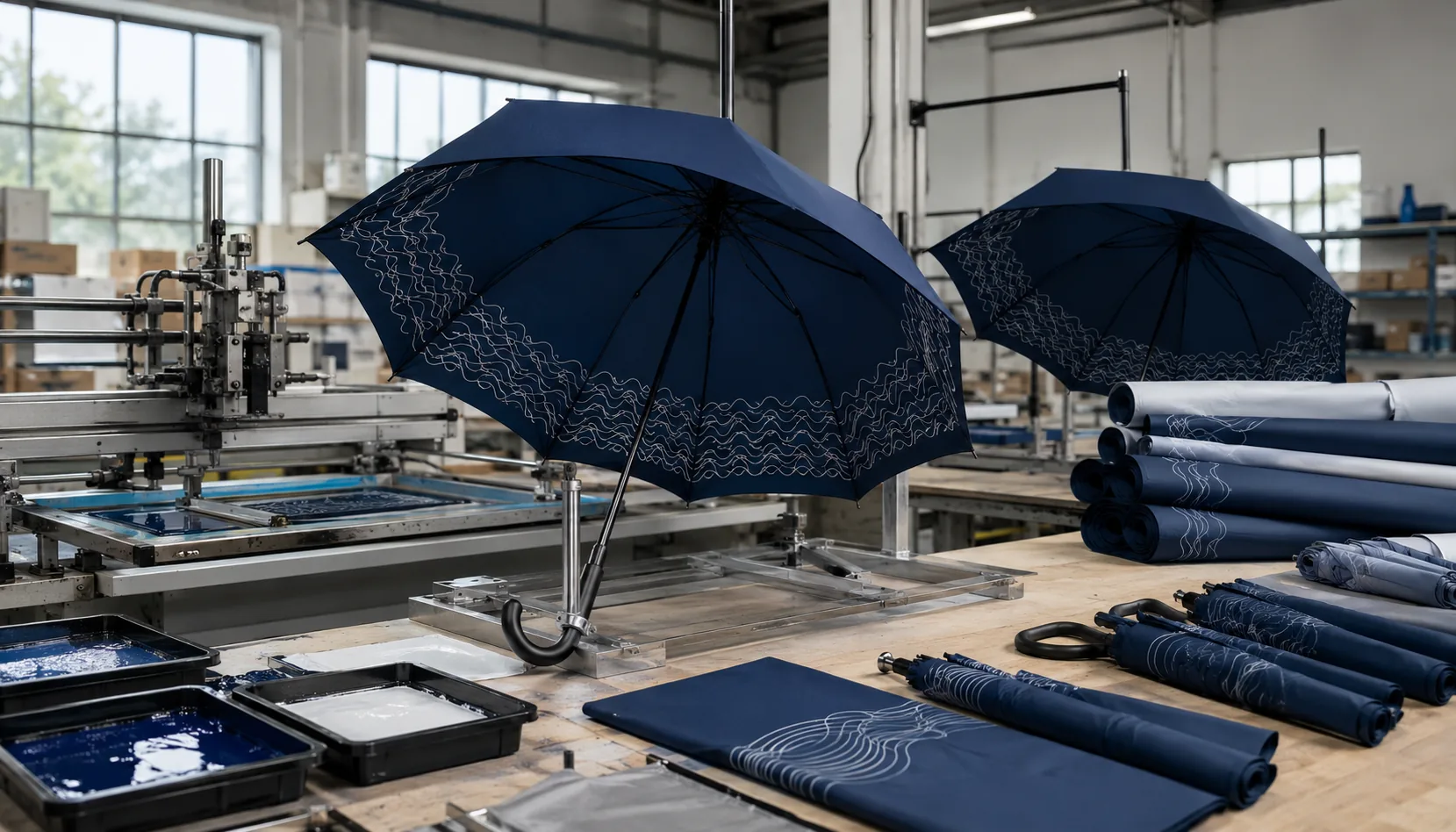
Inside-Canopy Umbrella Printing for Branded Campaigns
Plan inside-canopy umbrella printing for campaigns with readable layouts, fabric selection, rib-count limits, sample app...
Read More »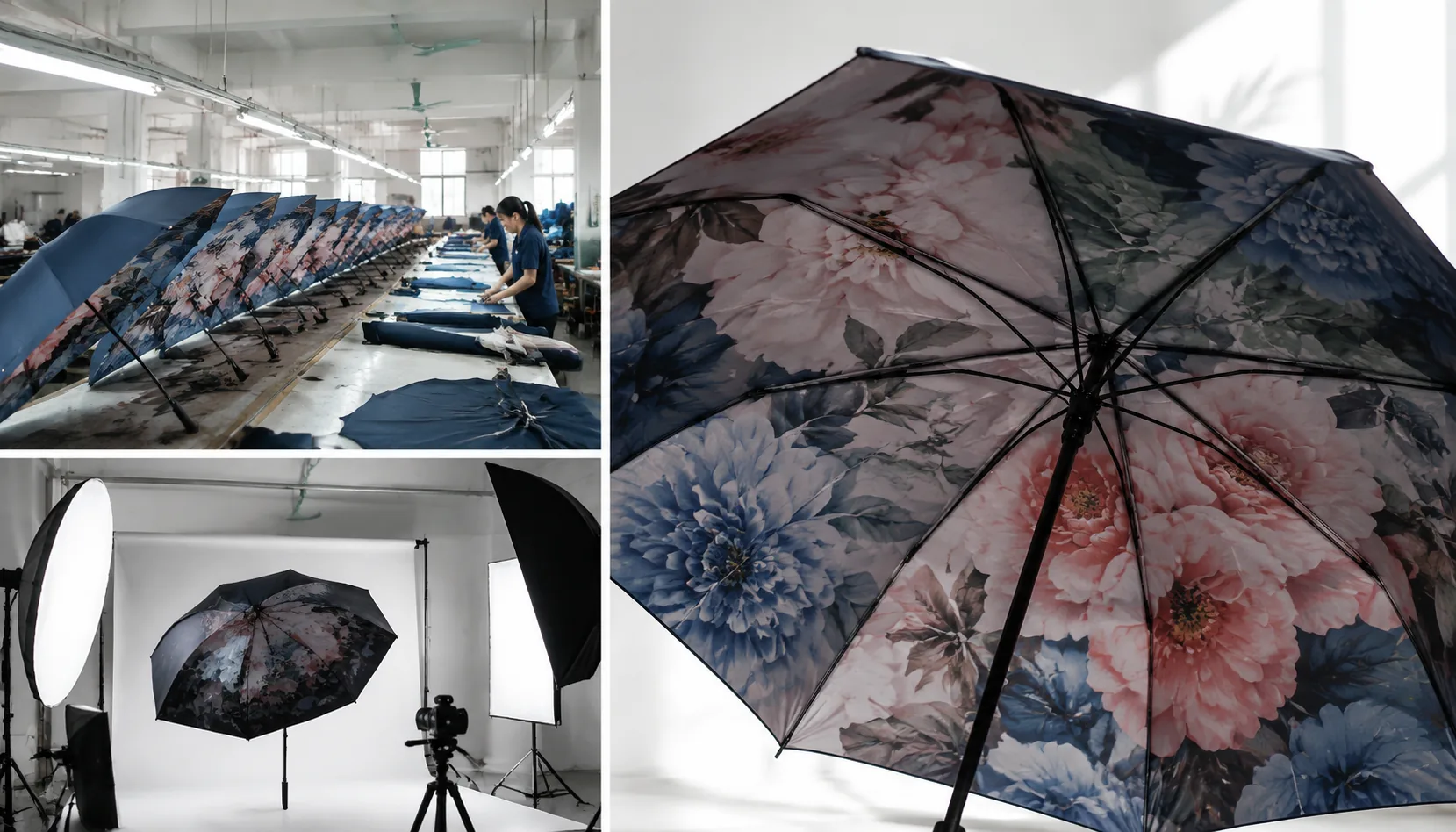
Inside-Canopy Umbrella Printing for Hidden Brand Moments
Design inside-canopy umbrella prints that surprise users while controlling fabric opacity, frame specs, sampling, MOQ, a...
Read More »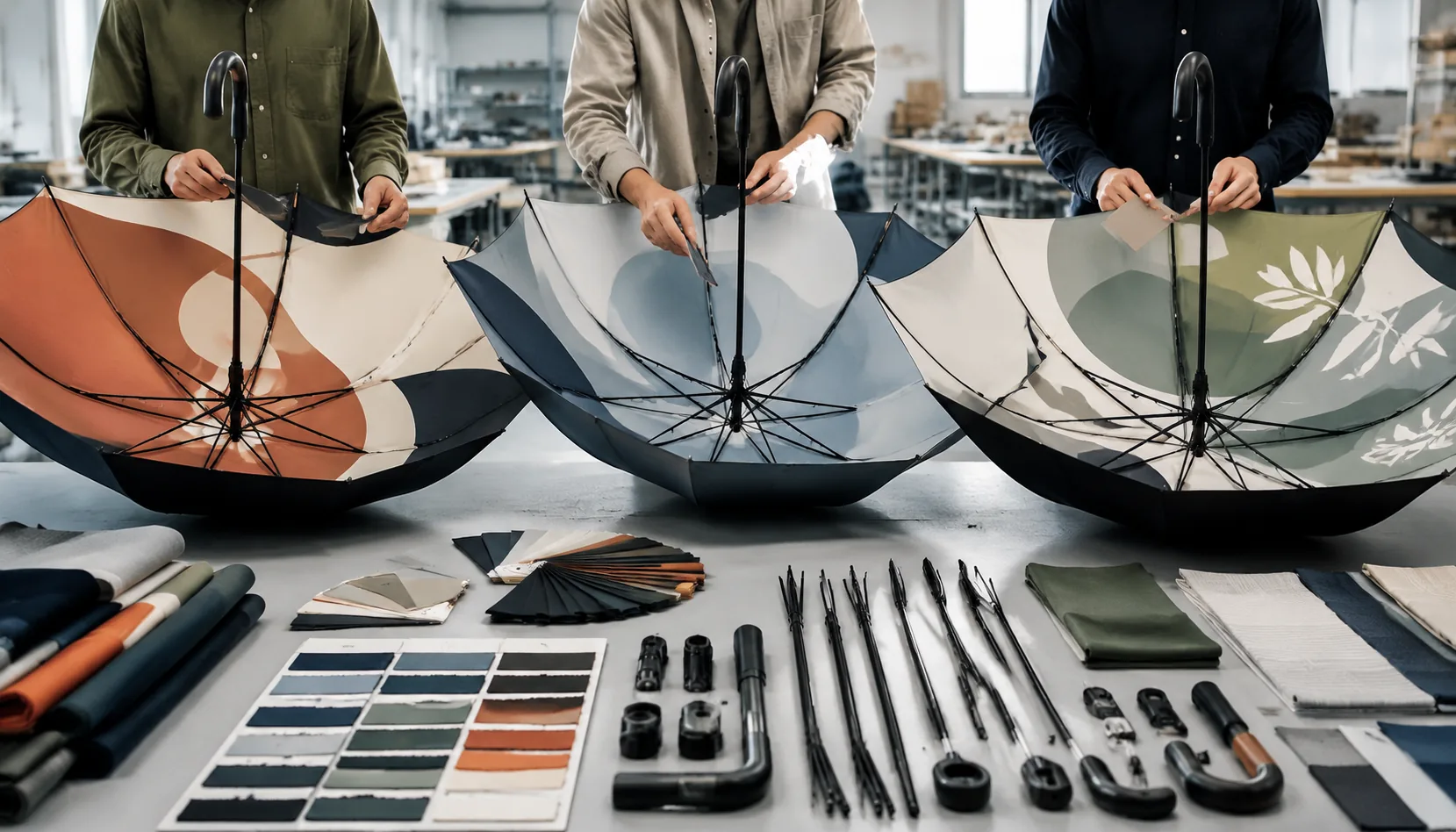
Inside-Canopy Umbrella Branding for Retail and Events
Plan inside-canopy logos with correct fabric, ink opacity, rib layout, and AQL checks so retail and event umbrellas look...
Read More »