Inside-Canopy Umbrella Printing for Hidden Brand Moments
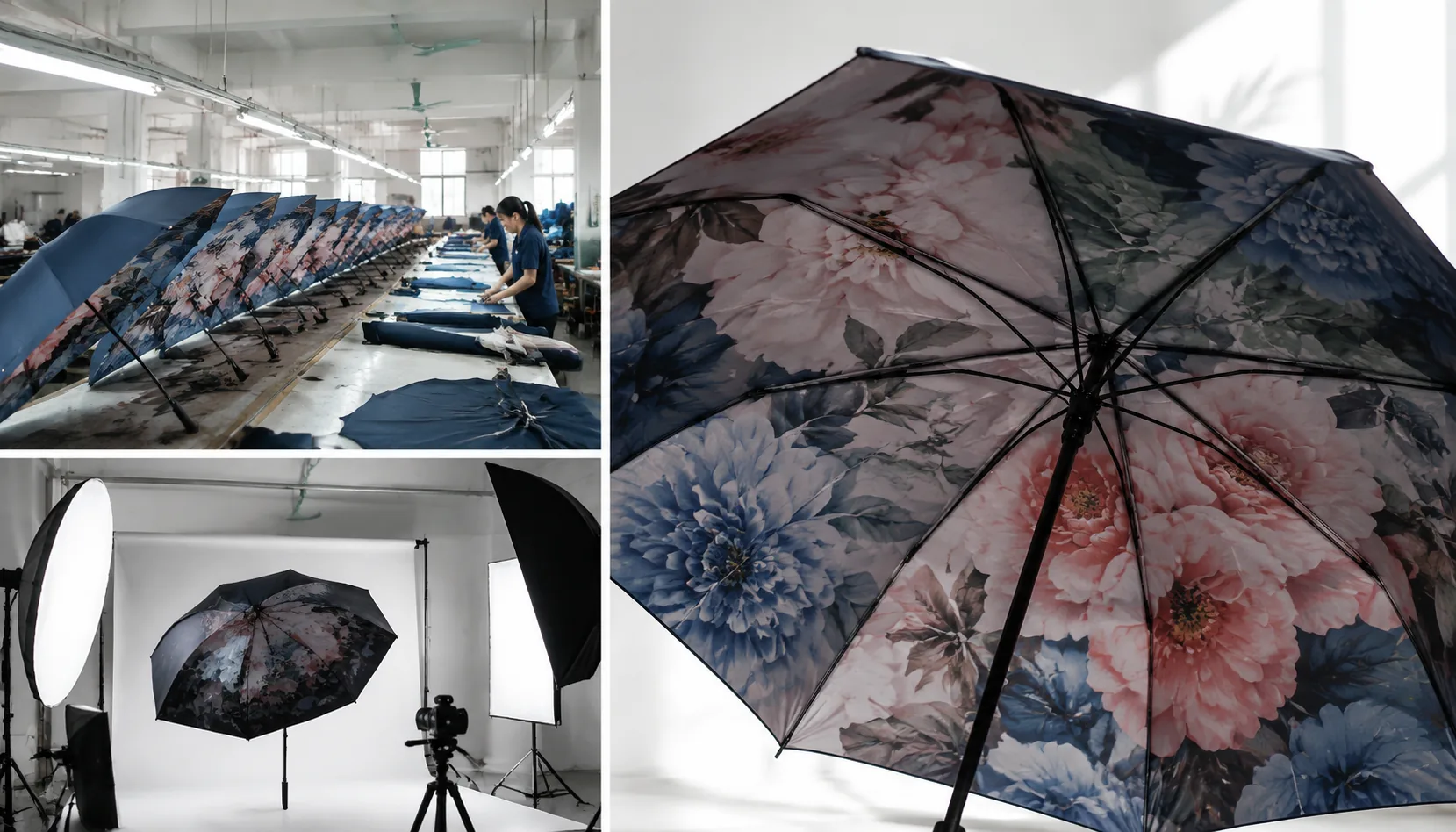
A hidden print only works if the buyer controls what happens before the umbrella ever opens: fabric shade, coating opacity, rib clearance, and how the artwork behaves when the canopy is tensioned. On our Songxia production floor, inside canopy umbrella printing is never treated as a simple logo placement; it has to be matched to fabric, frame geometry, sampling method, MOQ, and inspection standards so the brand moment feels intentional instead of risky.
When Interior Printing Adds Brand Value
Interior graphics create value when the person holding the umbrella is the audience, not the street. For museums, that can mean a Monet ceiling detail, a map of the galleries, or a short donor message printed across a 23" arc so it appears only after the visitor steps into rain. Travel brands use the same idea with route maps, skyline silhouettes, airport codes, or resort coordinates inside 190T or 210T pongee canopies. Universities often choose an inner umbrella logo print with campus illustrations, fight songs, or graduation-year artwork because alumni look up into the canopy while walking, waiting in line, or taking photos. This is where inside canopy umbrella printing works best: the message feels discovered, not pushed.
Luxury retail buyers should treat branded umbrella interiors like packaging design. A plain black exterior with fiberglass 8K ribs and a restrained handle looks clean on the sidewalk, while a printed lining inside can carry a monogram pattern, seasonal artwork, or a tone-on-tone brand story. For custom printed lining umbrellas, we normally recommend heat transfer or digital sublimation on white or light-colored pongee when the artwork needs fine gradients; screen printing is better for one- or two-color motifs with tight cost control. On POE transparent umbrellas, interior printing is less hidden, so the design must be planned as a visible two-sided object rather than a private reveal.
Event merchandise is different because the open-umbrella moment often happens in photos, queues, and VIP areas. A 27" golf umbrella with a double-canopy vent can show sponsor artwork inside while keeping the exterior minimal for fashion or venue rules. For promotional umbrella design, interior panels can be assigned by story: one panel for the event date, one for a sponsor, one for a city landmark, and the remaining panels for pattern or color balance. The factory risk is registration and panel matching, especially on 8K or 16K frames, so artwork should include 5-8 mm seam tolerance and avoid critical text crossing ribs. For retail-grade programs, I would still inspect to AQL 2.5 and test opening alignment after production, not just approve a flat printed fabric strike-off.
Fabric Opacity and Print Show-Through
Fabric opacity decides whether inside canopy umbrella printing looks premium or careless. On a standard 190T pongee canopy, the yarn density is light enough that a heavy inner umbrella logo print can ghost toward the outside, especially when the exterior is white, silver, yellow, sky blue, or other low-saturation colors. 210T pongee gives a tighter weave and slightly better coverage, but it is not a magic wall; high ink load, large solid blocks, and dark CMYK mixes can still shadow through when the umbrella is wet or held against strong sunlight. In production, I treat 190T as acceptable for small repeat patterns, tone-on-tone graphics, or thin line artwork, while 210T is the safer baseline for branded umbrella interiors with larger logos, night-sky prints, or photographic linings. If the buyer wants a pale outside canopy with a black or navy interior graphic, we run a printed cutting sample before bulk fabric approval, not after sewing.
Color pairing matters as much as fabric weight. A black, navy, forest green, burgundy, or charcoal outer canopy hides inner artwork much better than beige, white, light gray, or pastel panels. The problem is not only visual transparency; it is contrast. A dark inner print under a light exterior creates a soft shadow that follows the ribs and panel seams, and buyers usually notice it first when the umbrella is displayed open under retail lighting. For promotional umbrella design, I recommend avoiding large solid inner graphics directly under light exterior panels unless the artwork is screened back, broken into a pattern, or moved to alternating panels. Heat-transfer logos are especially risky because the film edge and adhesive layer can telegraph through thin 190T fabric. Sublimation on white lining fabric gives beautiful detail, but on single-layer construction the reverse side must be checked for bleed, migration, and daylight show-through before confirming the strike-off.
Single-layer umbrellas are lighter, cheaper, and easier to dry, but they give the least forgiveness for custom printed lining umbrellas. Double-canopy construction adds a second fabric layer, usually with a vented windproof structure on 8K or 10K frames, and that extra layer is the cleanest way to separate outside color from inside branding. It also increases fabric consumption, sewing time, and packed thickness, so the cost jump is real; for a 23 inch auto-open umbrella, expect double-canopy sewing to add more labor than simply upgrading from 190T to 210T. Our standard practice at ZheBrella is to test inner and outer color combinations as a complete canopy panel, not as loose fabric swatches, because seam tension, rib contact, and curved light angles change the result. For branded umbrella interiors, approve opacity under daylight, LED warehouse light, and wet-surface conditions, then lock ink density before mass cutting.
Artwork Layout for the Underside View
For inside canopy umbrella printing, the layout has to work from the user’s upward view, not from a flat catalog mockup. Radial artwork follows the rib geometry best: a center mark or icon at the shaft point, then graphics that fan out along each panel so the seams feel intentional instead of accidental. On 8K and 16K constructions, I always treat the rib lines as hard visual boundaries, because the panel breaks will cut through faces, lettering, and map detail whether the designer likes it or not. For branded umbrella interiors, the cleanest results come from artwork that is built in wedges, with line weights heavy enough to survive stitching, seam distortion, and the slight stretch that happens when the canopy is opened under tension.
Centered icons are useful when the client wants a simple inner umbrella logo print, but the safe zone is smaller than people expect. Keep critical text away from the runner mechanism at the center and away from the tip points where fabric can pull or wrinkle during sewing; those areas are the first to betray sloppy artwork. Bleed should extend beyond every panel edge so the printer can trim and stitch without leaving white slivers at the seams. For custom printed lining umbrellas, I also warn buyers not to place thin circular borders too close to the rib crossings, because once the umbrella opens those circles become broken rings. A map, compass, skyline, or moon phase graphic usually reads better than a dense paragraph of copy because the interior view is fragmented by structure.
Sky patterns, constellations, and repeated brand motifs are the easiest way to make the underside feel deliberate instead of crowded. A repeating logo field can work well on a promotional umbrella design, but it needs controlled spacing so the eye does not fight the ribs every 45 degrees on 8K frames or every 22.5 degrees on 16K frames. The best interior layouts use the panel repeat as a pattern rhythm: stars, clouds, waves, icons, or local landmarks placed in a circular flow that still makes sense when one panel is partially hidden by hand grip or seating angle. Our standard practice at ZheBrella is to proof the artwork on the exact panel count first, because inside canopy umbrella printing fails most often when the art is designed for the top view and then forced onto the wrong geometry.
Frame and Mechanism Choices That Support the Concept
The frame has to earn the premium before the buyer notices the hidden artwork. For inside canopy umbrella printing, I usually push clients toward fiberglass ribs rather than painted steel if the umbrella is meant for retail, VIP gifting, or a hotel program. Fiberglass bends back after gust loading, while steel ribs often stay kinked after one bad inversion. On a 23" or 27" stick umbrella, 8K fiberglass is the practical baseline; 10K gives a rounder canopy profile and better tension for an inner umbrella logo print; 16K looks impressive but adds weight and sewing labor. If the retail price target is above a basic promo umbrella, a fiberglass shaft or reinforced steel shaft, metal runner, and proper rib tips are easier to defend than spending everything on print area alone.
Mechanism choice also affects perceived value. A clean auto-open system lets the user reveal branded umbrella interiors in one motion, which matters when the design is meant to create a surprise moment in a lobby, store entrance, or event queue. Manual open is cheaper and reliable, but it makes the product feel like a giveaway unless the handle, canopy fabric, and print execution are upgraded. Auto-open-close is best for 21" folding umbrellas, but the spring stack and reverse-fold geometry increase folded diameter. Our standard practice at ZheBrella is to test the printed sample in its sleeve after bulk fabric, coating, and binding are confirmed, because a beautiful custom printed lining umbrella that cannot slide back into its sleeve will create complaints faster than a minor color shift.
Double-canopy vented construction is where higher pricing becomes easiest to justify, especially for promotional umbrella design that must survive real outdoor use. A vented 190T or 210T pongee canopy with fiberglass ribs can be built to pass 50+ mph wind-tunnel testing when panel tension, runner clearance, and stitch density are controlled. The caution is thickness: interior sublimation panels, blackout lining, or full-panel heat transfers add bulk at the folds, and a double canopy already has extra seam allowance around the vents. For compact models, keep the inside print bold and controlled rather than filling every panel with dense ink coverage. For golf sizes like 30", there is more room to handle heavier branded interiors, but sleeve diameter, carton CBM, and FOB freight cost still need to be checked before approving the final sample.
Sampling, QC, and Production Planning
A hidden interior print should be sampled before anyone approves bulk fabric, because the inside canopy is where ink flaws look worst under reflected light. For inside canopy umbrella printing, I recommend starting with strike-off panels on the actual canopy material, not a substitute swatch: 190T or 210T pongee for retail work, POE/PVC/EVA if the concept needs a transparent shell, and the same black-out or silver UV coating if the umbrella uses UPF 50+ protection. Check Pantone targets under D65 light and again under warm indoor light, because branded umbrella interiors often shift visually when the outer canopy is dark navy, black, or red. For photo-real artwork, sublimation gives the cleanest gradient on light polyester; for simple inner umbrella logo print work, screen printing or heat transfer may be more economical.
After the strike-off, move to a full pre-production sample using the real frame, rib count, and size: 21" folding auto-open-close, 23" straight manual, 27" golf, or 30" double-canopy vented windproof. Alignment must be checked after sewing, not only on flat panels, because a logo that looks centered before assembly can drift 8-15 mm once the canopy is stretched over 8K, 10K, or 16K ribs. Our standard practice at ZheBrella is to wet test the sample for 30 minutes, open and close it at least 20 cycles, then inspect for ink bleeding, transfer to the outer canopy, stitch-hole staining, and abrasion where fiberglass or steel rib tips contact the lining. Colorfastness checks should include dry rub, wet rub, and water spotting, especially on custom printed lining umbrellas with dark inks.
Production planning should lock artwork, fabric, frame, handle, packing, and shipping terms before the pre-production sample is signed, because launch calendars fail when buyers treat printing as the only critical path. Typical MOQ is 500-1,000 pieces per design for screen or heat-transfer interior branding, while full-panel sublimation may need 1,000+ pieces to keep fabric cutting and color control efficient. Bulk lead time is usually 25-35 days after sample approval for standard 23" or 27" models, and 40-50 days if tooling, custom handles, UPF 50+ coatings, or double-canopy windproof construction is involved. Final inspection should use AQL 2.5 for major defects, with specific checkpoints for print alignment, stains, ghosting, upside-down panels, loose thread, rib-tip punctures, and carton labeling. For promotional umbrella design tied to an event date, plan FOB Ningbo/Shanghai at least 2-3 weeks before the deadline, or DDP with a realistic customs and last-mile buffer.
Frequently Asked Questions
Can the inside and outside of the canopy both be printed?
Yes, but dual-side printing requires careful fabric and ink testing to prevent show-through, stiffness, or color contamination. A pre-production sample is essential before approving bulk production.
Are inside-canopy prints suitable for automatic umbrellas?
They can be used on auto-open umbrellas if artwork avoids high-stress fold lines and the added ink does not affect closure. Sampling should confirm smooth opening, clean folding, and sleeve fit.
How does inside-canopy printing affect fabric opacity and color visibility?
For best results, the canopy fabric usually needs enough opacity to prevent show-through from the outer side. Light backgrounds with solid ink coverage work well, while thin or translucent fabrics may require a denser weave or a backing layer to keep the hidden artwork clean and readable.
What frame or panel specs should a buyer confirm before approving an interior print layout?
Confirm panel count, panel width, seam positions, and the open diameter first, since those dimensions determine how the artwork lands across the ribs. Buyers should also verify the print-safe area near the seams and the center top to avoid distortion when the umbrella opens.
What is a typical MOQ and sampling timeline for custom printed lining umbrellas?
Many OEM umbrella programs start around 300 to 500 pieces per design, though some factories can support lower test runs with added setup cost. Sampling commonly takes 7 to 15 days after artwork and specs are confirmed, with bulk production often following in 30 to 45 days.
Looking to Launch Your Custom Umbrella Line?
ZheBrella is a Zhejiang-based OEM/ODM umbrella manufacturer with 17 years of export experience. Free design, low MOQ from 100 pieces, windproof construction, full-color print.
Get Free Quote Now »People Also Search For
Related Articles
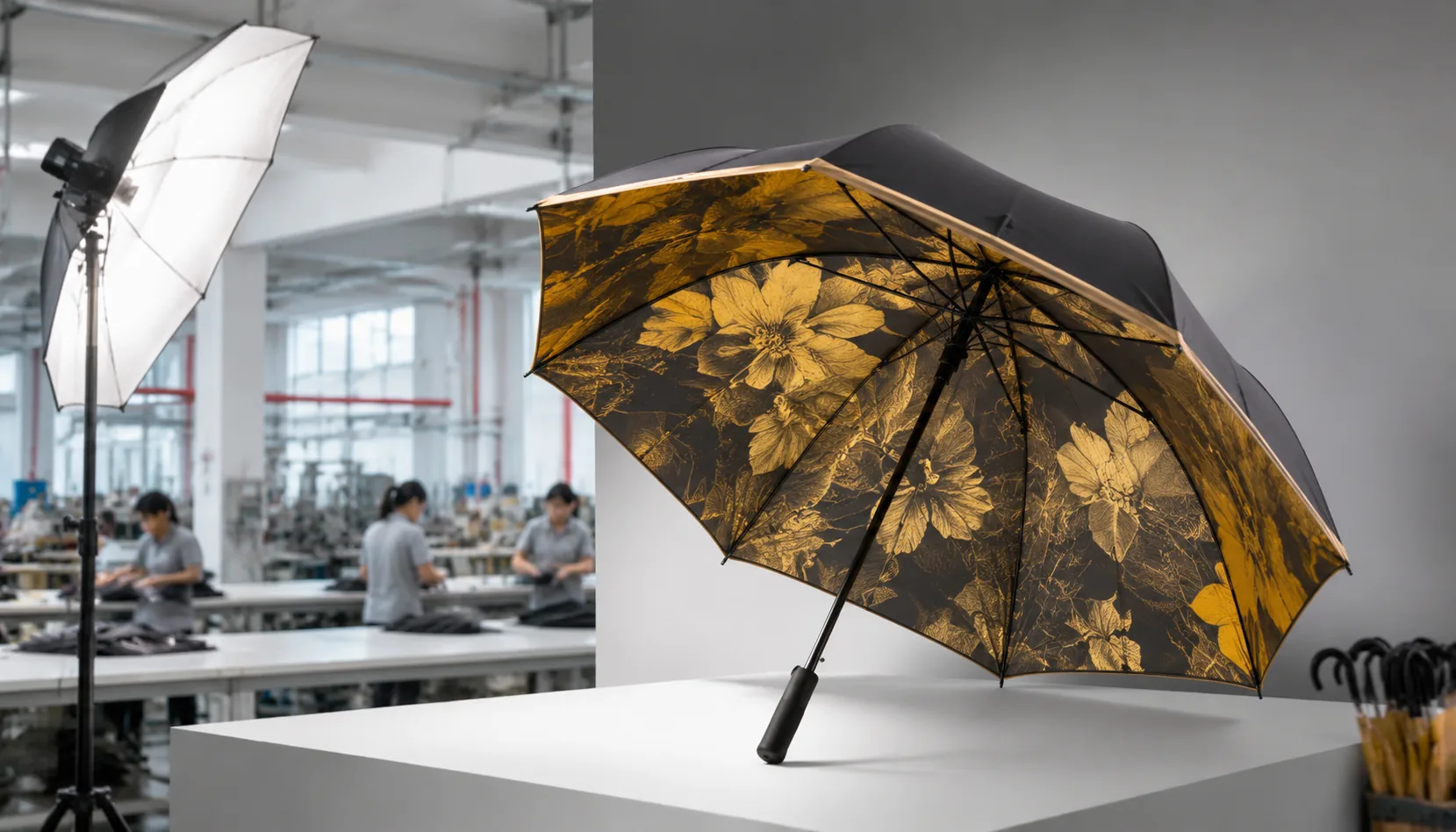
Inside-Canopy Umbrella Printing for Premium Brand Reveal
Plan underside umbrella graphics with fabric, rib, and QC choices that protect logo clarity while creating a premium rev...
Read More »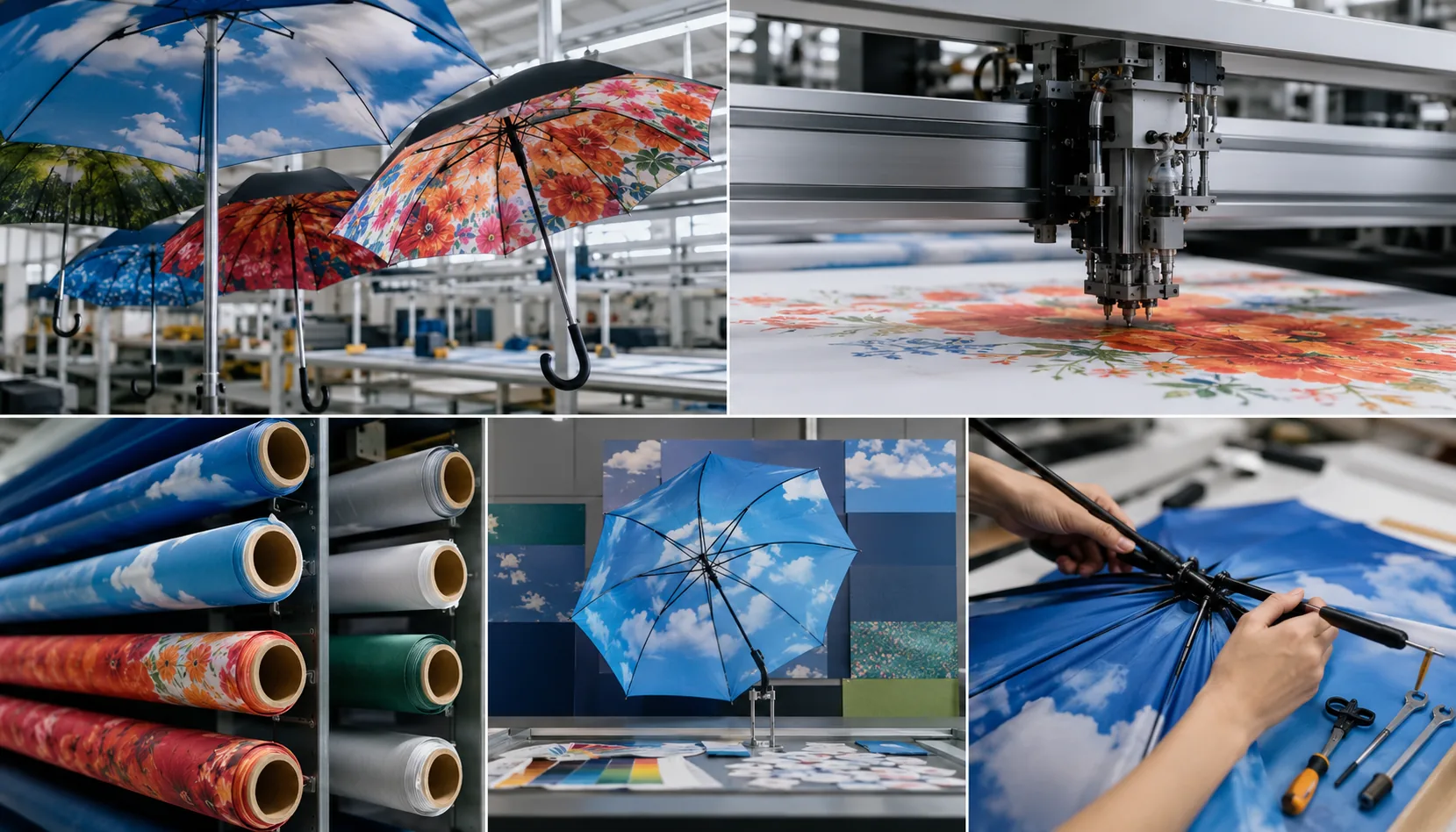
Inside-Canopy Umbrella Printing for Brand Storytelling
Use inside-canopy printing to add campaign artwork, messages, or maps without weakening exterior brand consistency on 19...
Read More »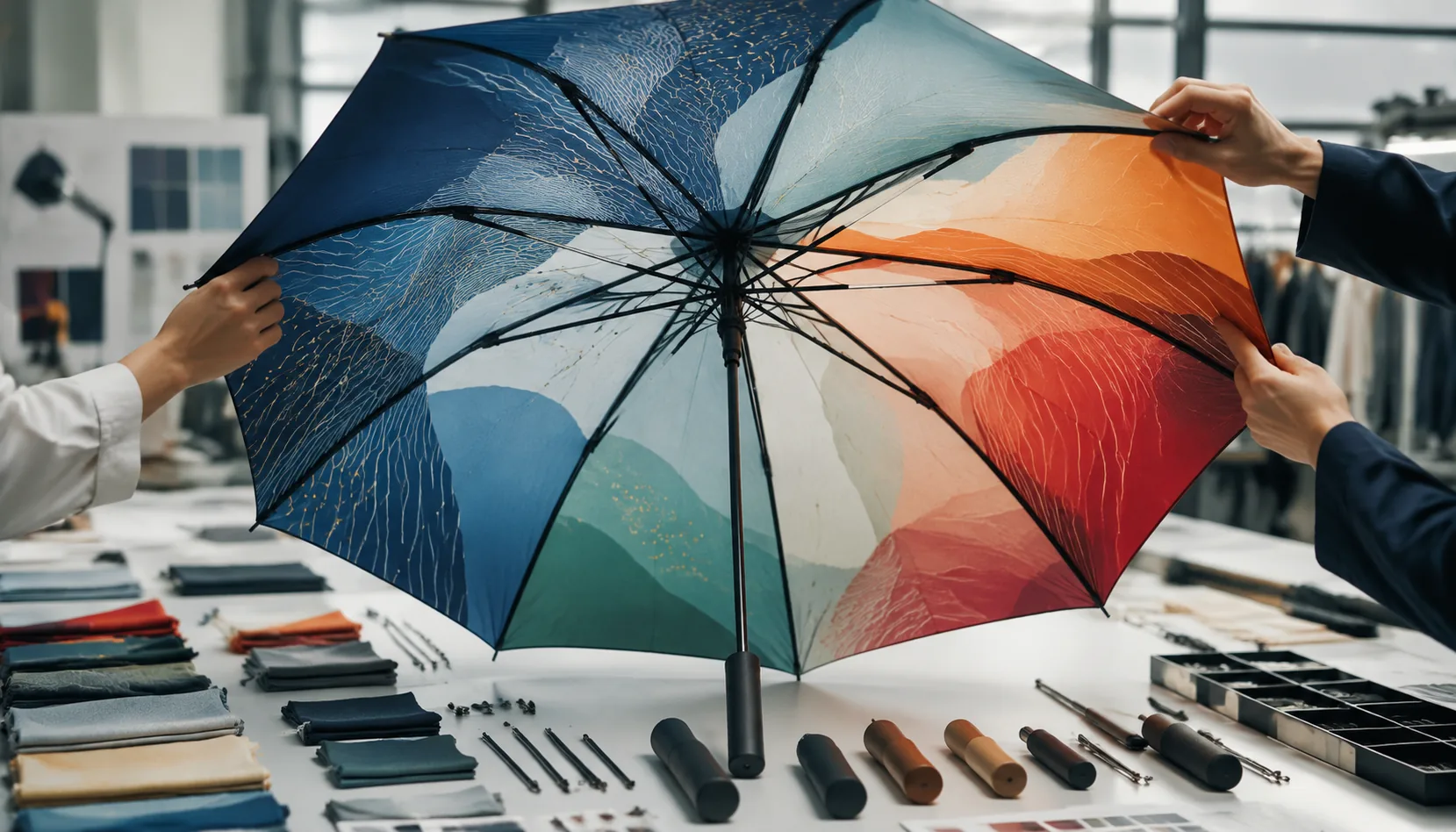
Inside-Canopy Printing for Branded Umbrella Storytelling
Use inside-canopy printing for brand stories, maps, slogans, and retail graphics while managing fabric opacity, frame ch...
Read More »