Inside-Canopy Printing for Branded Umbrella Storytelling
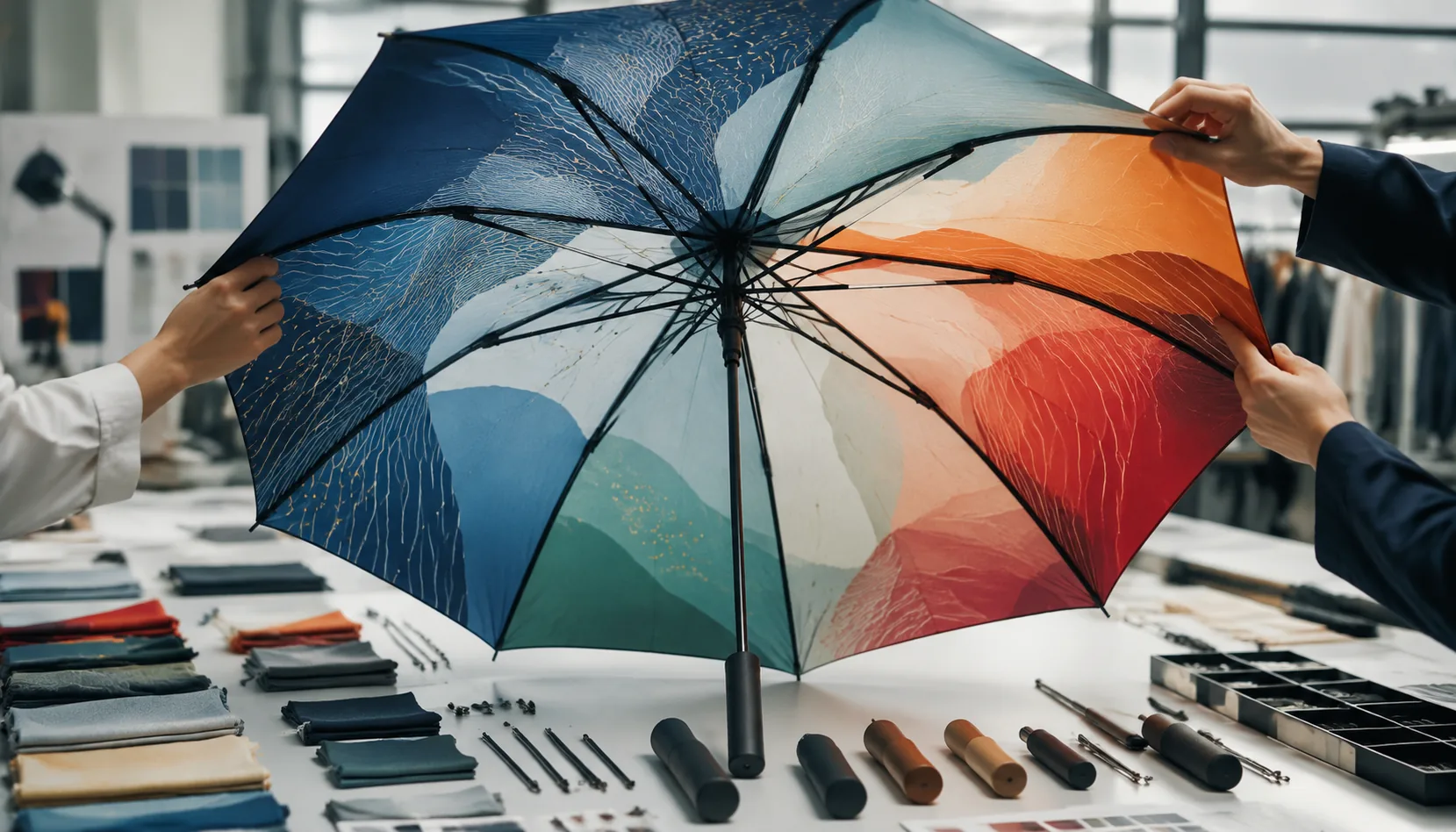
Buyers often love the idea of inside canopy umbrella printing, then run into the hard questions: will the artwork show cleanly through pongee, fight with the frame, or slow approval before a launch date? On our Songxia factory floor, the answer starts with fabric opacity, rib layout, ink behavior, and a strike-off sample that proves the story still reads after cutting, sewing, and final tensioning.
Why Print on the Inside of the Canopy
The strongest reason to print inside the canopy is that the user actually spends time with it. Exterior logo placement is built for passersby; it is seen for two seconds on a sidewalk or in a golf-course photo. A branded umbrella interior print sits above the customer’s head for minutes at a time, close enough to read, photograph, and remember. For retail buyers, hotels, museums, event organizers, and destination shops, that makes the umbrella less like a giveaway and more like a small private room. I have seen simple 23" auto-open umbrellas become stronger souvenirs when the underside carried a city map, gallery artwork, resort pattern, or event schedule instead of another outside panel logo.
Inside canopy umbrella printing works best when the design has a story to tell, not just a mark to repeat. A hotel can print a ceiling-style palm pattern or skyline view; a museum can use approved artwork details across 8K or 10K panels; a marathon can place route graphics where runners see them during rain delays. This is different from standard exterior branding, where screen printing usually sits on one or two 190T pongee panels and competes with rain, wrinkles, and street clutter. Inner-canopy storytelling uses the whole visual field, especially on double-canopy vented windproof umbrellas where the outer shell stays clean and the inner layer carries the experience.
From a production standpoint, custom inner canopy umbrellas need planning earlier than normal logo jobs. The print must align with rib positions, seam allowance, panel curvature, and the user’s viewing angle after assembly. For detailed umbrella storytelling design, we usually recommend heat transfer or sublimation on light-color 190T/210T pongee; for transparent POE or PVC styles, the effect is different because artwork can interfere with visibility. OEM umbrella branding teams should also decide whether the outside remains blank, uses a small woven label, or carries a discreet one-panel logo. That balance matters: the outside signals the brand, while the inside delivers the emotional moment.
Artwork Types That Work Inside Umbrellas
The best artwork for inside canopy umbrella printing is artwork that rewards the user when they look up: city maps, transit-style routes, venue layouts, campus guides, brand timelines, and campaign messages all work better inside than outside because the viewer has 10–30 seconds of quiet attention under the canopy. For city maps, keep the main roads or landmarks away from the rib seams and treat each panel like a page, not just one slice of a circle. On 8K umbrellas, the eight triangular panels give enough room for one landmark, one caption, or one route segment per panel. On 16K golf umbrellas, the narrower panels make full maps harder, but they are excellent for sequential storytelling: year-by-year brand milestones, product launches, tournament holes, or directional arrows for event staff.
Illustrated patterns and campaign graphics need different discipline than a normal outside logo print. A branded umbrella interior print can use clouds, skyline silhouettes, museum objects, mascots, constellation drawings, or product sketches, but the sewing allowance and rib pockets will cut through fine details if the art is built as one continuous poster. I recommend keeping important text at least 20–25 mm away from panel edges and using 10 pt as the absolute minimum font size on 190T or 210T pongee, with 12–14 pt safer for slogans read at arm’s length. On POE or PVC transparent umbrellas, reverse printing and ink opacity matter more than font size because glare can wash out thin strokes. For darker custom inner canopy umbrellas, white or metallic ink usually needs a base layer to avoid a dull gray result.
QR codes, directional graphics, and umbrella storytelling design should be functional before they are clever. A QR code inside the canopy should be at least 30 x 30 mm for close scanning, 40 x 40 mm if placed near the outer panel curve, and it should sit on a flat visual field without seams, vents, or heavy pattern behind it. For OEM umbrella branding tied to retail launches or events, we often place the brand story around the inner perimeter and reserve one panel for the CTA: scan code, booth number, campaign URL, or emergency wayfinding. Double-canopy vented windproof umbrellas add another constraint because the vent overlap can hide 40–60 mm of artwork near the crown, so the layout must be checked on a sewn sample, not only on a round digital mockup. AQL 2.5 inspection should include print alignment across panel joins, not just color and ink adhesion.
Fabric Opacity, Coatings, and Color Planning
Fabric opacity decides whether inside canopy umbrella printing looks premium or muddy before we even talk about artwork. Standard 190T pongee is fine for promotional rain umbrellas because it is light, folds cleanly, and takes screen or heat-transfer ink well, but it allows more light transmission, especially on white, yellow, sky blue, and other pale exterior panels. For interior storytelling designs with maps, sponsor logos, skyline illustrations, or QR-style detail, I usually push buyers toward 210T pongee because the denser weave gives better ink holdout and sharper edges. The difference sounds small on paper, but on a 23" auto-open umbrella or 27" golf umbrella, 210T reduces panel-to-panel shadowing and keeps small type more readable under daylight. If the outside canopy is navy, black, charcoal, or forest green, 190T can still work, but the inner print needs higher contrast and fewer thin lines.
Black-out construction is the safest route when the branded umbrella interior print must read like a poster. This is usually a two-layer canopy, or a coated single canopy where a black or dark middle layer blocks exterior color from contaminating the inner graphic. Silver UV coating is different: it reflects sunlight and helps with heat reduction, but it can make inner colors look cooler and slightly metallic if the print sits over or near the coating. For UPF 50+ umbrellas, the coating sequence matters: exterior pongee, UV or black-out coating, then inner print behaves differently from printing first and coating afterward. Our standard practice at ZheBrella is to confirm coating order during strike-off, not after bulk cutting, because once 8K or 16K panels are cut and overlocked, correcting show-through means remaking the canopy, not touching up the ink.
Color planning should start with a real panel mockup, not a flat PDF. A white exterior with a bright inner sky illustration sounds clean, but without a black-out layer the ribs, seams, and exterior logo can ghost through when held against sun. A black exterior with full-color inner artwork is more forgiving for show-through, but the inner print may lose brightness unless the printer lays down a white base before CMYK transfer or sublimation. For custom inner canopy umbrellas, I tell OEM umbrella branding clients to avoid 6 pt text, pale gray lines, and low-contrast watercolor effects unless they accept reduced readability at arm’s length. On vented double-canopy golf models, the overlap also changes light behavior, so one approved panel is not enough; inspect the assembled 30" sample under outdoor light before signing the AQL 2.5 pre-shipment standard.
Frame and Mechanism Choices for User Experience
The frame choice decides whether inside canopy umbrella printing feels like a premium reveal or a gimmick. On a 23" straight umbrella, the user opens a broad, stable “ceiling,” so a branded umbrella interior print can carry a map, brand timeline, event message, or retail campaign without being chopped into awkward triangles. I usually specify fiberglass ribs for this style when the print is story-heavy, because fiberglass flexes under gusts and reduces rib deformation that can distort the inner artwork. Steel ribs are cheaper and feel solid in hand, but they add weight and can permanently bend after a hard inversion. For hotel, museum, and corporate gifting programs, a manual or auto-open straight umbrella with 8K fiberglass ribs and 190T or 210T pongee gives the best balance of print area, handling, and cost control.
Folding umbrellas need tighter design discipline because every panel seam and rib joint interrupts the visual field. For 21" and 23" compact models, inside canopy umbrella printing works best with repeated patterns, skyline silhouettes, QR-led campaign elements, or short copy blocks rather than one large scene. Auto-open-close mechanisms are useful for commuter and promotional-product buyers because the user experiences the brand at the exact moment they exit a taxi, subway, or office lobby. The tradeoff is mechanical complexity: a 3-fold frame with steel shaft, fiberglass ribs, and plastic stretchers must pass open-close cycle testing, not just look good in a sample room. For custom inner canopy umbrellas shipped as retail or employee gifts, we check runner smoothness, spring force, and panel tension before approving bulk production, because a sticky mechanism makes even good umbrella storytelling design feel cheap.
Golf and reverse umbrellas are where OEM umbrella branding can become more immersive. A 27" or 30" golf umbrella gives enough interior surface for full-panel artwork, sponsor layouts, or course maps, and a double-canopy windproof structure helps the umbrella survive 50+ mph wind-tunnel tests when built with fiberglass ribs and reinforced tips. Reverse umbrellas are different: the wet side folds inward, so the inner print becomes the visible exterior when carried closed, making them strong for city campaigns and venue merchandise. At ZheBrella, our standard practice is to match mechanism to use case before quoting decoration: auto-open for hospitality and events, manual for heavy-duty golf, auto-open-close for commuter folding models, and C-handle reverse frames when hands-free entry matters. The print sells the story, but the frame determines whether the user keeps carrying it after the first rainy week.
Sampling, Lead Time, and Inspection Checklist
Artwork approval is where most inside-canopy projects either stay clean or become expensive. For inside canopy umbrella printing, I recommend four checkpoints before bulk cutting: a digital proof for logo size and Pantone targets, a panel mockup showing how the artwork crosses the 8K or 10K seams, a strike-off sample on the actual 190T or 210T pongee, and a full pre-production sample built on the real frame. A branded umbrella interior print is viewed at close range, so 3 mm drift at a seam is visible, especially on maps, skyline graphics, repeating slogans, or umbrella storytelling design that wraps across multiple panels. For double-canopy vented umbrellas, approve both the lower printed canopy and the outer shell, because vent overlap can hide 15–30 mm of artwork near the rib tips.
MOQ depends on the structure and print method, not just the logo. Simple manual-open 23" umbrellas with single-color inner screen print can start around 300–500 pcs, while full-panel heat-transfer or sublimation on custom inner canopy umbrellas usually makes sense from 500–1,000 pcs. Auto-open-close compact umbrellas, 27" golf umbrellas, 30" event umbrellas, and double-canopy windproof builds with fiberglass ribs often need 1,000 pcs or more because fabric loss, frame setup, and line balancing are heavier. Normal production timing is 25–45 days after sample approval and deposit: roughly 3–5 days for digital proofing, 7–10 days for strike-off and pre-production sample, 18–30 days for cutting, printing, sewing, frame assembly, and packing. Rush orders are possible, but I do not recommend compressing drying, coating cure, or seam inspection.
Inspection should be written into the PO, not negotiated after cartons are packed. Our standard practice at ZheBrella is AQL 2.5 for major defects and AQL 4.0 for minor defects, with checks on artwork position, color tolerance, panel orientation, rib attachment, runner movement, open-close cycling, water repellency, and carton drop condition. For OEM umbrella branding, I also add a checklist for handle logo direction, hangtag language, barcode scan, polybag warning text, and master carton marks. FOB Ningbo or Shanghai works well for buyers with their own forwarder; DDP is better for distributors shipping mixed promotional orders to multiple warehouses. Before shipment, confirm carton dimensions, gross weight, HS code, delivery address, and whether the umbrellas need individual retail packaging, because these details affect both freight cost and customs clearance timing.
Frequently Asked Questions
Can the outside stay plain while only the inside is printed?
Yes, many premium programs use a solid exterior with a printed interior. The main risk is show-through, so fabric opacity and coating should be confirmed during sampling.
Are QR codes reliable on inside-canopy prints?
They can work if printed large enough on a flat panel area with strong contrast. Avoid placing QR codes across seams, rib lines, or highly curved panel edges.
Does inside-canopy printing require a double-layer umbrella?
Not always. A single canopy can be printed inside if the fabric opacity and ink coverage are suitable, but double-canopy construction is often preferred for premium retail designs because it hides ribs and reduces show-through.
What MOQ should buyers expect for custom inner canopy umbrellas?
For OEM production, typical MOQs start around 500–1,000 pieces per design, depending on umbrella type, fabric, number of print colors, and whether a custom frame or handle is required.
How should artwork be prepared for umbrella storytelling designs?
Artwork should be supplied as vector files or high-resolution layered files with clear rib positions, seam allowances, and panel breaks marked. For full interior graphics such as maps or slogans, a pre-production sample is recommended before bulk production.
Looking to Launch Your Custom Umbrella Line?
ZheBrella is a Zhejiang-based OEM/ODM umbrella manufacturer with 17 years of export experience. Free design, low MOQ from 100 pieces, windproof construction, full-color print.
Get Free Quote Now »People Also Search For
Related Articles
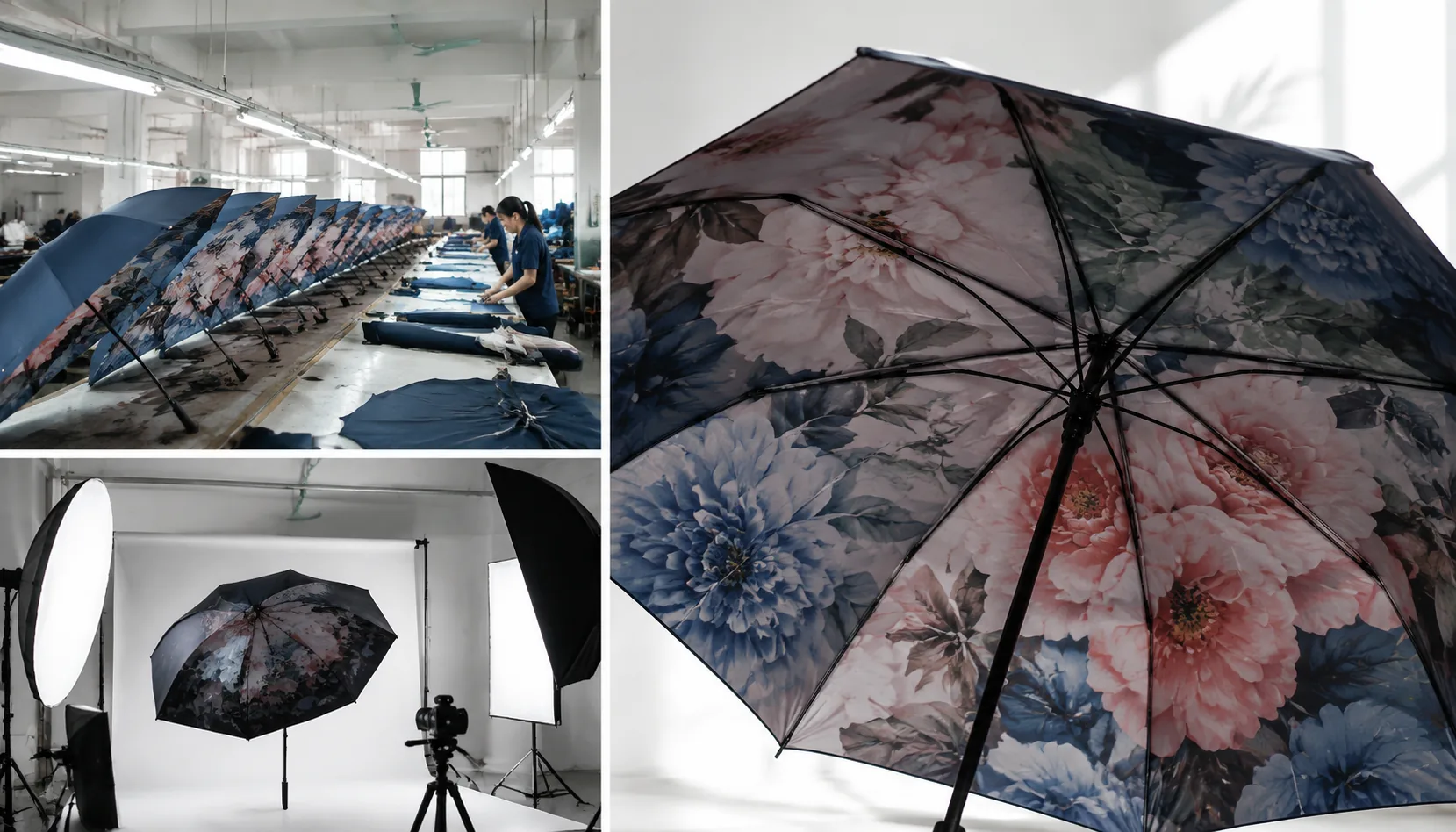
Inside-Canopy Umbrella Printing for Hidden Brand Moments
Design inside-canopy umbrella prints that surprise users while controlling fabric opacity, frame specs, sampling, MOQ, a...
Read More »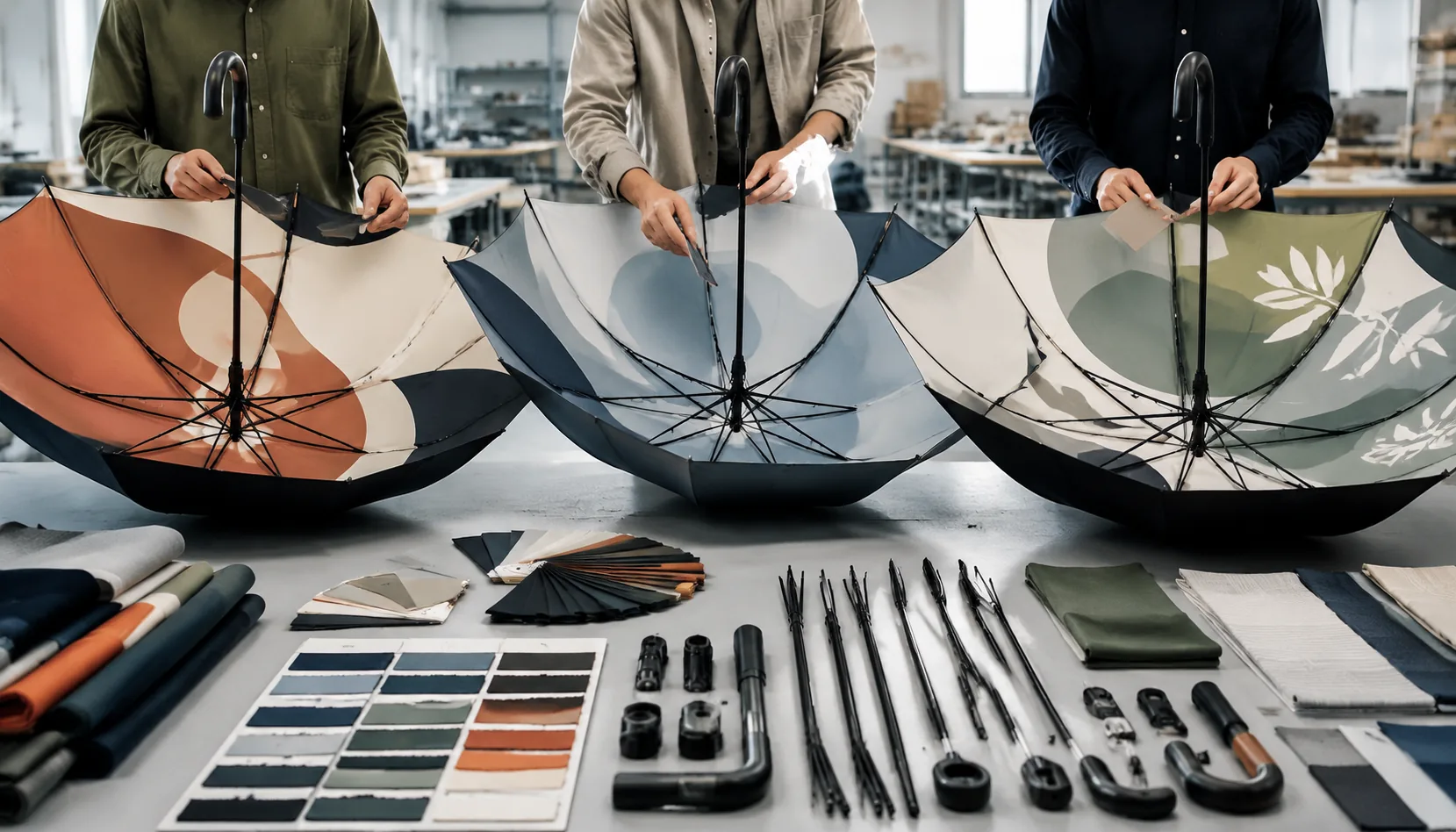
Inside-Canopy Umbrella Branding for Retail and Events
Plan inside-canopy logos with correct fabric, ink opacity, rib layout, and AQL checks so retail and event umbrellas look...
Read More »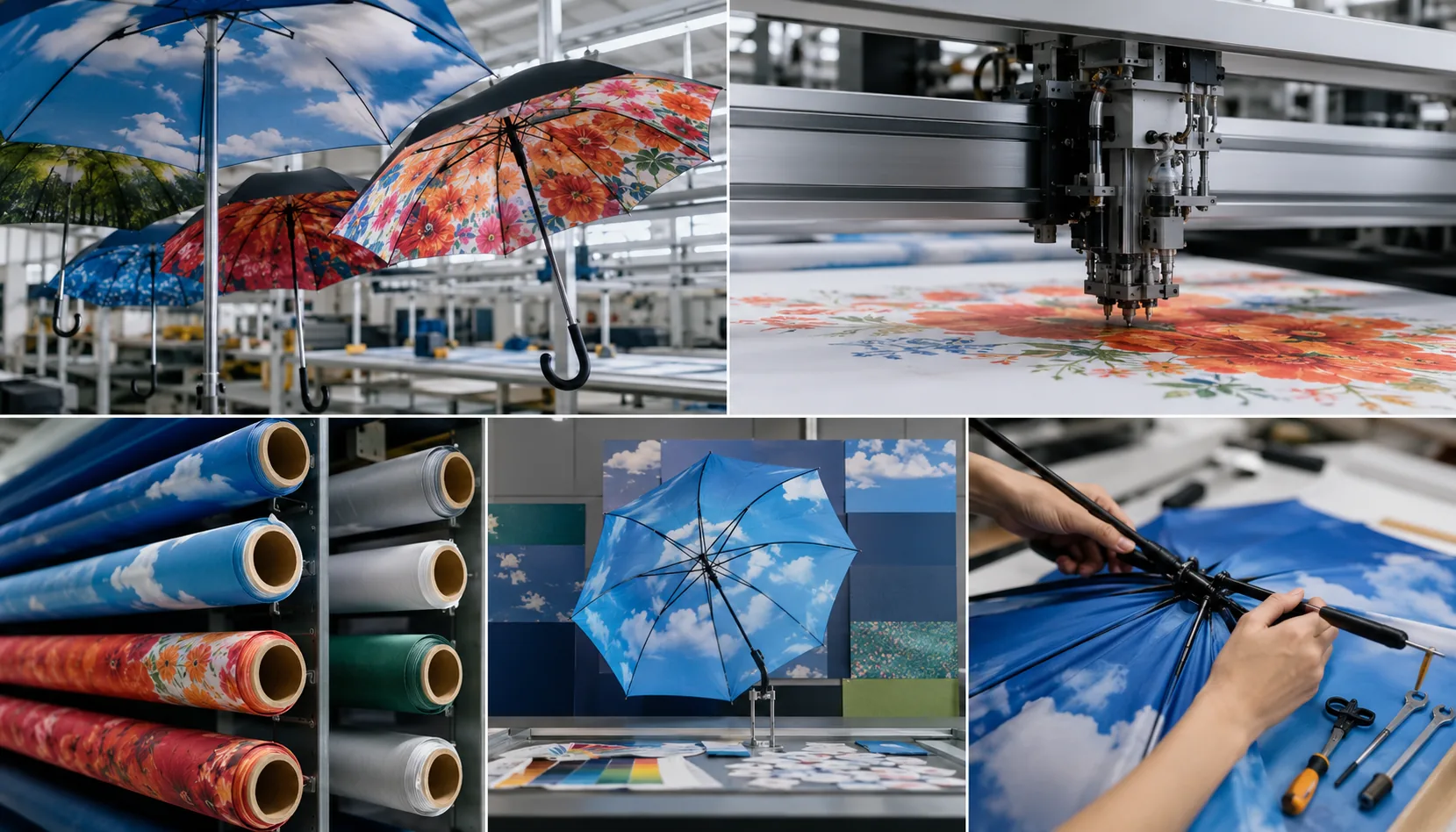
Inside-Canopy Umbrella Printing for Brand Storytelling
Use inside-canopy printing to add campaign artwork, messages, or maps without weakening exterior brand consistency on 19...
Read More »