Logo Placement Rules for Folding Umbrella Branding
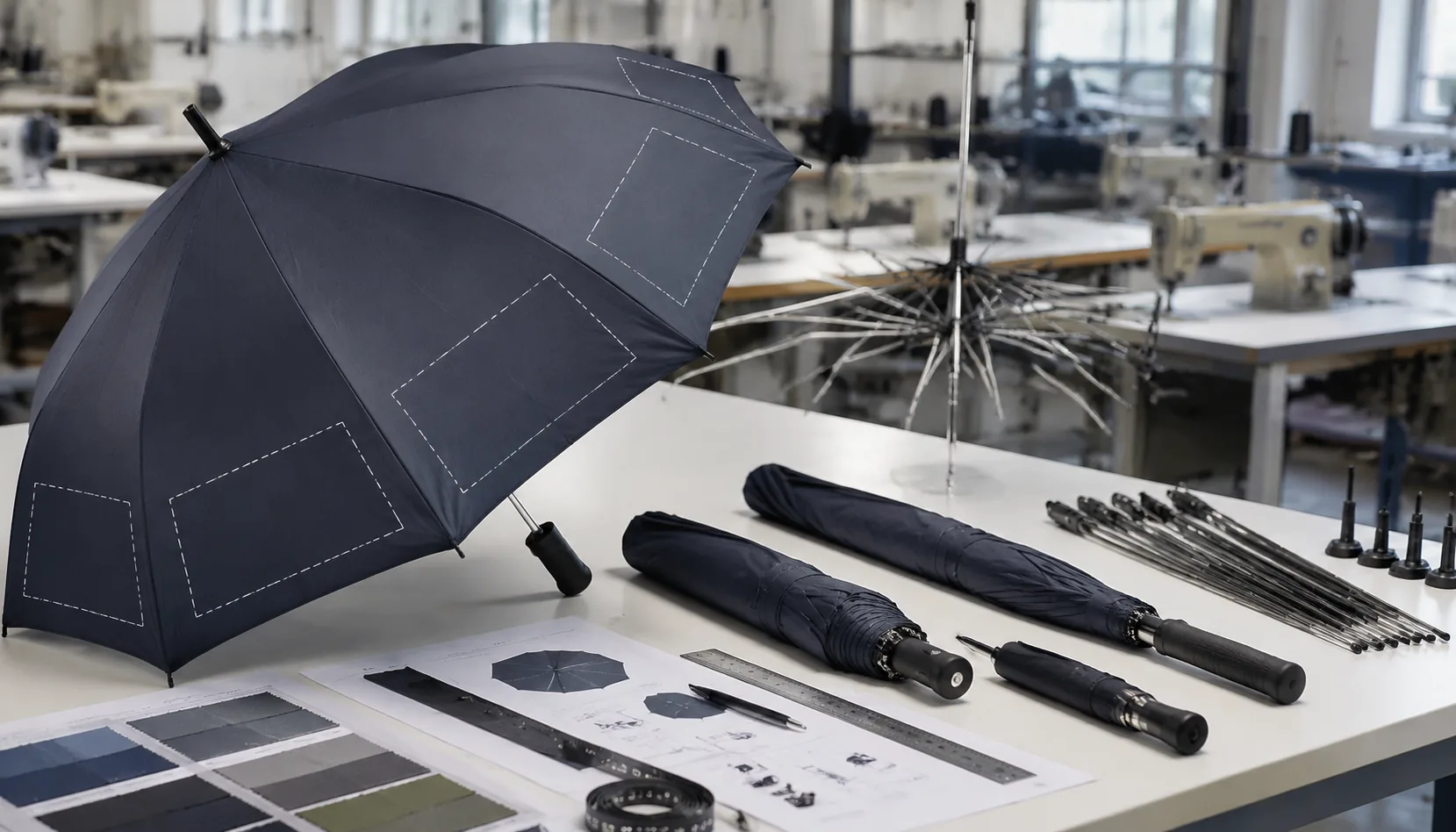
For folding umbrella branding, the real challenge is not printing a logo once—it is keeping it readable on a compact canopy, centered on curved panels, and consistent across repeat production runs. At the factory floor, that means balancing panel seams, print area limits, and opening stress so the `folding umbrella logo placement` still looks sharp after cutting, stitching, and everyday use.
Why folding umbrellas need different logo rules
Folding umbrellas do not follow the same branding logic as stick umbrellas because the usable canvas is broken up by geometry. A 21" or 23" folding model may only give you narrow triangular panels, and the shaft folds, runners, and strap closure all compete with print area. In practice, folding umbrella logo placement has to account for seam breaks, vented canopies, and the fact that a logo placed too close to a rib pocket will distort when the frame opens. On the factory floor, I always check the open shape first, then decide whether the mark belongs on one panel, two opposite panels, or the storage sleeve rather than forcing a large central graphic.
That smaller surface area changes logo sizing for umbrellas in a very real way. A mark that looks clean on a 30" stick umbrella can become unreadable on a compact 10K folding frame if the art is too close to the tip or too wide for the panel print alignment. Commuter use adds another constraint: the umbrella is often seen at arm’s length in rain, on a crowded platform, or while moving, so high-contrast, simple artwork performs better than dense text. Retail brands usually want a premium look with restrained placement, while event giveaways often prioritize quick recognition over detail, because the viewer only gets a second or two of exposure.
An umbrella branding guide for branded folding umbrellas should start with the actual open panel layout, not with the logo file. I look at rib count, canopy diameter, seam direction, and whether the closure strap will cover the print when folded. That tells you whether to use a small chest-style logo on one panel, a repeated edge mark, or sleeve branding for better visibility. The tradeoff is always the same: larger art improves distance visibility, but too much coverage risks misalignment, wrinkling, and poor fold behavior. For folding umbrella logo placement, the right answer is usually a restrained mark in the cleanest panel zone, not maximum ink coverage.
Placement zones that stay readable
The cleanest folding umbrella logo placement is usually one full panel, centered and kept well inside the stitch allowance. On 21" to 23" compact frames, I tell buyers to leave enough margin that the logo never gets clipped by panel edges or distorted when the canopy tension changes; on larger 27" or 30" stock, you can open the artwork up a bit, but the readable zone is still the flat middle third of the panel. For branded folding umbrellas, the safest rule is simple: avoid vent points, avoid the hem fold, and do not push artwork into the high-stress path where an auto-open canopy snaps tight, because that is where ink cracking and registration drift show up first.
If you want more visual impact, two adjacent panels can work well, especially for longer wordmarks or horizontal emblems that need a wider footprint. The downside is that panel print alignment becomes critical: the seam gap, panel curvature, and rib angle all have to be accounted for before sampling, or the mark will look broken once the umbrella is open. In our umbrella branding guide, this is the layout I recommend when the logo must read from a distance but cannot be oversized; keep the key text on the dominant panel and let the second panel carry only continuation graphics, not important copy.
Near-seam placements are possible, but only when the artwork is designed to tolerate seam distortion and the factory has a proper print template. That means keeping fine lines, small type, and tight borders away from stitched seams and avoiding any logo edge that lands on a vent opening or reinforced stress line. For logo sizing for umbrellas, I would rather see a slightly smaller, centered mark that stays crisp than a big graphic that wrinkles, folds, or gets cut by the panel join; on auto-open close frames especially, the first opening cycle can expose weak placement immediately and tell you whether the layout was built for production or just for a mockup.
Size guidance by canopy and rib count
On an 8K folding umbrella, the logo space is usually dictated by the canopy flat width, not the stitched panel width you see on the cutting table. For a standard 21" to 23" frame, a practical single-mark size is about 2.5" to 4" wide when placed on one panel, or up to roughly 6" wide if you are using a centered front-panel print and the artwork tolerates slight curvature near the seam. On a 16K folding frame with a 23" or 27" canopy, you can usually push that up to 4" to 6" wide for a clean one-panel logo, or 7" to 8" wide for a larger brand mark across multiple panels, as long as the panel print alignment is set correctly before printing. This is the part of the folding umbrella logo placement decision that gets buyers into trouble: they spec a size from a desktop mockup, then the logo lands too close to the ribs or folds awkwardly at the seam.
For branded folding umbrellas, the compact tri-fold style needs a different treatment than a 23" two-fold model. The shorter panel height and tighter curvature mean fine text, thin strokes, and detailed crests often collapse once the canopy is tensioned, especially on pongee 190T or 210T with a water-resistant coating. In an umbrella branding guide, I would simplify the artwork for tri-fold units by reducing line count, opening up letter spacing, and keeping the mark within a roughly 2" to 3.5" wide range unless you are printing on a flatter panel zone. A logo that reads clearly on a 23" umbrella may need to be rebalanced for a compact frame because the same artwork has less usable arc length and less visual breathing room between the seams and the runner path.
If the job uses mixed sizes, build one master layout for each rib count instead of scaling one file blindly. On 8K and 16K frames, the visible print area changes with rib angle, vent style, and canopy depth, so the right logo sizing for umbrellas should be checked against the actual sample canopy, not just the nominal diameter. My rule on the factory floor is simple: use the largest version that stays clear of stitch lines, then back off 10% to 15% for safety when the artwork has small type or multiple colors. That keeps the folding umbrella logo placement consistent across production, reduces rejected samples, and avoids the common problem of a mark looking sharp flat on screen but stretched or cropped once the umbrella is opened and tested in hand.
Matching artwork to print method
Single-color screen print is still the cleanest option for folding umbrella logo placement when the artwork is simple and the run size is serious. On a 21" or 23" folding canopy, a 1-color mark with solid fills, thicker strokes, and no trapped counters is far less likely to drift off-register than a complex build. The real limitation is not the press, it is the panel geometry: once the artwork crosses a seam or sits too close to a stitched edge, panel print alignment becomes the weak point, especially on 8K and 10K frames where the panels taper faster near the tip.
Multi-color digital print gives more freedom for gradients, shading, and small detail, but it is not forgiving when buyers want tiny type or hairline elements. At production scale, anything below about 1.5 mm line weight starts to lose consistency on textured pongee 190T or 210T, and very fine text can fill in after heat and pressure. For branded folding umbrellas that need a retail look, digital works well for photographic art or soft blends, but an umbrella branding guide should still set a minimum size so the logo does not collapse once the panel stretches over the frame.
Transfer decoration sits between the two, and I use it when the art is too detailed for screen print but too controlled to risk as a full digital panel. It handles small-panel branding better on POE, PVC, or EVA canopies because the image is applied first, then pressed, so the color edges stay sharper than a direct print on a curved panel. The catch is durability and edge lifting if the transfer is oversized or placed too close to a vent seam; for logo sizing for umbrellas, keep the mark simple, keep contrast high, and avoid ultra-thin strokes unless you have already approved a physical strike-off on the exact folding umbrella logo placement.
Buyer checklist for repeatable approval
The first thing procurement should lock down is the artwork package and the placement reference, because most disputes on branded folding umbrellas start there. Ask for vector artwork in AI, EPS, or PDF with outlined fonts, plus a flat-panel mockup that marks the exact panel, seam side, centerline, and distance from the runner or tip cap. For folding umbrella logo placement, I want a written callout that states whether the logo is on one panel, two opposite panels, or repeated around the canopy, because panel print alignment changes once the fabric is sewn and tensioned. If the vendor cannot show the artwork on the actual 21" or 23" canopy pattern, the approval is not stable enough for production.
Next, define logo sizing for umbrellas in millimeters, not by eye, and tie it to the decoration method. Screen print, heat transfer, and sublimation each shift slightly after curing and stitching, so the umbrella branding guide should state the allowed print tolerance, usually within ±3 mm on placement and ±5 mm on panel registration for repeat jobs. Sample sign-off should be done on a pre-production unit, not a digital proof only, and the buyer should approve the exact color, stroke weight, and edge sharpness against the canopy material, whether it is 190T pongee, 210T pongee, POE, or PVC. This is where branded folding umbrellas either stay consistent or drift from order to order.
MOQ and lead time need to be written into the approval sheet before the first PO is released. Standard factory practice is to state the minimum order quantity by colorway and logo version, then fix the lead time in days from artwork approval and deposit receipt, because changing placement after sampling resets the schedule. For inspection, insist on AQL 2.5 for logo position, color registration, missing ink, and off-center panels, with a clear pass/fail limit on how many umbrellas may sit outside the approved tolerance. If the supplier cannot show that their inline check covers print registration on the canopy panels and final carton audit, the approval process is too loose for repeatable buying.
Frequently Asked Questions
Where should a logo go on a folding umbrella for the best visibility?
The outer panel opposite the closing strap is often the cleanest location because it stays visible when the umbrella is carried. For most programs, one centered panel mark or a balanced two-panel layout is easier to reproduce than a full wrap.
Can very small text be printed on a folding umbrella?
Small text is possible, but it becomes less reliable on smaller panels and high-movement frames. A thicker font, fewer words, and a larger clear zone around the mark reduce production risk.
How much blank space should be left around a logo on a folding umbrella panel?
For most 3-fold and 2-fold umbrellas, leave at least 8 to 12 mm of safe margin from the panel seam and stitching line. This reduces the risk of distortion when the canopy opens and closes and helps keep repeat production consistent.
What logo size is usually workable on a compact folding umbrella?
A single-panel logo is often kept around 60 to 120 mm wide for better visibility without crossing into the seam area. If the design wraps across multiple panels, the factory should confirm the exact repeat length from the canopy pattern before sampling.
Do repeat orders need the same panel alignment file every time?
Yes. For repeat orders, keep the same panel layout, panel count, and artwork origin point so the logo prints in the same position. If the umbrella model changes, even by frame size or panel width, the print file usually needs to be adjusted.
Looking to Launch Your Custom Umbrella Line?
ZheBrella is a Zhejiang-based OEM/ODM umbrella manufacturer with 17 years of export experience. Free design, low MOQ from 100 pieces, windproof construction, full-color print.
Get Free Quote Now »People Also Search For
Related Articles
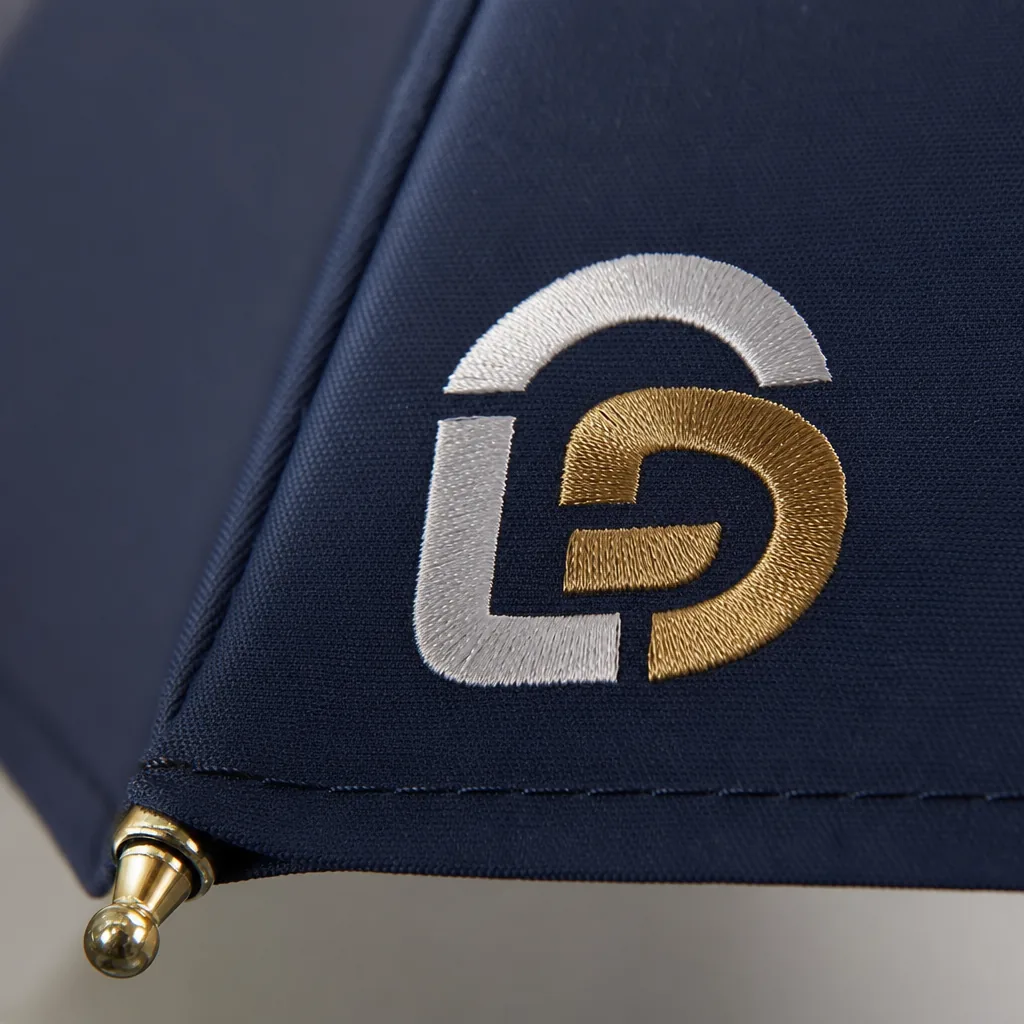
Refined Logo Placement Specs for Branded Umbrella Canopies
Plan logo placement on umbrellas with clear specs for panel size, safe zones, seam breaks, and repeat-order consistency ...
Read More »
Artwork Setup Rules for Clean Umbrella Branding Results
Get practical artwork setup rules for umbrellas, including bleed, panel alignment, safe zones, and production tolerances...
Read More »
Umbrella Logo Placement Strategies for Different Brand Goals
Learn how logo placement changes visibility, resale value, and repeat use on branded umbrellas, with print-area and pane...
Read More »