Luxury Stick Umbrellas: Premium Specs for Retail Brands
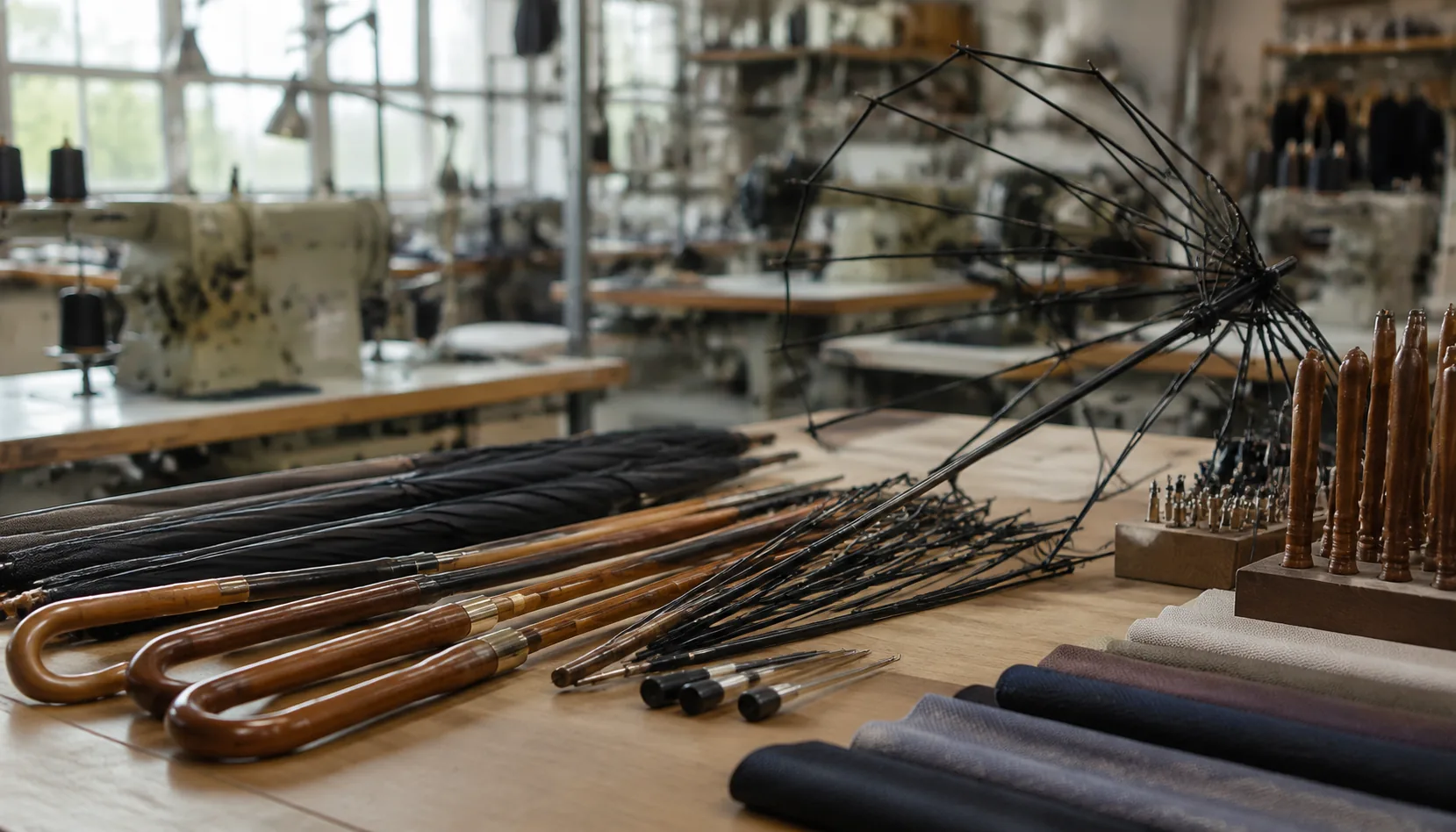
Retail buyers can make a stick umbrella look premium in a showroom, but repeat orders depend on what happens under load: rib temper, shaft straightness, fabric tension, handle finish, and carton survival after export handling. As a luxury stick umbrella manufacturer in Songxia, we see the gap most often in small details—210T pongee cutting accuracy, wooden handle polishing, runner fit, and tighter AQL checks before retail packaging is sealed.
Define What Makes a Stick Umbrella Premium
A premium stick umbrella starts with geometry, not decoration. On a 23-inch city model or a 27-inch golf-style canopy, the panel cutting must create even tension from top notch to rib tip; if one panel is 3 mm loose, the whole canopy looks tired under retail lighting. For premium stick umbrellas, I look first at the crown height, seam symmetry, and whether the tips sit on the same visual plane when the umbrella is open. A 190T pongee canopy can be acceptable, but retail brands usually move to 210T pongee with Teflon water repellent or UPF 50+ coating because the hand feel is denser and the fabric recovers better after wet folding. A luxury stick umbrella manufacturer should also control runner travel and spring force so the opening action feels smooth, not violent, with no metal-on-metal scrape when the runner locks into position.
Frame stability separates a good-looking sample from a product that survives a selling season. Standard 8K steel ribs keep cost down, but a premium retail umbrella OEM project often specifies fiberglass ribs, reinforced steel stretchers, or a 16K umbrella frame when the design needs a rounder canopy and better wind distribution. More ribs are not automatically better; if the rib length tolerance, tip stitching, and notch drilling are loose, a 16K frame only gives you sixteen chances to show defects. For wooden stick umbrellas, the shaft should be straight-grained and properly dried, because a warped shaft makes the canopy lean even if the frame is assembled correctly. In production, I want rib end alignment within about 2 mm, no loose rivets after cycling, and no canopy twist after repeated manual opening. Windproof claims should be tied to construction, such as a double-canopy vented design tested around 50+ mph, not just printed on a hangtag.
The handle is where customers decide whether the umbrella feels expensive before they ever open it. A stained maple, ash, bamboo, or beech crook handle needs a smooth radius, clean lacquer, and no glue shadow at the collar; resin handles need weight and polish without mold parting lines. Tip, ferrule, cap, and handle color should be specified as a matched trim system, because mixed brass, gunmetal, and black nickel finishes make even a well-built umbrella look like spare parts. For retail programs, I recommend approving a golden sample under AQL 2.5 with clear limits for canopy tension, handle blemishes, tip alignment, runner noise, and logo placement. A serious luxury stick umbrella manufacturer will also test opening cycles before shipment, check carton compression for long wooden shafts, and separate manual-open specifications from auto-open mechanisms early, since the spring hardware changes weight balance and the perceived quality in hand.
Specify Frame Strength and Opening Mechanisms
Frame strength should be specified before handle finish or logo method, because a premium stick umbrella that twists in wind will come back as a retail complaint. An 8K frame is acceptable for classic 23" wooden stick umbrellas when the buyer wants a clean silhouette, moderate weight, and a sharper price point. For higher-end retail lines, I prefer a 16K umbrella frame on 27" or 30" models because the canopy tension is more even, the dome looks rounder on shelf photography, and the load is distributed across more ribs. Steel ribs give a crisp, traditional feel and hold shape well, but they bend permanently after hard gusts. Fiberglass ribs cost more, yet they flex and recover; for wind-tunnel targets above 50 mph, fiberglass outer ribs with plated steel stretchers are usually the better construction. As a luxury stick umbrella manufacturer, we check rib symmetry before sewing because even a 3 mm mismatch shows under 190T or 210T pongee.
Shaft choice changes both performance and perceived value. A steel shaft is straight, strong, and consistent in diameter, which helps auto-open mechanisms run smoothly and keeps AQL 2.5 inspection failures low. Wood shafts, usually maple, beech, or ash, sell better in luxury ranges because the grain matches crook handles and leather straps, but they need tighter moisture control; a poorly dried wood shaft can warp after ocean freight or crack near the notch. For premium stick umbrellas, I recommend specifying shaft diameter, lacquer finish, straightness tolerance, and whether the tip cup is pinned or glued. Retail umbrella OEM buyers should also decide if they want a one-piece natural wood stick for a classic look or a steel shaft with wood-look covering for better consistency. The first option looks more authentic; the second gives fewer production surprises on large MOQs.
Manual open is still the most reliable choice for luxury stick umbrellas, especially with wood shafts and long handles. The action should feel deliberate, not stiff: the runner must slide cleanly, the notch must catch without thumb pressure, and the top spring should lock without rattling. Auto-open adds convenience for commuter ranges, but the spring, runner, and shaft slot need to be matched; cheap springs lose force after cycle testing, and a rough runner scratches plating after a few hundred opens. For windproof builds, a double-canopy vented design is worth the extra sewing time because pressure escapes instead of flipping the ribs. Our standard practice is to test open-close cycling, runner burrs, spring rebound, and canopy balance before packing, because luxury buyers notice small mechanical defects faster than fabric defects.
Upgrade Canopy Fabric and Weather Performance
For premium stick umbrellas, I would not build the canopy around 190T unless the target is hotel giveaway pricing. A 210T pongee canopy gives a tighter weave, smoother hand feel, and better color depth after piece dyeing or digital print, especially on navy, burgundy, forest green, and black. For retail umbrella OEM orders, our standard practice is to specify a durable water-repellent finish that beads within 3 seconds during spray testing, with optional Teflon treatment for a cleaner surface and longer-lasting runoff. UPF 50+ treatment is worth adding for golf-club shops, resort retail, and department-store programs, but the buyer should confirm whether the claim needs lab reporting by color, because lighter beige and ivory panels do not block UV the same way as dark pongee. As a luxury stick umbrella manufacturer, I also push clients away from shiny polyester satin unless they accept weaker abrasion performance and more visible needle marks.
Weather performance is not just coating; it is sewing discipline. On a 23" or 27" wooden stick umbrella, panel seams should run 10–12 stitches per inch with balanced upper and bobbin tension, otherwise the canopy puckers after steaming and looks cheap on shelf. Seam sealing is possible, but for classic wooden stick umbrellas it must be specified carefully: full tape sealing adds cost, stiffness, and sometimes visible ridges on dark 210T pongee, so many retail brands use reinforced seam stitching plus water-repellent finishing instead. The cap, notch, and tip areas need extra attention because water often enters where the canopy is pierced, not through the fabric face. If the project uses a 16K umbrella frame, the smaller panel width improves canopy curvature, but the sewing line must stay consistent or the dense rib layout will exaggerate every asymmetrical seam.
Panel symmetry checks should be written into the inspection sheet, not left to the sewing supervisor’s eye. For premium retail work, we check each cut bundle for grain direction, shade consistency, and panel length tolerance within about 2 mm before sewing; after assembly, the canopy edge should form a clean circle without high-low waves between rib tips. On wooden stick umbrellas with natural maple, beech, or ash handles, the canopy sits closer to the buyer’s eye because the product is often displayed open in-store, so misaligned logo panels and twisted seams are immediately obvious. A proper AQL 2.5 inspection should include open-close testing, water-spray sampling, seam pull checks, and visual review under consistent lighting. As a luxury stick umbrella manufacturer, I would rather reject a batch of mismatched panels before sewing than try to hide poor symmetry with heavier coating later.
Detail Handles, Tips, and Retail Finishing
Retail buyers usually judge premium stick umbrellas by the first 10 seconds in hand, so the handle and ferrule cannot be treated as decoration. For wooden stick umbrellas, I prefer solid maple, ash, or beech J handles over laminated mystery wood because the curve holds shape better after sanding, staining, and lacquer baking. A good lacquer finish needs at least two base coats and one clear top coat; rushed coating shows orange peel, pinholes, or color difference between the handle and shaft. Metal ferrules should be brass, stainless steel, or plated zinc alloy depending on target price, with tight crimping so they do not rotate after 500 open-close cycles. For premium stick umbrellas using a 23" or 27" canopy, the ferrule weight also affects balance; too heavy at the tip makes the umbrella feel cheap even when the trim looks expensive.
Brand finishing is where a luxury stick umbrella manufacturer has to be strict with artwork control, because small trims expose sloppy OEM work. Engraved handle plates need clean vector files and usually a 0.2–0.3 mm engraving depth before nickel, gunmetal, antique brass, or gold plating. Woven labels should be specified by thread count, fold type, and placement tolerance, not just “add logo label,” because a crooked label on 190T or 210T pongee looks worse than no label. Sleeves can be self-fabric pongee with snap closure, PU leather-look, or jacquard woven, but the sleeve must match canopy bulk; a vented double-canopy 16K umbrella frame needs a wider sleeve than a standard 8K steel-rib model. Our standard practice at ZheBrella is to approve handle, ferrule, label, sleeve, and gift box as one trim board before bulk cutting begins.
Premium trims directly change MOQ, sampling time, and unit cost, and this is where retail umbrella OEM planning often goes wrong. Stock solid wood handles and standard metal tips can keep MOQ around 300–500 pcs per color, with sampling in 7–10 days if the canopy fabric is available. Custom-molded handle plates, special lacquer colors, laser engraving, plated ferrules, woven labels, and rigid gift boxes usually push MOQ to 500–1,000 pcs because each supplier has setup waste and minimum plating or weaving charges. A rigid two-piece gift box with foam insert may add $1.20–$3.50 per unit depending on paper weight, magnet closure, and carton volume, and it can increase DDP freight more than buyers expect. For luxury programs, I recommend locking trim samples 20–25 days before mass production and inspecting under AQL 2.5 for plating scratches, glue marks, box crushing, and barcode placement.
Set Premium QC and Shipment Requirements
Premium QC must be written into the purchase order before sampling, not negotiated after cartons are packed. For premium stick umbrellas, I would specify AQL 2.5 for major defects and AQL 1.5 or 1.0 for critical retail issues such as crooked logos, loose tips, cracked wooden handles, exposed rib ends, or canopy stains. A luxury stick umbrella manufacturer should also define measurable tests: 300–500 open-close cycles for manual and auto-open mechanisms, rib alignment checks on every sampled unit, and frame deflection review for 8K, 10K, or 16K umbrella frame builds. For wooden stick umbrellas, the shaft must be checked for straightness, varnish bubbles, color blotching, and moisture-related warping, especially on beech, maple, or ash handles. Do not accept vague wording like “good quality inspection.” The QC sheet should list defect photos, pass/fail limits, sample size, and reinspection rules if the first inspection fails.
Handle strength is a common failure point on retail umbrella OEM orders because premium looks often hide weak bonding. A proper handle pull test should apply 15–20 kg of force for 10–15 seconds, with no rotation, cracking, glue separation, or metal ferrule movement. For J handles and straight wooden grips, I also check lacquer adhesion by rubbing and light scratch testing, because glossy retail handles show damage fast under store lighting. Canopy color consistency needs the same discipline: approve lab dips or strike-offs under D65 light, then check bulk 190T or 210T pongee panels against the approved standard before cutting. Printed logos need registration checks, wet rub review, and heat-transfer edge inspection. Individual packaging matters too: each umbrella should have a correct hangtag, barcode, care label, sleeve, desiccant where needed, and retail polybag or gift box without crushed corners or cloudy film.
Shipment planning for heavy retail cartons is different from cheap promotional freight. FOB works well when the buyer already has a forwarder and wants control from Ningbo or Shanghai port, but carton strength and cube must still be engineered at the factory: 5-ply export cartons, 12–24 pieces per carton depending on 23 inch, 27 inch, or 30 inch size, corner protection for boxed umbrellas, and drop-test checks for retail packaging. DDP is easier for smaller brands because duty, trucking, and final delivery are bundled, but it must be quoted using real carton dimensions and gross weight, not optimistic estimates from the sample room. A luxury stick umbrella manufacturer should warn buyers that wooden shafts, metal tips, gift boxes, and 16K frames increase chargeable weight quickly. For retail launches, I prefer booking shipment 7–10 days before final inspection, with carton marks, packing list, HS code, and Amazon or retailer routing labels confirmed before production closes.
Frequently Asked Questions
Are luxury stick umbrellas usually manual or automatic?
Both are common. Manual opening gives a traditional premium feel, while auto-open is preferred for convenience-focused retail lines if the spring and runner are tested for durability.
Why use 210T pongee instead of 190T pongee for premium umbrellas?
210T pongee has a denser weave and smoother hand feel, which supports premium retail positioning. It also prints cleanly when artwork, coating, and panel tension are controlled.
What frame spec is best for a premium stick umbrella sold at retail?
For retail-grade stick umbrellas, buyers often choose a 16K frame with reinforced ribs and a corrosion-resistant shaft. That setup usually balances wind resistance, opening smoothness, and a cleaner premium feel in hand.
Is 210T pongee a good canopy fabric for luxury umbrellas?
Yes. 210T pongee is commonly used for premium umbrellas because it offers a smooth handfeel, dense weave, and good water repellency. It also prints well for branding and color consistency across batches.
What QC checks matter most for private label stick umbrellas?
Key checks include opening/closing cycle testing, rib alignment, handle fit, canopy tension, and print accuracy. Retail buyers also usually request carton drop tests and final AQL inspection before shipment.
Looking to Launch Your Custom Umbrella Line?
ZheBrella is a Zhejiang-based OEM/ODM umbrella manufacturer with 17 years of export experience. Free design, low MOQ from 100 pieces, windproof construction, full-color print.
Get Free Quote Now »People Also Search For
Related Articles
Executive Stick Umbrellas: Buyer Specs for Retail Brands
Compare executive stick umbrella specs, from 8K/16K frames and pongee fabrics to handles, QC, MOQs, and shipping terms f...
Read More »
Executive Stick Umbrellas: Buyer Guide for Retail Brands
Compare executive stick umbrella specs, from 8K frames and wooden handles to 190T/210T pongee, auto-open parts, MOQ, QC,...
Read More »
Wooden Stick Umbrellas: OEM Specs for Retail Brands
Compare wooden stick umbrella specs for retail orders, including shafts, 8K/16K ribs, 190T/210T pongee, handles, QC, MOQ...
Read More »