Mascot and Character Printing on Branded Umbrellas
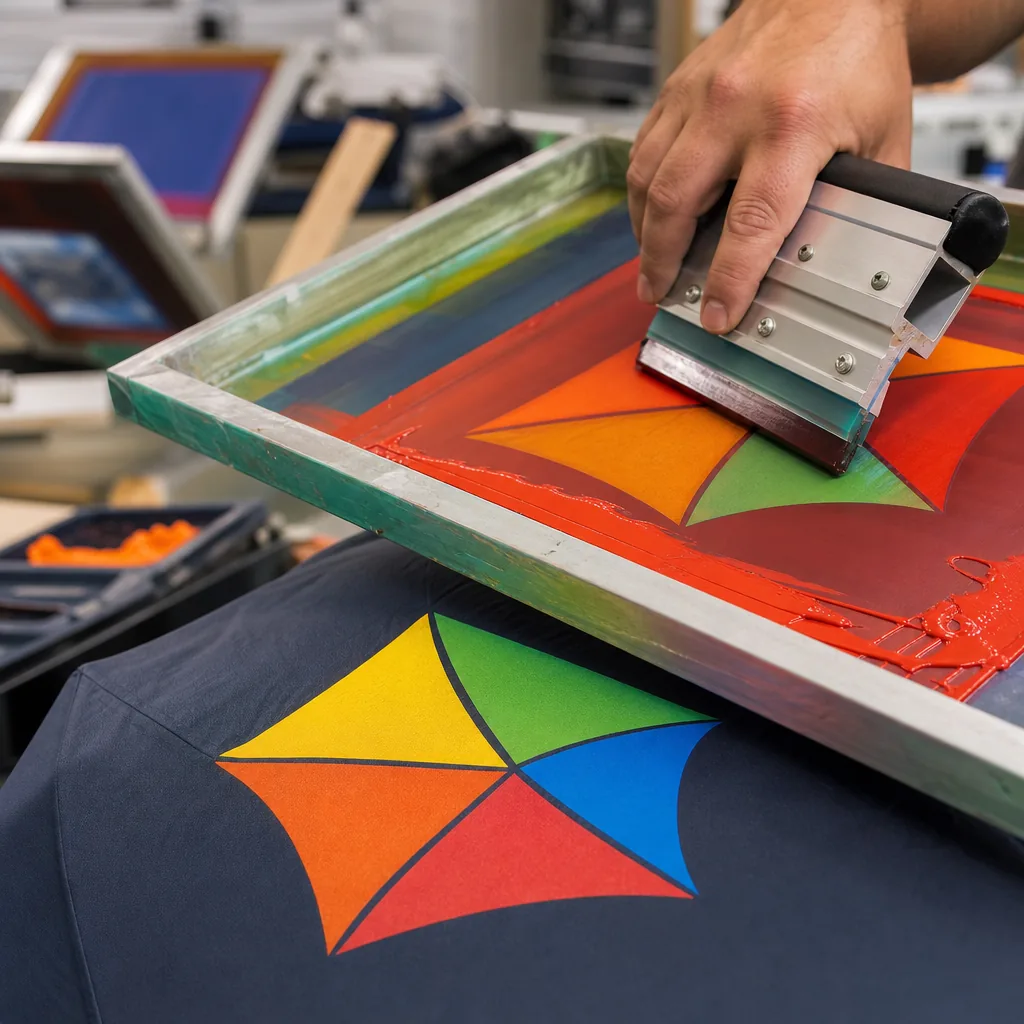
Mascot artwork looks simple on a screen, but on umbrella panels it can shift at the seam, lose color strength on coated fabric, or distort after heat setting and frame tension. For character printed umbrellas, buyers need more than a cute file; they need panel-by-panel artwork rules, fabric and ink choices that hold the brand color, and approval samples that match bulk production. On our Songxia factory floor, these details decide whether a promotion looks consistent across 500 pieces or 50,000.
Translate Character Artwork for Curved Canopies
Flat character art does not “scale up” cleanly onto an umbrella; it breaks into triangular gores that stretch from tip to edge, then gets pulled over ribs under tension. On an 8K 23" canopy, each panel is wide enough for a mascot body, logo badge, or speech bubble, but the rib line becomes a hard visual border once the umbrella opens. I tell buyers to keep eyes, mouths, noses, and key expressions at least 25–35 mm away from seams, because even a 3 mm sewing shift can make a smiling face look crooked. For character printed umbrellas, the production file should be built on the actual panel template, not a flat circle mockup. We normally add 8–12 mm bleed per panel, mark the centerline, and check the artwork at both cutting and sewing stages before bulk printing.
Large faces need a different layout decision than repeating mascots. An 8K layout works well when each panel carries one self-contained pose, product icon, or cartoon scene, especially for promotional umbrella artwork where readability from 3–5 meters matters more than perfect continuity. A 16K frame gives narrower panels, which can make a large face smoother around the dome because the fabric sections curve in smaller steps, but it also creates twice as many seam interruptions. For branded character umbrellas, I prefer 16K when the artwork is a full-canopy wrap with background scenery, clouds, stars, or city lines, because minor seam breaks are less obvious in those elements. For one oversized mascot face, 8K is usually safer if we can place both eyes within two adjacent panels and keep the nose off the center rib.
Mascot umbrella printing should be approved with a rib-map proof, not just a pretty rendering. We label each panel P1 to P8 or P1 to P16, show seam allowance, top cap coverage, and handle orientation, then output a 1:1 paper or fabric strike-off for the buyer’s signoff. Sublimation on 190T or 210T pongee gives the best color control for a custom cartoon umbrella, while screen printing is better for bold mascot shapes with 1–4 spot colors. Heat transfer can work for small chest-style characters, but it feels heavier and may wrinkle near the crown if the film crosses too many panels. At ZheBrella, our standard practice is to inspect the first 20 sewn canopies against the approved panel map before releasing mass production, because most character mistakes are alignment mistakes, not printing mistakes.
Choose Printing Methods for Fine Detail
Fine character detail usually fails at the edge first, not in the middle of the color block. For character printed umbrellas with black outlines, facial features, hair strands, gradients, shadows, and small legal text, digital printing gives the cleanest artwork reproduction because it can place variable-size ink droplets without needing separate screens. It handles soft cheek shading, mascot fur texture, and 4-color cartoon gradients better than screen printing, especially on 190T or 210T pongee panels cut for 21", 23", or 27" umbrellas. The tradeoff is cost and speed: digital is slower for bulk promotional runs, and dark canopy colors often need a white base layer to keep the mascot from looking muddy. For branded character umbrellas where the buyer cares about Pantone accuracy, we normally request vector artwork plus a high-resolution raster file at 300 dpi, then run a strike-off before canopy sewing so distortion across panel seams can be judged early.
Heat transfer is the practical middle ground for mascot umbrella printing when the artwork has gradients, small text, or multiple brand colors but the order quantity does not justify complex screen setup. A transfer film can hold crisp eyes, whiskers, speech bubbles, and shadow effects better than traditional screen printing, and it works well for localized promotional umbrella artwork placed on one or two panels. The weak point is hand feel and durability if the transfer layer is too thick; on folding umbrellas, repeated closing pressure can crease heavy transfers near the rib line. Our standard practice at ZheBrella is to test adhesion after water exposure, dry rubbing, and 20 to 30 open-close cycles before approving mass production. Heat transfer also needs careful temperature control: too cold and the film lifts, too hot and 190T pongee can show gloss marks or slight shrinkage around the print edge.
Screen printing still wins for simple branded character umbrellas with flat colors, bold outlines, and large logo areas, especially when the order is 1,000 pieces or more and the buyer wants tight unit cost. It lays down strong solid color on pongee and is reliable for 8K or 10K stick umbrellas with repeated panel graphics, but it is not my first choice for soft gradients, tiny trademark symbols, or thin text below about 6 pt. Mesh count, squeegee pressure, and ink viscosity decide whether a cartoon outline stays sharp or bleeds into the weave. Fabric choice matters too: 210T pongee has a tighter weave than 190T, so edges print cleaner and saturated reds, blues, and blacks look denser; 190T is lighter and cheaper, but fine mascot outlines can feather more visibly. For a custom cartoon umbrella with UPF 50+ coating or Teflon water-repellent finish, print testing must happen on the final coated fabric, not a substitute swatch.
Protect Brand Colors and Licensing Details
Lock the licensing rules before the first screen is burned, because character mistakes are expensive to repair after canopy cutting. For character printed umbrellas, we ask buyers to provide Pantone Solid Coated targets, vector artwork, approved character height-to-width proportions, minimum clear space around trademarks, and the exact legal copy string before sampling. A mascot face stretched 3% to fit a 23" panel may pass casual review but fail a brand audit, especially on branded character umbrellas sold through retail channels. On 190T or 210T pongee, I prefer defining tolerances by visible brand elements: logo color within Delta E 2.0 to 3.0 after drying, black keylines not thinner than 0.25 mm, and trademark spacing no less than the licensor’s stated safe zone. Legal copy usually belongs on one lower panel edge, the sleeve, or the hangtag, not crowded under the character’s feet where stitching and rib shadows make it unreadable.
Color proofing must be done on the real canopy construction, not on paper and not on white fabric if production will use UPF 50+ silver-coated or black-coated panels. Silver backing can cool reds and make yellow mascots look slightly green; black coating can dull light blues and force a white underbase for screen printing or heat transfer. For mascot umbrella printing, our standard practice at ZheBrella is to strike off on the chosen fabric and coating first, then review under D65 light and outdoor daylight before approving bulk. Sublimation works well on white polyester panels, but it is not the right choice for dark-coated pongee when exact Pantone matching is required. For POE or PVC domes, ink adhesion and transparency change the color read again, so a custom cartoon umbrella should have separate proofs for fabric stick umbrellas, EVA kids umbrellas, and clear dome styles.
Production files should show the umbrella as a 3D product, not only flat promotional umbrella artwork. A character crossing seams on an 8K or 10K canopy needs seam allowance compensation, because 6 to 8 mm disappears into the stitched edge and can cut through eyes, badges, or license marks. On 21" kids umbrellas and 23" auto-open models, the safe print area is smaller than buyers expect once tips, ferrules, runner clearance, and panel curvature are considered. For premium 27" golf umbrellas or 30" event umbrellas with double-canopy vented windproof construction, the outer vent may interrupt artwork unless the mascot is assigned to alternating panels. Bulk inspection should include AQL 2.5 checks for color consistency, registration, legal copy legibility, and approved trademark spacing, not just frame function. That is how character printed umbrellas stay compliant from pre-production sample to FOB or DDP shipment.
Validate Samples Before Bulk Production
Bulk production should not start from a nice-looking JPG; it should start from a controlled artwork proof with dimensions, Pantone references, print method, and panel position locked. For character printed umbrellas, small mistakes are obvious because buyers recognize the mascot face faster than they notice the umbrella frame. I want the proof to show every canopy panel at actual scale, including bleed, seam allowance, rib direction, and whether the character crosses panel seams. For screen printing on 190T or 210T pongee, fine outlines below 0.3 mm can fill in; for heat-transfer printing, thin whiskers, eyelashes, or mascot lettering may lift if the film is not pressed evenly. Writers should tell buyers to check registration between colors, missing details in eyes or hands, and whether promotional umbrella artwork remains readable on curved 21", 23", or 27" canopies instead of only on a flat PDF.
A strike-off is the first physical truth, and I do not treat it as decoration approval only. For mascot umbrella printing, the strike-off should be made on the same canopy fabric, coating, and color planned for bulk production, because Teflon finish, UV coating, and dark-dyed pongee all change ink appearance. If the order uses POE or PVC panels for a custom cartoon umbrella, check adhesion and transparency differently than woven fabric; print cracking often appears after folding, not while the panel is flat on the table. Our standard practice at ZheBrella is to fold and rub the printed area, then inspect for edge lifting, white stress marks, color bleeding, and distortion around sewn seams. The buyer should also confirm handle logo, woven strap label, snap button, sleeve print, and carton mark at this stage, because brand inconsistency usually comes from accessories being approved separately from the canopy.
The pre-production sample should be the exact umbrella the factory will copy: final frame, final ribs, final canopy, final logo placement, and final packing. A 23" auto-open umbrella with 8K steel ribs behaves differently from a 30" golf umbrella with fiberglass ribs and a double-canopy vent, so print position cannot be approved in isolation. For branded character umbrellas, open the sample fully and check whether ribs cut through the mascot’s face, whether panel stitching hides text, and whether the character still looks balanced when the umbrella is viewed from 2 to 3 meters away. During bulk inspection, AQL 2.5 should cover print defects such as misregistration, missing ink, stains, cracking after open-close cycling, and color deviation against the approved strike-off. Inspection should also include mechanism function, rib alignment, handle and strap logo consistency, sleeve matching, barcode accuracy, and random carton checks before FOB or DDP shipment is released.
Plan MOQ, Lead Time, and Delivery Terms
MOQ should be planned around print method first, not around the umbrella style. For digital heat-transfer or sublimation panels, we can usually start mascot umbrella printing at 300–500 pcs per design because there is no screen frame for every color, but the unit cost is higher and color matching must be checked on the actual pongee 190T/210T or POE canopy. Screen print is more economical from 1,000 pcs upward, especially on 23" or 27" straight umbrellas with 8K steel or fiberglass ribs, but every spot color needs a screen setup fee, often USD 30–80 per color per position. A custom cartoon umbrella with a full-panel character, edge-to-edge background, or multiple logo placements may also need CAD artwork cleanup, panel registration testing, and a printed pre-production sample before bulk cutting starts.
Lead time gets longer when the character artwork has faces, gradients, licensed colors, or panel-to-panel alignment. A simple 1-color mascot on one panel can move through sample approval in 5–7 days and bulk production in 20–25 days after deposit. Full-canopy branded character umbrellas normally need 7–12 days for proofing and strike-off samples, then 30–40 days for bulk, because cutting tolerance and sewing alignment decide whether the eyes, hands, and outlines look right after assembly. If the umbrella includes auto-open-close shafts, 10K fiberglass frames, UV UPF 50+ coating, or double-canopy vented construction rated around 50+ mph, add buffer for incoming frame inspection and AQL 2.5 final checking. Our standard practice at ZheBrella is to lock artwork, PMS colors, sample comments, carton marks, and spare parts before issuing the production order.
FOB and DDP quotes should be separated clearly for retail chains, theme parks, events, and licensing programs because the risk profile is different. FOB Ningbo or Shanghai is cleaner when the buyer controls forwarders, customs, and insurance; it also makes sense for repeat retail POs with mixed umbrella sizes such as 21" folding, 23" stick, and 30" golf umbrellas. DDP is useful for event planners and promotional-product distributors who need a landed unit cost to a warehouse, convention center, or theme park dock, but the quote must state duty, VAT, last-mile delivery, and whether cartons need Amazon, retail, or license-holder labeling. For character printed umbrellas tied to a movie release, sports mascot, or park opening, I recommend booking production 60–75 days before the delivery date, with final promotional umbrella artwork approved before the deposit is paid.
Frequently Asked Questions
What file format works best for mascot umbrella printing?
Vector AI or PDF files are best for logos and outlines, while 300 dpi layered PSD files can work for detailed character scenes. Factories should receive Pantone references and an approved flat layout.
Can the same mascot artwork be used on folding and golf umbrellas?
Usually yes, but the artwork must be resized and rebalanced for each canopy diameter and rib count. A compact auto-open umbrella and a 60-inch golf umbrella should each have separate production proofs.
What artwork files are needed for mascot umbrella printing?
Vector AI, EPS, or PDF files are preferred for mascot outlines, logos, and spot colors. For full-color cartoon artwork, provide 300 DPI layered PSD or TIFF files plus Pantone references for key brand colors.
Which print method is best for detailed character umbrellas?
Digital printing is best for gradients, facial details, and multi-color cartoon artwork, while silkscreen works well for simple mascot logos with 1–4 solid colors. For repeat retail programs, a pre-production sample is recommended before bulk approval.
What is the usual MOQ and sampling time for branded character umbrellas?
MOQ is typically 500–1,000 pieces per design depending on frame, fabric, and print method. Printed samples usually take 7–10 days after artwork confirmation, with bulk production around 25–45 days after sample approval.
Looking to Launch Your Custom Umbrella Line?
ZheBrella is a Zhejiang-based OEM/ODM umbrella manufacturer with 17 years of export experience. Free design, low MOQ from 100 pieces, windproof construction, full-color print.
Get Free Quote Now »People Also Search For
Related Articles
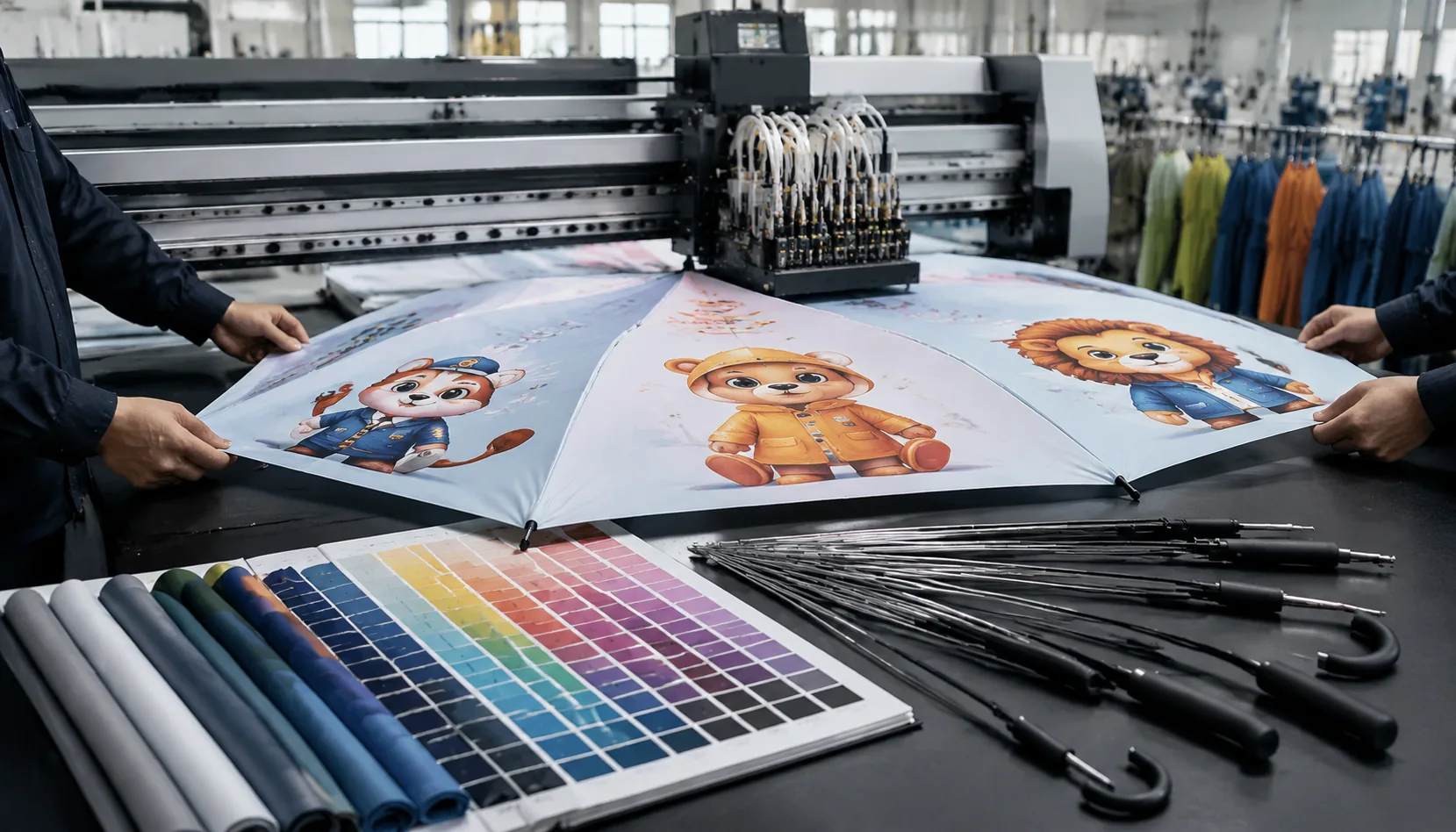
Brand Mascot and Character Printing on Umbrella Canopies
Turn mascots and character art into manufacturable umbrella prints with correct panel layout, fabric choice, sampling, s...
Read More »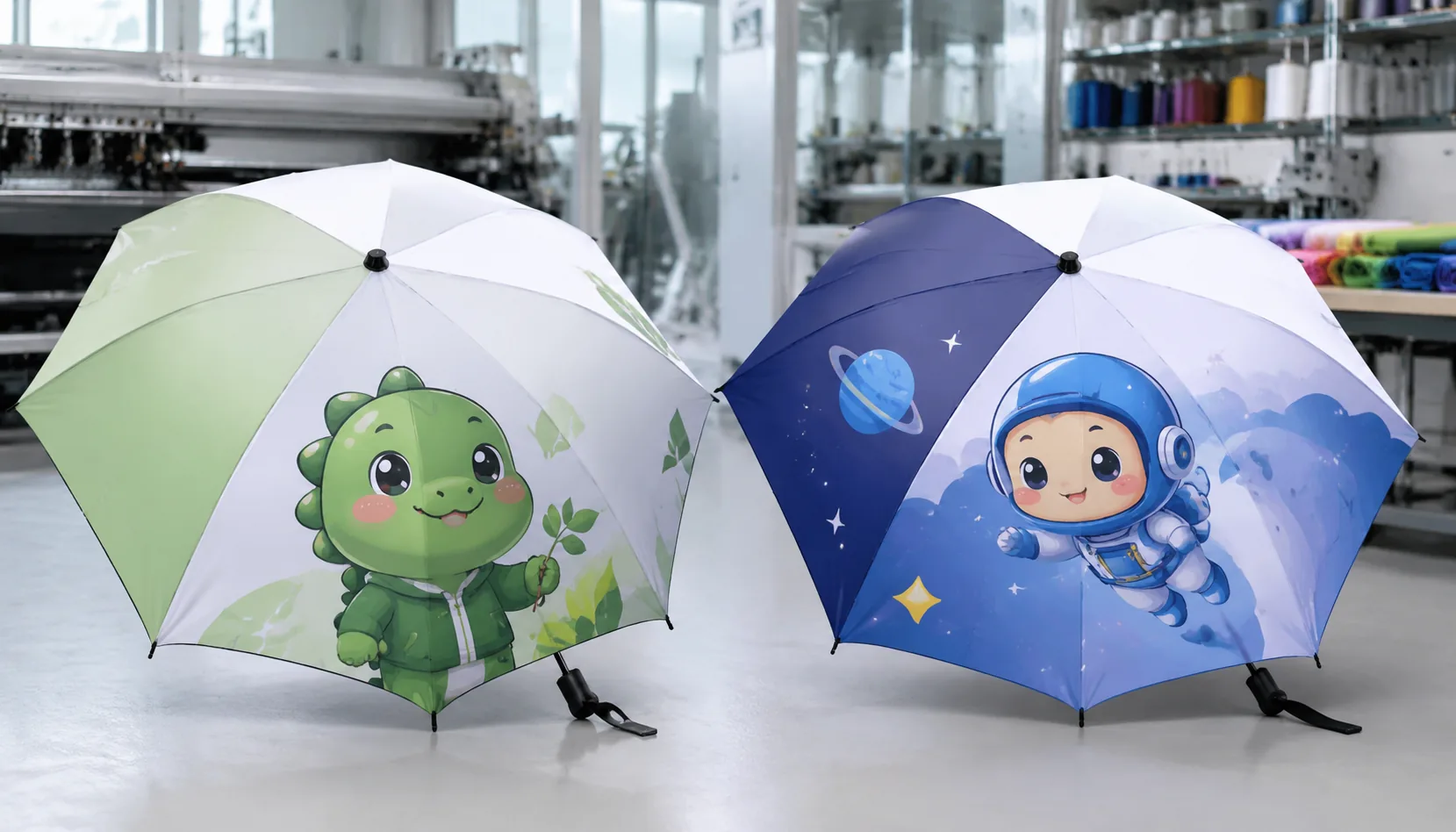
Mascot and Character Printing on Branded Umbrella Panels
Build mascot or character umbrellas with better artwork control, panel placement, fabric selection, sampling, and licens...
Read More »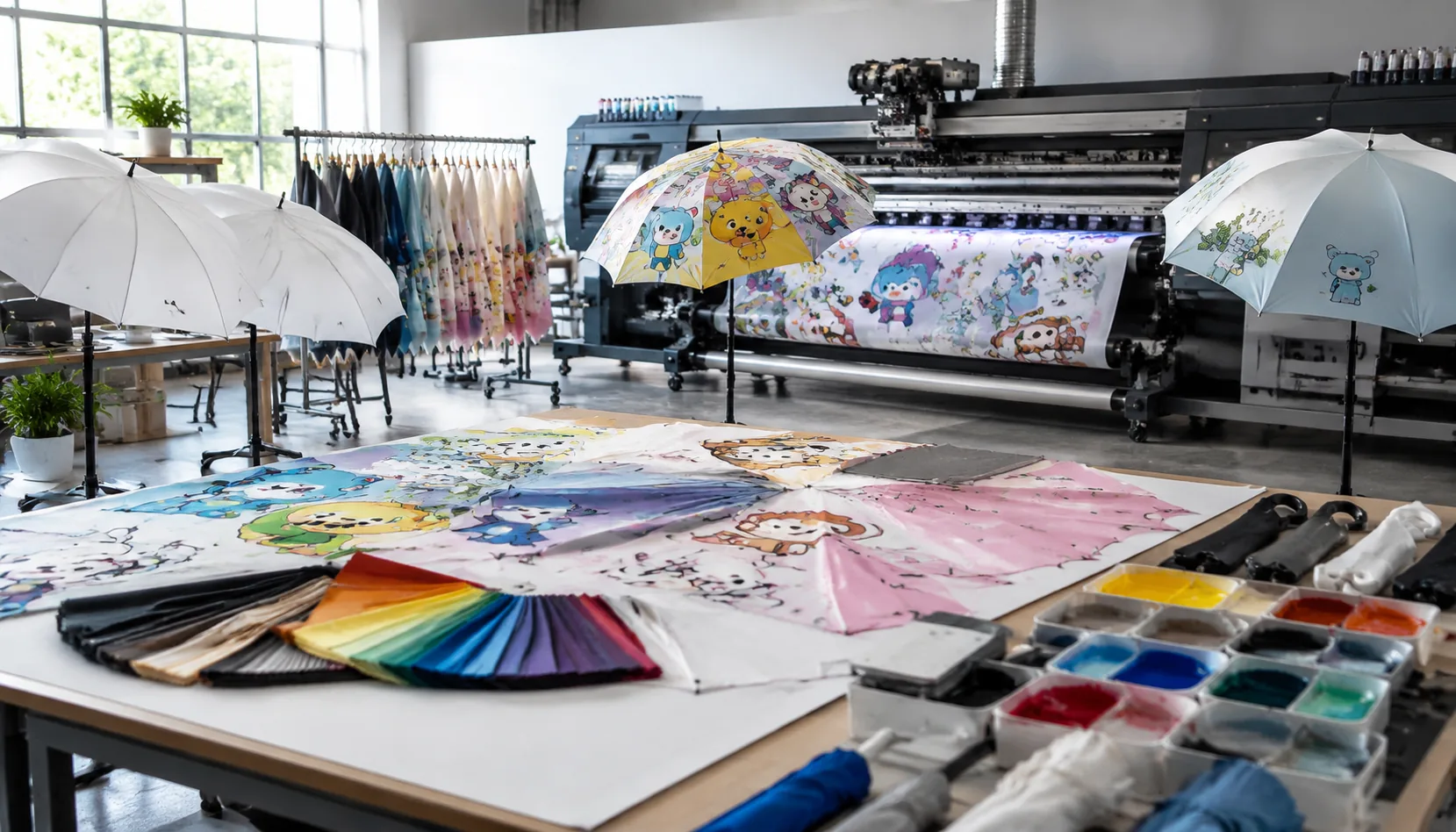
Character and Mascot Printing on Branded Umbrella Canopies
Plan mascot umbrella printing with clear artwork rules, fabric and rib choices, approval samples, and inspection checks ...
Read More »