Metallic Ink Logos for Premium Branded Umbrella Runs
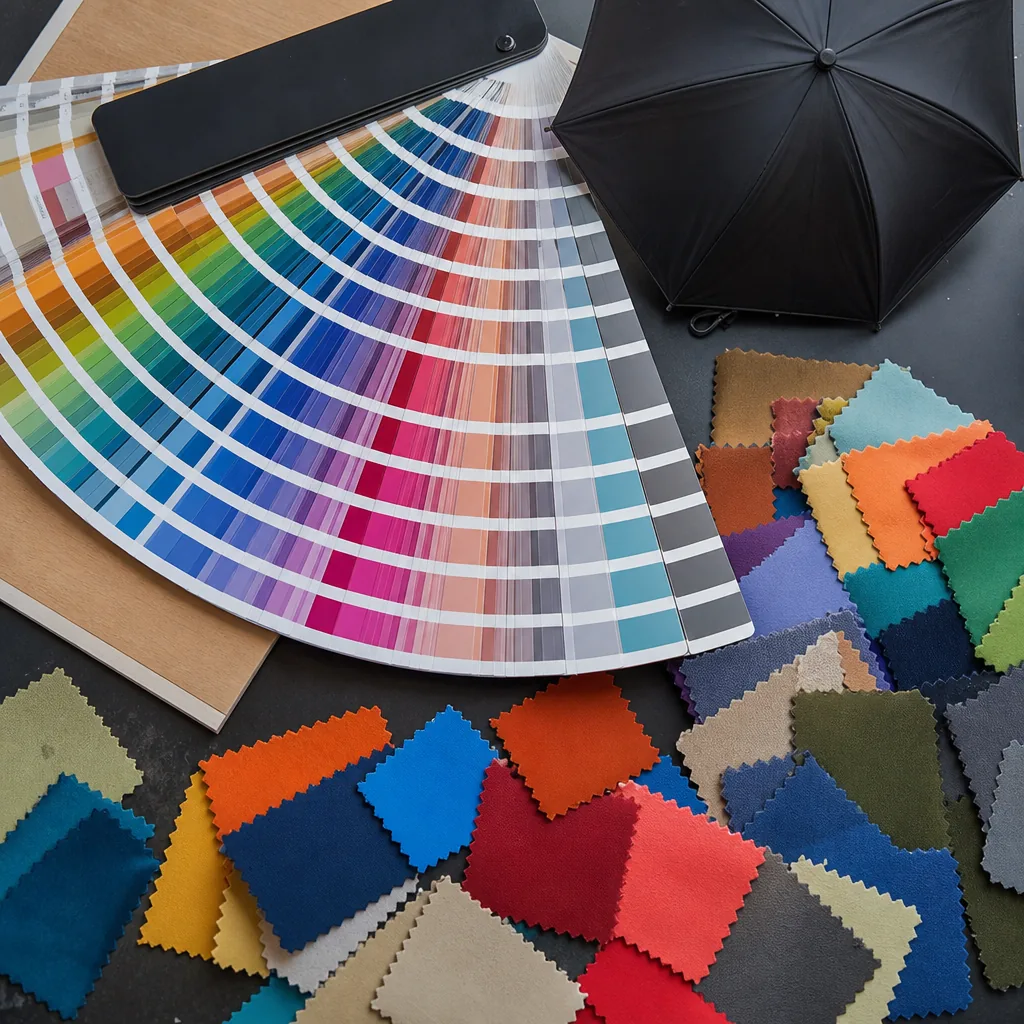
Premium umbrella buyers often ask for a metal-like logo, but the final result depends less on the ink name and more on canopy fabric, coating, curing control, and the abuse the print must survive in folding and rain tests. On our Songxia production floor, metallic logo umbrella printing is evaluated against pearl and silicone effects with real concerns in mind: adhesion on pongee or polyester, rub resistance, MOQ, sampling time, and whether the approved shine can be repeated across the full run.
Which Brand Programs Benefit From Metallic Ink
Metallic ink makes the most sense when the umbrella is meant to feel like a controlled brand asset, not a giveaway thrown into a conference bag. Executive gifts, private banking client programs, luxury hotel welcome sets, automotive dealer launches, and VIP event merchandise are the strongest fits because the buyer is paying for perceived finish as much as rain protection. On a 23" or 27" stick umbrella with 190T or 210T pongee, a restrained silver, champagne gold, or gunmetal mark on one or two panels can look more expensive than a four-color full-panel print. For corporate gift umbrellas, I usually recommend metallic ink only when the frame, handle, sleeve, and carton are also upgraded: fiberglass ribs instead of painted steel, EVA or coated wooden handle instead of cheap plastic, and a matching sleeve with a small repeat logo.
The best metallic logo umbrella printing programs are usually in finance, automotive, aviation, technology launches, and premium branded umbrellas for retail or membership clubs. These categories often have simple identity systems: a wordmark, crest, monogram, or small emblem that can sit cleanly on a navy, black, charcoal, burgundy, or deep green canopy. Metallic ink gives the logo a light-catching edge without making the umbrella look like souvenir merchandise. For OEM umbrella branding, it also works well on executive compact models, such as 21" auto-open-close umbrellas with 8K fiberglass ribs, where the print area is limited and the user sees the logo at close range when opening, closing, or storing it.
Metallic ink is not the right answer for dense full-canopy graphics, large gradients, or artwork that covers every panel. The pigment load that creates the metallic effect is heavier than standard plastisol or water-based ink, so fine lines, tiny legal text, and large flood areas can become inconsistent after curing, folding, and repeated wet use. On vented double-canopy windproof models rated around 50+ mph, large metallic areas also show panel movement and creasing more obviously than matte ink. Our standard practice at ZheBrella is to keep a specialty ink umbrella logo within a controlled size, usually under 120–180 mm wide depending on panel shape, and confirm adhesion, rub resistance, and color shift on actual canopy fabric before bulk production under AQL 2.5 inspection.
Metallic, Pearl, Silicone, and Raised Ink Options
Metallic ink is the first choice when buyers want a visible premium cue without changing the umbrella structure. On 190T or 210T pongee, a silver or gold metallic logo sits flatter than embroidery but catches light better than standard plastisol or water-based ink. The hand feel is slightly thicker and drier because the ink carries aluminum or mica particles; that is why we avoid ultra-fine strokes under about 0.35 mm and small serif text below 6–7 pt. Metallic logo umbrella printing also needs a solid underbase on dark navy, black, bottle green, or burgundy canopies, otherwise the shine looks muddy after drying. Cost is usually 15–30% higher than standard screen printing, mostly due to ink price, slower squeegee speed, and extra cleaning time between colors.
Pearl ink is softer and more subtle than metallic, better for premium branded umbrellas where the client wants a champagne, ivory, or tone-on-tone effect rather than a hard reflective logo. It has a smoother hand feel and works well on light gray, white, beige, and pastel pongee, but its opacity is weaker, so it is not the right choice for sharp contrast on dark 210T fabric. Silicone ink gives the richest raised surface and excellent elasticity, useful for a specialty ink umbrella logo on golf umbrellas, 27" auto-open models, or high-end corporate gift umbrellas handled repeatedly at events. The tradeoff is cost: silicone can be 2–3 times the price of normal ink, and thick deposits need controlled curing so the canopy panels do not shrink or distort.
Raised ink, often called high-density printing, gives the most tactile result but also creates the most production risk on umbrella panels because the fabric is cut on bias and moves under screen pressure. For OEM umbrella branding, our standard practice at ZheBrella is to keep raised elements bold: block letters, simple icons, and borders above 1 mm line width. Multi-color registration becomes harder when metallic, pearl, silicone, or raised ink is combined, especially across curved panels where each rib creates tension after assembly. A two-color metallic plus raised logo may look strong on a flat strike-off but shift 0.5–1.0 mm in bulk production if the artwork is too tight. For AQL 2.5 inspection, we set acceptance around practical viewing distance, not microscope-level perfection, and we always recommend a pre-production sample before committing MOQ to metallic logo umbrella printing.
Fabric, Coating, and Color Compatibility
Metallic ink shows best on dark canopy colors, but the fabric finish decides whether it looks like polished metal or dull gray paste. On 190T and 210T pongee, a matte face usually gives better visual contrast than shiny polyester because the fabric does not compete with the reflective flakes in the ink. Black, navy, charcoal, bottle green, and burgundy are the safest bases for premium branded umbrellas when the buyer wants silver, champagne gold, bronze, or copper logos. White and light gray can work, but the metallic effect is weaker unless the artwork has a dark outline or a solid underbase. For metallic logo umbrella printing, we normally check the weave density first because loose fabric lets ink sink too deep, reducing shine and making the logo edge fuzzy after curing.
Waterproof and functional coatings are where many logo failures start. Standard water-repellent treatment on pongee is usually manageable if the ink system is matched and the panel is cured correctly, but heavy Teflon-style repellency, silicone-feel finishes, and some PU back coatings reduce adhesion. UPF 50+ umbrellas are more sensitive because silver-coated, black-coated, or high-density UV layers can trap heat during curing and make the panel curl, especially on thin folding umbrella fabric. A specialty ink umbrella logo should be tested with cross-hatch tape pull, wet rub, dry rub, and flexing after 24 hours, not judged straight off the print table. Our standard practice at ZheBrella is to print sample panels from the actual bulk fabric roll, not a similar color card, because coating batches vary more than buyers expect.
Double-canopy windproof umbrellas need separate testing on both the outer canopy and the lower vent layer because airflow, panel tension, and fabric overlap change how the logo bends in use. A logo that passes on a flat 23-inch straight umbrella panel may crack near the vent seam on a 27-inch golf model with fiberglass ribs and a double-canopy construction rated for 50+ mph wind. Auto-open and auto-open-close folding models create another issue: the canopy is folded tightly around the shaft, so metallic ink on high-friction fold lines can abrade faster than standard plastisol or water-based ink. For corporate gift umbrellas and OEM umbrella branding, I recommend one pre-production sample opened and closed at least 50 cycles, then checked under side light for flaking, dulling, and crease whitening before approving bulk production.
Durability Testing Before Mass Production
Metallic inks fail differently from standard plastisol or water-based logo inks, so I do not approve mass production from a flat artwork file. For metallic logo umbrella printing, the first checkpoint is a pre-production sample on the exact canopy fabric, not a substitute roll. A silver logo on 190T pongee behaves differently than gold on 210T with Teflon coating, and both differ again on POE or PVC panels. We normally run dry rub and wet rub tests with a white cotton cloth for 20 to 50 strokes, checking whether the metallic particles transfer, dull, or smear. For premium branded umbrellas, the logo must keep a clean edge after rubbing, because even minor gray dusting around the mark looks cheap under retail lighting.
Tape adhesion testing is just as important, especially when the order uses specialty ink umbrella logo work over darker dyed fabric. I use a cross-hatch cut on the printed area, then apply 3M tape firmly and pull it back at a sharp angle to check peeling or flaking. Folding abrasion is the factory-floor test many buyers forget: the printed panel is folded along the same lines used during packing, pressed, opened, and inspected for cracking in the metallic layer. We also run water exposure checks by spraying and soaking the printed canopy, then drying it naturally to see whether the shine becomes patchy or whether ink migrates into the weave. On corporate gift umbrellas, these problems often show up after the first rainy event, not during a clean showroom inspection.
Before full cutting and sewing, I recommend at least one approved pre-production sample plus a small pilot run if the logo is large, placed near fold lines, or printed across multiple panels. Opening and closing cycle checks should be done on finished umbrellas, not loose canopy fabric; 50 to 100 cycles will reveal whether the print cracks where the canopy rubs against steel or fiberglass ribs, especially on 23-inch auto-open and 27-inch golf models. For OEM umbrella branding, final inspection should follow AQL 2.5 with specific defect calls for cracking, peeling, uneven metallic shine, pinholes, off-register edges, and ink migration. ZheBrella’s standard practice is to separate cosmetic print defects from frame defects during inspection, because a mechanically good umbrella can still be rejected if the metallic finish looks inconsistent across panels.
Pricing, MOQ, and Production Planning
Metallic logo umbrella printing should be quoted as a specialty process, not as normal one-color screen printing with a different ink bucket. Silver, gold, copper, and pearl inks carry a surcharge because the pigment is heavier, the mesh count must be selected carefully, and the print operator usually needs slower strokes to keep the metallic particles even. On 190T or 210T pongee, we normally test ink adhesion after water-repellent or Teflon treatment because some coatings reduce bite. For premium branded umbrellas, the practical surcharge is usually calculated per panel and per color, with a separate screen charge if the logo is large or split across multiple panels. Buyers should ask whether the quoted price includes pre-production strike-off, ink matching, and abrasion testing. A metallic ink that looks bright on a flat swatch can look dull once stretched over a 23-inch or 27-inch canopy, so approving only a digital mockup is a common mistake.
Production planning needs extra time because metallic ink dries slower than standard plastisol or water-based ink, especially in humid Zhejiang weather. If the factory stacks printed panels too early, the logo can offset onto the next panel or pick up sewing dust before canopy assembly. For a specialty ink umbrella logo, I prefer to add 2–4 days for sampling and 3–5 days in bulk production, depending on print area, curing method, and order size. Artwork should also be simplified before quoting: very thin lines, small serif text, and tight gradients often fill in or lose shine after curing. For corporate gift umbrellas, a clean 1-color metallic mark on one or two panels is more reliable than a complicated full-panel layout. If the buyer needs OEM umbrella branding across handle badges, sleeve labels, and canopy print, those items should be scheduled together so color tone and packaging approvals do not delay final inspection.
MOQ is not only about umbrella assembly; it is also about ink setup, screen preparation, and wastage control. For metallic logo umbrella printing, many factories will accept 500 pieces for existing 21-inch or 23-inch models, but 1,000–3,000 pieces is more realistic when custom canopy color, 8K fiberglass frame, auto-open-close shaft, or retail packaging is involved. Suppliers should quote clearly as FOB Ningbo or Shanghai, or DDP to the buyer’s warehouse, with lead time separated into sampling, bulk production, inspection, and transit. A proper quote should state carton quantity, individual sleeve or gift box, inner polybag requirements, AQL 2.5 inspection level, and whether metallic ink defects are judged under normal viewing distance or close inspection. Our standard practice at ZheBrella is to lock the approved pre-production sample before cutting bulk fabric, because changing metallic artwork after sewing starts creates rework that is far more expensive than extending the sampling stage by a few days.
Frequently Asked Questions
Can metallic ink match a Pantone metallic color exactly?
It can be approximated, but metallic reflection changes under different lighting and fabric colors. Buyers should approve a physical strike-off instead of relying only on a digital mockup.
Will metallic ink crack on folding umbrellas?
It can if the logo crosses high-fold areas or the ink layer is too thick. The safest approach is a moderate logo size on a low-stress panel area, tested on the actual frame before bulk production.
Which umbrella fabrics handle metallic and pearl inks best for consistent logo results?
190T and 210T pongee usually give the cleanest metallic and pearl print definition because the surface is tighter and smoother than many nylon options. Recycled PET can also work well, but the factory should test ink adhesion and color shift before mass production, especially on dark canopies.
What durability testing should buyers request before approving a specialty ink umbrella logo run?
Ask for a wet rub test, dry rub test, tape adhesion test, and at least a basic open-close cycle check after printing. For premium programs, many buyers also request a 24-48 hour curing confirmation and visual inspection after packing simulation to see whether metallic or silicone logos crack, scuff, or transfer.
How do MOQ and lead time usually differ between metallic, pearl, and silicone logo printing?
Metallic and pearl logo runs are often workable from around 500-1,000 pieces per colorway, while raised silicone logos may start closer to 1,000-3,000 pieces because of tooling and setup. Approval samples commonly take 5-10 business days, and bulk production is often 25-35 days after artwork sign-off, depending on umbrella style and print complexity.
Looking to Launch Your Custom Umbrella Line?
ZheBrella is a Zhejiang-based OEM/ODM umbrella manufacturer with 17 years of export experience. Free design, low MOQ from 100 pieces, windproof construction, full-color print.
Get Free Quote Now »People Also Search For
Related Articles
Metallic Logo Printing on Umbrellas for Premium Branding
Plan metallic logo umbrellas with the right fabric, print area, QC checks, MOQ, and lead time for premium corporate gift...
Read More »
Metallic Ink Umbrella Logos for Premium Brand Programs
Plan metallic umbrella logos with the right fabric, ink, placement, and QC controls so premium brand programs look consi...
Read More »
Metallic Gold and Silver Logos on Branded Umbrellas
Specify metallic gold or silver umbrella logos with realistic shine, fabric limits, sample checks, MOQ, cost factors, an...
Read More »