Minimum Logo Size Rules for Branded Umbrella Printing
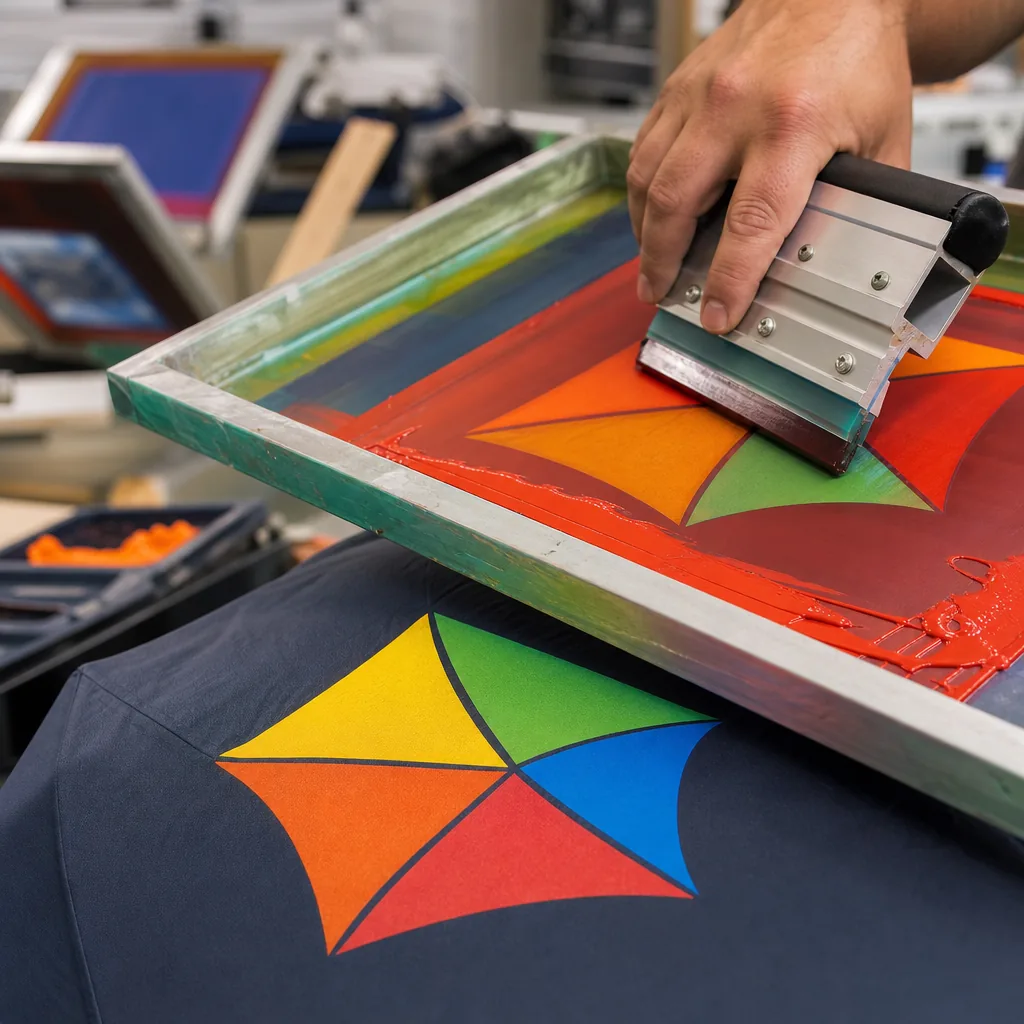
A logo that looks sharp on a PDF can disappear once it is printed across woven 190T or 210T umbrella fabric, especially after panel cutting, sewing tension, and ink spread are added to the equation. On our Songxia production floor, the minimum logo size umbrella buyers approve is not just a design preference; it determines whether thin lines, small text, and registration details survive bulk printing without turning soft or unreadable.
Why Small Logos Fail on Umbrella Fabric
Small logos fail on umbrellas because the canopy is not a flat, stable print surface. Most branded umbrellas use 190T or 210T pongee, polyester, POE, PVC, or EVA, and even the smoother pongee has a woven texture that breaks up fine details. When the canopy is sewn onto an 8K or 10K frame, each panel is pulled into a shallow curve between ribs, so the ink or transfer film sits on fabric that is already under tension. A mark that looks sharp at 25 mm wide on a PDF can lose its edges after screen printing, heat transfer, or sublimation, especially if the umbrella print line weight is below about 0.4–0.5 mm. This is why a realistic minimum logo size umbrella rule matters more than the artwork dimensions shown on a buyer’s mockup.
Viewing angle makes the problem worse. People rarely look at an umbrella logo straight-on like they would a business card, tote bag, or flat acrylic giveaway. They see it from the side, above street level, through moving rain, or across a crowded event entrance. On a 23" or 27" canopy, the printed panel curves away from the eye, and ribs create visual breaks every 45 degrees on an 8-panel umbrella. Readable umbrella branding usually needs bolder shapes, wider letter spacing, and fewer tiny words than apparel printing. A chest logo on a polo can be read from 3 feet because the surface faces forward; a canopy logo may need to work from 10 to 20 feet while the user is walking.
Rain exposure also changes contrast. Water beads from a Teflon-coated pongee canopy can sit over the print and distort small type; untreated polyester can darken when wet, reducing contrast between navy fabric and black or gray ink. Rigid promotional products like pens, bottles, or power banks hold a crisp edge because the substrate does not flex, stretch, or ripple in wind. Umbrellas do all three. For small logo umbrella printing, our standard practice at ZheBrella is to test the smallest text and icon gaps before production, not just approve the full logo size for umbrellas. If the logo includes registration marks, fine serif type, QR codes, or thin circular outlines, it usually needs simplification before it can survive real canopy conditions.
Recommended Minimum Sizes by Branding Method
For screen printing on pongee 190T/210T panels, I treat 35–40 mm wide as the practical minimum logo size umbrella buyers should approve for a simple one-color mark, measured at the narrowest readable version, not the artboard size. Text should be at least 5 mm high for uppercase sans-serif and 6–7 mm for lowercase or serif fonts; anything under 0.35 mm umbrella print line weight tends to fill in when ink passes through a 120–160 mesh screen and hits the slight weave of the fabric. Keep open spacing inside letters and icons at 0.5 mm or more, especially for reversed-out logos. For complex crests, QR-like patterns, thin script, or multi-color registration, move the print width to 60–80 mm and separate colors with 0.7–1.0 mm trapping tolerance. On a 23 inch 8K umbrella, the sweet spot is usually a 90–120 mm panel logo placed 120–160 mm from the tip, where the canopy is flatter and the squeegee pressure stays consistent.
Digital print and sublimation can hold more detail than screen print, but they do not make unreadable artwork readable. For small logo umbrella printing by digital transfer, I still reject text below 4 mm high and lines below 0.25–0.3 mm, because ink spread, heat press pressure, and fabric texture soften the edge after curing. Full-color photographic logos should be at least 70 mm wide, with fine legal text removed or enlarged; 300 dpi at final print size is the baseline, not a fix for a crowded design. Heat transfer vinyl or PU transfer is cleaner on edges, so a simple one-color mark can work at 25–30 mm wide, but narrow cuts under 0.5 mm peel during weeding or crack after repeated opening cycles. Our standard practice at ZheBrella is to test the smallest version on the actual canopy fabric and run 20–30 open-close cycles before confirming production artwork.
Woven labels and strap printing need stricter rules because the available area is small and curved around the folded umbrella. A sewn woven label on the tie strap is usually 12–18 mm high by 35–55 mm long; the minimum text height should be 3.5–4 mm for woven jacquard and 3 mm for printed satin, with stroke weights no thinner than 0.3 mm and at least 0.4 mm spacing between letters. For readable umbrella branding on the strap itself, use one short wordmark or icon, not a full address, slogan, and website. On compact 21 inch auto-open-close models, strap widths often run only 18–22 mm, so the safe logo size for umbrellas is about 30–45 mm long with bold geometry. If the brand mark has gradients, hairlines, or small registered trademark symbols, simplify the artwork, remove the ™, or move the detailed version to the canopy panel where the buyer can actually read it.
How Fabric and Canopy Structure Change Readability
Fabric texture is the first thing I check before approving a logo size for umbrellas, because the same artwork behaves differently on 190T and 210T pongee. A 190T pongee canopy has a slightly looser weave and more ink spread, so fine serifs, hairline icons, and thin slogan text can soften after screen printing or heat transfer. On 210T pongee, the tighter yarn density gives cleaner edges, especially for 1-color screen prints and reflective transfers, but it also shows registration errors more clearly on multi-color marks. For small logo umbrella printing, I normally want a minimum positive line weight of about 0.4–0.5 mm after scaling, and reversed-out lines should be thicker, closer to 0.6–0.8 mm, because ink gain and fabric movement reduce open space.
Coatings change the rule again. UPF 50+ black glue, silver coating, and some Teflon-treated fabrics can reduce surface absorption, which is good for water repellency but less forgiving for low-pressure ink adhesion. Heat-transfer logos often sit cleaner on coated pongee than direct screen ink, but the carrier film must not look like a patch, especially on dark navy, black, or forest green canopies. Dark canopy colors usually improve readable umbrella branding when the logo is white, silver, or another high-contrast color; they become a problem when a buyer insists on tone-on-tone charcoal or low-contrast PMS matches. A minimum logo size umbrella rule that works on a white 210T panel may fail on a black UV-coated canopy if the mark depends on thin negative gaps.
Canopy structure limits the usable print area as much as fabric does. An 8K umbrella has wider panels, so a 23-inch straight umbrella can often take a chest-level logo around 180–220 mm wide without fighting the seam allowance or rib shadows. A 16K umbrella divides the same canopy circumference into narrower slices; each panel is slimmer, more curved, and harder to hold flat on the platen, so the safe print width drops noticeably. This is where many procurement teams make mistakes: they approve artwork based on overall umbrella diameter instead of panel geometry. Our standard practice at ZheBrella is to measure the flat printable zone after seam allowance, rib position, and crown curvature, then adjust the minimum logo size umbrella recommendation before sampling.
Testing Logos on Samples Before Bulk Orders
The cheapest time to catch a bad logo is before fabric is cut, not after 5,000 panels are printed. For every branded order, the artwork review should start with vector files, usually AI, EPS, or PDF, because bitmap logos hide weak strokes and fuzzy edges until the screen is burned or the heat-transfer film is weeded. We check the actual imprint area by umbrella type: a 21" folding umbrella panel gives far less clean space than a 30" golf umbrella, especially near rib seams and the curved lower edge. A digital mockup is useful for placement and color expectation, but it does not prove the minimum logo size umbrella requirement. I still want to see the logo at 1:1 scale on a printed paper proof or film output, with the smallest letters measured in millimeters. For screen printing on 190T pongee, thin strokes below about 0.3 mm often break; for heat transfer, tiny gaps can fill when pressed.
Strike-offs are where small logo umbrella printing gets honest. We print the actual logo on the actual canopy material, such as 190T/210T pongee, POE, PVC, or EVA, using the chosen process: screen print, heat transfer, or sublimation. Dark navy pongee with white ink behaves differently from silver UV-coated fabric with a Pantone red mark. Registered marks, ® and ™ symbols, and thin taglines are the first details to fail, especially after the fabric is tensioned over 8K or 10K ribs. QR codes are even less forgiving; I usually recommend at least 25 mm square for basic scanning, more if the code sits near a seam or on a vented double-canopy panel. Legal text under 5 pt may look acceptable on the digital mockup but turn into gray dust on woven fabric. That is not readable umbrella branding; it is decoration pretending to be information.
A pre-production sample should be approved before bulk cutting, especially when the logo size for umbrellas is near the lower limit or the buyer requires retail-level consistency. Our standard practice at ZheBrella is to review the open umbrella from normal hand distance, then inspect the print close up for pinholes, sawtooth edges, ink bleeding, heat-press scorch marks, and distortion across the panel curve. We also check whether the logo remains visible when the umbrella is wet, folded, and sleeve-packed, because some metallic or low-contrast prints disappear after handling. If the minimum logo size umbrella test fails, the fix is usually simple: enlarge the mark, remove the tagline, thicken the umbrella print line weight, separate legal copy onto a hangtag, or print the QR code on the sleeve instead of the canopy. Approving these changes at sample stage protects the order from AQL 2.5 inspection failures and avoids expensive reprinting after bulk production has started.
Production Tolerances, MOQ, and Buyer Sign-Off
The final artwork spec should not say only “print logo on panel.” It should lock down logo size, panel position, print color, and tolerance before fabric cutting starts. For a normal 23" umbrella with 190T or 210T pongee, I want to see the logo size written in millimeters, the distance from the canopy tip or seam line, and the allowed movement, usually ±3 mm for panel printing and ±5 mm when the fabric stretch is difficult to control. Color should be defined by Pantone code, not a screenshot, because navy, royal blue, and reflex blue look different after ink absorption and heat curing. For minimum logo size umbrella decisions, the buyer also needs to approve line weight: fine strokes under 0.3 mm often break in screen printing, while heat transfer can hold smaller detail but may add a film edge. These details are what make readable umbrella branding possible after sewing tension pulls the canopy over 8K or 10K ribs.
AQL 2.5 inspection does not mean every umbrella will be perfect; it means the shipment is judged against an agreed defect limit, so the tolerance rules must be written before production. Inspectors should know what counts as a major defect: logo tilted more than the approved angle, color outside the signed swatch range, print shifted into a seam, or a small logo umbrella printing result that becomes unreadable at normal viewing distance. For print quality, our standard practice at ZheBrella is to keep a signed pre-production sample, a fabric strike-off, and a printed panel reference at the packing line so QC staff are not guessing. If the approved logo size for umbrellas is 70 mm wide, the inspection sheet should not accept 58 mm on one panel and 75 mm on another. That variation usually comes from screen setup, careless fabric positioning, or uncontrolled heat-transfer pressure, not from the umbrella structure itself.
MOQ and lead time become serious when the buyer asks for special print tests, unusual ink, or extra-small logo detail. A standard one-color screen print may fit into a 500-piece MOQ, but metallic ink, silicone ink, reflective transfer, or repeated testing for very thin umbrella print line weight can push the practical MOQ to 1,000 pieces because the factory must prepare screens, waste fabric, adjust curing time, and reserve skilled operators. For FOB Ningbo or Shanghai orders, I normally plan 7 to 10 days for artwork confirmation and sampling, then 25 to 35 days for bulk production after deposit and sample sign-off. Under DDP terms, add time for carton measurement, customs paperwork, sailing or air schedules, and final-mile delivery; 45 to 60 days is more realistic for North America or Europe. Buyers who approve the minimum logo size umbrella spec late often save one day in email and lose two weeks on the production calendar.
Frequently Asked Questions
Can a QR code be printed on an umbrella canopy?
Yes, but it must be large enough, high contrast, and tested on a physical sample. Small QR codes can distort on curved fabric and may not scan reliably after sewing and canopy tensioning.
Should fine taglines be included under an umbrella logo?
Only if the text meets the factory’s minimum height and line-weight rules. For many promotional umbrellas, a simplified logo without a tagline reads better from normal viewing distance.
What file setup helps prevent small logos from filling in during umbrella production?
Provide vector artwork with all fonts outlined and strokes expanded to shapes before submission. For bulk orders, most factories will review line weights under about 0.3 mm and reverse gaps under about 0.4 mm because these are the areas most likely to close up on 190T and 210T fabrics.
Does the minimum readable logo size change between one-color screen printing and heat transfer printing on umbrellas?
Yes. One-color screen printing is usually better for bold marks and simple text, while heat transfer can hold smaller details more accurately. If your logo includes thin lines, gradients, or letters under about 4-5 mm tall, a transfer-based method is often the safer choice for readability.
Should I enlarge a small chest-style logo when printing on a single umbrella panel for retail distribution?
Usually yes, because a chest logo scaled directly onto an umbrella panel can look undersized from normal viewing distance. B2B buyers commonly approve a print width around 80-120 mm on one panel for simple logos, then request a pre-production mockup or sample to confirm balance and readability.
Looking to Launch Your Custom Umbrella Line?
ZheBrella is a Zhejiang-based OEM/ODM umbrella manufacturer with 17 years of export experience. Free design, low MOQ from 100 pieces, windproof construction, full-color print.
Get Free Quote Now »People Also Search For
Related Articles
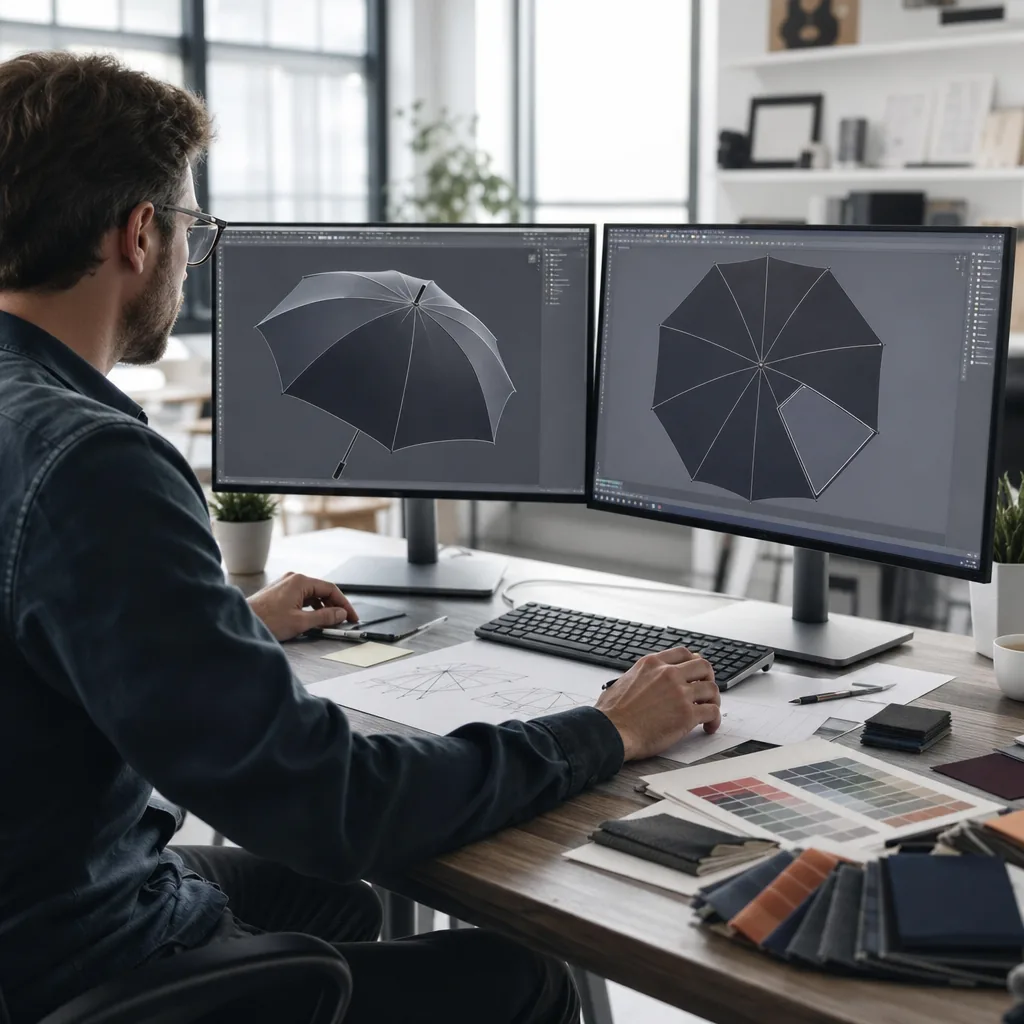
Minimum Logo Size Rules for Umbrella Canopy Printing
Set print-ready logo sizes for 190T/210T pongee canopies, avoid fine-line failures, and approve AQL 2.5 samples before f...
Read More »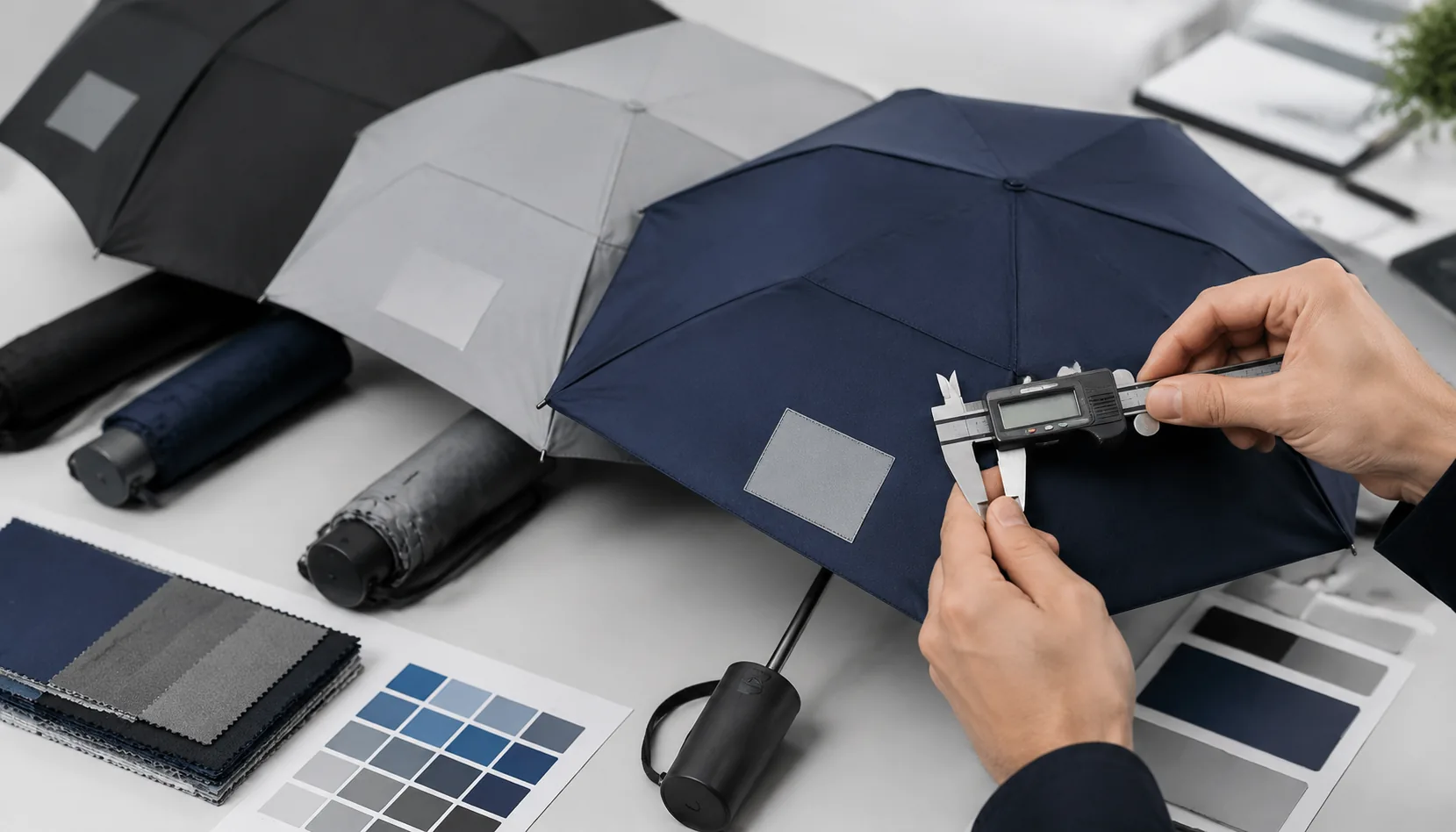
Minimum Logo Size Rules for Branded Compact Umbrellas
Set practical logo size, line weight, fabric, and print specs for compact umbrellas so small branding stays readable in ...
Read More »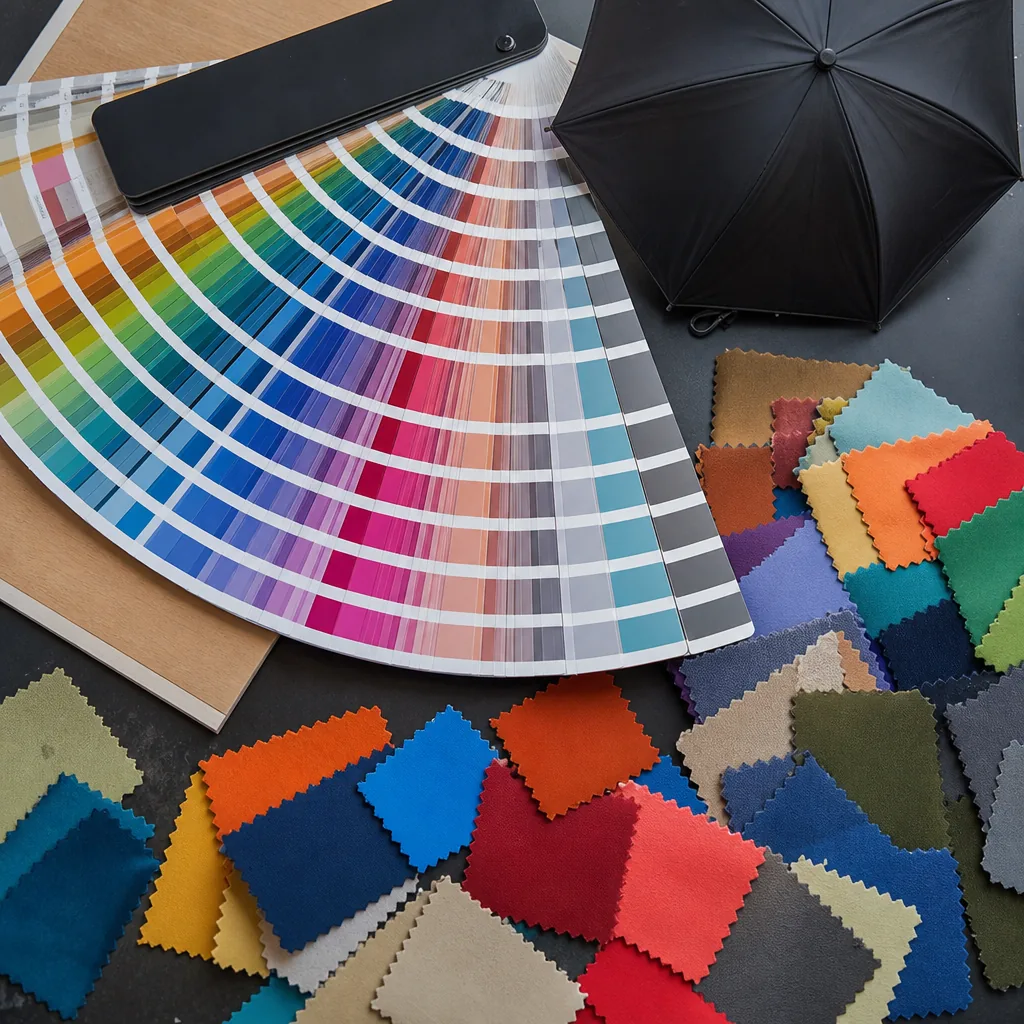
Logo Size Standards for Branded Umbrella Production Runs
Set practical logo sizes by umbrella style, panel count, and print method so procurement teams can approve branded umbre...
Read More »