Minimum Logo Size Rules for Umbrella Canopy Printing
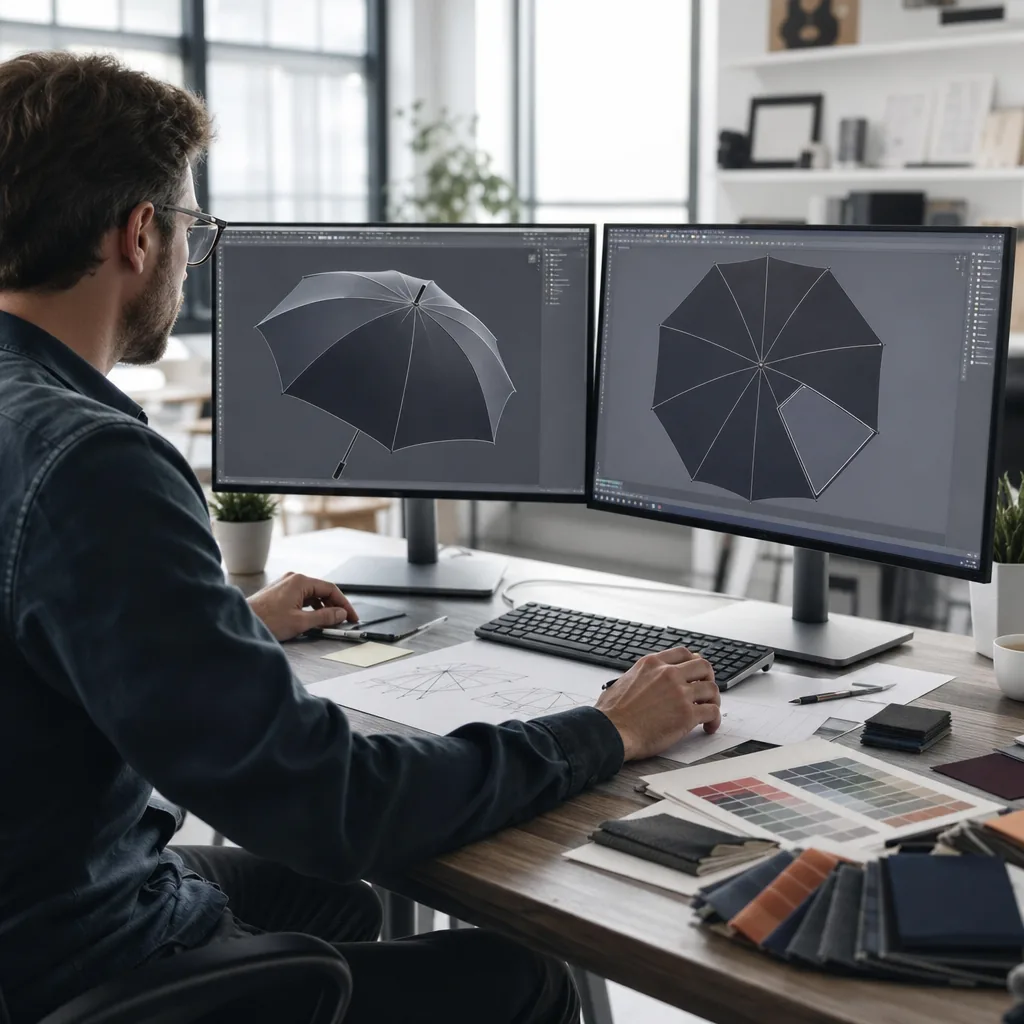
A logo that looks sharp on a PDF can break down quickly on a wet, curved pongee canopy, especially when thin strokes, small text, or tight color traps hit 190T or 210T fabric. On our printing floor in Songxia, we set umbrella logo size guidelines around real mesh limits, ink spread, panel tension, and viewing distance, then confirm with AQL 2.5 pre-production samples before releasing bulk runs at speed.
Why Minimum Logo Size Matters on Umbrella Fabric
Minimum size is not a graphic-design preference; it is a production control point. An umbrella canopy is not a flat brochure. Each panel is a curved triangle sewn under tension, usually 8K or 10K construction for standard promotional umbrellas and 16K for some fashion styles. When the umbrella opens, the fabric stretches differently near the rib tips, center cap, and seams, so a 12 mm icon that looks sharp on a PDF can distort or visually collapse on the finished canopy. Seam breaks make this worse. If artwork crosses two panels, even a 2 to 3 mm sewing tolerance can interrupt thin strokes or misalign small letters. Good umbrella logo size guidelines start by asking where the logo sits: one panel, alternate panels, full-panel repeat, or near the lower arc where the fabric tension is higher.
Fabric surface matters just as much as artwork scale. Most custom umbrellas use 190T or 210T pongee because it balances hand feel, water resistance, and printability, but it is still woven fabric, not coated paper. Ink edges follow yarn texture, so fine line screen printing below roughly 0.3 to 0.5 mm line weight becomes risky, especially on dark fabric with light ink. Waterproof treatments, Teflon coating, silver UV backing, or black UV coating can also reduce ink grip if the print process and curing temperature are not adjusted. On POE or EVA clear umbrellas, the issue is different: the surface is smoother, but ink can spread or scratch if adhesion testing is skipped. For canopy logo printing, minimum logo height is often less important than the smallest gap, dot, serif, or registered trademark symbol inside the design.
A logo that passes on paper may fail umbrella print QC because inspection happens after cutting, sewing, opening, and rubbing, not just after ink hits fabric. Our standard practice at ZheBrella is to check branded umbrella artwork at actual size before plate making, then confirm a strike-off under AQL 2.5 inspection conditions: print position, edge sharpness, color coverage, adhesion, and visibility from normal viewing distance. As a practical rule, avoid text under 6 to 8 mm high on 190T pongee, keep reversed-out gaps at least 0.6 mm, and enlarge thin emblems by 10% to 20% compared with tote bag or paper artwork. These umbrella logo size guidelines prevent the common buyer complaint: the logo is technically printed, but the brand mark no longer reads cleanly once the umbrella is opened.
Recommended Line Weights, Text Sizes, and Safe Areas
The most common failure in canopy logo printing is not ink adhesion; it is artwork built too small for a moving, slightly textured fabric panel. For 190T or 210T pongee, I treat 0.5 mm as the absolute minimum positive line weight for screen printing, but 0.7–0.8 mm is the safer production target for bulk orders under AQL 2.5. Fine line screen printing below 0.4 mm may look sharp on a PDF, then disappear when the panel stretches over 8K or 10K ribs. For reversed lines knocked out of a solid ink block, increase to at least 0.8 mm, preferably 1.0 mm, because ink gain will close the gap. On PVC, POE, or EVA clear canopies, edges can creep more during heat transfer, so small outlines and thin icon details should be enlarged by another 10–15%. These umbrella logo size guidelines are stricter than paper printing because the canopy is sewn, tensioned, folded, and rubbed before the customer ever opens it.
For text, I rarely approve anything below 6 pt for positive one-color printing, and I prefer 8 pt or larger if the font has thin strokes, serifs, or tight counters. Reversed text should start at 10 pt, with bold or medium-weight fonts only; light Helvetica-style strokes often fill in after curing. Small icons should have a minimum finished height of 8–10 mm if they need to be recognized at arm’s length, while trademark symbols, registration marks, and copyright marks should be at least 4 mm high or deleted from the canopy version of the branded umbrella artwork. A 2 mm registered trademark symbol next to a 180 mm logo may satisfy a brand guideline on a business card, but on pongee it becomes a fuzzy dot. If legal requires the mark, move it into a cleaner open area and use a simplified vector shape, not a raster file pulled from a web layout.
Safe area rules are just as important as minimum size. Keep printed elements at least 25–30 mm away from stitched seams, 35 mm from the outer panel edge, and 40–50 mm from rib tips, because the canopy curves and the operator needs flat contact during screen printing or heat pressing. On a 23-inch folding umbrella, I normally keep logos inside the central two-thirds of the panel width and avoid crossing rib lines entirely; on 27-inch or 30-inch golf umbrellas, there is more room, but seam distortion is still visible on straight baselines. Leave 50 mm around strap attachment points, Velcro tabs, snaps, and tie wraps, since bulk fabric and reinforcement stitches create pressure differences that cause broken ink edges. For umbrella print QC, our standard practice at ZheBrella is to check the first printed panels against a 1:1 film or heat-transfer proof before sewing, because after assembly, a logo placed 15 mm too close to a seam cannot be corrected without recutting the panel.
How Print Method Changes Detail Reproduction
Print method decides the real minimum logo size more than the artwork file does. For canopy logo printing on 190T or 210T pongee, screen printing is still the most stable choice for solid one-color marks, but it has limits: strokes under about 0.4 mm and reversed text below 6 pt often plug up after ink gain, especially on darker fabric where we need a heavier white underbase. Fine line screen printing can work when the logo is simple, the mesh count is matched correctly, and the canopy panel is held flat, but umbrella panels are not T-shirts; the curved sewn surface and rib tension distort small details. My practical umbrella logo size guidelines are simple: keep ordinary Latin text at 7–8 pt minimum for screen print, avoid hairline serifs, and do not place tiny legal copy near seams, tips, or the panel edge where tension changes during assembly.
Heat transfer gives sharper edges for small typography because the artwork is printed on film first, then pressed onto the canopy. It is better for gradients, multi-color badges, and brand marks with fine internal gaps that would be risky on a direct screen. The tradeoff is hand feel, edge durability, and cost. On PU-coated pongee or some Teflon-treated fabrics, adhesion must be tested before mass production; a logo that looks perfect after pressing can fail a tape test or crack after folding if the temperature, dwell time, or adhesive layer is wrong. For branded umbrella artwork with thin outlines or small sponsor logos, I often push buyers toward heat transfer when they need four-color accuracy under 30 mm wide. But for 5,000 pieces of a simple white logo on navy 23-inch auto-open umbrellas, screen printing is usually cleaner, faster, and cheaper.
Digital printing, including sublimation on white polyester panels, reproduces the most detail, but it changes the production route. Sublimation is excellent for full-panel artwork, photo effects, and small multi-color logos because there is no screen registration, yet it normally requires white fabric and printing before cutting and sewing. Direct digital on finished canopies exists, but production speed and color density are not ideal for large B2B orders. Multi-color registration is where many small logos fail umbrella print QC: an 8K umbrella has wider panels and fewer seam interruptions, so two-color screen registration is manageable; a 16K umbrella has narrower panels, more ribs, and more accumulated tension, so tiny multi-color marks can shift visibly after sewing. Our standard practice at ZheBrella is to recommend one-color artwork when the logo is under 45 mm wide, especially on 16K frames, because clean reproduction beats a technically correct but blurry brand mark.
Frame and Canopy Specs That Influence Logo Clarity
The first thing that changes logo legibility is panel geometry, not the artwork file. On an 8K golf umbrella, each canopy panel is wide enough to carry a cleaner mark, so the usable print zone can often be kept around 6 to 8 inches wide per panel before the seam and spoke line start fighting the layout. On a 16K canopy, the panel narrows sharply, which means the same logo has to be compressed or broken across more seams; that is where thin strokes and small text get lost. In practice, umbrella logo size guidelines should start with panel count, then panel width, then seam allowance, not with the customer’s preferred artwork dimensions. For canopy logo printing, a simple solid mark usually survives better than a detailed crest, especially when the logo sits near the center top where curvature is lowest.
Double-canopy windproof construction changes the problem again because the vented inner layer steals visual real estate and creates shadowing. If the outer canopy is printed, the lower edge and vent openings can distort fine line screen printing, so the artwork needs more negative space and heavier stroke weight than it would on a single-layer top. Fiberglass ribs also help because they flex without creating sharp print breaks, while steel ribs hold shape more rigidly but can telegraph seam stress on cheaper panels after repeated opening cycles. On a production line, I treat this as a risk to branded umbrella artwork: the more the frame moves, the more the ink has to tolerate stretch at the panel apex and seam intersection. That is why umbrella logo size guidelines usually allow a larger solid logo on a vented golf umbrella than on a tightly stitched steel-frame promotion umbrella.
Different umbrella styles give you very different branding surfaces, and the differences matter more than most buyers expect. A golf umbrella can often take a 1-color logo across one or two panels, while a folding umbrella may only give you a narrow segment between ribs, especially on 21-inch or 23-inch frames. Auto-open and auto-open-close models add hardware at the shaft and handle area, but the main canopy remains the best print field; compact umbrellas, by contrast, need tighter artwork and more aggressive simplification because the panel curvature is steeper and the face area is smaller. For umbrella print QC, we check whether text is still readable from 1 to 2 meters, whether the smallest line holds after curing, and whether panel alignment keeps the logo centered at full opening. If the art needs fine line screen printing, I usually push the buyer to enlarge it or remove detail before sampling, because a beautiful file can still fail on fabric if the usable print zone is too small.
Sampling, QC, and Approval Before Bulk Production
The cheapest mistake is the one caught on a strike-off, not after 3,000 panels are sewn into finished umbrellas. For any logo near the lower limit of readability, I recommend a printed strike-off on the actual canopy fabric: 190T or 210T pongee, POE, PVC, or EVA if that is the approved material. Paper proofs are useful for layout, but they do not show ink spread, fabric texture, coating resistance, or how white ink covers dark navy and black panels. For fine line screen printing, we normally reject artwork with strokes under 0.3 mm, small reversed text, or tight gradients unless the buyer accepts a simplified logo. Practical umbrella logo size guidelines should be verified at this stage: measure the smallest text, icon gaps, and registration points with a ruler, not by looking at a PDF on a screen.
After the strike-off is signed, the pre-production sample should be a complete umbrella made with the final frame, canopy, print method, handle, sleeve, and carton marking. This is where canopy logo printing problems often appear: the logo looked centered on a flat panel, but shifts visually after sewing because the panel curve, seam allowance, and rib tension change the viewing area. For 23-inch 8K promotional umbrellas, I usually hold logo placement within ±5 mm from the approved position; for larger 27-inch or 30-inch golf umbrellas, ±8 mm is more realistic if the print crosses a wide panel. Color approval should reference Pantone coated or uncoated numbers, but buyers should know that sublimation, heat transfer, and screen ink will not hit color the same way on coated polyester. ZheBrella’s standard practice is to photograph the pre-production sample under neutral light and record logo width, height, and distance from seam before releasing bulk cutting.
Bulk production should not start until the buyer approves the artwork file, strike-off, and pre-production sample in writing, especially for FOB and DDP orders where rework after export is expensive. Typical MOQ for custom branded umbrella artwork is 500 pieces for basic screen print, 1,000 pieces if special fabric colors or custom handles are involved, and 2,000 pieces or more for complex all-over sublimation. Normal sampling takes 5–7 days for a strike-off and 7–10 days for a complete pre-production sample; bulk production is usually 25–35 days after deposit and approvals, longer in the rainy-season rush. Final umbrella print QC should use AQL 2.5 for major defects, checking print sharpness, ink smears, pinholes, color deviation, upside-down panels, and placement tolerance against the signed sample. Good umbrella logo size guidelines are not just design advice; they become the inspection standard that decides whether cartons ship, get sorted, or get reprinted.
Frequently Asked Questions
What is a safe minimum logo height for umbrella canopy printing?
For most 190T/210T pongee canopies, 25-30 mm is a safer minimum for simple logos, while detailed logos often need 40 mm or more. Very thin lines and small reversed text should be tested on a strike-off sample.
Can small logos be printed across umbrella seams?
It is possible, but not recommended for precise marks because seams can interrupt fine details. Place small logos inside one panel whenever possible, especially on 8K and 16K constructions.
What minimum stroke weight should we keep for screen-printed logos on 190T and 210T pongee?
For most canopy screen printing, keep positive lines at 0.4 mm minimum and reversed-out lines at 0.5-0.6 mm minimum. On 190T fabric, slightly thicker strokes usually hold better than on 210T because the weave can make fine details break or fill in.
How much margin should artwork leave from the panel edge and seam on a standard umbrella canopy?
A practical rule is to keep key logo elements at least 15-20 mm away from seams and 20-25 mm from the outer panel edge. This reduces distortion near stitching lines and lowers the risk of misregistration being visible in bulk production.
When should a buyer request a sealed sample before mass production instead of approving artwork only?
Request a sealed pre-production sample when the logo includes thin strokes, small text under 8 pt, reversed graphics, or tight color registration. This usually adds about 3-7 days, but it is the safest way to confirm print clarity before bulk production under an AQL 2.5 inspection standard.
Looking to Launch Your Custom Umbrella Line?
ZheBrella is a Zhejiang-based OEM/ODM umbrella manufacturer with 17 years of export experience. Free design, low MOQ from 100 pieces, windproof construction, full-color print.
Get Free Quote Now »People Also Search For
Related Articles
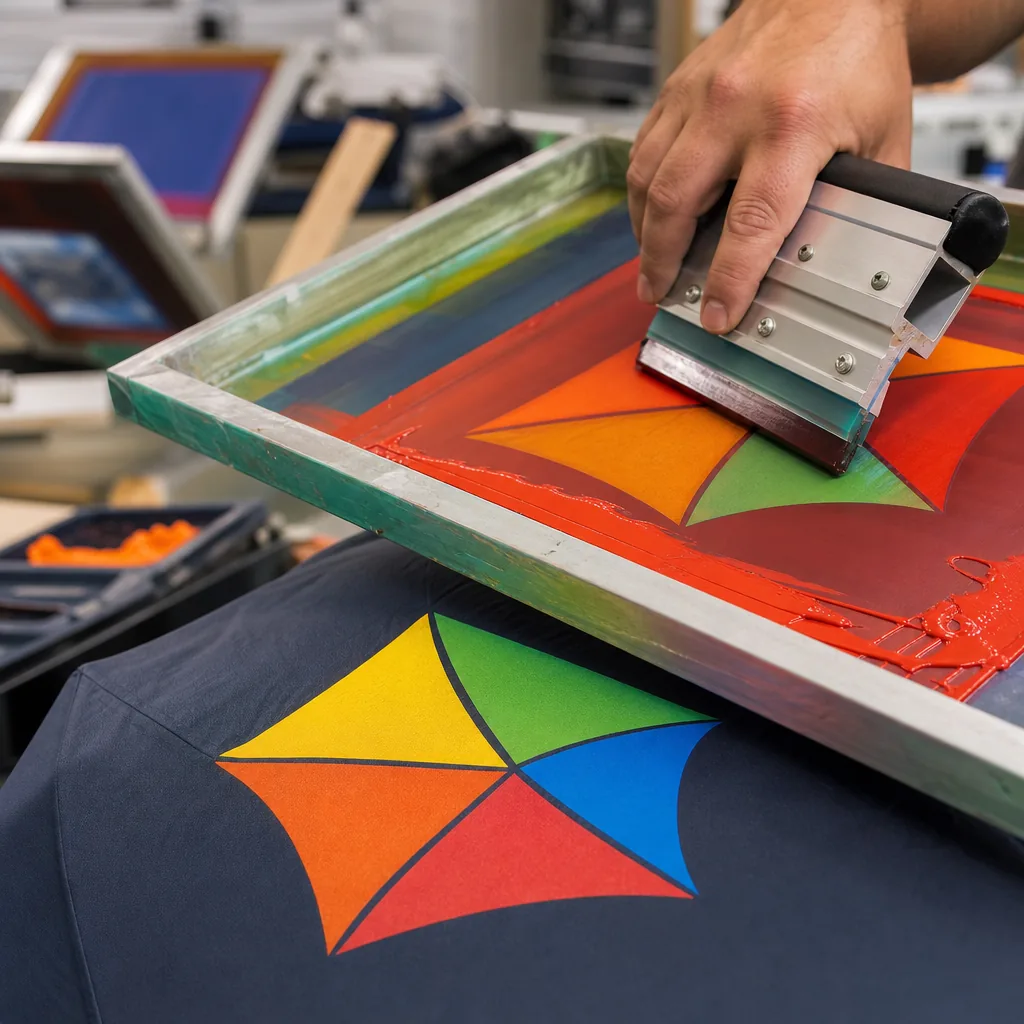
Minimum Logo Size Rules for Branded Umbrella Printing
Define safe logo sizes, line weights, and text limits for umbrella printing so small brand marks stay readable on 190T a...
Read More »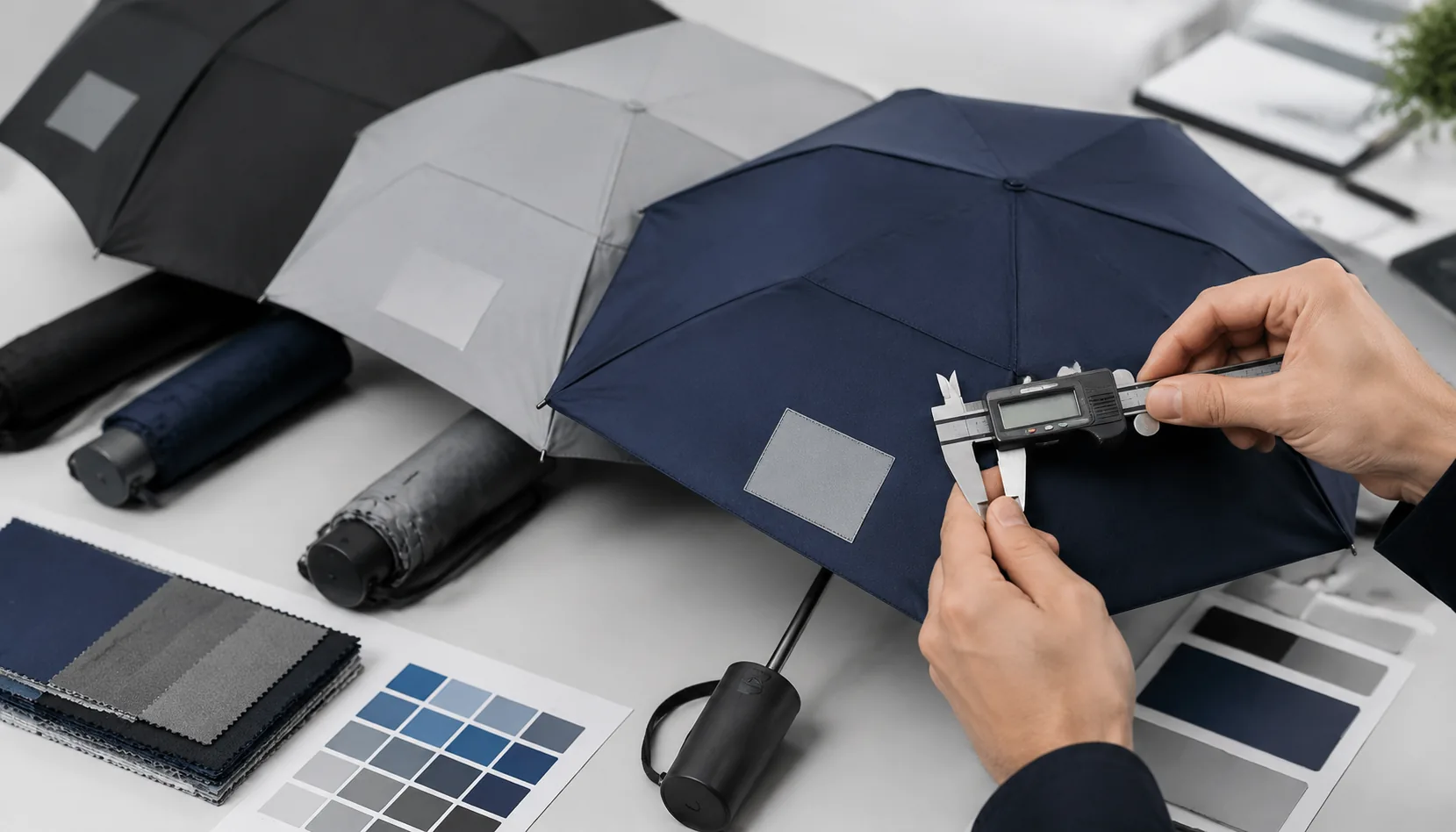
Minimum Logo Size Rules for Branded Compact Umbrellas
Set practical logo size, line weight, fabric, and print specs for compact umbrellas so small branding stays readable in ...
Read More »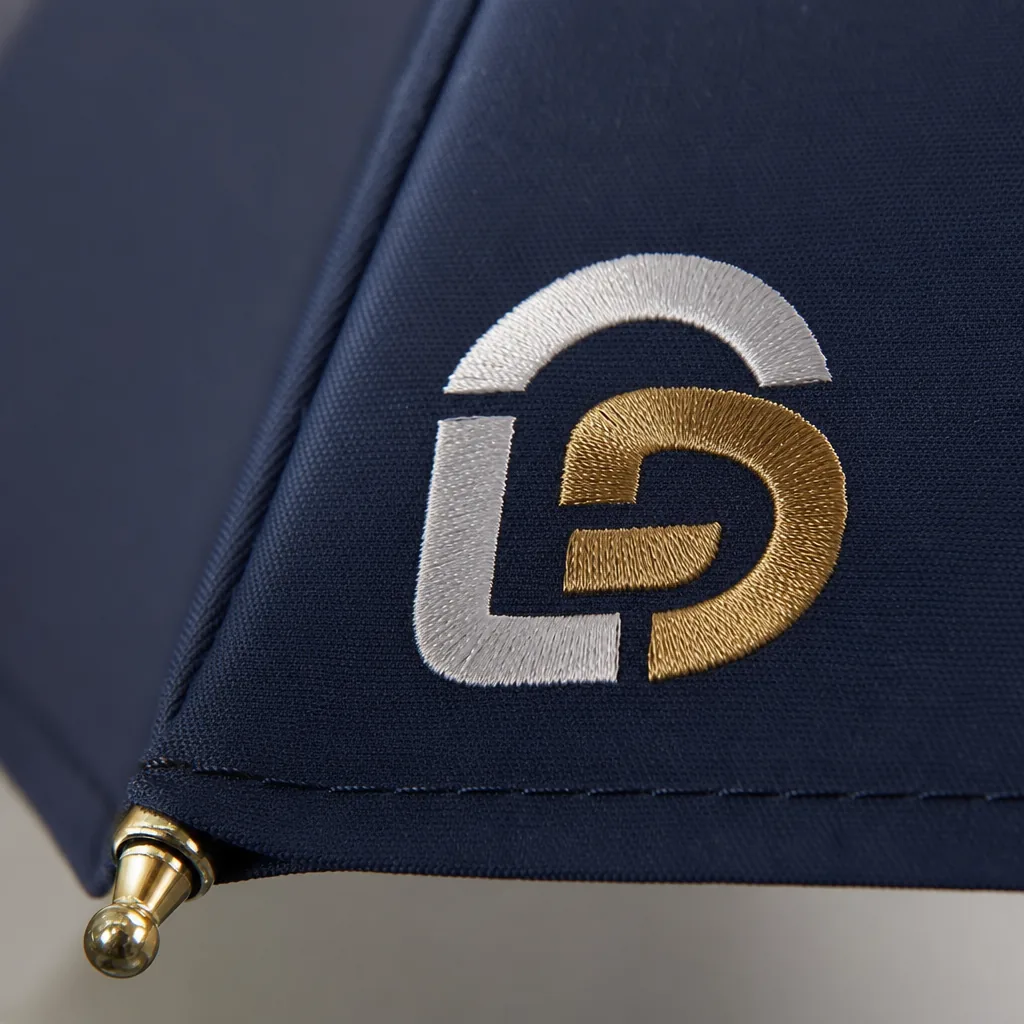
Top 5 Logo Size Decisions for Branded Umbrella Panels
Plan logo size by umbrella type, panel count, print method, and buyer approval needs before sampling branded umbrella or...
Read More »