Minimum Logo Sizes for Compact and Folding Umbrellas
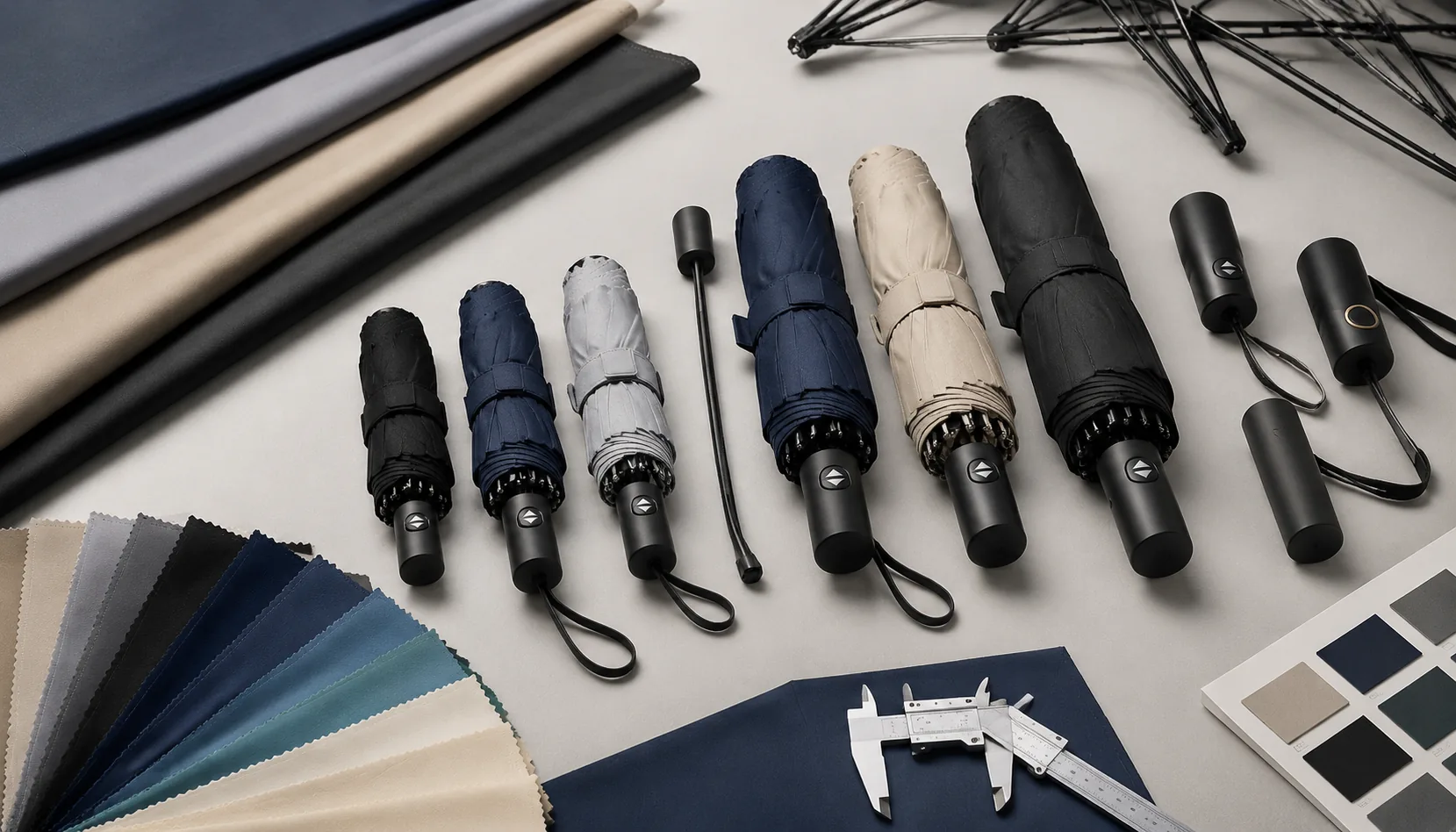
On compact and folding umbrellas, a logo that looks fine on a flat proof can break across seams, ribs, and tight folds once it reaches the sewing line. The real minimum umbrella logo size depends on panel width, canopy curvature, fabric coating, and whether we print by silk screen, heat transfer, or digital. On our Songxia factory floor, we set logo limits around what stays readable after cutting, stitching, folding, and final inspection—not just what fits in the artwork file.
Why Folding Umbrellas Need Different Logo Rules
The biggest mistake buyers make is applying golf-umbrella artwork rules to 3-fold and 5-fold frames. A 30" golf umbrella gives you broad, shallow panels that stay relatively smooth when opened; a 21" or 23" folding umbrella breaks the canopy into tighter arcs over shorter ribs, so the same logo looks larger, closer to the seam, and more distorted. On common 8K umbrella panels, the triangular print area narrows quickly toward the center cap, and the lower third is interrupted by fold memory from repeated packing. That is why the minimum umbrella logo size is not only about whether a screen can hold a fine line; it is about whether the mark still reads cleanly after the fabric has been creased, stretched, and wrapped around a compact shaft.
Compact umbrella logo printing also has to respect how the ribs collapse. A 3-fold frame creates two main crease bands across each panel, while a 5-fold travel frame creates more bend points and sharper fabric compression, especially on 190T or 210T pongee with Teflon coating. Those creases can cut through small type, QR codes, thin icons, and gradients, even when the print itself passed adhesion testing. For folding umbrella branding, I normally keep critical artwork away from rib lines and avoid placing text too high toward the top notch, where the panel angle changes fastest. Heat-transfer logos tolerate some detail better than screen print, but they can still wrinkle if the transfer edge crosses a hard fold line.
Auto-open and auto-open-close mechanisms reduce usable print zones more than many artwork templates show. The spring-loaded runner, thicker center shaft, safety notch, and reinforced tips change canopy tension when opened, so panels do not lie as flat as a manual compact umbrella. On budget steel frames, the fabric can pull unevenly between ribs; on fiberglass ribs, the curve is smoother but still tighter than a golf model. Our standard practice at ZheBrella is to check promotional umbrella artwork on a physical opened sample, not only a flat dieline, before approving mass production. For most compact jobs, a practical minimum umbrella logo size is driven by readability at arm’s length, seam clearance of 15–20 mm, and whether the logo survives folding without landing across the strongest crease bands.
Recommended Logo Sizes by Umbrella Type
For a 21-inch compact folding umbrella, the safe one-panel logo usually lands between 70 x 35 mm and 100 x 55 mm, measured on the printable center area of one canopy panel, not across the curved seam line. On 190T or 210T pongee, that size keeps text readable after sewing tension pulls the panel slightly toward the ribs. I do not like pushing a detailed logo beyond 120 mm wide on a 21-inch canopy because the panel triangle narrows fast near the top runner, and the print starts looking distorted when viewed from the front. For compact umbrella logo printing with a simple icon or two-line brand lockup, 80 x 40 mm is the most reliable factory size for screen print, heat transfer, and digital transfer. If the artwork includes a QR code, fine serif type, or small registration marks, increase the clear area or simplify the file before approving the sample.
A 23-inch auto-open folding umbrella gives noticeably better branding room, especially on 8K umbrella panels where each panel is wider and flatter than a 21-inch compact. For one-panel folding umbrella branding, I normally recommend 100 x 50 mm to 140 x 70 mm, with 120 x 60 mm being the common promotional size for distributors. On 23-inch models with steel shafts and fiberglass ribs, the canopy tension is stronger after auto-open impact, so we leave at least 25 mm from the seam and 40 mm from the outer hem to avoid cracking on heat-transfer film. Repeated panel logos work best smaller: 60 x 30 mm to 90 x 45 mm on 4 panels, or 50 x 25 mm to 70 x 35 mm on all 8 panels. The minimum umbrella logo size for readable Latin letters is usually about 6 mm cap height after printing, not just the overall logo width.
Larger folding umbrellas, such as 27-inch golf-style folders or 30-inch oversized travel models, can carry a 150 x 80 mm to 200 x 100 mm one-panel logo if the artwork is bold and the canopy is cut cleanly. For retail programs, I prefer one large mark on a front-facing panel plus a smaller repeat on the opposite panel, because eight oversized prints make the umbrella look like event signage rather than a product. Narrow vertical marks need special handling on 8K canopies: a stacked logo or wordmark should stay around 25 to 45 mm wide and 120 to 180 mm tall, centered along the panel grain, with enough margin so the letters do not climb into the rib pocket. Our standard practice at ZheBrella is to check promotional umbrella artwork at actual scale on a paper panel template before sampling, because a logo that looks balanced in a PDF can look too high, too low, or too close to the seam once the umbrella opens.
How Rib Count Changes Readability
Rib count changes logo readability because it changes the usable panel shape, not because it changes the umbrella diameter. On a typical 21" or 23" folding umbrella, an 8K frame gives eight wider triangular panels, so a horizontal logo can usually sit in the lower third of one panel with enough left-right breathing room. For compact umbrella logo printing, that often means a practical mark around 120-160 mm wide on one panel, depending on seam allowance, fabric stretch, and whether the artwork is text-heavy. A 16K frame splits the same canopy into sixteen narrower panels, so the available horizontal width drops sharply even though the open arc looks rounder and more premium. This is where buyers get surprised: the minimum umbrella logo size may be technically printable, but brand names with long words become harder to read from 2-3 meters away.
On 16K umbrellas, I usually push customers toward taller, more compact artwork instead of wide lockups. A round seal, stacked logo, initials, or icon-plus-short-name works better than a long horizontal slogan. With 8K umbrella panels, promotional umbrella artwork has more room to breathe, and screen printing registration is more forgiving because the operator has a larger flat area to press against. Heat transfer can handle smaller detail, but the same readability rule applies: a 60 mm logo may look clean on a PDF, then disappear once the canopy curves and the user is walking in rain. For folding umbrella branding, I prefer testing artwork at actual size on a paper panel template before approving bulk production, especially for 210T pongee with dark coating or UPF 50+ silver backing.
Fiberglass ribs and steel ribs do not directly change the print size; the screen, transfer film, or sublimation file still uses the same panel outline. What they do change is how the finished canopy behaves after opening, closing, and packing. Fiberglass ribs are lighter and more elastic, so they recover better after wind load and put less permanent crease stress on printed zones near the rib line. Steel ribs are cheaper and stiffer, but on compact auto-open-close models they can create stronger fold pressure when the canopy is wrapped tight with the strap. That pressure can mark thick plastisol ink, crack low-grade heat transfers, or distort fine letters after carton compression. Our standard practice at ZheBrella is to keep logos at least 20-25 mm away from seams and main fold lines, then confirm the minimum umbrella logo size after a folded-sample rub and open-close test.
Choosing Print Methods for Small Details
Digital print or sublimation makes sense when promotional umbrella artwork contains gradients, shadows, photos, or many colors that would require too many screens. Sublimation is strongest on white or light polyester pongee, especially 210T where the tighter weave gives smoother edges; direct digital on darker fabric needs a white base, which can reduce softness and raise cost. For gradients, the minimum umbrella logo size should be judged by visual distance, not only millimeters: a 60–80 mm mark on one panel usually reads well from 2–3 meters, while tiny tonal transitions disappear on wet-look coated fabric. Keep fine gradient text out of the design; use solid lettering over the image or add a clear keyline. I also recommend at least 70% contrast between logo and canopy color for small details. A beautiful low-contrast mockup on a monitor often becomes a failed retail sample under cloudy daylight, where umbrellas are actually used.
Approval Checks Before Production
Approve the artwork at actual scale before anyone cuts fabric, because most logo problems on compact umbrellas start with a PDF that looked fine on a laptop. For folding umbrella branding, I want a full-size digital mockup showing the logo on the exact panel shape, not a flat rectangle. A 21" or 23" folding umbrella has narrow triangular panels, and the printable safe area changes with 8K umbrella panels versus 10K layouts. If the buyer asks for the minimum umbrella logo size, I normally judge it by the smallest readable text after panel curvature, seam allowance, and fold creases are considered—not just the vector file dimensions. Keep critical text at least 5 mm from stitch lines and avoid placing fine QR codes or thin serif fonts near the rib pocket.
A printed strike-off is the cheapest insurance before mass production. For compact umbrella logo printing, screen print, heat transfer, and sublimation each fail differently: screen print can fill in small letters, heat transfer can show edge lift on coated 190T pongee, and sublimation can shift color on dark artwork if the fabric spec is wrong. Our standard practice at ZheBrella is to run the strike-off on the same canopy material, such as 190T/210T pongee with Teflon or UV UPF 50+ coating, then compare Pantone or CMYK targets under D65 light. If promotional umbrella artwork includes gradients, metallic effects, or small sponsor logos, approve the physical print instead of relying only on a digital proof.
Before FOB or DDP shipment, inspection should include open and closed sample photos plus AQL 2.5 checks from random cartons. Inspect logo position against the approved mockup, registration between colors, edge sharpness, ink coverage, transfer adhesion, and color consistency across panels. On 8K umbrella panels, a 3 mm drift toward the seam can look worse than it measures, especially on a 3-fold frame where folds cut through the logo when closed. The closed-photo check matters because many event and retail buyers display compact umbrellas wrapped, not open. If the minimum umbrella logo size was already near the limit, reject samples with blurred text, pinholes, color banding, or panel-to-panel mismatch before balance payment and shipment release.
Frequently Asked Questions
What is the smallest text size that works on a folding umbrella?
For most production orders, avoid text below 5–6 mm high after printing. Small legal lines or URLs should be tested on the actual fabric and print method before approval.
Does a 16K folding umbrella make logos harder to print?
It can make wide logos harder to place because each panel is narrower. Buyers often use smaller repeated marks, vertical logos, or alternating panel branding on 16K designs.
What is a practical minimum logo size for compact umbrella panels?
For most compact folding umbrellas, a logo should be at least 80–100 mm wide on one panel to stay readable after folding and opening. Very detailed marks or small text may need 120 mm or more, especially on darker fabrics.
Can a logo be printed across ribs on an 8K folding umbrella?
It is possible, but not recommended for precise logos because ribs and seams can distort alignment. For 8K umbrella panels, buyers usually get cleaner results by printing the logo within one panel or repeating it on multiple panels.
What artwork files should be supplied for compact umbrella logo printing?
Vector files such as AI, EPS, or PDF are preferred, with fonts outlined and Pantone colors specified. For raster artwork, provide at least 300 dpi at actual print size to avoid blurry edges on small umbrella panels.
Looking to Launch Your Custom Umbrella Line?
ZheBrella is a Zhejiang-based OEM/ODM umbrella manufacturer with 17 years of export experience. Free design, low MOQ from 100 pieces, windproof construction, full-color print.
Get Free Quote Now »People Also Search For
Related Articles
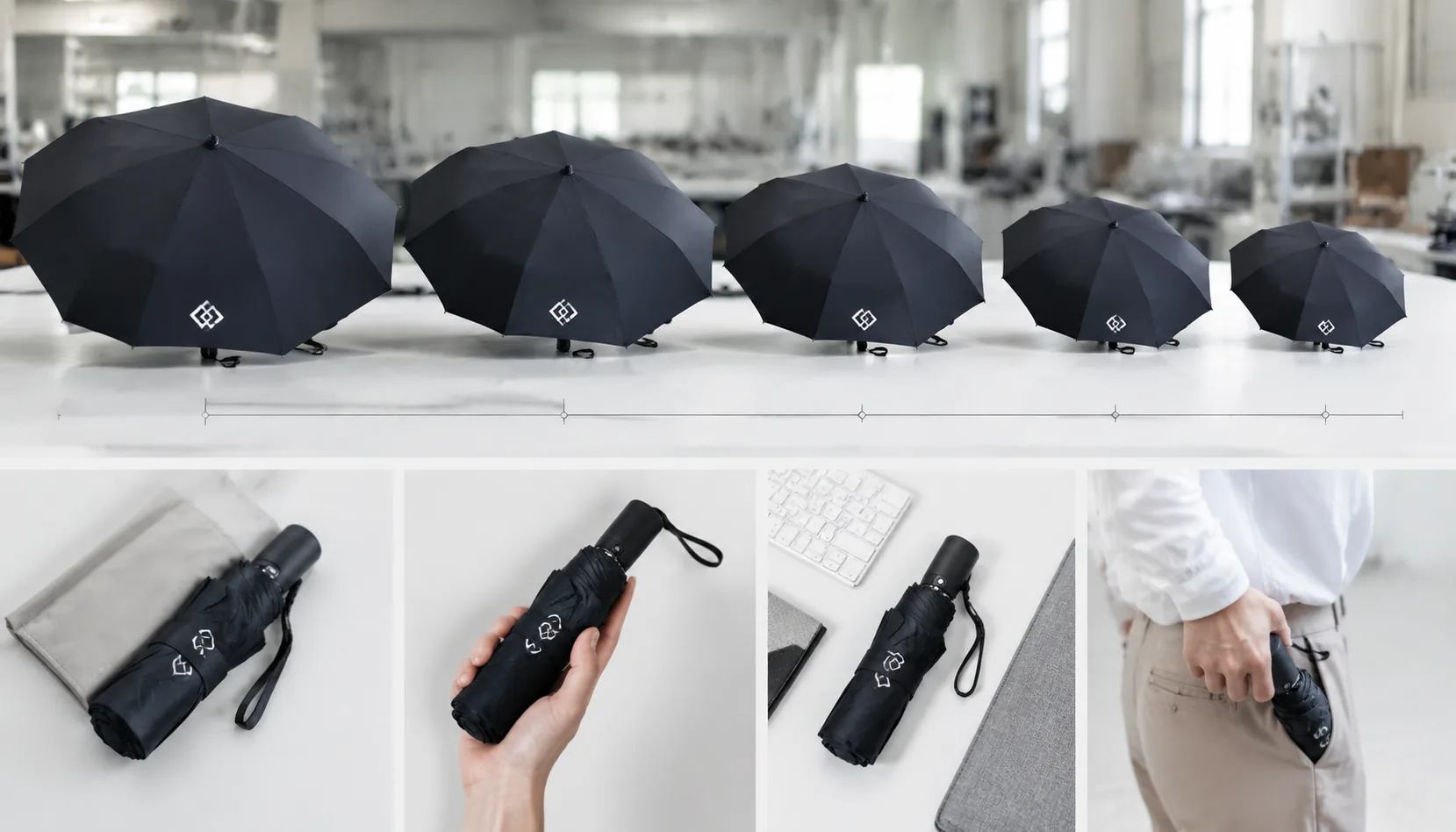
Logo Scale Rules for Compact Folding Promotional Umbrellas
Set practical logo sizes for 3-fold and 5-fold umbrellas, balancing panel width, auto-open frames, rib layout, MOQ, and ...
Read More »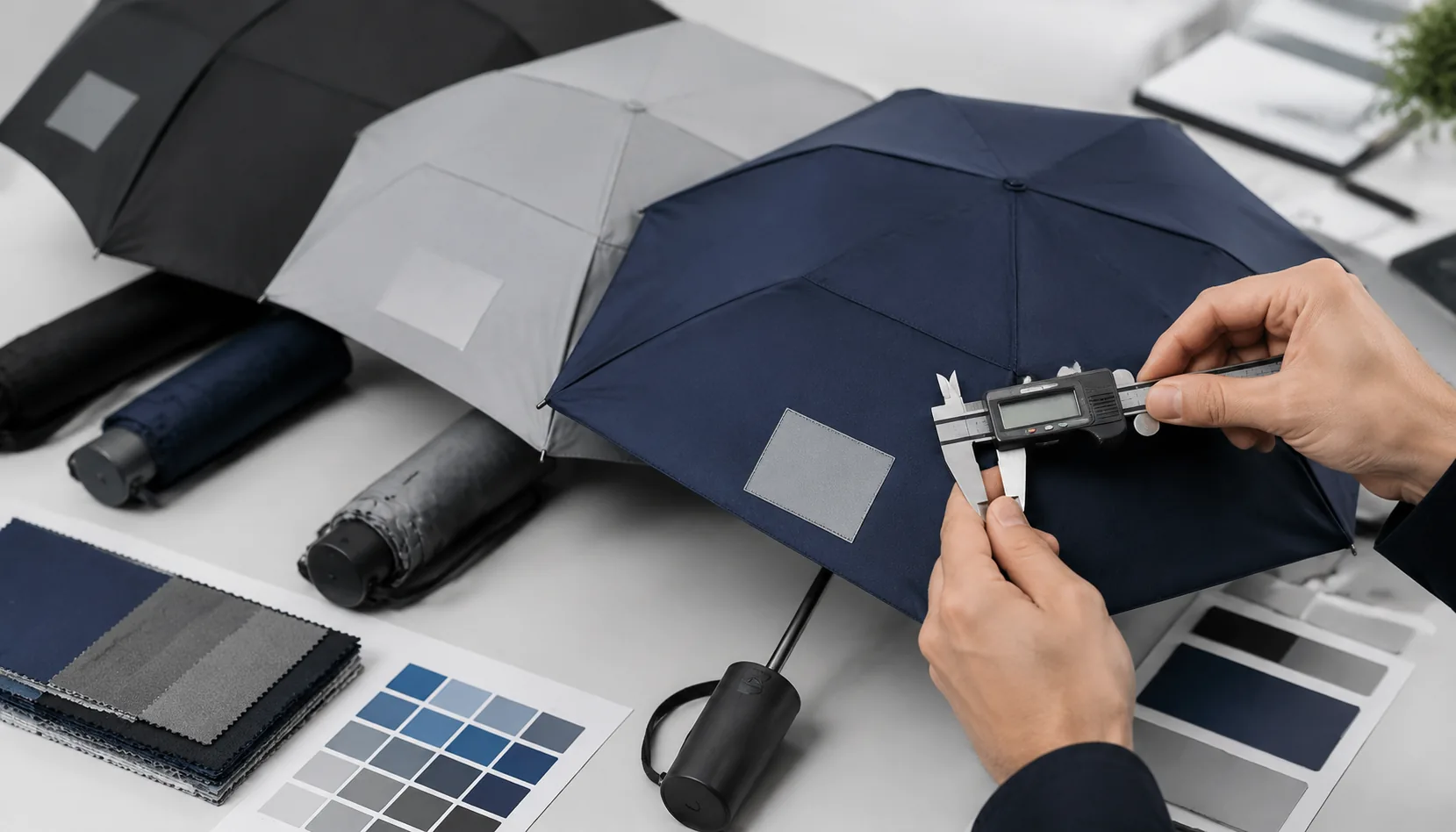
Minimum Logo Size Rules for Branded Compact Umbrellas
Set practical logo size, line weight, fabric, and print specs for compact umbrellas so small branding stays readable in ...
Read More »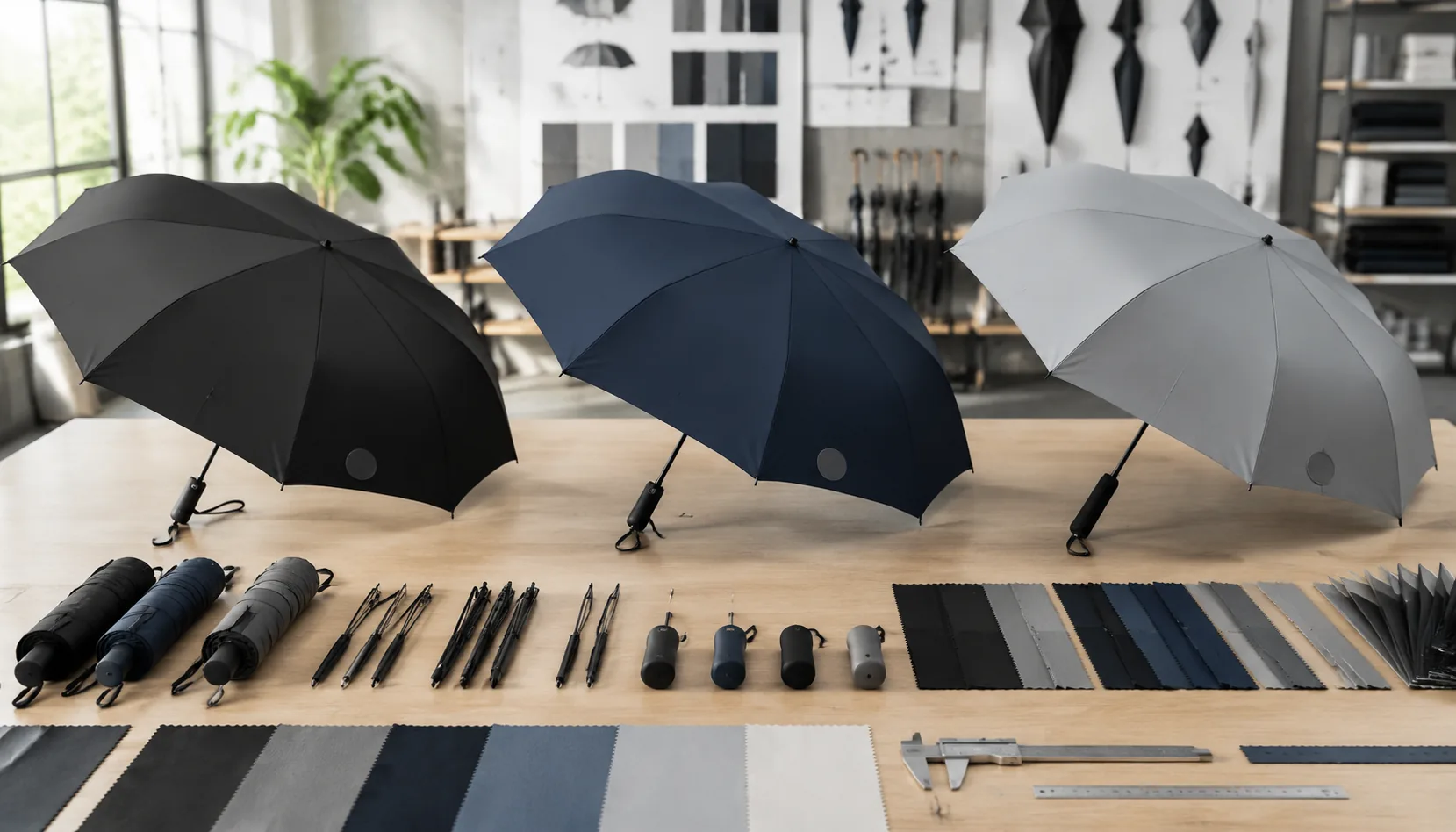
Scaling Logo Sizes Across Folding, Golf, and Stick Umbrellas
Set practical logo size rules across 21-inch folding, 23-inch stick, and 30-inch golf umbrellas without losing visibilit...
Read More »