Packaging Artwork Control for Multi-SKU Umbrella Lines
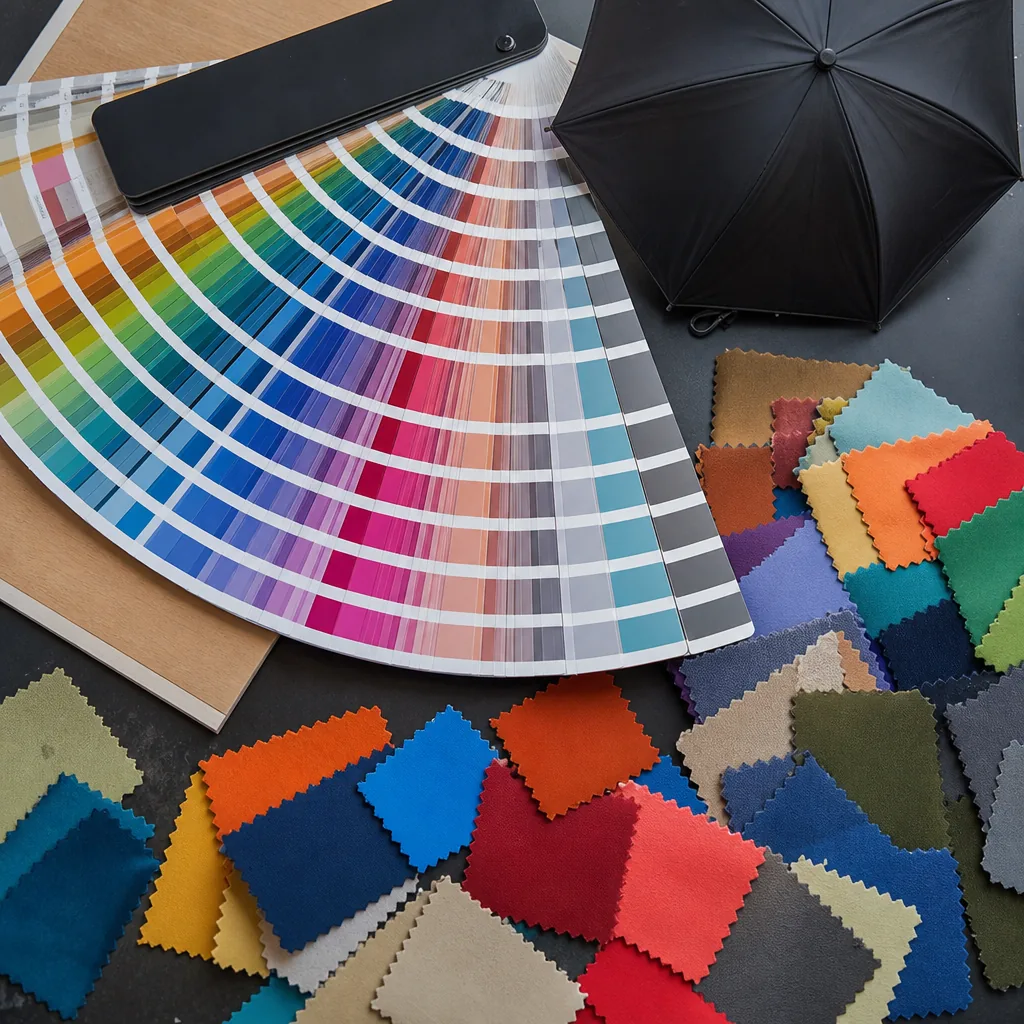
When an umbrella line has ten canopy colors, two rib counts, three handle trims, and separate carton marks for each customer market, packaging artwork becomes one of the easiest places to lose control. On our factory floor, umbrella packaging artwork control means tying every hangtag, sleeve, inner box, and master carton file back to the exact BOM, sample approval, and packing instruction before mass production starts.
Map the SKU Structure Before Design
Start umbrella packaging artwork control with a SKU matrix, not a dieline. Group first by commercial family: 21 inch or 23 inch compact travel umbrellas, 27 inch stick umbrellas, 30 inch golf umbrellas, and child or dome styles. Then split by frame and mechanism because the artwork risk changes: an 8K compact auto-open model needs different warning text, button callouts, and instruction diagrams than a manual stick umbrella or auto-open-close model. Separate 8K, 10K, and 16K frames so canopy diagrams, rib-count claims, spare-part references, and printed panel color blocking match the actual build. A 16K golf umbrella with a fiberglass windproof frame should not inherit copy from a basic steel-rib promotional umbrella, especially when the wind claim is tied to 50+ mph testing.
Treat fabric, color, and channel as controlled artwork variables, not decoration. A 190T or 210T pongee travel umbrella, POE clear dome, PVC rain umbrella, EVA child-safe model, and UPF 50+ sun umbrella each need separate care text, material naming, and claim approval; UPF 50+ artwork should link to the coating lot instead of a generic sun icon. For multi SKU umbrella packaging, control color by master code across canopy, handle, strap, sleeve, insert card, and carton swatch because black, navy, and royal blue are easy to mix at pack-out. The same 23 inch private label umbrella program may need an e-commerce pack with suffocation warning, drop-test labeling, and DDP carton marks, a chain-retail version with shelf-ready branded umbrella packaging specs, and a promotional version using only a polybag and export carton. Assign one packaging BOM to each SKU family, lock channel variants below it, then inspect artwork revision, barcode scan, accessory insertion, color callout, and ship marks under AQL 2.5 before final carton sealing.
Create a Repeatable Packaging Information Hierarchy
Umbrella packaging artwork control should start with a locked hierarchy, not SKU-by-SKU layout decisions. Put the brand mark on the top-left or top-center panel, the product name directly below it, and three to five feature icons in one horizontal row. Group color name, size, SKU, and mechanism in a single product-data block so a 21-inch manual compact, 23-inch auto-open model, or auto-open-close style can be checked quickly. Place the barcode on the flattest scannable face, clear of folds, seams, sleeve curves, and gloss glare. Reserve the lower back or side panel for country of origin, warning text, recycling marks, importer details, and other compliance copy. For sleeves, use the front face for brand, model, and key selling features; use the back face for SKU, EAN/UPC, legal copy, and production data. For hangtags, keep brand and product name on the front, with barcode and compliance text on the reverse. If wording runs long, cut copy instead of moving required fields.
A fixed hierarchy makes multi SKU umbrella packaging easier to compare without opening samples. Fabric weight should always appear in the same feature zone, so buyers can separate a 190T pongee canopy from a 210T pongee upgrade at a glance. Frame construction needs the same discipline: steel ribs, fiberglass ribs, and 8K, 10K, or 16K rib counts belong in one predictable technical line, not split between icons, lifestyle copy, and back-panel notes. Mechanism type also needs a fixed position because similar color names such as navy, royal blue, and midnight blue cannot carry product identification risk. This matters in retail umbrella line management, where picking teams, distributors, and store staff compare cases by SKU, barcode, size, fabric, frame, and opening system. A consistent label structure reduces carton mix-ups, wrong shelf placement, and disputes over whether the buyer received the approved private label umbrella program specification.
Separate fixed brand artwork from variable production data before proofing. Lock the brand mark, icon style, claim format, barcode zone, and compliance template in the master branded umbrella packaging specs. Pull color name, SKU, barcode, size, canopy fabric, rib material, mechanism, and coating from a controlled SKU sheet, then verify those fields against the sales order before plate making or digital print release. At ZheBrella, this is treated as production-risk control because one wrong barcode on a 5,000-piece FOB order can cost more than the artwork correction. Claims need the same control. If a model lists UPF 50+ coating, Teflon water repellency, or a double-canopy vented windproof frame rated for 50+ mph, place that claim in the same feature zone on every sleeve, hangtag, and carton, and link it to the same test file reference. Umbrella packaging artwork control works only when the template, SKU data, and claim evidence stay aligned through approval and production.
Build Artwork Masters and Variable Fields
Build one master file for each packaging format in the line, then separate it into two controlled parts: locked brand elements and editable SKU fields. For umbrella packaging artwork control, the core masters usually cover the retail color box, sleeve, belly band, insert card, hangtag, woven label layout, outer carton mark, and any pallet label that repeats consumer-facing data. Lock the logo, legal line, typography, safety icons, and finish callouts so only SKU data can change. Keep editable fields limited to the item code, canopy color, handle material, 21-inch or 23-inch size, manual or auto-open-close mechanism, and fabric descriptors such as 190T pongee, POE, or UPF 50+ coating. Use one naming convention across every format so prepress, purchasing, and packing can match the correct art set to the correct umbrella. That reduces a common multi SKU umbrella packaging error: a black straight umbrella packed in artwork intended for a navy folding model because revised PDFs were circulated under inconsistent filenames.
Treat version control as a release gate, not a filing habit. Each file should carry a revision ID tied to the Pantone reference, barcode generation date, dieline number, language set, and retailer account code; if any one input changes, the version changes. That matters because branded umbrella packaging specs often differ by retailer. One account may require a GS1-128 block on the side panel, another an EAN-13 with country of origin below the code, and another bilingual warnings at a fixed point size. Dieline control is equally critical in retail umbrella line management: a belly band sized for a 3-fold 21-inch umbrella at a 29 cm closed length will not fit a 27-inch golf umbrella, and an insert card sized for an 8K compact can shift inside a 10K case if tolerance moves 2 to 3 mm. In a private label umbrella program, keep translations and barcode blocks as approved variable fields, not manual text edits, and release art only after prepress confirms dieline and Pantone callouts, QA matches SKU data to the BOM, and packing verifies barcode readability on a physical mockup before mass printing.
Prevent Packing and Labeling Errors at the Factory
Most packing failures in multi SKU umbrella packaging start before the line runs, so the main control document is the SKU packing sheet, not the sealing table. For each SKU, build one file that links the umbrella BOM to the packaging map: canopy color name, approved fabric swatch or calibrated color chip, handle finish, tie-wrap direction, hangtag position, polybag type, insert card revision, barcode number, carton quantity, and outer-carton mark layout. On a 12- or 24-SKU private label umbrella program, color approval by name alone is not enough. Terms such as navy, wine, or black are too loose when 190T pongee shades can differ only slightly under weak factory lighting. The same risk applies when hardware is shared across models but warning text or labels differ, such as a POE kids bubble umbrella versus a clear fashion umbrella. Effective umbrella packaging artwork control starts with one sealed golden sample per SKU and a workstation reference that shows the exact umbrella-to-packaging match the line must follow.
Factory controls should prevent mix-ups before they become rework or chargebacks. Before each run, line-clearance checks remove all leftover labels, header cards, belly bands, cartons, and inserts from the prior SKU, and the supervisor signs the first packed unit against the approved sample. Packaging materials should then be quarantined by SKU code and carton mark so a 21-inch auto-open 8K umbrella with fiberglass ribs is not packed as a 23-inch auto-open-close 10K vented model. Carton marks should use large plain text plus scannable barcodes, and packers should verify both umbrella style and packaging style at fixed intervals, typically every 30 to 50 pieces depending on line speed. Final inspection should apply AQL 2.5 to artwork revision, barcode scanability, color wording, suffocation warnings, assort labels, carton count, and correct packaging-to-umbrella matching. For branded umbrella packaging specs and retail umbrella line management, inspectors should scan codes on curved hangtags and folded cartons, not only flat proofs, and physically separate US, EU, and UK packaging variants for FOB loading or DDP customs clearance.
Plan Sampling, MOQ, and Shipment Terms
Cost packaging MOQ separately from umbrella MOQ. A 3,000-piece umbrella order can still require a 10,000-piece color-box run because the packaging supplier prints full offset sheets, not mixed short runs. The same mismatch applies to polybags, belly bands, swing tags, PDQ trays, and master cartons, each with its own setup charge, reorder point, and scrap risk. For multi SKU umbrella packaging, the most controllable structure is usually a shared packaging master: one dieline, one insert size, and one fixed print position, with only the SKU label, barcode, or one artwork panel changing. In practice, that often means using one box format for several 21-inch or 23-inch folding umbrella styles. That standardization cuts plate charges, reduces make-ready spoilage, lowers dead-stock exposure, and makes warehouse control easier when one slow SKU leaves excess branded boxes behind. Good umbrella packaging artwork control is operational, not cosmetic: it protects margin, reduces packaging inventory risk, and keeps a private label umbrella program scalable across multiple SKUs.
Printed packaging usually sets the launch date, not the umbrella. Plain export cartons can be ready in 3 to 5 days, while custom color boxes, printed sleeves, and other branded umbrella packaging specs typically need 10 to 18 days after final artwork approval. If the pack includes lamination, spot UV, foil, or E-flute display trays, plan 15 to 25 days. Do not approve the canopy and assume the line is safe. Packaging failures usually appear at the white mockup and full-print pre-production sample stage, where the team can verify fit, fold lines, barcode readability, warning text, and insert clearance around the runner and handle before mass print. For shipment planning, tie Incoterms to packaging readiness. Under FOB Ningbo or Shanghai, buyers can move bulk-packed umbrellas first and repack later, but only if the destination operation can sort SKUs without damaging canopies. For retail umbrella line management across several markets, DDP is often lower risk because goods arrive prepacked by SKU and store allocation. Build the ex-factory date backward: 7 to 10 days for umbrella PP approval, 25 to 35 days for production, 10 to 18 days for printed packaging, then 3 to 7 days for final packing and AQL 2.5 inspection.
Frequently Asked Questions
How should brands handle packaging for the same umbrella in several canopy colors?
Use one master package design with a clear variable color field, barcode, and SKU. For retail, add a small printed swatch or color name area so warehouse teams and shoppers can identify the color without opening the package.
What causes the most packaging errors in multi-SKU umbrella orders?
The common causes are similar color names, reused dielines without updated barcodes, and packaging produced before final product specs are locked. A packed pre-production sample for each SKU is the best control point.
How do buyers reduce approval delays when one umbrella style has many color and size variants?
Use a single artwork matrix that lists each SKU by item number, color code, canopy size, handle type, barcode, and carton mark. Most importers can cut review rounds from 3-4 to 1-2 by approving one master file plus a locked variant table instead of separate email threads for every SKU.
What file controls help prevent the factory from packing the wrong printed box with the wrong umbrella variant?
Require matching SKU codes on the retail box, hangtag, polybag sticker, and master carton, with one internal version number on every print file. For production, many factories also use carton-side color dots or short codes so warehouse staff can separate similar black, navy, and gray programs during packing.
What is a practical MOQ approach for custom packaging across a multi-SKU umbrella line?
A common approach is to keep one shared carton structure across the line and change only the printed artwork by SKU. This helps buyers meet factory print MOQs more efficiently, often starting around 500-1000 pieces per variant for boxes or inserts, while the umbrella MOQ may be handled separately.
Looking to Launch Your Custom Umbrella Line?
ZheBrella is a Zhejiang-based OEM/ODM umbrella manufacturer with 17 years of export experience. Free design, low MOQ from 100 pieces, windproof construction, full-color print.
Get Free Quote Now »People Also Search For
Related Articles

Top 5 Retail Gift Tag Systems for Branded Umbrella Lines
Plan retail umbrella gift tags by price tier, barcode needs, material, attachment method, and QC so branded lines look c...
Read More »Logo Colorways for Multi-SKU Umbrella Programs
Build umbrella colorways that keep logos visible, simplify production, and support multi-SKU retail, corporate, or distr...
Read More »
Retail Barcode and Compliance Labels for Branded Umbrellas
Specify barcode, warning, and care labels for retail umbrellas so buyers get compliant, shelf-ready packs with fewer rel...
Read More »