Photo-Quality Umbrella Printing for Licensed Brand Artwork
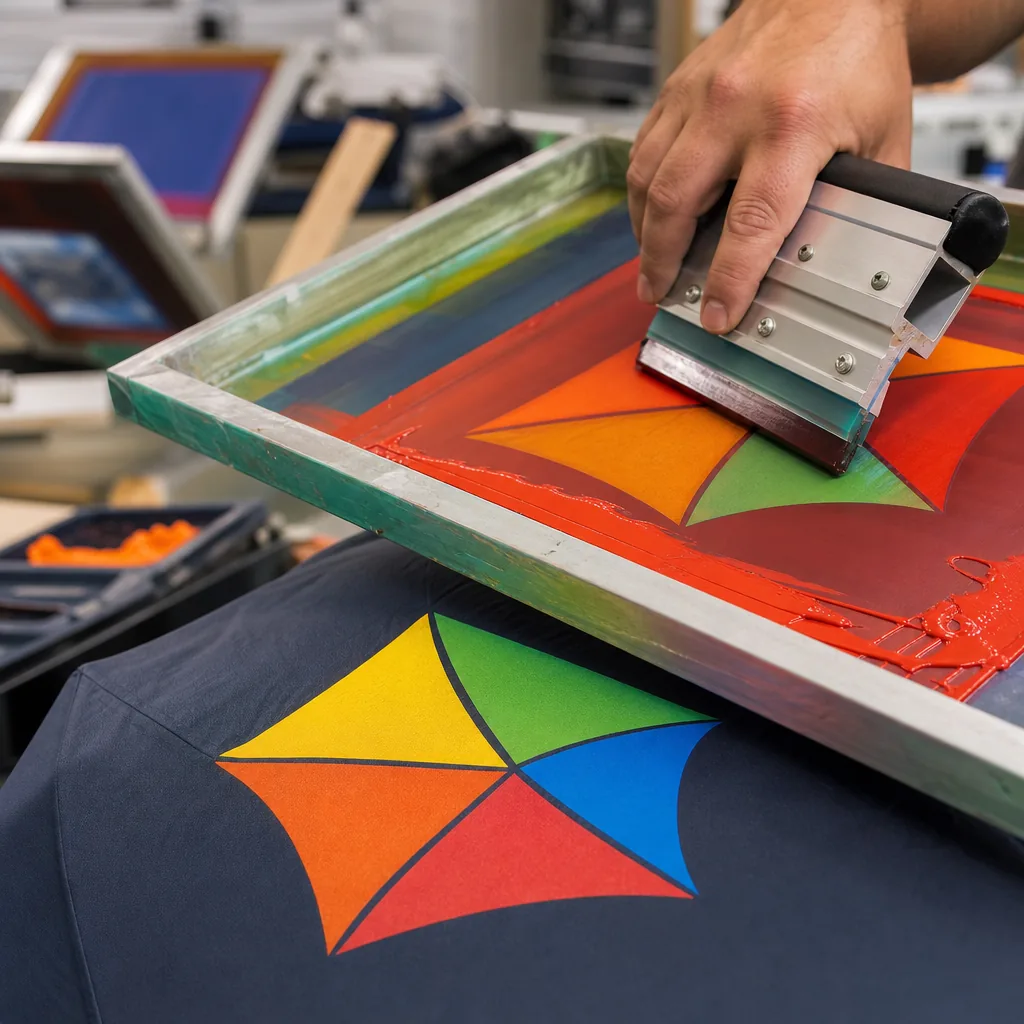
Licensed artwork leaves no room for soft edges, drifting brand colors, or panel-to-panel mismatch once the canopy is sewn and tensioned. On our factory floor, photo quality umbrella printing starts before ink hits fabric, with file checks, substrate selection, calibrated proofs, panel layout control, and sewing tolerances all treated as one production system. For bulk orders, the real challenge is not making one good sample; it is holding that result across every cut panel, frame size, and shipment lot.
What Counts as Photo-Quality Artwork
Use photo quality umbrella printing when the image carries the sale: licensed characters, museum paintings, sports photography, fashion graphics, resort skylines, and destination retail souvenirs. These programs fail faster than logo umbrellas because buyers inspect faces, jersey numbers, brushwork, skin tones, skyline lines, and brand colors at arm’s length. A 23" canopy panel may look clean on screen, but the finished umbrella is curved, segmented by ribs and seams, interrupted by the center cap, and often viewed under outdoor light. Soft edges, banding, moire, and color drift can trigger licensor rejection on licensed umbrella artwork, especially when character likeness, team identity, artist reproduction, or fashion color standards are controlled. Select digital umbrella printing, heat transfer, or sublimation after confirming fabric, color target, repeat accuracy, canopy size, and order volume; do not judge the method by unit price alone.
Build raster artwork at final print size, not at presentation size. ZheBrella normally requests 150 to 300 dpi at full canopy scale, with layered PSD, TIFF, or high-quality PDF files preferred; JPEG is usable only if it has not been repeatedly compressed. AI, EPS, and vector PDF remain the right formats for logos, type, legal marks, and panel registration guides, but vector files cannot recover detail from low-resolution photography. A file that passes on a 21" compact umbrella may fail on a 30" golf umbrella because the visible print area, viewing distance, and panel distortion change. Before brand artwork approval, confirm panel dimensions, bleed, rib positions, seam allowance, and center cap clearance across 8K, 10K, or 16K frames so the artwork registers correctly on the finished custom printed umbrellas.
Raster artwork needs full-size proofing because monitors, reduced PDFs, and A4 swatches hide defects that fabric will show. Pongee 190T and 210T absorb ink differently from POE, PVC, or EVA; Teflon water-repellent and UPF 50+ treatments can also shift surface behavior and perceived color. A small strike-off can confirm tone, but it cannot prove whether a face bends over a rib, a panoramic city view aligns around the canopy, or a dark gradient steps after heat transfer. For photo quality umbrella printing, budget a full canopy sample when the image has licensing risk, retail value, or fine photographic detail. The sample stage usually adds 5 to 10 days before mass production, but it reduces rejection risk at AQL 2.5 inspection and prevents costly disputes after FOB shipment to a distributor or retailer.
Choosing the Right Canopy and Frame
For photo quality umbrella printing, canopy fabric is the first quality gate. 190T pongee is the cost-led option for custom printed umbrellas: it is lighter, folds down neatly on 21 inch compact frames, and prints reliably for bold logos, repeat patterns, and large color blocks. Its looser weave shows limits faster on digital umbrella printing, especially with fine gradients, skin tones, metallic-looking effects, small legal copy, and dark-to-light transitions. 210T pongee gives licensed umbrella artwork a tighter, smoother print surface, so edges stay cleaner and dense colors read deeper with less daylight washout. That matters when the file includes character faces, product photography, or small rights-holder text that must survive brand artwork approval. If the artwork is simple, 190T controls cost without hurting the design. If the artwork is photographic or text-heavy, 210T is the safer spec because the fabric supports sharper detail before frame or print method becomes the limiting factor.
Format affects how well printed detail holds together once the umbrella is opened, folded, packed, and inspected. A 21 inch compact has smaller panels and more folding stress, so it works best for cropped character elements, repeated logos, and centered badge layouts rather than full scenic artwork. A 23 inch or 27 inch straight umbrella gives flatter panel geometry and fewer visual breaks, making strike-off samples easier to review and speeding brand artwork approval. A 30 inch golf umbrella offers the largest printable area, but artwork should be mapped to the actual 8K, 10K, or 16K rib layout before sampling; faces, text, and license marks should stay off seams because even a 5 mm shift can read as misregistration. Frame material also matters. Steel ribs reduce unit cost and suit low-MOQ event runs, but bends from wind or carton pressure can wrinkle the canopy and distort alignment. Fiberglass ribs recover better, hold cleaner canopy tension, and are the better choice when photo quality umbrella printing must keep a smooth retail appearance through AQL 2.5 inspection. For compact auto-open-close styles, a steel shaft with fiberglass ribs is often the best cost-durability balance.
Digital Print Setup for Curved Panels
Photo quality umbrella printing is won or lost in prepress. Licensed umbrella artwork has to be rebuilt to the actual tapered panel, not dropped onto a flat brand mockup. For each wedge, set the true top width, hem width, arc length, and centerline grain direction, then separate files panel by panel before release. On a standard 8K 23-inch canopy, the wider panels give enough usable area for a face, character, or hero logo, but seam loss still has to be engineered into the file. A practical starting point is 6-10 mm seam allowance on each side and 8-15 mm bleed, then adjust for fabric stretch and the digital umbrella printing process. Add a no-critical-detail zone at the crown near the ferrule and at the tip, where curvature and sewing distortion are highest. Without those controls, the failure pattern is predictable: eyes drift into seams, type clips at the edge, and registered elements land too close to the rib channel after sewing.
Canopy count directly affects approval risk. An 8K layout is usually the safer format for hero graphics because it has fewer image breaks and wider wedges; a 16K canopy doubles seam interruptions and narrows each panel, which makes portraits, faces, and centered marks more likely to split in ways a license holder rejects. For 16K, keep to repeats, gradients, step-and-repeat logos, and patterns that can tolerate interruption. Crop risk is highest at the skirt: after stitching, hem folding can remove another 10-12 mm, so legal copy, trademark symbols, and registration marks should sit well above the fold line. Color control needs the same discipline. Pongee 190T and 210T absorb ink differently, and coating, cutting, and panel tension can shift density after sewing, especially on dark solids, skin tones, reds, and licensed character blues. For photo quality umbrella printing, brand artwork approval should cover flat panel templates, a stitched canopy simulation, and a sewn sample on the production substrate before custom printed umbrellas move to mass production.
Approval Workflow for Licensed Brands
Start licensed programs from the factory dieline, not a flat logo file. For photo quality umbrella printing, the art has to match the actual canopy geometry: rib positions, seam allowance, bleed, safe zones, cap area, panel numbering, and wrap direction. A 23-inch 8K straight umbrella and a 21-inch auto-open-close folding style do not share the same printable arc, tip spacing, or fabric tension, so faces, gradients, trademark symbols, and small legal copy can move once the canopy is sewn. ZheBrella should issue AI or PDF templates with Pantone references and construction notes for 190T or 210T pongee, plus POE, PVC, or EVA where relevant. The buyer or agency then returns locked licensed umbrella artwork with character placement, repeat backgrounds, trademark marks, and any linked sleeve, hangtag, barcode, or carton-mark files. Allow 1-2 working days for the first template check, then add a 3-day buffer for licensed properties, where approvals often stall over placement, scale, or required legal text.
Use the digital proof to approve layout, not final color. Digital umbrella printing handles photographic gradients and character art well, especially by sublimation on white pongee or heat transfer on selected coated fabrics, but screens cannot show fabric-level problems such as muddy skin tones, weak blacks, blue-sky banding, or logo reds shifting after Teflon or UPF 50+ finishing. A low-risk workflow is factory proof, buyer proof, physical strike-off on the final canopy fabric, then a sewn pre-production sample. Strike-offs typically take 3-5 working days after file lock; DHL or FedEx shipping for color proofs usually adds 3-6 days, depending on destination and customs. Hold 2-4 working days for each revision cycle so the printer can re-RIP files, reset ink limits, and check registration across 8K, 10K, or 16K layouts. The pre-production sample should use the approved print, final 190T or 210T canopy, correct frame spec such as fiberglass or steel ribs, chosen manual or auto-open-close mechanism, and all branded trims and packing marks. Do not release bulk cutting until written licensor sign-off is in hand. For MOQ orders, reserve 7-10 days for approvals before the 25-35 day production window, then add time for AQL 2.5 inspection booking and FOB or DDP freight cutoffs.
Bulk QC and Compliance Checks
Use an AQL 2.5 sampling plan by lot size for photo quality umbrella printing; a visual check on the top cartons is not enough. Inspect sampled units under consistent lighting against the approved color standard, and record print defects that trigger buyer claims: soft fine detail, banding, seam registration drift, edge breakup, and visible color shift. On licensed umbrella artwork, panel order is a release item, not a cosmetic note. If a logo lockup, character face, or scene sequence is sewn one panel off or rotated by a half pitch, the order may be unsellable even when resolution is acceptable. QC should also tension the canopy on the frame before sign-off, because stains, transfer ghosting, needle oil, and coating marks often appear only after the fabric is stretched. For custom printed umbrellas, this inspection point protects buyers from disputes over dark gradients, muddy skin tones, and hidden handling damage that only shows up in finished form.
Do not release the lot on print approval alone; frame performance must match the salesman sample and BOM. Cycle manual, auto-open, and auto-open-close umbrellas to verify opening force, runner travel, lock engagement, clean closure, and auto-open reliability without spring hesitation or pinch points. On 21-inch and 23-inch folding styles, watch for weak return springs, crooked top notches, and ribs catching when the canopy weight is high. On 27-inch and 30-inch golf umbrellas, check shaft straightness, ferrule seating, rib symmetry, vent alignment on double-canopy constructions, tip security, handle adhesion, and the specified fiberglass-versus-steel rib mix. For digital umbrella printing programs, packing QC should confirm every carton label: model code, colorway, quantity, destination mark, carton dimensions, gross and net weight, retailer label position, and scannable UPC or EAN barcodes on unit packs and master cartons. Keep retained production samples from shipped lots so repeat orders and future brand artwork approval are matched to an approved production standard, not just a pre-production mockup.
Frequently Asked Questions
What resolution is needed for photo-quality umbrella printing?
Artwork should be prepared at full print size whenever possible, typically 150-300 dpi depending on image detail and panel size. Low-resolution web images usually fail once enlarged across a canopy.
Can licensed character artwork cross umbrella seams?
It can, but key faces, text, and trademarks should not sit directly on seams. Panel mapping should keep important artwork inside the safe print area to avoid distortion after sewing.
What artwork files are usually required for photo-quality umbrella printing on licensed designs?
Most factories ask for layered AI or PSD files, linked images at 300 dpi at full print size, and Pantone references for critical brand colors. If the design crosses panel seams, a panel-by-panel layout and repeat alignment notes are typically required before sampling.
How do you control color consistency across repeat umbrella orders for licensed artwork?
Buyers usually approve a digital strike-off or physical canopy proof against Pantone targets before mass production. For repeat orders, the factory should lock the approved print file, fabric specification, coating type, and inspection tolerance so reorders match the original production standard.
Which canopy construction works best when the artwork includes faces, logos, or continuous photographic scenes?
A full digital print on pongee or recycled polyester usually gives the cleanest result, but artwork placement must account for 8-panel or 10-panel seam breaks. For designs with critical faces or logos, many buyers choose larger golf or straight umbrellas because the wider panels reduce distortion and cut-off.
Looking to Launch Your Custom Umbrella Line?
ZheBrella is a Zhejiang-based OEM/ODM umbrella manufacturer with 17 years of export experience. Free design, low MOQ from 100 pieces, windproof construction, full-color print.
Get Free Quote Now »People Also Search For
Related Articles
Gradient and Photo Print Umbrellas for Retail Brand Stories
Plan photographic and gradient canopy art with 210T pongee, digital print sampling, panel seams, and lead times that fit...
Read More »
Gradient and Photographic Umbrella Prints for Brand Campaigns
Plan photo, gradient, and all-over digital umbrella prints with file specs, 190T/210T fabric choices, panel seams, lead ...
Read More »Gradient and Photo Umbrella Printing for Branded Campaigns
Understand when digital printing can reproduce photos, gradients, and complex art on pongee canopies, with file specs, l...
Read More »