Gradient and Photo Print Umbrellas for Retail Brand Stories
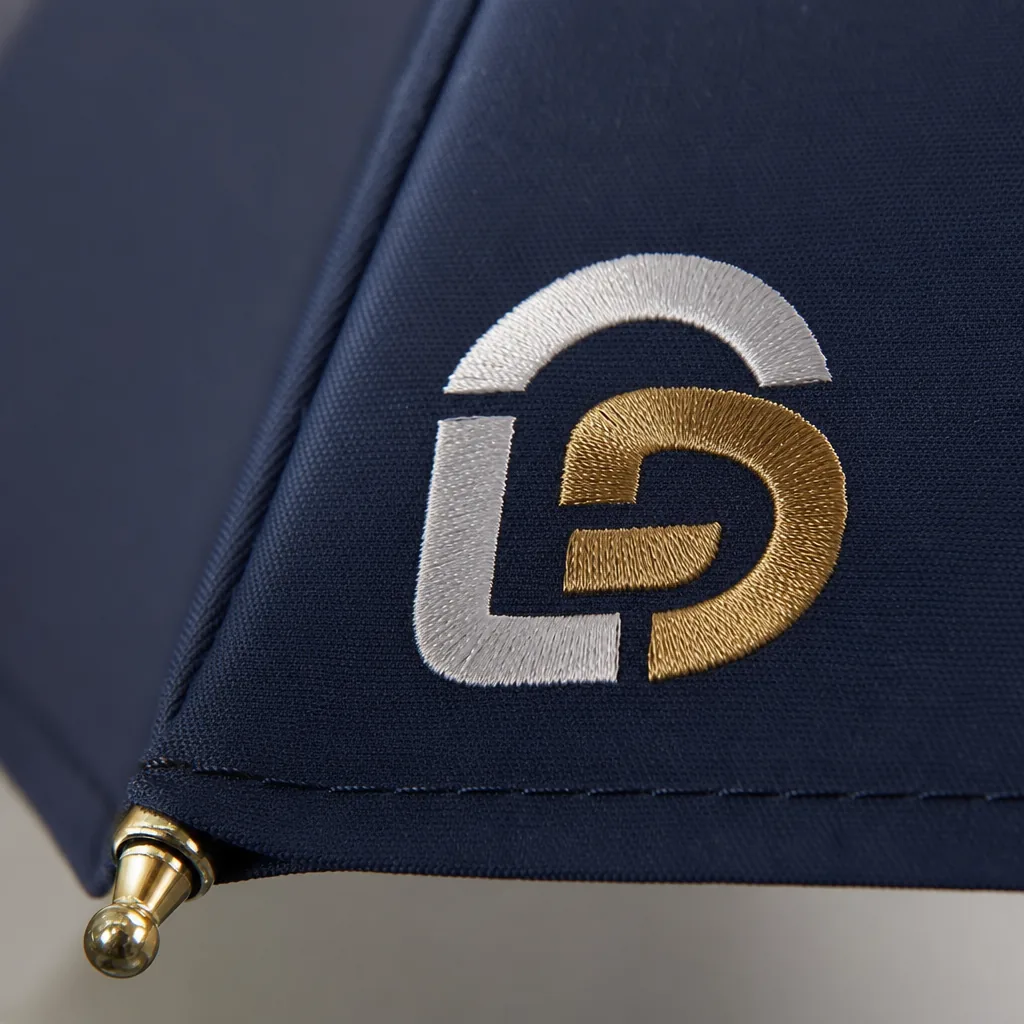
Retail teams often approve beautiful gradient or photographic umbrella artwork on screen, then lose weeks when panel seams, fabric hand feel, or color drift show up in sampling. On our Songxia production floor, photo print umbrellas start with 210T pongee selection, digital strike-offs, seam-aware artwork splitting, and canopy checks under real frame tension. Getting those details locked early is what keeps launch calendars, MOQ planning, and retail brand stories aligned.
Why Brands Use Gradient and Photo Canopy Artwork
Image-led umbrellas sell a story before they sell a logo. Destination retailers use skyline fades, beach photography, mountain silhouettes, or map textures because the umbrella becomes a portable souvenir, not just rain gear. Museum shops do the same with cropped paintings, architectural details, archival photos, or exhibition color palettes. For this type of retail umbrella branding, the canopy is treated like a curved 8-panel canvas, usually on 190T or 210T pongee for cleaner color and better hand feel than cheap polyester. A simple one-color logo can be screen printed on one or two panels, but photo print umbrellas require artwork planning across seams, panel direction, rib positions, and top-cap alignment. If the image has faces, building lines, or horizon bands, we normally avoid placing critical details directly on seam allowances because 2-3 mm sewing variation is normal even in a controlled line.
Fashion drops and seasonal collections often use gradient umbrella printing because color transition is easier to coordinate with apparel, packaging, and window displays than a literal photograph. A spring collection may run from pale mint to ivory, while a winter capsule may use navy-to-black or burgundy-to-charcoal fades on a 23" auto-open frame. Beverage campaigns are more aggressive: condensation photography, fruit splashes, can graphics, or festival artwork printed across all 8K panels, sometimes with a matching sleeve and hangtag. For small and medium runs, digital printed umbrellas are usually the practical choice because there is no screen charge per color, and the artwork can carry complex tones. For larger programs, sublimation may be more stable on white pongee when the buyer needs repeatable color over 3,000-10,000 pieces.
The technical difference is that custom canopy artwork must survive production realities: fabric shrinkage after heat transfer, panel cutting tolerance, stitch tension, and the way ribs pull the canopy into a dome. A clean photo on a flat proof can look broken if the factory does not compensate for the crown curve and seam loss. For retail programs, I prefer 8K or 10K fiberglass ribs for a lighter, more premium feel; steel ribs reduce cost but can make a photo canopy feel like a giveaway item. If the umbrella is positioned above basic promotional pricing, buyers should specify Teflon water-repellent finishing, UPF 50+ if sun use matters, and AQL 2.5 inspection for print defects, frame function, and color variance. Typical MOQ starts around 300-500 pieces per artwork for digital print, with 25-40 days production depending on strike-off approval and packaging.
Artwork Resolution and Panel Mapping Requirements
For photo print umbrellas, the first production risk is not the printer; it is weak artwork. I ask buyers for final artwork at 300 dpi at actual panel size, or at least 150 dpi if the image is a large photographic background without small text. A 23" straight umbrella usually needs eight separate canopy panels, while a golf umbrella at 27" or 30" may run 8K, 10K, or 16K depending on frame design. Files should be supplied in CMYK for screen, heat-transfer, and most digital workflows, with a Pantone reference if a brand color must match packaging or apparel. RGB files from social media often look bright on screen but print dull on 190T or 210T pongee unless corrected. For digital printed umbrellas, we normally request layered AI, PSD, PDF, or TIFF files with embedded images and fonts outlined, not flattened low-resolution JPEGs pulled from a website.
Panel mapping decides whether gradient umbrella printing looks premium or cheap. Umbrella canopies are not one flat circle; they are cut into wedge-shaped panels, sewn with 8 to 12 mm seam allowance, then stretched over ribs that create visible breaks in the artwork. On an 8K umbrella, each panel covers a wider visual area, so a landscape, skyline, or product shot must be split more carefully across the ribs. On a 16K umbrella, the curve is smoother, but there are twice as many seams, which can cut through faces, logos, and straight horizons if the layout is not planned. Our standard practice at ZheBrella is to provide a panel template showing cut line, safe area, seam allowance, rib position, top notch, and ferrule center. Any critical face, bottle, handbag, car, or headline should sit at least 20 to 30 mm away from a rib seam.
Custom canopy artwork should be reviewed as a three-dimensional object, not only as a flat proof. A sunset gradient may look continuous in PDF form, but after sewing, the color shift can step slightly from panel to panel because fabric tension, heat-transfer pressure, and coating thickness vary. For retail umbrella branding, I recommend placing the hero image on two to four continuous panels and using softer gradients or repeating texture on the remaining panels. Horizons should either follow the canopy arc intentionally or be kept high enough that seam distortion is not obvious when the umbrella is open. For photo print umbrellas with people, avoid positioning eyes, mouths, and hands over the rib line; a 5 mm sewing drift is normal in mass production, and it is enough to make a portrait look misaligned. Before bulk cutting, a strike-off on the actual canopy fabric is better than approving color from a monitor or paper print.
Fabric and Print Method Choices for Image Quality
For image-heavy canopies, fabric choice affects sharpness before the printer even starts. 190T pongee is the common retail baseline because it balances cost, weight, and a smooth enough weave for most digital printed umbrellas. It works well on 21-inch and 23-inch folding models where buyers need a soft hand feel and good drape, but very fine photo details can lose a little edge because the yarn spacing is slightly more open. 210T pongee gives a tighter surface, better color depth, and cleaner transitions in skin tones, skies, water, and architectural images. If the design includes small text, thin line art, or a full-panel photograph, I usually push buyers toward 210T, especially on 27-inch and 30-inch stick umbrellas where the larger canopy makes flaws easier to see. The cost increase is real, but it is usually cheaper than reprinting rejected goods after retail inspection.
Digital printing is the right method for gradient umbrella printing, photo landscapes, watercolor effects, and custom canopy artwork with many colors. Sublimation on polyester pongee drives dye into the fabric, so the print stays flexible and does not crack when the canopy is folded around 8K or 10K ribs. It also handles soft fades from navy to teal or sunset orange to pink without the banding that can happen when a factory tries to simulate gradients with screens. For photo print umbrellas, we normally request artwork at final panel size, 150 to 300 dpi, with seam allowance included, because each triangular panel is cut and sewn after printing or printed after cutting depending on the layout tolerance. Color management matters: a bright RGB file on a laptop will not automatically match CMYK or sublimation output, so a strike-off sample is not optional for retail programs.
Screen printing still has a place, but not for everything. If the canopy uses a flat white logo, one Pantone red icon, or a two-color sponsor mark, screen printing is often more stable, faster, and cheaper than digital. The ink film can look stronger on dark 190T pongee, and spot-color matching is easier when the buyer cares more about brand color than photographic realism. For retail umbrella branding with repeated logos across 500, 1,000, or 3,000 pieces, screen setup costs are quickly absorbed, while unit cost stays low. The limitation is obvious on the production floor: every extra color needs another screen, registration has tolerance, and gradients must be converted into halftones that rarely look as smooth as true digital output. Our standard practice at ZheBrella is to recommend digital for gradients and photos, screen printing for bold flat graphics, and a physical pre-production sample before bulk cutting.
Color Matching Limits for Photographic Prints
The most common color dispute comes from approving artwork on a backlit phone screen, then expecting the same result on coated textile. RGB artwork must be converted properly before production, and even then, custom canopy artwork should include a tolerance note for photographic zones. For brand elements, we can work toward Delta E targets or visually match against a Pantone swatch under agreed lighting. For photo areas, we control consistency by locking the print profile, fabric batch, coating spec, and curing temperature, not by promising every pixel will match the original file. Heat-transfer print on pongee can hold sharp city images and product photos well, while sublimation gives a softer hand but may shift reds and deep blues depending on the disperse ink set. Before a 3,000-piece FOB order, I would rather spend 5 to 7 days on a corrected sample than have 60 cartons fail a buyer’s store review because the gradient looked right only under factory fluorescent lamps.
Production Planning for Retail Launches
For retail launch work, I would not approve photo print umbrellas from artwork alone. The first gate is a strike-off sample on the real canopy fabric, usually pongee 190T or 210T, because gradient umbrella printing behaves differently on a flat screen than on a sewn curved panel. That sample should show panel-to-panel image alignment, edge wrap, and whether the darkest tones collapse after heat-setting. If the artwork uses faces, logos, or fine typography, we also check whether the ribs distort the image at the seams and whether the dye or ink shifts after tensioning. For digital printed umbrellas, the strike-off is the cheapest place to catch color drift before the factory cuts full panels. At this stage, I expect the buyer to confirm Pantone targets, placement tolerances, and any retail-specific details such as hang tags, barcode zones, and fold positions so the final custom canopy artwork does not get blocked by packaging or labeling.
After the strike-off is approved, we run a pre-production sample on the actual frame and canopy construction, not a loose fabric mockup. That sample should reflect the final size, mechanism, and print method, because photo print umbrellas can look clean on a 23-inch manual frame but shift badly on a 27-inch auto-open-close frame if the panel tension changes. This is where we confirm color consistency across multiple panels, check for ghosting, pinholes, ink cracking at the seams, and make sure the print registration stays centered after sewing and pressing. Our standard practice is to treat this sample as the control for bulk, then hold the same criteria through AQL 2.5 inspection during production. For a new retail program, MOQ is usually set by print setup and packaging complexity, and lead time is normally about 25 to 40 days after sample approval, longer if the buyer wants special inserts, sleeves, or multi-SKU carton packs.
Bulk release should be tied to packaging coordination, not just print approval. Retail umbrella branding fails when the canopy looks right but the carton artwork, barcode placement, and polybag spec do not match the store’s receiving rules. I would lock the master carton count, inner pack if needed, and labeling format before mass production starts, especially if the shipment is going direct to distribution centers. For trade terms, FOB works well when the buyer controls freight and destination handling, while DDP is better when the retail team wants landed cost and fewer customs variables. During bulk, AQL 2.5 checks need to cover image alignment, shade variation, seam contamination, scuff marks, and any print defects like banding or offset ghosts. If the order is going into photo print umbrellas as a seasonal launch, I would also reserve extra time for carton drop tests and retail-ready packing so the goods arrive saleable, not just assembled.
Frequently Asked Questions
Are photo print umbrellas better on 190T or 210T pongee?
Both can work, but 210T pongee usually gives a denser feel and smoother print surface for premium retail programs. A strike-off sample is the best way to confirm sharpness, color depth, and coating compatibility.
Can one photo image continue across all umbrella panels?
Yes, but seams and rib positions will interrupt the image. Designers should map key subjects inside panels and allow tolerance for cutting and stitching, especially on 16K umbrellas with narrower panels.
How much artwork loss should buyers expect at umbrella panel seams on photo or gradient designs?
Plan for 3-5 mm of visual interruption at each seam and keep faces, logos, and sharp text away from panel joins. For full-canopy photography, suppliers usually provide a seam compensation template before sampling.
What is a realistic sampling timeline for digital printed umbrellas before a retail launch PO?
For new canopy artwork on 210T pongee, digital print strike-off files are often ready in 2-4 days and a finished sample in about 7-12 days. If the handle, ferrule, or packaging is also customized, sample timing can extend to 12-15 days.
Can buyers start at MOQ and still match gradient colors across repeat orders?
Yes, but the factory should lock the approved print file, fabric base, and color target from the first order. At MOQ levels, most buyers approve against a digital strike-off plus one sealed production sample to control repeat consistency.
Looking to Launch Your Custom Umbrella Line?
ZheBrella is a Zhejiang-based OEM/ODM umbrella manufacturer with 17 years of export experience. Free design, low MOQ from 100 pieces, windproof construction, full-color print.
Get Free Quote Now »People Also Search For
Related Articles
Gradient and Photo Print Umbrellas for Retail Brand Artwork
Understand how gradient and photo umbrella prints are built, sampled, and inspected so retail artwork stays sharp across...
Read More »
Gradient and Photographic Umbrella Prints for Retail Brands
Build retail umbrella prints with photo clarity, correct fabric specs, sample approvals, and QC checks for gradients, ar...
Read More »
Gradient and Photographic Umbrella Prints for Brand Campaigns
Plan photo, gradient, and all-over digital umbrella prints with file specs, 190T/210T fabric choices, panel seams, lead ...
Read More »